H.I.V AIDS
CREATED BY
MAHENDRA KUMAR
PATEL
B.TECH (CSE)
1ST SEM
WHAT IS H.I.V.
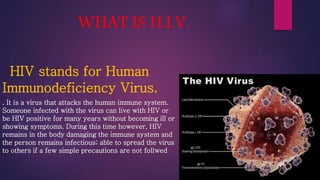
HIV stands for Human
Immunodeficiency Virus.
. It is a virus that attacks the human immune system.
Someone infected with the virus can live with HIV or
be HIV positive for many years without becoming ill or
showing symptoms. During this time however, HIV
remains in the body damaging the immune system and
the person remains infectious; able to spread the virus
to others if a few simple precautions are not follwed
Over time, HIV can damage the immune system to such a degree that infections may begin to
occur as a result of a weakened immune system. Eventually, one may acquire various illnesses
due to the damage done by the virus.
When this happens this is called AIDS or Acquired Immune Deficiency Syndrome. That is, a
collection of illnesses.
OTHER NAMESFOR H.I.V.
FORMER NAMES OF THE VIRUS INCLUDE:
Human T cell lymphotrophic virus (HTLV-III)
Lymphadenopathy associated virus (LAV)
AIDS associated retrovirus (ARV)
WHAT DOES "AIDS“ MEAN?
AIDS STANDS FOR ACQUIRED IMMUNE DEFICIENCY
SYNDROME
• ACQUIRED MEANS YOU CAN GET INFECTED WITH IT;
IMMUNE DEFICIENCY MEANS A WEAKNESS IN THE BODY'S
SYSTEM THAT FIGHTS DISEASES.
• SYNDROME MEANS A GROUP OF HEALTH PROBLEMS THAT MAKE
UP A DISEASE.
AIDS (definition)
OPPORTUNISTIC INFECTIONS AND MALIGNANCIES
THAT RARELY OCCUR IN THE ABSENCE OF SEVERE
IMMUNODEFICIENCY (EG, PNEUMOCYSTIS
PNEUMONIA, CENTRAL NERVOUS SYSTEM
LYMPHOMA).
PERSONS WITH POSITIVE HIV SEROLOGY WHO HAVE
EVER HAD A CD4 LYMPHOCYTE COUNT BELOW 200
CELLS/MCL OR A CD4 LYMPHOCYTE PERCENTAGE
BELOW 14% ARE CONSIDERED TO HAVE AIDS.
MoDES OF H.I.V/AIDS TRANSMISSION
 Through Bodily Fluids
 Blood Products
 Semen
 Vaginal Fluids
IntraVenous Drug
Abuse
Sharing Needles
Without sterilization Increases the chances of
contracting HIV
Unsterilized blades
THROUGH SEX
Unprotected Intercourse
Oral
Anal
Myths about HIV
Stage 1 - Primary
1.Short, flu-like illness - occurs one to six weeks after infection
2. Mild symptoms
3. Infected person can infect other
people
Stage 2 - Asymptomatic
Lasts for an average of ten years
This stage is free from symptoms
There may be swollen glands
The level of HIV in the blood drops to low levels
HIV antibodies are detectable in the blood
Stage 3 – Symptomatic
.The immune system deteriorates.
.Opportunistic infections and cancers start to
appear.
Stage 4 - HIV  AIDS
 The immune system weakens too much as
CD4 cells decrease in number.
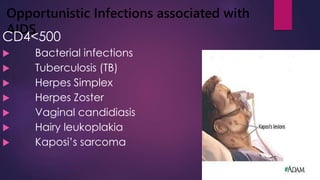
Opportunistic Infections associated with
AIDS
CD4<500
 Bacterial infections
 Tuberculosis (TB)
 Herpes Simplex
 Herpes Zoster
 Vaginal candidiasis
 Hairy leukoplakia
 Kaposi’s sarcoma
TB & HIV CO-INFECTION
 TB is the most common opportunistic infection in HIV and the first cause of
mortality in HIV infected patients (10-30%)
 10 million patients co-infected in the world.
 Immunosuppression induced by HIV modifies the clinical presentation of TB :
1. Subnormal clinical and roentgen presentation
2. High rate of MDR/XDR
3. High rate of treatment failure and relapse (5% vs < 1% in HIV)
PRIMARY PREVENTION:
Five ways to protect yourself?
 Abstinence
 Monogamous Relationship
 Protected Sex
 Sterile needles
 New shaving/cutting blades
Abstinence
 It is the most effective method of not acquiring HIV/AIDS.
 Refraining from unprotected sex: oral, anal, or vaginal.
 Refraining from intravenous drug use
Monogamous relationship
 A mutually monogamous (only one sex
partner) relationship with a person who is
not infected with HIV
 HIV testing before intercourse is necessary
to prove your partner is not infected
WHAT WE CAN DO??
UNAIDS Outcome Framework 2009–2011: nine priority areas
 We can reduce sexual transmission of HIV.
 We can prevent mothers from dying and babies from becoming
infected with HIV.
 We can ensure that people living with HIV receive treatment.
 We can prevent people living with HIV from dying of tuberculosis.
 We can protect drug users from becoming infected with HIV.
 We can remove punitive laws, policies, practices, stigma and
discrimination that
 block effective responses to AIDS.
 We can stop violence against women and girls.
 We can empower young people to protect themselves from HIV.
 We can enhance social protection for people affected by HIV.
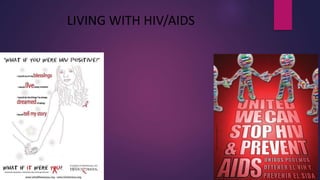
LIVING WITH HIV/AIDS
THANKS

Hiv

  • 1.
    H.I.V AIDS CREATED BY MAHENDRAKUMAR PATEL B.TECH (CSE) 1ST SEM
  • 2.
    WHAT IS H.I.V. HIVstands for Human Immunodeficiency Virus. . It is a virus that attacks the human immune system. Someone infected with the virus can live with HIV or be HIV positive for many years without becoming ill or showing symptoms. During this time however, HIV remains in the body damaging the immune system and the person remains infectious; able to spread the virus to others if a few simple precautions are not follwed
  • 3.
    Over time, HIVcan damage the immune system to such a degree that infections may begin to occur as a result of a weakened immune system. Eventually, one may acquire various illnesses due to the damage done by the virus. When this happens this is called AIDS or Acquired Immune Deficiency Syndrome. That is, a collection of illnesses.
  • 4.
    OTHER NAMESFOR H.I.V. FORMERNAMES OF THE VIRUS INCLUDE: Human T cell lymphotrophic virus (HTLV-III) Lymphadenopathy associated virus (LAV) AIDS associated retrovirus (ARV)
  • 5.
    WHAT DOES "AIDS“MEAN? AIDS STANDS FOR ACQUIRED IMMUNE DEFICIENCY SYNDROME • ACQUIRED MEANS YOU CAN GET INFECTED WITH IT; IMMUNE DEFICIENCY MEANS A WEAKNESS IN THE BODY'S SYSTEM THAT FIGHTS DISEASES. • SYNDROME MEANS A GROUP OF HEALTH PROBLEMS THAT MAKE UP A DISEASE.
  • 6.
    AIDS (definition) OPPORTUNISTIC INFECTIONSAND MALIGNANCIES THAT RARELY OCCUR IN THE ABSENCE OF SEVERE IMMUNODEFICIENCY (EG, PNEUMOCYSTIS PNEUMONIA, CENTRAL NERVOUS SYSTEM LYMPHOMA). PERSONS WITH POSITIVE HIV SEROLOGY WHO HAVE EVER HAD A CD4 LYMPHOCYTE COUNT BELOW 200 CELLS/MCL OR A CD4 LYMPHOCYTE PERCENTAGE BELOW 14% ARE CONSIDERED TO HAVE AIDS.
  • 7.
    MoDES OF H.I.V/AIDSTRANSMISSION  Through Bodily Fluids  Blood Products  Semen  Vaginal Fluids
  • 8.
    IntraVenous Drug Abuse Sharing Needles Withoutsterilization Increases the chances of contracting HIV Unsterilized blades
  • 9.
  • 10.
  • 11.
    Stage 1 -Primary 1.Short, flu-like illness - occurs one to six weeks after infection 2. Mild symptoms 3. Infected person can infect other people
  • 12.
    Stage 2 -Asymptomatic Lasts for an average of ten years This stage is free from symptoms There may be swollen glands The level of HIV in the blood drops to low levels HIV antibodies are detectable in the blood
  • 13.
    Stage 3 –Symptomatic .The immune system deteriorates. .Opportunistic infections and cancers start to appear.
  • 14.
    Stage 4 -HIV  AIDS  The immune system weakens too much as CD4 cells decrease in number.
  • 15.
    Opportunistic Infections associatedwith AIDS CD4<500  Bacterial infections  Tuberculosis (TB)  Herpes Simplex  Herpes Zoster  Vaginal candidiasis  Hairy leukoplakia  Kaposi’s sarcoma
  • 16.
    TB & HIVCO-INFECTION  TB is the most common opportunistic infection in HIV and the first cause of mortality in HIV infected patients (10-30%)  10 million patients co-infected in the world.  Immunosuppression induced by HIV modifies the clinical presentation of TB : 1. Subnormal clinical and roentgen presentation 2. High rate of MDR/XDR 3. High rate of treatment failure and relapse (5% vs < 1% in HIV)
  • 17.
    PRIMARY PREVENTION: Five waysto protect yourself?  Abstinence  Monogamous Relationship  Protected Sex  Sterile needles  New shaving/cutting blades
  • 18.
    Abstinence  It isthe most effective method of not acquiring HIV/AIDS.  Refraining from unprotected sex: oral, anal, or vaginal.  Refraining from intravenous drug use
  • 19.
    Monogamous relationship  Amutually monogamous (only one sex partner) relationship with a person who is not infected with HIV  HIV testing before intercourse is necessary to prove your partner is not infected
  • 20.
    WHAT WE CANDO?? UNAIDS Outcome Framework 2009–2011: nine priority areas  We can reduce sexual transmission of HIV.  We can prevent mothers from dying and babies from becoming infected with HIV.  We can ensure that people living with HIV receive treatment.  We can prevent people living with HIV from dying of tuberculosis.  We can protect drug users from becoming infected with HIV.  We can remove punitive laws, policies, practices, stigma and discrimination that  block effective responses to AIDS.  We can stop violence against women and girls.  We can empower young people to protect themselves from HIV.  We can enhance social protection for people affected by HIV.
  • 21.
  • 22.