z
PULPITIS
Dr. Sarang Suresh Hotchandani
z
Pulpitis is Most Common Cause of;
Dental Pain
Loss of tooth in
younger age
DR.SARANGSURESHHOTCHANDANI
2
z
Causes of Pulpitis
 Dental Caries (Most Common)
 Trauma
 Cracked tooth syndrome
 Thermal
 Chemical
DR.SARANGSURESHHOTCHANDANI
3
z
If Pulpitis Not Treated this will happen!
Pulpitis
Pulp Necrosis
Periapical
Periodontitis
DR.SARANGSURESHHOTCHANDANI
4
z
Clinical Features of Pulpitis
 Patient unable to localize from which tooth
pain is originating.
 Because pulps of individual teeth are not sensed
precisely on Sensory Cortex.
 Sometimes pulpitis pain is referred;
 E.g. mandibular molars to ear.
DR.SARANGSURESHHOTCHANDANI
5
z
Clinical Features of Pulpitis
 There is no any pain on applying
pressure/palpation/percussion on tooth in
pulpitis.
 If pain is present on pressure it is always periapical
periodontitis; inflammation of PDL.
 But sometimes, when there is frank cavity in tooth, the
impacted food particles sometimes apply pressure
through soft & thin dentine.
DR.SARANGSURESHHOTCHANDANI
6
z
Clinical Classification of Pulpitis
DR.SARANGSURESHHOTCHANDANI
7
z
Acute Pulpitis
(Early Stage Acute Pulpitis)
 Tooth is hypersensitive
 Very cold/hot stimuli cause stabbing
pain, relieved by removing stimuli.
DR.SARANGSURESHHOTCHANDANI
8
z
Acute Pulpitis
(Late Stage Acute Pulpitis)
 Duration of pain increases & it is
persistent.
 Pain starts spontaneously often
when patient try to sleep.
DR.SARANGSURESHHOTCHANDANI
9
z
Pain of Pulpitis Occurs due to;
 Presence of inflammatory infiltrate in
closed pulp chamber on irritated nerve
endings.
 Pain producing substances from
damaged pulp.
DR.SARANGSURESHHOTCHANDANI
10
z
Characteristics of Acute Pulpitis Pain
 Sever
 Sharp
 Stabbing
 Can’t relieved by simple analgesics.
DR.SARANGSURESHHOTCHANDANI
11
z
Clinical Classification of Acute Pulpitis
Acute Pulpitis
Irreversible
Acute Pulpitis
Reversible
Acute Pulpitis
DR.SARANGSURESHHOTCHANDANI
12
z
Characteristics of Irreversible
Acute Pulpitis
 Constant sever pain even after
removal of stimuli.
 Treatment; Root Canal Therapy
DR.SARANGSURESHHOTCHANDANI
13
z
Outcome of untreated Acute Pulpitis!
 Chronic Pulpitis
 Pulp Necrosis
DR.SARANGSURESHHOTCHANDANI
14
z
Chronic Pulpitis
 Spontaneous attack of dull pain for
hours or more
 It may or may not be due to acute
pulpits.
DR.SARANGSURESHHOTCHANDANI
15
z
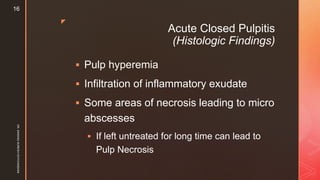
Acute Closed Pulpitis
(Histologic Findings)
 Pulp hyperemia
 Infiltration of inflammatory exudate
 Some areas of necrosis leading to micro
abscesses
 If left untreated for long time can lead to
Pulp Necrosis
DR.SARANGSURESHHOTCHANDANI
16
z
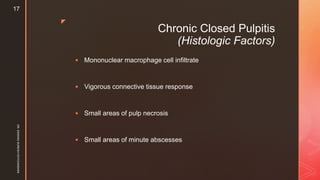
Chronic Closed Pulpitis
(Histologic Factors)
 Mononuclear macrophage cell infiltrate
 Vigorous connective tissue response
 Small areas of pulp necrosis
 Small areas of minute abscesses
DR.SARANGSURESHHOTCHANDANI
17
z
Factors Which Prevent Survival of Pulp
 Pulp is enclosed within rigid walls of pulp
chamber
 Only one small opening at apex for blood
supply to tooth
DR.SARANGSURESHHOTCHANDANI
18
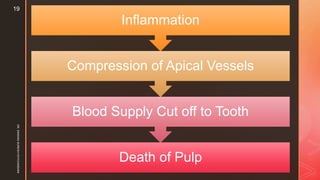
Death of Pulp
Blood Supply Cut off to Tooth
Compression of Apical Vessels
Inflammation
DR.SARANGSURESHHOTCHANDANI
19
z
Open Pulpitis
(Pulp Polyp)
 Pulp grown through cavity opening.
 This may be due to large open
apices & good blood flow.
DR.SARANGSURESHHOTCHANDANI
20
z
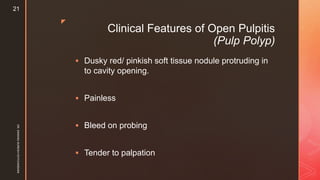
Clinical Features of Open Pulpitis
(Pulp Polyp)
 Dusky red/ pinkish soft tissue nodule protruding in
to cavity opening.
 Painless
 Bleed on probing
 Tender to palpation
DR.SARANGSURESHHOTCHANDANI
21
z
Histological Features of Open Pulpitis
(Pulp Polyp)
 Few odontoblast present
 Pulp tissue is replaced by granulation tissue
 Proliferated mass of pulp polyp is covered by stratified
squamous epithelium
DR.SARANGSURESHHOTCHANDANI
22
z
Management of Pulpitis
 If cause is fracture/ cracked tooth, stabilize & seal the pulp temporarily.
 If cause is caries, pulp capping, caries removal.
 Pulpotomy in deciduous teeth
 Endodontic treatment
 Extraction
 Analgesic are ineffective against pulpitis pain
DR.SARANGSURESHHOTCHANDANI
23
z
THE END
DR.SARANGSURESHHOTCHANDANI
24

PULPITIS (PULP INFLAMMATION) - DENTISTRY

  • 1.
  • 2.
    z Pulpitis is MostCommon Cause of; Dental Pain Loss of tooth in younger age DR.SARANGSURESHHOTCHANDANI 2
  • 3.
    z Causes of Pulpitis Dental Caries (Most Common)  Trauma  Cracked tooth syndrome  Thermal  Chemical DR.SARANGSURESHHOTCHANDANI 3
  • 4.
    z If Pulpitis NotTreated this will happen! Pulpitis Pulp Necrosis Periapical Periodontitis DR.SARANGSURESHHOTCHANDANI 4
  • 5.
    z Clinical Features ofPulpitis  Patient unable to localize from which tooth pain is originating.  Because pulps of individual teeth are not sensed precisely on Sensory Cortex.  Sometimes pulpitis pain is referred;  E.g. mandibular molars to ear. DR.SARANGSURESHHOTCHANDANI 5
  • 6.
    z Clinical Features ofPulpitis  There is no any pain on applying pressure/palpation/percussion on tooth in pulpitis.  If pain is present on pressure it is always periapical periodontitis; inflammation of PDL.  But sometimes, when there is frank cavity in tooth, the impacted food particles sometimes apply pressure through soft & thin dentine. DR.SARANGSURESHHOTCHANDANI 6
  • 7.
    z Clinical Classification ofPulpitis DR.SARANGSURESHHOTCHANDANI 7
  • 8.
    z Acute Pulpitis (Early StageAcute Pulpitis)  Tooth is hypersensitive  Very cold/hot stimuli cause stabbing pain, relieved by removing stimuli. DR.SARANGSURESHHOTCHANDANI 8
  • 9.
    z Acute Pulpitis (Late StageAcute Pulpitis)  Duration of pain increases & it is persistent.  Pain starts spontaneously often when patient try to sleep. DR.SARANGSURESHHOTCHANDANI 9
  • 10.
    z Pain of PulpitisOccurs due to;  Presence of inflammatory infiltrate in closed pulp chamber on irritated nerve endings.  Pain producing substances from damaged pulp. DR.SARANGSURESHHOTCHANDANI 10
  • 11.
    z Characteristics of AcutePulpitis Pain  Sever  Sharp  Stabbing  Can’t relieved by simple analgesics. DR.SARANGSURESHHOTCHANDANI 11
  • 12.
    z Clinical Classification ofAcute Pulpitis Acute Pulpitis Irreversible Acute Pulpitis Reversible Acute Pulpitis DR.SARANGSURESHHOTCHANDANI 12
  • 13.
    z Characteristics of Irreversible AcutePulpitis  Constant sever pain even after removal of stimuli.  Treatment; Root Canal Therapy DR.SARANGSURESHHOTCHANDANI 13
  • 14.
    z Outcome of untreatedAcute Pulpitis!  Chronic Pulpitis  Pulp Necrosis DR.SARANGSURESHHOTCHANDANI 14
  • 15.
    z Chronic Pulpitis  Spontaneousattack of dull pain for hours or more  It may or may not be due to acute pulpits. DR.SARANGSURESHHOTCHANDANI 15
  • 16.
    z Acute Closed Pulpitis (HistologicFindings)  Pulp hyperemia  Infiltration of inflammatory exudate  Some areas of necrosis leading to micro abscesses  If left untreated for long time can lead to Pulp Necrosis DR.SARANGSURESHHOTCHANDANI 16
  • 17.
    z Chronic Closed Pulpitis (HistologicFactors)  Mononuclear macrophage cell infiltrate  Vigorous connective tissue response  Small areas of pulp necrosis  Small areas of minute abscesses DR.SARANGSURESHHOTCHANDANI 17
  • 18.
    z Factors Which PreventSurvival of Pulp  Pulp is enclosed within rigid walls of pulp chamber  Only one small opening at apex for blood supply to tooth DR.SARANGSURESHHOTCHANDANI 18
  • 19.
    Death of Pulp BloodSupply Cut off to Tooth Compression of Apical Vessels Inflammation DR.SARANGSURESHHOTCHANDANI 19
  • 20.
    z Open Pulpitis (Pulp Polyp) Pulp grown through cavity opening.  This may be due to large open apices & good blood flow. DR.SARANGSURESHHOTCHANDANI 20
  • 21.
    z Clinical Features ofOpen Pulpitis (Pulp Polyp)  Dusky red/ pinkish soft tissue nodule protruding in to cavity opening.  Painless  Bleed on probing  Tender to palpation DR.SARANGSURESHHOTCHANDANI 21
  • 22.
    z Histological Features ofOpen Pulpitis (Pulp Polyp)  Few odontoblast present  Pulp tissue is replaced by granulation tissue  Proliferated mass of pulp polyp is covered by stratified squamous epithelium DR.SARANGSURESHHOTCHANDANI 22
  • 23.
    z Management of Pulpitis If cause is fracture/ cracked tooth, stabilize & seal the pulp temporarily.  If cause is caries, pulp capping, caries removal.  Pulpotomy in deciduous teeth  Endodontic treatment  Extraction  Analgesic are ineffective against pulpitis pain DR.SARANGSURESHHOTCHANDANI 23
  • 24.