Suresh Babu G
Assistant Professor
Suresh Babu G
Multi Sensory
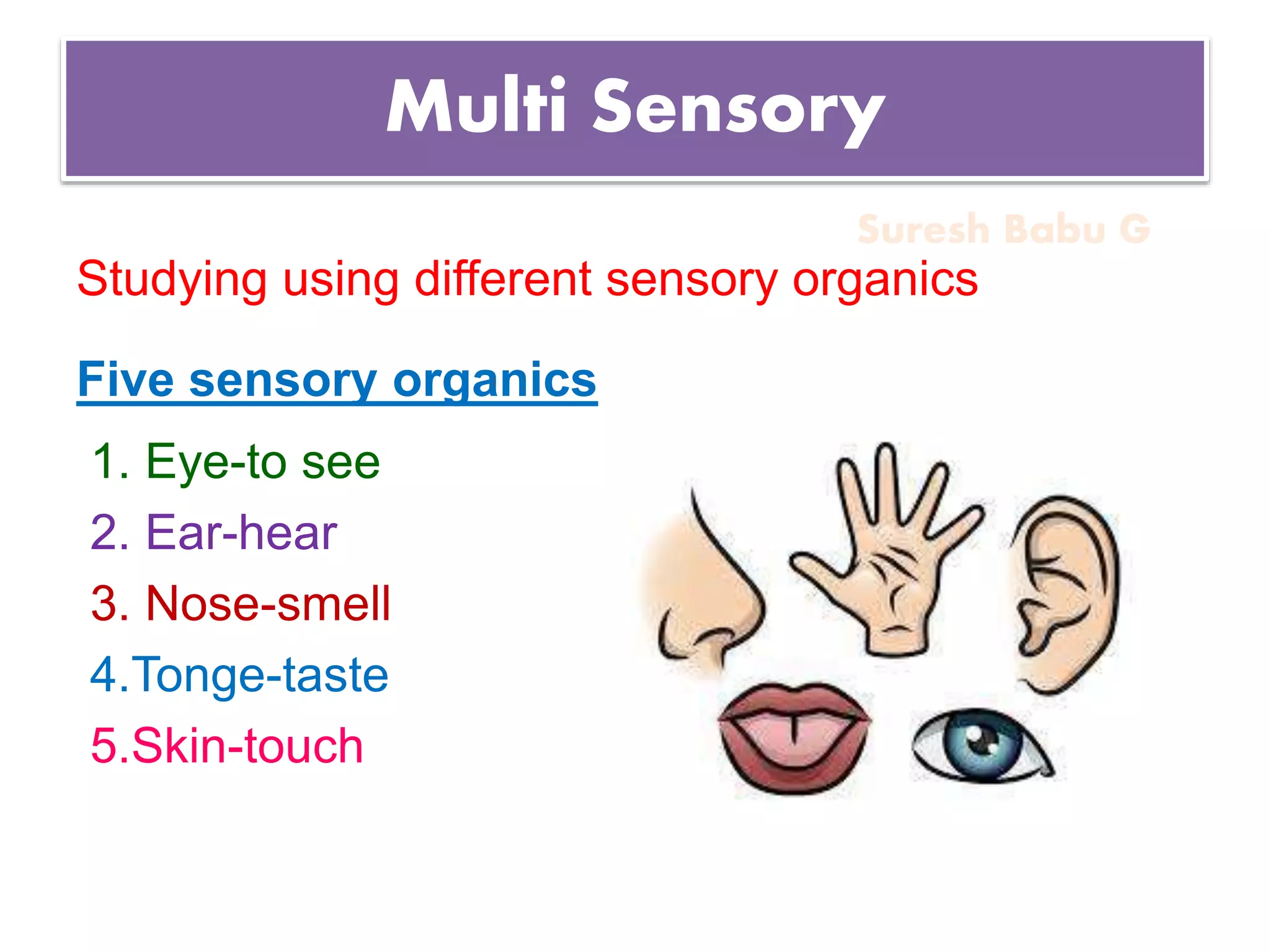
Studying using different sensory organics
Five sensory organics
1. Eye-to see
2. Ear-hear
3. Nose-smell
4.Tonge-taste
5.Skin-touch
Suresh Babu G
Multisensory Approach
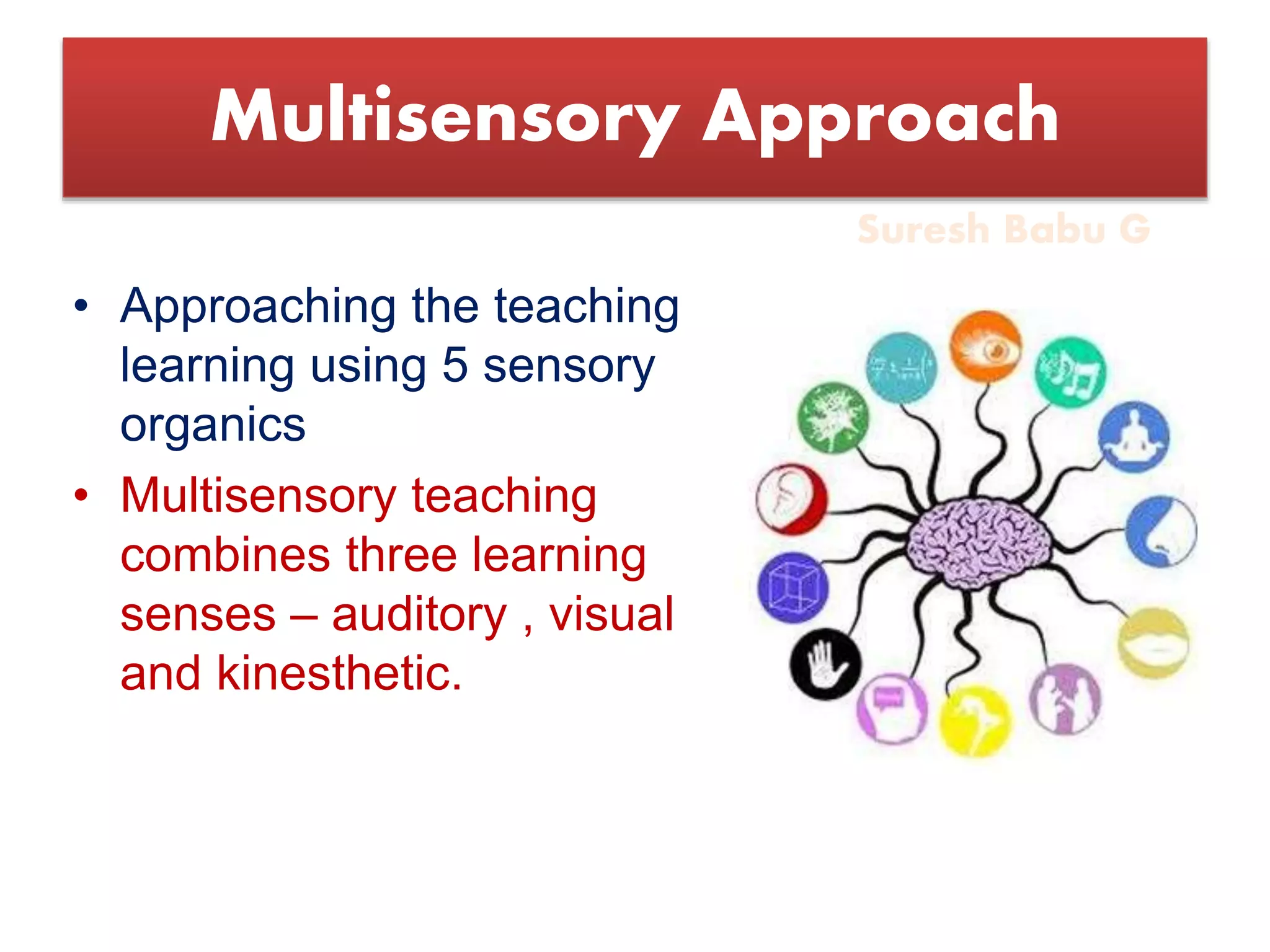
• Approaching the teaching
learning using 5 sensory
organics
• Multisensory teaching
combines three learning
senses – auditory , visual
and kinesthetic.
Suresh Babu G
Multisensory Learning Approach in Teaching
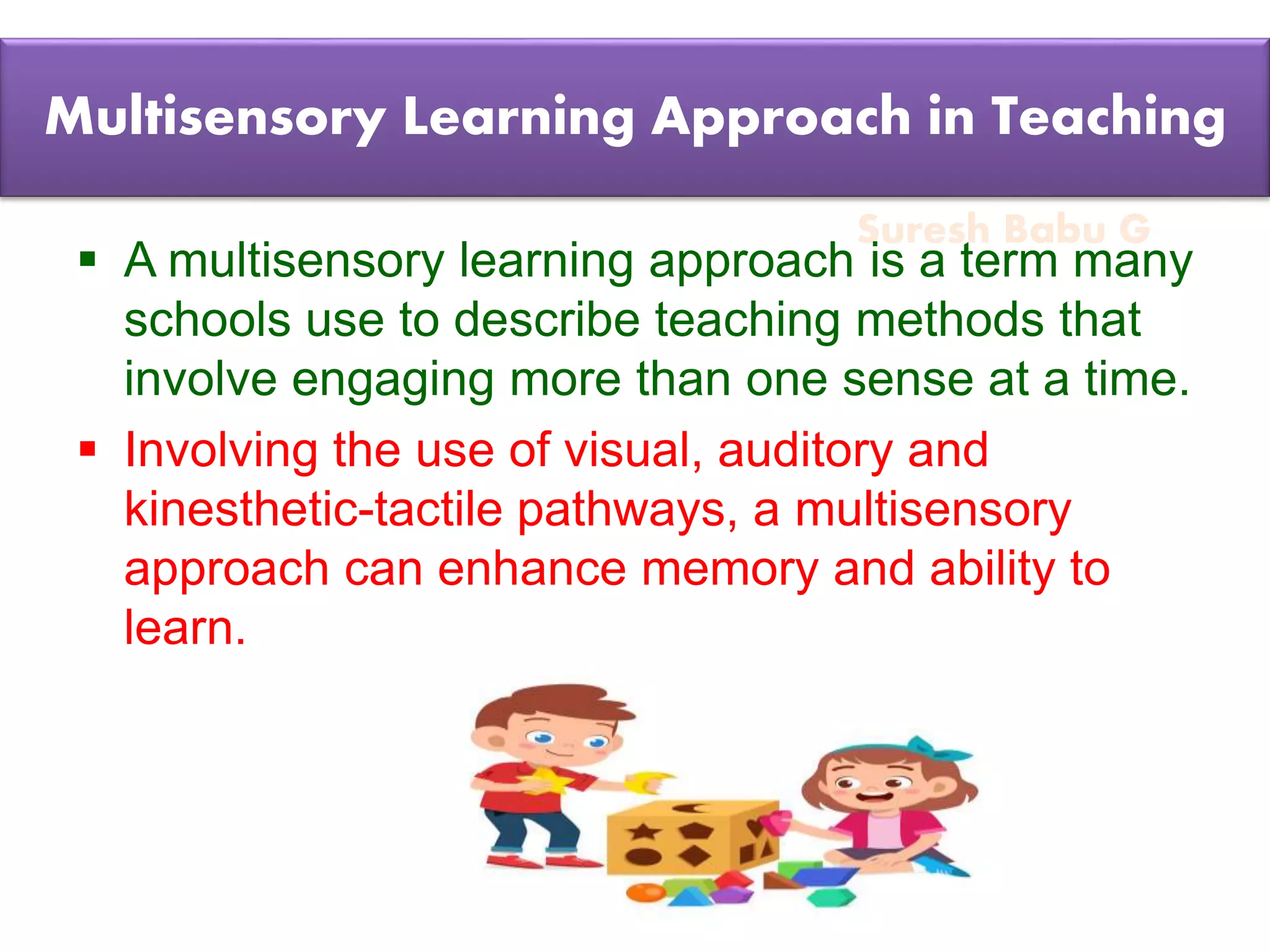
 A multisensory learning approach is a term many
schools use to describe teaching methods that
involve engaging more than one sense at a time.
 Involving the use of visual, auditory and
kinesthetic-tactile pathways, a multisensory
approach can enhance memory and ability to
learn.
Suresh Babu G
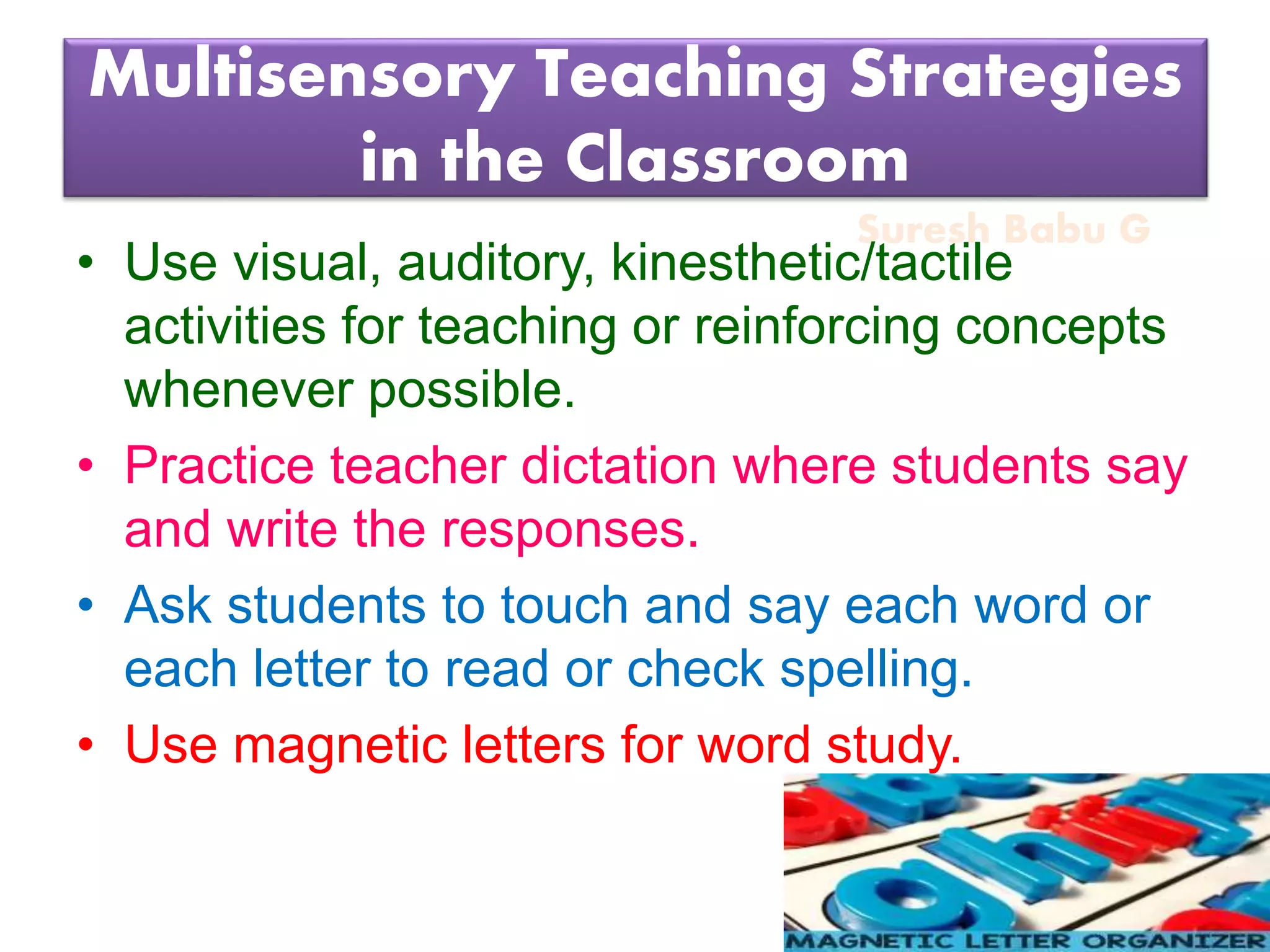
Multisensory Teaching Strategies
in the Classroom
• Use visual, auditory, kinesthetic/tactile
activities for teaching or reinforcing concepts
whenever possible.
• Practice teacher dictation where students say
and write the responses.
• Ask students to touch and say each word or
each letter to read or check spelling.
• Use magnetic letters for word study.
Suresh Babu G
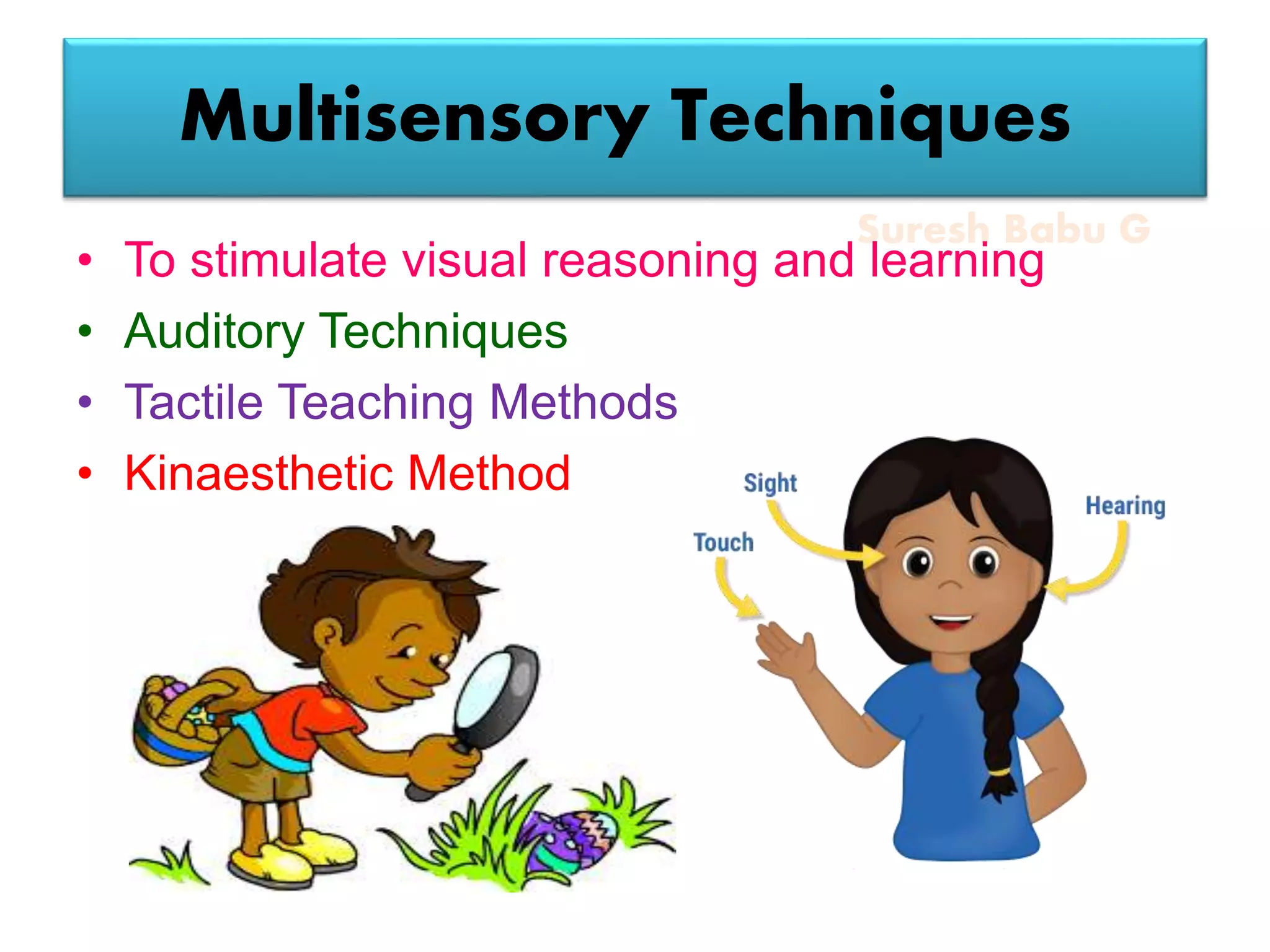
Multisensory Techniques
• To stimulate visual reasoning and learning
• Auditory Techniques
• Tactile Teaching Methods
• Kinaesthetic Method
Suresh Babu G
Key Benefits of the Multisensory
Approach
• Increased learner engagement
• Generating a greater capacity for
learning
• Encouraging a greater
knowledge transfer
• Improved attitudes towards
learning
• Greater student achievement
Suresh Babu G

Multi Sensory Approach in Education Technology

  • 1.
  • 2.
    Suresh Babu G MultiSensory Studying using different sensory organics Five sensory organics 1. Eye-to see 2. Ear-hear 3. Nose-smell 4.Tonge-taste 5.Skin-touch
  • 3.
    Suresh Babu G MultisensoryApproach • Approaching the teaching learning using 5 sensory organics • Multisensory teaching combines three learning senses – auditory , visual and kinesthetic.
  • 4.
    Suresh Babu G MultisensoryLearning Approach in Teaching  A multisensory learning approach is a term many schools use to describe teaching methods that involve engaging more than one sense at a time.  Involving the use of visual, auditory and kinesthetic-tactile pathways, a multisensory approach can enhance memory and ability to learn.
  • 5.
    Suresh Babu G MultisensoryTeaching Strategies in the Classroom • Use visual, auditory, kinesthetic/tactile activities for teaching or reinforcing concepts whenever possible. • Practice teacher dictation where students say and write the responses. • Ask students to touch and say each word or each letter to read or check spelling. • Use magnetic letters for word study.
  • 6.
    Suresh Babu G MultisensoryTechniques • To stimulate visual reasoning and learning • Auditory Techniques • Tactile Teaching Methods • Kinaesthetic Method
  • 7.
    Suresh Babu G KeyBenefits of the Multisensory Approach • Increased learner engagement • Generating a greater capacity for learning • Encouraging a greater knowledge transfer • Improved attitudes towards learning • Greater student achievement
  • 8.