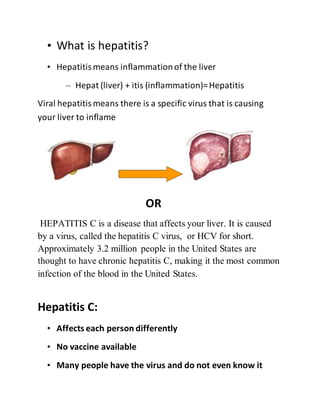

• What is hepatitis?
• Hepatitismeans inflammationof the liver
– Hepat (liver) + itis (inflammation)=Hepatitis
Viral hepatitismeans there is a specific virus that is causing
your liver to inflame
OR
HEPATITIS C is a disease that affects your liver. It is caused
by a virus, called the hepatitis C virus, or HCV for short.
Approximately 3.2 million people in the United States are
thought to have chronic hepatitis C, making it the most common
infection of the blood in the United States.
Hepatitis C:
• Affects each person differently
• No vaccine available
• Many people have the virus and do not even know it
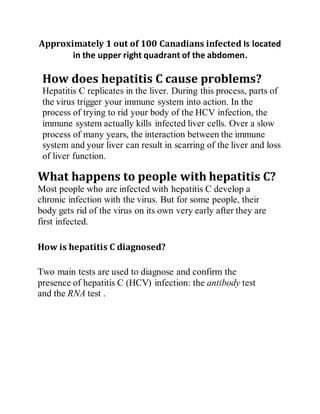
Approximately 1 out of 100 Canadians infected Is located
in the upper right quadrant of the abdomen.
How does hepatitis C cause problems?
Hepatitis C replicates in the liver. During this process, parts of
the virus trigger your immune system into action. In the
process of trying to rid your body of the HCV infection, the
immune system actually kills infected liver cells. Over a slow
process of many years, the interaction between the immune
system and your liver can result in scarring of the liver and loss
of liver function.
What happens to people with hepatitis C?
Most people who are infected with hepatitis C develop a
chronic infection with the virus. But for some people, their
body gets rid of the virus on its own very early after they are
first infected.
How is hepatitis C diagnosed?
Two main tests are used to diagnose and confirm the
presence of hepatitis C (HCV) infection: the antibody test
and the RNA test .
Tests of HCV infection
HCV Antibody
The HCV antibody test can be either positive or negative. A
positive result means that you have been infected with HCV at
some point. Once you are positive for the antibody, this test will
remain positive, even if you are successfully treated.
HCV RNA test
This is a test of the hepatitis C virus (HCV) itself. It detects the
virus in the bloodstream and can measure how many units of
virus are present. The RNA test is also known as the “viral
load.” The result is usually a number of international units.
When the viral load is “undetected”it means that there is no
measurable virus in the blood.
HCV Genotype test
• The HCV genotype is the strain of hepatitis C that you
have. The genotype is important in determining the
medications used for treatment. The most common
genotype in the U.S. is genotype 1, but worldwide there are
genotypes 1-6.
Epidemiology:
1.8% of the U.S. population
~ 4 million infected personsin the U.S.
8,000 – 10,000 deaths per year
Global prevalence – 170 million
• 5 X more prevalent than HIV
• Agent factors:
• The Hepatitis C virus(HCV) is:
• Small
• Enveloped
• ss+RNAVirus
• It is the member of the Hepacivirus genus in the family
Flaviviridae.
Signs and symptoms:
• Individuals may have one or more of the following
symptoms, while others experience no symptoms:
1. Tiredness
2. Nausea
3. Muscle or joint pain
4. Trouble sleeping
5. Loss of appetite
6. Weight loss
7. Abdominal pain
8. Itchiness
9. Depression
10.Dark urine (pee)
A few may have specific liver related symptoms initially:
10. Pale stool (poo)
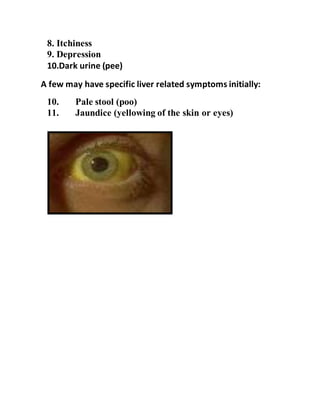
11. Jaundice (yellowing of the skin or eyes)
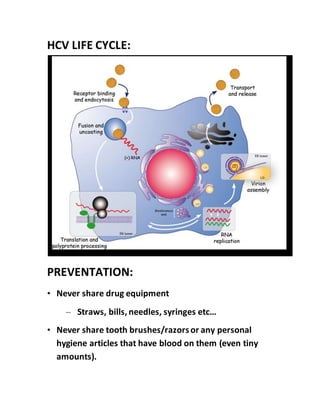
HCV LIFE CYCLE:
PREVENTATION:
• Never share drug equipment
– Straws, bills, needles, syringes etc…
• Never share tooth brushes/razorsor any personal
hygiene articles that have blood on them (even tiny
amounts).
• Practice safer sex
• Always make sure new & sterilized equipment is being
used for tattooing & piercing
• Make sure ink for tattooing is not being shared
• Do not touch dirty needles without proper
equipment or following proper
procedures.

Hepatitis C

  • 1.
    • What ishepatitis? • Hepatitismeans inflammationof the liver – Hepat (liver) + itis (inflammation)=Hepatitis Viral hepatitismeans there is a specific virus that is causing your liver to inflame OR HEPATITIS C is a disease that affects your liver. It is caused by a virus, called the hepatitis C virus, or HCV for short. Approximately 3.2 million people in the United States are thought to have chronic hepatitis C, making it the most common infection of the blood in the United States. Hepatitis C: • Affects each person differently • No vaccine available • Many people have the virus and do not even know it
  • 2.
    Approximately 1 outof 100 Canadians infected Is located in the upper right quadrant of the abdomen. How does hepatitis C cause problems? Hepatitis C replicates in the liver. During this process, parts of the virus trigger your immune system into action. In the process of trying to rid your body of the HCV infection, the immune system actually kills infected liver cells. Over a slow process of many years, the interaction between the immune system and your liver can result in scarring of the liver and loss of liver function. What happens to people with hepatitis C? Most people who are infected with hepatitis C develop a chronic infection with the virus. But for some people, their body gets rid of the virus on its own very early after they are first infected. How is hepatitis C diagnosed? Two main tests are used to diagnose and confirm the presence of hepatitis C (HCV) infection: the antibody test and the RNA test .
  • 3.
    Tests of HCVinfection HCV Antibody The HCV antibody test can be either positive or negative. A positive result means that you have been infected with HCV at some point. Once you are positive for the antibody, this test will remain positive, even if you are successfully treated. HCV RNA test This is a test of the hepatitis C virus (HCV) itself. It detects the virus in the bloodstream and can measure how many units of virus are present. The RNA test is also known as the “viral load.” The result is usually a number of international units. When the viral load is “undetected”it means that there is no measurable virus in the blood. HCV Genotype test • The HCV genotype is the strain of hepatitis C that you have. The genotype is important in determining the medications used for treatment. The most common genotype in the U.S. is genotype 1, but worldwide there are genotypes 1-6. Epidemiology: 1.8% of the U.S. population ~ 4 million infected personsin the U.S.
  • 4.
    8,000 – 10,000deaths per year Global prevalence – 170 million • 5 X more prevalent than HIV • Agent factors: • The Hepatitis C virus(HCV) is: • Small • Enveloped • ss+RNAVirus • It is the member of the Hepacivirus genus in the family Flaviviridae. Signs and symptoms: • Individuals may have one or more of the following symptoms, while others experience no symptoms: 1. Tiredness 2. Nausea 3. Muscle or joint pain 4. Trouble sleeping 5. Loss of appetite 6. Weight loss 7. Abdominal pain
  • 5.
    8. Itchiness 9. Depression 10.Darkurine (pee) A few may have specific liver related symptoms initially: 10. Pale stool (poo) 11. Jaundice (yellowing of the skin or eyes)
  • 6.
    HCV LIFE CYCLE: PREVENTATION: •Never share drug equipment – Straws, bills, needles, syringes etc… • Never share tooth brushes/razorsor any personal hygiene articles that have blood on them (even tiny amounts).
  • 7.
    • Practice safersex • Always make sure new & sterilized equipment is being used for tattooing & piercing • Make sure ink for tattooing is not being shared • Do not touch dirty needles without proper equipment or following proper procedures.