- Dr Rahul Arya
Assistant Professor
Department of Medicine
VIRAL HEPATITIS
 Viral hepatitis is a systemic disease with primary inflammation of the liver by
anyone of a heterogeneous group of hepatotropic viruses.
 Causes of viral hepatitis
 Common-
 Hepatitis A
 Hepatitis B ± Hepatitis D
 Hepatitis C
 Hepatitis E
 Less common
 Cytomegalovirus
 Epstein Barr Virus
 Rare
 Herpes Simplex
 Yellow fever
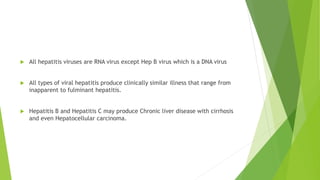
 All hepatitis viruses are RNA virus except Hep B virus which is a DNA virus
 All types of viral hepatitis produce clinically similar illness that range from
inapparent to fulminant hepatitis.
 Hepatitis B and Hepatitis C may produce Chronic liver disease with cirrhosis
and even Hepatocellular carcinoma.
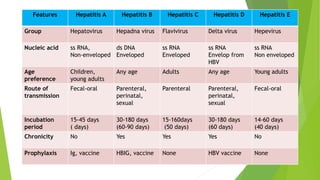
Features Hepatitis A Hepatitis B Hepatitis C Hepatitis D Hepatitis E
Group Hepatovirus Hepadna virus Flavivirus Delta virus Hepevirus
Nucleic acid ss RNA,
Non-enveloped
ds DNA
Enveloped
ss RNA
Enveloped
ss RNA
Envelop from
HBV
ss RNA
Non enveloped
Age
preference
Children,
young adults
Any age Adults Any age Young adults
Route of
transmission
Fecal-oral Parenteral,
perinatal,
sexual
Parenteral Parenteral,
perinatal,
sexual
Fecal-oral
Incubation
period
15-45 days
( days)
30-180 days
(60-90 days)
15-160days
(50 days)
30-180 days
(60 days)
14-60 days
(40 days)
Chronicity No Yes Yes Yes No
Prophylaxis Ig, vaccine HBIG, vaccine None HBV vaccine None
Clinical features of acute viral hepatitis
 Symptoms and Sign:-
1) Prodromal phase - symptoms are constitutional- anorexia, nausea and
vomiting, fatigue, malaise, arthralgias, myalgias, headache, photophobia,
pharyngitis, coygh and coryza.
 These may precede onset of jaundice by 1-2 weeks.
 Low grade fever
 Dark colored urine and clay colored stools.
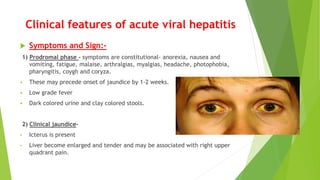
2) Clinical jaundice-
• Icterus is present
• Liver become enlarged and tender and may be associated with right upper
quadrant pain.
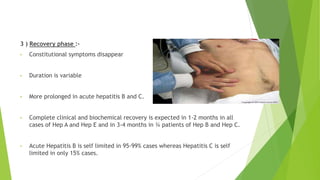
3 ) Recovery phase :-
• Constitutional symptoms disappear
• Duration is variable
• More prolonged in acute hepatitis B and C.
• Complete clinical and biochemical recovery is expected in 1-2 months in all
cases of Hep A and Hep E and in 3-4 months in ¾ patients of Hep B and Hep C.
• Acute Hepatitis B is self limited in 95-99% cases whereas Hepatitis C is self
limited in only 15% cases.
 Laboratory Features:-
 AST and ALT are elevated and precedes rise in bilirubin levels.
 Peak levels 400-4000 IU.
 Serum bilirubin may continue to rise despite falling aminotransferases levels.
 Total bilirubin is equally divided between conjugated and unconjugated
fractions.
 ALP may be normal or slightly elevated.
 Neutopenia, lymphopenia followed by relative lymphocytosis.
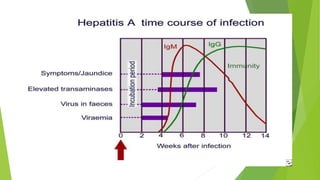
HEPATITIS A
 Hepatitis A (formerly known as ―infectious hepatitis or epidemic jaundice) is
an acute infectious disease caused by Hepatitis A virus (HAV).
 The disease is heralded by non-specific symptoms such as fever, chills,
headache, fatigue, generalized weakness and aches and pains, followed by
anorexia, nausea, vomiting, dark urine and jaundice.
 The disease is benign with complete recovery in several weeks.
 Agent factors
a) AGENT: The causative agent, the hepatitis A virus is nonenveloped 27 nm
heat, acid and ether resistant RNA virus of genus enterovirus of the
Picornaviridae family. It multiplies only in hepatocytes.
b) RESERVOIR OF INFECTION: The human cases are the only reservoir of
infection.
c) PERIOD OF INFECTIVITY : The risk of transmitting HAV is greatest from 2
weeks before to 1 week after the onset of jaundice.
d) INFECTIVE MATERIAL : Mainly human’s faeces.
e) VIRUS EXCRETION: HAV is excreted in the faeces for about 2 weeks before
onset of jaundice and for up to 2 weeks thereafter.
 Host factors
a) AGE: Infection with HAV is more frequent among children than in adults.
b) SEX: Both sexes are equally susceptible.
c) IMMUNITY: Immunity after attack probably lasts for life.
 Environmental factors
 Cases may occur throughout the year.
 In India the disease tends to be associated with periods of heavy rainfall.
 Incubation period
 10-50 days (usually 4 weeks).
 Mode of Transmission
FAECAL-ORAL ROUTE: Major route of transmission.
-By contaminated water, food or milk.
 DIAGNOSIS
 IgM anti HAV during acute illness- persist for 3 months.
 IgG anti HAV- during convalescence period, remains detectable indefinitely.
 Prevention:-
-hygienic measures and sanitation
-passive immunization Human Immunoglobulin given before exposure to virus or
early during the incubation period, will prevent or attenuate a clinical illness.
-active immunization
 Inactivated vaccines
-Immunization schedule 0,6-12 months.
 Treatment:
-no specific treatment
-dietary food and long rest.
HEPATITIS B
 Hepatitis B (formerly known as ―serum hepatitis) is an acute systemic
infection with major pathology in the liver, caused by hepatitis B virus.
 Transmitted by the Parenteral route, perinatal and sexual route.
 The acute illness causes liver inflammation, vomiting, jaundice, and, rarely,
death.
 Chronic hepatitis B may eventually cause cirrhosis and liver cancer.
 Hepatitis B is endemic throughout the world, especially in tropical &
developing countries.
 Agent factor-
 Hepatitis b virus is a double stranded DNA virus which belongs to family
Hepadna virus also known as dane particle.
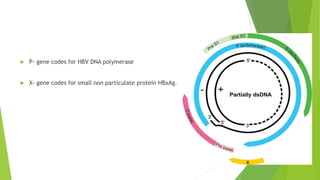
 HBV has partially double strand and partially single strand genomes.
 It contains own endogenous DNA polymerase.
 It contains 4 overlapping genes- S, C, P and X.
 It replicates by reverse transcription of minus strand DNA from pregenomic
RNA intermediate; then plus strand DNA is transcribed from minus strand DNA
tempelate by DNA dependent DNA polymerase.
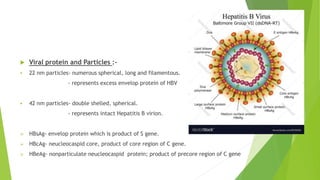
 Viral protein and Particles :-
 22 nm particles- numerous spherical, long and filamentous.
- represents excess envelop protein of HBV
 42 nm particles- double shelled, spherical.
- represents intact Hepatitis B virion.
 HBsAg- envelop protein which is product of S gene.
 HBcAg- neucleocaspid core, product of core region of C gene.
 HBeAg- nonparticulate neucleocaspid protein; product of precore region of C gene
 P- gene codes for HBV DNA polymerase
 X- gene codes for small non particulate protein HBxAg.
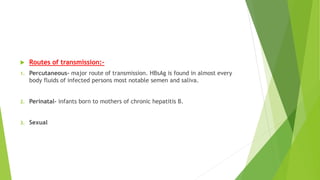
 Routes of transmission:-
1. Percutaneous- major route of transmission. HBsAg is found in almost every
body fluids of infected persons most notable semen and saliva.
2. Perinatal- infants born to mothers of chronic hepatitis B.
3. Sexual
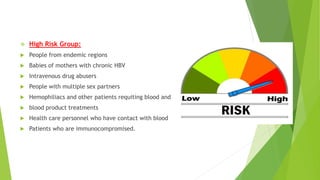
 High Risk Group:
 People from endemic regions
 Babies of mothers with chronic HBV
 Intravenous drug abusers
 People with multiple sex partners
 Hemophiliacs and other patients requiting blood and
 blood product treatments
 Health care personnel who have contact with blood
 Patients who are immunocompromised.
 The risk of progression to chronic liver disease depends on the source and
timing of infection.
 Vertical transmission from mother to child in perinatal period carries the
highest risk of chronic infection.
 Chronic hepatitis can lead to cirrhosis or HCC usually after decades of
infection.
Investigations
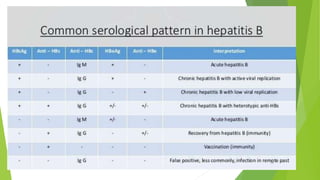
 Serology
HBV contains several antigens to which infected persons can make immune
responses.
1) Hepatitis B surface antigen (HBsAg)-
• First detectable virological marker appears within 1-12 weeks
• Negative test make HBV infection very unlikely.
• Appears late in incubation period but before the prodormal phase of acute
hepatitis.
• Usually last for 3-4 weeks and can persist for upto 5 months
• Persistence of HBsAg for longer than 6 months indicates chronic infection.
• Antibody to HBsAg (anti- HBs) appear after 3-6 months and persists for many
years.
 Anti HBs implies either a previous infection, in which case anti-HBc is usually
also present, or previous vaccination, in which case anti-HBc is not present.
2) Hepatitis B core antigen (HBcAg)-
• HBcAg is not found in blood but antibody to it (anti HBc) appears early which
reaches a high titre, subsides gradually but then persists.
• Anti-HBc is demonstrated in serum within 1-2 weeks after appearance of
HBsAg and preceding detectable levels of anti HBs by weeks to months.
• Hence during this window period anti HBc may represent the only serologic
evidence of current or recent infection.
• Anti-HBc is initially of IgM type, with IgG antibody appearing later.
3) Hepatitis B e antigen (HBeAg)-
• It is an indicator of viral replication
• In acute hepatitis B it may appear only transiently followed by appearance of
antibody.
• HBeAg reflects active replication of virus in liver.
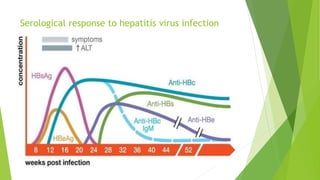
Serological response to hepatitis virus infection
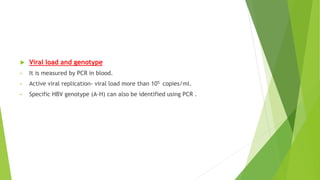
 Viral load and genotype
• It is measured by PCR in blood.
• Active viral replication- viral load more than 105 copies/ml.
• Specific HBV genotype (A-H) can also be identified using PCR .
Management of acute Hepatitis B
 Supportive treatment.
 Full recovery occurs in 90-95% of adults following acute HBV infection
 Antiviral therapy is usually not required
 Antiviral therapy with nucleocaspid analogue (entecavir or Tenofovir) may be
given in severe Hepatitis B.
 Fulminant liver failure due to acute hepatitis B occurs in less than 1% of
cases.
 5-10% of cases develop chronic hepatitis B infection.
Chronic Hepatitis B
 Infection at birth  clinically silent acute infection but 90% chance of chronic
infection.
 Infection in young adulthood in immunocomptent person clinically apparent acute
hepatitis but risk of chronicity of only approximately 1%.
 chronic HBV infection can occur in the presence or absence of serum hepatitis B e
antigen (HBeAg).
A) HBeAg-reactive chronic hepatitis B-
1) Replicative phase-
2) Non replicative phase
B) HBeAg negative chronic hepatitis B
 Clinical Features
 Fatigue
 Persistent or intermittent jaundice
 Anorexia, malaise
 Complications of cirrhosis- ascites, edema, bleeding gastroesophageal varices,
hepatic encephalopathy, coagulopathy, hypersplenism
Management of chronic hepatitis B
 Indication for treatment:-
 High viral load in the presence of active hepatitis as evidenced by elevated
serum transaminases and/or histological evidence of inflammation and
fibrosis.
 Goal of treatment:-
 HBeAg seroconversion
 Reduction in HBV DNA
 Normalisation of LFT
 Oral antiviral agents are more effective in reducing viral loads in HBeAg
negative chronic hepatitis B than in HBeAg positive chronic hepatitis B.
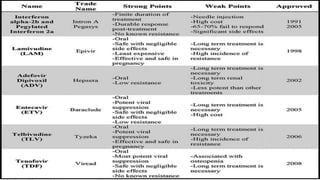
 Seven drugs are aproved to treat hepatitis B
 Oral agents- Lamivudine, adefovir, entecavir, dipivoxil, telbivudine and
tenofovir
 Injectables- interferon alpha and Pegylated interferon alpha.
 Prevention
 By recombinant Hepatitis B vaccine containing HBsAg which is capable of
producing active immunization in 95% of individuals.
 The vaccine should be offered to at risk group
• Parenteral drug users
• Homosexual men
• Close contact of infected individuals
• Patient on chronic hemodialysis
• Patient with chronic liver disease
• Medical, nursing and laboratory personnel
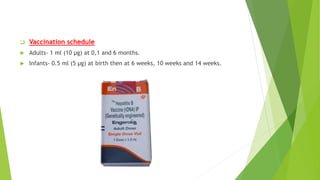
 Vaccination schedule
 Adults- 1 ml (10 µg) at 0,1 and 6 months.
 Infants- 0.5 ml (5 µg) at birth then at 6 weeks, 10 weeks and 14 weeks.
Hepatitis C
 Hepatitis C is an infectious disease affecting primarily the liver, caused by the
hepatitis C virus (HCV).
 Hepatitis C is the cause of what used to be known as non-A, non-B hepatitis.
 Acute symptomatic infection is rare.
 Chronic infection can lead to scarring of the liver and ultimately to cirrhosis,
which is generally apparent after many years.
 80% of exposed individual becomes chronically infected.
 Usually identified in asymptomatic individuals screened because of risk factor
or have incidentally been found to have abnormal liver tests.
 Risk factor for acquisition of chronic hepatitis C infection are:-
1. Intravenous drug abusers
2. Unscreened blood products
3. Vertical transmission
4. Needlestick injury
5. Iatrogenic parenteral transmission
 Agent factor
 Hepatitis C virus is a single strand, positive sense, RNA virus which belongs to
genus Hepacivirus of family Flaviviridae.
 It is surrounded by an envelope, carrying glycoprotein spikes.
 Incubation period- 15-160 days.
 There are 6 distinct major genotypes and >50 subtypes within genotypes.
( quasispecies).
 HCV infection do not induce lasting immunity against reinfection.
 Modes of Transmission
 Percutaneous route is the most common route
 During the 1970s, the likelihood of acquiring hepatitis after transfusion of
voluntarily donated, HBsAg-screened blood was ~10% per patient.
 Based on serologic exclusion of hepatitis A and B, these cases were classified
as “non-A, non-B” hepatitis.
 During the 1980s, voluntary self-exclusion of blood donors with risk factors
for AIDS and then the introduction of donor screening for anti-HIV reduced
further the likelihood of transfusion-associated hepatitis to <5%.
 During the late 1980s and early 1990s, the introduction first-generation
immunoassays for anti-HCV reduced the frequency of transfusion-associated
hepatitis even further.
 The introduction of second-generation anti-HCV assays reduced the frequency
of transfusion-associated hepatitis C to almost imperceptible levels—1 in
100,000
 Third-generation anti-HCV assays and of automated PCR testing of donated
blood for HCV RNA, which has resulted in a reduction in the risk of
transfusion-associated HCV infection to 1 in 2.3 million transfusions.
 hepatitis C can be also transmitted by other percutaneous routes, such as
injection drug use, occupational exposure to blood.
 Sexual and Perinatal transmission is rare.
 Breastfeeding does not increase the risk of HCV infection.
 Chances of HCV infection after accidental needle puncture is ~3%.
Diagnosis
 Anti- HCV :-
- used to diagnose Hepatitis C infection.
- It takes atleast 4 weeks after HCV infection for appearance of anti-HCV.
- It remains detectable after recovery and during chronic infection.
 HCV RNA :-
- Most sensitive test for HCV infection.
- It is “gold standard” in establishing a diagnosis of hepatitis C.
- HCV RNA can be detected even before acute elevation of aminotransferase
activity and before the appearance of anti-HCV in patients with acute
hepatitis C.
Prognosis
 After acute HCV infection, the likelihood of remaining chronically infected
approaches 85–90%.
 cirrhosis may develop in as many as 20% within 10–20 years of acute illness.
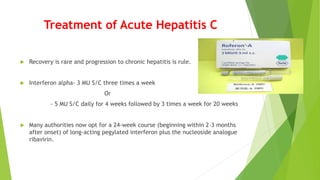
Treatment of Acute Hepatitis C
 Recovery is rare and progression to chronic hepatitis is rule.
 Interferon alpha- 3 MU S/C three times a week

Or
- 5 MU S/C daily for 4 weeks followed by 3 times a week for 20 weeks
 Many authorities now opt for a 24-week course (beginning within 2–3 months
after onset) of long-acting pegylated interferon plus the nucleoside analogue
ribavirin.
Treatment of Chronic Hepatitis C
 Indication for therapy:-
 Detectable HCV RNA
 Moderate or severe hepatitis on liver biopsy
 Contraindications for antiviral therapy:-
 Decompensated cirrhosis
 Pregnancy ( ribavarin is teratogenic)
 Contraindications to use of antiviral medications.
 Protease inhibitors are not recommended in children less than 18 years.
 Duration of therapy depends on the genotype  24 to 48 weeks
 Regimens
 Pegylated interferon + Ribavarin + Protease inhibitor ( Boceprevir/ Telaprevir)
Prevention
 Only General Prophylaxis, such as blood, tissue, organ screening, is possible.
 No specific active or passive immunizing agent is available.
Hepatitis D
 Hepatitis D is caused by hepatitis D virus (HDV) which belongs to genus
deltavirus.
 HDV is considered to be a defective RNA virus because it can propagate only
in the presence of the hepatitis B virus (HBV).
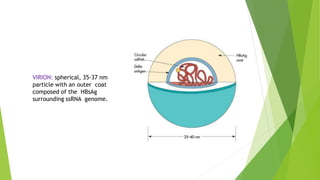
VIRION: spherical, 35-37 nm
particle with an outer coat
composed of the HBsAg
surrounding ssRNA genome.
 Incubation Period
15-160 days
 Mode of Transmission
The primary route of Transmission are believed to be
similar to those of HBV, though HDV does not appear to
be sexually transmitted disease.
Clinical Features
 Infection is dependent on HBV replication, as HBV provides an
HBsAg envelop for HDV.
 Two types of infection are recognisesd, coinfection and superinfection.
In Coinfection, HDV and HBV are transmitted together at the same
time.
In Superinfection, HDV infection occurs in a person already harbouring HBV.
Diagnosis
 Anti-HDV appear 30-40 days after appearance of symptoms
 During acute HDV infection, anti-HDV of the IgM class
predominates.
 In chronic HDV infection both IgM and IgG anti-HDV can be
detected.
 HDV RNA can be detected in serum during virus replication.
 HBV-HDV Coinfection
Pre or post exposure prophylaxis to prevent HBV
infection. Screening of blood donor for HBsAg.
 HBV-HDV Superinfection
Education to reduce risk behaviors among persons with
chronic HBV infection.
Prevention
Hepatitis E
 Previously labeled epidemic or enterically transmitted non-A, non-B
hepatitis.
 HEV is an enterically transmitted virus that causes clinically apparent
hepatitis primarily in India, Asia, Africa, and Central America.
 Agent factor:-
 HEV is spherical nonenveloped virus, 27-nm to 34 nm in diameter, with
a ssRNA genome.
 The Virus is very labile.
 It has been classified in the genus Hepevirus under the family
Hepeviridae.
 The virus has been detected in stool, bile, and liver and is excreted in the
stool during the late incubation period.
 Mode of Transmission
 mainly by the fecal-oral route due to fecal contamination of water supplies or
food
 person-to-person transmission is uncommon.
 Diagnosis
 IgM anti-HEV in acute phase
 IgG anti-HEV after 3 months
 Prognosis:-
 Clinical and biochemical recovery occur in 1-2 months.
 It do not causes chronic infection in immunocompetent host.
 In 1-2 % of cases fatal fulminant hepatitis may occur
 Upto 20% of cases of hepatitis in pregnant women may develop into fulminant
hepatitis.
Treatment
 Symptomatic

 Universal precautions
 Hygenic precautions and hand washing
Prevention
 A recombinant genotype 1 vaccine has been licensed for use in China since
2012.
 Three doses of the vaccine administered at 0, 1 and 6 months are
recommended for use in individuals more than 16 years of age.
Thank You

Viral hepatitis

  • 1.
    - Dr RahulArya Assistant Professor Department of Medicine
  • 2.
    VIRAL HEPATITIS  Viralhepatitis is a systemic disease with primary inflammation of the liver by anyone of a heterogeneous group of hepatotropic viruses.  Causes of viral hepatitis  Common-  Hepatitis A  Hepatitis B ± Hepatitis D  Hepatitis C  Hepatitis E
  • 3.
     Less common Cytomegalovirus  Epstein Barr Virus  Rare  Herpes Simplex  Yellow fever
  • 4.
     All hepatitisviruses are RNA virus except Hep B virus which is a DNA virus  All types of viral hepatitis produce clinically similar illness that range from inapparent to fulminant hepatitis.  Hepatitis B and Hepatitis C may produce Chronic liver disease with cirrhosis and even Hepatocellular carcinoma.
  • 5.
    Features Hepatitis AHepatitis B Hepatitis C Hepatitis D Hepatitis E Group Hepatovirus Hepadna virus Flavivirus Delta virus Hepevirus Nucleic acid ss RNA, Non-enveloped ds DNA Enveloped ss RNA Enveloped ss RNA Envelop from HBV ss RNA Non enveloped Age preference Children, young adults Any age Adults Any age Young adults Route of transmission Fecal-oral Parenteral, perinatal, sexual Parenteral Parenteral, perinatal, sexual Fecal-oral Incubation period 15-45 days ( days) 30-180 days (60-90 days) 15-160days (50 days) 30-180 days (60 days) 14-60 days (40 days) Chronicity No Yes Yes Yes No Prophylaxis Ig, vaccine HBIG, vaccine None HBV vaccine None
  • 6.
    Clinical features ofacute viral hepatitis  Symptoms and Sign:- 1) Prodromal phase - symptoms are constitutional- anorexia, nausea and vomiting, fatigue, malaise, arthralgias, myalgias, headache, photophobia, pharyngitis, coygh and coryza.  These may precede onset of jaundice by 1-2 weeks.  Low grade fever  Dark colored urine and clay colored stools. 2) Clinical jaundice- • Icterus is present • Liver become enlarged and tender and may be associated with right upper quadrant pain.
  • 7.
    3 ) Recoveryphase :- • Constitutional symptoms disappear • Duration is variable • More prolonged in acute hepatitis B and C. • Complete clinical and biochemical recovery is expected in 1-2 months in all cases of Hep A and Hep E and in 3-4 months in ¾ patients of Hep B and Hep C. • Acute Hepatitis B is self limited in 95-99% cases whereas Hepatitis C is self limited in only 15% cases.
  • 8.
     Laboratory Features:- AST and ALT are elevated and precedes rise in bilirubin levels.  Peak levels 400-4000 IU.  Serum bilirubin may continue to rise despite falling aminotransferases levels.  Total bilirubin is equally divided between conjugated and unconjugated fractions.  ALP may be normal or slightly elevated.  Neutopenia, lymphopenia followed by relative lymphocytosis.
  • 9.
  • 10.
     Hepatitis A(formerly known as ―infectious hepatitis or epidemic jaundice) is an acute infectious disease caused by Hepatitis A virus (HAV).  The disease is heralded by non-specific symptoms such as fever, chills, headache, fatigue, generalized weakness and aches and pains, followed by anorexia, nausea, vomiting, dark urine and jaundice.  The disease is benign with complete recovery in several weeks.
  • 11.
     Agent factors a)AGENT: The causative agent, the hepatitis A virus is nonenveloped 27 nm heat, acid and ether resistant RNA virus of genus enterovirus of the Picornaviridae family. It multiplies only in hepatocytes. b) RESERVOIR OF INFECTION: The human cases are the only reservoir of infection. c) PERIOD OF INFECTIVITY : The risk of transmitting HAV is greatest from 2 weeks before to 1 week after the onset of jaundice. d) INFECTIVE MATERIAL : Mainly human’s faeces. e) VIRUS EXCRETION: HAV is excreted in the faeces for about 2 weeks before onset of jaundice and for up to 2 weeks thereafter.
  • 12.
     Host factors a)AGE: Infection with HAV is more frequent among children than in adults. b) SEX: Both sexes are equally susceptible. c) IMMUNITY: Immunity after attack probably lasts for life.  Environmental factors  Cases may occur throughout the year.  In India the disease tends to be associated with periods of heavy rainfall.
  • 13.
     Incubation period 10-50 days (usually 4 weeks).  Mode of Transmission FAECAL-ORAL ROUTE: Major route of transmission. -By contaminated water, food or milk.
  • 14.
     DIAGNOSIS  IgManti HAV during acute illness- persist for 3 months.  IgG anti HAV- during convalescence period, remains detectable indefinitely.
  • 16.
     Prevention:- -hygienic measuresand sanitation -passive immunization Human Immunoglobulin given before exposure to virus or early during the incubation period, will prevent or attenuate a clinical illness. -active immunization  Inactivated vaccines -Immunization schedule 0,6-12 months.
  • 17.
     Treatment: -no specifictreatment -dietary food and long rest.
  • 18.
  • 19.
     Hepatitis B(formerly known as ―serum hepatitis) is an acute systemic infection with major pathology in the liver, caused by hepatitis B virus.  Transmitted by the Parenteral route, perinatal and sexual route.  The acute illness causes liver inflammation, vomiting, jaundice, and, rarely, death.  Chronic hepatitis B may eventually cause cirrhosis and liver cancer.  Hepatitis B is endemic throughout the world, especially in tropical & developing countries.
  • 20.
     Agent factor- Hepatitis b virus is a double stranded DNA virus which belongs to family Hepadna virus also known as dane particle.  HBV has partially double strand and partially single strand genomes.  It contains own endogenous DNA polymerase.  It contains 4 overlapping genes- S, C, P and X.  It replicates by reverse transcription of minus strand DNA from pregenomic RNA intermediate; then plus strand DNA is transcribed from minus strand DNA tempelate by DNA dependent DNA polymerase.
  • 21.
     Viral proteinand Particles :-  22 nm particles- numerous spherical, long and filamentous. - represents excess envelop protein of HBV  42 nm particles- double shelled, spherical. - represents intact Hepatitis B virion.  HBsAg- envelop protein which is product of S gene.  HBcAg- neucleocaspid core, product of core region of C gene.  HBeAg- nonparticulate neucleocaspid protein; product of precore region of C gene
  • 22.
     P- genecodes for HBV DNA polymerase  X- gene codes for small non particulate protein HBxAg.
  • 23.
     Routes oftransmission:- 1. Percutaneous- major route of transmission. HBsAg is found in almost every body fluids of infected persons most notable semen and saliva. 2. Perinatal- infants born to mothers of chronic hepatitis B. 3. Sexual
  • 24.
     High RiskGroup:  People from endemic regions  Babies of mothers with chronic HBV  Intravenous drug abusers  People with multiple sex partners  Hemophiliacs and other patients requiting blood and  blood product treatments  Health care personnel who have contact with blood  Patients who are immunocompromised.
  • 25.
     The riskof progression to chronic liver disease depends on the source and timing of infection.  Vertical transmission from mother to child in perinatal period carries the highest risk of chronic infection.  Chronic hepatitis can lead to cirrhosis or HCC usually after decades of infection.
  • 26.
    Investigations  Serology HBV containsseveral antigens to which infected persons can make immune responses. 1) Hepatitis B surface antigen (HBsAg)- • First detectable virological marker appears within 1-12 weeks • Negative test make HBV infection very unlikely. • Appears late in incubation period but before the prodormal phase of acute hepatitis. • Usually last for 3-4 weeks and can persist for upto 5 months • Persistence of HBsAg for longer than 6 months indicates chronic infection. • Antibody to HBsAg (anti- HBs) appear after 3-6 months and persists for many years.
  • 27.
     Anti HBsimplies either a previous infection, in which case anti-HBc is usually also present, or previous vaccination, in which case anti-HBc is not present. 2) Hepatitis B core antigen (HBcAg)- • HBcAg is not found in blood but antibody to it (anti HBc) appears early which reaches a high titre, subsides gradually but then persists. • Anti-HBc is demonstrated in serum within 1-2 weeks after appearance of HBsAg and preceding detectable levels of anti HBs by weeks to months. • Hence during this window period anti HBc may represent the only serologic evidence of current or recent infection. • Anti-HBc is initially of IgM type, with IgG antibody appearing later.
  • 28.
    3) Hepatitis Be antigen (HBeAg)- • It is an indicator of viral replication • In acute hepatitis B it may appear only transiently followed by appearance of antibody. • HBeAg reflects active replication of virus in liver.
  • 29.
    Serological response tohepatitis virus infection
  • 31.
     Viral loadand genotype • It is measured by PCR in blood. • Active viral replication- viral load more than 105 copies/ml. • Specific HBV genotype (A-H) can also be identified using PCR .
  • 32.
    Management of acuteHepatitis B  Supportive treatment.  Full recovery occurs in 90-95% of adults following acute HBV infection  Antiviral therapy is usually not required  Antiviral therapy with nucleocaspid analogue (entecavir or Tenofovir) may be given in severe Hepatitis B.  Fulminant liver failure due to acute hepatitis B occurs in less than 1% of cases.  5-10% of cases develop chronic hepatitis B infection.
  • 33.
    Chronic Hepatitis B Infection at birth  clinically silent acute infection but 90% chance of chronic infection.  Infection in young adulthood in immunocomptent person clinically apparent acute hepatitis but risk of chronicity of only approximately 1%.  chronic HBV infection can occur in the presence or absence of serum hepatitis B e antigen (HBeAg). A) HBeAg-reactive chronic hepatitis B- 1) Replicative phase- 2) Non replicative phase B) HBeAg negative chronic hepatitis B
  • 34.
     Clinical Features Fatigue  Persistent or intermittent jaundice  Anorexia, malaise  Complications of cirrhosis- ascites, edema, bleeding gastroesophageal varices, hepatic encephalopathy, coagulopathy, hypersplenism
  • 35.
    Management of chronichepatitis B  Indication for treatment:-  High viral load in the presence of active hepatitis as evidenced by elevated serum transaminases and/or histological evidence of inflammation and fibrosis.  Goal of treatment:-  HBeAg seroconversion  Reduction in HBV DNA  Normalisation of LFT  Oral antiviral agents are more effective in reducing viral loads in HBeAg negative chronic hepatitis B than in HBeAg positive chronic hepatitis B.
  • 36.
     Seven drugsare aproved to treat hepatitis B  Oral agents- Lamivudine, adefovir, entecavir, dipivoxil, telbivudine and tenofovir  Injectables- interferon alpha and Pegylated interferon alpha.
  • 38.
     Prevention  Byrecombinant Hepatitis B vaccine containing HBsAg which is capable of producing active immunization in 95% of individuals.  The vaccine should be offered to at risk group • Parenteral drug users • Homosexual men • Close contact of infected individuals • Patient on chronic hemodialysis • Patient with chronic liver disease • Medical, nursing and laboratory personnel
  • 39.
     Vaccination schedule Adults- 1 ml (10 µg) at 0,1 and 6 months.  Infants- 0.5 ml (5 µg) at birth then at 6 weeks, 10 weeks and 14 weeks.
  • 40.
  • 41.
     Hepatitis Cis an infectious disease affecting primarily the liver, caused by the hepatitis C virus (HCV).  Hepatitis C is the cause of what used to be known as non-A, non-B hepatitis.  Acute symptomatic infection is rare.  Chronic infection can lead to scarring of the liver and ultimately to cirrhosis, which is generally apparent after many years.  80% of exposed individual becomes chronically infected.  Usually identified in asymptomatic individuals screened because of risk factor or have incidentally been found to have abnormal liver tests.
  • 42.
     Risk factorfor acquisition of chronic hepatitis C infection are:- 1. Intravenous drug abusers 2. Unscreened blood products 3. Vertical transmission 4. Needlestick injury 5. Iatrogenic parenteral transmission
  • 43.
     Agent factor Hepatitis C virus is a single strand, positive sense, RNA virus which belongs to genus Hepacivirus of family Flaviviridae.  It is surrounded by an envelope, carrying glycoprotein spikes.  Incubation period- 15-160 days.  There are 6 distinct major genotypes and >50 subtypes within genotypes. ( quasispecies).  HCV infection do not induce lasting immunity against reinfection.
  • 44.
     Modes ofTransmission  Percutaneous route is the most common route  During the 1970s, the likelihood of acquiring hepatitis after transfusion of voluntarily donated, HBsAg-screened blood was ~10% per patient.  Based on serologic exclusion of hepatitis A and B, these cases were classified as “non-A, non-B” hepatitis.
  • 45.
     During the1980s, voluntary self-exclusion of blood donors with risk factors for AIDS and then the introduction of donor screening for anti-HIV reduced further the likelihood of transfusion-associated hepatitis to <5%.  During the late 1980s and early 1990s, the introduction first-generation immunoassays for anti-HCV reduced the frequency of transfusion-associated hepatitis even further.  The introduction of second-generation anti-HCV assays reduced the frequency of transfusion-associated hepatitis C to almost imperceptible levels—1 in 100,000
  • 46.
     Third-generation anti-HCVassays and of automated PCR testing of donated blood for HCV RNA, which has resulted in a reduction in the risk of transfusion-associated HCV infection to 1 in 2.3 million transfusions.  hepatitis C can be also transmitted by other percutaneous routes, such as injection drug use, occupational exposure to blood.  Sexual and Perinatal transmission is rare.  Breastfeeding does not increase the risk of HCV infection.  Chances of HCV infection after accidental needle puncture is ~3%.
  • 48.
    Diagnosis  Anti- HCV:- - used to diagnose Hepatitis C infection. - It takes atleast 4 weeks after HCV infection for appearance of anti-HCV. - It remains detectable after recovery and during chronic infection.  HCV RNA :- - Most sensitive test for HCV infection. - It is “gold standard” in establishing a diagnosis of hepatitis C. - HCV RNA can be detected even before acute elevation of aminotransferase activity and before the appearance of anti-HCV in patients with acute hepatitis C.
  • 49.
    Prognosis  After acuteHCV infection, the likelihood of remaining chronically infected approaches 85–90%.  cirrhosis may develop in as many as 20% within 10–20 years of acute illness.
  • 50.
    Treatment of AcuteHepatitis C  Recovery is rare and progression to chronic hepatitis is rule.  Interferon alpha- 3 MU S/C three times a week Or - 5 MU S/C daily for 4 weeks followed by 3 times a week for 20 weeks  Many authorities now opt for a 24-week course (beginning within 2–3 months after onset) of long-acting pegylated interferon plus the nucleoside analogue ribavirin.
  • 51.
    Treatment of ChronicHepatitis C  Indication for therapy:-  Detectable HCV RNA  Moderate or severe hepatitis on liver biopsy  Contraindications for antiviral therapy:-  Decompensated cirrhosis  Pregnancy ( ribavarin is teratogenic)  Contraindications to use of antiviral medications.  Protease inhibitors are not recommended in children less than 18 years.
  • 52.
     Duration oftherapy depends on the genotype  24 to 48 weeks  Regimens  Pegylated interferon + Ribavarin + Protease inhibitor ( Boceprevir/ Telaprevir)
  • 53.
    Prevention  Only GeneralProphylaxis, such as blood, tissue, organ screening, is possible.  No specific active or passive immunizing agent is available.
  • 54.
  • 55.
     Hepatitis Dis caused by hepatitis D virus (HDV) which belongs to genus deltavirus.  HDV is considered to be a defective RNA virus because it can propagate only in the presence of the hepatitis B virus (HBV).
  • 56.
    VIRION: spherical, 35-37nm particle with an outer coat composed of the HBsAg surrounding ssRNA genome.
  • 57.
     Incubation Period 15-160days  Mode of Transmission The primary route of Transmission are believed to be similar to those of HBV, though HDV does not appear to be sexually transmitted disease.
  • 58.
    Clinical Features  Infectionis dependent on HBV replication, as HBV provides an HBsAg envelop for HDV.  Two types of infection are recognisesd, coinfection and superinfection. In Coinfection, HDV and HBV are transmitted together at the same time. In Superinfection, HDV infection occurs in a person already harbouring HBV.
  • 59.
    Diagnosis  Anti-HDV appear30-40 days after appearance of symptoms  During acute HDV infection, anti-HDV of the IgM class predominates.  In chronic HDV infection both IgM and IgG anti-HDV can be detected.  HDV RNA can be detected in serum during virus replication.
  • 60.
     HBV-HDV Coinfection Preor post exposure prophylaxis to prevent HBV infection. Screening of blood donor for HBsAg.  HBV-HDV Superinfection Education to reduce risk behaviors among persons with chronic HBV infection. Prevention
  • 61.
  • 62.
     Previously labeledepidemic or enterically transmitted non-A, non-B hepatitis.  HEV is an enterically transmitted virus that causes clinically apparent hepatitis primarily in India, Asia, Africa, and Central America.  Agent factor:-  HEV is spherical nonenveloped virus, 27-nm to 34 nm in diameter, with a ssRNA genome.  The Virus is very labile.  It has been classified in the genus Hepevirus under the family Hepeviridae.
  • 63.
     The virushas been detected in stool, bile, and liver and is excreted in the stool during the late incubation period.  Mode of Transmission  mainly by the fecal-oral route due to fecal contamination of water supplies or food  person-to-person transmission is uncommon.
  • 64.
     Diagnosis  IgManti-HEV in acute phase  IgG anti-HEV after 3 months  Prognosis:-  Clinical and biochemical recovery occur in 1-2 months.  It do not causes chronic infection in immunocompetent host.  In 1-2 % of cases fatal fulminant hepatitis may occur  Upto 20% of cases of hepatitis in pregnant women may develop into fulminant hepatitis.
  • 65.
    Treatment  Symptomatic   Universalprecautions  Hygenic precautions and hand washing
  • 66.
    Prevention  A recombinantgenotype 1 vaccine has been licensed for use in China since 2012.  Three doses of the vaccine administered at 0, 1 and 6 months are recommended for use in individuals more than 16 years of age.
  • 67.