Hemoglobin
Made by the students of C2
class:
Petra Kokla, Thanasis Loupas, Thodoris Loupasis,
Elvira Limperopoulou, Melina Martzakli & Victoria Mizan
Hemoglobin (Hb)
Hemoglobin is an oxygen-transport mettaloprotein in the red
blood cells of all vertebrates.
It a relatively big molecule, produced in the bone marrow.
In mammals, the protein makes up about 96% of the red blood
cells' dry content (by weight), and around 35% of the total
content (including water).
Structure
The hemoglobin molecule is an assembly of four globular protein subunits.
Each subunit is composed of a protein chain tightly associated with a non-
protein prosthetic heme group. Each protein chain arranges into a set of
alpha-helix structural segments connected together in a globin fold
arrangement.
In adult humans, the most common hemoglobin type is a tetramer (which
contains four subunit proteins) called hemoglobin A, consisting of two α and
two β subunits non-covalently bound, each made of 141 and 146 amino
acid residues, respectively. This is denoted as α2
β2
. The subunits are
structurally similar and about the same size.
Hemoglobin A (HbA) is the most intensively studied of the hemoglobin
molecules.
     Heme
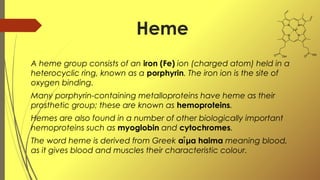
A heme group consists of an iron (Fe) ion (charged atom) held in a
heterocyclic ring, known as a porphyrin. The iron ion is the site of
oxygen binding.
Many porphyrin-containing metalloproteins have heme as their
prosthetic group; these are known as hemoproteins.
Hemes are also found in a number of other biologically important
hemoproteins such as myoglobin and cytochromes.
The word heme is derived from Greek α μα haimaἷ meaning blood,
as it gives blood and muscles their characteristic colour.
Globulin
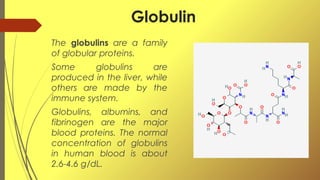
The globulins are a family
of globular proteins.
Some globulins are
produced in the liver, while
others are made by the
immune system.
Globulins, albumins, and
fibrinogen are the major
blood proteins. The normal
concentration of globulins
in human blood is about
2.6-4.6 g/dL.
Types of globulins
All globulins fall into one of the following four categories :
Alpha 1 globulins including a1
-antitrypsin, a1
-antichymotrypsin,
orosomucoid (acid glycoprotein), alpha1
-lipoprotein & serum
amyloid 1.
Alpha 2 globulins including haptoglobin, a2
-macroglobulin,
ceruloplasmin & thyroxine binding protein.
Beta globulins incuding transferrin, plasminogen, properdin &
angiostatins.
Gamma globulins (one group of gamma globulins is the
immunoglobulins, which are also known as "antibodies")
Globulins can be distinguished from one another using serum
protein electrophoresis.
Function of hemoglobin
Hemoglobin in the blood carries oxygen from the
respiratory organs (lungs or gills) to the rest of the
body (i.e. the tissues).
There, it releases the oxygen to permit aerobic
respiration to provide energy to power the
functions of the organism in the process called
metabolism.
Hemoglobin has an oxygen-binding capacity of
1.34 mL O2
per gram which increases the total
blood oxygen capacity seventy-fold compared
to dissolved oxygen in blood. The mammalian
hemoglobin molecule can bind (carry) up to
four oxygen molecules.
This function is called oxygenation.
Oxygen saturation
In general, hemoglobin can be saturated with oxygen molecules
(oxyhemoglobin), or desaturated with oxygen molecules
(deoxyhemoglobin).
Oxyhemoglobin is formed during physiological respiration when
oxygen binds to the heme component of the protein hemoglobin in
red blood cells. This process occurs in the pulmonary capillaries
adjacent to the alveoli of the lungs. The oxygen then travels through
the blood stream to be dropped off at cells.
Deoxyhemoglobin is the form of hemoglobin without the bound
oxygen.
Transfer of other gases
Hemoglobin is involved in the
transfer of other gases: It
carries some of the body's
respiratory carbon dioxide
(about 20–25% of the total)
as carbaminohemoglobin, in
which CO2
is bound to the
globin protein. The molecule
also carries the important
regulatory molecule nitric
oxide bound to a globin
protein thiol group, releasing
it at the same time as
oxygen.
Normal values of hemoglobin

Men: 13.8 to 18.0 g/dL (138 to 180 g/L, or 8.56 to 11.17 mmol/L)

Women: 12.1 to 15.1 g/dL (121 to 151 g/L, or 7.51 to 9.37 mmol/L)

Children: 11 to 16 g/dL (111 to 160 g/L, or 6.83 to 9.93 mmol/L)
If the concentration is below normal, this is called anemia.
Thank you very much for your attention!!!

Hemoglobin

  • 1.
    Hemoglobin Made by thestudents of C2 class: Petra Kokla, Thanasis Loupas, Thodoris Loupasis, Elvira Limperopoulou, Melina Martzakli & Victoria Mizan
  • 2.
    Hemoglobin (Hb) Hemoglobin isan oxygen-transport mettaloprotein in the red blood cells of all vertebrates. It a relatively big molecule, produced in the bone marrow. In mammals, the protein makes up about 96% of the red blood cells' dry content (by weight), and around 35% of the total content (including water).
  • 3.
    Structure The hemoglobin moleculeis an assembly of four globular protein subunits. Each subunit is composed of a protein chain tightly associated with a non- protein prosthetic heme group. Each protein chain arranges into a set of alpha-helix structural segments connected together in a globin fold arrangement. In adult humans, the most common hemoglobin type is a tetramer (which contains four subunit proteins) called hemoglobin A, consisting of two α and two β subunits non-covalently bound, each made of 141 and 146 amino acid residues, respectively. This is denoted as α2 β2 . The subunits are structurally similar and about the same size. Hemoglobin A (HbA) is the most intensively studied of the hemoglobin molecules.
  • 4.
         Heme Aheme group consists of an iron (Fe) ion (charged atom) held in a heterocyclic ring, known as a porphyrin. The iron ion is the site of oxygen binding. Many porphyrin-containing metalloproteins have heme as their prosthetic group; these are known as hemoproteins. Hemes are also found in a number of other biologically important hemoproteins such as myoglobin and cytochromes. The word heme is derived from Greek α μα haimaἷ meaning blood, as it gives blood and muscles their characteristic colour.
  • 5.
    Globulin The globulins area family of globular proteins. Some globulins are produced in the liver, while others are made by the immune system. Globulins, albumins, and fibrinogen are the major blood proteins. The normal concentration of globulins in human blood is about 2.6-4.6 g/dL.
  • 6.
    Types of globulins Allglobulins fall into one of the following four categories : Alpha 1 globulins including a1 -antitrypsin, a1 -antichymotrypsin, orosomucoid (acid glycoprotein), alpha1 -lipoprotein & serum amyloid 1. Alpha 2 globulins including haptoglobin, a2 -macroglobulin, ceruloplasmin & thyroxine binding protein. Beta globulins incuding transferrin, plasminogen, properdin & angiostatins. Gamma globulins (one group of gamma globulins is the immunoglobulins, which are also known as "antibodies") Globulins can be distinguished from one another using serum protein electrophoresis.
  • 7.
    Function of hemoglobin Hemoglobinin the blood carries oxygen from the respiratory organs (lungs or gills) to the rest of the body (i.e. the tissues). There, it releases the oxygen to permit aerobic respiration to provide energy to power the functions of the organism in the process called metabolism. Hemoglobin has an oxygen-binding capacity of 1.34 mL O2 per gram which increases the total blood oxygen capacity seventy-fold compared to dissolved oxygen in blood. The mammalian hemoglobin molecule can bind (carry) up to four oxygen molecules. This function is called oxygenation.
  • 8.
    Oxygen saturation In general,hemoglobin can be saturated with oxygen molecules (oxyhemoglobin), or desaturated with oxygen molecules (deoxyhemoglobin). Oxyhemoglobin is formed during physiological respiration when oxygen binds to the heme component of the protein hemoglobin in red blood cells. This process occurs in the pulmonary capillaries adjacent to the alveoli of the lungs. The oxygen then travels through the blood stream to be dropped off at cells. Deoxyhemoglobin is the form of hemoglobin without the bound oxygen.
  • 9.
    Transfer of othergases Hemoglobin is involved in the transfer of other gases: It carries some of the body's respiratory carbon dioxide (about 20–25% of the total) as carbaminohemoglobin, in which CO2 is bound to the globin protein. The molecule also carries the important regulatory molecule nitric oxide bound to a globin protein thiol group, releasing it at the same time as oxygen.
  • 10.
    Normal values ofhemoglobin  Men: 13.8 to 18.0 g/dL (138 to 180 g/L, or 8.56 to 11.17 mmol/L)  Women: 12.1 to 15.1 g/dL (121 to 151 g/L, or 7.51 to 9.37 mmol/L)  Children: 11 to 16 g/dL (111 to 160 g/L, or 6.83 to 9.93 mmol/L) If the concentration is below normal, this is called anemia.
  • 11.
    Thank you verymuch for your attention!!!