Melanin
Lola Kirkou
Iokasti Konsta
Ellie Konstantinidi
Konstantinos Leontiadis
Theano Livieratou
Odysseas Mpalis
Introduction
Melanin is a broad term for a group of
natural pigments found in most
organisms. It is produced by the
oxidation of the amino acid tyrosine.
There are three basic types of melanin:
eumelanin, pheomelanin and
neuromelanin.
The melanin pigments are produced in a
specialized group of cells known as
melanocytes. They are located in the
bottom layer of the skin’s epidermis,
the stratum basale, the middle layer of
the eye, the uvea, the inner ear, the
menings, the bones and the heart. They
derive from the neural crest cells, which
explains their shape and their special
function.
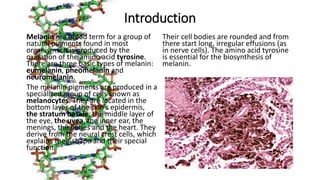
Their cell bodies are rounded and from
there start long, irregular effusions (as
in nerve cells). The amino acid tyrosine
is essential for the biosynthesis of
melanin.
Biosynthesis
• Melanin is produced by the amino acid tyrosine with the enzyme tyrosinase.
Tyrosinase is transported into the lumen of the endoplasmic reticulum of
melanocytes and accumulates in vesicles.
•The vesicle is surrounded by a membrane and the tyrosinase activity begins. The
vesicle (melanosome) slowly appears in parallel with filaments on which the
melanin is deposited. Increased melanin production prevents the distinction of
structural details within the vesicle. At the end the mature melanin granule is
finished and the melanin completely fills the vesicle.
• Melanin, after its composition is completed and accumulates in vesicles, moves to
the surface of the skin. During this transfer the melanin is denatured and the color
of black becomes white.
Kinds of melanin
Eumelanin, is a dark brown pigment, responsible for
the color of hair and skin.
Pheomelanin, impart a pink to red hue, depending
upon the concentration. Pheomelanin is also found on
the skin and the hair of both light and dark people.
Phaeomelanin imparts a reddish tinge for this and is
found in very large quantities in red hair. Pheomelanin
may be carcinogenic when exposed to ultraviolet rays
The color of the iris depends on the ratio between
eumelanin and pheomelanin.
Neuromelanin, is a dark soluble pigment produced in
specific populations of catecholaminergic neurons in
the brain. Its biological function is still unknown but
there is evidence that it plays a crucial role in
apoptosis and Parkinson’s disease.
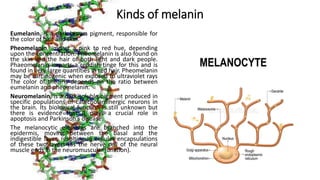
The melanocytic effusions are branched into the
epidermis, moving between the basal and the
indigestible layer, resulting in cellular encapsulations
of these two layers (as the nerve cell of the neural
muscle ends in the neuromuscular junction).
Pheomelanin Neuromelanin
The function of melanin
Melanin is a pigment that gives human
skin, hair and eyes their color. People with
dark skin have more melanin in their skin
than people with light skin.
The function of melanin
In the human skin, melanogenesis is initiated by exposure to UV
radiation, causing the skin to darken. Melanin is an effective absorbent
of light. It is able to dissipate over 99.9% of absorbed UV radiation
Because of this property, melanin is thought to protect skin cells from
UVB radiation damage, reducing the risk of cancer, and it is considered
that exposure to UV radiation is associated with increased risk of
malignant melanoma, a cancer of melanocytes (melanin cells).
Studies have shown a lower incidence for skin cancer in individuals
with more concentrated melanin, i.e. darker skin tone. However, the
relationship between skin pigmentation and photoprotection is still
being investigated.
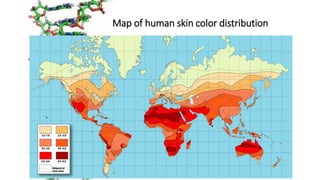
Map of human skin color distribution
Skin and Hair Colors
Genetic Disorders
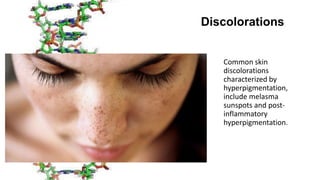
Common skin
discolorations
characterized by
hyperpigmentation,
include melasma
sunspots and post-
inflammatory
hyperpigmentation.
Discolorations
Hyperpigmentation
The main causes of hyperpigmentation are:
• exposure to all kinds of ultraviolet radiation
• genetic predisposition
• inappropriate cosmetics
• pregnancy or the use of contraception pills
Vitiligo
• It is a long-term skin condition characterized
by patches of the skin losing their pigment.
The hair from the skin may also become
white.
• The exact cause of vitiligo is unknown. It is
believed to be due to genetic susceptibility
that is triggered by an environmental factor,
such that the autoimmune disease occurs.
This results in the destruction of skin
pigment cells.
• Globally about 1% of people are affected by
vitiligo.
• It is not an infectious disease
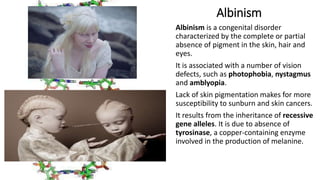
Albinism
Albinism is a congenital disorder
characterized by the complete or partial
absence of pigment in the skin, hair and
eyes.
It is associated with a number of vision
defects, such as photophobia, nystagmus
and amblyopia.
Lack of skin pigmentation makes for more
susceptibility to sunburn and skin cancers.
It results from the inheritance of recessive
gene alleles. It is due to absence of
tyrosinase, a copper-containing enzyme
involved in the production of melanine.
Thank you
very much for
your attention!

Melanin

  • 1.
    Melanin Lola Kirkou Iokasti Konsta EllieKonstantinidi Konstantinos Leontiadis Theano Livieratou Odysseas Mpalis
  • 2.
    Introduction Melanin is abroad term for a group of natural pigments found in most organisms. It is produced by the oxidation of the amino acid tyrosine. There are three basic types of melanin: eumelanin, pheomelanin and neuromelanin. The melanin pigments are produced in a specialized group of cells known as melanocytes. They are located in the bottom layer of the skin’s epidermis, the stratum basale, the middle layer of the eye, the uvea, the inner ear, the menings, the bones and the heart. They derive from the neural crest cells, which explains their shape and their special function. Their cell bodies are rounded and from there start long, irregular effusions (as in nerve cells). The amino acid tyrosine is essential for the biosynthesis of melanin.
  • 3.
    Biosynthesis • Melanin isproduced by the amino acid tyrosine with the enzyme tyrosinase. Tyrosinase is transported into the lumen of the endoplasmic reticulum of melanocytes and accumulates in vesicles. •The vesicle is surrounded by a membrane and the tyrosinase activity begins. The vesicle (melanosome) slowly appears in parallel with filaments on which the melanin is deposited. Increased melanin production prevents the distinction of structural details within the vesicle. At the end the mature melanin granule is finished and the melanin completely fills the vesicle. • Melanin, after its composition is completed and accumulates in vesicles, moves to the surface of the skin. During this transfer the melanin is denatured and the color of black becomes white.
  • 4.
    Kinds of melanin Eumelanin,is a dark brown pigment, responsible for the color of hair and skin. Pheomelanin, impart a pink to red hue, depending upon the concentration. Pheomelanin is also found on the skin and the hair of both light and dark people. Phaeomelanin imparts a reddish tinge for this and is found in very large quantities in red hair. Pheomelanin may be carcinogenic when exposed to ultraviolet rays The color of the iris depends on the ratio between eumelanin and pheomelanin. Neuromelanin, is a dark soluble pigment produced in specific populations of catecholaminergic neurons in the brain. Its biological function is still unknown but there is evidence that it plays a crucial role in apoptosis and Parkinson’s disease. The melanocytic effusions are branched into the epidermis, moving between the basal and the indigestible layer, resulting in cellular encapsulations of these two layers (as the nerve cell of the neural muscle ends in the neuromuscular junction).
  • 5.
  • 6.
    The function ofmelanin Melanin is a pigment that gives human skin, hair and eyes their color. People with dark skin have more melanin in their skin than people with light skin.
  • 7.
    The function ofmelanin In the human skin, melanogenesis is initiated by exposure to UV radiation, causing the skin to darken. Melanin is an effective absorbent of light. It is able to dissipate over 99.9% of absorbed UV radiation Because of this property, melanin is thought to protect skin cells from UVB radiation damage, reducing the risk of cancer, and it is considered that exposure to UV radiation is associated with increased risk of malignant melanoma, a cancer of melanocytes (melanin cells). Studies have shown a lower incidence for skin cancer in individuals with more concentrated melanin, i.e. darker skin tone. However, the relationship between skin pigmentation and photoprotection is still being investigated.
  • 8.
    Map of humanskin color distribution
  • 9.
  • 10.
  • 11.
    Common skin discolorations characterized by hyperpigmentation, includemelasma sunspots and post- inflammatory hyperpigmentation. Discolorations
  • 12.
    Hyperpigmentation The main causesof hyperpigmentation are: • exposure to all kinds of ultraviolet radiation • genetic predisposition • inappropriate cosmetics • pregnancy or the use of contraception pills
  • 13.
    Vitiligo • It isa long-term skin condition characterized by patches of the skin losing their pigment. The hair from the skin may also become white. • The exact cause of vitiligo is unknown. It is believed to be due to genetic susceptibility that is triggered by an environmental factor, such that the autoimmune disease occurs. This results in the destruction of skin pigment cells. • Globally about 1% of people are affected by vitiligo. • It is not an infectious disease
  • 14.
    Albinism Albinism is acongenital disorder characterized by the complete or partial absence of pigment in the skin, hair and eyes. It is associated with a number of vision defects, such as photophobia, nystagmus and amblyopia. Lack of skin pigmentation makes for more susceptibility to sunburn and skin cancers. It results from the inheritance of recessive gene alleles. It is due to absence of tyrosinase, a copper-containing enzyme involved in the production of melanine.
  • 15.
    Thank you very muchfor your attention!