HEMATOPOIESIS


JOSE R. VILLARINO, RMT
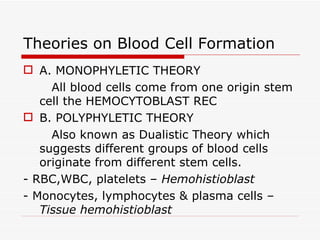
Theories on Blood Cell Formation
 A. MONOPHYLETIC THEORY
     All blood cells come from one origin stem
   cell the HEMOCYTOBLAST REC
 B. POLYPHYLETIC THEORY
     Also known as Dualistic Theory which
   suggests different groups of blood cells
   originate from different stem cells.
- RBC,WBC, platelets – Hemohistioblast
- Monocytes, lymphocytes & plasma cells –
   Tissue hemohistioblast
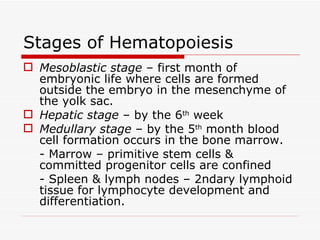
Stages of Hematopoiesis
 Mesoblastic stage – first month of
  embryonic life where cells are formed
  outside the embryo in the mesenchyme of
  the yolk sac.
 Hepatic stage – by the 6th week
 Medullary stage – by the 5th month blood
  cell formation occurs in the bone marrow.
  - Marrow – primitive stem cells &
  committed progenitor cells are confined
  - Spleen & lymph nodes – 2ndary lymphoid
  tissue for lymphocyte development and
  differentiation.
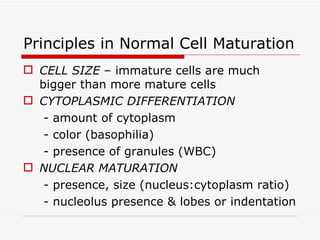
Principles in Normal Cell Maturation
 CELL SIZE – immature cells are much
  bigger than more mature cells
 CYTOPLASMIC DIFFERENTIATION
   - amount of cytoplasm
   - color (basophilia)
   - presence of granules (WBC)
 NUCLEAR MATURATION
   - presence, size (nucleus:cytoplasm ratio)
   - nucleolus presence & lobes or indentation
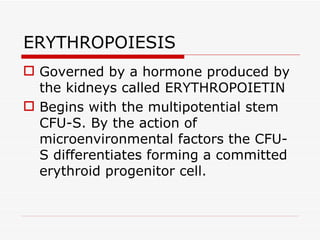
ERYTHROPOIESIS
 Governed by a hormone produced by
  the kidneys called ERYTHROPOIETIN
 Begins with the multipotential stem
  CFU-S. By the action of
  microenvironmental factors the CFU-
  S differentiates forming a committed
  erythroid progenitor cell.
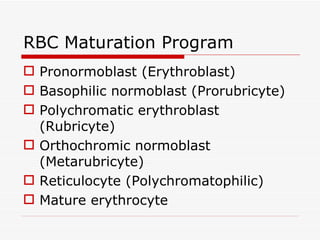
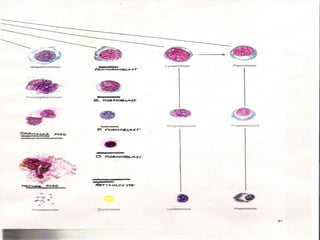
RBC Maturation Program
 Pronormoblast (Erythroblast)
 Basophilic normoblast (Prorubricyte)
 Polychromatic erythroblast
  (Rubricyte)
 Orthochromic normoblast
  (Metarubricyte)
 Reticulocyte (Polychromatophilic)
 Mature erythrocyte
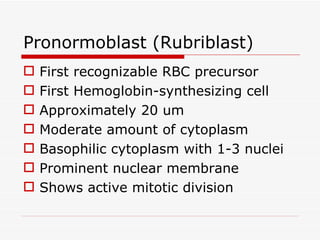
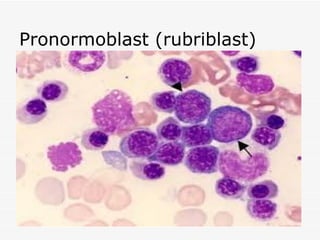
Pronormoblast (Rubriblast)
   First recognizable RBC precursor
   First Hemoglobin-synthesizing cell
   Approximately 20 um
   Moderate amount of cytoplasm
   Basophilic cytoplasm with 1-3 nuclei
   Prominent nuclear membrane
   Shows active mitotic division
Pronormoblast (rubriblast)
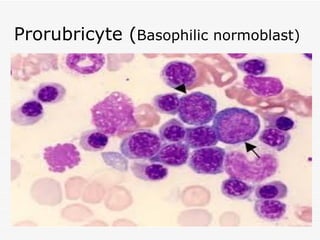
Basophilic normoblast
(prorubricyte)
 Slightly smaller than the rubriblast
 Cytoplasm is moderate in amount
  with deep basophilia due to high
  amounts of cytoplamsic RNA
 Nucleoli are present though not
  always visible
 Active mitotic division noted
Prorubricyte (Basophilic normoblast)
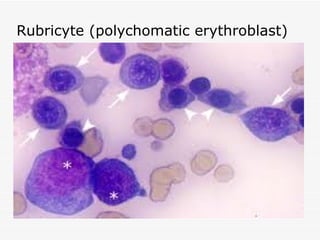
Polychromatic erythroblast
(rubricyte)
 Cytoplasm stains various shades of
  gray due to mixture of RNA and
  hemoglobin
 Nuclear volume occupies half of the
  cell area
 May undergo 1 or mitotic division in
  which after the last division the
  nucleus become small & condensed
Rubricyte (polychomatic erythroblast)
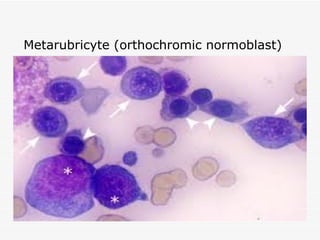
Orthochromic normoblast
(metarubricyte)
   Last nucleated stage in RBC series
   First non-mitotic stage
   Slight polychromasia
   Abundant or full hemoglobinization
Metarubricyte (orthochromic normoblast)
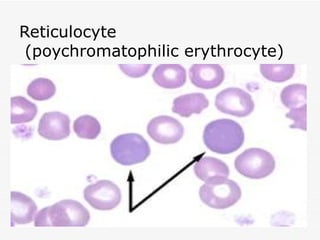
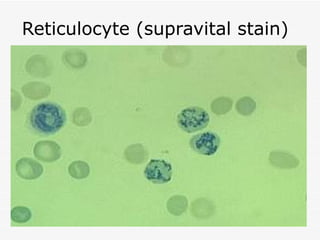
Reticulocyte
 Non-nucleated immature RBC
 Appears polychromatic due to remaining
  RNA responsible for the bluish-gray color
  on air-dried smears
 Larger than mature erythrocyte
 Released into the circulation after 2 days of
  maturation in the marrow
 Synthesize Hemoglobin for approximately 1
  day after leaving the bone marrow
Reticulocyte
 (poychromatophilic erythrocyte)
Reticulocyte (supravital stain)
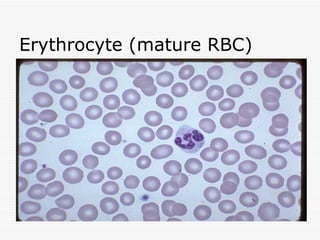
Mature Erythrocyte
 Appears as a biconcave disc with a
  concavity on each side – “Discocyte”
 Average size 7.2 um
Erythrocyte (mature RBC)
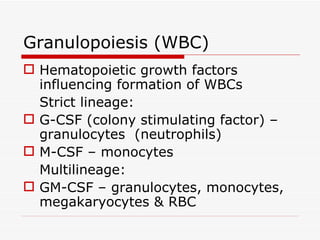
Granulopoiesis (WBC)
 Hematopoietic growth factors
  influencing formation of WBCs
  Strict lineage:
 G-CSF (colony stimulating factor) –
  granulocytes (neutrophils)
 M-CSF – monocytes
  Multilineage:
 GM-CSF – granulocytes, monocytes,
  megakaryocytes & RBC
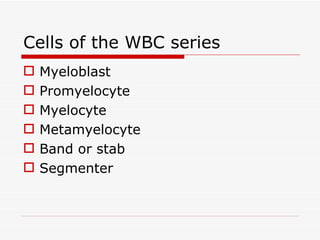
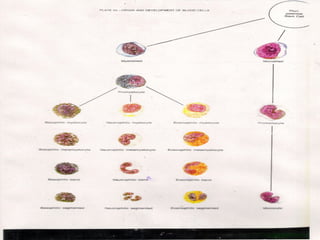
Cells of the WBC series
   Myeloblast
   Promyelocyte
   Myelocyte
   Metamyelocyte
   Band or stab
   Segmenter
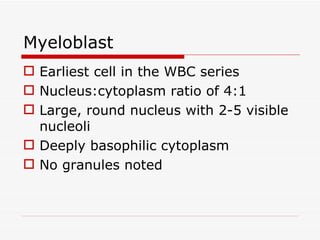
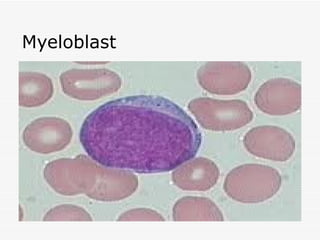
Myeloblast
 Earliest cell in the WBC series
 Nucleus:cytoplasm ratio of 4:1
 Large, round nucleus with 2-5 visible
  nucleoli
 Deeply basophilic cytoplasm
 No granules noted
Myeloblast
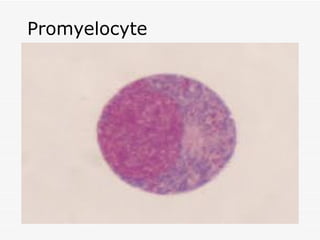
Promyelocyte
   Slightly smaller than myeloblast
   Basophilic cytoplasm
   N:C ratio of 2:1 with visible nucleoli
   Presence of azurophilic granules
Promyelocyte
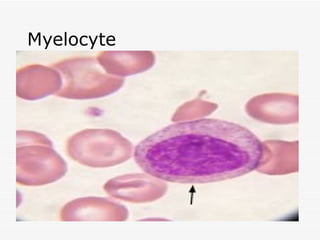
Myelocyte
 Appearance of the specific granules or
  also known as secondary granules
 Specific granules will determine the
  functional destiny of the WBC giving
  rise to eosinophil, basophil or
  neutrophil.
 N:C ratio 1:1 with almost invisible
  nucleoli. Cytoplasm show mixture of
  basophilic and acidophilic staining
Myelocyte
Metamyelocyte
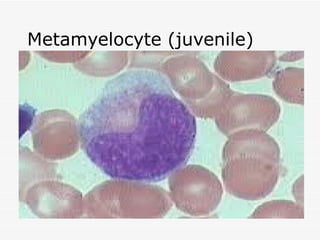
 Also known as the JUVENILE
 Differentiated from the myelocyte
  because of the presence of
  indentation of its nucleus
 N:C ratio 1:1 and smaller than the
  myelocyte
Metamyelocyte (juvenile)
Band or Stab
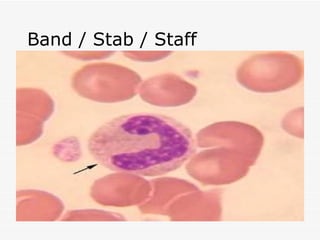
 Also known as the STAFF
 Measures 12-13 um
 Nucleus is sausage-shaped, elongated
  or horse-shoe shaped in appearance
  there is no lobulation or segmentation
  noted.
Band / Stab / Staff
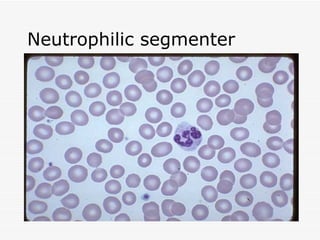
Segmenter
  Most mature stage of the WBC
  N:C ratio of 1:2
  Nucleus shows lobulation or segments
  Differentiated based on the
   appearance of its granules as follows:
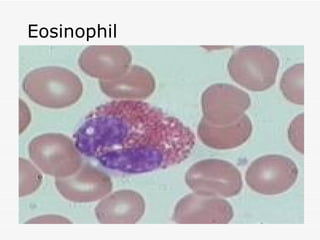
- Eosinophil – reddish-orange granules
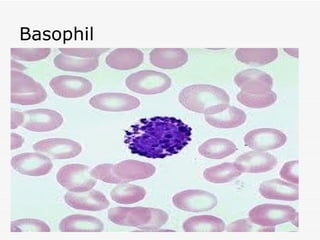
- Basophil – blue-black granules
- Neutrophil – pink-tan granules
Neutrophilic segmenter
Eosinophil
Basophil
Hematopoiesis
Hematopoiesis
Hematopoiesis

Hematopoiesis

  • 1.
  • 2.
    Theories on BloodCell Formation  A. MONOPHYLETIC THEORY All blood cells come from one origin stem cell the HEMOCYTOBLAST REC  B. POLYPHYLETIC THEORY Also known as Dualistic Theory which suggests different groups of blood cells originate from different stem cells. - RBC,WBC, platelets – Hemohistioblast - Monocytes, lymphocytes & plasma cells – Tissue hemohistioblast
  • 3.
    Stages of Hematopoiesis Mesoblastic stage – first month of embryonic life where cells are formed outside the embryo in the mesenchyme of the yolk sac.  Hepatic stage – by the 6th week  Medullary stage – by the 5th month blood cell formation occurs in the bone marrow. - Marrow – primitive stem cells & committed progenitor cells are confined - Spleen & lymph nodes – 2ndary lymphoid tissue for lymphocyte development and differentiation.
  • 4.
    Principles in NormalCell Maturation  CELL SIZE – immature cells are much bigger than more mature cells  CYTOPLASMIC DIFFERENTIATION - amount of cytoplasm - color (basophilia) - presence of granules (WBC)  NUCLEAR MATURATION - presence, size (nucleus:cytoplasm ratio) - nucleolus presence & lobes or indentation
  • 5.
    ERYTHROPOIESIS  Governed bya hormone produced by the kidneys called ERYTHROPOIETIN  Begins with the multipotential stem CFU-S. By the action of microenvironmental factors the CFU- S differentiates forming a committed erythroid progenitor cell.
  • 6.
    RBC Maturation Program Pronormoblast (Erythroblast)  Basophilic normoblast (Prorubricyte)  Polychromatic erythroblast (Rubricyte)  Orthochromic normoblast (Metarubricyte)  Reticulocyte (Polychromatophilic)  Mature erythrocyte
  • 7.
    Pronormoblast (Rubriblast)  First recognizable RBC precursor  First Hemoglobin-synthesizing cell  Approximately 20 um  Moderate amount of cytoplasm  Basophilic cytoplasm with 1-3 nuclei  Prominent nuclear membrane  Shows active mitotic division
  • 8.
  • 9.
    Basophilic normoblast (prorubricyte)  Slightlysmaller than the rubriblast  Cytoplasm is moderate in amount with deep basophilia due to high amounts of cytoplamsic RNA  Nucleoli are present though not always visible  Active mitotic division noted
  • 10.
  • 11.
    Polychromatic erythroblast (rubricyte)  Cytoplasmstains various shades of gray due to mixture of RNA and hemoglobin  Nuclear volume occupies half of the cell area  May undergo 1 or mitotic division in which after the last division the nucleus become small & condensed
  • 12.
  • 13.
    Orthochromic normoblast (metarubricyte)  Last nucleated stage in RBC series  First non-mitotic stage  Slight polychromasia  Abundant or full hemoglobinization
  • 14.
  • 15.
    Reticulocyte  Non-nucleated immatureRBC  Appears polychromatic due to remaining RNA responsible for the bluish-gray color on air-dried smears  Larger than mature erythrocyte  Released into the circulation after 2 days of maturation in the marrow  Synthesize Hemoglobin for approximately 1 day after leaving the bone marrow
  • 16.
  • 17.
  • 18.
    Mature Erythrocyte  Appearsas a biconcave disc with a concavity on each side – “Discocyte”  Average size 7.2 um
  • 19.
  • 20.
    Granulopoiesis (WBC)  Hematopoieticgrowth factors influencing formation of WBCs Strict lineage:  G-CSF (colony stimulating factor) – granulocytes (neutrophils)  M-CSF – monocytes Multilineage:  GM-CSF – granulocytes, monocytes, megakaryocytes & RBC
  • 21.
    Cells of theWBC series  Myeloblast  Promyelocyte  Myelocyte  Metamyelocyte  Band or stab  Segmenter
  • 22.
    Myeloblast  Earliest cellin the WBC series  Nucleus:cytoplasm ratio of 4:1  Large, round nucleus with 2-5 visible nucleoli  Deeply basophilic cytoplasm  No granules noted
  • 23.
  • 24.
    Promyelocyte  Slightly smaller than myeloblast  Basophilic cytoplasm  N:C ratio of 2:1 with visible nucleoli  Presence of azurophilic granules
  • 25.
  • 26.
    Myelocyte  Appearance ofthe specific granules or also known as secondary granules  Specific granules will determine the functional destiny of the WBC giving rise to eosinophil, basophil or neutrophil.  N:C ratio 1:1 with almost invisible nucleoli. Cytoplasm show mixture of basophilic and acidophilic staining
  • 27.
  • 28.
    Metamyelocyte  Also knownas the JUVENILE  Differentiated from the myelocyte because of the presence of indentation of its nucleus  N:C ratio 1:1 and smaller than the myelocyte
  • 29.
  • 30.
    Band or Stab Also known as the STAFF  Measures 12-13 um  Nucleus is sausage-shaped, elongated or horse-shoe shaped in appearance there is no lobulation or segmentation noted.
  • 31.
    Band / Stab/ Staff
  • 32.
    Segmenter  Mostmature stage of the WBC  N:C ratio of 1:2  Nucleus shows lobulation or segments  Differentiated based on the appearance of its granules as follows: - Eosinophil – reddish-orange granules - Basophil – blue-black granules - Neutrophil – pink-tan granules
  • 33.
  • 34.
  • 35.