Heart Failure in pediatrics
Investigations
& Treatment
Jenan muhammed
8th term
ESIC MC PGIMSR
Chest radiography
• High specifity and negative predictive value
• Cardiomegaly- suggestive of ventricular dilatation or
hypertrophy
• Large right to left shunts-exaggerated pulmonary arterial
vessels marking towards periphery
• Cardiomyopathy- lung fields normal
• Severe HF- fluffy perihilar pulmonary markings
suggestive of pulmonary edema
Laboratory investigations
• Symptomatic HF- associated with perturbations
of electrolyte and fluid balance, renal function,
liver function, thyroid function
• Hyponatremia due to renal water retention
(chronic Diuretic treatment still worsens tht)
ECG
• Nonspecific but frequently abnormal in pediatric
HF patients
• With findings of LV hypertrophy, low voltage
QRS morphology with ST-T wave abnormalities
(myocardial inflammatory disz,also pericarditis),
MI patterns, AV blocks,
• Best tool for evaluating rhythm disorders
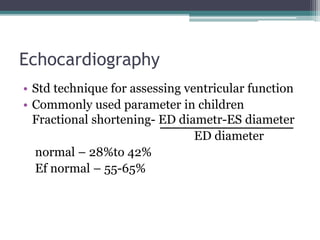
Echocardiography
• Std technique for assessing ventricular function
• Commonly used parameter in children
Fractional shortening- ED diametr-ES diameter
ED diameter
normal – 28%to 42%
Ef normal – 55-65%
Essential for identifying
• Causes of HF such as structural heart disease
• Ventricular dysfunction (both systolic and
diastolic)
• Chamber dimensions
• Effusions (both pericardial and pleural)
Biomarkers
• Serum B type ntriuretic peptide- elevated in HF
due to systolic dysfunction(CM) as well as with
volume overload
• Cardiac troponin-elevated in cases of mycarditis,
ischemic injury due to coronary anomaly,
cardiomyopathy
• Pulse oximetry or hyperoxia test- 100% oxygen
given and oxygen saturation is determined
• Metabolic and genetic testing
• Endomyocardial biopsy for acute myocarditis
• MRI cardiac- left n right ventricular function
treatment
• Underlying cause
• Cardiac anomaly amenable to surgery – medical
treatment to prepare the patient for surgery
• Lesion s nt reversible- medical treatment allows
the child to b back to normal activities for some
period and delay need for heart transplantion
• Treatment of the precipitating events
• Rheumatic activity,
• Infective endocarditis,
• Intercurrent infections,
• Anaemia, electrolyte imbalances,
• Arrhythmia, pulmonary embolism..
General measures
• Bed rest and limit activities
• Nurse propped up or in sitting position
• Control fever
• Expressed breast milk for small infants
• Fluid restriction in volume overloaded
• Pulmonary edema – positive pressure
ventilation
• Neonates with HF- nursed in an incubator, baby
s kept propped up at 30 degree
• Child s restless or dyspneic- sedatives r used
Diet
• Usually fail to thrive- increased metabolic
demands and decreased caloric intake
• Increase calorie intake supplement breast milk
• Severely ill- not able to suck, nasogastric tube
• Older children- no added salt diet
Goals of medical therpay
• Reducing preload
• Enhancing cardiac contractility
• Reducing afterload
• Improving oxygen delivery
• Enhancing nutrition
• Medical management of CCF should be tailored
to specific details of each case
diuretics
• Diuretics afford quick relief in pulmonary and
systemic congestion. 1 mg/kg of frusemide is the
agent of choice.
• For chronic use 1-4 mg/kg of frusemide or 20-40
mg/kg of chlorothiazide in divided dosages are
used.
• Monitor electrolytes, urea and weight
• Spironolactone may be added 2 divided doses of
2mg/kg/day
Afterload reducers-
• ACEI and ARBs
• Decreases peripheral vascular resistance and thereby
improving mycardial performance
• Especially useful-HF secondary to cardiomyopathy n
severe aortic n mitral insufficiency
• Additional benefits on preventing cardiac
remodeling
• Captopril-0.3 to 6mg/kg ,Enalapril-0.05to
0.5mg/kg/day
• Nitrates- venodilators
• Hydralazine arterial dilators
• Nitroprusside used in icu settings
Beta blockers
• Used in dialated cardiomyopathy
• Improve symptoms n survival
• Metoprolol selctive beta blocker
• Carvediol both alpha n beta blocker
• CCBs
• Should b avoided unless indicated for systemic
HTN
Phosphodiesterase inhibitor
• Milrinone- refractory to std therapy n post
operative period in open heart surgery
• Positive inotropy n peripheral vasodialtaion
• IV 0.25to 1 microgm/kg/min
Augmenting myocardial contractility
• Digoxin-
• Digitalization schedule- half total immediately
subsequent 2 quarters at 12 hrs intervals
• ECG closely monitored
• maintenance digitalis after 12 hrs- daily dosage
one quarter of digitalising dosage s divided into
2 n given at 12 hrs intervels
Inotropes
• Usually administered in ICU settings
• Dopamine – beta adrenergic agonists(alpha
adrenergic at higher doses)
• Selective renal vasodilatation( useful in patients
compromised kidney functions)
• 2 to 10 micro gm/kg/min
• Fenoldopam – DA1 agonists
• Dobutamine – causes moderate reduction in
peripheral vascular resistance 2 to 20
microgm/kg/min
• Isoproterenol- pure beta agoinists in patients
with slow heart rates & less commonly used(
chances of arrhythmias)
• Epinephrine in cardiogenic shock
Manging acute CCF
• Admit to ICU
• Neoneates nursed in incubator
• Baby kept propped up at 30 degree
• Humidified oxygen
• Child is restless- morphine 0.05mg/kg SC
• Treat precipitating factors
• Diuresis with furosemide
• Significant hypotention- given dopamine
infusion
• Reduce preload- nitrates
• After stabilisation look into cause
Electro physiologic approach
• Biventricular resynchronisation pacing
• Improves cardiac output by maintaining normal
synchrony between right n left ventricle
contraction
Correct underlying cause
Surgical approach
Thank you

Heart failure in pediatrics

  • 1.
    Heart Failure inpediatrics Investigations & Treatment Jenan muhammed 8th term ESIC MC PGIMSR
  • 2.
    Chest radiography • Highspecifity and negative predictive value • Cardiomegaly- suggestive of ventricular dilatation or hypertrophy • Large right to left shunts-exaggerated pulmonary arterial vessels marking towards periphery • Cardiomyopathy- lung fields normal • Severe HF- fluffy perihilar pulmonary markings suggestive of pulmonary edema
  • 4.
    Laboratory investigations • SymptomaticHF- associated with perturbations of electrolyte and fluid balance, renal function, liver function, thyroid function • Hyponatremia due to renal water retention (chronic Diuretic treatment still worsens tht)
  • 5.
    ECG • Nonspecific butfrequently abnormal in pediatric HF patients • With findings of LV hypertrophy, low voltage QRS morphology with ST-T wave abnormalities (myocardial inflammatory disz,also pericarditis), MI patterns, AV blocks, • Best tool for evaluating rhythm disorders
  • 6.
    Echocardiography • Std techniquefor assessing ventricular function • Commonly used parameter in children Fractional shortening- ED diametr-ES diameter ED diameter normal – 28%to 42% Ef normal – 55-65%
  • 7.
    Essential for identifying •Causes of HF such as structural heart disease • Ventricular dysfunction (both systolic and diastolic) • Chamber dimensions • Effusions (both pericardial and pleural)
  • 8.
    Biomarkers • Serum Btype ntriuretic peptide- elevated in HF due to systolic dysfunction(CM) as well as with volume overload • Cardiac troponin-elevated in cases of mycarditis, ischemic injury due to coronary anomaly, cardiomyopathy
  • 9.
    • Pulse oximetryor hyperoxia test- 100% oxygen given and oxygen saturation is determined • Metabolic and genetic testing • Endomyocardial biopsy for acute myocarditis • MRI cardiac- left n right ventricular function
  • 10.
    treatment • Underlying cause •Cardiac anomaly amenable to surgery – medical treatment to prepare the patient for surgery • Lesion s nt reversible- medical treatment allows the child to b back to normal activities for some period and delay need for heart transplantion
  • 11.
    • Treatment ofthe precipitating events • Rheumatic activity, • Infective endocarditis, • Intercurrent infections, • Anaemia, electrolyte imbalances, • Arrhythmia, pulmonary embolism..
  • 12.
    General measures • Bedrest and limit activities • Nurse propped up or in sitting position • Control fever • Expressed breast milk for small infants • Fluid restriction in volume overloaded • Pulmonary edema – positive pressure ventilation • Neonates with HF- nursed in an incubator, baby s kept propped up at 30 degree • Child s restless or dyspneic- sedatives r used
  • 13.
    Diet • Usually failto thrive- increased metabolic demands and decreased caloric intake • Increase calorie intake supplement breast milk • Severely ill- not able to suck, nasogastric tube • Older children- no added salt diet
  • 14.
    Goals of medicaltherpay • Reducing preload • Enhancing cardiac contractility • Reducing afterload • Improving oxygen delivery • Enhancing nutrition • Medical management of CCF should be tailored to specific details of each case
  • 15.
    diuretics • Diuretics affordquick relief in pulmonary and systemic congestion. 1 mg/kg of frusemide is the agent of choice. • For chronic use 1-4 mg/kg of frusemide or 20-40 mg/kg of chlorothiazide in divided dosages are used. • Monitor electrolytes, urea and weight • Spironolactone may be added 2 divided doses of 2mg/kg/day
  • 16.
    Afterload reducers- • ACEIand ARBs • Decreases peripheral vascular resistance and thereby improving mycardial performance • Especially useful-HF secondary to cardiomyopathy n severe aortic n mitral insufficiency • Additional benefits on preventing cardiac remodeling • Captopril-0.3 to 6mg/kg ,Enalapril-0.05to 0.5mg/kg/day • Nitrates- venodilators • Hydralazine arterial dilators • Nitroprusside used in icu settings
  • 17.
    Beta blockers • Usedin dialated cardiomyopathy • Improve symptoms n survival • Metoprolol selctive beta blocker • Carvediol both alpha n beta blocker • CCBs • Should b avoided unless indicated for systemic HTN
  • 18.
    Phosphodiesterase inhibitor • Milrinone-refractory to std therapy n post operative period in open heart surgery • Positive inotropy n peripheral vasodialtaion • IV 0.25to 1 microgm/kg/min
  • 19.
    Augmenting myocardial contractility •Digoxin- • Digitalization schedule- half total immediately subsequent 2 quarters at 12 hrs intervals • ECG closely monitored • maintenance digitalis after 12 hrs- daily dosage one quarter of digitalising dosage s divided into 2 n given at 12 hrs intervels
  • 20.
    Inotropes • Usually administeredin ICU settings • Dopamine – beta adrenergic agonists(alpha adrenergic at higher doses) • Selective renal vasodilatation( useful in patients compromised kidney functions) • 2 to 10 micro gm/kg/min • Fenoldopam – DA1 agonists • Dobutamine – causes moderate reduction in peripheral vascular resistance 2 to 20 microgm/kg/min
  • 21.
    • Isoproterenol- purebeta agoinists in patients with slow heart rates & less commonly used( chances of arrhythmias) • Epinephrine in cardiogenic shock
  • 22.
    Manging acute CCF •Admit to ICU • Neoneates nursed in incubator • Baby kept propped up at 30 degree • Humidified oxygen • Child is restless- morphine 0.05mg/kg SC • Treat precipitating factors • Diuresis with furosemide • Significant hypotention- given dopamine infusion • Reduce preload- nitrates • After stabilisation look into cause
  • 23.
    Electro physiologic approach •Biventricular resynchronisation pacing • Improves cardiac output by maintaining normal synchrony between right n left ventricle contraction Correct underlying cause Surgical approach
  • 24.