Case scenario
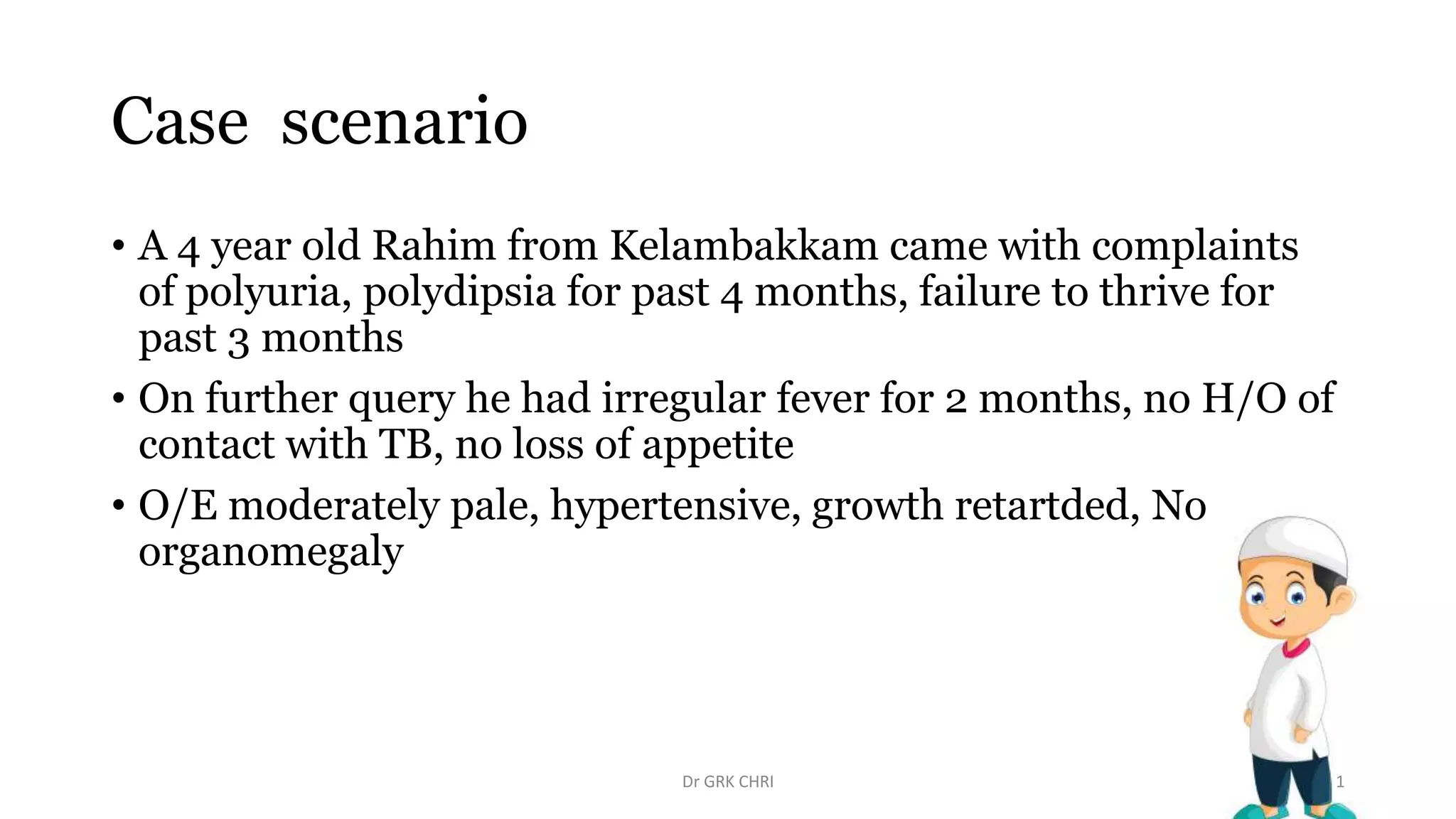
• A 4 year old Rahim from Kelambakkam came with complaints
of polyuria, polydipsia for past 4 months, failure to thrive for
past 3 months
• On further query he had irregular fever for 2 months, no H/O of
contact with TB, no loss of appetite
• O/E moderately pale, hypertensive, growth retartded, No
organomegaly
Dr GRK CHRI 1
Dr GRK CHRI 2
Dr. G.Rajkumar MD
Professor of Paediatrics
CHRI
Chronic Kidney Disease in
Children
Outline
• CKD is a chronic progressive disease that can clog normal
lifestyle & reduce lifespan
• Definition
• Etiopathogenesis
• Stages
• Clinical features
• Management
Dr GRK CHRI 4
Criteria for definition of chronic kidney
disease (NKF KDOQI Guidelines)
Patient has CKD if either of the following criteria are present:
1. Kidney damage for ≥3 months as defined by structural or
functional abnormalities of the kidney, with or without decreased
GFR, manifested by one or more of the following features:
Abnormalities in composition of blood or urine
Abnormalities in imaging
Abnormalities in biopsy
2. GFR < 60ml/min/1.73m2≥ 3 months with or without signs of
kidney damage described above
Dr GRK CHRI 5
3 exceptions in Paediatrics
1. Criteria duration longer than 3 months does not apply for
infant less than 3 months
2. GFR < 60ml/min/1.73m2 cannot be used for children < 2 years
as this group has developmental immaturity leading to low GFR
Urine protein can be used instead of urine albumin excretion in
children
Dr GRK CHRI 6
Risk factors for CKD
• VUR with recurrent UTI
• Obstructive uropathy
• Previous history of nephritis or NS
• Family history of PCKD
• Renal dysplasia or hypoplasia
• LBW
• DM/SHT
• SLE, Vasculitis, HSP
Dr GRK CHRI 7
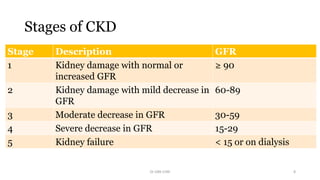
Stages of CKD
Stage Description GFR
1 Kidney damage with normal or
increased GFR
≥ 90
2 Kidney damage with mild decrease in
GFR
60-89
3 Moderate decrease in GFR 30-59
4 Severe decrease in GFR 15-29
5 Kidney failure < 15 or on dialysis
Dr GRK CHRI 8
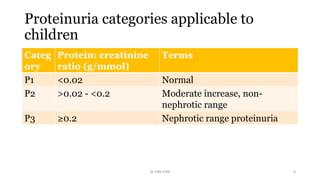
Proteinuria categories applicable to
children
Categ
ory
Protein: creatinine
ratio (g/mmol)
Terms
P1 <0.02 Normal
P2 >0.02 - <0.2 Moderate increase, non-
nephrotic range
P3 ≥0.2 Nephrotic range proteinuria
Dr GRK CHRI 9
Epidemiology
• Prevalence of CKD in children is 18/10,00000
• Childhood onset ESRD has significant morbidity and 30 fold
increase risk od dying from cardiovascular & infective causes.
Dr GRK CHRI 10
Etiology
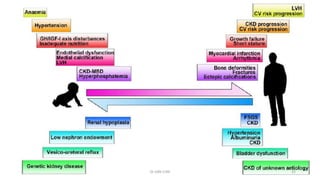
• In children < 5 yrs. congenital anomalies of kidney & urinary
tract ( renal hypoplasia/dysplasia or obstructive uropathy),
RVT, Prune belly syndrome and is often diagnosed with
perinatal USG
• In children older than 5 yrs. acquired or inherited causes of
glomerulo-nephritis predominate
Dr GRK CHRI 11
Non Glomerular
• Aplastic, dysplastic, hypoplastic kidneys
• Cystinosis
• Medullary kidney disease/ juvenile nephrolithiasis
• Obstructive uropathy ( PUV, cloaca, neurogenic bladder)
• Oxalosis
• AD & AR PCKD
• Pyelonephritis, interstitial nephritis, reflux nephropathy
• Renal infarct syndrome of agenesis of abdominal musculature (Eagle Barrett
syndrome)
• Wilms tumour
Dr GRK CHRI 12
Glomerular
• Chronic glomerulonephritis ( including FSGS)
• Congenital nephrotic syndrome (CNS)
• HUS
• HSP
• Idiopathic crescentic glomerulonephritis
• Ig A nephropathy
• MPGN
• Membranous nephropathy
• Sickle cell nephropathy
• SLE, Wegener Granulomatosis
• Hereditary nephritis- Alport Syndrome
Dr GRK CHRI 13
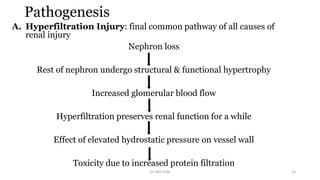
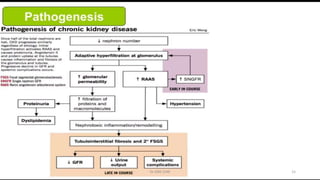
Pathogenesis
A. Hyperfiltration Injury: final common pathway of all causes of
renal injury
Nephron loss
Rest of nephron undergo structural & functional hypertrophy
Increased glomerular blood flow
Hyperfiltration preserves renal function for a while
Effect of elevated hydrostatic pressure on vessel wall
Toxicity due to increased protein filtration
Dr GRK CHRI 14
Dr GRK CHRI 15
• Remaining nephrons suffer from increased excretory burden
leading on to a vicious cycle of increased glomerular blood flow
and hyperfiltration injury
Dr GRK CHRI 16
B. Proteinuria
Direct toxic effect of proteins on tubular cells
Recruit monocytes & macrophages-glomerular sclerosis & tubule
interstitial fibrosis
C. Uncontrolled Hypertension-arterial nephrosclerosis & enhances
hyperfiltration injury
D. Hyperphosphatemia- calcium phosphate deposition in renal
interstitium & blood vessels
E. Hyperlipidemia- Oxidant-mediated injury
Regardless of etiology, progression of interstitial fibrosis is the
primary determinant of CKD
Dr GRK CHRI 17
Pathophysiology
1. Accumulation of nitrogenous waste-d/t decreased GFR
2. Acidosis- decreased ammonia synthesis, decreased bicarbonate
reabsorption, decreased net acid excretion
3. Sodium wasting- solute diuresis, tubular damage
4. Urinary concentrating defect- solute diuresis, tubular damage
5. Hyperkalemia- Reduced GFR, Metabolic acidosis, Excessive
potassium intake, hyporeninemic hypoaldosteronism
6. Renal osteodystrophy- impaired renal production of 1,25
dihydroxycholecalciferol, hyperphosphatemia, hypocalcemia,
secondary hyperparathyroidism
Dr GRK CHRI 18
7. Growth retardation- inadequate calorie intake, metabolic
acidosis, renal osteodystrophy, anemia, GH resistance
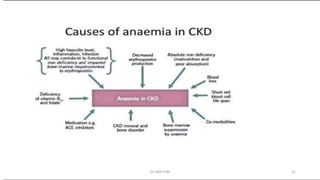
8. Anemia-decreased erythropoietin secretion, Iron, Folic acid
and or Vitamin B12 deficiency, decreased erythrocyte survival
9. Bleeding tendency-defective platelet function
10. Infection- Defective granulocyte function, impaired cellular
immunity, indwelling catheters
11. Decreased academic achievement, attention regulation or
executive functioning- hypertension, LBW
Dr GRK CHRI 19
12. Gastrointestinal symptoms ( feed intolerance, abdominal pain)-
GERD, decreased GI motility
13. Hypertension- volume over load, excessive renin production
14. Hyperlipidemia- decreased lipoprotein lipase activity, abnormal
HDL-C
15. Cardiomyopathy-volume overload, hypertension, anemia
16. Glucose intolerance-tissue insulin resistance
17. Neurological Symptoms- fatigue, poor concentration, headache,
memory loss, seizures, peripheral neuropathy-uremic factors,
Aluminum toxicity, Hypertension
Dr GRK CHRI 20
Dr GRK CHRI 21
Dr GRK CHRI 22
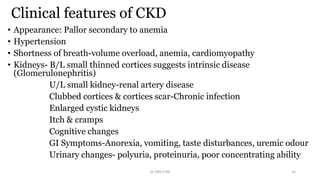
Clinical features of CKD
• Appearance: Pallor secondary to anemia
• Hypertension
• Shortness of breath-volume overload, anemia, cardiomyopathy
• Kidneys- B/L small thinned cortices suggests intrinsic disease
(Glomerulonephritis)
U/L small kidney-renal artery disease
Clubbed cortices & cortices scar-Chronic infection
Enlarged cystic kidneys
Itch & cramps
Cognitive changes
GI Symptoms-Anorexia, vomiting, taste disturbances, uremic odour
Urinary changes- polyuria, proteinuria, poor concentrating ability
Dr GRK CHRI 23
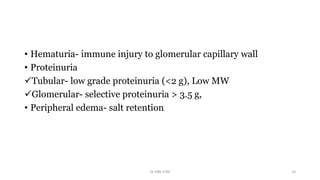
• Hematuria- immune injury to glomerular capillary wall
• Proteinuria
Tubular- low grade proteinuria (<2 g), Low MW
Glomerular- selective proteinuria > 3.5 g,
• Peripheral edema- salt retention
Dr GRK CHRI 24
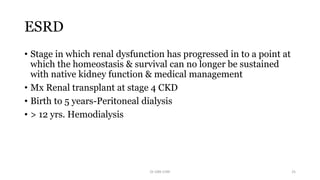
ESRD
• Stage in which renal dysfunction has progressed in to a point at
which the homeostasis & survival can no longer be sustained
with native kidney function & medical management
• Mx Renal transplant at stage 4 CKD
• Birth to 5 years-Peritoneal dialysis
• > 12 yrs. Hemodialysis
Dr GRK CHRI 25
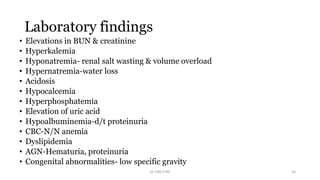
Laboratory findings
• Elevations in BUN & creatinine
• Hyperkalemia
• Hyponatremia- renal salt wasting & volume overload
• Hypernatremia-water loss
• Acidosis
• Hypocalcemia
• Hyperphosphatemia
• Elevation of uric acid
• Hypoalbuminemia-d/t proteinuria
• CBC-N/N anemia
• Dyslipidemia
• AGN-Hematuria, proteinuria
• Congenital abnormalities- low specific gravity
Dr GRK CHRI 26
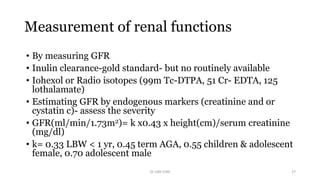
Measurement of renal functions
• By measuring GFR
• Inulin clearance-gold standard- but no routinely available
• Iohexol or Radio isotopes (99m Tc-DTPA, 51 Cr- EDTA, 125
lothalamate)
• Estimating GFR by endogenous markers (creatinine and or
cystatin c)- assess the severity
• GFR(ml/min/1.73m2)= k x0.43 x height(cm)/serum creatinine
(mg/dl)
• k= 0.33 LBW < 1 yr, 0.45 term AGA, 0.55 children & adolescent
female, 0.70 adolescent male
Dr GRK CHRI 27
Management of CKD
• CKD treatment is supportive
• Replacing absent/ diminished renal function
• Slowing progression of renal dysfunction
Dr GRK CHRI 28
• Close monitoring of blood studies, urine studies(spot PCR,
24hrs urinary protein)
• Ambulatory blood pressure monitoring over 24 hrs
• Masked hypertension-Normal office blood pressure but
abnormal ABPM
• Its seen up to 35% of Paediatric predialysis patients
• 4 fold increased risk of LVH
Dr GRK CHRI 29
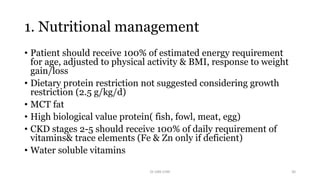
1. Nutritional management
• Patient should receive 100% of estimated energy requirement
for age, adjusted to physical activity & BMI, response to weight
gain/loss
• Dietary protein restriction not suggested considering growth
restriction (2.5 g/kg/d)
• MCT fat
• High biological value protein( fish, fowl, meat, egg)
• CKD stages 2-5 should receive 100% of daily requirement of
vitamins& trace elements (Fe & Zn only if deficient)
• Water soluble vitamins
Dr GRK CHRI 30
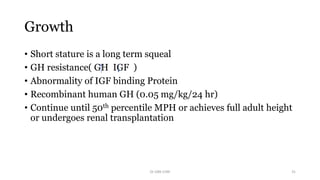
Growth
• Short stature is a long term squeal
• GH resistance( GH IGF )
• Abnormality of IGF binding Protein
• Recombinant human GH (0.05 mg/kg/24 hr)
• Continue until 50th percentile MPH or achieves full adult height
or undergoes renal transplantation
Dr GRK CHRI 31
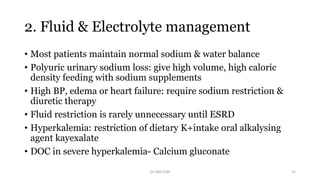
2. Fluid & Electrolyte management
• Most patients maintain normal sodium & water balance
• Polyuric urinary sodium loss: give high volume, high caloric
density feeding with sodium supplements
• High BP, edema or heart failure: require sodium restriction &
diuretic therapy
• Fluid restriction is rarely unnecessary until ESRD
• Hyperkalemia: restriction of dietary K+intake oral alkalysing
agent kayexalate
• DOC in severe hyperkalemia- Calcium gluconate
Dr GRK CHRI 32
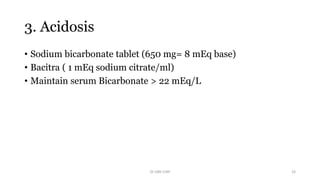
3. Acidosis
• Sodium bicarbonate tablet (650 mg= 8 mEq base)
• Bacitra ( 1 mEq sodium citrate/ml)
• Maintain serum Bicarbonate > 22 mEq/L
Dr GRK CHRI 33
4. Renal osteodystrophy
• Spectrum of bone disease in CKD
• High turnover bone disease
• Secondary hyperparathyroidism
• Osteitis fibrosa cystica
Dr GRK CHRI 34
Pathophysiology
• When GFR declines to 50%of normal
• Decline in 1 α hydroxylase
• Decreased production of activated Vitamin D
• intestinal absorption of calcium
• Hypocalcemia
• Secondary hyperparathyroidism
• Increase bone resorption when GFR decline to 25% of normal
• Hyperphosphatemia
Dr GRK CHRI 35
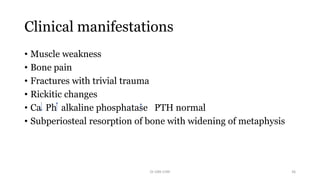
Clinical manifestations
• Muscle weakness
• Bone pain
• Fractures with trivial trauma
• Rickitic changes
• Ca Ph alkaline phosphatase PTH normal
• Subperiosteal resorption of bone with widening of metaphysis
Dr GRK CHRI 36
Treatment of renal osteodystrophy
• Low phosphorus diet
• Phosphate binders
• Calcium carbonate & calcium acetate
• Sevelamer(Renagel)- calcium binder
• Avoid aluminum based binder
• Vitamin D therapy
• Maintain calcium/ phosphorus product <55
Dr GRK CHRI 37
5. Anemia
• Keep Hb between 12-13g/dl
• Erythropoietin if Hb< 10g/dl-Dose 50-150 mg/kg SC 1-3
times/week
• Darbopoeitin alfa (long acting) Dose 0.45 µg/kg/week
Dr GRK CHRI 38
6. Hypertension
• Salt restriction
• Diuretic therapy
• Hydrochlorothizide-2 mg/kg/d
• Furosemide 1-2 mg/kg/dose
• ACE inhibitors-Angiotensin II blockers for proteinuric renal
failure ( enalapril, lisinopril, losartan)
Dr GRK CHRI 39
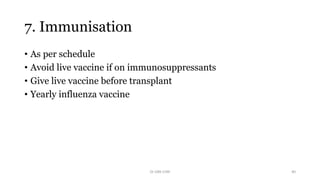
7. Immunisation
• As per schedule
• Avoid live vaccine if on immunosuppressants
• Give live vaccine before transplant
• Yearly influenza vaccine
Dr GRK CHRI 40
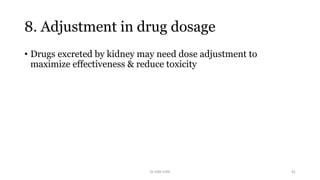
8. Adjustment in drug dosage
• Drugs excreted by kidney may need dose adjustment to
maximize effectiveness & reduce toxicity
Dr GRK CHRI 41
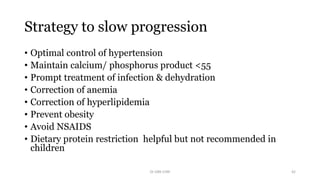
Strategy to slow progression
• Optimal control of hypertension
• Maintain calcium/ phosphorus product <55
• Prompt treatment of infection & dehydration
• Correction of anemia
• Correction of hyperlipidemia
• Prevent obesity
• Avoid NSAIDS
• Dietary protein restriction helpful but not recommended in
children
Dr GRK CHRI 42
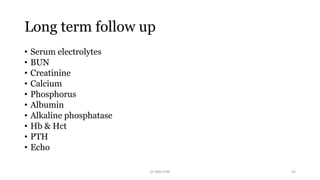
Long term follow up
• Serum electrolytes
• BUN
• Creatinine
• Calcium
• Phosphorus
• Albumin
• Alkaline phosphatase
• Hb & Hct
• PTH
• Echo
Dr GRK CHRI 43
Summary
• CKD is irreversible loss of renal function
• Glomerulonephritis, congenital Renal & urological anomalies, reflux
nephropathy account for major chunk of CKD in children.
• Hypertension & proteinuria are major causes of disease progression
• Presenting complaints include anemia, growth retardation,
hypertension, bone disease, acidosis, encephalopathy, malnutrition
• Adequate management of early stages halt progression
• Psychological & emotional support to patients & parents
• Renal replacement therapy initiated when GFR < 15 ml/min/ 1.73m2
Dr GRK CHRI 44

CKD IN CHILDREN DR GRK.pptx

  • 1.
    Case scenario • A4 year old Rahim from Kelambakkam came with complaints of polyuria, polydipsia for past 4 months, failure to thrive for past 3 months • On further query he had irregular fever for 2 months, no H/O of contact with TB, no loss of appetite • O/E moderately pale, hypertensive, growth retartded, No organomegaly Dr GRK CHRI 1
  • 2.
  • 3.
    Dr. G.Rajkumar MD Professorof Paediatrics CHRI Chronic Kidney Disease in Children
  • 4.
    Outline • CKD isa chronic progressive disease that can clog normal lifestyle & reduce lifespan • Definition • Etiopathogenesis • Stages • Clinical features • Management Dr GRK CHRI 4
  • 5.
    Criteria for definitionof chronic kidney disease (NKF KDOQI Guidelines) Patient has CKD if either of the following criteria are present: 1. Kidney damage for ≥3 months as defined by structural or functional abnormalities of the kidney, with or without decreased GFR, manifested by one or more of the following features: Abnormalities in composition of blood or urine Abnormalities in imaging Abnormalities in biopsy 2. GFR < 60ml/min/1.73m2≥ 3 months with or without signs of kidney damage described above Dr GRK CHRI 5
  • 6.
    3 exceptions inPaediatrics 1. Criteria duration longer than 3 months does not apply for infant less than 3 months 2. GFR < 60ml/min/1.73m2 cannot be used for children < 2 years as this group has developmental immaturity leading to low GFR Urine protein can be used instead of urine albumin excretion in children Dr GRK CHRI 6
  • 7.
    Risk factors forCKD • VUR with recurrent UTI • Obstructive uropathy • Previous history of nephritis or NS • Family history of PCKD • Renal dysplasia or hypoplasia • LBW • DM/SHT • SLE, Vasculitis, HSP Dr GRK CHRI 7
  • 8.
    Stages of CKD StageDescription GFR 1 Kidney damage with normal or increased GFR ≥ 90 2 Kidney damage with mild decrease in GFR 60-89 3 Moderate decrease in GFR 30-59 4 Severe decrease in GFR 15-29 5 Kidney failure < 15 or on dialysis Dr GRK CHRI 8
  • 9.
    Proteinuria categories applicableto children Categ ory Protein: creatinine ratio (g/mmol) Terms P1 <0.02 Normal P2 >0.02 - <0.2 Moderate increase, non- nephrotic range P3 ≥0.2 Nephrotic range proteinuria Dr GRK CHRI 9
  • 10.
    Epidemiology • Prevalence ofCKD in children is 18/10,00000 • Childhood onset ESRD has significant morbidity and 30 fold increase risk od dying from cardiovascular & infective causes. Dr GRK CHRI 10
  • 11.
    Etiology • In children< 5 yrs. congenital anomalies of kidney & urinary tract ( renal hypoplasia/dysplasia or obstructive uropathy), RVT, Prune belly syndrome and is often diagnosed with perinatal USG • In children older than 5 yrs. acquired or inherited causes of glomerulo-nephritis predominate Dr GRK CHRI 11
  • 12.
    Non Glomerular • Aplastic,dysplastic, hypoplastic kidneys • Cystinosis • Medullary kidney disease/ juvenile nephrolithiasis • Obstructive uropathy ( PUV, cloaca, neurogenic bladder) • Oxalosis • AD & AR PCKD • Pyelonephritis, interstitial nephritis, reflux nephropathy • Renal infarct syndrome of agenesis of abdominal musculature (Eagle Barrett syndrome) • Wilms tumour Dr GRK CHRI 12
  • 13.
    Glomerular • Chronic glomerulonephritis( including FSGS) • Congenital nephrotic syndrome (CNS) • HUS • HSP • Idiopathic crescentic glomerulonephritis • Ig A nephropathy • MPGN • Membranous nephropathy • Sickle cell nephropathy • SLE, Wegener Granulomatosis • Hereditary nephritis- Alport Syndrome Dr GRK CHRI 13
  • 14.
    Pathogenesis A. Hyperfiltration Injury:final common pathway of all causes of renal injury Nephron loss Rest of nephron undergo structural & functional hypertrophy Increased glomerular blood flow Hyperfiltration preserves renal function for a while Effect of elevated hydrostatic pressure on vessel wall Toxicity due to increased protein filtration Dr GRK CHRI 14
  • 15.
  • 16.
    • Remaining nephronssuffer from increased excretory burden leading on to a vicious cycle of increased glomerular blood flow and hyperfiltration injury Dr GRK CHRI 16
  • 17.
    B. Proteinuria Direct toxiceffect of proteins on tubular cells Recruit monocytes & macrophages-glomerular sclerosis & tubule interstitial fibrosis C. Uncontrolled Hypertension-arterial nephrosclerosis & enhances hyperfiltration injury D. Hyperphosphatemia- calcium phosphate deposition in renal interstitium & blood vessels E. Hyperlipidemia- Oxidant-mediated injury Regardless of etiology, progression of interstitial fibrosis is the primary determinant of CKD Dr GRK CHRI 17
  • 18.
    Pathophysiology 1. Accumulation ofnitrogenous waste-d/t decreased GFR 2. Acidosis- decreased ammonia synthesis, decreased bicarbonate reabsorption, decreased net acid excretion 3. Sodium wasting- solute diuresis, tubular damage 4. Urinary concentrating defect- solute diuresis, tubular damage 5. Hyperkalemia- Reduced GFR, Metabolic acidosis, Excessive potassium intake, hyporeninemic hypoaldosteronism 6. Renal osteodystrophy- impaired renal production of 1,25 dihydroxycholecalciferol, hyperphosphatemia, hypocalcemia, secondary hyperparathyroidism Dr GRK CHRI 18
  • 19.
    7. Growth retardation-inadequate calorie intake, metabolic acidosis, renal osteodystrophy, anemia, GH resistance 8. Anemia-decreased erythropoietin secretion, Iron, Folic acid and or Vitamin B12 deficiency, decreased erythrocyte survival 9. Bleeding tendency-defective platelet function 10. Infection- Defective granulocyte function, impaired cellular immunity, indwelling catheters 11. Decreased academic achievement, attention regulation or executive functioning- hypertension, LBW Dr GRK CHRI 19
  • 20.
    12. Gastrointestinal symptoms( feed intolerance, abdominal pain)- GERD, decreased GI motility 13. Hypertension- volume over load, excessive renin production 14. Hyperlipidemia- decreased lipoprotein lipase activity, abnormal HDL-C 15. Cardiomyopathy-volume overload, hypertension, anemia 16. Glucose intolerance-tissue insulin resistance 17. Neurological Symptoms- fatigue, poor concentration, headache, memory loss, seizures, peripheral neuropathy-uremic factors, Aluminum toxicity, Hypertension Dr GRK CHRI 20
  • 21.
  • 22.
  • 23.
    Clinical features ofCKD • Appearance: Pallor secondary to anemia • Hypertension • Shortness of breath-volume overload, anemia, cardiomyopathy • Kidneys- B/L small thinned cortices suggests intrinsic disease (Glomerulonephritis) U/L small kidney-renal artery disease Clubbed cortices & cortices scar-Chronic infection Enlarged cystic kidneys Itch & cramps Cognitive changes GI Symptoms-Anorexia, vomiting, taste disturbances, uremic odour Urinary changes- polyuria, proteinuria, poor concentrating ability Dr GRK CHRI 23
  • 24.
    • Hematuria- immuneinjury to glomerular capillary wall • Proteinuria Tubular- low grade proteinuria (<2 g), Low MW Glomerular- selective proteinuria > 3.5 g, • Peripheral edema- salt retention Dr GRK CHRI 24
  • 25.
    ESRD • Stage inwhich renal dysfunction has progressed in to a point at which the homeostasis & survival can no longer be sustained with native kidney function & medical management • Mx Renal transplant at stage 4 CKD • Birth to 5 years-Peritoneal dialysis • > 12 yrs. Hemodialysis Dr GRK CHRI 25
  • 26.
    Laboratory findings • Elevationsin BUN & creatinine • Hyperkalemia • Hyponatremia- renal salt wasting & volume overload • Hypernatremia-water loss • Acidosis • Hypocalcemia • Hyperphosphatemia • Elevation of uric acid • Hypoalbuminemia-d/t proteinuria • CBC-N/N anemia • Dyslipidemia • AGN-Hematuria, proteinuria • Congenital abnormalities- low specific gravity Dr GRK CHRI 26
  • 27.
    Measurement of renalfunctions • By measuring GFR • Inulin clearance-gold standard- but no routinely available • Iohexol or Radio isotopes (99m Tc-DTPA, 51 Cr- EDTA, 125 lothalamate) • Estimating GFR by endogenous markers (creatinine and or cystatin c)- assess the severity • GFR(ml/min/1.73m2)= k x0.43 x height(cm)/serum creatinine (mg/dl) • k= 0.33 LBW < 1 yr, 0.45 term AGA, 0.55 children & adolescent female, 0.70 adolescent male Dr GRK CHRI 27
  • 28.
    Management of CKD •CKD treatment is supportive • Replacing absent/ diminished renal function • Slowing progression of renal dysfunction Dr GRK CHRI 28
  • 29.
    • Close monitoringof blood studies, urine studies(spot PCR, 24hrs urinary protein) • Ambulatory blood pressure monitoring over 24 hrs • Masked hypertension-Normal office blood pressure but abnormal ABPM • Its seen up to 35% of Paediatric predialysis patients • 4 fold increased risk of LVH Dr GRK CHRI 29
  • 30.
    1. Nutritional management •Patient should receive 100% of estimated energy requirement for age, adjusted to physical activity & BMI, response to weight gain/loss • Dietary protein restriction not suggested considering growth restriction (2.5 g/kg/d) • MCT fat • High biological value protein( fish, fowl, meat, egg) • CKD stages 2-5 should receive 100% of daily requirement of vitamins& trace elements (Fe & Zn only if deficient) • Water soluble vitamins Dr GRK CHRI 30
  • 31.
    Growth • Short statureis a long term squeal • GH resistance( GH IGF ) • Abnormality of IGF binding Protein • Recombinant human GH (0.05 mg/kg/24 hr) • Continue until 50th percentile MPH or achieves full adult height or undergoes renal transplantation Dr GRK CHRI 31
  • 32.
    2. Fluid &Electrolyte management • Most patients maintain normal sodium & water balance • Polyuric urinary sodium loss: give high volume, high caloric density feeding with sodium supplements • High BP, edema or heart failure: require sodium restriction & diuretic therapy • Fluid restriction is rarely unnecessary until ESRD • Hyperkalemia: restriction of dietary K+intake oral alkalysing agent kayexalate • DOC in severe hyperkalemia- Calcium gluconate Dr GRK CHRI 32
  • 33.
    3. Acidosis • Sodiumbicarbonate tablet (650 mg= 8 mEq base) • Bacitra ( 1 mEq sodium citrate/ml) • Maintain serum Bicarbonate > 22 mEq/L Dr GRK CHRI 33
  • 34.
    4. Renal osteodystrophy •Spectrum of bone disease in CKD • High turnover bone disease • Secondary hyperparathyroidism • Osteitis fibrosa cystica Dr GRK CHRI 34
  • 35.
    Pathophysiology • When GFRdeclines to 50%of normal • Decline in 1 α hydroxylase • Decreased production of activated Vitamin D • intestinal absorption of calcium • Hypocalcemia • Secondary hyperparathyroidism • Increase bone resorption when GFR decline to 25% of normal • Hyperphosphatemia Dr GRK CHRI 35
  • 36.
    Clinical manifestations • Muscleweakness • Bone pain • Fractures with trivial trauma • Rickitic changes • Ca Ph alkaline phosphatase PTH normal • Subperiosteal resorption of bone with widening of metaphysis Dr GRK CHRI 36
  • 37.
    Treatment of renalosteodystrophy • Low phosphorus diet • Phosphate binders • Calcium carbonate & calcium acetate • Sevelamer(Renagel)- calcium binder • Avoid aluminum based binder • Vitamin D therapy • Maintain calcium/ phosphorus product <55 Dr GRK CHRI 37
  • 38.
    5. Anemia • KeepHb between 12-13g/dl • Erythropoietin if Hb< 10g/dl-Dose 50-150 mg/kg SC 1-3 times/week • Darbopoeitin alfa (long acting) Dose 0.45 µg/kg/week Dr GRK CHRI 38
  • 39.
    6. Hypertension • Saltrestriction • Diuretic therapy • Hydrochlorothizide-2 mg/kg/d • Furosemide 1-2 mg/kg/dose • ACE inhibitors-Angiotensin II blockers for proteinuric renal failure ( enalapril, lisinopril, losartan) Dr GRK CHRI 39
  • 40.
    7. Immunisation • Asper schedule • Avoid live vaccine if on immunosuppressants • Give live vaccine before transplant • Yearly influenza vaccine Dr GRK CHRI 40
  • 41.
    8. Adjustment indrug dosage • Drugs excreted by kidney may need dose adjustment to maximize effectiveness & reduce toxicity Dr GRK CHRI 41
  • 42.
    Strategy to slowprogression • Optimal control of hypertension • Maintain calcium/ phosphorus product <55 • Prompt treatment of infection & dehydration • Correction of anemia • Correction of hyperlipidemia • Prevent obesity • Avoid NSAIDS • Dietary protein restriction helpful but not recommended in children Dr GRK CHRI 42
  • 43.
    Long term followup • Serum electrolytes • BUN • Creatinine • Calcium • Phosphorus • Albumin • Alkaline phosphatase • Hb & Hct • PTH • Echo Dr GRK CHRI 43
  • 44.
    Summary • CKD isirreversible loss of renal function • Glomerulonephritis, congenital Renal & urological anomalies, reflux nephropathy account for major chunk of CKD in children. • Hypertension & proteinuria are major causes of disease progression • Presenting complaints include anemia, growth retardation, hypertension, bone disease, acidosis, encephalopathy, malnutrition • Adequate management of early stages halt progression • Psychological & emotional support to patients & parents • Renal replacement therapy initiated when GFR < 15 ml/min/ 1.73m2 Dr GRK CHRI 44