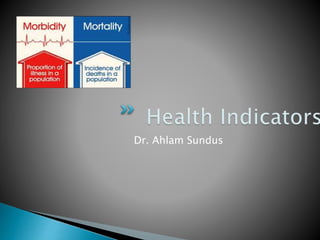
Dr. Ahlam Sundus
 Measure health status of community
 Compare health status among countries
 Estimate healthcare requirements
 Allocation of resources
 Monitoring of health services , activities and
programs
 Evaluation of target of health program
 Valid
 Reliable
 Sensitive
 Specific
A complete status of health can be best evaluated by
employing many indicators at a time
 The number of deaths in a given time or place
 The proportion of deaths to population
 Crude death rate
 Expectation of life
 Infant mortality rate
 Child mortality rate
 Under-5 proportionate mortality rate
 Maternal mortality rate
 Disease specific mortality
 Proportional mortality rate
 No. of deaths per 1000 population every year
 Indicator of comparative health of people
 Not meant for international comparison
◦ Results may vary on the basis of age gender and
composition of population
 Good tool for assessment of over all health
improvement in a population
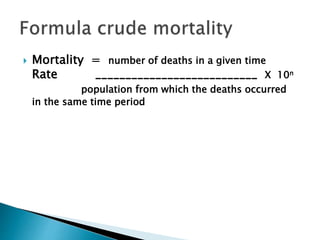
 Mortality = number of deaths in a given time
Rate ___________________________ X 10n
population from which the deaths occurred
in the same time period
 At birth is defined as average number of
years that will be lived if current age-specific
mortality rates persist
 Good indicator of socio-economic
development
 Global health indicator
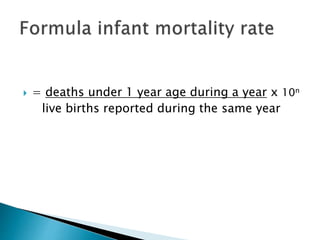
 Ratio of deaths under 1 year of age in a given
year to the live births in same year
 Expressed as a rate per 1000 live births
 Universally accepted indicator for infants,
whole population, socio-economic conditions
 = deaths under 1 year age during a year x 10n
live births reported during the same year
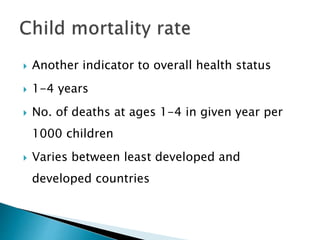
 Another indicator to overall health status
 1-4 years
 No. of deaths at ages 1-4 in given year per
1000 children
 Varies between least developed and
developed countries
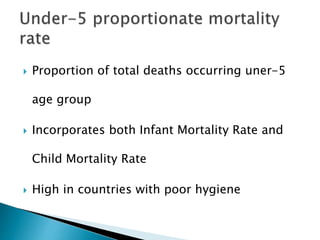
 Proportion of total deaths occurring uner-5
age group
 Incorporates both Infant Mortality Rate and
Child Mortality Rate
 High in countries with poor hygiene
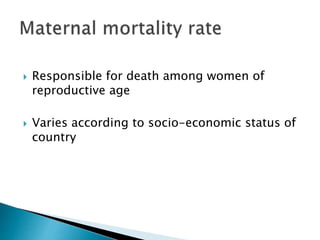
 Responsible for death among women of
reproductive age
 Varies according to socio-economic status of
country
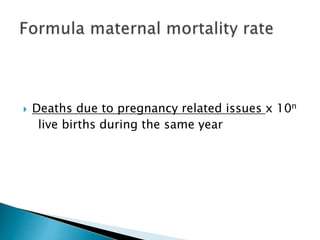
 Deaths due to pregnancy related issues x 10n
live births during the same year
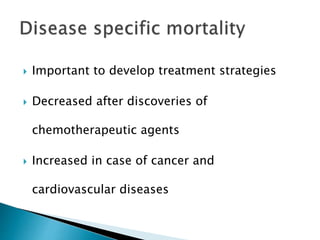
 Important to develop treatment strategies
 Decreased after discoveries of
chemotherapeutic agents
 Increased in case of cancer and
cardiovascular diseases
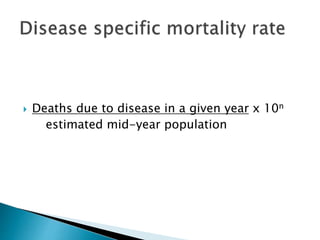
 Deaths due to disease in a given year x 10n
estimated mid-year population
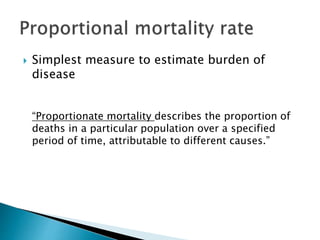
 Simplest measure to estimate burden of
disease
“Proportionate mortality describes the proportion of
deaths in a particular population over a specified
period of time, attributable to different causes.”
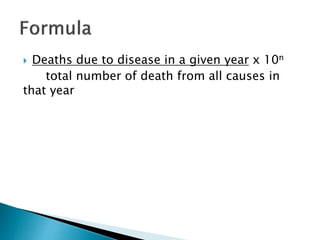
 Deaths due to disease in a given year x 10n
total number of death from all causes in
that year
 Mortality doesn’t indicate the burden of ill
health
 Mental health
 Arthritis
 Asthma
 Epilepsy
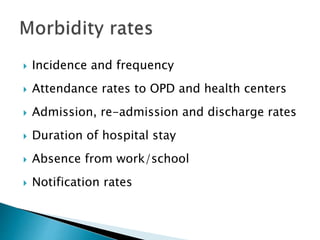
 Incidence and frequency
 Attendance rates to OPD and health centers
 Admission, re-admission and discharge rates
 Duration of hospital stay
 Absence from work/school
 Notification rates
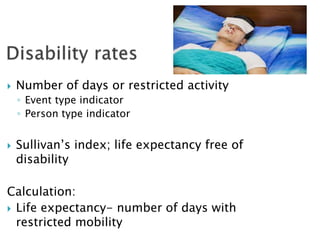
 Number of days or restricted activity
◦ Event type indicator
◦ Person type indicator
 Sullivan’s index; life expectancy free of
disability
Calculation:
 Life expectancy- number of days with
restricted mobility
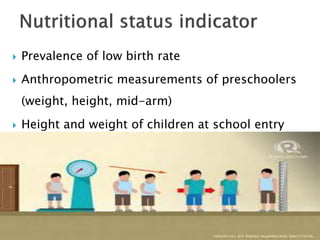
 Prevalence of low birth rate
 Anthropometric measurements of preschoolers
(weight, height, mid-arm)
 Height and weight of children at school entry
 Doctor: population ratio
 Doctor: nurse population ratio
 Population: hospital bed ratio
 Population covered by health center
 Population per traditional birth attendents
 Proportion of infants fully immunized
 Proportion of pregnant ladies who receive full
antenatal care
 Bed occupancy rates in hospitals
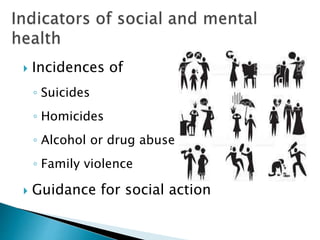
 Incidences of
◦ Suicides
◦ Homicides
◦ Alcohol or drug abuse
◦ Family violence
 Guidance for social action
 Rate of increase in population
 Per capita GNP
 Level of unemployment
 Dependency ratio
 Literacy rate
 Family size
 Housing (number of person per room)

Health indicators

  • 1.
  • 2.
     Measure healthstatus of community  Compare health status among countries  Estimate healthcare requirements  Allocation of resources  Monitoring of health services , activities and programs  Evaluation of target of health program
  • 3.
     Valid  Reliable Sensitive  Specific A complete status of health can be best evaluated by employing many indicators at a time
  • 4.
     The numberof deaths in a given time or place  The proportion of deaths to population  Crude death rate  Expectation of life  Infant mortality rate  Child mortality rate  Under-5 proportionate mortality rate  Maternal mortality rate  Disease specific mortality  Proportional mortality rate
  • 5.
     No. ofdeaths per 1000 population every year  Indicator of comparative health of people  Not meant for international comparison ◦ Results may vary on the basis of age gender and composition of population  Good tool for assessment of over all health improvement in a population
  • 6.
     Mortality =number of deaths in a given time Rate ___________________________ X 10n population from which the deaths occurred in the same time period
  • 7.
     At birthis defined as average number of years that will be lived if current age-specific mortality rates persist  Good indicator of socio-economic development  Global health indicator
  • 8.
     Ratio ofdeaths under 1 year of age in a given year to the live births in same year  Expressed as a rate per 1000 live births  Universally accepted indicator for infants, whole population, socio-economic conditions
  • 9.
     = deathsunder 1 year age during a year x 10n live births reported during the same year
  • 10.
     Another indicatorto overall health status  1-4 years  No. of deaths at ages 1-4 in given year per 1000 children  Varies between least developed and developed countries
  • 11.
     Proportion oftotal deaths occurring uner-5 age group  Incorporates both Infant Mortality Rate and Child Mortality Rate  High in countries with poor hygiene
  • 12.
     Responsible fordeath among women of reproductive age  Varies according to socio-economic status of country
  • 13.
     Deaths dueto pregnancy related issues x 10n live births during the same year
  • 14.
     Important todevelop treatment strategies  Decreased after discoveries of chemotherapeutic agents  Increased in case of cancer and cardiovascular diseases
  • 15.
     Deaths dueto disease in a given year x 10n estimated mid-year population
  • 16.
     Simplest measureto estimate burden of disease “Proportionate mortality describes the proportion of deaths in a particular population over a specified period of time, attributable to different causes.”
  • 17.
     Deaths dueto disease in a given year x 10n total number of death from all causes in that year
  • 19.
     Mortality doesn’tindicate the burden of ill health  Mental health  Arthritis  Asthma  Epilepsy
  • 20.
     Incidence andfrequency  Attendance rates to OPD and health centers  Admission, re-admission and discharge rates  Duration of hospital stay  Absence from work/school  Notification rates
  • 21.
     Number ofdays or restricted activity ◦ Event type indicator ◦ Person type indicator  Sullivan’s index; life expectancy free of disability Calculation:  Life expectancy- number of days with restricted mobility
  • 22.
     Prevalence oflow birth rate  Anthropometric measurements of preschoolers (weight, height, mid-arm)  Height and weight of children at school entry
  • 23.
     Doctor: populationratio  Doctor: nurse population ratio  Population: hospital bed ratio  Population covered by health center  Population per traditional birth attendents
  • 24.
     Proportion ofinfants fully immunized  Proportion of pregnant ladies who receive full antenatal care  Bed occupancy rates in hospitals
  • 25.
     Incidences of ◦Suicides ◦ Homicides ◦ Alcohol or drug abuse ◦ Family violence  Guidance for social action
  • 26.
     Rate ofincrease in population  Per capita GNP  Level of unemployment  Dependency ratio  Literacy rate  Family size  Housing (number of person per room)