Headache Good morning
General conciderations : _ Headache is one of the most common neurological problems, in which the careful analysis of the details of history is particularly important. _ Duration of the headache may give clear idea of the seriousness of the und- erlying disease . _ sudden headache for the first time may be due to meningitis, intracranial hemorrhage, subarachnoid hemorrhage . _ Headache for years usually is psychogenic . _ Headache for weeks or months may suggest a progressive or an expanding intracranial lesion& require careful investigation. _ Pain sensitive structures both inside and outside the head receive their sensory innervation from the tigeminal, glossopharangeal and vagus  nerves or from the upper three cervical nerves
General conciderations : cont. _If the headache is due to a lesion above tentorium pain is felt at  the distribution of ophthalmic division of trigeminal nerve. _If the lesion is below tentorium the pain is referred to distribution  of upper three cervical nerves or ninth or tenth cranial nerves _ the duration and frequency are important when the headache is  periodic or recurrent, migraine may occur at regular intervals or confined to certain times, at premenstrual period and  may be absent during pregnancy. _ Aggravating factors are important, headache of increased intracra- nial pressure is aggravated by change in posture or sudden  movement also in vascular and post-concussional headache
General conciderations : cont. _Certain food, cheese , chocolate and hypoglycemia may bring on  migraine, while rest will generally relieve vascular headache. _  The quality of pain also helpful, in migraine is throbbing, but in migrainous neuralgia may take the form of severe boring pain, while in tension headache is dull, pressing and band-like.
Primary headaches. Migraine. Tension. Cluster.
BENIGN PAROXYSMAL HEADACHES
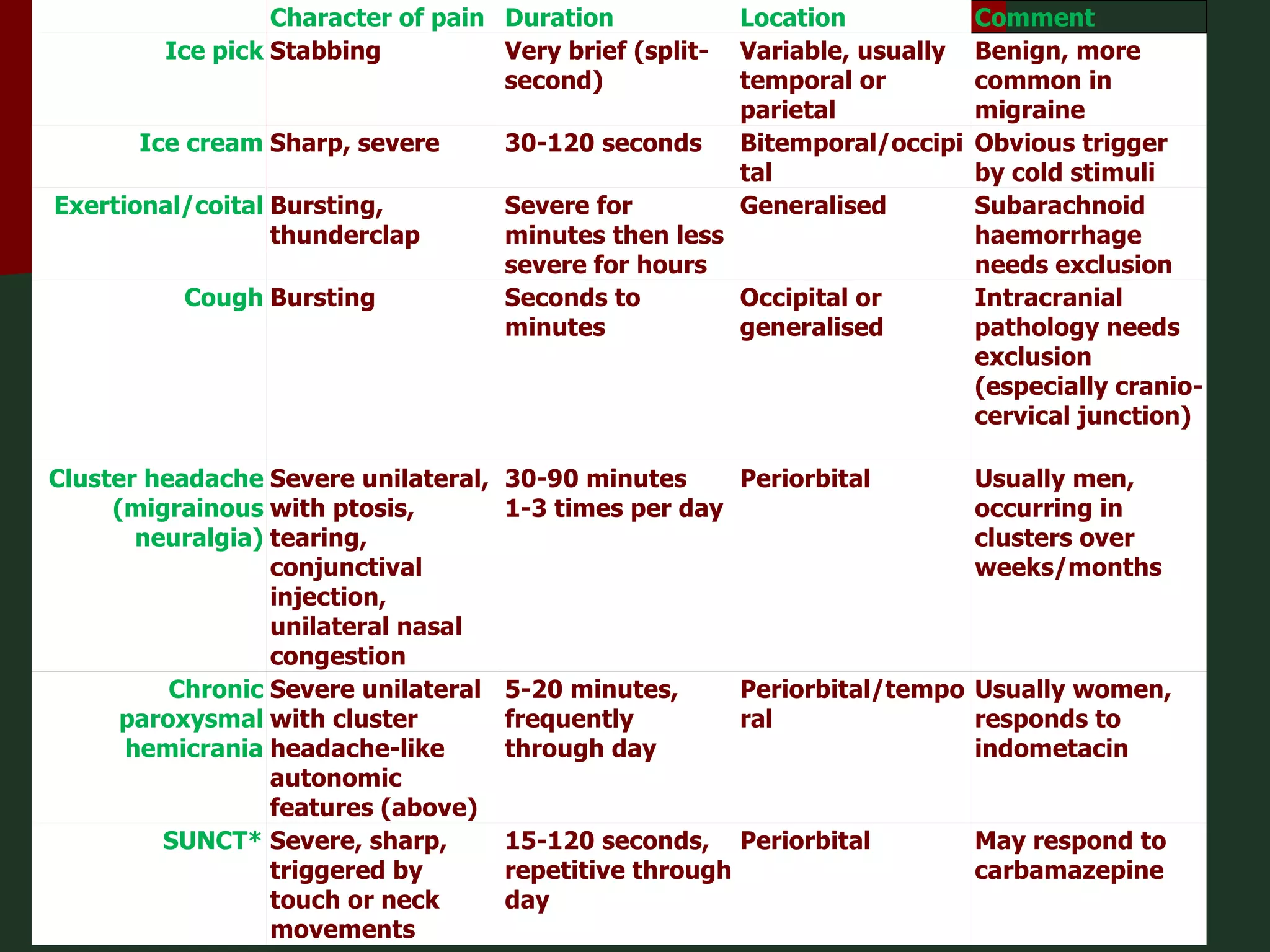
Character of pain Duration Location Comment Ice pick Stabbing Very brief (split-second) Variable, usually temporal or parietal Benign, more common in migraine Ice cream Sharp, severe 30-120 seconds Bitemporal/occipital Obvious trigger by cold stimuli Exertional/coital Bursting, thunderclap Severe for minutes then less severe for hours Generalised Subarachnoid haemorrhage needs exclusion Cough Bursting Seconds to minutes Occipital or generalised Intracranial pathology needs exclusion (especially cranio-cervical junction) Cluster headache (migrainous neuralgia) Severe unilateral, with ptosis, tearing, conjunctival injection, unilateral nasal congestion 30-90 minutes 1-3 times per day Periorbital Usually men, occurring in clusters over weeks/months Chronic paroxysmal hemicrania Severe unilateral with cluster headache-like autonomic features (above) 5-20 minutes, frequently through day Periorbital/temporal Usually women, responds to indometacin SUNCT* Severe, sharp, triggered by touch or neck movements 15-120 seconds, repetitive through day Periorbital May respond to carbamazepine
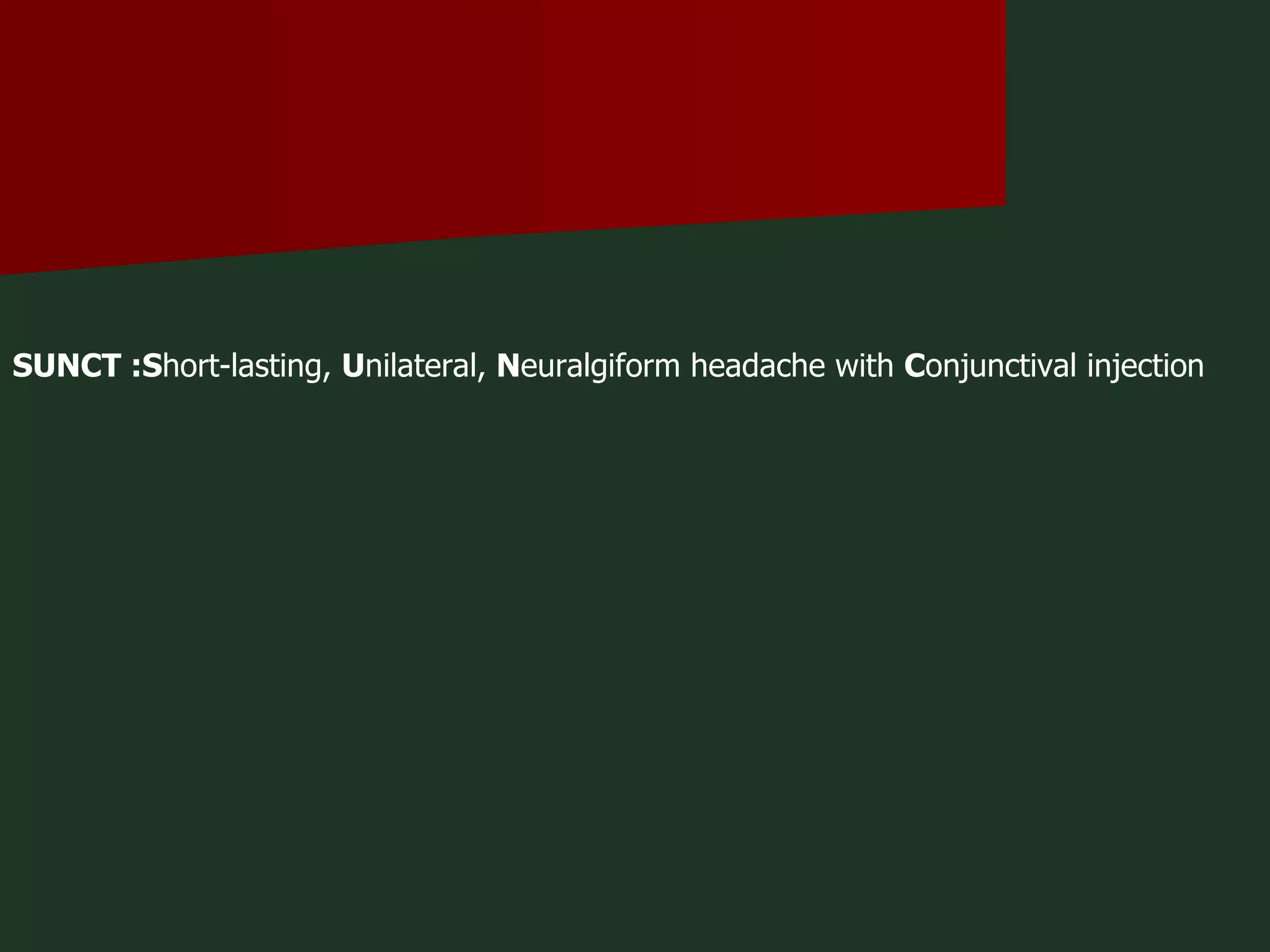
SUNCT :S hort-lasting,  U nilateral,  N euralgiform headache with  C onjunctival injection
Secondary headaches. Subarachoid hemorrhage. Meningitis. Intracranial tumors. Temporal artritis. Subdural hematoma.
 
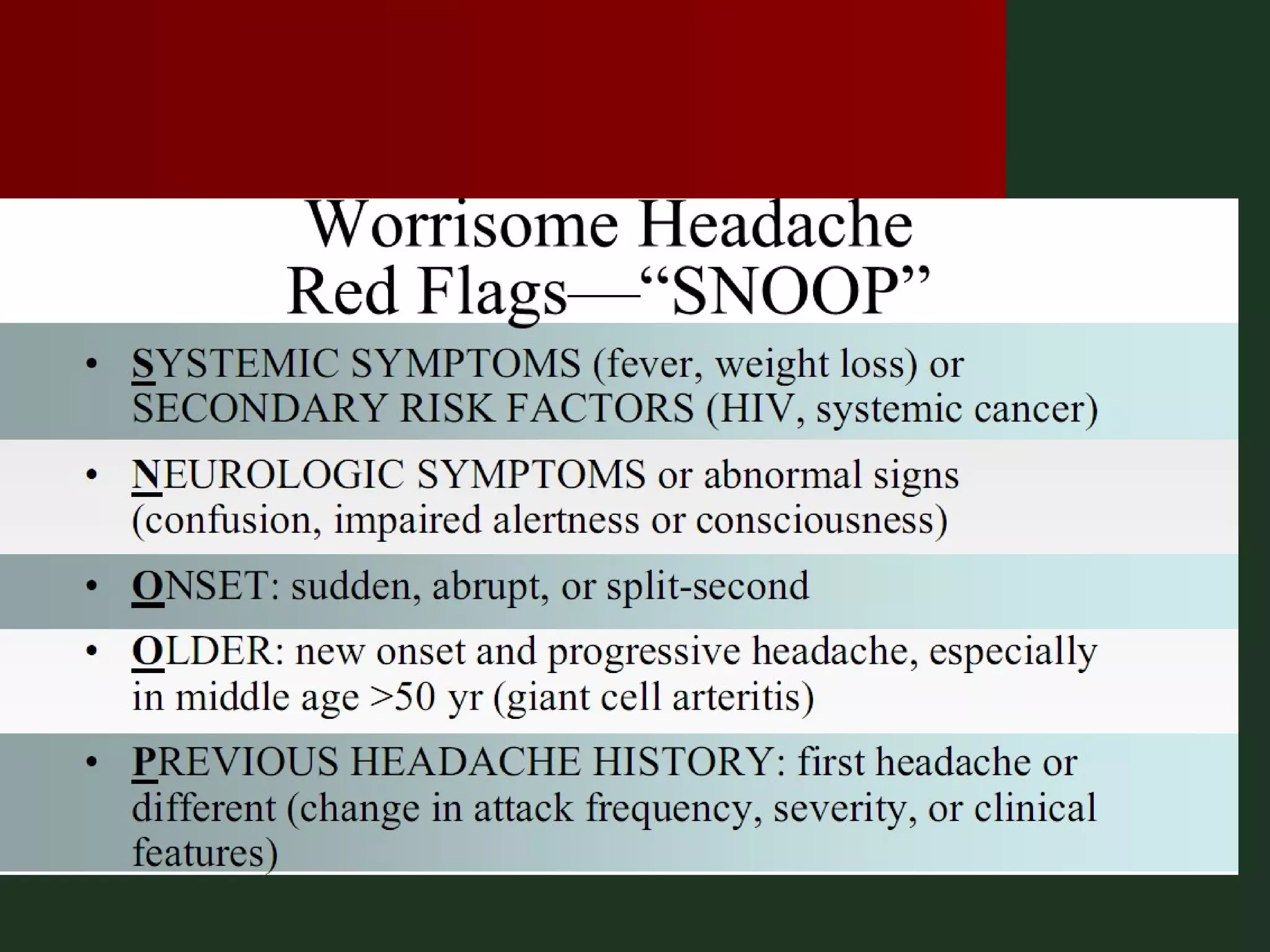
“ Red Flags” for headache evaluation  HIGH RISK HISTORICAL FEATURES  Sudden Onset  New onset > 50yrs Headache with exertion  Visual disturbances Location Medication  HIV , Immunocompromised
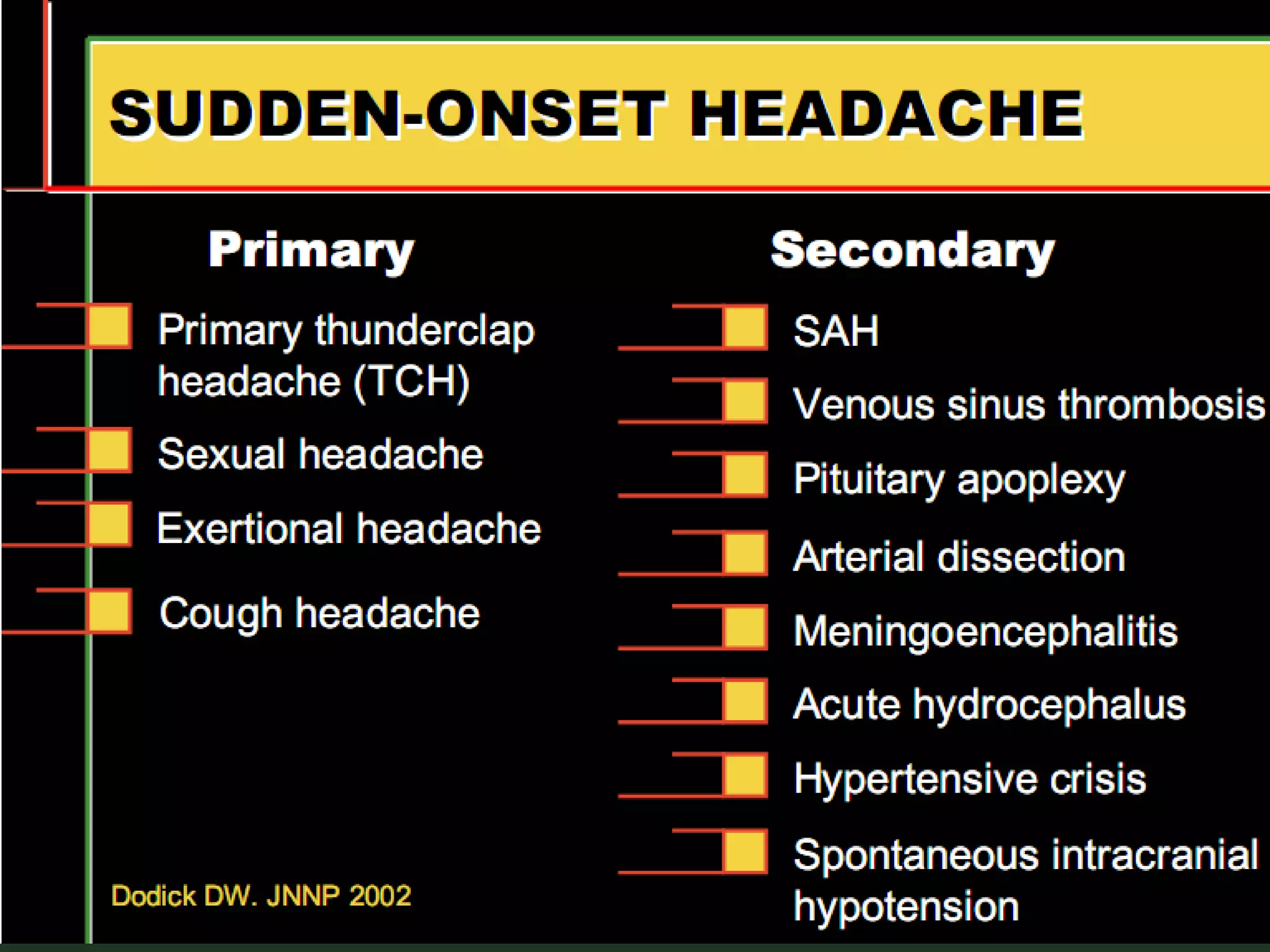
Sudden onset  Subarachnoid hemorrhage (SAH) often presents with the abrupt onset of excruciating pain. Other serious etiologies include carotid and vertebral artery dissections, venous sinus thrombosis, pituitary apoplexy, and hypertensive emergencies
 
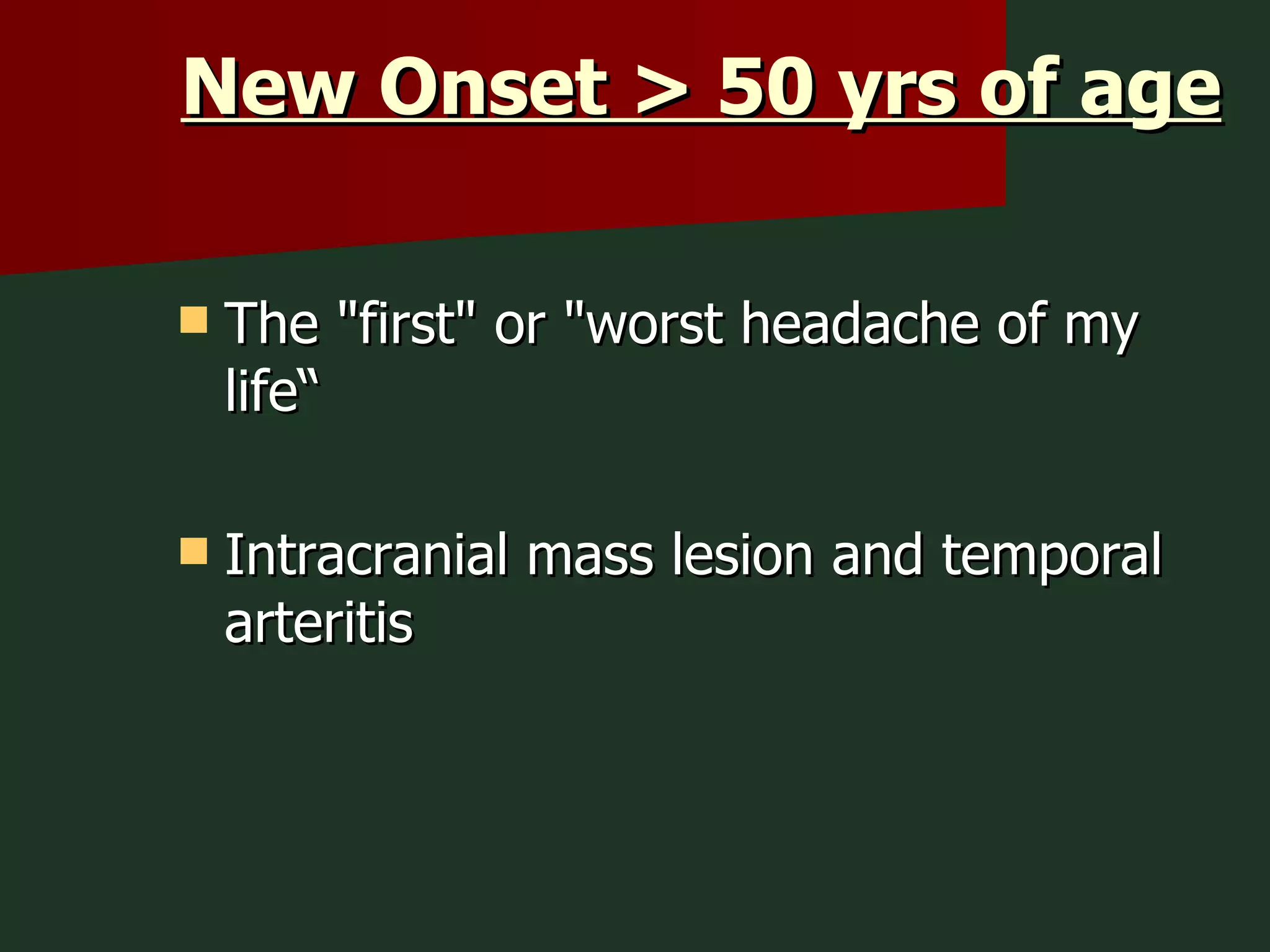
New Onset > 50 yrs of age The "first" or "worst headache of my life“ Intracranial mass lesion and temporal arteritis
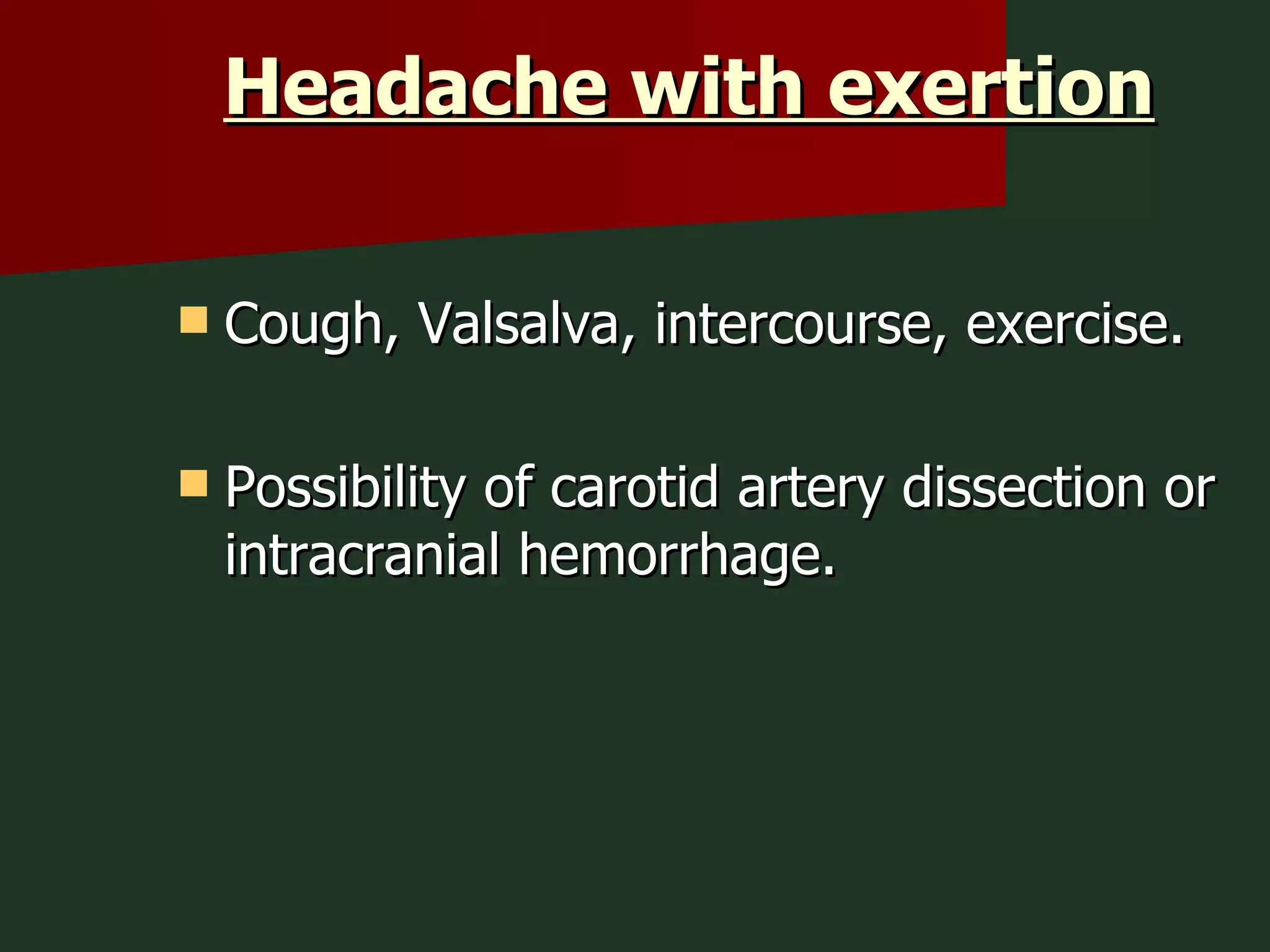
Headache with exertion   Cough, Valsalva, intercourse, exercise. Possibility of carotid artery dissection or intracranial hemorrhage.
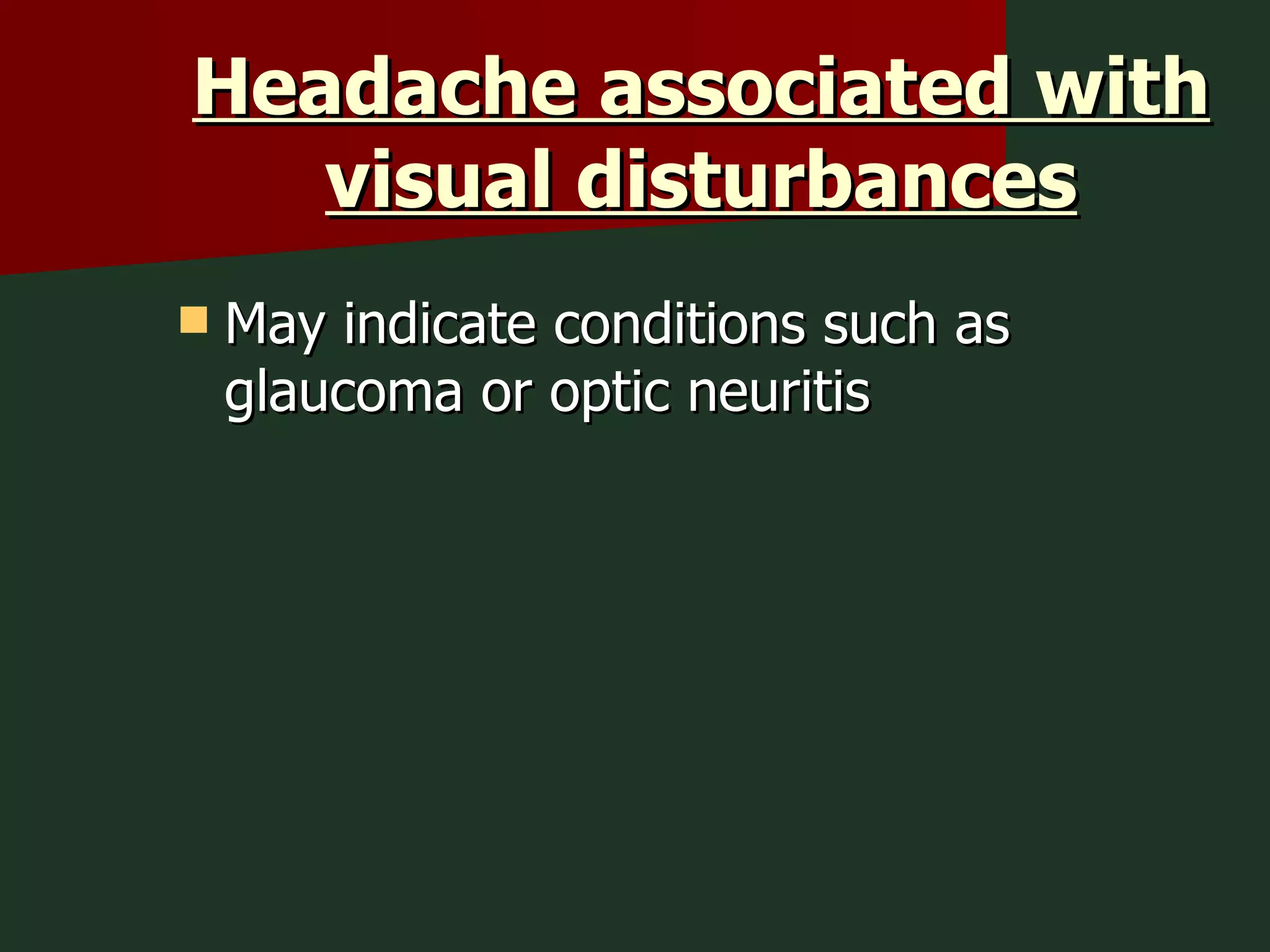
Headache associated with visual disturbances May indicate conditions such as glaucoma or optic neuritis
Location of pain Unilateral temple headache in adult life (may indicate cranial arteritis) Head pain that spreads into the lower neck and between the shoulders may indicate meningeal infection.
HIV and immunosuppression  Significant risk for intracranial disease, including toxoplasmosis, brain abscess, meningitis and tumours.
Medications   Use of anticoagulants or nonsteroidal antiinflammatory drugs eg, aspirin increases the risk of intracranial bleeding. Analgesics can mask severe symptoms or exacerbate migraine headache
HIGH RISK EXAMINATION FINDINGS Neurological abnormalities Meningism Ophthalmologic findings Abnormal vital signs
Neurological Abnormalities  Best clinical predictor of intracranial pathology. Unilateral vision loss, ataxia, or seizure. Pupillary asymmetry, unilateral pronator drift, or extensor plantar response
Decreased level of consciousness  Atypical of benign headaches Increases the likelihood of meningitis, encephalitis, subarachnoid hemorrhage (SAH), or other space occupying lesion.
Meningism Nuchal rigidity  Photophobia  Kernig’s sign Brudzinski’s sign
Ophthalmologic findings Papilloedema Raises the suspicion of raised intracranial pressure Mass lesion or benign intracranial hypertension.
Abnormal Vital Signs Febrile Increased BP Bradycardia
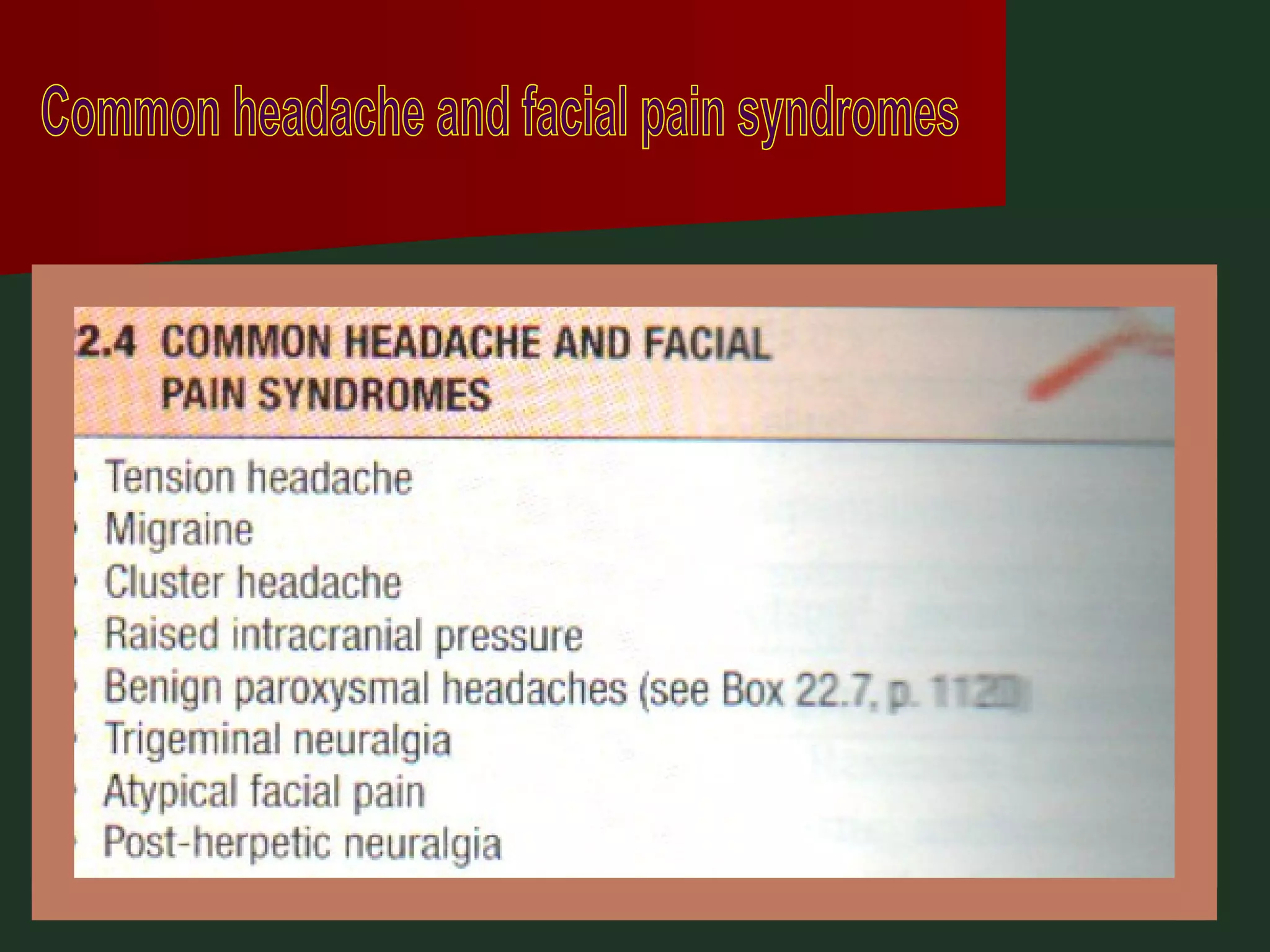
Common headache and facial pain syndromes
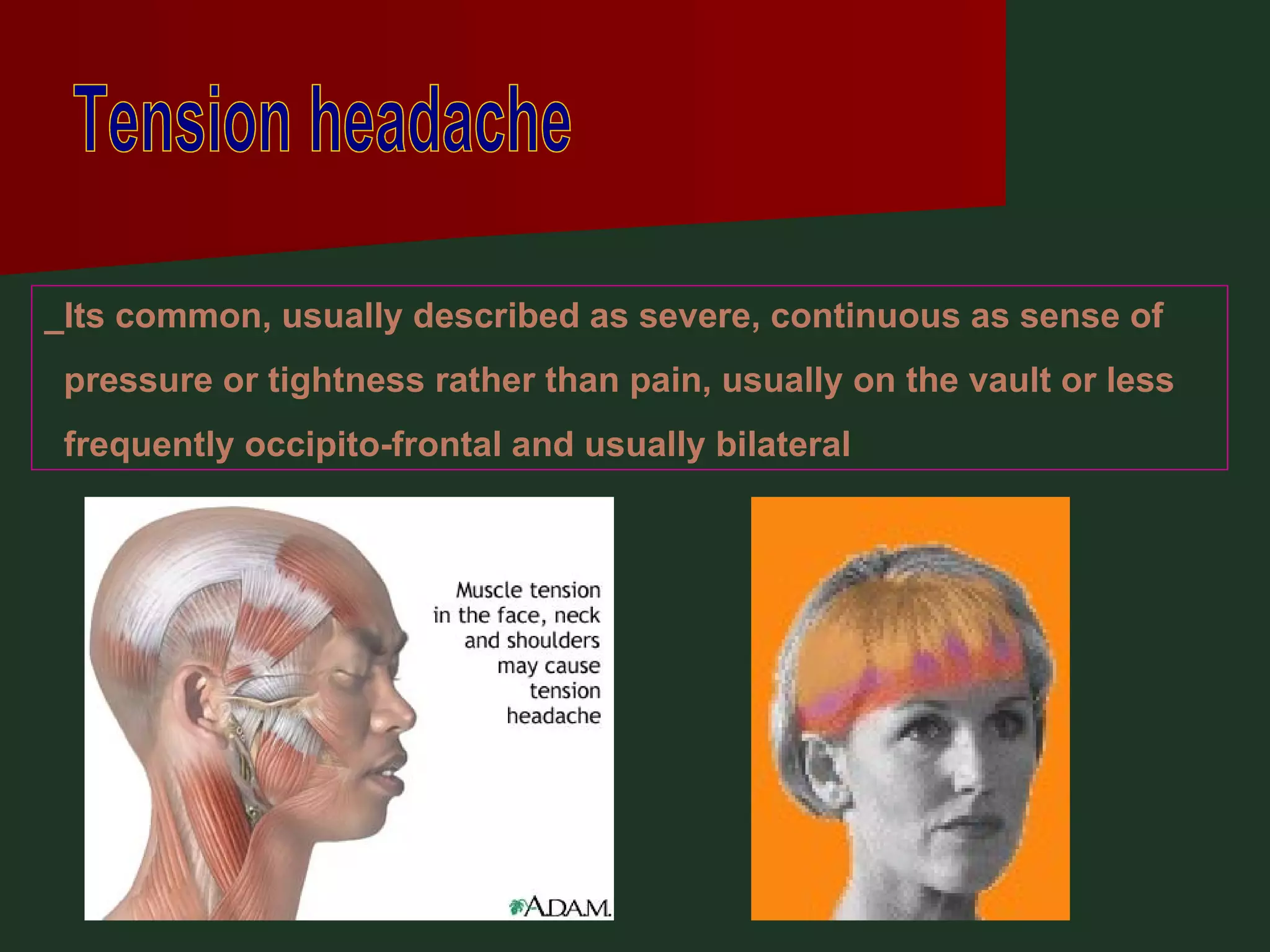
Tension headache _Its common, usually described as severe, continuous as sense of pressure or tightness rather than pain, usually on the vault or less frequently occipito-frontal and usually bilateral
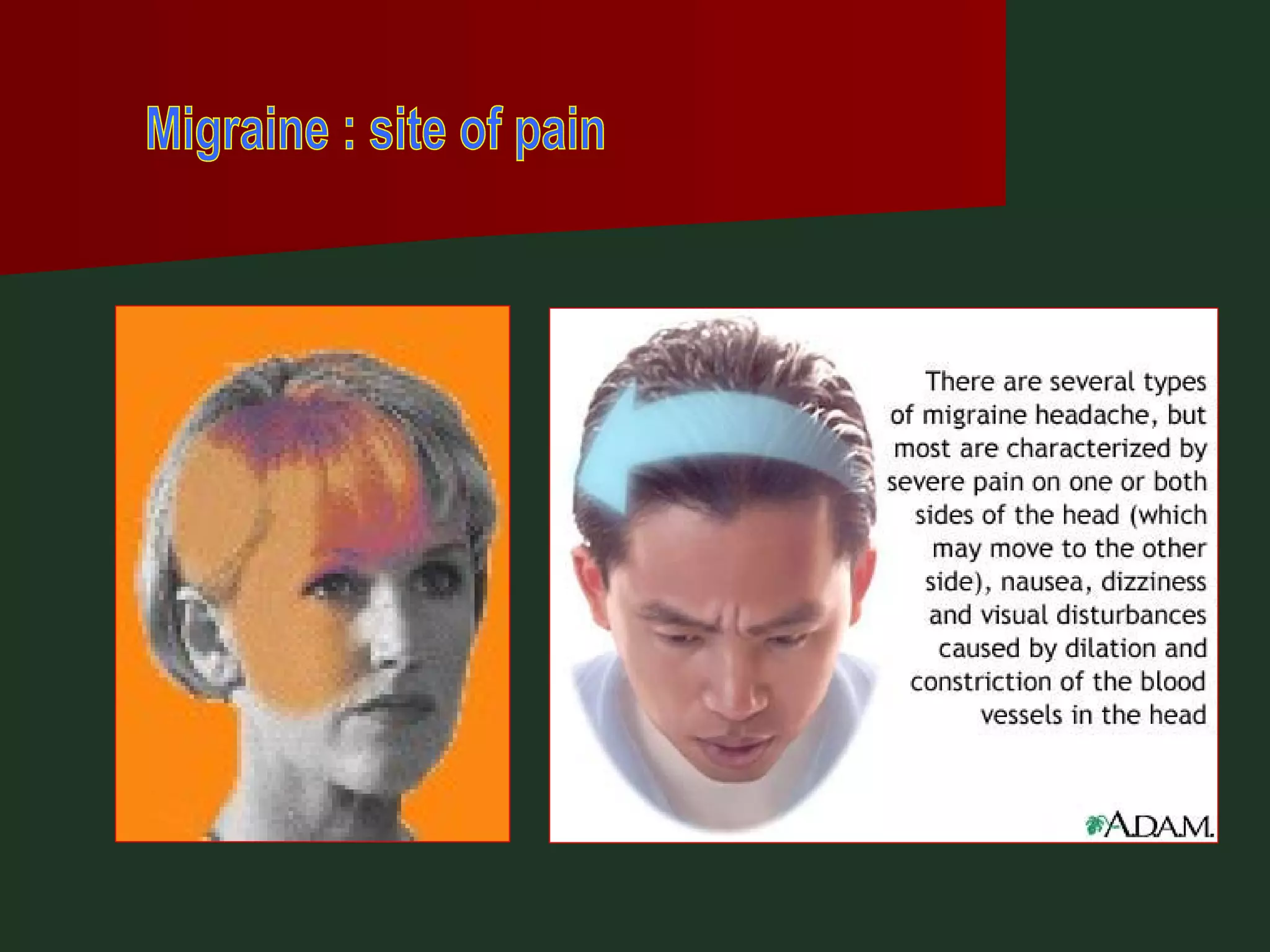
Migraine _ migraine is very common and a wide variety of atypical and  partial forms are seen. _ usually start at adolescence as recurrent headache lasting 2 hs to 2 days. _ the pain is usually unilateral associated with photophobia, nausea and vomiting. _ Many patients experience an aura before the pain usually visual disturbance as flashing lights, scotomata, or even hemianopia, paraesthesiae may occur around the angle of the mouth or in the hand.
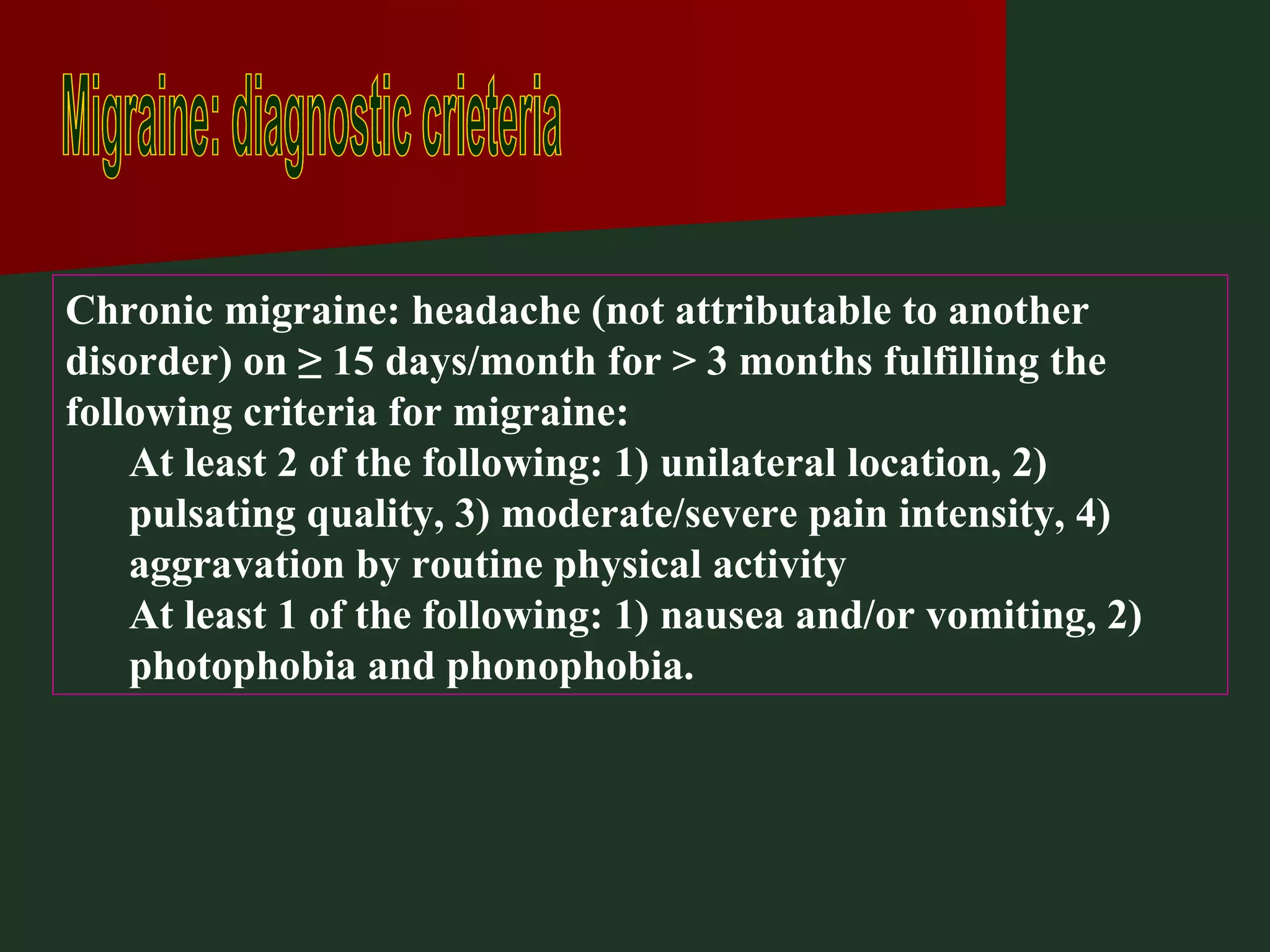
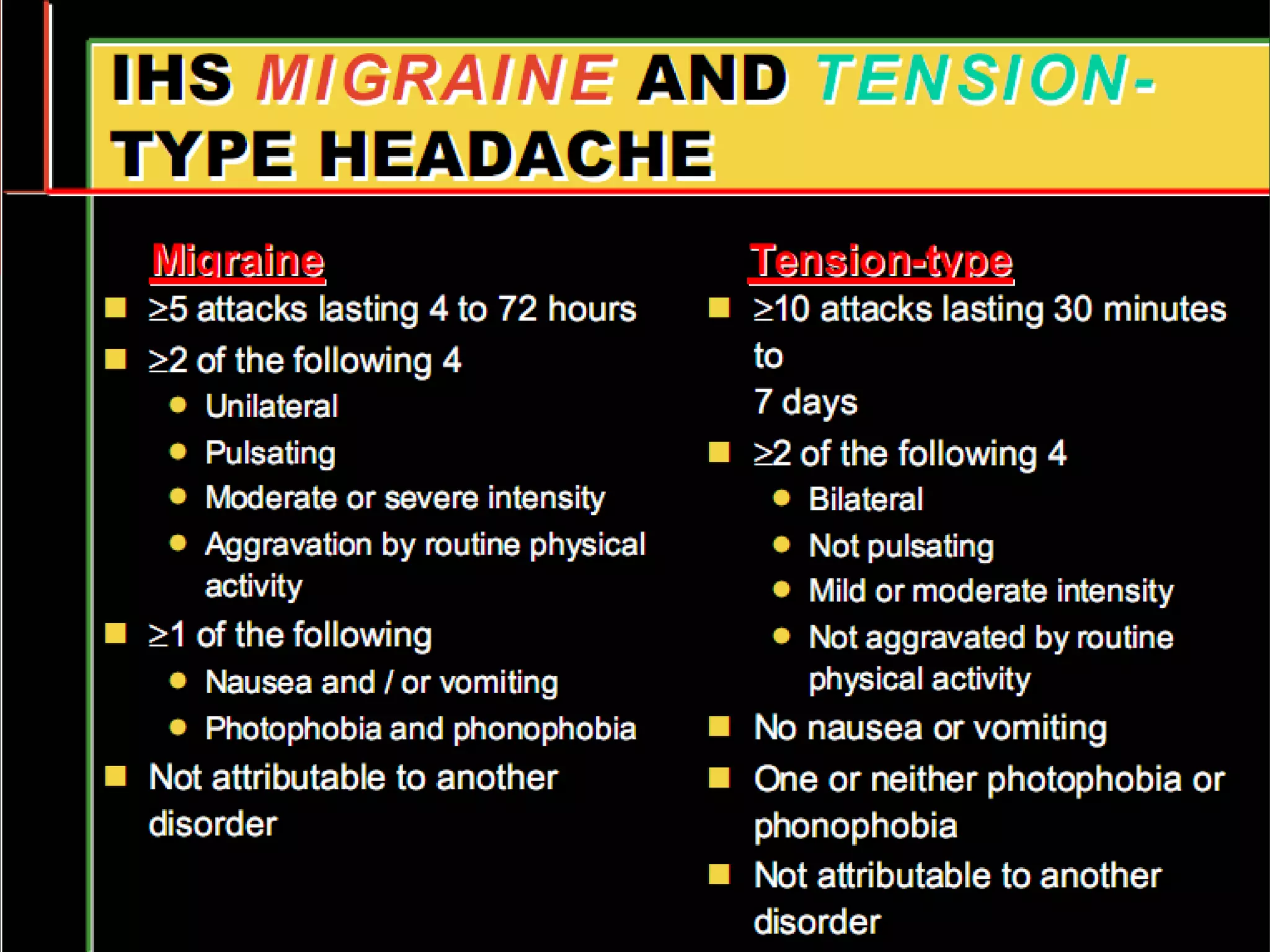
Migraine: diagnostic crieteria Chronic migraine: headache (not attributable to another disorder) on ≥ 15 days/month for > 3 months fulfilling the following criteria for migraine: At least 2 of the following: 1) unilateral location, 2) pulsating quality, 3) moderate/severe pain intensity, 4) aggravation by routine physical activity At least 1 of the following: 1) nausea and/or vomiting, 2) photophobia and phonophobia.
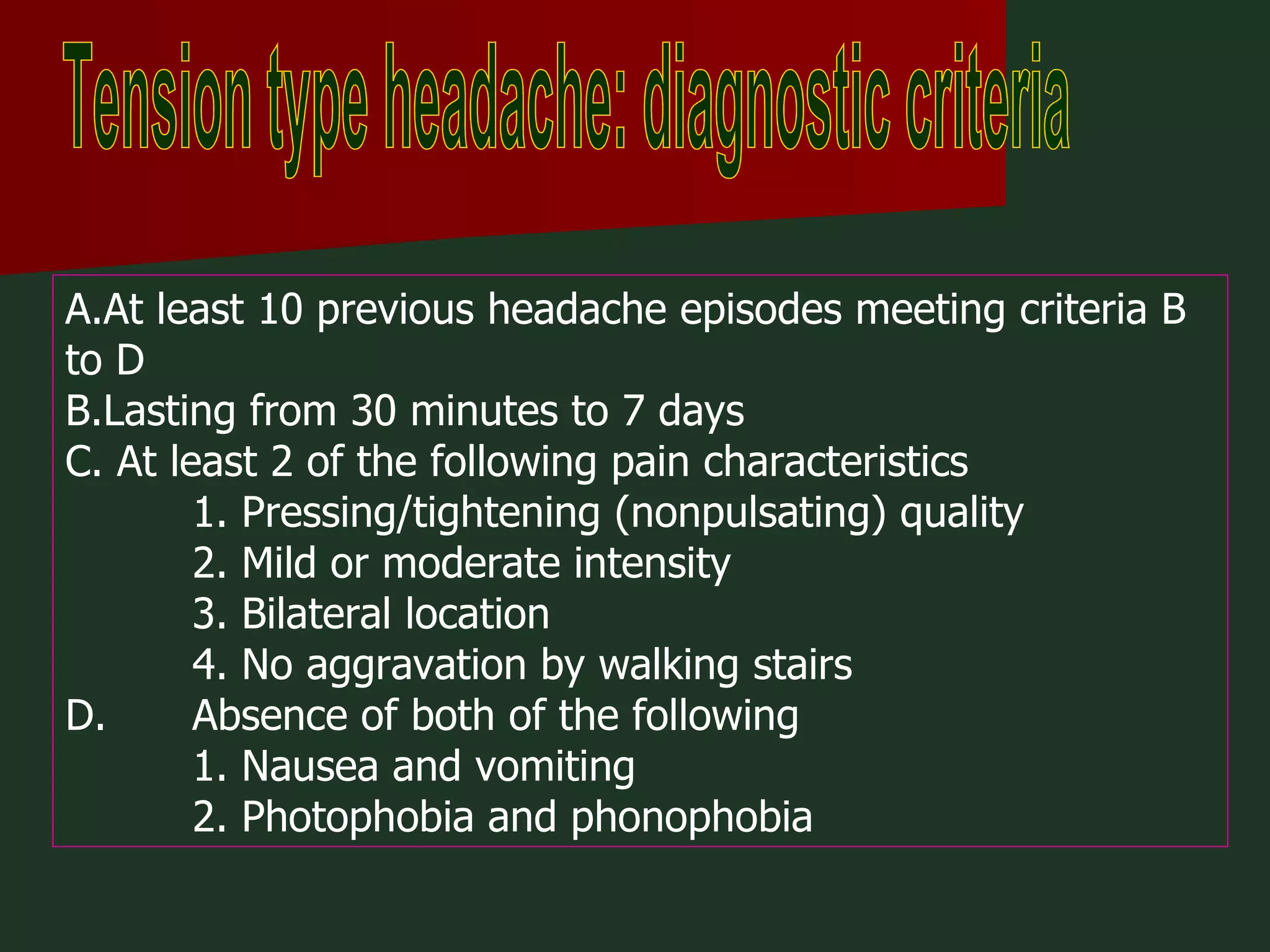
Tension type headache: diagnostic criteria A.At least 10 previous headache episodes meeting criteria B to D B.Lasting from 30 minutes to 7 days C. At least 2 of the following pain characteristics 1. Pressing/tightening (nonpulsating) quality 2. Mild or moderate intensity 3. Bilateral location 4. No aggravation by walking stairs D. Absence of both of the following 1. Nausea and vomiting 2. Photophobia and phonophobia
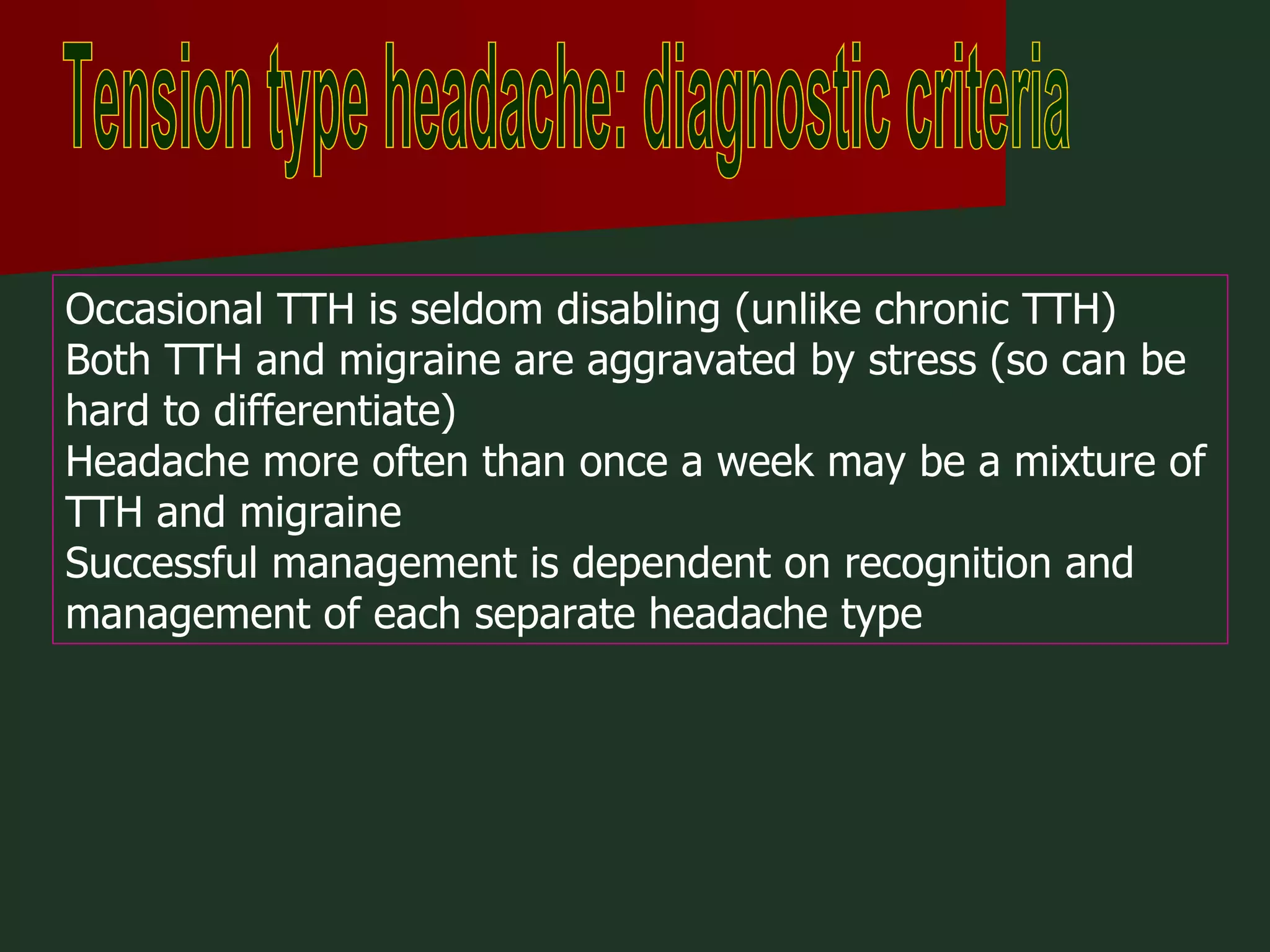
Tension type headache: diagnostic criteria Occasional TTH is seldom disabling (unlike chronic TTH)  Both TTH and migraine are aggravated by stress (so can be hard to differentiate)  Headache more often than once a week may be a mixture of TTH and migraine  Successful management is dependent on recognition and management of each separate headache type
 
Cluster headache: diagnostic criteria Formerly known as  migrainous neuralgia Generally affects men (ratio 6:1), often smokers, in their 20s or older Typically occurs in bouts for 6-12 weeks every one or two years Attacks typically occur at night, waking the patient 1 to 2 hours after falling asleep, lasting 30 to 60 minutes Pain is intense, probably as severe as renal colic, and strictly unilateral
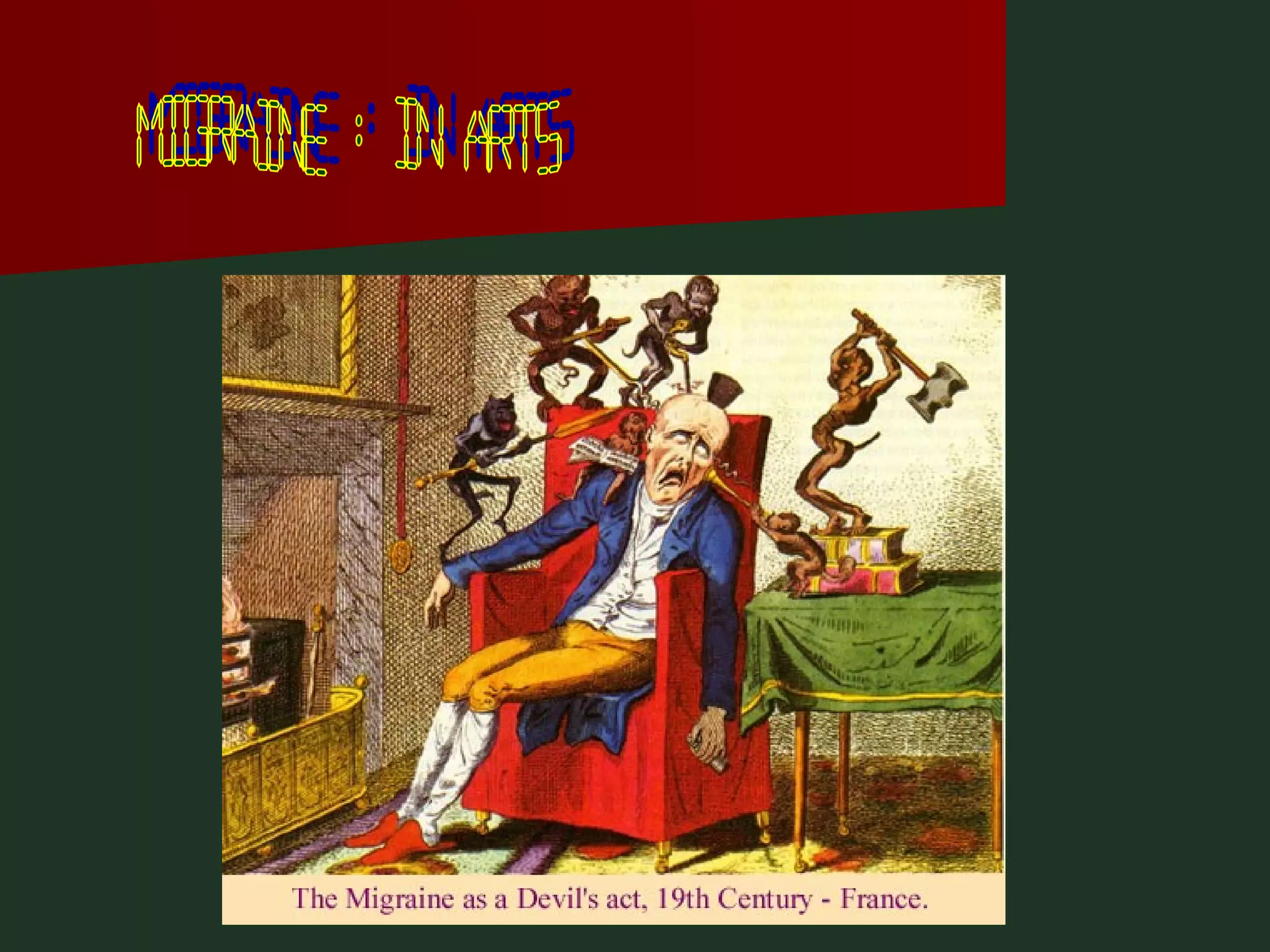
Migraine : in arts
Migraine : site of pain
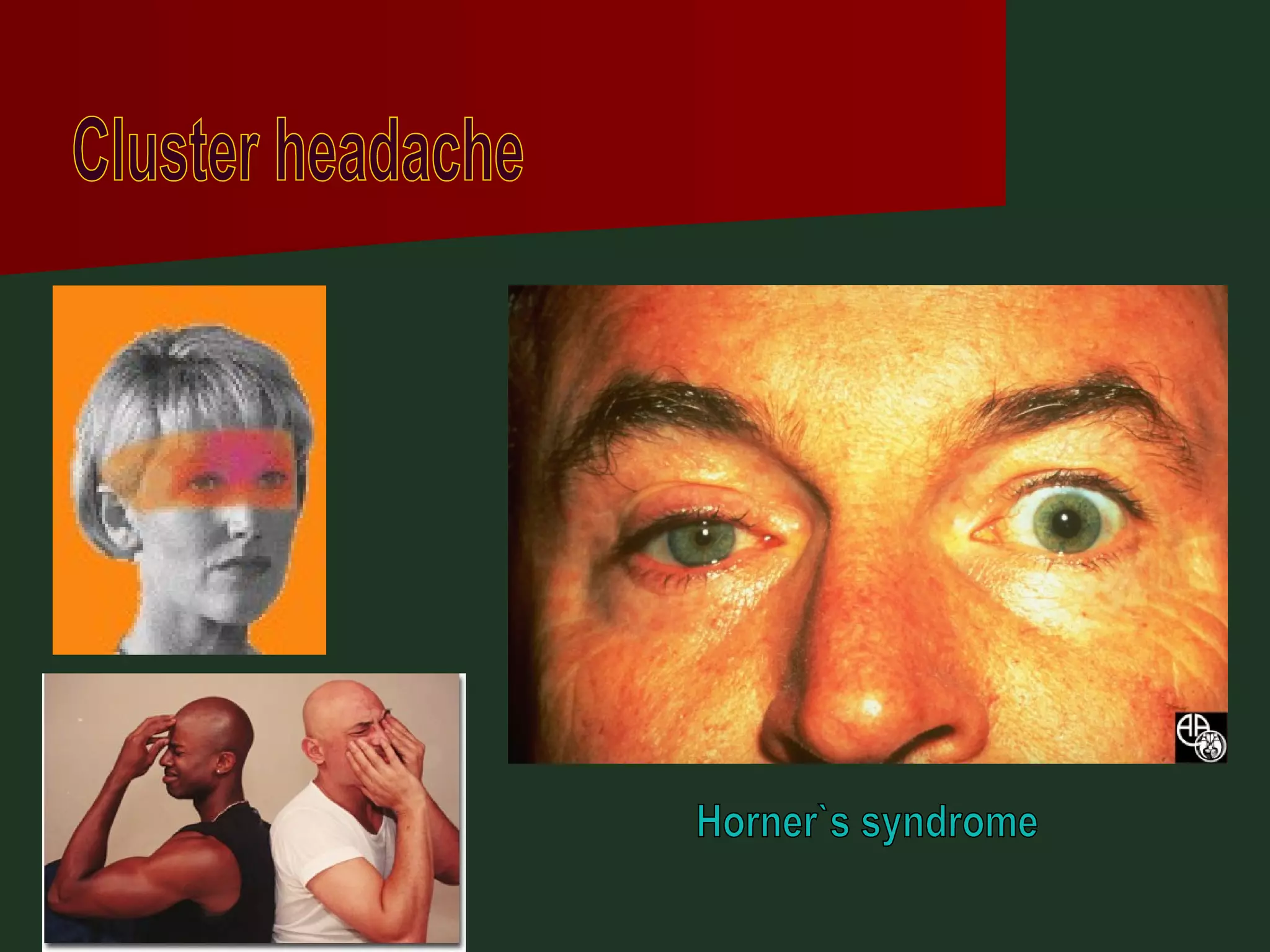
Cluster headache _Its much less common than migraine and more in males, onset usually at third decade. _Characterized by severe periodic unilateral periorbital pain with conjunctival injection, unilateral lacrimation, nasal congestion and partial horner`s syndrome _The pain is brief last 30-90 minutes. _ usually occur at  early morning for weeks disappear for months followed by another cluster.
Cluster headache Horner`s syndrome
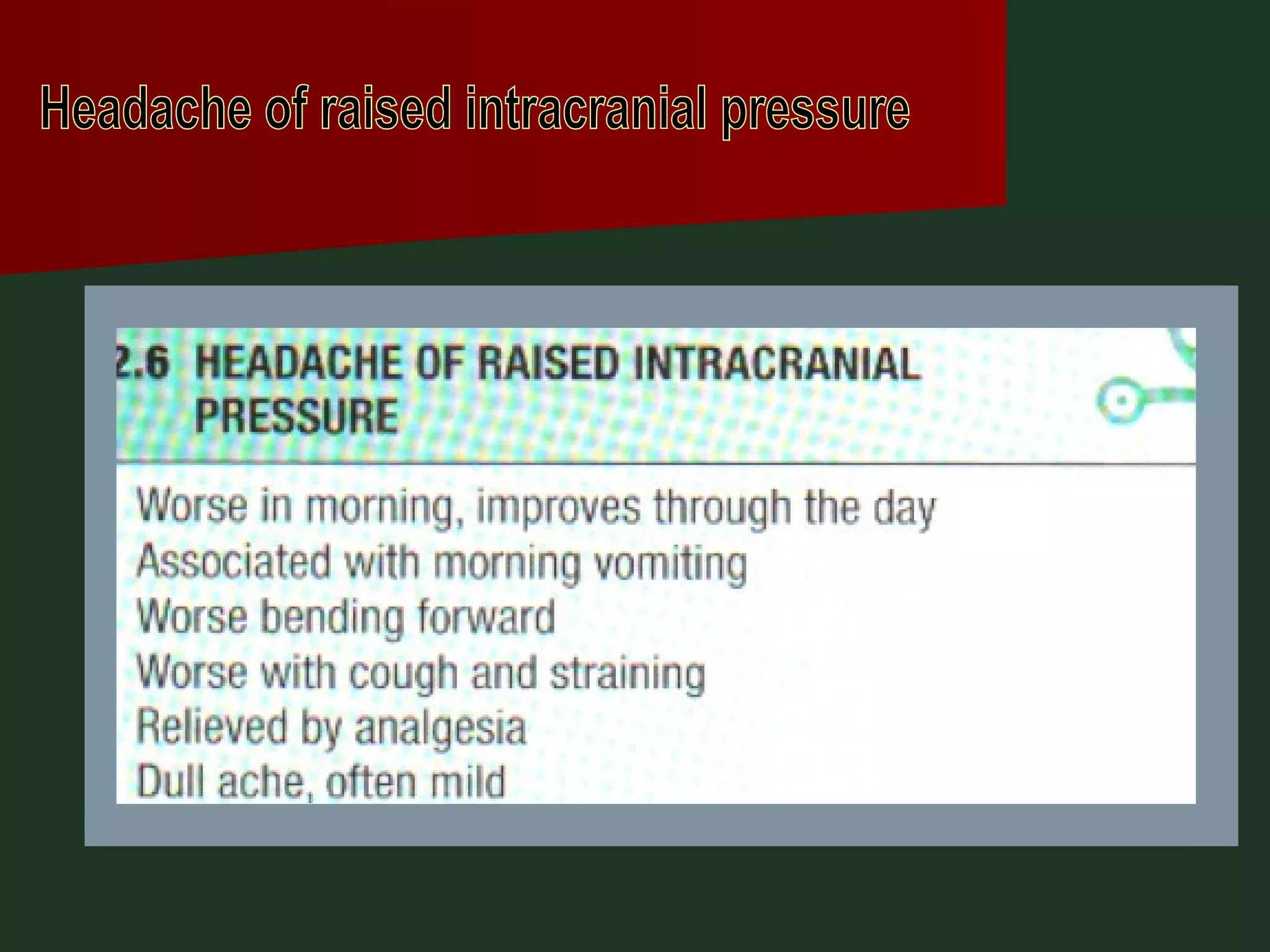
Headache of raised intracranial pressure
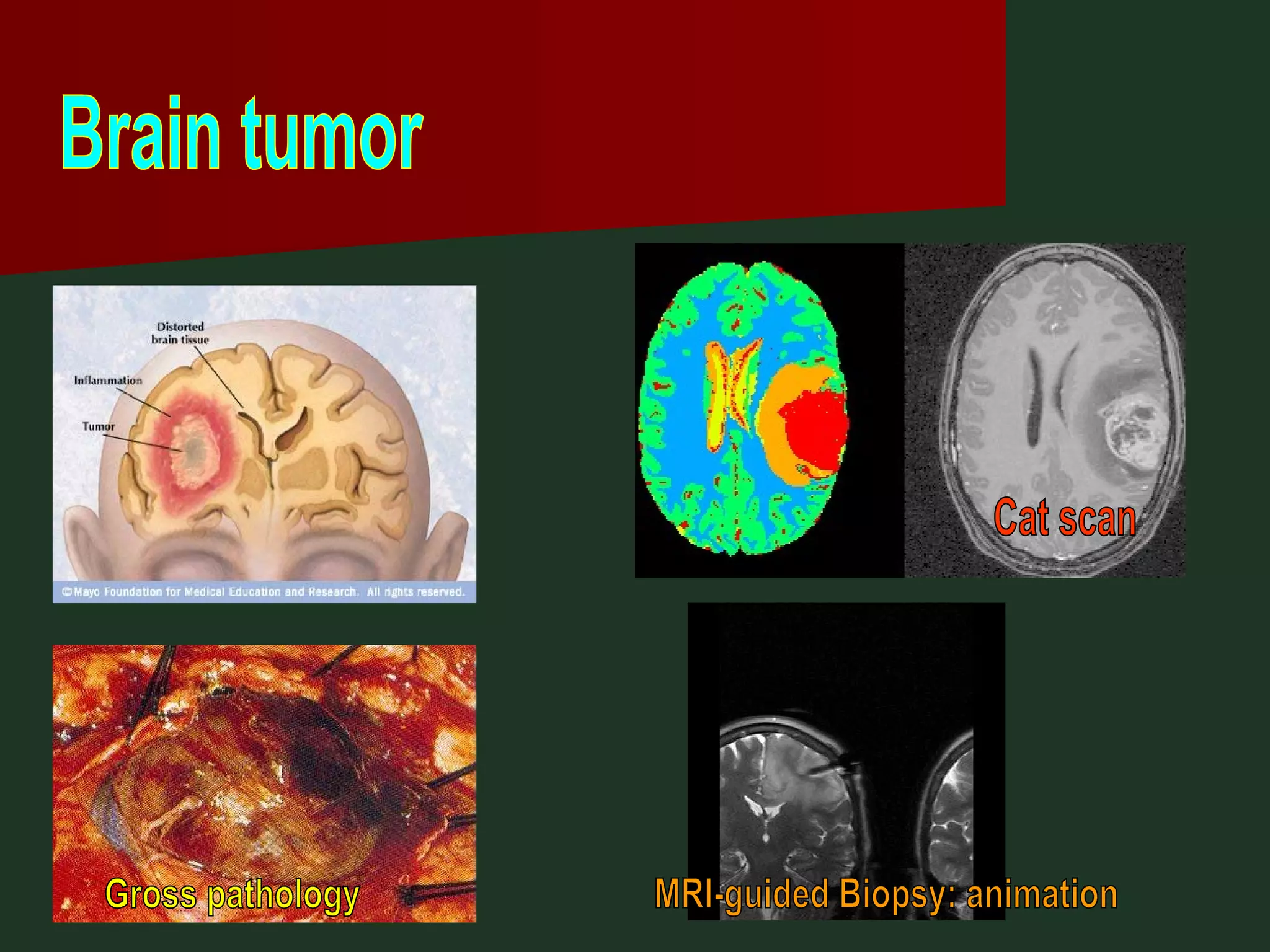
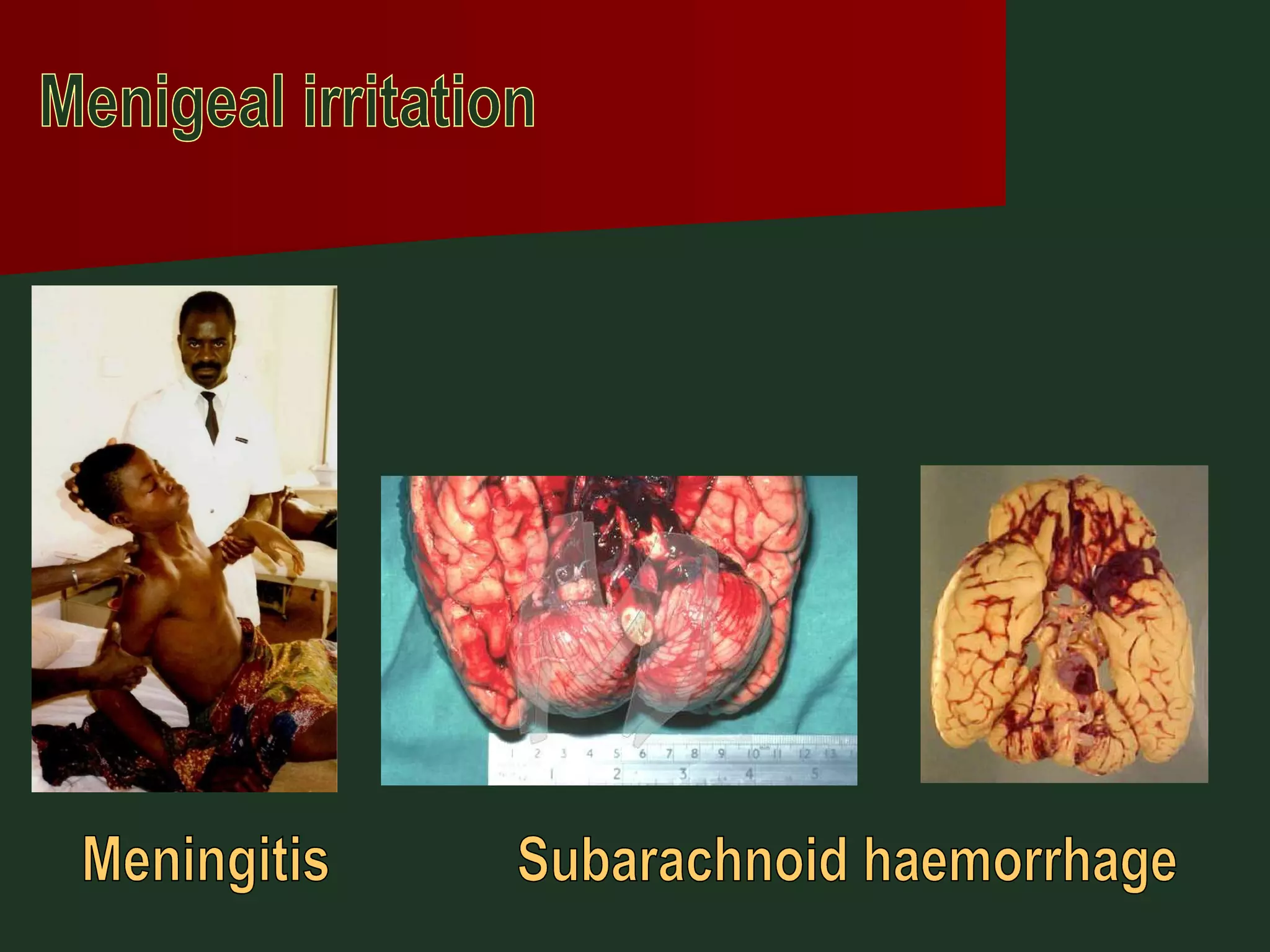
Headache of raised intracranial pressure : Cont. _Usually due to space occupying lesions, brain tumor, abscess, or haematoma. _Other causes of raised intracranial pressure, viral encephalitis,  lead encephalopathy and malignant hypertension. _Severe headache occurs in meningeal irritation as in meningitis and subarachnoid haemorrhage which are associated with vomiting and  neck rigidity.
Brain tumor Cat scan MRI-guided Biopsy: animation Gross pathology
Subarachnoid haemorrhage Meningitis Menigeal irritation
Coital and exercise-induced headache _Usually middle-aged men develop sudden, severe headache at the climax of sexual intercourse last for 10-15 minutes, a milder  headache may persist for few hours. _A similar headache may occur after unaccustommed exertion in unfit person.
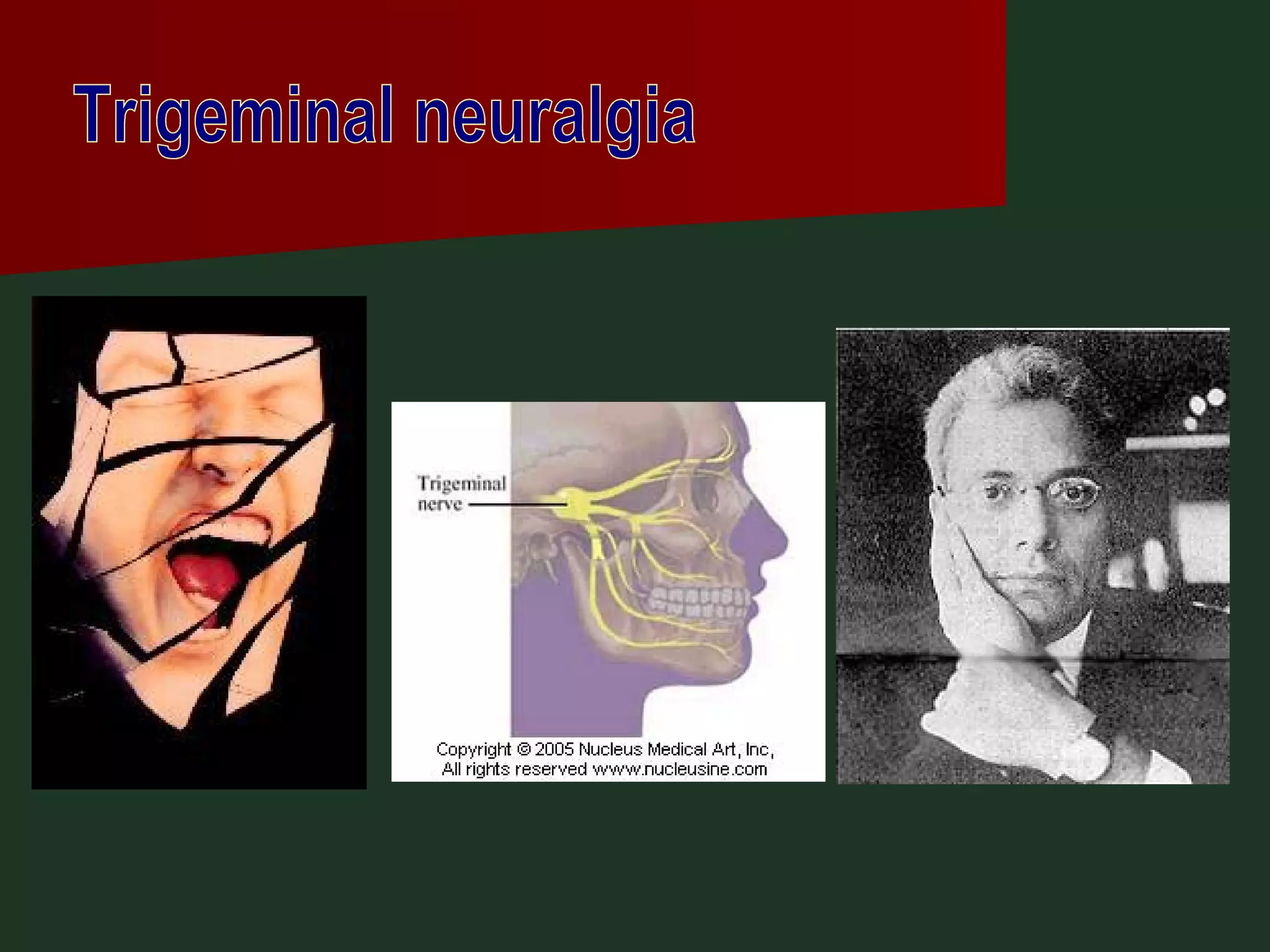
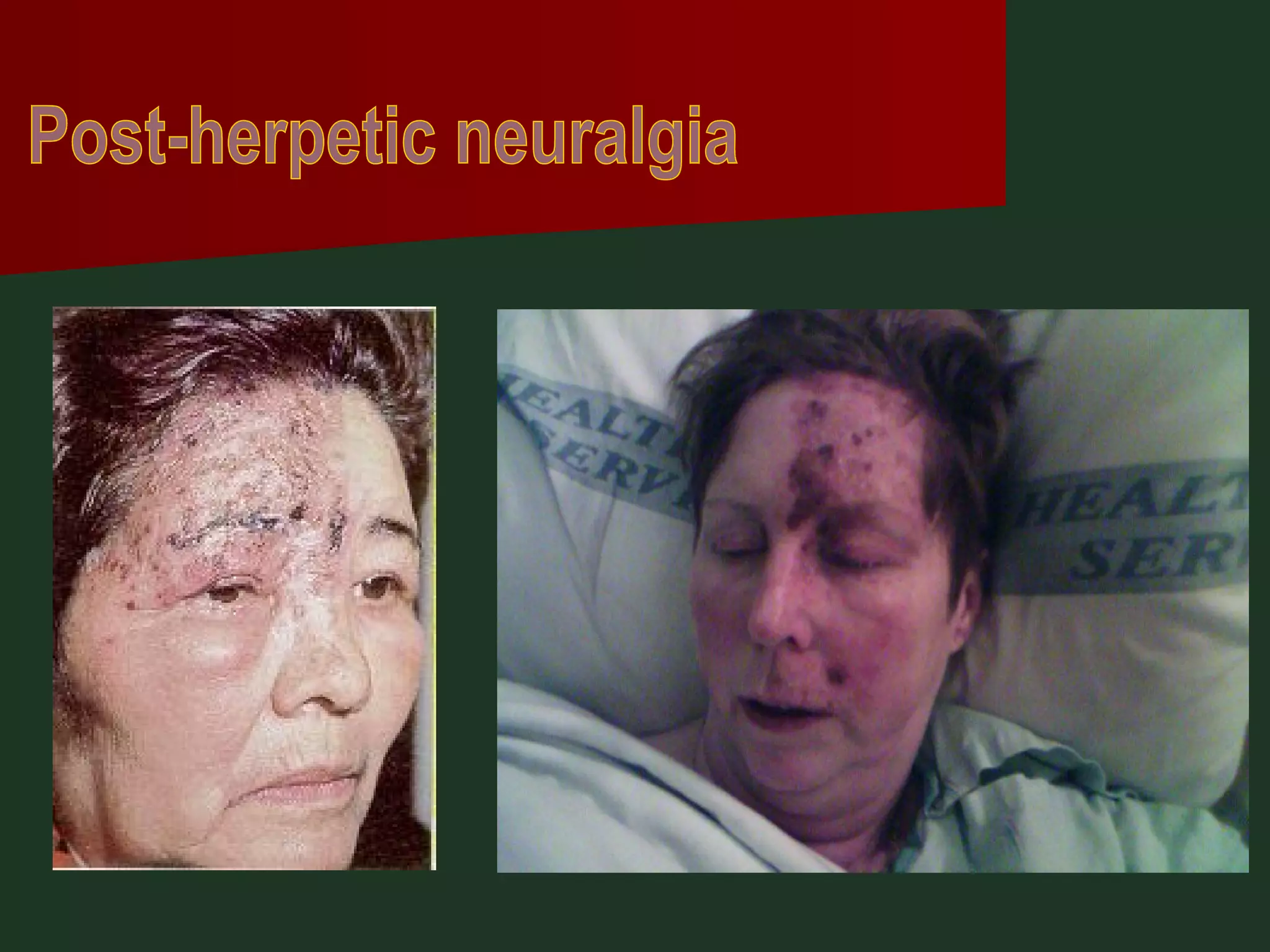
Facial pain _Most patients with persisting  facial pain have, trigeminal neuralgia, atypical facial pain or post-herpetic neuralgia. _ Trigeminal neuralgia causes very sharp lancinating pains in one division of trigeminal nerve in middle-aged and elderly patients the pain is severe, brief and repetitive make the patient to flinch.  _Atypical facial pain is continuous and unremitting, centered over  the maxilla most frequently on left side in middle-aged women. _ Post-herpetic neuralgia is continuous, felt as burning at affected territory which is sensitive to light touch and there is history of Herpes zoster.
HEADACHES IN OLD AGE Prevalence : less common in those aged over 60 years than in younger people.  Common causes:  trigeminal neuralgia, temporal arteritis and post-herpetic neuralgia, which occur rarely in younger patients.  Migraine and tension headache:  less common than in younger people.  Raised intracranial pressure:  not always associated with headache, vomiting or papilloedema because intracranial mass lesions can reach larger sizes before presentation, as the involutional process that occurs in ageing brains allows the accommodation of an expanding lesion more easily than in younger patients.


Trigeminal neuralgia
Post-herpetic neuralgia
Thank you

Headache Lec 3rd Class

  • 1.
  • 2.
    General conciderations :_ Headache is one of the most common neurological problems, in which the careful analysis of the details of history is particularly important. _ Duration of the headache may give clear idea of the seriousness of the und- erlying disease . _ sudden headache for the first time may be due to meningitis, intracranial hemorrhage, subarachnoid hemorrhage . _ Headache for years usually is psychogenic . _ Headache for weeks or months may suggest a progressive or an expanding intracranial lesion& require careful investigation. _ Pain sensitive structures both inside and outside the head receive their sensory innervation from the tigeminal, glossopharangeal and vagus nerves or from the upper three cervical nerves
  • 3.
    General conciderations :cont. _If the headache is due to a lesion above tentorium pain is felt at the distribution of ophthalmic division of trigeminal nerve. _If the lesion is below tentorium the pain is referred to distribution of upper three cervical nerves or ninth or tenth cranial nerves _ the duration and frequency are important when the headache is periodic or recurrent, migraine may occur at regular intervals or confined to certain times, at premenstrual period and may be absent during pregnancy. _ Aggravating factors are important, headache of increased intracra- nial pressure is aggravated by change in posture or sudden movement also in vascular and post-concussional headache
  • 4.
    General conciderations :cont. _Certain food, cheese , chocolate and hypoglycemia may bring on migraine, while rest will generally relieve vascular headache. _ The quality of pain also helpful, in migraine is throbbing, but in migrainous neuralgia may take the form of severe boring pain, while in tension headache is dull, pressing and band-like.
  • 5.
  • 6.
  • 7.
    Character of painDuration Location Comment Ice pick Stabbing Very brief (split-second) Variable, usually temporal or parietal Benign, more common in migraine Ice cream Sharp, severe 30-120 seconds Bitemporal/occipital Obvious trigger by cold stimuli Exertional/coital Bursting, thunderclap Severe for minutes then less severe for hours Generalised Subarachnoid haemorrhage needs exclusion Cough Bursting Seconds to minutes Occipital or generalised Intracranial pathology needs exclusion (especially cranio-cervical junction) Cluster headache (migrainous neuralgia) Severe unilateral, with ptosis, tearing, conjunctival injection, unilateral nasal congestion 30-90 minutes 1-3 times per day Periorbital Usually men, occurring in clusters over weeks/months Chronic paroxysmal hemicrania Severe unilateral with cluster headache-like autonomic features (above) 5-20 minutes, frequently through day Periorbital/temporal Usually women, responds to indometacin SUNCT* Severe, sharp, triggered by touch or neck movements 15-120 seconds, repetitive through day Periorbital May respond to carbamazepine
  • 8.
    SUNCT :S hort-lasting, U nilateral, N euralgiform headache with C onjunctival injection
  • 9.
    Secondary headaches. Subarachoidhemorrhage. Meningitis. Intracranial tumors. Temporal artritis. Subdural hematoma.
  • 10.
  • 11.
    “ Red Flags”for headache evaluation HIGH RISK HISTORICAL FEATURES  Sudden Onset New onset > 50yrs Headache with exertion Visual disturbances Location Medication HIV , Immunocompromised
  • 12.
    Sudden onset  Subarachnoidhemorrhage (SAH) often presents with the abrupt onset of excruciating pain. Other serious etiologies include carotid and vertebral artery dissections, venous sinus thrombosis, pituitary apoplexy, and hypertensive emergencies
  • 13.
  • 14.
    New Onset >50 yrs of age The "first" or "worst headache of my life“ Intracranial mass lesion and temporal arteritis
  • 15.
    Headache with exertion Cough, Valsalva, intercourse, exercise. Possibility of carotid artery dissection or intracranial hemorrhage.
  • 16.
    Headache associated withvisual disturbances May indicate conditions such as glaucoma or optic neuritis
  • 17.
    Location of painUnilateral temple headache in adult life (may indicate cranial arteritis) Head pain that spreads into the lower neck and between the shoulders may indicate meningeal infection.
  • 18.
    HIV and immunosuppression Significant risk for intracranial disease, including toxoplasmosis, brain abscess, meningitis and tumours.
  • 19.
    Medications Use of anticoagulants or nonsteroidal antiinflammatory drugs eg, aspirin increases the risk of intracranial bleeding. Analgesics can mask severe symptoms or exacerbate migraine headache
  • 20.
    HIGH RISK EXAMINATIONFINDINGS Neurological abnormalities Meningism Ophthalmologic findings Abnormal vital signs
  • 21.
    Neurological Abnormalities  Bestclinical predictor of intracranial pathology. Unilateral vision loss, ataxia, or seizure. Pupillary asymmetry, unilateral pronator drift, or extensor plantar response
  • 22.
    Decreased level ofconsciousness  Atypical of benign headaches Increases the likelihood of meningitis, encephalitis, subarachnoid hemorrhage (SAH), or other space occupying lesion.
  • 23.
    Meningism Nuchal rigidity Photophobia Kernig’s sign Brudzinski’s sign
  • 24.
    Ophthalmologic findings PapilloedemaRaises the suspicion of raised intracranial pressure Mass lesion or benign intracranial hypertension.
  • 25.
    Abnormal Vital SignsFebrile Increased BP Bradycardia
  • 26.
    Common headache andfacial pain syndromes
  • 27.
    Tension headache _Itscommon, usually described as severe, continuous as sense of pressure or tightness rather than pain, usually on the vault or less frequently occipito-frontal and usually bilateral
  • 28.
    Migraine _ migraineis very common and a wide variety of atypical and partial forms are seen. _ usually start at adolescence as recurrent headache lasting 2 hs to 2 days. _ the pain is usually unilateral associated with photophobia, nausea and vomiting. _ Many patients experience an aura before the pain usually visual disturbance as flashing lights, scotomata, or even hemianopia, paraesthesiae may occur around the angle of the mouth or in the hand.
  • 29.
    Migraine: diagnostic crieteriaChronic migraine: headache (not attributable to another disorder) on ≥ 15 days/month for > 3 months fulfilling the following criteria for migraine: At least 2 of the following: 1) unilateral location, 2) pulsating quality, 3) moderate/severe pain intensity, 4) aggravation by routine physical activity At least 1 of the following: 1) nausea and/or vomiting, 2) photophobia and phonophobia.
  • 30.
    Tension type headache:diagnostic criteria A.At least 10 previous headache episodes meeting criteria B to D B.Lasting from 30 minutes to 7 days C. At least 2 of the following pain characteristics 1. Pressing/tightening (nonpulsating) quality 2. Mild or moderate intensity 3. Bilateral location 4. No aggravation by walking stairs D. Absence of both of the following 1. Nausea and vomiting 2. Photophobia and phonophobia
  • 31.
    Tension type headache:diagnostic criteria Occasional TTH is seldom disabling (unlike chronic TTH) Both TTH and migraine are aggravated by stress (so can be hard to differentiate) Headache more often than once a week may be a mixture of TTH and migraine Successful management is dependent on recognition and management of each separate headache type
  • 32.
  • 33.
    Cluster headache: diagnosticcriteria Formerly known as migrainous neuralgia Generally affects men (ratio 6:1), often smokers, in their 20s or older Typically occurs in bouts for 6-12 weeks every one or two years Attacks typically occur at night, waking the patient 1 to 2 hours after falling asleep, lasting 30 to 60 minutes Pain is intense, probably as severe as renal colic, and strictly unilateral
  • 34.
  • 35.
  • 36.
    Cluster headache _Itsmuch less common than migraine and more in males, onset usually at third decade. _Characterized by severe periodic unilateral periorbital pain with conjunctival injection, unilateral lacrimation, nasal congestion and partial horner`s syndrome _The pain is brief last 30-90 minutes. _ usually occur at early morning for weeks disappear for months followed by another cluster.
  • 37.
  • 38.
    Headache of raisedintracranial pressure
  • 39.
    Headache of raisedintracranial pressure : Cont. _Usually due to space occupying lesions, brain tumor, abscess, or haematoma. _Other causes of raised intracranial pressure, viral encephalitis, lead encephalopathy and malignant hypertension. _Severe headache occurs in meningeal irritation as in meningitis and subarachnoid haemorrhage which are associated with vomiting and neck rigidity.
  • 40.
    Brain tumor Catscan MRI-guided Biopsy: animation Gross pathology
  • 41.
  • 42.
    Coital and exercise-inducedheadache _Usually middle-aged men develop sudden, severe headache at the climax of sexual intercourse last for 10-15 minutes, a milder headache may persist for few hours. _A similar headache may occur after unaccustommed exertion in unfit person.
  • 43.
    Facial pain _Mostpatients with persisting facial pain have, trigeminal neuralgia, atypical facial pain or post-herpetic neuralgia. _ Trigeminal neuralgia causes very sharp lancinating pains in one division of trigeminal nerve in middle-aged and elderly patients the pain is severe, brief and repetitive make the patient to flinch. _Atypical facial pain is continuous and unremitting, centered over the maxilla most frequently on left side in middle-aged women. _ Post-herpetic neuralgia is continuous, felt as burning at affected territory which is sensitive to light touch and there is history of Herpes zoster.
  • 44.
    HEADACHES IN OLDAGE Prevalence : less common in those aged over 60 years than in younger people. Common causes: trigeminal neuralgia, temporal arteritis and post-herpetic neuralgia, which occur rarely in younger patients. Migraine and tension headache: less common than in younger people. Raised intracranial pressure: not always associated with headache, vomiting or papilloedema because intracranial mass lesions can reach larger sizes before presentation, as the involutional process that occurs in ageing brains allows the accommodation of an expanding lesion more easily than in younger patients.
  • 45.
  • 46.
  • 47.
  • 48.
  • 49.
  • 50.
  • 51.