PRIMARY
HEADACH
ES
TRIGEMINAL AUTONOMIC
              CEPHALALGIAS

   Cluster headache, paroxysmal hemicrania, SUNCT.
   Short lasting attacks associated with cranial
    autonomic symptoms.
   Severe pain- more than once a day
   Patients with TACs should undergo pituitary imaging
    and pituitary function tests.
CLUSTER HEADACHE
   Pain- deep, non-fluctuating and explosive
   Core feature- periodicity
   Daily bouts of 1-2 attacks; short duration U/L pain
    for 8-10 weeks a year; pain free interval
    averages1year.
   Patients move about during attacks- pacing,
    rocking or rubbing the head for relief.
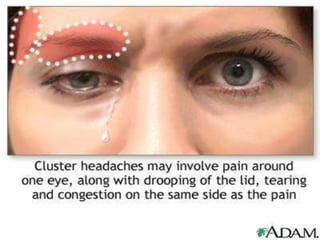
   Associated with ipsilateral symptoms of cranial
    parasympathetic autonomic activation.
   Photophobia/ phonophobia if present tend to be
Treatment of CH
   CH attacks peak rapidly and thus treatment with
    quick onset is required.
     100 % oxygen inhalation.
     Sumatriptan 6 mg s/c or 20 mg nasal spray


     Preventive   management
        Short term- prednisolone/ verapamil
        Long term- verapamil/ lithium/ topiramate/
        gabapentin.
PAROXYSMAL HEMICRANIA
   U/L, very severe pain
   Short lasting attacks (2- 45 mins)
   Very frequent attacks (>5/ day)
   Marked autonomic features I/L to the pain
   Rapid course (< 72 hrs)
   Excellent response to Indomethacin.
   Male: Female ratio- 1:1
   Pain tends to be retroorbital
   Treatment of choice- Indomethacin
SUNCT/ SUNA
   Severe, U/L orbital/ temporal pain
   Stabbing/ throbbing in quality.
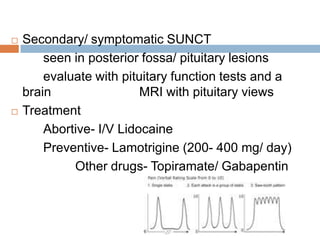
   3 basic patterns:
        single stabs- short lived
        groups of stabs
        longer attacks ( saw tooth phenomenon)
   Diagnosis
       Cutaneous triggerability of attacks
       Lack of refractory period b/w attacks
       Lack of response to Indomethacin
   Secondary/ symptomatic SUNCT
        seen in posterior fossa/ pituitary lesions
        evaluate with pituitary function tests and a
    brain                 MRI with pituitary views
   Treatment
        Abortive- I/V Lidocaine
        Preventive- Lamotrigine (200- 400 mg/ day)
             Other drugs- Topiramate/ Gabapentin
OTHER PRIMARY
               HEADACHES
1.   HEMICRANIA CONTINUA

       moderate and continuous
       U/L asso with fluctuations of severe pain
       complete resolution with Indomethacin
       exacerbation may be asso with autonomic
     features
       women affected twice as often as men
2. PRIMARY STABBING HEADACHE

 stabbing pain confined to head
 single/ series of stabs
 absence of asso cranial autonomic features
 absence of cutaneous triggering of attacks
 patterns of regular recurrence at irregular intervals
  described as “ ice-pick pain” or “jab and jolts”
3. PRIMARY COUGH HEADACHE
  generalized headache
  sudden onset; lasts for several minutes
  precipitated by coughing
  typically older patients
4. PRIMARY EXERTIONAL HEADACHE
  features ~ to both cough headache and migraine
  precipitated by any form of exercise
  B/L, throbbing headache
5. PRIMARY SEX HEADACHE
  precipitated by sexual excitement
  dull B/L- suddenly becomes intense
  reported more often in men
6. PRIMARY THUNDERCLAP HEADACHE
  sudden onset of severe headache
  absence of any known provocation
  should be vigorously investigated with
  neuroimaging (CT/ MRI with MR angiography) and
  CSF exmntn.
7. HYPNIC HEADACHE
  typically begins a few hours after sleep onset
  last for 15-30 mins.
  moderately severe and generalized
  most patients are female
  onset usually after age 60
  photophobia/ nausea usually absent
  major secondary consideration- poorly controlled
  HTN.
THANK
YOU……

Primary headache

  • 1.
  • 2.
    TRIGEMINAL AUTONOMIC CEPHALALGIAS  Cluster headache, paroxysmal hemicrania, SUNCT.  Short lasting attacks associated with cranial autonomic symptoms.  Severe pain- more than once a day  Patients with TACs should undergo pituitary imaging and pituitary function tests.
  • 3.
    CLUSTER HEADACHE  Pain- deep, non-fluctuating and explosive  Core feature- periodicity  Daily bouts of 1-2 attacks; short duration U/L pain for 8-10 weeks a year; pain free interval averages1year.  Patients move about during attacks- pacing, rocking or rubbing the head for relief.  Associated with ipsilateral symptoms of cranial parasympathetic autonomic activation.  Photophobia/ phonophobia if present tend to be
  • 5.
    Treatment of CH  CH attacks peak rapidly and thus treatment with quick onset is required.  100 % oxygen inhalation.  Sumatriptan 6 mg s/c or 20 mg nasal spray  Preventive management Short term- prednisolone/ verapamil Long term- verapamil/ lithium/ topiramate/ gabapentin.
  • 6.
    PAROXYSMAL HEMICRANIA  U/L, very severe pain  Short lasting attacks (2- 45 mins)  Very frequent attacks (>5/ day)  Marked autonomic features I/L to the pain  Rapid course (< 72 hrs)  Excellent response to Indomethacin.  Male: Female ratio- 1:1  Pain tends to be retroorbital  Treatment of choice- Indomethacin
  • 7.
    SUNCT/ SUNA  Severe, U/L orbital/ temporal pain  Stabbing/ throbbing in quality.  3 basic patterns: single stabs- short lived groups of stabs longer attacks ( saw tooth phenomenon)  Diagnosis  Cutaneous triggerability of attacks  Lack of refractory period b/w attacks  Lack of response to Indomethacin
  • 8.
    Secondary/ symptomatic SUNCT seen in posterior fossa/ pituitary lesions evaluate with pituitary function tests and a brain MRI with pituitary views  Treatment Abortive- I/V Lidocaine Preventive- Lamotrigine (200- 400 mg/ day) Other drugs- Topiramate/ Gabapentin
  • 9.
    OTHER PRIMARY HEADACHES 1. HEMICRANIA CONTINUA moderate and continuous U/L asso with fluctuations of severe pain complete resolution with Indomethacin exacerbation may be asso with autonomic features women affected twice as often as men
  • 10.
    2. PRIMARY STABBINGHEADACHE stabbing pain confined to head single/ series of stabs absence of asso cranial autonomic features absence of cutaneous triggering of attacks patterns of regular recurrence at irregular intervals described as “ ice-pick pain” or “jab and jolts”
  • 11.
    3. PRIMARY COUGHHEADACHE generalized headache sudden onset; lasts for several minutes precipitated by coughing typically older patients 4. PRIMARY EXERTIONAL HEADACHE features ~ to both cough headache and migraine precipitated by any form of exercise B/L, throbbing headache
  • 12.
    5. PRIMARY SEXHEADACHE precipitated by sexual excitement dull B/L- suddenly becomes intense reported more often in men 6. PRIMARY THUNDERCLAP HEADACHE sudden onset of severe headache absence of any known provocation should be vigorously investigated with neuroimaging (CT/ MRI with MR angiography) and CSF exmntn.
  • 13.
    7. HYPNIC HEADACHE typically begins a few hours after sleep onset last for 15-30 mins. moderately severe and generalized most patients are female onset usually after age 60 photophobia/ nausea usually absent major secondary consideration- poorly controlled HTN.
  • 14.