KAZAKH RUSSIAN MEDICAL
UNIVERSITY
NAME - MANAN GANDHI
SUBJECT – NEUROLOGY
GROUP – 502 A
GUILLAIN-BARRÉ SYNDROME
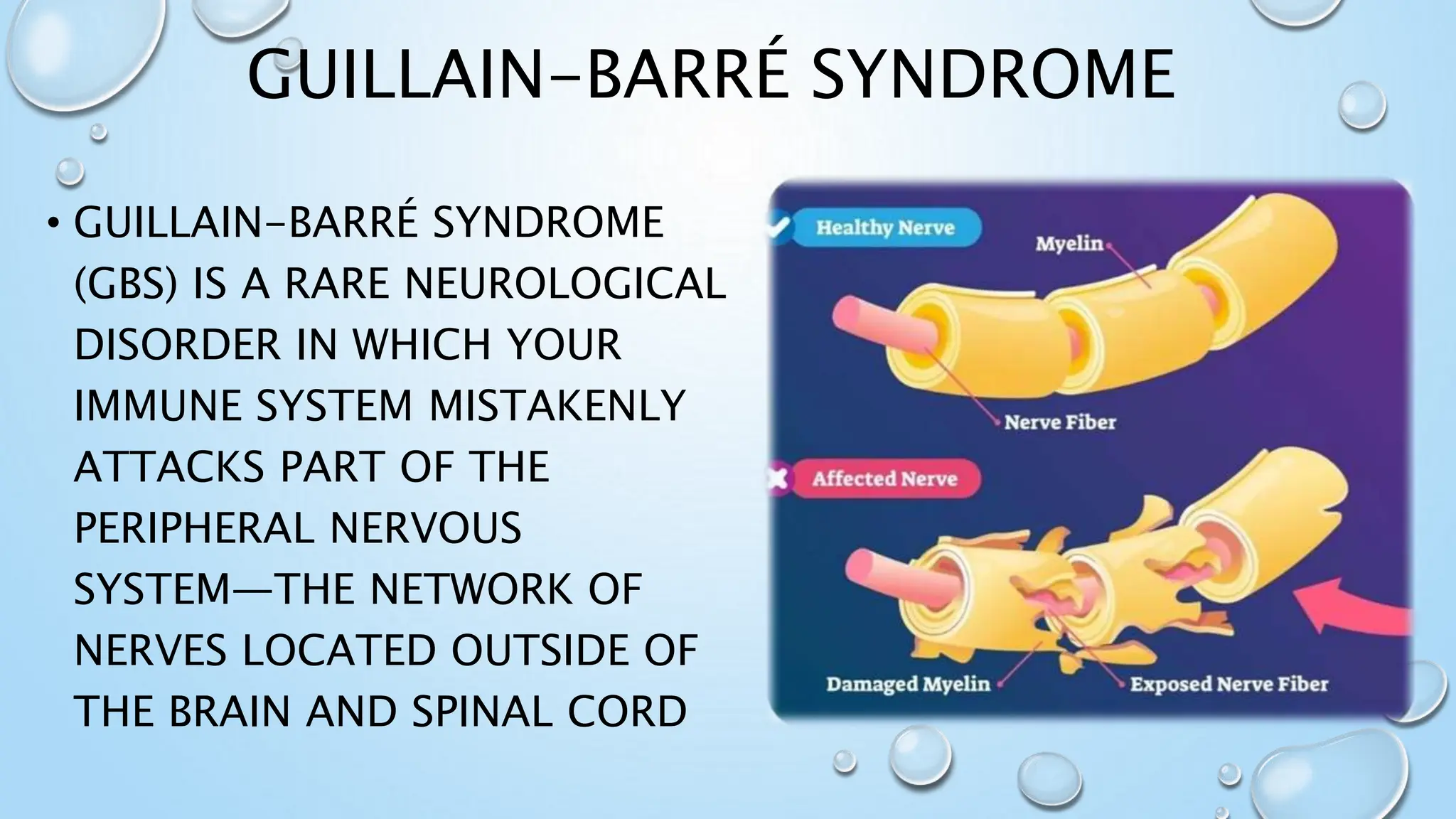
• GUILLAIN-BARRÉ SYNDROME
(GBS) IS A RARE NEUROLOGICAL
DISORDER IN WHICH YOUR
IMMUNE SYSTEM MISTAKENLY
ATTACKS PART OF THE
PERIPHERAL NERVOUS
SYSTEM—THE NETWORK OF
NERVES LOCATED OUTSIDE OF
THE BRAIN AND SPINAL CORD
SYMPTOM
S OF GBS
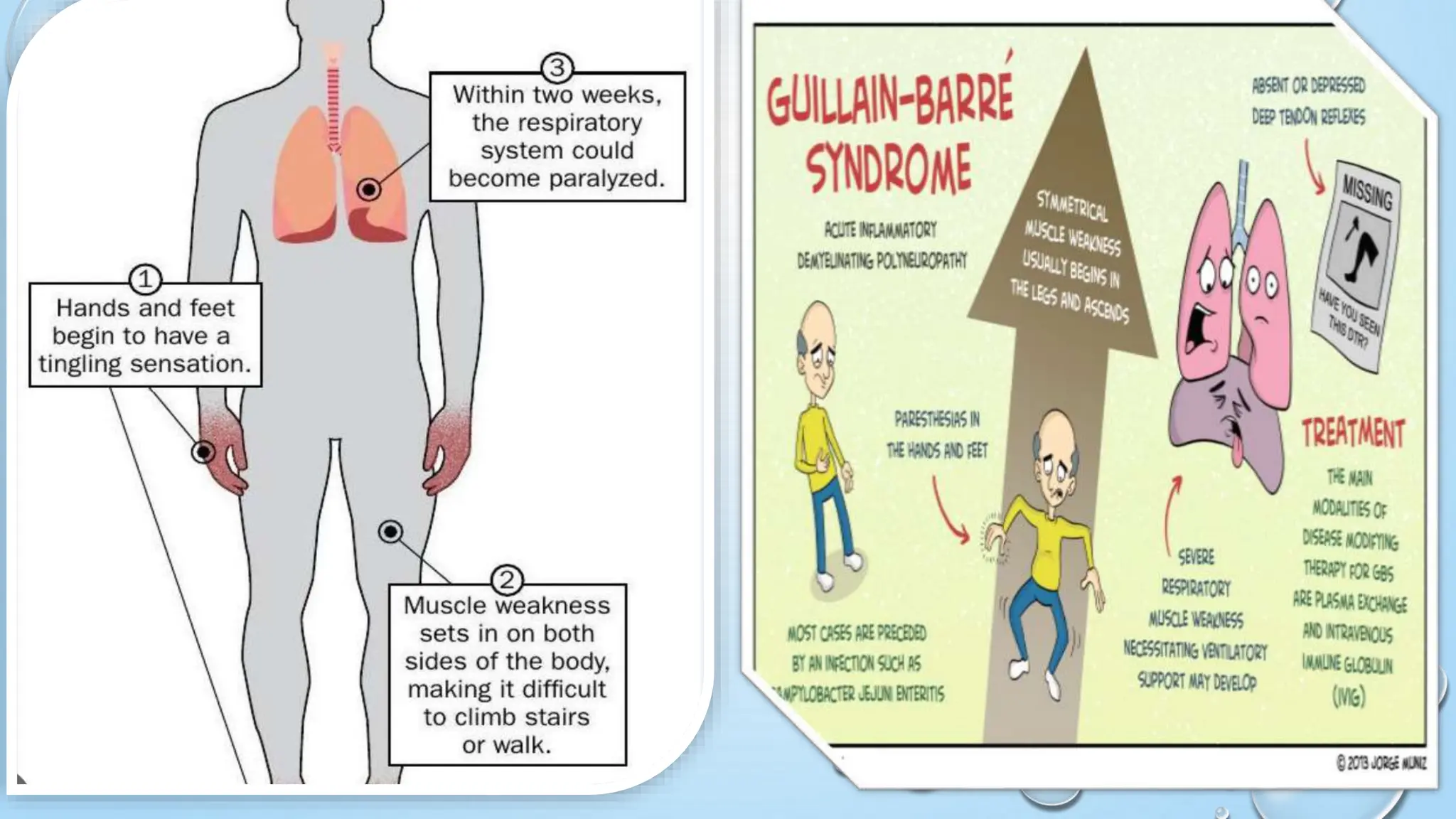
A pins and needles
sensation in your
fingers, toes, ankles or
wrist.
Weakness in your legs
that spreads to your
upper body.
Unsteady walking or
inability to walk or
climb stair.
Difficulty with facial
movements, including
speaking, chewing or
swallowing.
Double vision or
inability to move the
eye.
Severe pain
Difficulty with bladder
control or bowel
function.
Rapid heart rate.
As GBS progresses,
muscle weakness can
turn into paralysis.
ETIOLOGY OF GBS
Most commonly, infection
with campylobacter, a
type of bacteria often
found in undercooked
poultry.
Viruses (Influenza virus,
Cytomegalovirus,
Epstein-Barr virus, Zika
viru, HIV).
Hepatitis A, B, C and E.
Mycoplasma pneumonia. Surgery. Trauma.
Hodgkin’s lymphoma.
Rarely, influenza
vaccinations or childhood
vaccinations.
TYPES OF GBS
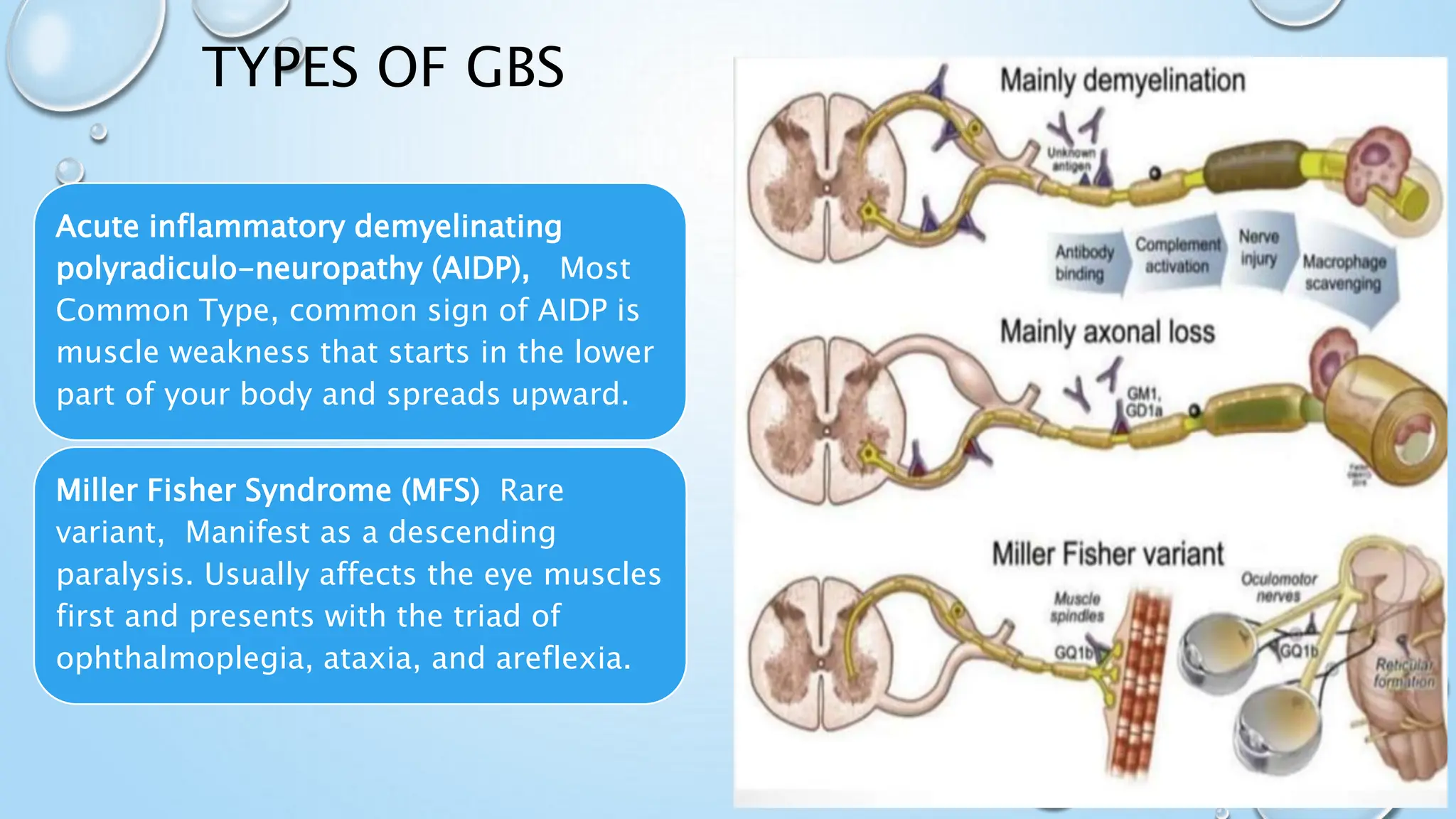
Acute inflammatory demyelinating
polyradiculo-neuropathy (AIDP), Most
Common Type, common sign of AIDP is
muscle weakness that starts in the lower
part of your body and spreads upward.
Miller Fisher Syndrome (MFS) Rare
variant, Manifest as a descending
paralysis. Usually affects the eye muscles
first and presents with the triad of
ophthalmoplegia, ataxia, and areflexia.
TYPES OF GBS
Acute Motor Axonal
Neuropathy (AMAN). Attacks
motor nodes of Ranvier and is
prevalent in China and
Mexico.
Acute Motor Sensory Axonal
Neuropathy (AMSAN). Similar
to AMAN Affect the sensory
with several axonal damage.
DIAGNOSIS OF GBS
• NERVE CONDUCTION
STUDIES. ELECTRODES
ARE TAPED TO THE SKIN
ABOVE YOUR NERVES. A
SMALL SHOCK IS PASSED
THROUGH THE NERVE TO
MEASURE THE SPEED OF
NERVE SIGNALS.
DIAGNOSI
S OF GBS
Spinal tap (lumbar puncture) - A small
amount of fluid is withdrawn from the spinal
canal in your lower back. The fluid is tested
for a type of change that commonly occurs in
people who have Guillain-Barre syndrome.
Electromyography - Thin-needle electrodes
are inserted into the muscles your doctor
wants to study. The electrodes measure nerve
activity in the muscles.
• LUMBER PUNCTURE
• Electromyography
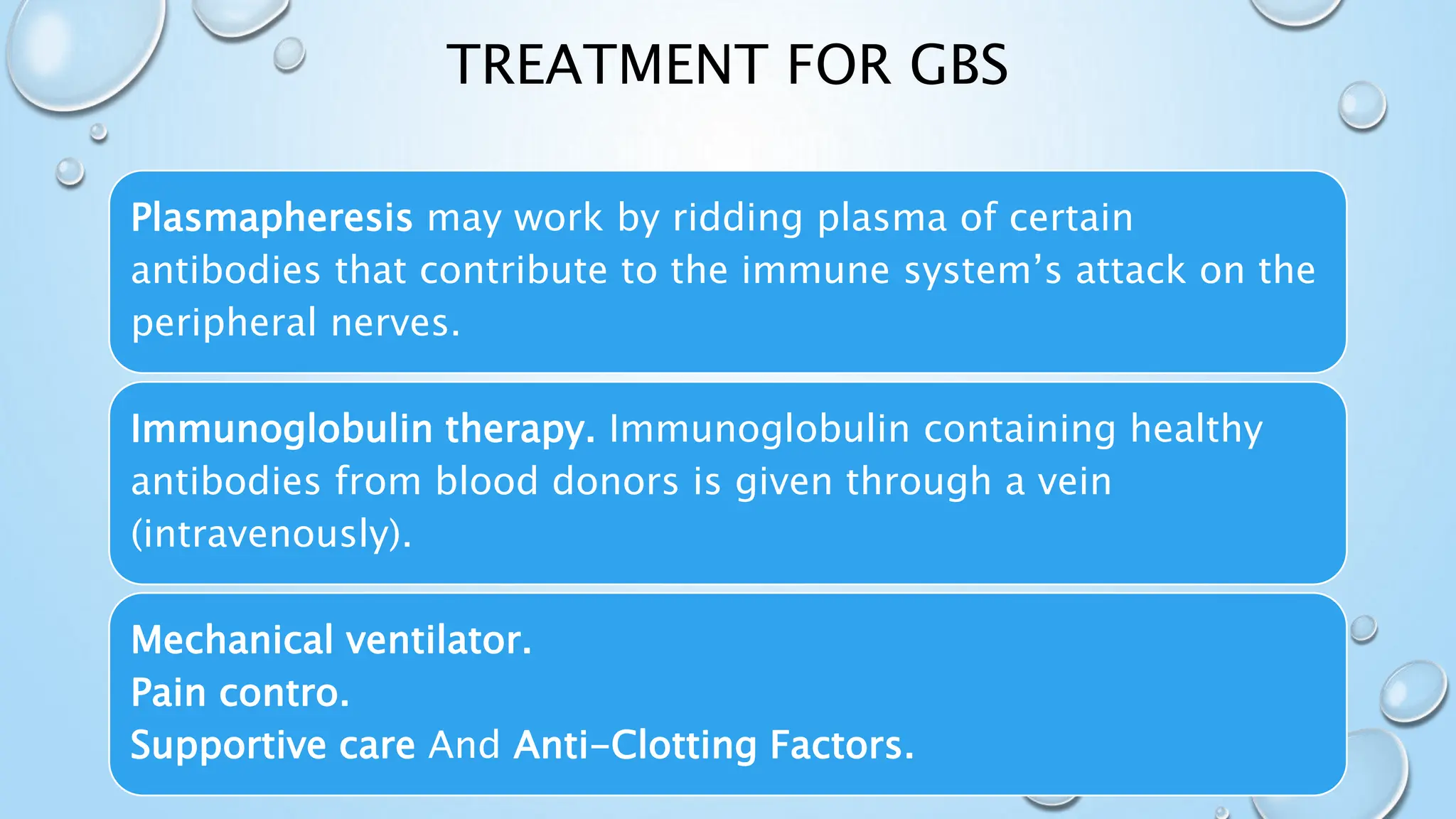
TREATMENT FOR GBS
Plasmapheresis may work by ridding plasma of certain
antibodies that contribute to the immune system’s attack on the
peripheral nerves.
Immunoglobulin therapy. Immunoglobulin containing healthy
antibodies from blood donors is given through a vein
(intravenously).
Mechanical ventilator.
Pain contro.
Supportive care And Anti-Clotting Factors.
EPIDEMIOLOGY AND RECENT STUDIES
The annual incidence of GBS range from 0.5-1.5 cases per
100,000 population in individuals younger than 18 years. It can
affect any age group.
Males appear to be at greater risk for GBS than females
Guillain-Barre syndrome may occur after infection with the
COVID-19 virus. It’s also a rare reaction in those who receive the
Johnson & Johnson or AstraZeneca COVID-19 vaccine.
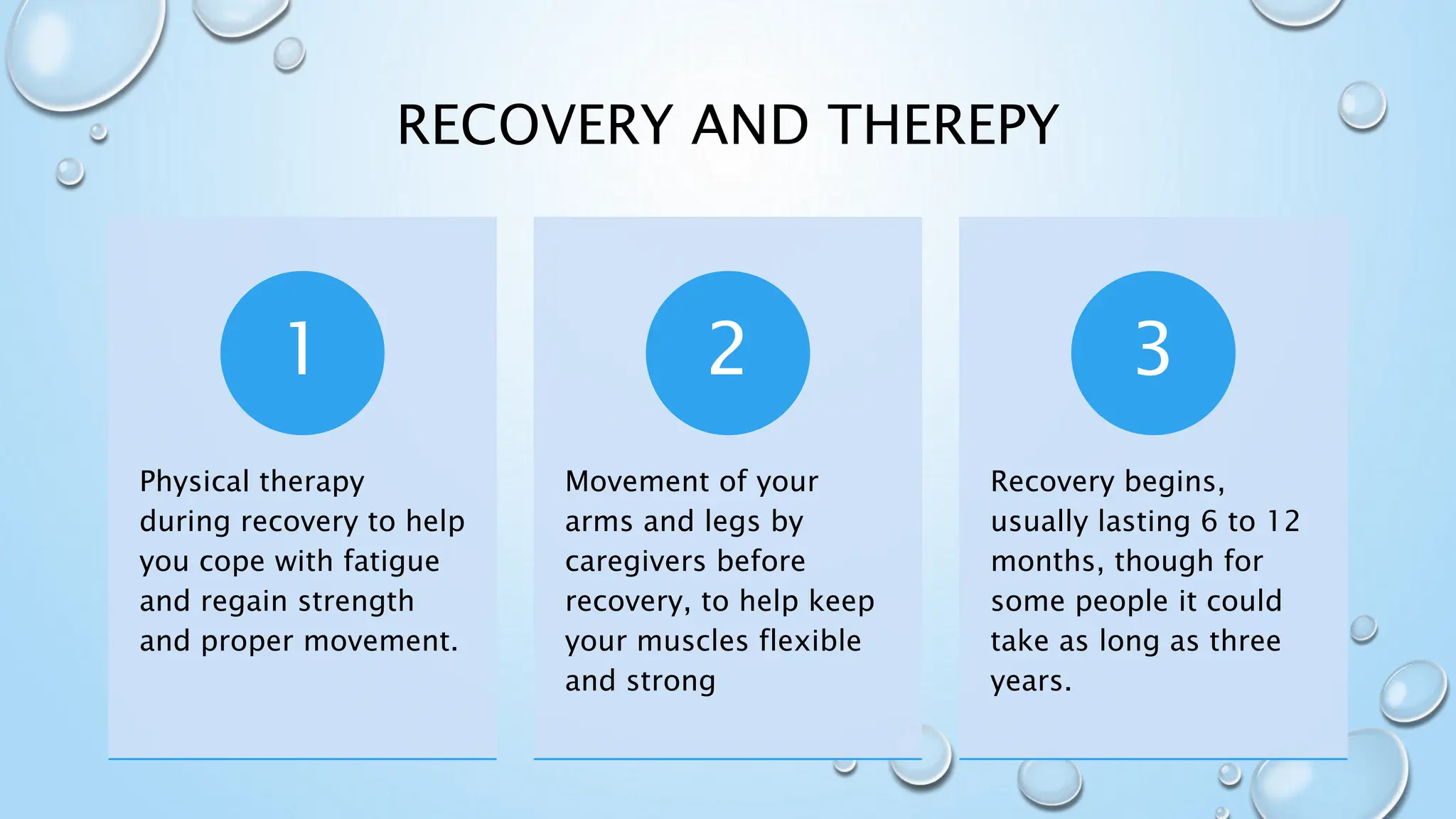
RECOVERY AND THEREPY
Physical therapy
during recovery to help
you cope with fatigue
and regain strength
and proper movement.
1
Movement of your
arms and legs by
caregivers before
recovery, to help keep
your muscles flexible
and strong
2
Recovery begins,
usually lasting 6 to 12
months, though for
some people it could
take as long as three
years.
3
QUESTION
S FOR THE
TOPIC
Symptoms of GBS?
Difference B/w AIDP and
AMAN/ASMAN types of GBS?
Diagnosis of GBS?
Treatment oF GBS?
THANK YOU

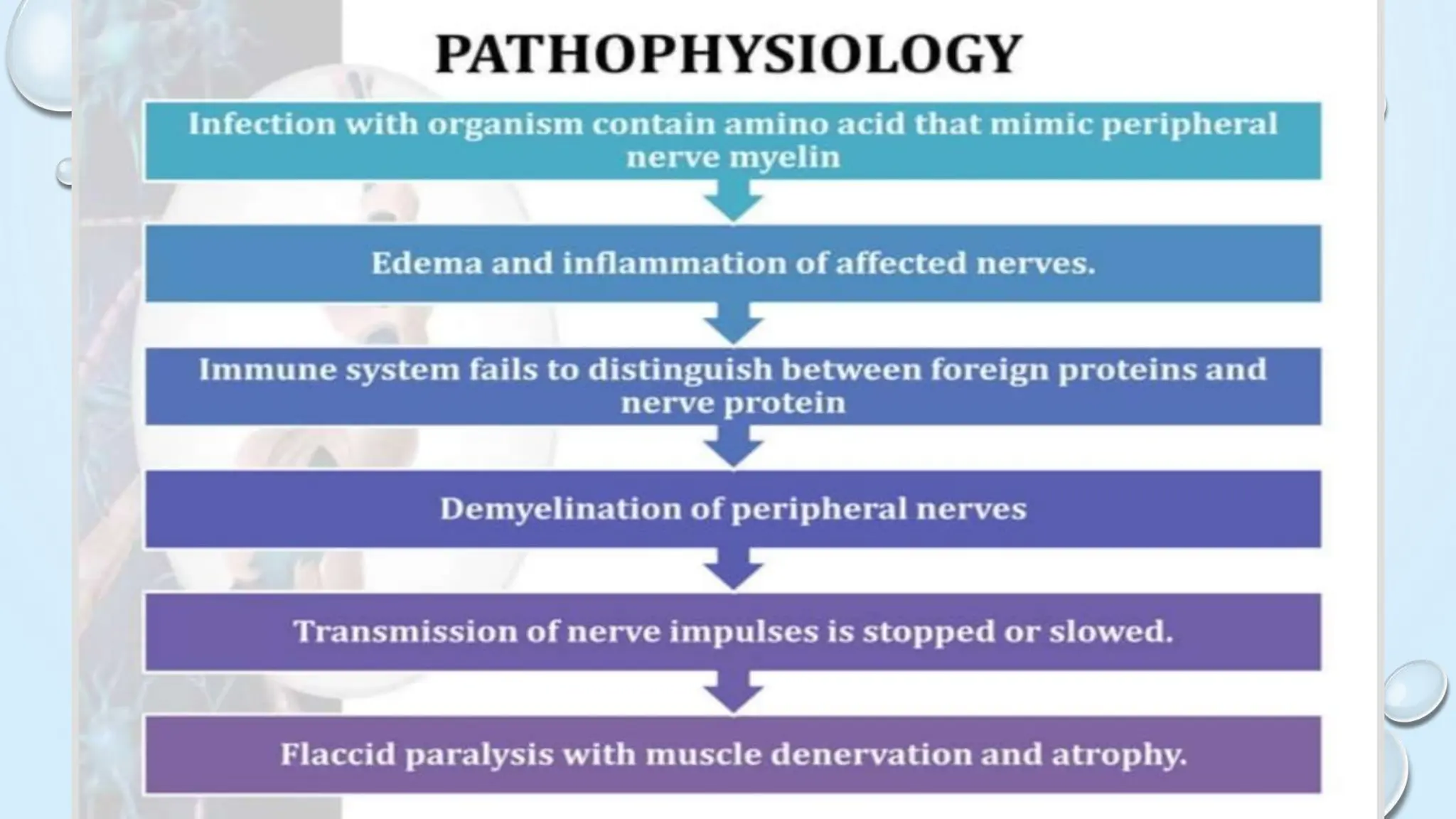
Guillain Barre syndrome (GBS) in brief PPT

  • 1.
    KAZAKH RUSSIAN MEDICAL UNIVERSITY NAME- MANAN GANDHI SUBJECT – NEUROLOGY GROUP – 502 A
  • 2.
    GUILLAIN-BARRÉ SYNDROME • GUILLAIN-BARRÉSYNDROME (GBS) IS A RARE NEUROLOGICAL DISORDER IN WHICH YOUR IMMUNE SYSTEM MISTAKENLY ATTACKS PART OF THE PERIPHERAL NERVOUS SYSTEM—THE NETWORK OF NERVES LOCATED OUTSIDE OF THE BRAIN AND SPINAL CORD
  • 3.
    SYMPTOM S OF GBS Apins and needles sensation in your fingers, toes, ankles or wrist. Weakness in your legs that spreads to your upper body. Unsteady walking or inability to walk or climb stair. Difficulty with facial movements, including speaking, chewing or swallowing. Double vision or inability to move the eye. Severe pain Difficulty with bladder control or bowel function. Rapid heart rate. As GBS progresses, muscle weakness can turn into paralysis.
  • 5.
    ETIOLOGY OF GBS Mostcommonly, infection with campylobacter, a type of bacteria often found in undercooked poultry. Viruses (Influenza virus, Cytomegalovirus, Epstein-Barr virus, Zika viru, HIV). Hepatitis A, B, C and E. Mycoplasma pneumonia. Surgery. Trauma. Hodgkin’s lymphoma. Rarely, influenza vaccinations or childhood vaccinations.
  • 6.
    TYPES OF GBS Acuteinflammatory demyelinating polyradiculo-neuropathy (AIDP), Most Common Type, common sign of AIDP is muscle weakness that starts in the lower part of your body and spreads upward. Miller Fisher Syndrome (MFS) Rare variant, Manifest as a descending paralysis. Usually affects the eye muscles first and presents with the triad of ophthalmoplegia, ataxia, and areflexia.
  • 7.
    TYPES OF GBS AcuteMotor Axonal Neuropathy (AMAN). Attacks motor nodes of Ranvier and is prevalent in China and Mexico. Acute Motor Sensory Axonal Neuropathy (AMSAN). Similar to AMAN Affect the sensory with several axonal damage.
  • 9.
    DIAGNOSIS OF GBS •NERVE CONDUCTION STUDIES. ELECTRODES ARE TAPED TO THE SKIN ABOVE YOUR NERVES. A SMALL SHOCK IS PASSED THROUGH THE NERVE TO MEASURE THE SPEED OF NERVE SIGNALS.
  • 10.
    DIAGNOSI S OF GBS Spinaltap (lumbar puncture) - A small amount of fluid is withdrawn from the spinal canal in your lower back. The fluid is tested for a type of change that commonly occurs in people who have Guillain-Barre syndrome. Electromyography - Thin-needle electrodes are inserted into the muscles your doctor wants to study. The electrodes measure nerve activity in the muscles.
  • 11.
    • LUMBER PUNCTURE •Electromyography
  • 12.
    TREATMENT FOR GBS Plasmapheresismay work by ridding plasma of certain antibodies that contribute to the immune system’s attack on the peripheral nerves. Immunoglobulin therapy. Immunoglobulin containing healthy antibodies from blood donors is given through a vein (intravenously). Mechanical ventilator. Pain contro. Supportive care And Anti-Clotting Factors.
  • 13.
    EPIDEMIOLOGY AND RECENTSTUDIES The annual incidence of GBS range from 0.5-1.5 cases per 100,000 population in individuals younger than 18 years. It can affect any age group. Males appear to be at greater risk for GBS than females Guillain-Barre syndrome may occur after infection with the COVID-19 virus. It’s also a rare reaction in those who receive the Johnson & Johnson or AstraZeneca COVID-19 vaccine.
  • 14.
    RECOVERY AND THEREPY Physicaltherapy during recovery to help you cope with fatigue and regain strength and proper movement. 1 Movement of your arms and legs by caregivers before recovery, to help keep your muscles flexible and strong 2 Recovery begins, usually lasting 6 to 12 months, though for some people it could take as long as three years. 3
  • 15.
    QUESTION S FOR THE TOPIC Symptomsof GBS? Difference B/w AIDP and AMAN/ASMAN types of GBS? Diagnosis of GBS? Treatment oF GBS?
  • 16.