Guillain-Barre Syndrome
Presented by: Shubham Singh
Topic to be covered
❑ Gross structure of peripheral nerve.
❑ Brief description of peripheral polyneuropathy.
❑ Introduction to GBS (Guillain-Barre Syndrome).
❑ Epidemiology.
❑ Etiology of GBS.
❑ Pathophysiology of.
❑ Clinical presentation.
❑ Making diagnosis.
❑ Treatment.
❑ Prognosis.
❑ Modern approach.
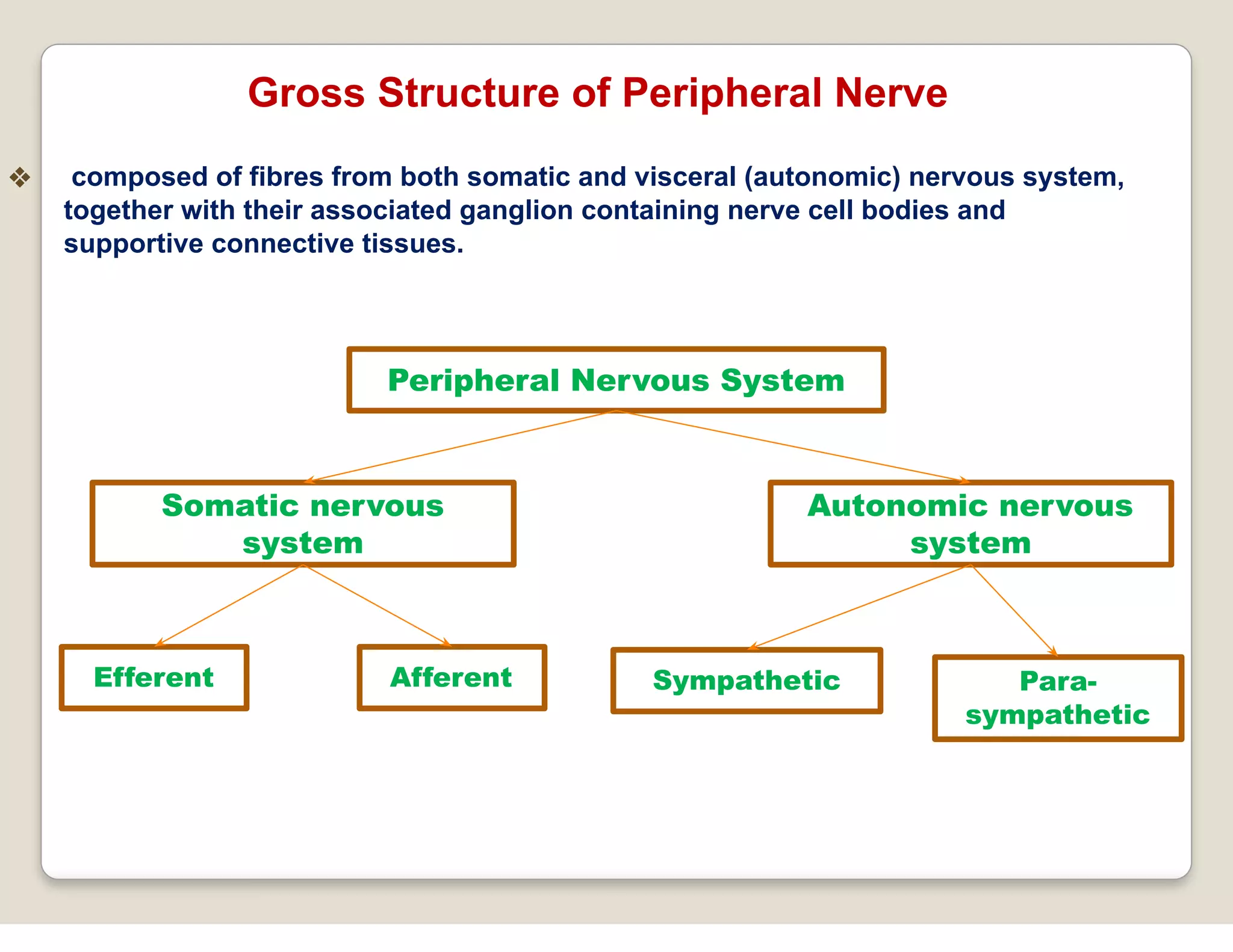
Peripheral Nervous System
Sympathetic
Somatic nervous
system
Autonomic nervous
system
Para-
sympathetic
Afferent
Efferent
❖ composed of fibres from both somatic and visceral (autonomic) nervous system,
together with their associated ganglion containing nerve cell bodies and
supportive connective tissues.
Gross Structure of Peripheral Nerve
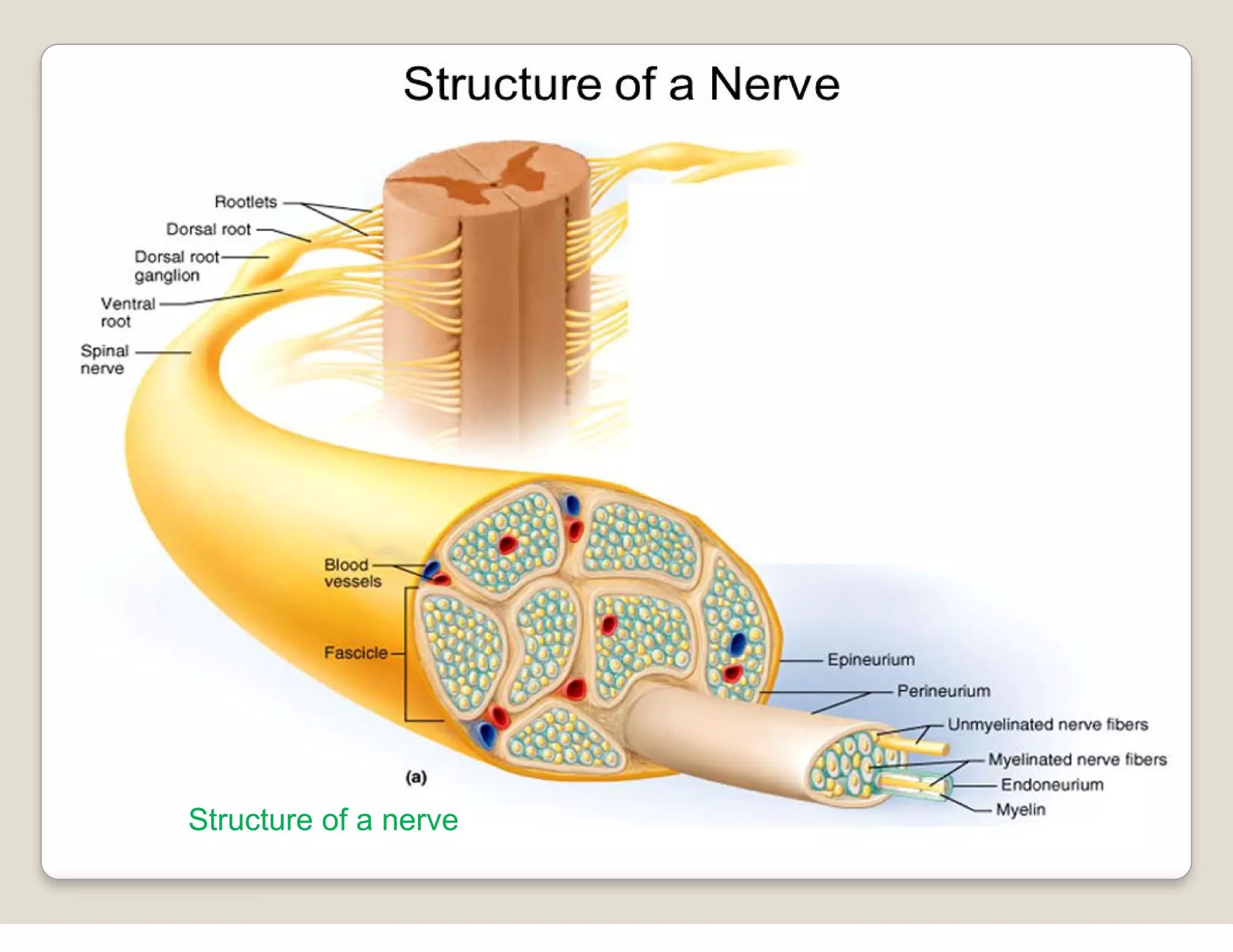
Structure of a nerve
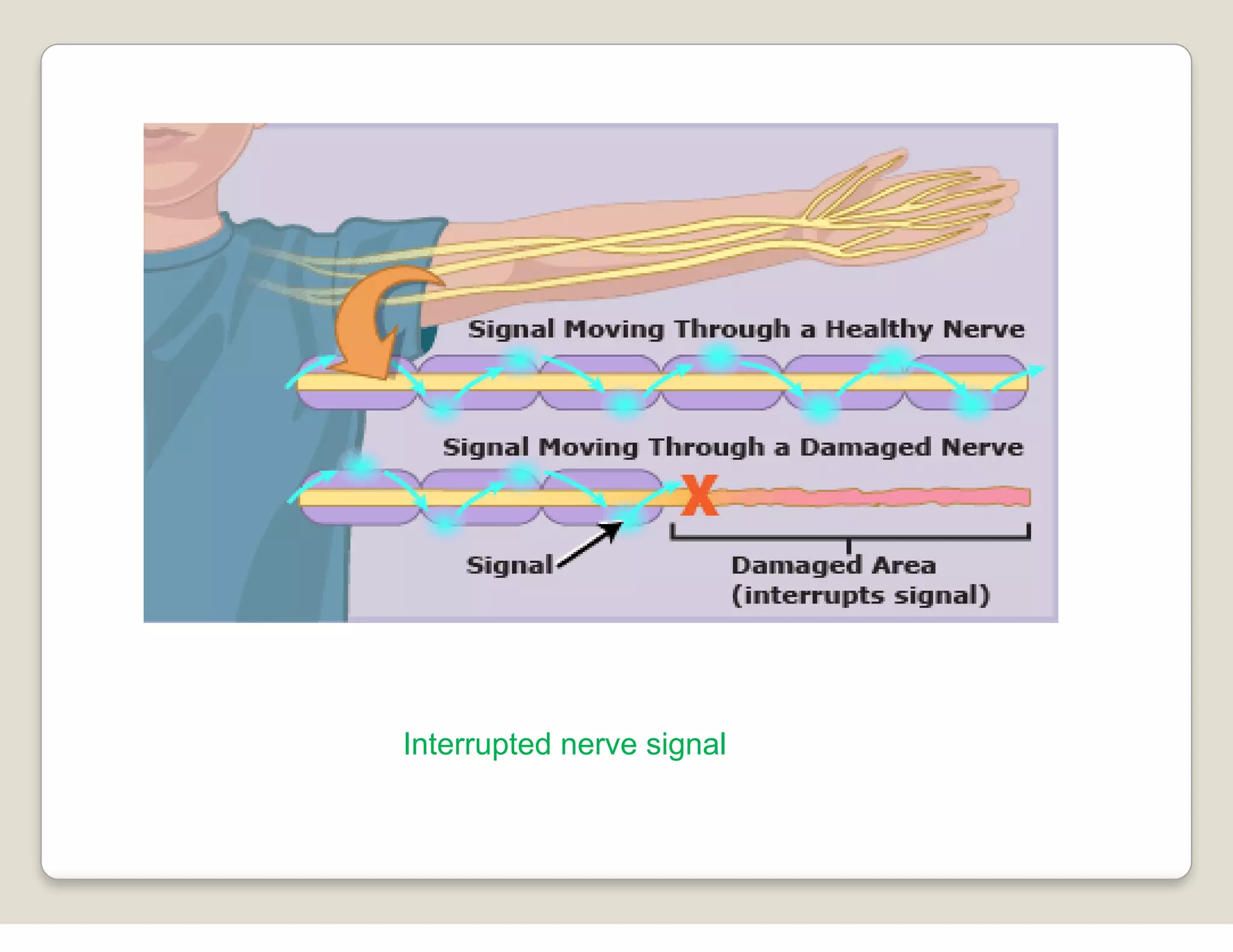
Interrupted nerve signal
Polyneuropathy : collective term for a syndrome which includes
all inflammatory and degenerative diseases involving the peripheral
nervous system.
❖ includes primary degenerative diseases which begins in nerve
parenchyma.
❖ Initiated by toxic, metabolic or vascular causes.
❖ the main presenting feature include widespread sensory and motor
disturbance of the peripheral nerves.
Polyneuropathy
Polyneuropathy
Acute Ascending
Polyneuropathy
Sub-acute Sensorimoter
Polyneuropathy
Chronic sensorimotor
Polyneuropathy
❖ Depending upon nature and involvement of pathways commonly occurring
polyneuropathy
- GBS
- prophyria
- diphtheria
symmetrical asymmetrical acquired genetic
- carcinoma
- amyloid
- diabetic
neuropathy
- polyarteritis
nodosa
- arsenical
- lead
- thalidomide
neuropathy
- peroneal muscular
atrophy
- hypertrophic
intestinal neuritis
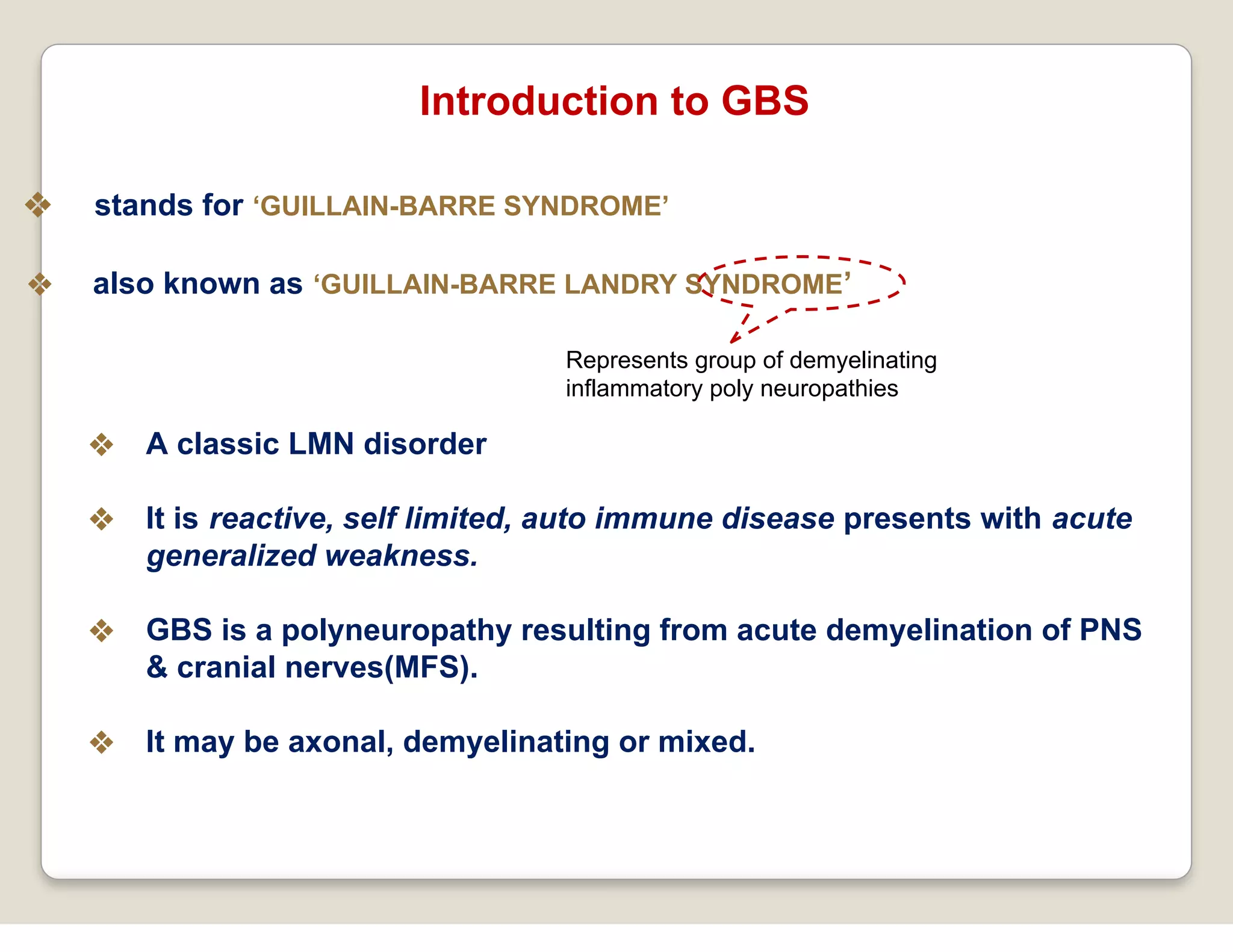
❖ stands for ‘GUILLAIN-BARRE SYNDROME’
❖ also known as ‘GUILLAIN-BARRE LANDRY SYNDROME’
❖ A classic LMN disorder
❖ It is reactive, self limited, auto immune disease presents with acute
generalized weakness.
❖ GBS is a polyneuropathy resulting from acute demyelination of PNS
& cranial nerves(MFS).
❖ It may be axonal, demyelinating or mixed.
Introduction to GBS
Represents group of demyelinating
inflammatory poly neuropathies
Myelinated and demyelinated nerve.
GBS
AIDP MFS
Acute Inflammatory
Demyelinating
Polyneuropathy
- most common
- accounts for 70-80%
- Autoimmune disorder,
antibody mediated Is
triggered by antecedent
viral or bacterial infection
- Inflammatory
demyelination may be
accompanied by axonal
nerve loss
- Remyelination occurs
after the immune reaction
stops
AMSAN
AMAN
Acute Motor
Axonal
Neuropathy
Acute Motor and
Sensory Axonal
Neuropathy
Miller Fisher
Syndrome
-Demyelination and
inflammation of
cranial nerve III and
VI, spinal ganglia,
and peripheral
nerves
- cardinal feature
ophthalmoplegia,
ataxia, areflexia
- Sensory loss
unusual, but
proprioception may
be impaired.
Classification of GBS
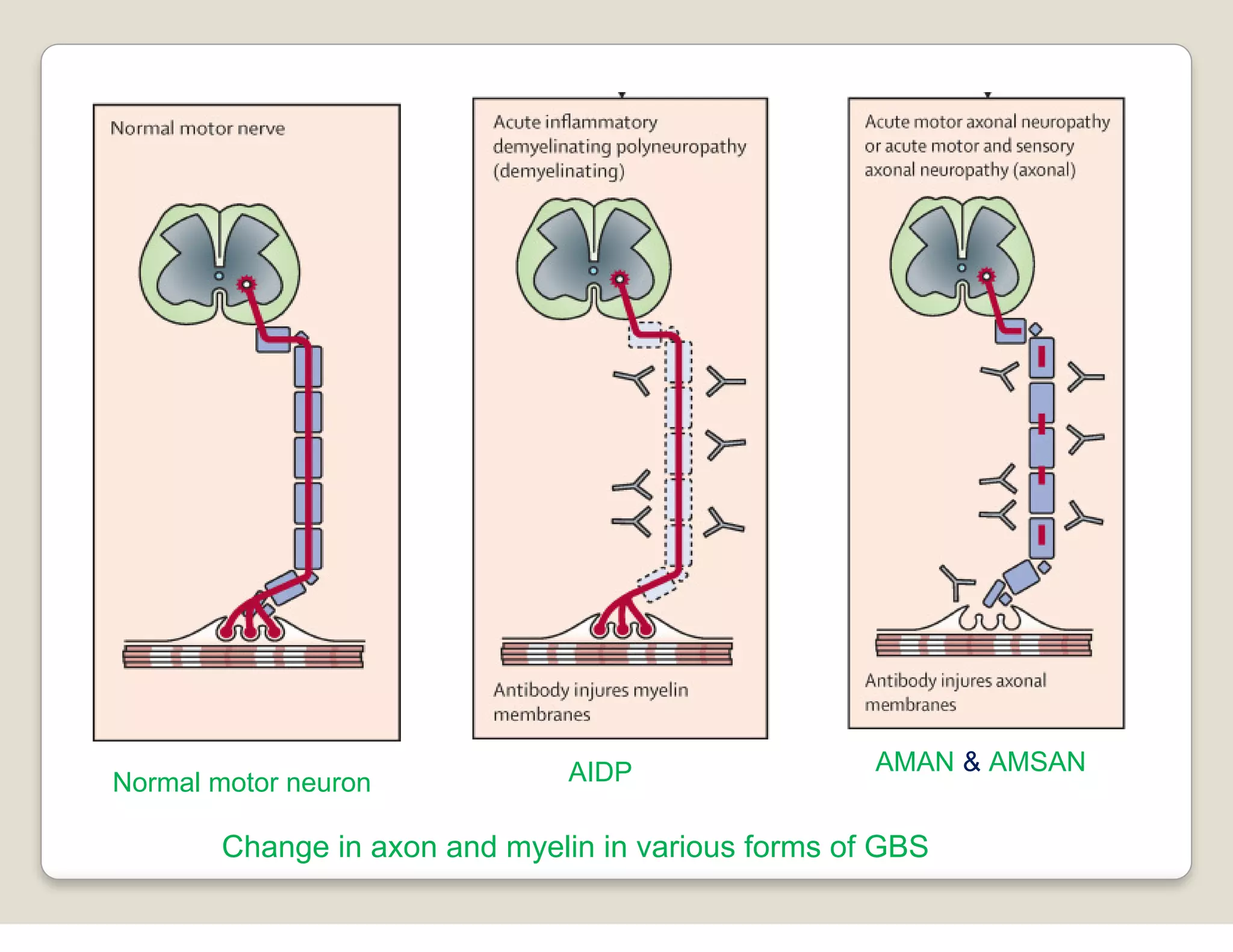
AMAN & AMSAN are axonal
types where axons themselves
are damaged by immune
response
APAN
Acute Panautonom
neuropathy
-Sympathetic,
parasympathetic
nervous systems
are involved.
- Cardiovascular
involvement is
common (postural
hypotension,
tachycardia,
hypertension,
dysrhythmias).
- Blurry vision, dry
eyes.
Change in axon and myelin in various forms of GBS
Normal motor neuron AIDP AMAN & AMSAN
rapid deteriotion of vision
abnormal muscle coordination, paralysis of the eye muscles.
cardinal feature: ophthalmoplegia, ataxia, areflexia
Clinical presentation in MFS
Epidemiology
❖ Found worldwide with ratio of 1-2 in a lakh i.e. 1:100000.
❖ Affects both sexes but men being more affected (1.5 times) than
women.
❖ Young or middle aged adult 20-50 years are being more affected.
❖ Most people reach the greatest stage of weakness within the first
two weeks after symptoms appear
❖ By the third week 90 percent of affected individuals are at their
weakest.
❖ 70% of people with GBS eventually experience full recovery.
Survey report by NCBI of reported case of GBS
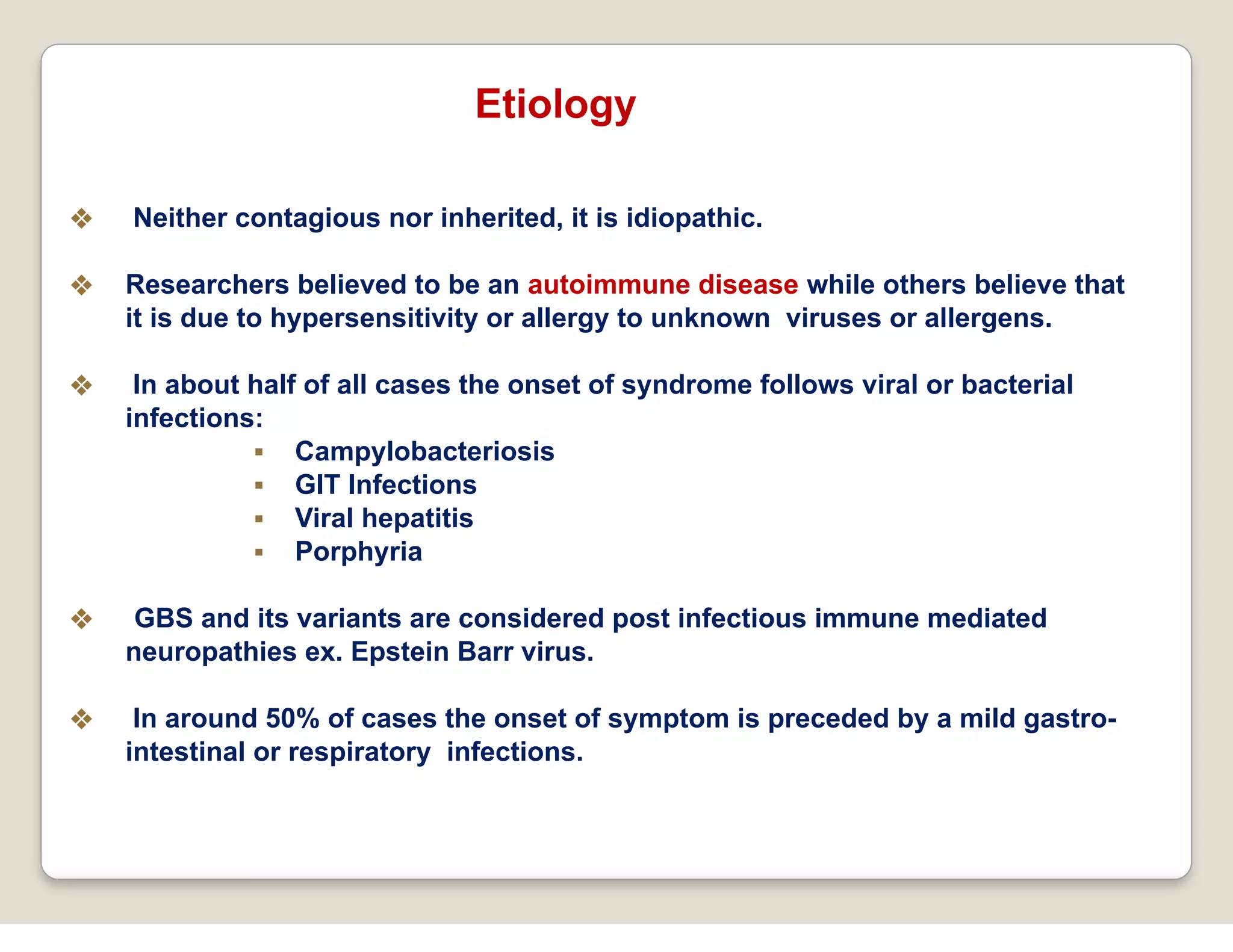
Etiology
❖ Neither contagious nor inherited, it is idiopathic.
❖ Researchers believed to be an autoimmune disease while others believe that
it is due to hypersensitivity or allergy to unknown viruses or allergens.
❖ In about half of all cases the onset of syndrome follows viral or bacterial
infections:
▪ Campylobacteriosis
▪ GIT Infections
▪ Viral hepatitis
▪ Porphyria
❖ GBS and its variants are considered post infectious immune mediated
neuropathies ex. Epstein Barr virus.
❖ In around 50% of cases the onset of symptom is preceded by a mild gastro-
intestinal or respiratory infections.
Etiology of polyneuropathies
❖ Infective condition:
local infection of peripheral nerve. e.g. virus (herpes zooster), and bacteria
(leprosy).
Infection with organisms e.g. diphtheria, tetanus, botulism
❖ Post-infective polyneuropathy: GBS
❖ Toxic substances
heavy metals: mercury, lead, arsenic,
organic chemicals: aniline, cyanide
drugs: thalidomide, isoniazid.
❖ Deficiency, metabolic & blood disorders
alcoholism, porphyria, leukemias, diabetes mellitus
❖ Trauma: compression/stretching,
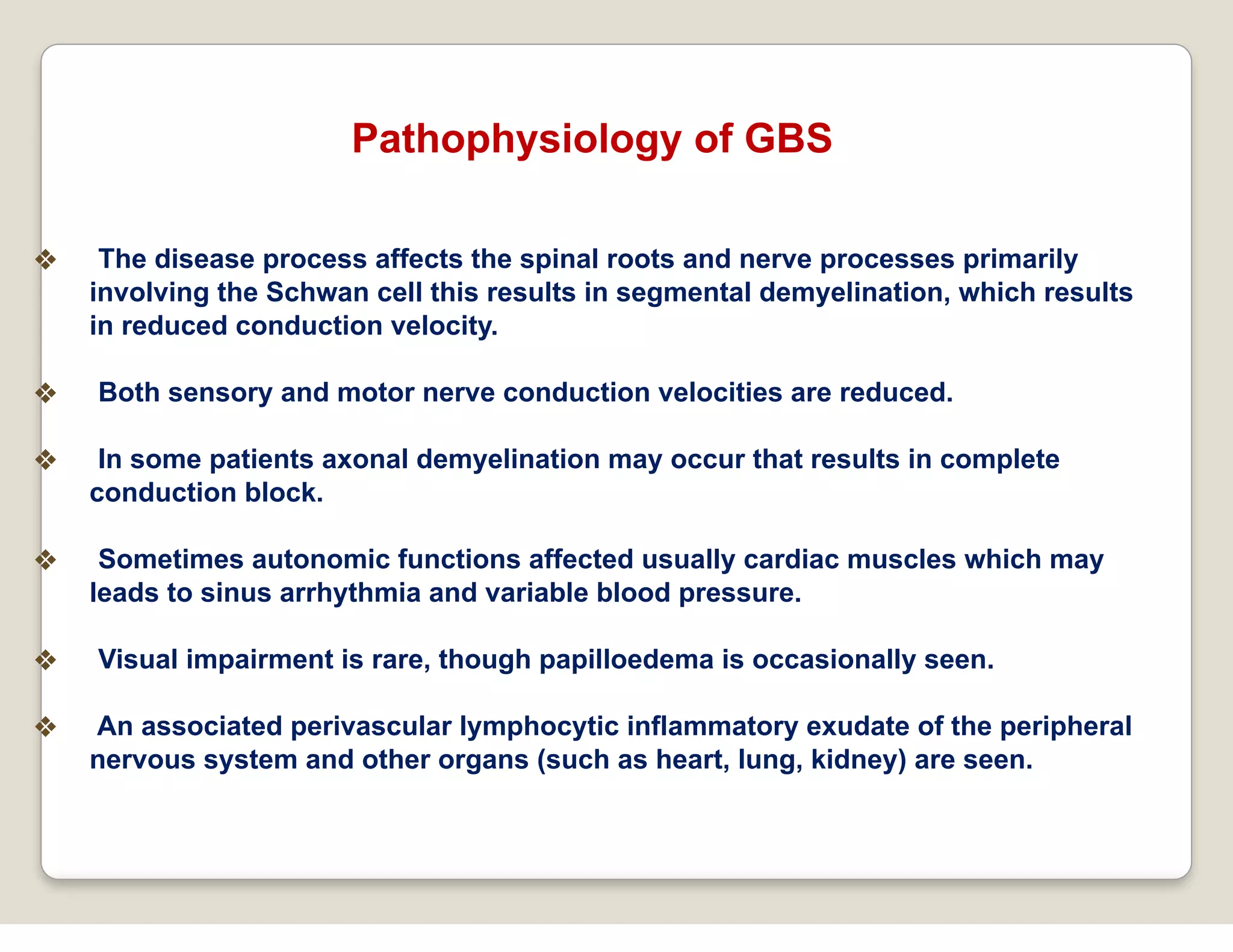
Pathophysiology of GBS
❖ The disease process affects the spinal roots and nerve processes primarily
involving the Schwan cell this results in segmental demyelination, which results
in reduced conduction velocity.
❖ Both sensory and motor nerve conduction velocities are reduced.
❖ In some patients axonal demyelination may occur that results in complete
conduction block.
❖ Sometimes autonomic functions affected usually cardiac muscles which may
leads to sinus arrhythmia and variable blood pressure.
❖ Visual impairment is rare, though papilloedema is occasionally seen.
❖ An associated perivascular lymphocytic inflammatory exudate of the peripheral
nervous system and other organs (such as heart, lung, kidney) are seen.
Spinal roots and nerve
processes
reduced conduction
velocity
Schwann cell
Segmental demyelination
involving
Both sensory
and motor
nerve
conduction
velocities are
reduced
Results in
weakness
Disease
affects
complete conduction
block
paralysis
Cross reaction of antibodies
Normal and disturbed transmission.
Clinical presentation
❖ Characterized by sensation such as tingling in the feet or hands or even
pain (specially in children), often starting in the legs or back.
❖ Symmetrical weakness of muscles i.e. weakness on both sides of the
body in the next few weeks.
❖ Some patients experience paresthesia in toes & legs others have
symptom only one side of the body(rare).
❖ Variation of symptom is seen: some may include mild difficulty in
walking, requiring crutches the others may have complete paralysis of
arms and legs and respiratory involvement.
❖ Muscle wasting, hypotonia and partial or complete loss of the associated
deep tendon reflex.
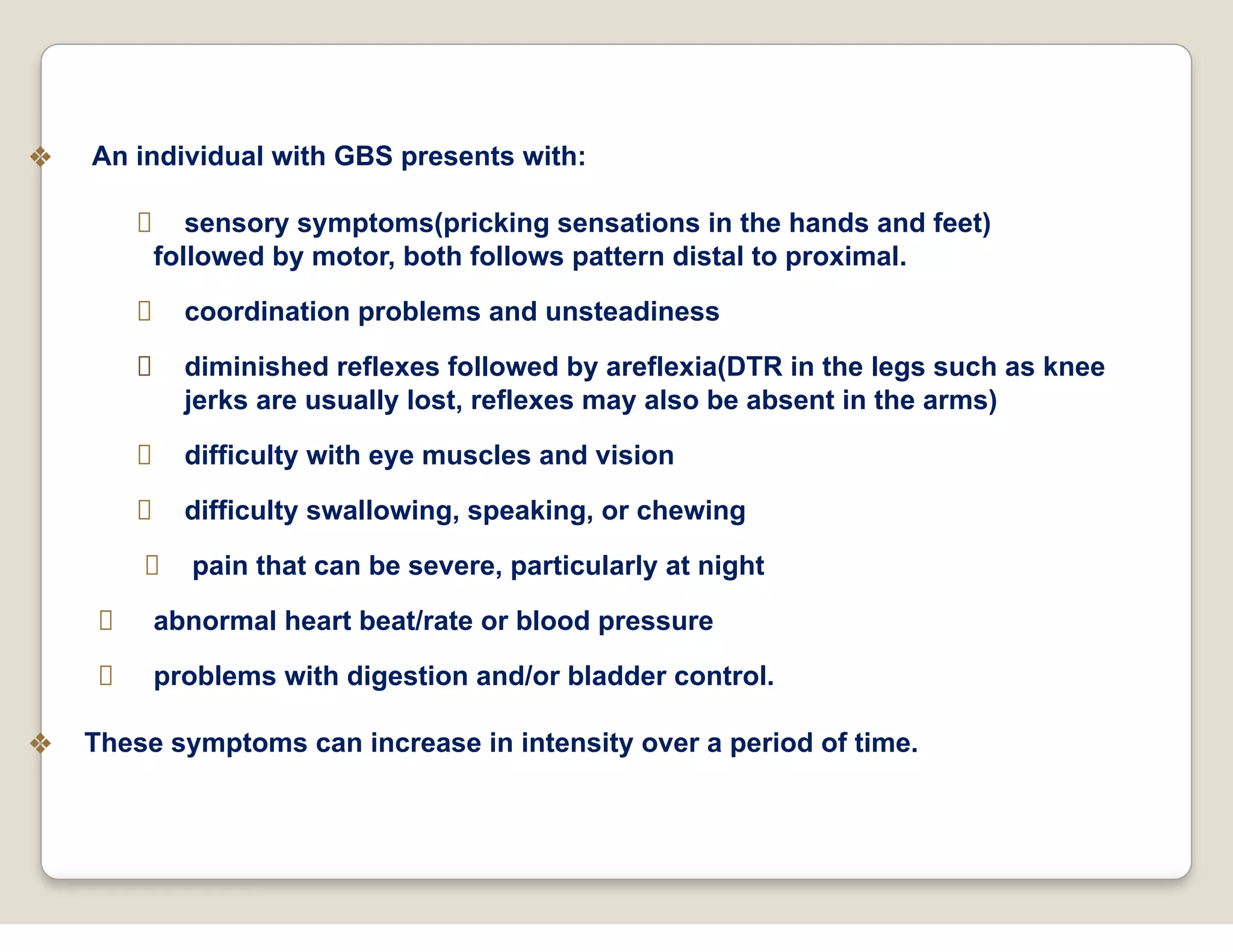
❖ An individual with GBS presents with:
sensory symptoms(pricking sensations in the hands and feet)
followed by motor, both follows pattern distal to proximal.
coordination problems and unsteadiness
diminished reflexes followed by areflexia(DTR in the legs such as knee
jerks are usually lost, reflexes may also be absent in the arms)
difficulty with eye muscles and vision
difficulty swallowing, speaking, or chewing
pain that can be severe, particularly at night
abnormal heart beat/rate or blood pressure
problems with digestion and/or bladder control.
❖ These symptoms can increase in intensity over a period of time.
Distal limbs involvement
Abnormal sensations such as tingling,
pain and numbness
Diminished or absent deep tendon reflexes
Increased cerebrospinal fluid protein without elevated cell
count
Abnormal nerve conduction velocity findings
Sometimes, a recent viral infection or diarrhea
Recent onset,
within days
to at most
four weeks symmetrical weakness
A 12 years old child presenting with GBS
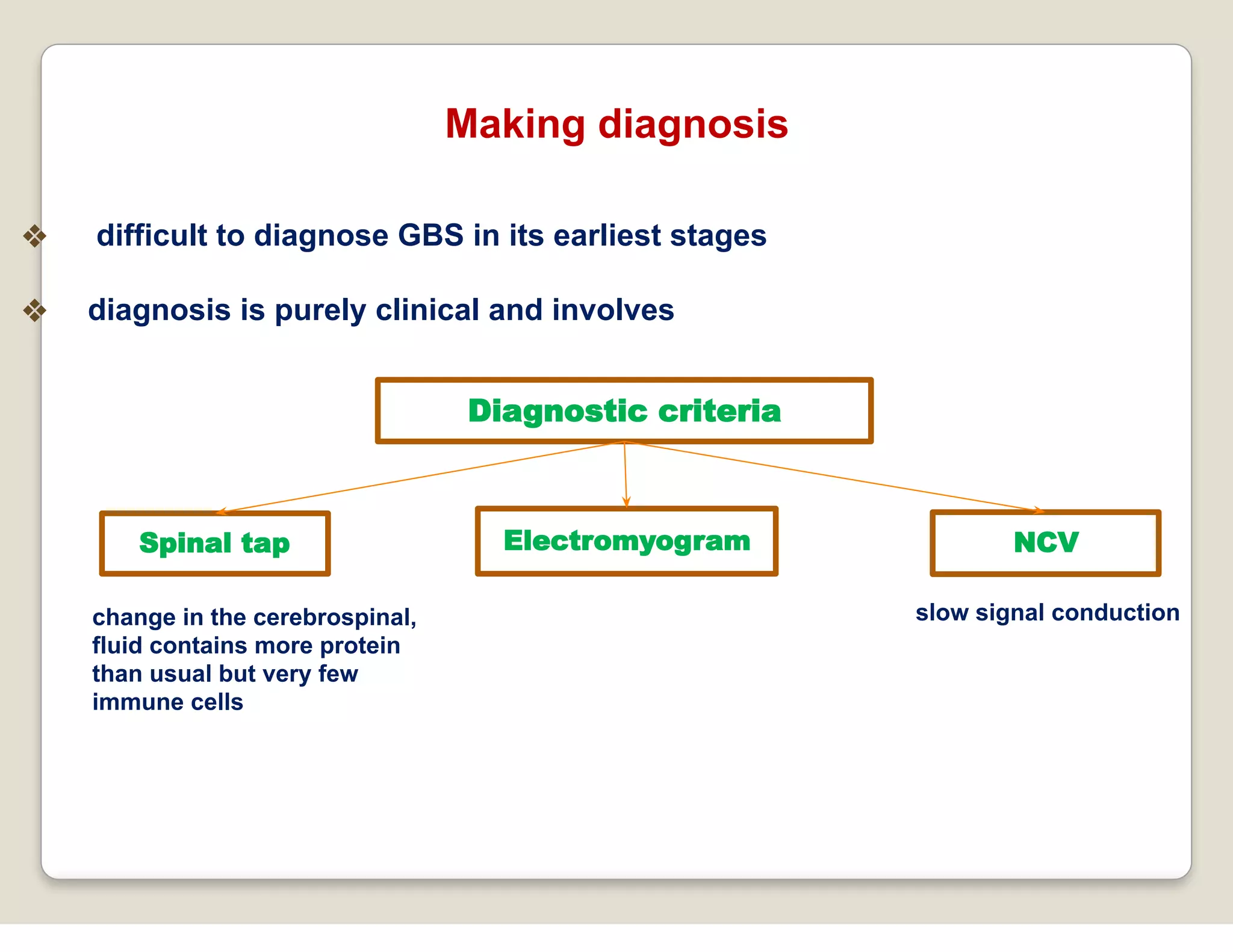
Making diagnosis
❖ difficult to diagnose GBS in its earliest stages
❖ diagnosis is purely clinical and involves
Spinal tap
Diagnostic criteria
NCV
Electromyogram
change in the cerebrospinal,
fluid contains more protein
than usual but very few
immune cells
slow signal conduction
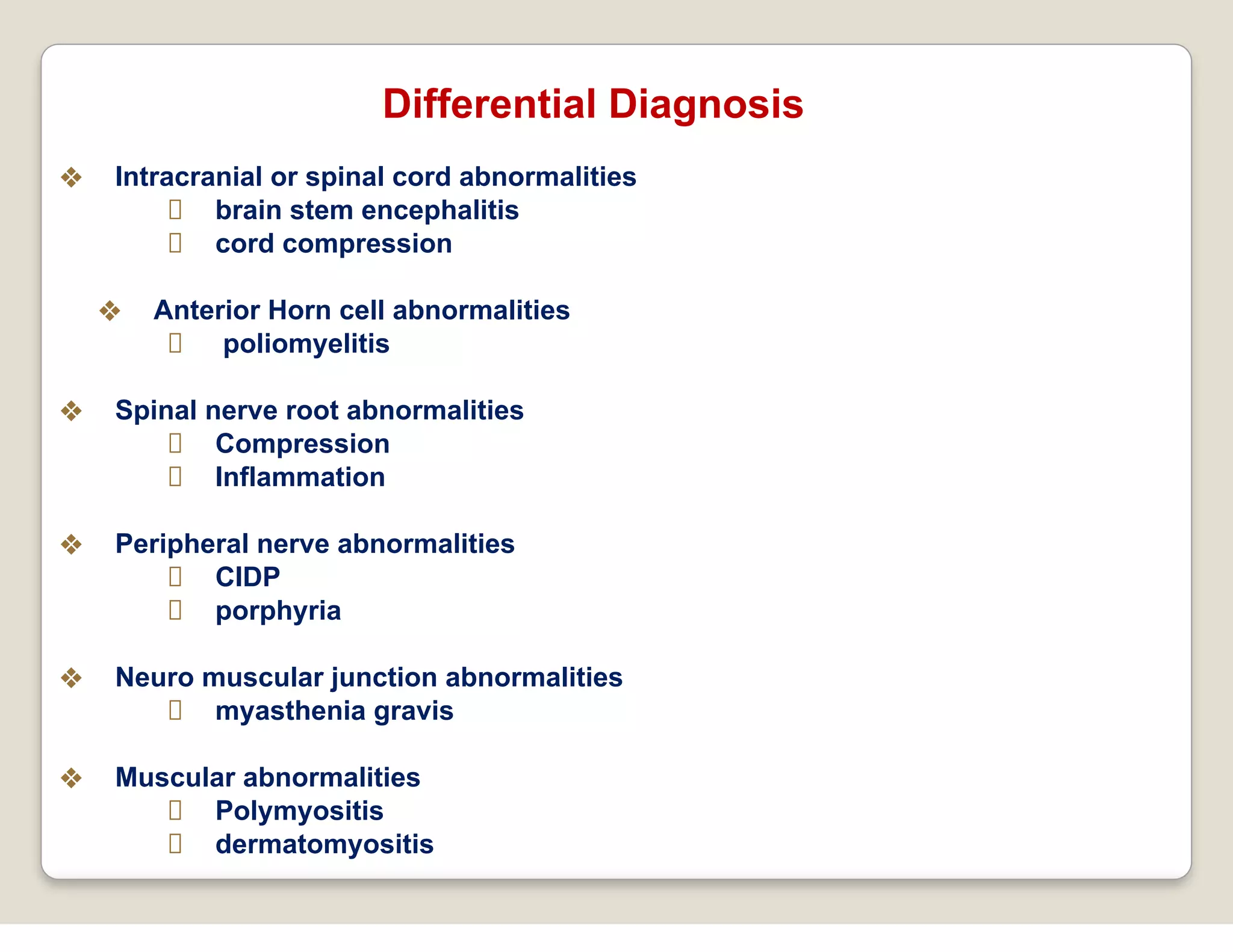
Differential Diagnosis
❖ Intracranial or spinal cord abnormalities
brain stem encephalitis
cord compression
❖ Anterior Horn cell abnormalities
poliomyelitis
❖ Spinal nerve root abnormalities
Compression
Inflammation
❖ Peripheral nerve abnormalities
CIDP
porphyria
❖ Neuro muscular junction abnormalities
myasthenia gravis
❖ Muscular abnormalities
Polymyositis
dermatomyositis
Treatment
- Drugs: Analgesics for muscle and joint pain
Muscle relaxants for spasm
Tricyclic antidepressant and anti convulsant
for painful sensation
Corticosteroid
- : plasmapheresis & high dose immunoglobin
therapy (IVIg)
Medical management Physiotherapy management
- physical therapy
- splintage
- mobilization
- re-education
Acute care
Rehabilative Care
Principles of Physiotherapy Management
❖ maintenance of airway and ventilatory capacity.
❖ maintain and improve joint range.
❖ strengthening and re-educate normal muscle function.
❖ re-education of sensory awareness and motor function.
❖ restoration of normal function.
❖ motivation and psychological support
Physiotherapy Management
Acute (progressive stage)
❖ maintenance of clear airway and prevention of lung infractions(chest
physiotherapy, postural drainage)
❖ support of joint and maintenance of normal joint movement
❖ maintenance of circulation.
❖ prevention of pressure sores.
❖ relief of pain (using TENS)
❖ psychological support
Acute progressive Stage Recovery stage
Recovery stage/ rehabilative care
❖ respiratory system: rate, depth, pattern of breathing, vital capacity and
chest expansion.
❖ strength(Isometric, isotonic, isokinetic exercises) and endurance
training(by changing duration and intensity).
❖ functional training
❖ balance and proprioception training(PNF techniques)
❖ motivation and general psychological approach
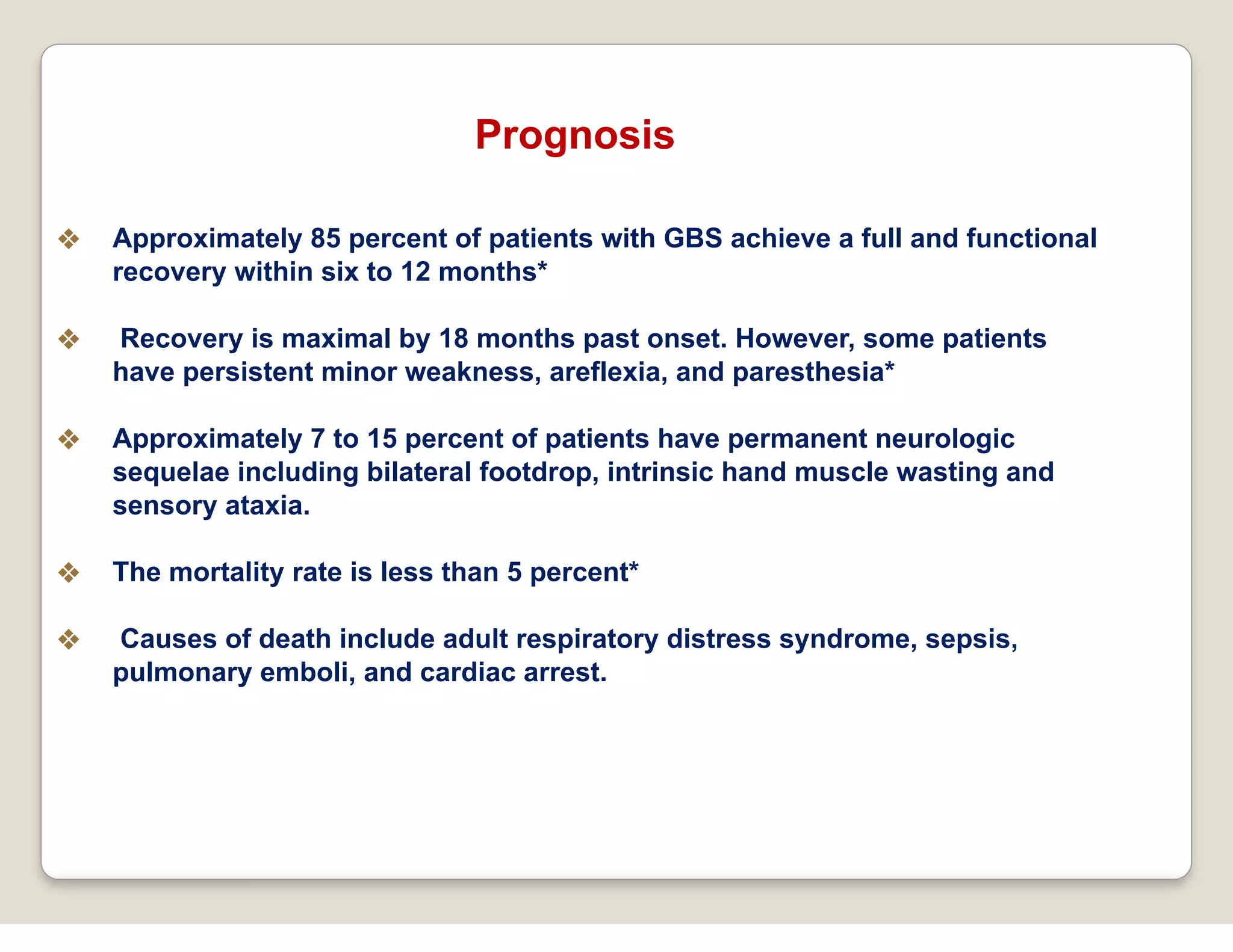
Prognosis
❖ Approximately 85 percent of patients with GBS achieve a full and functional
recovery within six to 12 months*
❖ Recovery is maximal by 18 months past onset. However, some patients
have persistent minor weakness, areflexia, and paresthesia*
❖ Approximately 7 to 15 percent of patients have permanent neurologic
sequelae including bilateral footdrop, intrinsic hand muscle wasting and
sensory ataxia.
❖ The mortality rate is less than 5 percent*
❖ Causes of death include adult respiratory distress syndrome, sepsis,
pulmonary emboli, and cardiac arrest.
❖ Several factors during the acute phase of illness predict subsequent
poor recovery. These factors include
age older than 60 years
severe, rapidly progressive disease
prolonged mechanical ventilation for more than one month
preexisting pulmonary disease predict a poor outcome.
❖ In general, a poor long-term prognosis is directly related to the severity
of the acute episode and delay in onset of specific treatment.
Modern Approach and Methodology
1.
National Institute of Neurological Disorders and Stroke (NINDS), the component of
the National Institutes of Health (NIH)
mouse model
- with an altered autoimmune
regulator gene that generates autoimmunity against the peripheral nervous system
(PNS).
- certain proteins or peptides in viruses and bacteria may be the same as those found
in myelin, and the production of antibodies to neutralize the invading viruses or
bacteria could trigger the attack on the myelin sheath.
2.
Indian Institute of Sciences (IISc) Bang lore, with the advancement in artificial
Intelligence and development of non invasive electrode technology
Shubham Singh
Thank you
for your
active participation & kind collaboration
Your Queries Please ?

Guillain Barre syndrome (GBS) .pdf

  • 1.
  • 2.
    Topic to becovered ❑ Gross structure of peripheral nerve. ❑ Brief description of peripheral polyneuropathy. ❑ Introduction to GBS (Guillain-Barre Syndrome). ❑ Epidemiology. ❑ Etiology of GBS. ❑ Pathophysiology of. ❑ Clinical presentation. ❑ Making diagnosis. ❑ Treatment. ❑ Prognosis. ❑ Modern approach.
  • 3.
    Peripheral Nervous System Sympathetic Somaticnervous system Autonomic nervous system Para- sympathetic Afferent Efferent ❖ composed of fibres from both somatic and visceral (autonomic) nervous system, together with their associated ganglion containing nerve cell bodies and supportive connective tissues. Gross Structure of Peripheral Nerve
  • 4.
  • 5.
  • 6.
    Polyneuropathy : collectiveterm for a syndrome which includes all inflammatory and degenerative diseases involving the peripheral nervous system. ❖ includes primary degenerative diseases which begins in nerve parenchyma. ❖ Initiated by toxic, metabolic or vascular causes. ❖ the main presenting feature include widespread sensory and motor disturbance of the peripheral nerves. Polyneuropathy
  • 7.
    Polyneuropathy Acute Ascending Polyneuropathy Sub-acute Sensorimoter Polyneuropathy Chronicsensorimotor Polyneuropathy ❖ Depending upon nature and involvement of pathways commonly occurring polyneuropathy - GBS - prophyria - diphtheria symmetrical asymmetrical acquired genetic - carcinoma - amyloid - diabetic neuropathy - polyarteritis nodosa - arsenical - lead - thalidomide neuropathy - peroneal muscular atrophy - hypertrophic intestinal neuritis
  • 8.
    ❖ stands for‘GUILLAIN-BARRE SYNDROME’ ❖ also known as ‘GUILLAIN-BARRE LANDRY SYNDROME’ ❖ A classic LMN disorder ❖ It is reactive, self limited, auto immune disease presents with acute generalized weakness. ❖ GBS is a polyneuropathy resulting from acute demyelination of PNS & cranial nerves(MFS). ❖ It may be axonal, demyelinating or mixed. Introduction to GBS Represents group of demyelinating inflammatory poly neuropathies
  • 9.
  • 10.
    GBS AIDP MFS Acute Inflammatory Demyelinating Polyneuropathy -most common - accounts for 70-80% - Autoimmune disorder, antibody mediated Is triggered by antecedent viral or bacterial infection - Inflammatory demyelination may be accompanied by axonal nerve loss - Remyelination occurs after the immune reaction stops AMSAN AMAN Acute Motor Axonal Neuropathy Acute Motor and Sensory Axonal Neuropathy Miller Fisher Syndrome -Demyelination and inflammation of cranial nerve III and VI, spinal ganglia, and peripheral nerves - cardinal feature ophthalmoplegia, ataxia, areflexia - Sensory loss unusual, but proprioception may be impaired. Classification of GBS AMAN & AMSAN are axonal types where axons themselves are damaged by immune response APAN Acute Panautonom neuropathy -Sympathetic, parasympathetic nervous systems are involved. - Cardiovascular involvement is common (postural hypotension, tachycardia, hypertension, dysrhythmias). - Blurry vision, dry eyes.
  • 11.
    Change in axonand myelin in various forms of GBS Normal motor neuron AIDP AMAN & AMSAN
  • 12.
    rapid deteriotion ofvision abnormal muscle coordination, paralysis of the eye muscles. cardinal feature: ophthalmoplegia, ataxia, areflexia Clinical presentation in MFS
  • 13.
    Epidemiology ❖ Found worldwidewith ratio of 1-2 in a lakh i.e. 1:100000. ❖ Affects both sexes but men being more affected (1.5 times) than women. ❖ Young or middle aged adult 20-50 years are being more affected. ❖ Most people reach the greatest stage of weakness within the first two weeks after symptoms appear ❖ By the third week 90 percent of affected individuals are at their weakest. ❖ 70% of people with GBS eventually experience full recovery.
  • 14.
    Survey report byNCBI of reported case of GBS
  • 15.
    Etiology ❖ Neither contagiousnor inherited, it is idiopathic. ❖ Researchers believed to be an autoimmune disease while others believe that it is due to hypersensitivity or allergy to unknown viruses or allergens. ❖ In about half of all cases the onset of syndrome follows viral or bacterial infections: ▪ Campylobacteriosis ▪ GIT Infections ▪ Viral hepatitis ▪ Porphyria ❖ GBS and its variants are considered post infectious immune mediated neuropathies ex. Epstein Barr virus. ❖ In around 50% of cases the onset of symptom is preceded by a mild gastro- intestinal or respiratory infections.
  • 16.
    Etiology of polyneuropathies ❖Infective condition: local infection of peripheral nerve. e.g. virus (herpes zooster), and bacteria (leprosy). Infection with organisms e.g. diphtheria, tetanus, botulism ❖ Post-infective polyneuropathy: GBS ❖ Toxic substances heavy metals: mercury, lead, arsenic, organic chemicals: aniline, cyanide drugs: thalidomide, isoniazid. ❖ Deficiency, metabolic & blood disorders alcoholism, porphyria, leukemias, diabetes mellitus ❖ Trauma: compression/stretching,
  • 17.
    Pathophysiology of GBS ❖The disease process affects the spinal roots and nerve processes primarily involving the Schwan cell this results in segmental demyelination, which results in reduced conduction velocity. ❖ Both sensory and motor nerve conduction velocities are reduced. ❖ In some patients axonal demyelination may occur that results in complete conduction block. ❖ Sometimes autonomic functions affected usually cardiac muscles which may leads to sinus arrhythmia and variable blood pressure. ❖ Visual impairment is rare, though papilloedema is occasionally seen. ❖ An associated perivascular lymphocytic inflammatory exudate of the peripheral nervous system and other organs (such as heart, lung, kidney) are seen.
  • 18.
    Spinal roots andnerve processes reduced conduction velocity Schwann cell Segmental demyelination involving Both sensory and motor nerve conduction velocities are reduced Results in weakness Disease affects complete conduction block paralysis
  • 19.
  • 20.
    Normal and disturbedtransmission.
  • 21.
    Clinical presentation ❖ Characterizedby sensation such as tingling in the feet or hands or even pain (specially in children), often starting in the legs or back. ❖ Symmetrical weakness of muscles i.e. weakness on both sides of the body in the next few weeks. ❖ Some patients experience paresthesia in toes & legs others have symptom only one side of the body(rare). ❖ Variation of symptom is seen: some may include mild difficulty in walking, requiring crutches the others may have complete paralysis of arms and legs and respiratory involvement. ❖ Muscle wasting, hypotonia and partial or complete loss of the associated deep tendon reflex.
  • 22.
    ❖ An individualwith GBS presents with: sensory symptoms(pricking sensations in the hands and feet) followed by motor, both follows pattern distal to proximal. coordination problems and unsteadiness diminished reflexes followed by areflexia(DTR in the legs such as knee jerks are usually lost, reflexes may also be absent in the arms) difficulty with eye muscles and vision difficulty swallowing, speaking, or chewing pain that can be severe, particularly at night abnormal heart beat/rate or blood pressure problems with digestion and/or bladder control. ❖ These symptoms can increase in intensity over a period of time.
  • 23.
    Distal limbs involvement Abnormalsensations such as tingling, pain and numbness Diminished or absent deep tendon reflexes Increased cerebrospinal fluid protein without elevated cell count Abnormal nerve conduction velocity findings Sometimes, a recent viral infection or diarrhea Recent onset, within days to at most four weeks symmetrical weakness
  • 24.
    A 12 yearsold child presenting with GBS
  • 25.
    Making diagnosis ❖ difficultto diagnose GBS in its earliest stages ❖ diagnosis is purely clinical and involves Spinal tap Diagnostic criteria NCV Electromyogram change in the cerebrospinal, fluid contains more protein than usual but very few immune cells slow signal conduction
  • 26.
    Differential Diagnosis ❖ Intracranialor spinal cord abnormalities brain stem encephalitis cord compression ❖ Anterior Horn cell abnormalities poliomyelitis ❖ Spinal nerve root abnormalities Compression Inflammation ❖ Peripheral nerve abnormalities CIDP porphyria ❖ Neuro muscular junction abnormalities myasthenia gravis ❖ Muscular abnormalities Polymyositis dermatomyositis
  • 27.
    Treatment - Drugs: Analgesicsfor muscle and joint pain Muscle relaxants for spasm Tricyclic antidepressant and anti convulsant for painful sensation Corticosteroid - : plasmapheresis & high dose immunoglobin therapy (IVIg) Medical management Physiotherapy management - physical therapy - splintage - mobilization - re-education Acute care Rehabilative Care
  • 28.
    Principles of PhysiotherapyManagement ❖ maintenance of airway and ventilatory capacity. ❖ maintain and improve joint range. ❖ strengthening and re-educate normal muscle function. ❖ re-education of sensory awareness and motor function. ❖ restoration of normal function. ❖ motivation and psychological support Physiotherapy Management
  • 29.
    Physiotherapy Management Acute (progressivestage) ❖ maintenance of clear airway and prevention of lung infractions(chest physiotherapy, postural drainage) ❖ support of joint and maintenance of normal joint movement ❖ maintenance of circulation. ❖ prevention of pressure sores. ❖ relief of pain (using TENS) ❖ psychological support Acute progressive Stage Recovery stage
  • 30.
    Recovery stage/ rehabilativecare ❖ respiratory system: rate, depth, pattern of breathing, vital capacity and chest expansion. ❖ strength(Isometric, isotonic, isokinetic exercises) and endurance training(by changing duration and intensity). ❖ functional training ❖ balance and proprioception training(PNF techniques) ❖ motivation and general psychological approach
  • 33.
    Prognosis ❖ Approximately 85percent of patients with GBS achieve a full and functional recovery within six to 12 months* ❖ Recovery is maximal by 18 months past onset. However, some patients have persistent minor weakness, areflexia, and paresthesia* ❖ Approximately 7 to 15 percent of patients have permanent neurologic sequelae including bilateral footdrop, intrinsic hand muscle wasting and sensory ataxia. ❖ The mortality rate is less than 5 percent* ❖ Causes of death include adult respiratory distress syndrome, sepsis, pulmonary emboli, and cardiac arrest.
  • 34.
    ❖ Several factorsduring the acute phase of illness predict subsequent poor recovery. These factors include age older than 60 years severe, rapidly progressive disease prolonged mechanical ventilation for more than one month preexisting pulmonary disease predict a poor outcome. ❖ In general, a poor long-term prognosis is directly related to the severity of the acute episode and delay in onset of specific treatment.
  • 35.
    Modern Approach andMethodology 1. National Institute of Neurological Disorders and Stroke (NINDS), the component of the National Institutes of Health (NIH) mouse model - with an altered autoimmune regulator gene that generates autoimmunity against the peripheral nervous system (PNS). - certain proteins or peptides in viruses and bacteria may be the same as those found in myelin, and the production of antibodies to neutralize the invading viruses or bacteria could trigger the attack on the myelin sheath. 2. Indian Institute of Sciences (IISc) Bang lore, with the advancement in artificial Intelligence and development of non invasive electrode technology
  • 36.
    Shubham Singh Thank you foryour active participation & kind collaboration Your Queries Please ?