Multiple Sclerosis
Faten Al-Sadek
What is Multiple sclerosis (MS) ?
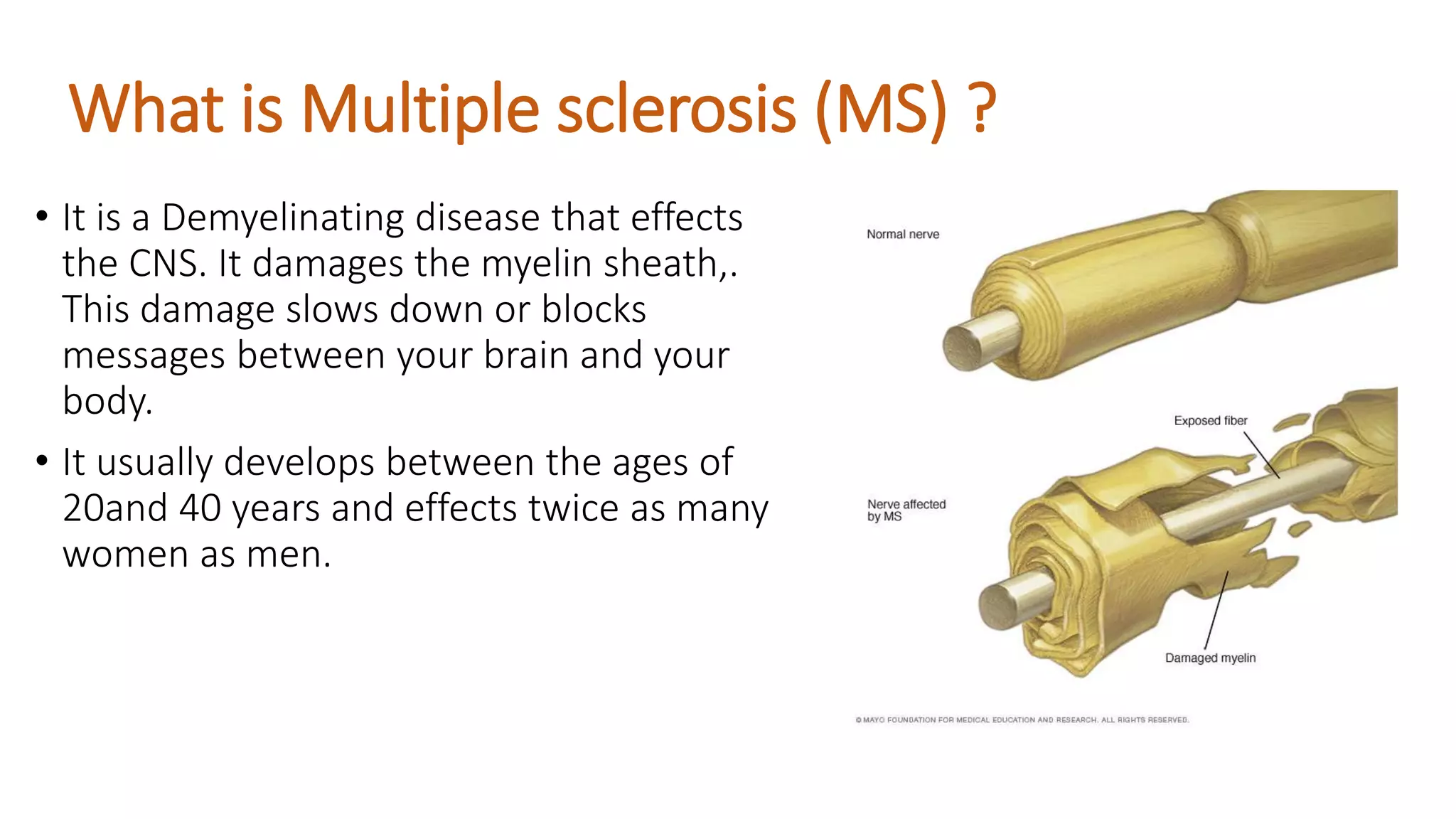
• It is a Demyelinating disease that effects
the CNS. It damages the myelin sheath,.
This damage slows down or blocks
messages between your brain and your
body.
• It usually develops between the ages of
20and 40 years and effects twice as many
women as men.
What happen in MS ?
• MS is an autoimmune condition, which means your
immune system mistakes part of your body for a
foreign substance and attacks. In the case of MS, it
attacks the myelin sheath in the brain or spinal cord .
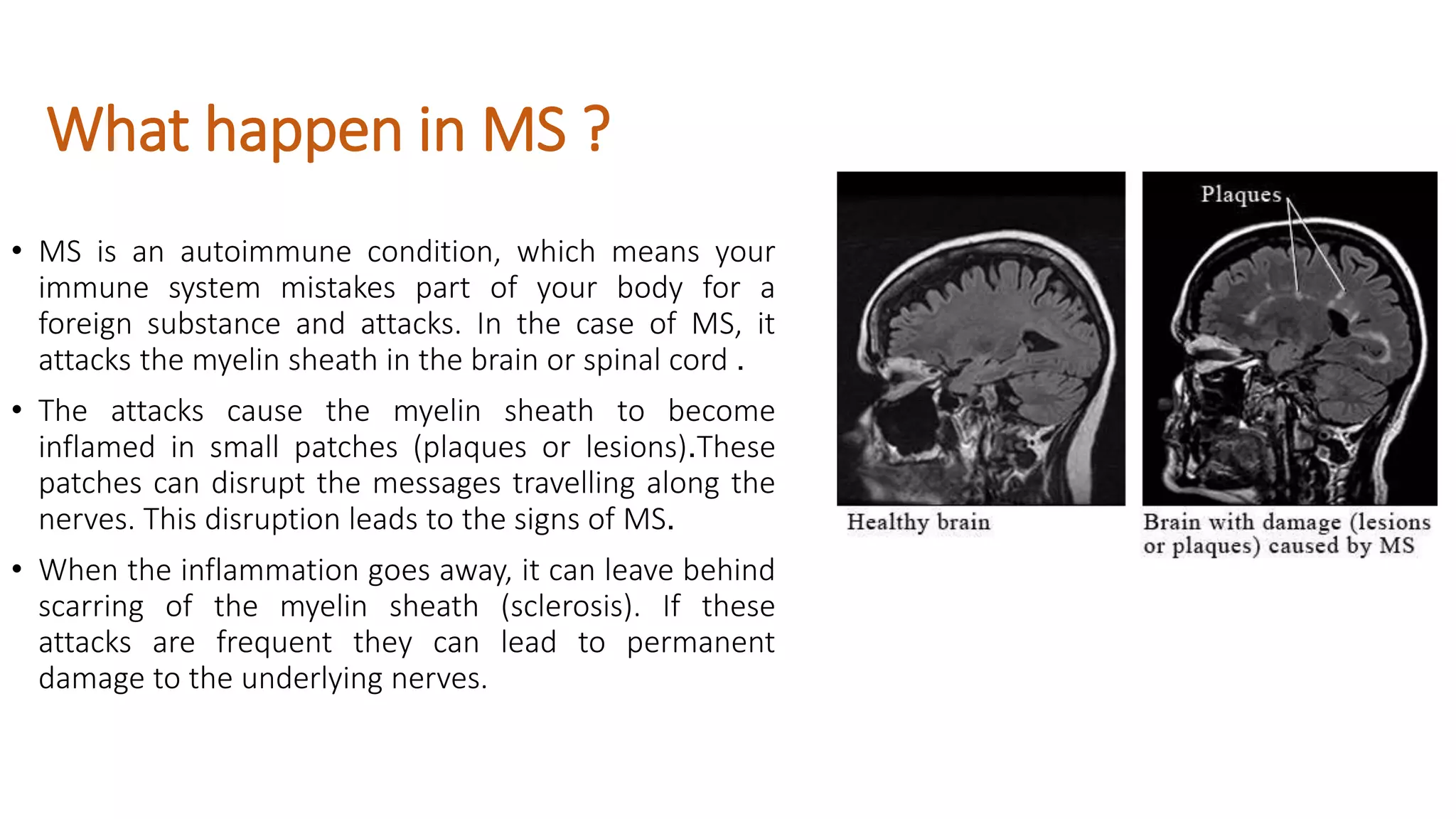
• The attacks cause the myelin sheath to become
inflamed in small patches (plaques or lesions).These
patches can disrupt the messages travelling along the
nerves. This disruption leads to the signs of MS.
• When the inflammation goes away, it can leave behind
scarring of the myelin sheath (sclerosis). If these
attacks are frequent they can lead to permanent
damage to the underlying nerves.
MS pathophysiology :
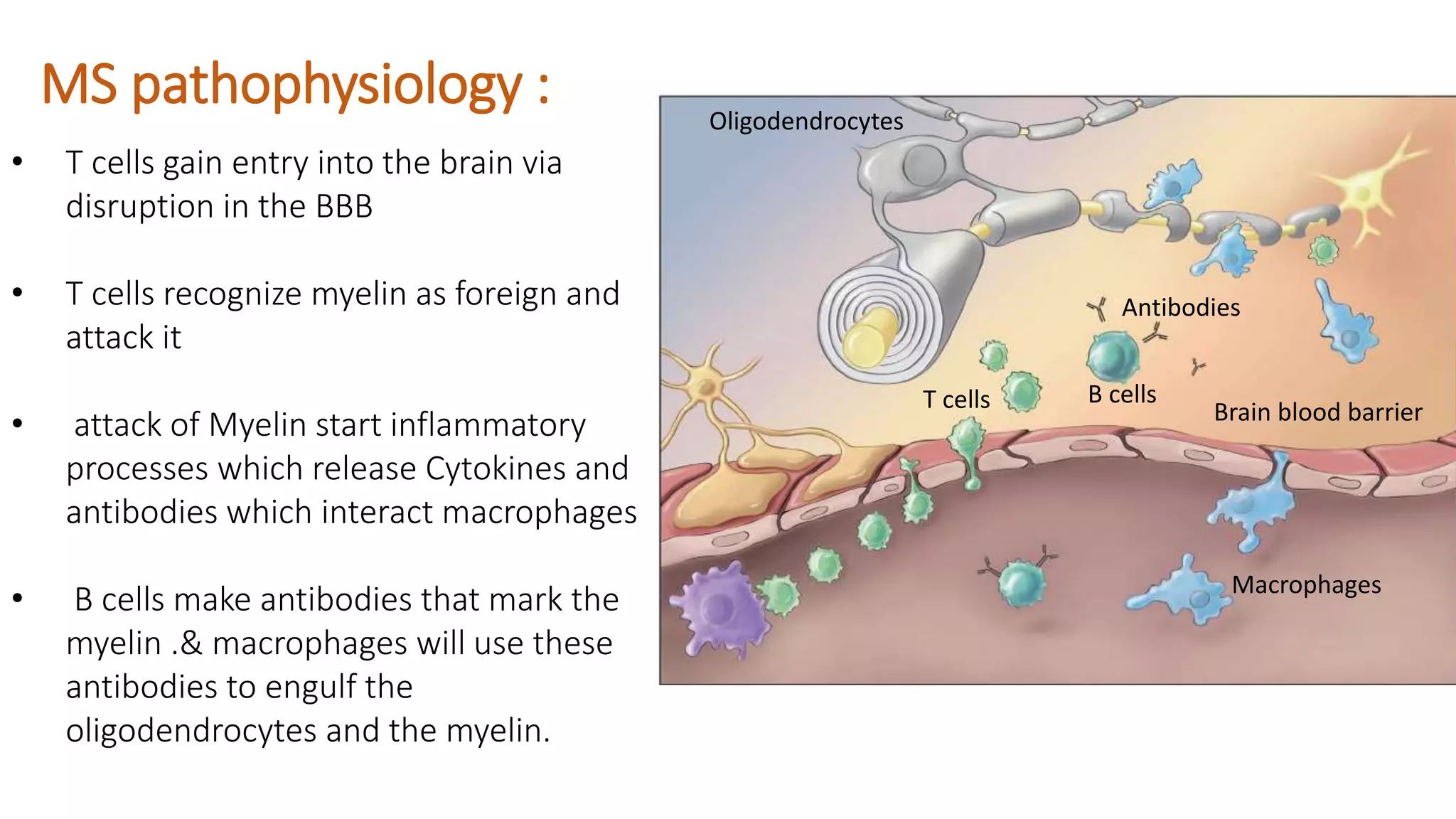
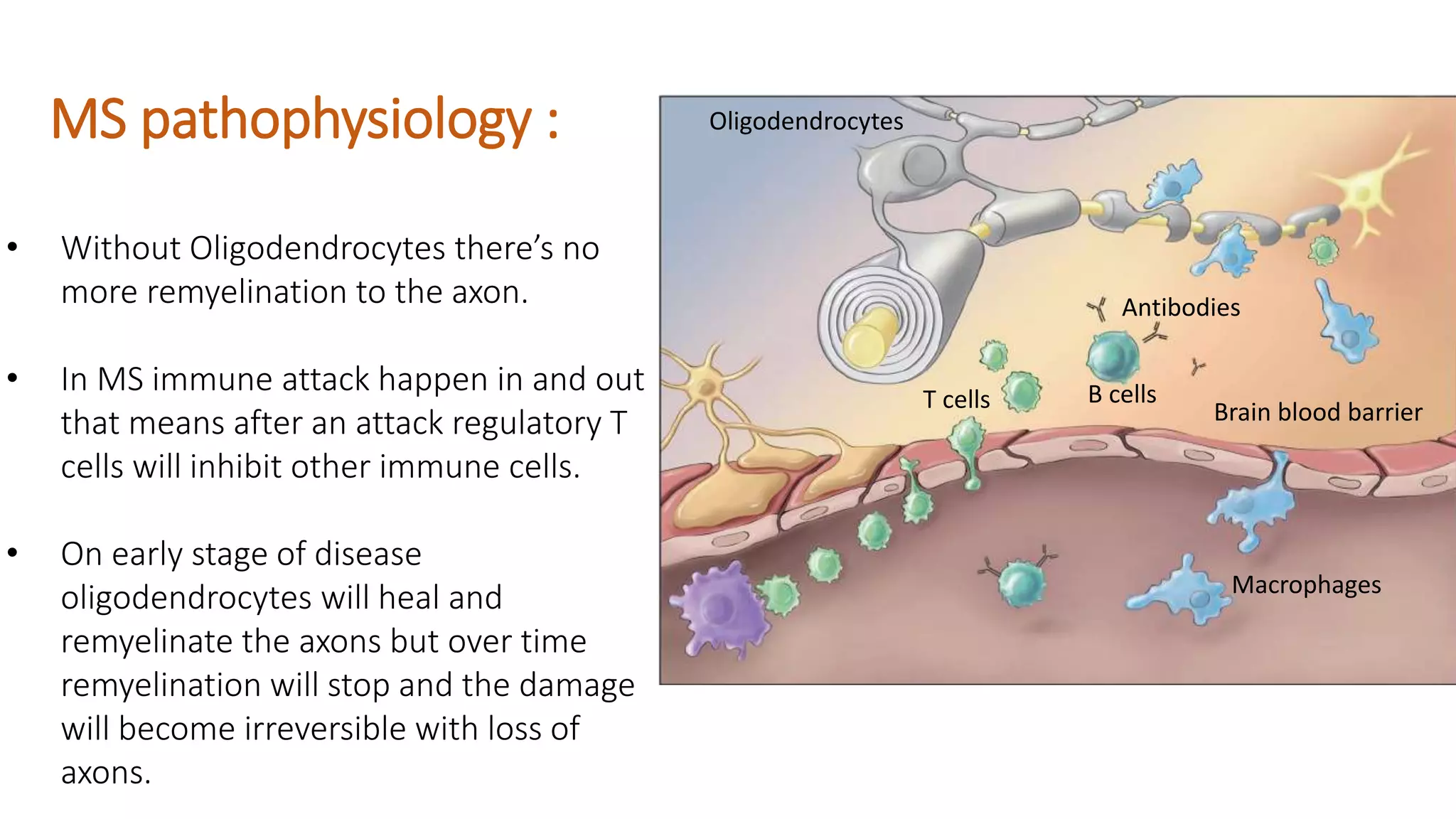
• T cells gain entry into the brain via
disruption in the BBB
• T cells recognize myelin as foreign and
attack it
• attack of Myelin start inflammatory
processes which release Cytokines and
antibodies which interact macrophages
• B cells make antibodies that mark the
myelin .& macrophages will use these
antibodies to engulf the
oligodendrocytes and the myelin.
Brain blood barrierT cells B cells
Antibodies
Macrophages
Oligodendrocytes
MS pathophysiology :
• Without Oligodendrocytes there’s no
more remyelination to the axon.
• In MS immune attack happen in and out
that means after an attack regulatory T
cells will inhibit other immune cells.
• On early stage of disease
oligodendrocytes will heal and
remyelinate the axons but over time
remyelination will stop and the damage
will become irreversible with loss of
axons.
Brain blood barrierT cells B cells
Antibodies
Macrophages
Oligodendrocytes
Causes of MS :
The cause of MS is unknown , but it linked with some factors such as:
Genetic factors :
• Being a female
• Specific genes that have been linked with MS , HLA-DR2 gene (encode for identify and bind
molecules)
• Familial risk
Immunological factors:
an abnormal immune-mediated response attacks the myelin
Environmental factors:
Vitamin D deficiency .People who live closer to the equator are exposed to greater amounts of
sunlight so they have a lower risk than people who live farther from the equators .
MS Symptoms:
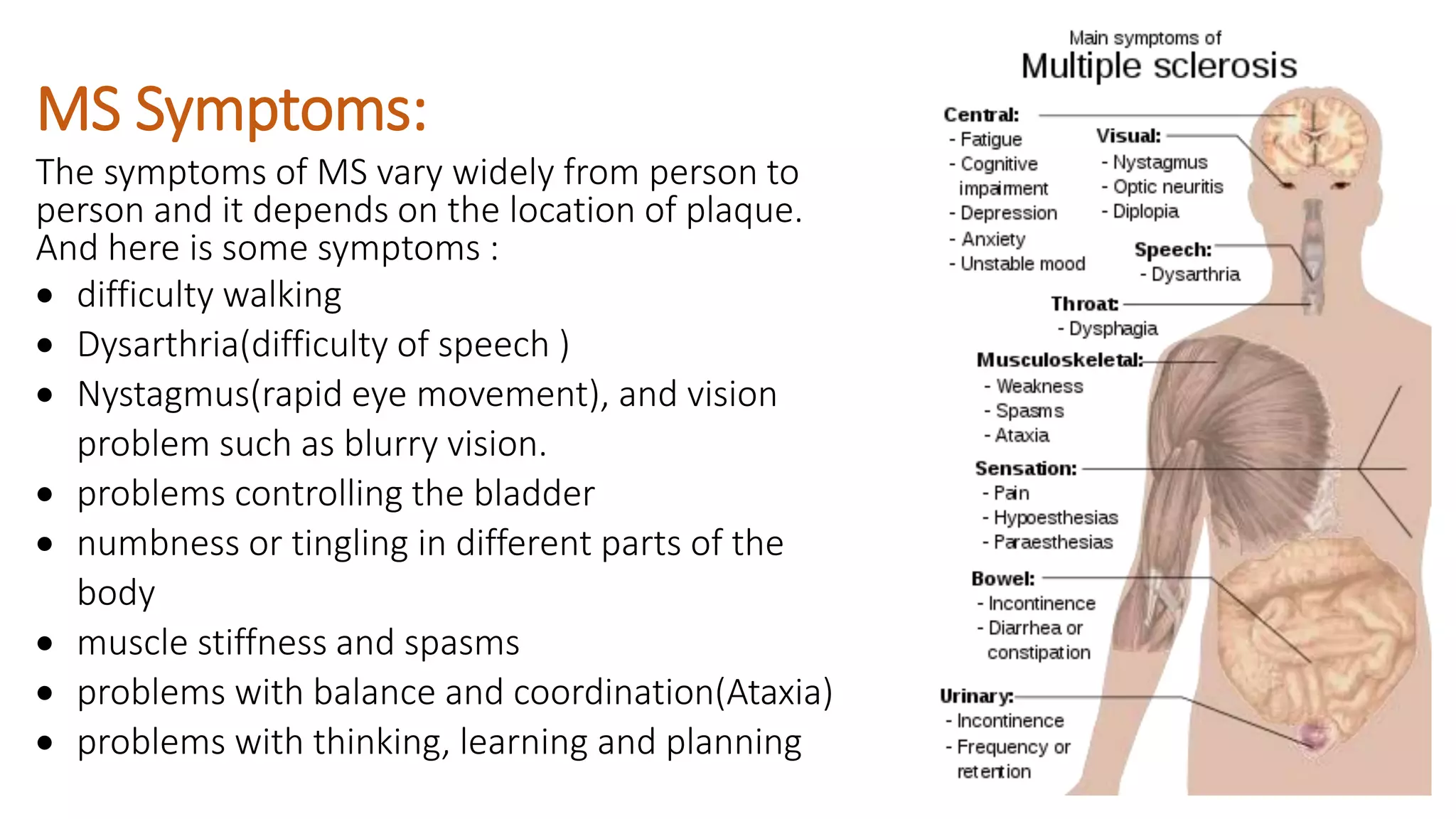
The symptoms of MS vary widely from person to
person and it depends on the location of plaque.
And here is some symptoms :
 difficulty walking
 Dysarthria(difficulty of speech )
 Nystagmus(rapid eye movement), and vision
problem such as blurry vision.
 problems controlling the bladder
 numbness or tingling in different parts of the
body
 muscle stiffness and spasms
 problems with balance and coordination(Ataxia)
 problems with thinking, learning and planning
MS Diagnosis :
MS is typically diagnosed based on the symptoms, in
combination with supporting medical imaging and
laboratory testing.
• Magnetic resonance imaging ( MRI ) of brain and spinal
cord to show plaques.
• spinal tap test(lumbar puncture). high levels of antibodies
in CSF indicate having MS.
• Visual Evoked potential . Measure response to visual
stimulus
MS Treatment :
There is no cure for multiple sclerosis.
Treatment typically focuses on speeding
recovery from attacks, slowing the progression of
the disease and managing MS symptoms
Immunomodulators:
• Beta interferons :They are injected under the skin
or into muscle and can reduce the frequency and
severity of relapses
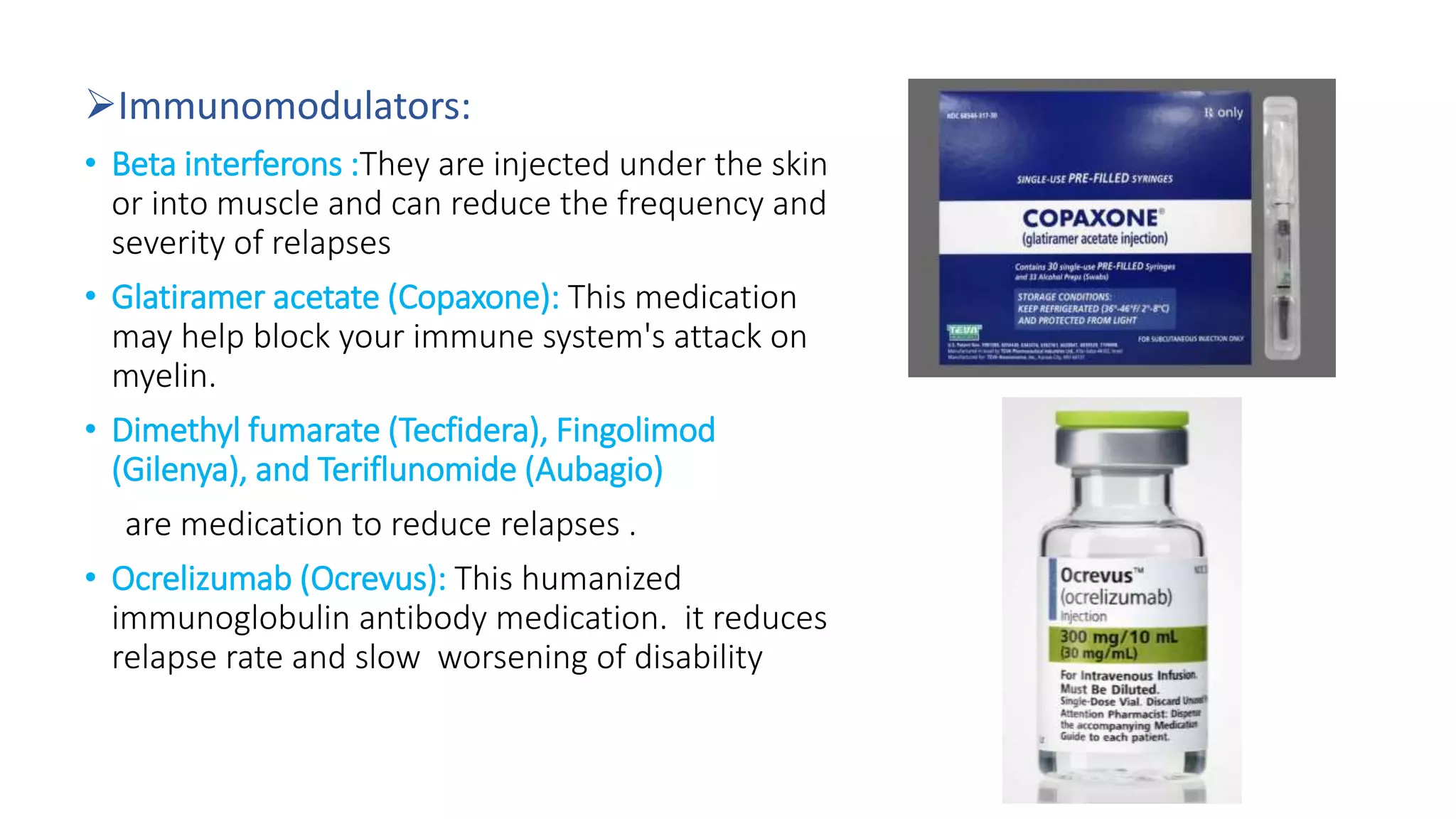
• Glatiramer acetate (Copaxone): This medication
may help block your immune system's attack on
myelin.
• Dimethyl fumarate (Tecfidera), Fingolimod
(Gilenya), and Teriflunomide (Aubagio)
are medication to reduce relapses .
• Ocrelizumab (Ocrevus): This humanized
immunoglobulin antibody medication. it reduces
relapse rate and slow worsening of disability
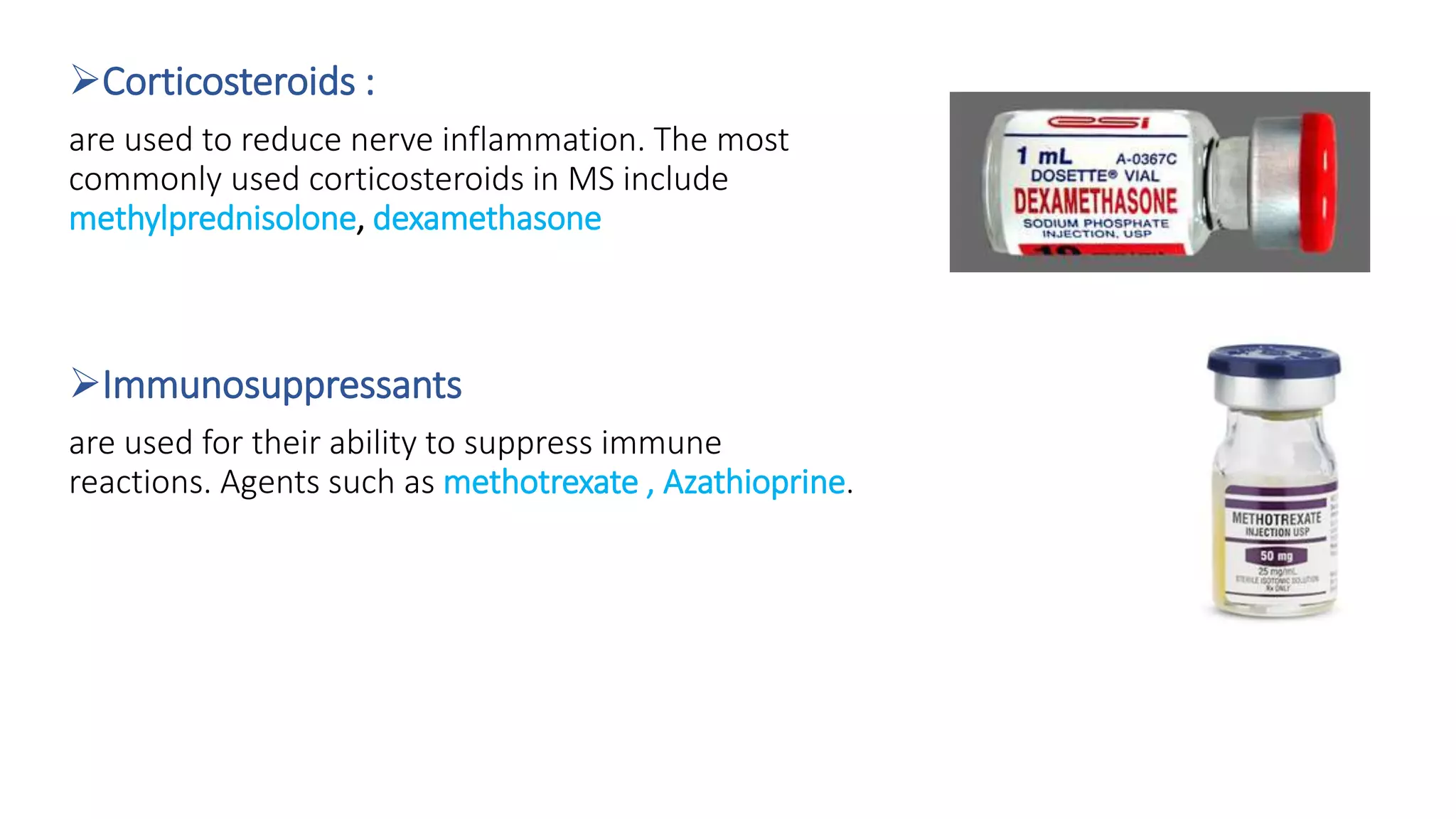
Corticosteroids :
are used to reduce nerve inflammation. The most
commonly used corticosteroids in MS include
methylprednisolone, dexamethasone
Immunosuppressants
are used for their ability to suppress immune
reactions. Agents such as methotrexate , Azathioprine.
 Treatments for MS symptoms:
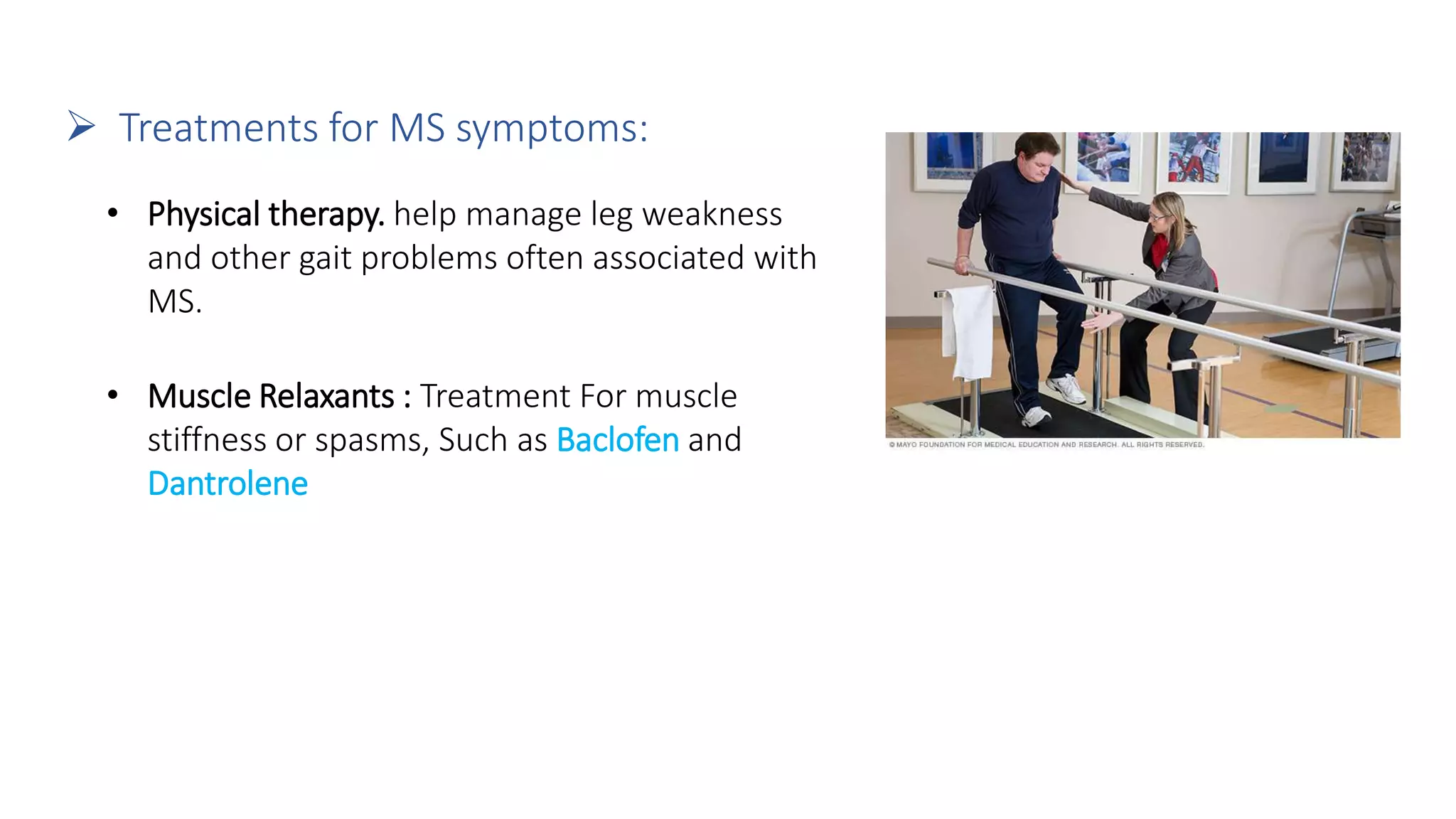
• Physical therapy. help manage leg weakness
and other gait problems often associated with
MS.
• Muscle Relaxants : Treatment For muscle
stiffness or spasms, Such as Baclofen and
Dantrolene
References :
• http://www.nationalmssociety.org/
• http://www.mayoclinic.org/
• https://www.webmd.com/
• https://www.osmosis.org/
Multiple sclerosis pathophysiology, diagnosis, and treatment

Multiple sclerosis pathophysiology, diagnosis, and treatment

  • 1.
  • 2.
    What is Multiplesclerosis (MS) ? • It is a Demyelinating disease that effects the CNS. It damages the myelin sheath,. This damage slows down or blocks messages between your brain and your body. • It usually develops between the ages of 20and 40 years and effects twice as many women as men.
  • 3.
    What happen inMS ? • MS is an autoimmune condition, which means your immune system mistakes part of your body for a foreign substance and attacks. In the case of MS, it attacks the myelin sheath in the brain or spinal cord . • The attacks cause the myelin sheath to become inflamed in small patches (plaques or lesions).These patches can disrupt the messages travelling along the nerves. This disruption leads to the signs of MS. • When the inflammation goes away, it can leave behind scarring of the myelin sheath (sclerosis). If these attacks are frequent they can lead to permanent damage to the underlying nerves.
  • 4.
    MS pathophysiology : •T cells gain entry into the brain via disruption in the BBB • T cells recognize myelin as foreign and attack it • attack of Myelin start inflammatory processes which release Cytokines and antibodies which interact macrophages • B cells make antibodies that mark the myelin .& macrophages will use these antibodies to engulf the oligodendrocytes and the myelin. Brain blood barrierT cells B cells Antibodies Macrophages Oligodendrocytes
  • 5.
    MS pathophysiology : •Without Oligodendrocytes there’s no more remyelination to the axon. • In MS immune attack happen in and out that means after an attack regulatory T cells will inhibit other immune cells. • On early stage of disease oligodendrocytes will heal and remyelinate the axons but over time remyelination will stop and the damage will become irreversible with loss of axons. Brain blood barrierT cells B cells Antibodies Macrophages Oligodendrocytes
  • 6.
    Causes of MS: The cause of MS is unknown , but it linked with some factors such as: Genetic factors : • Being a female • Specific genes that have been linked with MS , HLA-DR2 gene (encode for identify and bind molecules) • Familial risk Immunological factors: an abnormal immune-mediated response attacks the myelin Environmental factors: Vitamin D deficiency .People who live closer to the equator are exposed to greater amounts of sunlight so they have a lower risk than people who live farther from the equators .
  • 7.
    MS Symptoms: The symptomsof MS vary widely from person to person and it depends on the location of plaque. And here is some symptoms :  difficulty walking  Dysarthria(difficulty of speech )  Nystagmus(rapid eye movement), and vision problem such as blurry vision.  problems controlling the bladder  numbness or tingling in different parts of the body  muscle stiffness and spasms  problems with balance and coordination(Ataxia)  problems with thinking, learning and planning
  • 8.
    MS Diagnosis : MSis typically diagnosed based on the symptoms, in combination with supporting medical imaging and laboratory testing. • Magnetic resonance imaging ( MRI ) of brain and spinal cord to show plaques. • spinal tap test(lumbar puncture). high levels of antibodies in CSF indicate having MS. • Visual Evoked potential . Measure response to visual stimulus
  • 9.
    MS Treatment : Thereis no cure for multiple sclerosis. Treatment typically focuses on speeding recovery from attacks, slowing the progression of the disease and managing MS symptoms
  • 10.
    Immunomodulators: • Beta interferons:They are injected under the skin or into muscle and can reduce the frequency and severity of relapses • Glatiramer acetate (Copaxone): This medication may help block your immune system's attack on myelin. • Dimethyl fumarate (Tecfidera), Fingolimod (Gilenya), and Teriflunomide (Aubagio) are medication to reduce relapses . • Ocrelizumab (Ocrevus): This humanized immunoglobulin antibody medication. it reduces relapse rate and slow worsening of disability
  • 11.
    Corticosteroids : are usedto reduce nerve inflammation. The most commonly used corticosteroids in MS include methylprednisolone, dexamethasone Immunosuppressants are used for their ability to suppress immune reactions. Agents such as methotrexate , Azathioprine.
  • 12.
     Treatments forMS symptoms: • Physical therapy. help manage leg weakness and other gait problems often associated with MS. • Muscle Relaxants : Treatment For muscle stiffness or spasms, Such as Baclofen and Dantrolene
  • 13.
    References : • http://www.nationalmssociety.org/ •http://www.mayoclinic.org/ • https://www.webmd.com/ • https://www.osmosis.org/