

Guideline for blood transfusion
in newborn
Dr MANDAR HAVAL
DCH. DNB.
Fellow in Neonatology (NNF)
Introduction
• Preterm neonates comprise the most heavily
transfused group of patients, and about 85%
of extremely low birth weight newborns
receive a transfusion by the end of their
hospital stay
• What specific pretransfusion processing is
performed before transfusing blood products
to neonates?
• What are the indications for the use of various
blood products?
Pre-transfusion Issues:
Recommendations
• Donor selection
a. Avoid blood donation from first and
second degree relatives.
b. In addition to routine screening tests, the
donor should be seronegative for
Cytomegalovirus (CMV).
• Blood typing errors can result from
i. Weak expression of red blood cell(RBC) antigens in neonates
ii. Presence of maternal antibodies that can mask the
corresponding antigens.
iii. Umbilical cord samples contaminated by maternal blood/
Wharton’s jelly.
When indicated following tests should be performed before
selecting the right donor blood
i. Mother’s blood: ABO/Rh blood group and irregular antibodies
against RBCs using the indirect antiglobulin test (IAT).
ii. Neonate’s blood: ABO/Rh blood groups, (when possible,
confirmed on a second sample). Direct antiglobulin test (DAT) and,
if positive, elution of any antibody and its identification.sting of
donor blood
PRE-TRANSFUSION TESTING OF DONOR BLOOD
3. Leucodepletion: Whole blood, Packed RBC
and platelet concentrates should be
leucodepleted(<5 x 10⁶ leucocytes per pack).
This may be done in the blood bank (pre issue)
or using online filters at the bedside (post
issue).
4. Hematocrit: Reconstituted blood should have
a hematocrit 0.5 ± 0.05
Gamma irradiation
• Gamma irradiation: It renders donor lymphocytes
effete and unable to mount a graft versus host
reaction on the immunologically incompetent
neonate. The dosage required is 25-50 gray (2500
- 5000 rads). Irradiation of packed RBC should be
done within 14 days of collection of the cells;
once irradiated packed RBC should be transfused
within 48 hours. Irradiation does not change the
shelf-life of platelet concentrates
Indication for irradiated blood
i. Intrauterine transfusion of packed RBC and platelets
ii. Transfusion of packed RBC and platelets (also in blood
exchange transfusion) after
intrauterine transfusion
iii. Transfusion of RBC and platelets in neonates with birth
weight < 1500grams and/or gestation at birth
<30weeks
iv. Donations from first or second degree relatives
v. Neonates with congenital or acquired
immunodeficiency.
Prevention of Cytomegalovirus
infection:
• This can be achieved by using CMV
seronegative donors and leucodepletion.
• Indication –
i. Intrauterine transfusion of packed RBC and
platelets
ii. Neonates with birth weight <1500 grams
and/or gestation < 30weeks
iii. Neonates with congenital or acquired
immune deficiency;
Use of satellite (piggyback) bags
• This reduces wastage and exposure to
multiple donors. Blood banks should be
encouraged to use these for all blood
components.
T activation
• T antigens (and the closely related Th, Tk and
Tx antigens) are present on theneonate’s RBC
surface and get activated in certain clinical
situations (e.g. Necrotizing enterocolitis and
Septicemia) when RBC get exposed to
bacterial or viral enzymes (neuraminidase).
This leads to polyagglutination of the RBCs
(unexpected agglutination on testing with sera
from ABO compatible donors) and thereby
hemolysis
Cont..
• In high risk situations avoid all plasma or
plasma products as most adults have anti T
antibodies due to prior exposure to bacteria
and vaccines. If unavoidable use plasma with
low titres of anti T antibody to prevent
hemolysis.
Reconstitution of packed cells for
exchange transfusion
• At present, in India no regulatory guidelines
exist for reconstitution of blood. In the West,
the FDA clearly states that although
reconstitution of blood can be done either at
the blood bank or at the ward, whoever
reconstitutes the blood must be registered
with the FDA.
Single vs multiple donors
• A unit of blood with additional satellite packs
ordered for each infant and used up to its
expiry date, allows up to eight transfusions
from a single donation, reducing the number
donor exposures
Recommendations on use of blood
products in neonates
a. Characteristics: Blood for transfusion should
be less than 5 days old, irradiated, CMV
negative,warmed and have a hematocrit of
0.5 to 0.6
b. Reconstituted blood: Reconstituted whole
blood is obtained by combining packed RBC
with fresh-frozen plasma (FFP). Ideally FFP
should be from the same donor bag from
which the packed RBC was produced.
Otherwise AB group FFP from a different
donor may be used. The final product should
be used within 24h of reconstitution and has
the same characteristics as whole blood
except for reduced platelets.
Cont..
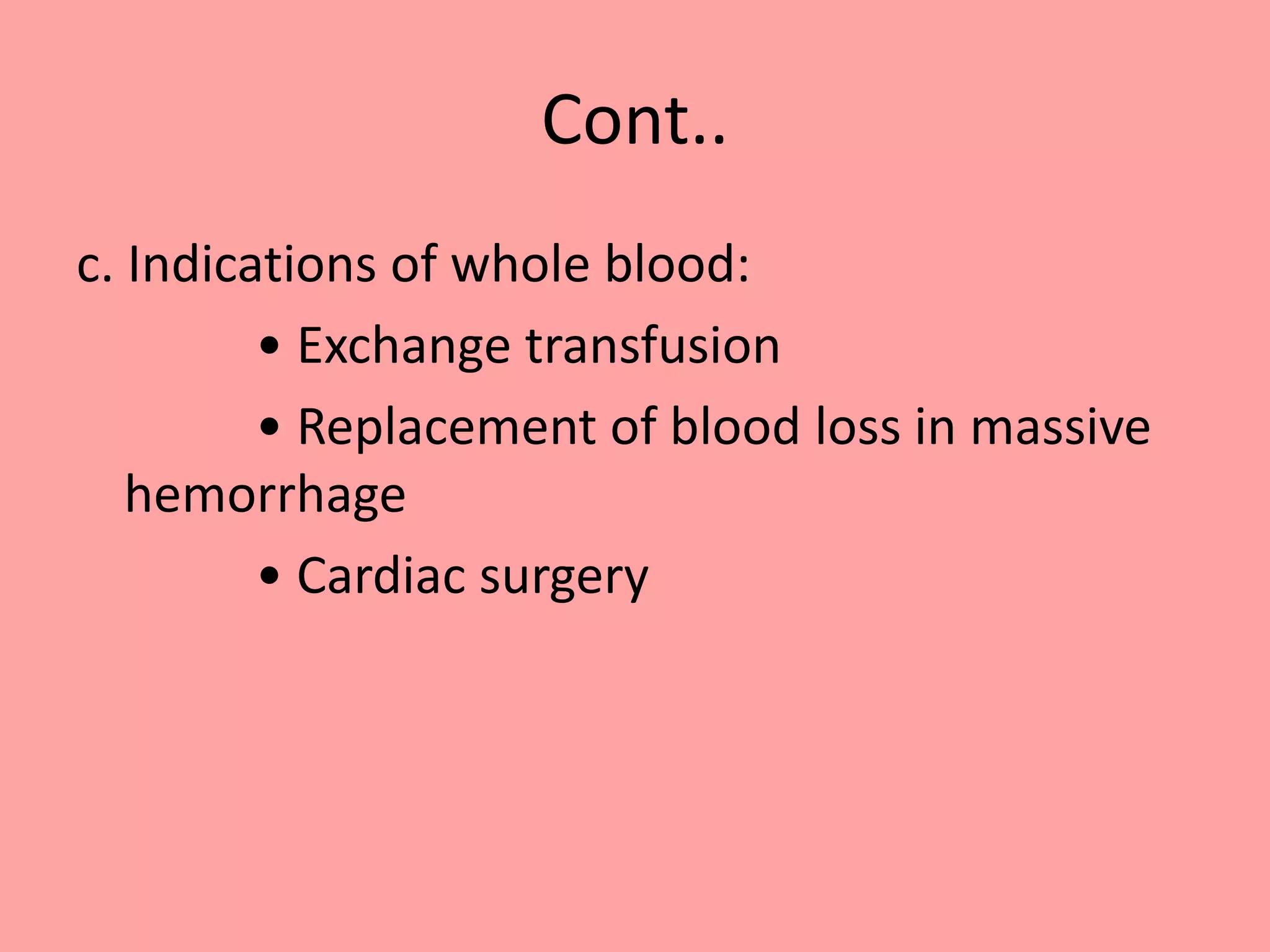
c. Indications of whole blood:
• Exchange transfusion
• Replacement of blood loss in massive
hemorrhage
• Cardiac surgery
Exchange transfusion
• The choice of donor blood group is dependent
on the mother and infant’s blood
and Rh grouping
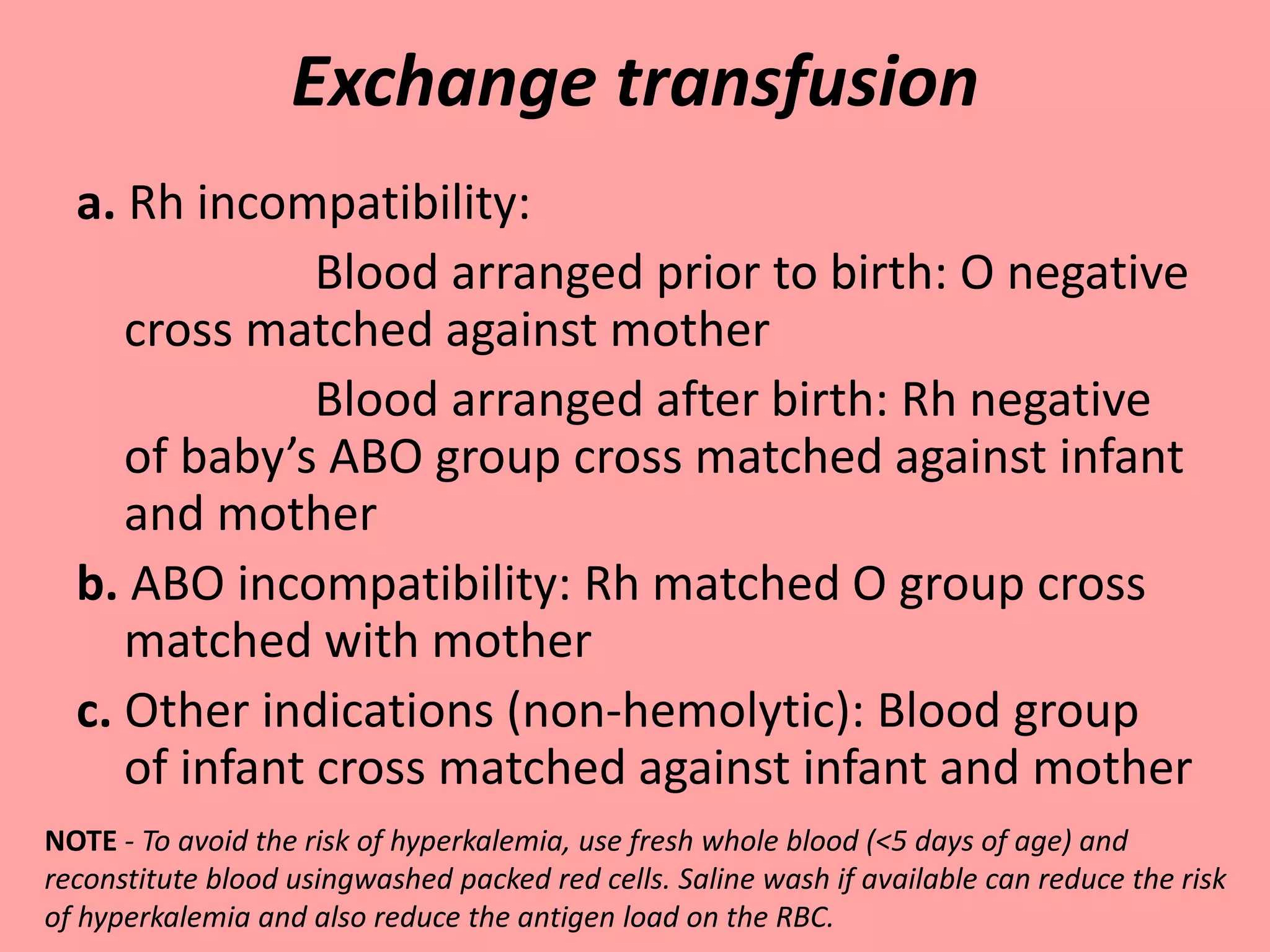
Exchange transfusion
a. Rh incompatibility:
Blood arranged prior to birth: O negative
cross matched against mother
Blood arranged after birth: Rh negative
of baby’s ABO group cross matched against infant
and mother
b. ABO incompatibility: Rh matched O group cross
matched with mother
c. Other indications (non-hemolytic): Blood group
of infant cross matched against infant and mother
NOTE - To avoid the risk of hyperkalemia, use fresh whole blood (<5 days of age) and
reconstitute blood usingwashed packed red cells. Saline wash if available can reduce the risk
of hyperkalemia and also reduce the antigen load on the RBC.
Packed red blood cell (PRBC)
transfusions
• Many centers have introduced restrictive
transfusion policies for preterm infants in
recent years.
• Despite hematocrit being an imperfect
surrogate marker for oxygen delivery, various
guidelines propose cut off values to trigger
transfusion
Severe anemia of antenatal onset Hb
<8gm/dl at birth
a. In severe anemia associated with congestive
heart failure (due to immunohemolysis, chronic
feto-maternal or feto-fetal hemorrhage) the most
appropriate treatment is"partial" exchange
transfusion (PET) with packed RBC with the aim
of correcting the anemia while avoiding volume
overload.
b. In severe anemia with hypovolaemic shock
(placenta previa, abruption placentae, rupture of
the cord), the intravascular volume must be
restored and the anemia corrected.
Early neonatal anemia(after birth or in
1st week of life
• For anemia developing after birth or in the
first week of life, in which the values of Hb are
moderately decreased, transfusion treatment
is necessary in the case of severe cardio-
pulmonary diseases, in order to maintain the
PCV greater than 0.35 to 0.40.
Late neonatal anemia
a. Acute blood loss greater than 10% of blood
volume with features of decreased oxygen
delivery or greater than 20% of blood volume.
b. PCV < 30%: Moderate or significant
mechanical ventilator support [MAP >8 cm ,
FiO2 >0.40 with conventional ventilation or
MAP >14 and FiO2 > 0.40 with High frequency
ventilation-HFV]
c. PCV < 25%: Minimal mechanical ventilator
support [ MAP < 8 cm, FiO2 < 0.40 on
conventional ventilation or MAP <14 and/or FiO2
0.40 on HFV]
d. PCV < 20%: Supplemental oxygen not requiring
mechanical ventilatory support plus the presence
of one or more of the following :
i. Tachycardia >180/minute or Respiratory rate >
60 for ≥ 24hours
ii. Doubling of the oxygen requirement in last 48
hours
iii. Lactate > 2.5 mEq/L or acute metabolic acidosis
with pH <7.20
iv. Weight gain less than 10 grams/kg/day
over 4 days while receiving 120kcal/kg/day
v. If the infant will undergo major surgery
within 72 hours
e. PCV< 18%: Consider transfusion for asym-
ptomatic infants with absolute reticulocyte
count of < 100x103/μL (100x109/L) or < 2
percent.
Guidelines which are also
followed are
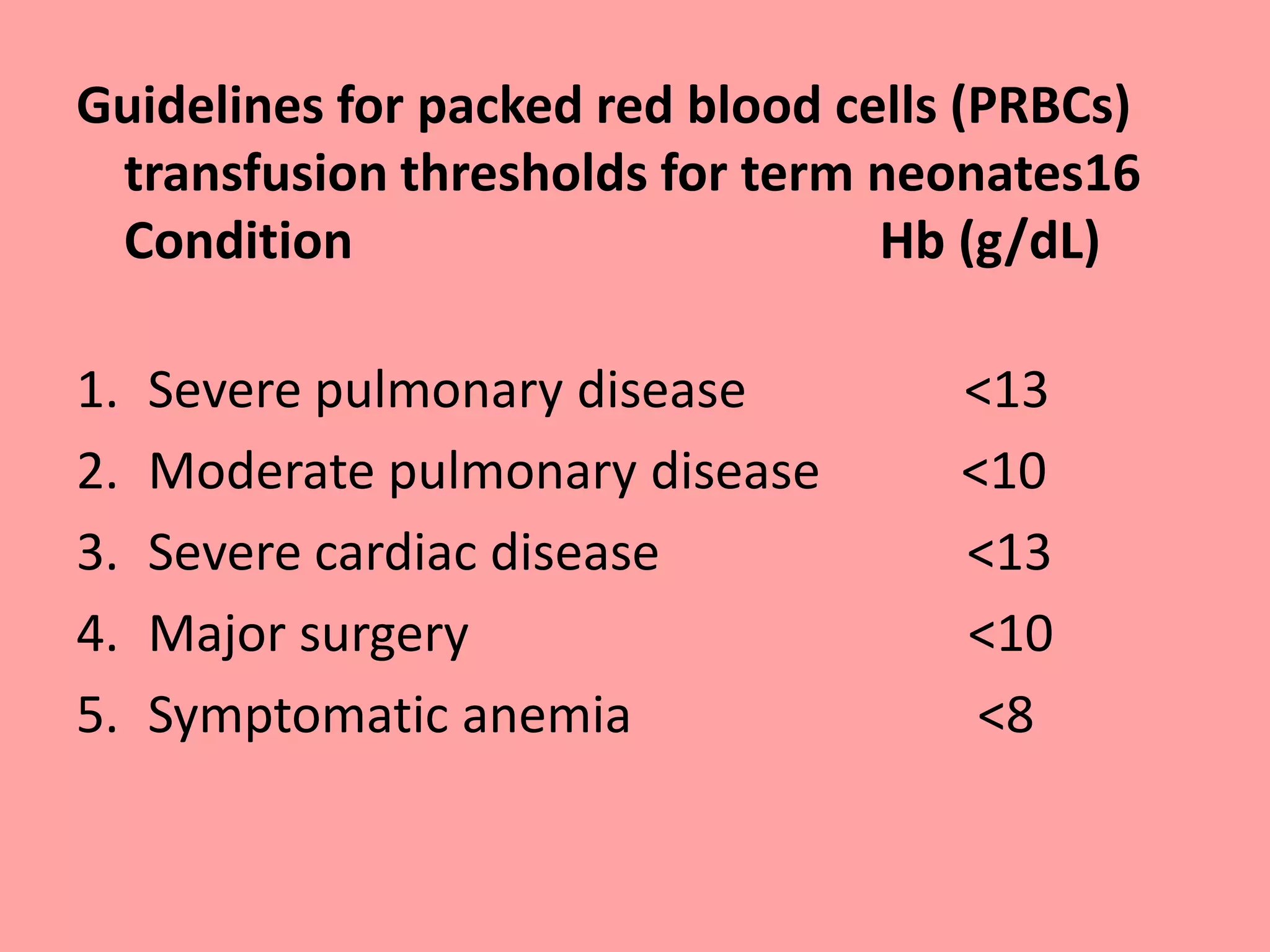
Guidelines for packed red blood cells (PRBCs)
transfusion thresholds for term neonates16
Condition Hb (g/dL)
1. Severe pulmonary disease <13
2. Moderate pulmonary disease <10
3. Severe cardiac disease <13
4. Major surgery <10
5. Symptomatic anemia <8
Amount of transfusion to be given:
• It has been seen that transfusion with PRBC at
a dose of 20 mL/kg is well tolerated and
results in an overall decrease in number of
transfusions compared to transfusions done at
10 mL/kg. There is also a higher rise in
hemoglobin with a higher dose of PRBCs
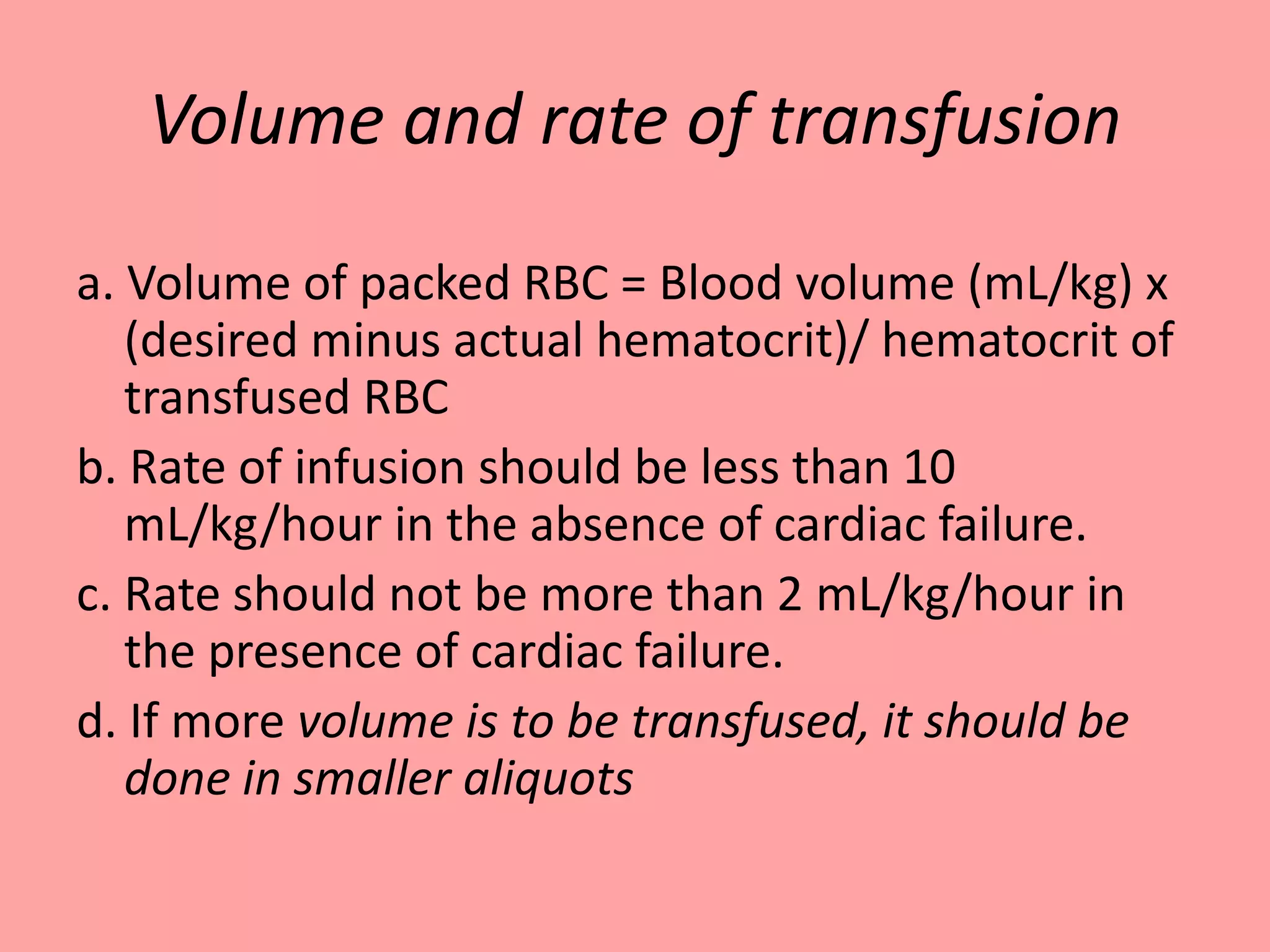
Volume and rate of transfusion
a. Volume of packed RBC = Blood volume (mL/kg) x
(desired minus actual hematocrit)/ hematocrit of
transfused RBC
b. Rate of infusion should be less than 10
mL/kg/hour in the absence of cardiac failure.
c. Rate should not be more than 2 mL/kg/hour in
the presence of cardiac failure.
d. If more volume is to be transfused, it should be
done in smaller aliquots
Expected response:
• Each transfusion of 9 mL/kg of body weight
should increase hemoglobin level by 3 g/dL.
Meticulous monitoring of input, output and
vital signs are mandatory during blood
transfusion
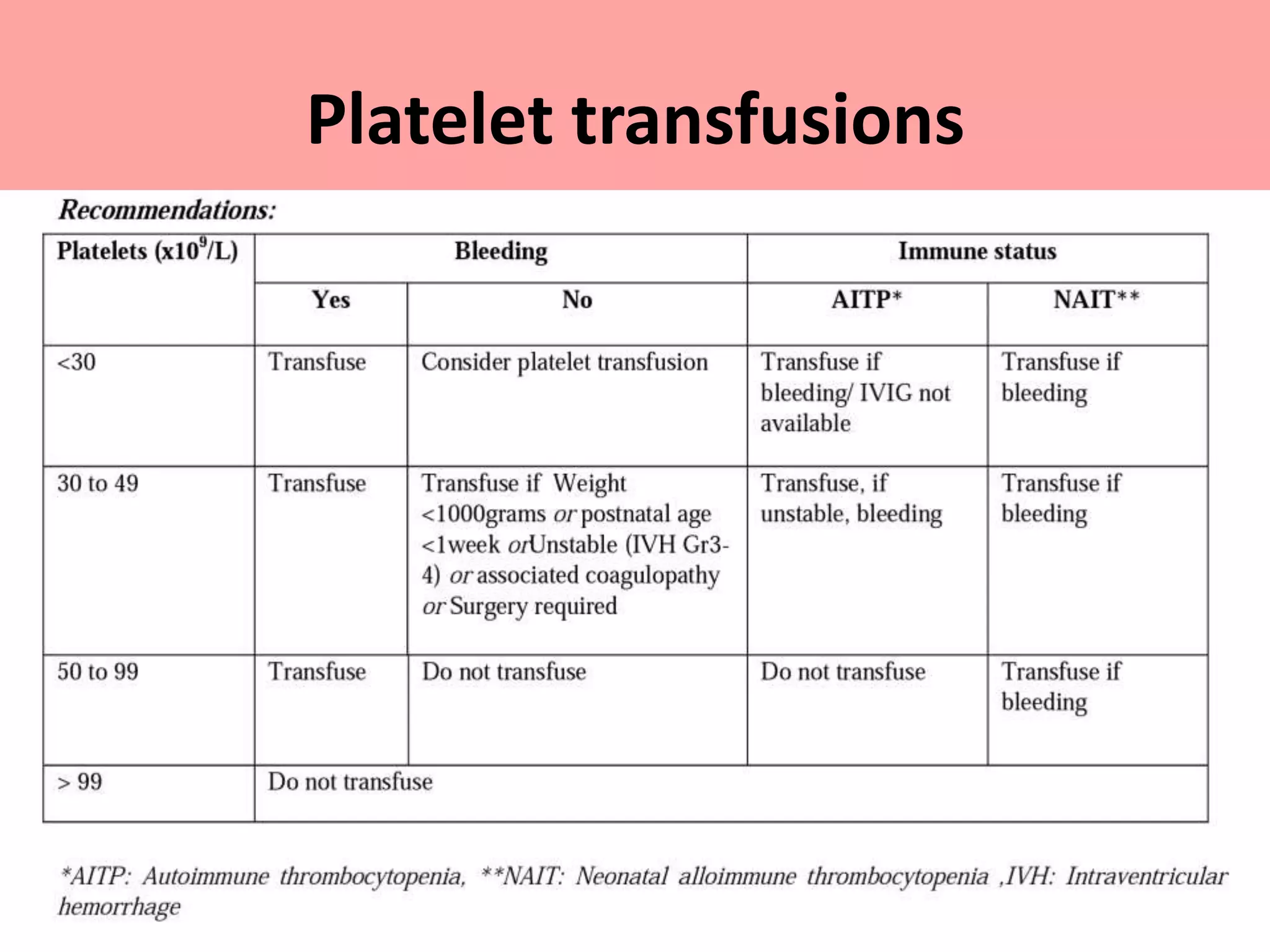
Platelet transfusions
Practical Issues
• 1. Platelets should never be filtered through a
micropore blood filter before transfusion, as it
will considerably decrease the number of
platelets.
• 2. Female Rh-negative infants should receive
platelets from Rh-negative donors to prevent
Rh sensitization from the contaminating red
blood cells.
3. The usual recommended dose of platelets for
neonates is 1 unit of platelets per 10 kg body
weight, which amounts to 5 mL/kg. The
predicted rise in platelet count from a 5-mL/kg
dose would be 20 to 60,000/cubic mm.24,25
Doses of up to 10-20 ml/kg may be used in
case of severe thrombocytopenia.
Fresh frozen plasma and
Cryoprecipitate Indications
a. Severe clotting deficiency (including DIC) with
bleeding
b. Severe clotting deficiency in a neonate
undergoing an invasive procedure
c. Vitamin K deficiency with bleeding
d. Dilutional coagulopathy with bleeding
e. Severe anticoagulant protein deficiency
f. Reconstitution of packed RBC for exchange
transfusion
Incorrect indications for which FFP is
often prescribed but should not be
used
a. Prevention of intraventricular hemorrhage in
premature neonates
b. Volume replacement in the management of
sepsis
c. As an adjunct in the management of
thrombocytopenia
d. To “correct” prolonged indices of coagulation
Recommendations for Factor VIII/
cryoprecipitate
• Congenital factor deficiencies are rare in the
neonatal period. While treating bleeding
neonates, cryoprecipitate is often considered
an alternative to FFP because of its small
volume. However, cryoprecipitate contains
only factors VIII, XIII and fibrinogen and is not
effective in treating the more extensive
clotting factor deficiencies.
Granulocyte transfusion
• Limited therapeutic effectiveness in general
except for bacterial sepsis or disseminated
fungal infection unresponsive to antibiotics in
infants
• CMV seronegative and be irradiated as it
contains large number of lymphocytes but
leukofilters should not be used for granulocyte
transfusions
• The usual dose is 1-2 x 10 neutrophils/Kg body
weight, in a volume of 15 ml/Kg
Practice points
• Use components wherever feasible/ available
• Follow guidelines
• Treat patient/ not lab values
• Awareness of complications of blood
transfusions
TRANSFUSION ASSOCIATED RISKS
• Blood transfusion reactions may be broadly
classified as
1. Infectious
2. Non-infectious
a. Acute
i. Immunologic
ii. Non-immunologic
b. Delayed
Guideline for blood transfusion in newborn (NNF)

Guideline for blood transfusion in newborn (NNF)

  • 1.
    Guideline for bloodtransfusion in newborn Dr MANDAR HAVAL DCH. DNB. Fellow in Neonatology (NNF)
  • 2.
    Introduction • Preterm neonatescomprise the most heavily transfused group of patients, and about 85% of extremely low birth weight newborns receive a transfusion by the end of their hospital stay
  • 3.
    • What specificpretransfusion processing is performed before transfusing blood products to neonates? • What are the indications for the use of various blood products?
  • 4.
    Pre-transfusion Issues: Recommendations • Donorselection a. Avoid blood donation from first and second degree relatives. b. In addition to routine screening tests, the donor should be seronegative for Cytomegalovirus (CMV).
  • 5.
    • Blood typingerrors can result from i. Weak expression of red blood cell(RBC) antigens in neonates ii. Presence of maternal antibodies that can mask the corresponding antigens. iii. Umbilical cord samples contaminated by maternal blood/ Wharton’s jelly. When indicated following tests should be performed before selecting the right donor blood i. Mother’s blood: ABO/Rh blood group and irregular antibodies against RBCs using the indirect antiglobulin test (IAT). ii. Neonate’s blood: ABO/Rh blood groups, (when possible, confirmed on a second sample). Direct antiglobulin test (DAT) and, if positive, elution of any antibody and its identification.sting of donor blood PRE-TRANSFUSION TESTING OF DONOR BLOOD
  • 6.
    3. Leucodepletion: Wholeblood, Packed RBC and platelet concentrates should be leucodepleted(<5 x 10⁶ leucocytes per pack). This may be done in the blood bank (pre issue) or using online filters at the bedside (post issue). 4. Hematocrit: Reconstituted blood should have a hematocrit 0.5 ± 0.05
  • 7.
    Gamma irradiation • Gammairradiation: It renders donor lymphocytes effete and unable to mount a graft versus host reaction on the immunologically incompetent neonate. The dosage required is 25-50 gray (2500 - 5000 rads). Irradiation of packed RBC should be done within 14 days of collection of the cells; once irradiated packed RBC should be transfused within 48 hours. Irradiation does not change the shelf-life of platelet concentrates
  • 8.
    Indication for irradiatedblood i. Intrauterine transfusion of packed RBC and platelets ii. Transfusion of packed RBC and platelets (also in blood exchange transfusion) after intrauterine transfusion iii. Transfusion of RBC and platelets in neonates with birth weight < 1500grams and/or gestation at birth <30weeks iv. Donations from first or second degree relatives v. Neonates with congenital or acquired immunodeficiency.
  • 9.
    Prevention of Cytomegalovirus infection: •This can be achieved by using CMV seronegative donors and leucodepletion. • Indication – i. Intrauterine transfusion of packed RBC and platelets ii. Neonates with birth weight <1500 grams and/or gestation < 30weeks iii. Neonates with congenital or acquired immune deficiency;
  • 10.
    Use of satellite(piggyback) bags • This reduces wastage and exposure to multiple donors. Blood banks should be encouraged to use these for all blood components.
  • 11.
    T activation • Tantigens (and the closely related Th, Tk and Tx antigens) are present on theneonate’s RBC surface and get activated in certain clinical situations (e.g. Necrotizing enterocolitis and Septicemia) when RBC get exposed to bacterial or viral enzymes (neuraminidase). This leads to polyagglutination of the RBCs (unexpected agglutination on testing with sera from ABO compatible donors) and thereby hemolysis
  • 12.
    Cont.. • In highrisk situations avoid all plasma or plasma products as most adults have anti T antibodies due to prior exposure to bacteria and vaccines. If unavoidable use plasma with low titres of anti T antibody to prevent hemolysis.
  • 13.
    Reconstitution of packedcells for exchange transfusion • At present, in India no regulatory guidelines exist for reconstitution of blood. In the West, the FDA clearly states that although reconstitution of blood can be done either at the blood bank or at the ward, whoever reconstitutes the blood must be registered with the FDA.
  • 14.
    Single vs multipledonors • A unit of blood with additional satellite packs ordered for each infant and used up to its expiry date, allows up to eight transfusions from a single donation, reducing the number donor exposures
  • 15.
    Recommendations on useof blood products in neonates a. Characteristics: Blood for transfusion should be less than 5 days old, irradiated, CMV negative,warmed and have a hematocrit of 0.5 to 0.6
  • 16.
    b. Reconstituted blood:Reconstituted whole blood is obtained by combining packed RBC with fresh-frozen plasma (FFP). Ideally FFP should be from the same donor bag from which the packed RBC was produced. Otherwise AB group FFP from a different donor may be used. The final product should be used within 24h of reconstitution and has the same characteristics as whole blood except for reduced platelets.
  • 17.
    Cont.. c. Indications ofwhole blood: • Exchange transfusion • Replacement of blood loss in massive hemorrhage • Cardiac surgery
  • 18.
    Exchange transfusion • Thechoice of donor blood group is dependent on the mother and infant’s blood and Rh grouping
  • 19.
    Exchange transfusion a. Rhincompatibility: Blood arranged prior to birth: O negative cross matched against mother Blood arranged after birth: Rh negative of baby’s ABO group cross matched against infant and mother b. ABO incompatibility: Rh matched O group cross matched with mother c. Other indications (non-hemolytic): Blood group of infant cross matched against infant and mother NOTE - To avoid the risk of hyperkalemia, use fresh whole blood (<5 days of age) and reconstitute blood usingwashed packed red cells. Saline wash if available can reduce the risk of hyperkalemia and also reduce the antigen load on the RBC.
  • 20.
    Packed red bloodcell (PRBC) transfusions • Many centers have introduced restrictive transfusion policies for preterm infants in recent years. • Despite hematocrit being an imperfect surrogate marker for oxygen delivery, various guidelines propose cut off values to trigger transfusion
  • 21.
    Severe anemia ofantenatal onset Hb <8gm/dl at birth a. In severe anemia associated with congestive heart failure (due to immunohemolysis, chronic feto-maternal or feto-fetal hemorrhage) the most appropriate treatment is"partial" exchange transfusion (PET) with packed RBC with the aim of correcting the anemia while avoiding volume overload. b. In severe anemia with hypovolaemic shock (placenta previa, abruption placentae, rupture of the cord), the intravascular volume must be restored and the anemia corrected.
  • 22.
    Early neonatal anemia(afterbirth or in 1st week of life • For anemia developing after birth or in the first week of life, in which the values of Hb are moderately decreased, transfusion treatment is necessary in the case of severe cardio- pulmonary diseases, in order to maintain the PCV greater than 0.35 to 0.40.
  • 23.
    Late neonatal anemia a.Acute blood loss greater than 10% of blood volume with features of decreased oxygen delivery or greater than 20% of blood volume. b. PCV < 30%: Moderate or significant mechanical ventilator support [MAP >8 cm , FiO2 >0.40 with conventional ventilation or MAP >14 and FiO2 > 0.40 with High frequency ventilation-HFV]
  • 24.
    c. PCV <25%: Minimal mechanical ventilator support [ MAP < 8 cm, FiO2 < 0.40 on conventional ventilation or MAP <14 and/or FiO2 0.40 on HFV] d. PCV < 20%: Supplemental oxygen not requiring mechanical ventilatory support plus the presence of one or more of the following : i. Tachycardia >180/minute or Respiratory rate > 60 for ≥ 24hours ii. Doubling of the oxygen requirement in last 48 hours iii. Lactate > 2.5 mEq/L or acute metabolic acidosis with pH <7.20
  • 25.
    iv. Weight gainless than 10 grams/kg/day over 4 days while receiving 120kcal/kg/day v. If the infant will undergo major surgery within 72 hours e. PCV< 18%: Consider transfusion for asym- ptomatic infants with absolute reticulocyte count of < 100x103/μL (100x109/L) or < 2 percent.
  • 26.
    Guidelines which arealso followed are
  • 27.
    Guidelines for packedred blood cells (PRBCs) transfusion thresholds for term neonates16 Condition Hb (g/dL) 1. Severe pulmonary disease <13 2. Moderate pulmonary disease <10 3. Severe cardiac disease <13 4. Major surgery <10 5. Symptomatic anemia <8
  • 28.
    Amount of transfusionto be given: • It has been seen that transfusion with PRBC at a dose of 20 mL/kg is well tolerated and results in an overall decrease in number of transfusions compared to transfusions done at 10 mL/kg. There is also a higher rise in hemoglobin with a higher dose of PRBCs
  • 29.
    Volume and rateof transfusion a. Volume of packed RBC = Blood volume (mL/kg) x (desired minus actual hematocrit)/ hematocrit of transfused RBC b. Rate of infusion should be less than 10 mL/kg/hour in the absence of cardiac failure. c. Rate should not be more than 2 mL/kg/hour in the presence of cardiac failure. d. If more volume is to be transfused, it should be done in smaller aliquots
  • 30.
    Expected response: • Eachtransfusion of 9 mL/kg of body weight should increase hemoglobin level by 3 g/dL. Meticulous monitoring of input, output and vital signs are mandatory during blood transfusion
  • 31.
  • 32.
    Practical Issues • 1.Platelets should never be filtered through a micropore blood filter before transfusion, as it will considerably decrease the number of platelets. • 2. Female Rh-negative infants should receive platelets from Rh-negative donors to prevent Rh sensitization from the contaminating red blood cells.
  • 33.
    3. The usualrecommended dose of platelets for neonates is 1 unit of platelets per 10 kg body weight, which amounts to 5 mL/kg. The predicted rise in platelet count from a 5-mL/kg dose would be 20 to 60,000/cubic mm.24,25 Doses of up to 10-20 ml/kg may be used in case of severe thrombocytopenia.
  • 34.
    Fresh frozen plasmaand Cryoprecipitate Indications a. Severe clotting deficiency (including DIC) with bleeding b. Severe clotting deficiency in a neonate undergoing an invasive procedure c. Vitamin K deficiency with bleeding d. Dilutional coagulopathy with bleeding e. Severe anticoagulant protein deficiency f. Reconstitution of packed RBC for exchange transfusion
  • 35.
    Incorrect indications forwhich FFP is often prescribed but should not be used a. Prevention of intraventricular hemorrhage in premature neonates b. Volume replacement in the management of sepsis c. As an adjunct in the management of thrombocytopenia d. To “correct” prolonged indices of coagulation
  • 36.
    Recommendations for FactorVIII/ cryoprecipitate • Congenital factor deficiencies are rare in the neonatal period. While treating bleeding neonates, cryoprecipitate is often considered an alternative to FFP because of its small volume. However, cryoprecipitate contains only factors VIII, XIII and fibrinogen and is not effective in treating the more extensive clotting factor deficiencies.
  • 37.
    Granulocyte transfusion • Limitedtherapeutic effectiveness in general except for bacterial sepsis or disseminated fungal infection unresponsive to antibiotics in infants • CMV seronegative and be irradiated as it contains large number of lymphocytes but leukofilters should not be used for granulocyte transfusions • The usual dose is 1-2 x 10 neutrophils/Kg body weight, in a volume of 15 ml/Kg
  • 38.
    Practice points • Usecomponents wherever feasible/ available • Follow guidelines • Treat patient/ not lab values • Awareness of complications of blood transfusions
  • 39.
    TRANSFUSION ASSOCIATED RISKS •Blood transfusion reactions may be broadly classified as 1. Infectious 2. Non-infectious a. Acute i. Immunologic ii. Non-immunologic b. Delayed