Download to read offline
![INDIAN PEDIATRICS 669 VOLUME 52__AUGUST 15, 2015
Normative Blood Pressure Data for Indian Neonates
MOUMITA SAMANTA, RAKESH MONDAL, SOMOSRI RAY, TAPAS SABUI, *AVIJIT HAZRA, #CHANCHAL KUNDU,
DEBOLINA SARKAR AND DIBYENDU ROYCHOWDHURY
From Departments of Pediatric Medicine, Medical College Kolkata; #Cardiology, *Pharmacology, IPGME&R and SSKM
Hospital; Kolkata, West Bengal, India.
Correspondence to: Dr Rakesh Mondal, Balarampur, Mahestala, Kolkata 700141, West Bengal, India.
ivanrakesh2001@gmail.com
Received: September 01, 2014; Initial review: January 02, 2015; Accepted: May 29, 2015
Objective: To establish the normative blood pressure (BP) values
in healthy Indian neonates using oscillometric method, and to
develop BP percentile charts.
Design: Prospective observational study.
Setting: Neonatal unit of a teaching hospital in Eastern India.
Participants: 1617 hemodynamically stable inborn neonates
without birth asphyxia, major congenital anomaly, maternal
complications (e.g. preeclampsia, hypertension, diabetes) or
critical neonatal illness.
Procedure: Quite state measurements of systolic BP (SBP),
diastolic BP (DBP) and mean arterial pressure (MAP) were
recorded by oscillometric method on day 4, 7 and 14 of postnatal
life. The averages of three readings at 2-minute intervals were
used.
Results: Percentile charts (providing 5th, 10th, 25th, 50th, 75th,
95th, and 99th percentile values) have been developed. SBP,
DBP and MAP showed a steady rise from day 4 to day 14, and
were comparable between males and females, but were
significantly lower in preterms than in term neonates
Conclusions: Normative neonatal BP data along with gestational
age-wise percentile charts shall be of help for decision-making
and planning for sick newborns.
Keywords: Blood pressure, Hypertension, Neonate,
Normogram.
N
eonatal hypotension and hypertension require
early detection and timely management due to
possible association with short and long term
adverse outcomes [1]. Blood pressure (BP)
increases with birth weight, and gestational and
chronological age [2]. However, there is paucity of
studies documenting normative blood pressure values in
healthy term and preterm neonates in India. Invasive BP
monitoring, even though more accurate; is associated
with complications such as infection, vasospasm and
thrombus formation [3-5]. Indirect methods have been
shown to be reliable and consistent if conducted under
standardized conditions [6]. Studies evaluating normal
BP ranges for normal, low birth weight (LBW) and very
low birth weight (VLBW) infants have drawbacks of
small sample size, retrospective data collection,
infrequent measurements, or inclusion of infants on
inotropes or with cerebral injury [1,7,8]. We planned this
study to generate normative BP readings of healthy
Indian neonates.
METHODS
This prospective observational study was conducted on
healthy term and preterm newborns delivered in a
teaching hospital from September 2013 to April 2014 in
Kolkata, India. The study protocol was approved by the
Institutional Ethics Committee.
Enrolment was done on 3 days in a week (Monday,
Wednesday and Friday). All healthy newborns were
enrolled after birth on the scheduled days after obtaining
written informed consent from the parent. Exclusion
criteria included birth asphyxia; infants of mothers with
hypertension, preeclampsia, gestational diabetes, type 1
diabetes mellitus or illicit substance use; major
congenital anomaly; and sepsis or other problems
requiring admission to neonatal intensive care unit
(NICU), except for those preterm neonates admitted only
for establishment of feeding. Each neonate was studied
on day 4, 7, and 14 of birth. If discharged prior to day 14,
the mother was asked to come for follow-up on the
scheduled day.
Multichannel monitor (Larson and Turbo make; Star
55) was used to determine systolic BP (SBP), diastolic
BP (DBP), and mean arterial pressure (MAP) by
oscillometric method. Disposable infant BP cuffs (sizes
6-11 cm, 4-6 cm and 1-4 cm) were used. The smallest cuff
size that covered at least two- thirds of the right upper arm
RRRRR EEEEE SSSSS EEEEE AAAAA RRRRR CCCCC H PH PH PH PH P AAAAA PPPPP EEEEE RRRRR](https://image.slidesharecdn.com/669-150825035017-lva1-app6892/85/Normative-Blood-Pressure-Data-for-Indian-Neonates-1-320.jpg)
![INDIAN PEDIATRICS 669 VOLUME 52__AUGUST 15, 2015
Normative Blood Pressure Data for Indian Neonates
MOUMITA SAMANTA, RAKESH MONDAL, SOMOSRI RAY, TAPAS SABUI, *AVIJIT HAZRA, #CHANCHAL KUNDU,
DEBOLINA SARKAR AND DIBYENDU ROYCHOWDHURY
From Departments of Pediatric Medicine, Medical College Kolkata; #Cardiology, *Pharmacology, IPGME&R and SSKM
Hospital; Kolkata, West Bengal, India.
Correspondence to: Dr Rakesh Mondal, Balarampur, Mahestala, Kolkata 700141, West Bengal, India.
ivanrakesh2001@gmail.com
Received: September 01, 2014; Initial review: January 02, 2015; Accepted: May 29, 2015
Objective: To establish the normative blood pressure (BP) values
in healthy Indian neonates using oscillometric method, and to
develop BP percentile charts.
Design: Prospective observational study.
Setting: Neonatal unit of a teaching hospital in Eastern India.
Participants: 1617 hemodynamically stable inborn neonates
without birth asphyxia, major congenital anomaly, maternal
complications (e.g. preeclampsia, hypertension, diabetes) or
critical neonatal illness.
Procedure: Quite state measurements of systolic BP (SBP),
diastolic BP (DBP) and mean arterial pressure (MAP) were
recorded by oscillometric method on day 4, 7 and 14 of postnatal
life. The averages of three readings at 2-minute intervals were
used.
Results: Percentile charts (providing 5th, 10th, 25th, 50th, 75th,
95th, and 99th percentile values) have been developed. SBP,
DBP and MAP showed a steady rise from day 4 to day 14, and
were comparable between males and females, but were
significantly lower in preterms than in term neonates
Conclusions: Normative neonatal BP data along with gestational
age-wise percentile charts shall be of help for decision-making
and planning for sick newborns.
Keywords: Blood pressure, Hypertension, Neonate,
Normogram.
N
eonatal hypotension and hypertension require
early detection and timely management due to
possible association with short and long term
adverse outcomes [1]. Blood pressure (BP)
increases with birth weight, and gestational and
chronological age [2]. However, there is paucity of
studies documenting normative blood pressure values in
healthy term and preterm neonates in India. Invasive BP
monitoring, even though more accurate; is associated
with complications such as infection, vasospasm and
thrombus formation [3-5]. Indirect methods have been
shown to be reliable and consistent if conducted under
standardized conditions [6]. Studies evaluating normal
BP ranges for normal, low birth weight (LBW) and very
low birth weight (VLBW) infants have drawbacks of
small sample size, retrospective data collection,
infrequent measurements, or inclusion of infants on
inotropes or with cerebral injury [1,7,8]. We planned this
study to generate normative BP readings of healthy
Indian neonates.
METHODS
This prospective observational study was conducted on
healthy term and preterm newborns delivered in a
teaching hospital from September 2013 to April 2014 in
Kolkata, India. The study protocol was approved by the
Institutional Ethics Committee.
Enrolment was done on 3 days in a week (Monday,
Wednesday and Friday). All healthy newborns were
enrolled after birth on the scheduled days after obtaining
written informed consent from the parent. Exclusion
criteria included birth asphyxia; infants of mothers with
hypertension, preeclampsia, gestational diabetes, type 1
diabetes mellitus or illicit substance use; major
congenital anomaly; and sepsis or other problems
requiring admission to neonatal intensive care unit
(NICU), except for those preterm neonates admitted only
for establishment of feeding. Each neonate was studied
on day 4, 7, and 14 of birth. If discharged prior to day 14,
the mother was asked to come for follow-up on the
scheduled day.
Multichannel monitor (Larson and Turbo make; Star
55) was used to determine systolic BP (SBP), diastolic
BP (DBP), and mean arterial pressure (MAP) by
oscillometric method. Disposable infant BP cuffs (sizes
6-11 cm, 4-6 cm and 1-4 cm) were used. The smallest cuff
size that covered at least two- thirds of the right upper arm
RRRRR EEEEE SSSSS EEEEE AAAAA RRRRR CCCCC H PH PH PH PH P AAAAA PPPPP EEEEE RRRRR](https://image.slidesharecdn.com/669-150825035017-lva1-app6892/75/Normative-Blood-Pressure-Data-for-Indian-Neonates-1-2048.jpg)
![INDIAN PEDIATRICS 670 VOLUME 52__AUGUST 15, 2015
SAMANTA, et al. NORMAL BLOOD PRESSURE FOR NEONATES
length and encompassed the entire arm circumference
was selected. One investigator performed all BP
measurements using a standardized protocol [9]. The
appropriate-sized cuff was applied to the right upper arm
with baby in prone position. Three successive BP
recordings were taken at 2-minute intervals. The average
of these three readings, rounded off to the nearest mmHg,
was calculated and recorded for further analysis. The
tasks of feeding the babies, applying an appropriate BP
cuff and keeping them in prone position were done by the
trained nursing staff. The doctor was involved in
checking the preparatory work and recording the BP.
Mean, standard deviation (SD),95% confidence interval
(CI), and 5th, 10th, 25th, 50th, 75th, 95th and 99th
percentile values were calculated for the whole group.
Statistica version 6 (Tulsa, Oklahoma: StatSoft Inc.,
2001) and MedCalc version 11.6 (Mariakerke, Belgium:
MedCalc Software 2011) softwares were used for
statistical analysis.
RESULTS
From the 2055 neonates screened, data of 1617 (916
males) were available for analysis. Fig. 1 shows the flow
chart for the study participants. Of the 1617 analyzed, 97
had some missing data (86 babies present on day 7 but
absent on day 14; 11 absent on day 7 but present on day
↓
→
14). There were 1427 term (1412 appropriate for
gestational age [AGA]) and 190 preterm (186 AGA)
newborns. The of BP recordings on days 4, 7 and 14 for
term and preterm neonates have been presented in Table I
along with the percentile values on the respective days.
TABLE I OSCILLOMETRIC NEONATAL BLOOD PRESSURE (mmHg) STRATIFIED BY GESTATIONAL STATUS (N=1617)
Parameter Status Mean (SD) 5th 10th 25th 50th 75th 90th 95th 99th
Day 4-SBP Term 74 (7) 62 64 68 74 78 82 84 88
Preterm 62 (7) 46 54 58 62 66 72 74 78
DBP Term 54 (7) 42 43 50 54 60 62 62 66
Preterm 43 (6) 32 34 40 42 47 50 52 56
MAP Term 61 (6) 48 50 56 60 66 68 70 73
Preterm 49 (6) 38 41 46 48 53 56 58 62
Day 7-SBP Term 78 (6) 66 70 74 78 82 84 87 90
Preterm 66 (7) 54 58 62 66 70 74 77 82
DBP Term 58 (6) 50 50 55 60 62 64 66 72
Preterm 47 (6) 38 40 42 48 50 55 56 62
MAP Term 64 (5) 54 56 61 66 68 70 72 75
Preterm 53 (5) 44 46 50 54 57 60 63 66
Day 14-SBP Term 81 (5) 72 74 78 82 84 88 90 90
Preterm 70 (7) 60 61 66 70 75 78 80 85
DBP Term 61 (6) 52 54 60 60 64 68 70 74
Preterm 51 (6) 40 42 50 50 55 60 60 62
MAP Term 68 (5) 58 61 66 68 71 74 75 79
Preterm 58 (6) 47 49 56 57 61 66 66 68
SBP = Systolic blood pressure; DBP = Diastolic blood pressure; MAP = Mean arterial pressure.
2055 neonates enrolled
437 Excluded
Birth asphyxia 98
Major congenital abnormality 30
Sick and required NICU admission 152
Maternal factors like hypertension,
Preeclampsia, gestational diabetes 167
1618 Underwent day 4 BP measurement
1 lost to follow-up
1617 Underwent day 7 and 14 BP measurements
Analyzed 1617
FIG. 1 Flow chart for the study participants.
↓
↓
↓](https://image.slidesharecdn.com/669-150825035017-lva1-app6892/85/Normative-Blood-Pressure-Data-for-Indian-Neonates-2-320.jpg)
![INDIAN PEDIATRICS 672 VOLUME 52__AUGUST 15, 2015
SAMANTA, et al. NORMAL BLOOD PRESSURE FOR NEONATES
There were no statistically significant difference in mean
SBP, DBP and MAP recordings between males and
females. However, all three parameters were significantly
lower in preterms compared to term neonates on each of
the three days.
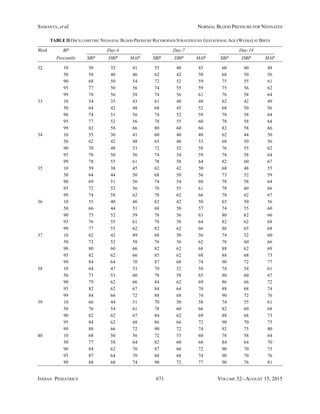
Table II presents BP data for days 4, 7 and 14 by
gestational age, from 32nd to 40th week.
DISCUSSION
These gestational age-wise percentile charts for Indian
newborns are likely to be of help in NICU settings for
bedside decision-making, and for management of sick
neonates. The limitations of the study include small
sample size for preterm and SGA neonates. All the
recordings were done by a single observer. Although
single observer eliminates the possibility of interobserver
variation, it increases the chances of erroneous result if
this observer keeps on making a systematic error.
In our study, the median values of SBP, DBP and
MAP on day 4 of life were comparable to those found by
Kent, et al. [10] in Australian term newborns. The day-
wise increment in MAP as seen in our study was also
reported by Cunningham, et al. [11]. Kent, et al. [12] in
2009 reported normative BP data in 147 non-ventilated
preterm neonates, and showed that the BP in preterm
neonates was comparable to that of term infants, after two
weeks. However, analysis of data from 566 preterm
neonates in southern Cleveland [13] showed that BP is
preterms continues to rise after 10 days of life, and
stabilizes by a postconceptional age of 44-48 weeks. A
higher value of DBP recorded in our study could be
possibly due to the influence of higher rates of vaginal
delivery, intrauterine growth retardation and maternal
steroid injections, which were taken into consideration
[14-16]. Higher DBP at the end of 2nd week with drop in
DBP in the subsequent weeks has been reported earlier
[17]. Follow-up blood pressure data in these neonates
was not collected.
We conclude that the data derived from this study can
be used to diagnose hypotension and hypertension in
Indian newborns and monitor blood pressure of sick
neonates.
Contributors: MS, SR, RM, DS, TS, DRC: diagnosis and
management of the patients; RM, MS, CK, TS: searched the
literature; RM, MS, AH: drafted the manuscript; MS, CK, AH,
RM: critical review.All the authors approved the final version.
Funding: None; Competing interests: None stated.
REFERENCES
1. Nuntnarumit P, Yang W, Bada-Ellzey HS. Blood pressure
measurements in the newborn. Clin Perinatol.
1999;26:981-96.
2. Gulati A, Srivastava RN. Hypertension. In: Srivastava RN,
Bagga A, editors. Pediatric Nephrology,5thed. New Delhi:
Jaypee Publishers. p. 337-59.
3. Langbaum M, Eyal FG. A practical and reliable method of
measuring blood pressure in the neonate by pulse oximetry.
J Pediatr. 1994;125:591-5.
4. Jones DW, Appel LJ, Sheps SG, Roccella EJ, Lenfant C.
Measuring blood pressure accurately: new and persistent
challenges. J Am Med Assoc. 2003; 289:1027-30.
5. Dasgupta SJ, Gill AB. Hypotension in the very low
birthweight infant: the old, the new, and the uncertain.
Arch Dis Child Fetal Neonatal Ed. 2003;88:F450-4.
6. National High Blood Pressure Education Program
Working Group on High Blood Pressure in Children and
Adolescents. The fourth report on the diagnosis, evaluation
and treatment of high blood pressure in children and
adolescents. Pediatrics. 2004;114:555-76.
7. Watkins AM, West CR, Cooke RW. Blood pressure and
cerebral haemorrhage and ischaemia in very low
birthweight infants. Early Hum Dev. 1989;19:103-10.
8. Versmold HT, Kitterman JA, Phibbs RH, Gregory GA,
Tooley WH. Aortic blood pressure during the first 12 hours
of life in infants with birth weight 610 to 4,220 grams.
Pediatrics. 1981;67:607-13.
9. Nwankwo MU, Lorenz JM, Gardiner JC. A standard
protocol for blood pressure measurement in the newborn.
Pediatrics. 1997;99;e10
10. Kent AL, Kecskes Z, Shadbolt B, Falk MC. Normative
blood pressure data in the early neonatal period. Pediatr
Nephrol. 2007;22:1335-41.
11. Cunningham S, Symon AG, Elton RA, Zhu C, McIntosh N.
Intra-arterial blood pressure reference ranges, death and
morbidity in very low birth weight infants during the first
seven days of life. Early Hum Dev. 1999;56:151-65.
12. Kent AL, Meskell S, Falk MC, Shadbolt B. Normative
blood pressure data in non-ventilated premature neonates
from 28-36 weeks gestation. Pediatr Nephrol.
2009;24:141-6.
13. Northern Neonatal Nursing Initiative. Systolic blood
WHAT IS ALREADY KNOWN?
• Normal blood pressure data for neonates are available from other countries.
WHAT THIS STUDY ADDS?
• Normative blood pressure data with gestational age-wise percentile charts from Indian newborns is provided.](https://image.slidesharecdn.com/669-150825035017-lva1-app6892/85/Normative-Blood-Pressure-Data-for-Indian-Neonates-4-320.jpg)


The study established normative blood pressure values for healthy Indian neonates using an oscillometric method, analyzing 1617 hemodynamically stable newborns. Percentile charts were developed showing blood pressure increases from day 4 to day 14, with significant differences noted between term and preterm infants. This data aims to assist in the management of neonatal blood pressure and decision-making in clinical settings.


