Blood Transfusion In Neonates

Dr. Souhila Bait
Laboratory Medicine Resident
Introduction

 Blood Transfusion is not without hazards
 You should weigh the risk against benefit

 Use of right products to the right patient at the
right time
Consider:
 infants will live long enough to get a long term
complication of blood transfusion.
 neonate has special need :
small size
•
•
•
•
•
•

O2 affinity of fetal hemoglobin
Immature immune system
Presence of maternal alloantibodies
Shortened red cell survival
Decreased erythropoiesis
Cardiovascular adaptive capacity
Use of clinical guidelines may provide the following:
 improvements in outcomes.
 improvements in medical practice.
 decision support tools for practitioners.

 points of reference for medical orientation and

education.
 criteria for self-evaluation.
Strategies to reduce donor exposure or RBC transfusions:

 Delayed clamping of the umbilical cord.
 Restricting blood sampling.

 Using recombinant human erythropoietin to stimulate

erythropoiesis.
 Using iron supplementation or vitamins to minimize the
severity of anemia.
 Using appropriately collected and stored multipack RBC
units.
 Collecting and transfusing umbilical cord blood (autologous

blood transfusion).
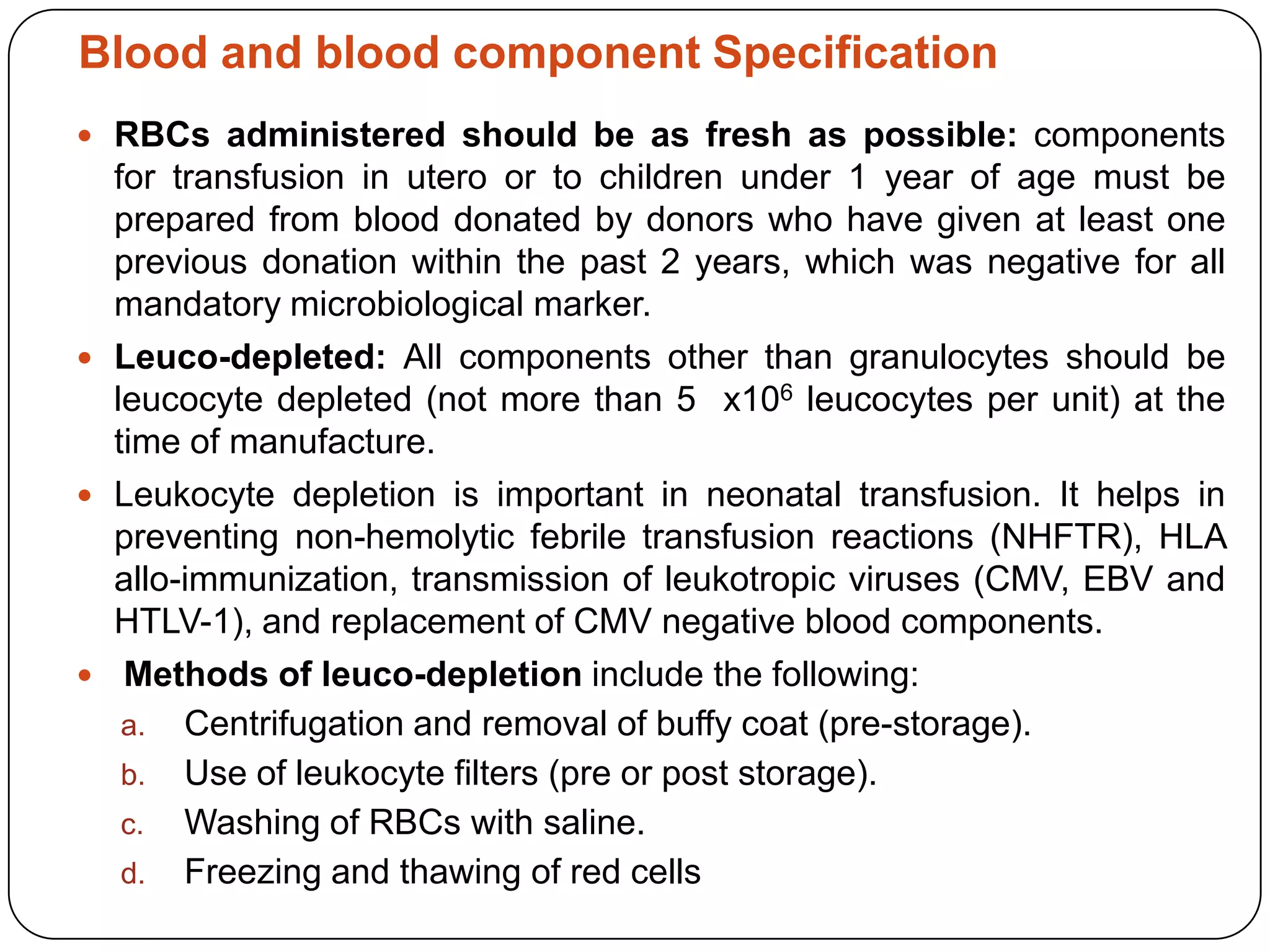
Blood and blood component Specification
 RBCs administered should be as fresh as possible: components

for transfusion in utero or to children under 1 year of age must be
prepared from blood donated by donors who have given at least one
previous donation within the past 2 years, which was negative for all
mandatory microbiological marker.
 Leuco-depleted: All components other than granulocytes should be
leucocyte depleted (not more than 5 x10⁶ leucocytes per unit) at the
time of manufacture.
 Leukocyte depletion is important in neonatal transfusion. It helps in
preventing non-hemolytic febrile transfusion reactions (NHFTR), HLA
allo-immunization, transmission of leukotropic viruses (CMV, EBV and
HTLV-1), and replacement of CMV negative blood components.
 Methods of leuco-depletion include the following:
a. Centrifugation and removal of buffy coat (pre-storage).
b. Use of leukocyte filters (pre or post storage).
c. Washing of RBCs with saline.
d. Freezing and thawing of red cells


irradiated: inactivation of donor T cells to prevent the risk of
transfusion related graft versus host disease(GVHD).



It is essential to irradiate all red cell and platelet components(with the
exception of frozen red cells) for:
1.
2.
3.
4.
5.



Intrauterine transfusion (IUT).
Exchange transfusion (ET) of red cells after IUT.
Top-up transfusion after IUT.
When the donation is from a first- or second-degree relative or a
human leucocyte antigen (HLA)-selected donor.
When the child has proven or suspected immunodeficiency.

cytomegalovirus (CMV) seronegative: or leuco-depleted to
<5x10⁶ /unit has a significant reduction in risk of CMV transmission.
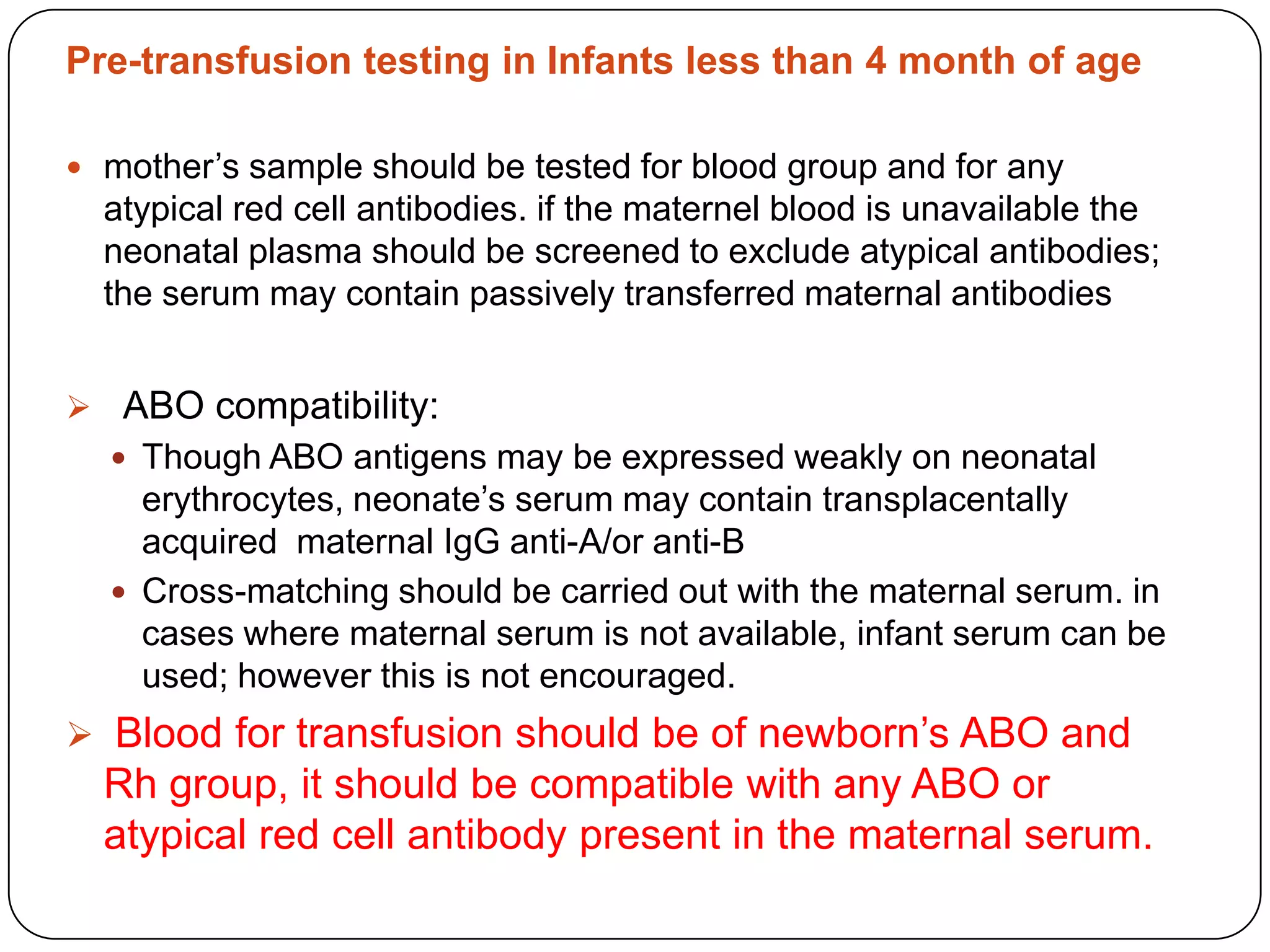
Pre-transfusion testing in Infants less than 4 month of age
 mother’s sample should be tested for blood group and for any

atypical red cell antibodies. if the maternel blood is unavailable the
neonatal plasma should be screened to exclude atypical antibodies;
the serum may contain passively transferred maternal antibodies
 ABO compatibility:
 Though ABO antigens may be expressed weakly on neonatal

erythrocytes, neonate’s serum may contain transplacentally
acquired maternal IgG anti-A/or anti-B
 Cross-matching should be carried out with the maternal serum. in
cases where maternal serum is not available, infant serum can be
used; however this is not encouraged.

 Blood for transfusion should be of newborn’s ABO and

Rh group, it should be compatible with any ABO or
atypical red cell antibody present in the maternal serum.
Infant

Transfused
Blood

prbc/whole
blood

O(anti A and anti B)
A
(anti B)
B
(anti A)

O
O
O

W/PRbc

A(Ag A)

O (antiA and anti B)
A (anti B)
B (antiA)
AB (0 Ab)

O
A
O
A

PRbc
W/PRbc
PRbc
W/PRbc

B(Ag B)

O(antiA and anti B)
A (anti B)
B (antiA)
AB (0 Ab)

O
O
B
B

PRbc
PRbc
W/PRbc
W/PRbc

A
B
AB
A/B/O

W/PRbc
W/PRbc
W/PRbc
PRbc

O(o Ag)

AB(Ag A +Ag B)

Mom

A (anti B)
B (antiA)
AB (0 Ab)
AB (0 Ab)
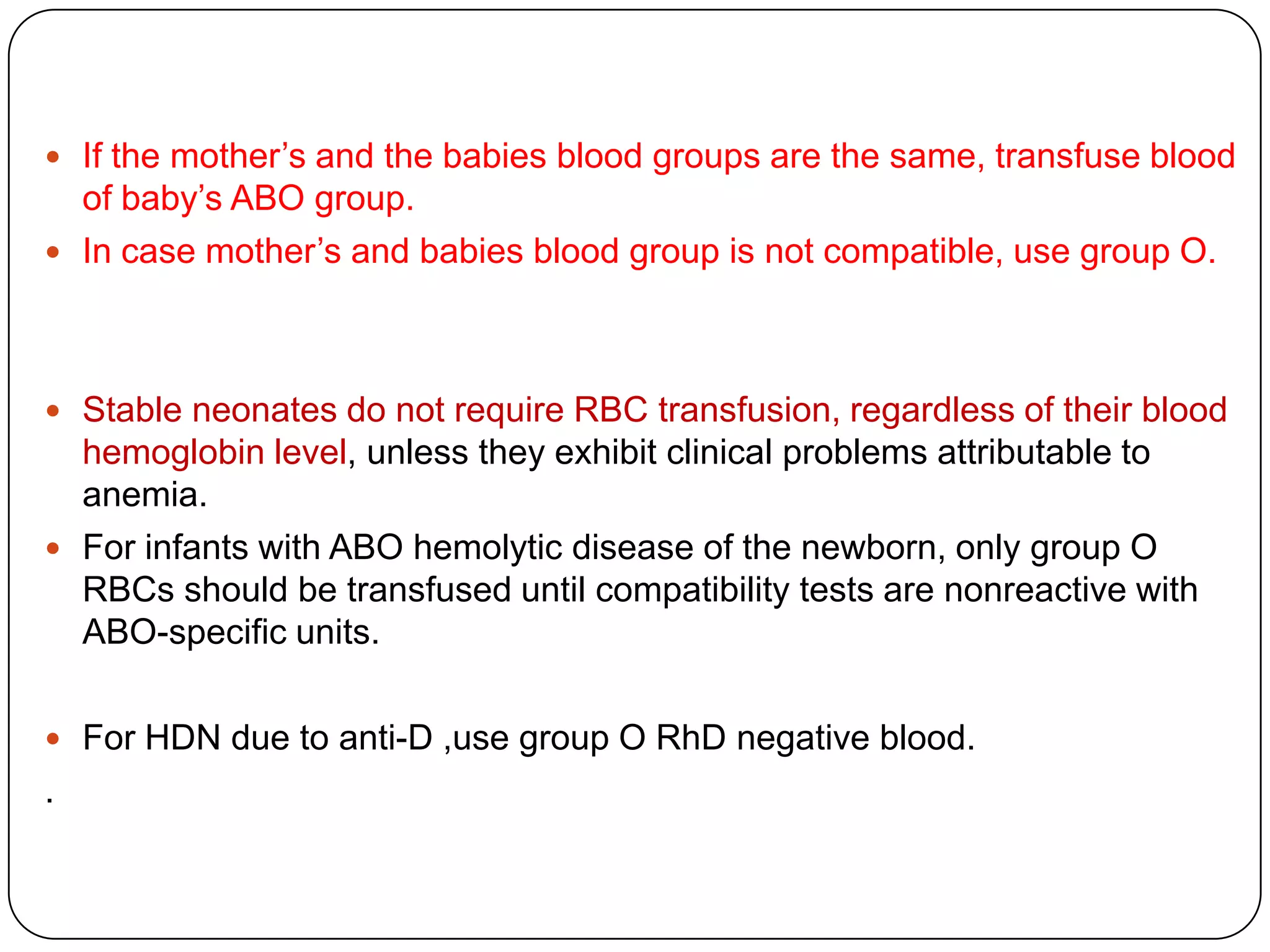
 If the mother’s and the babies blood groups are the same, transfuse blood

of baby’s ABO group.
 In case mother’s and babies blood group is not compatible, use group O.

 Stable neonates do not require RBC transfusion, regardless of their blood

hemoglobin level, unless they exhibit clinical problems attributable to
anemia.
 For infants with ABO hemolytic disease of the newborn, only group O
RBCs should be transfused until compatibility tests are nonreactive with
ABO-specific units.
 For HDN due to anti-D ,use group O RhD negative blood.

.
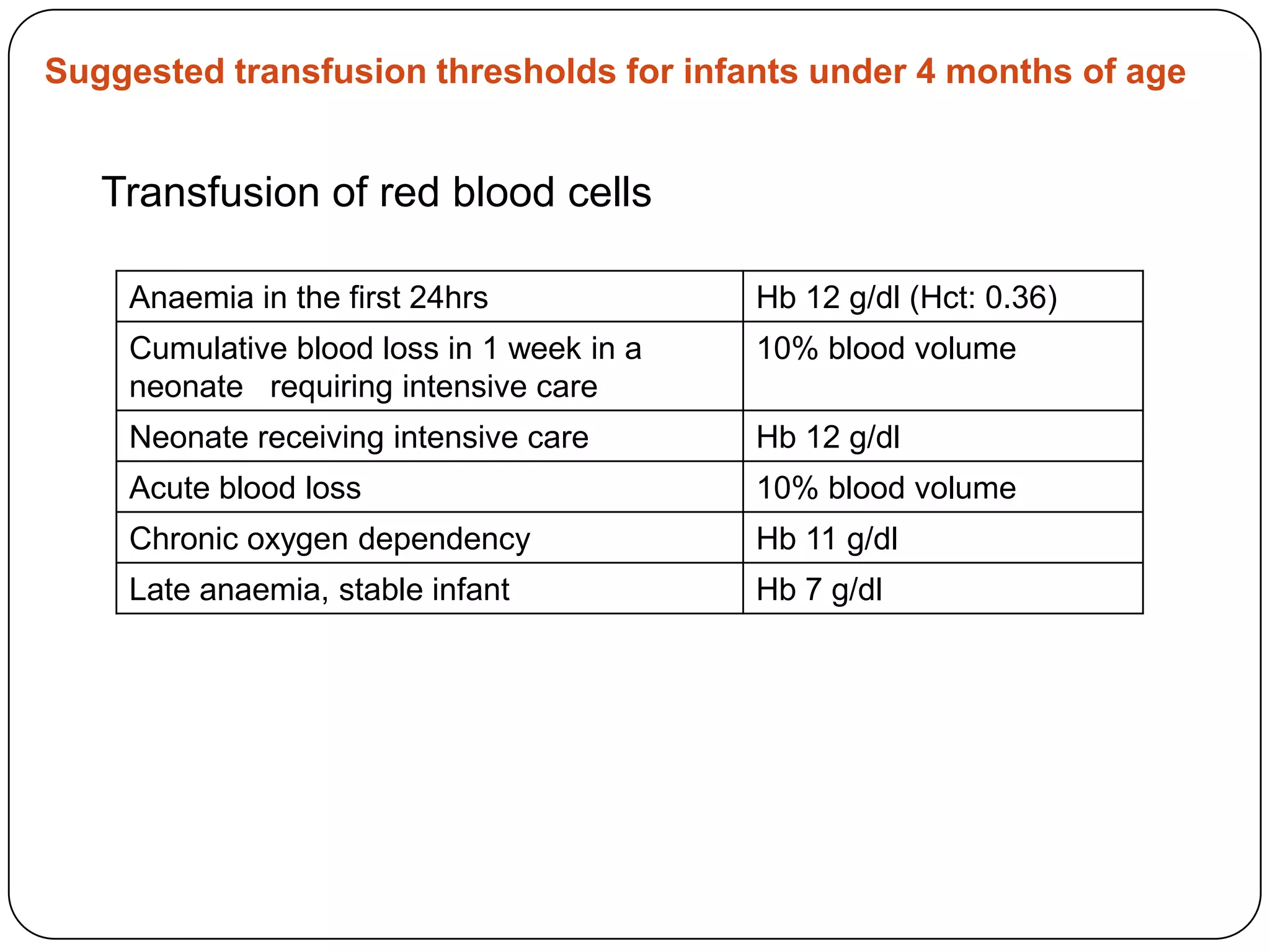
Suggested transfusion thresholds for infants under 4 months of age

Transfusion of red blood cells
Anaemia in the first 24hrs

Hb 12 g/dl (Hct: 0.36)

Cumulative blood loss in 1 week in a
neonate requiring intensive care

10% blood volume

Neonate receiving intensive care

Hb 12 g/dl

Acute blood loss

10% blood volume

Chronic oxygen dependency

Hb 11 g/dl

Late anaemia, stable infant

Hb 7 g/dl
 Neonates may require multiple transfusions, increasing

the risk of infectious disease transmission, through multiple
donor exposures and allo-immunization.

 To reduce exposure to multiple donors, the most important

approach is the use of multipack collection systems so that
multiple RBC transfusions from the same random or
designated donor can be given to the same baby over an
extended period of time.
Measures to reduce multiple blood transfusions in preterm infants

 In preterm and sick neonates, needing multiple

transfusions, aliquots from a single donor can be given as
sequential transfusions.
 This is done practically by reserving a bag of fresh PRBC

for up to 7 days for a newborn and withdrawing small
amounts required repeatedly from that bag under laminar
flow using a sterile connecting device, into a fresh blood
bag.
Fresh Frozen Plasma
 Fresh frozen plasma should never be used as a simple volume

replacement and it is not clearly superior to crystalloids or colloids in the
management of neonatal hypotension.
 Routine administration to preterm infants to try to prevent peri ventricular

haemorrhage (PVH) has been shown to confer no benefit and should
therefore be avoided.
 Neonates with a significant coagulopathy {e.g. prothrombin time (PT) or

activated partial thromboplastin time (APTT) >1.5 } and significant risk of
bleeding (e.g. preterm and/or intubated, previous PVH) or who are about
to undergo an invasive procedure should receive FFP at a dose of 15
ml/kg.
 The only indications for FFP in neonates recommended in the

recent BCSH guidelines are: DIC, vitamin-K-dependent bleeding
and inherited deficiencies of coagulation factors.

 For neonatal transfusions AB Plasma is used (compatible to all blood

groups) , or choose compatible FFP with neonates ABO red cell
antigens (see Table )
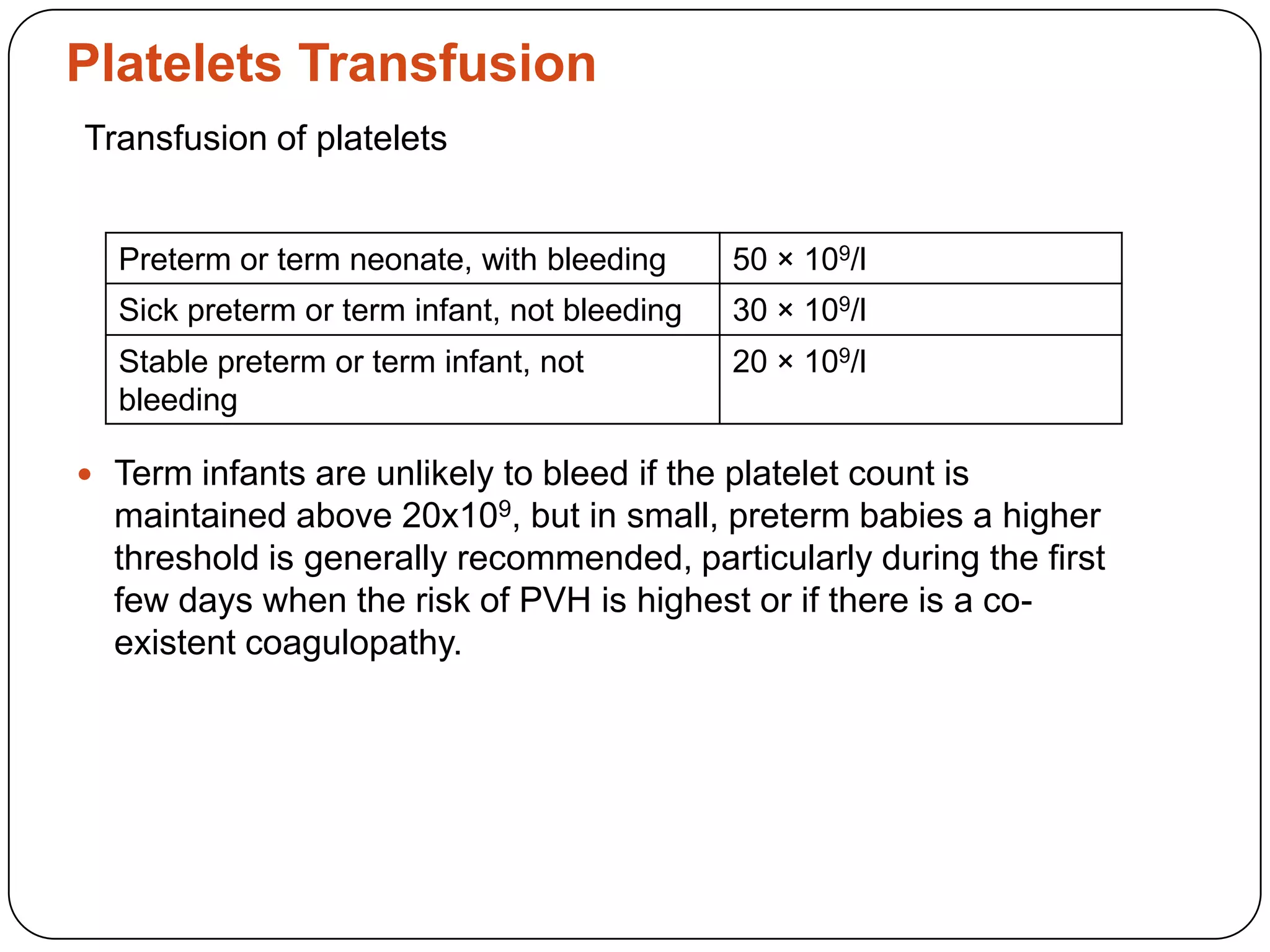
Platelets Transfusion
Transfusion of platelets

Preterm or term neonate, with bleeding

50 × 109/l

Sick preterm or term infant, not bleeding

30 × 109/l

Stable preterm or term infant, not
bleeding

20 × 109/l

 Term infants are unlikely to bleed if the platelet count is

maintained above 20x109, but in small, preterm babies a higher
threshold is generally recommended, particularly during the first
few days when the risk of PVH is highest or if there is a coexistent coagulopathy.
Platelets for neonatal transfusion should be
 ABO identical or compatible RhD identical or compatible.
 Be HPA compatible in infants with allo-immune thrombocytopenia
 Be irradiated if appropriate.
 For platelet and FFP transfusions, plasma compatibility should be

ensured whenever possible.
 Both products contain enough red cell stroma to stimulate Rh
immunization Therefore, RhD- girls for whom only RhD+ products
are available should receive anti-D Ig. The dose should be 50IU/per
unit of FFP(200–300 ml) or per 500 ml of platelets transfused, or
250 IU per adult therapeutic dose of platelets (c. 250–350ml,
whether from a single aphaeresis donation or from a pack derived
from a buffy coat pool from four donations). Components must not
contain other clinically significant red cell antibodies.
Cryoprecipitate
 It’s prepared from FFP by thawing at 2-40C.
 Undissolved precipitate is collected by centrifugation

and supernatant plasma is aseptically expressed into a
satellite bag.
 Cryoprecipitate contains about 80 to 100 U of factor
VIII in 10-25 ml of plasma, 300 mg of fibrinogen and
varying amounts of factor XIII. it is stored at
temperature of ≤-200c.
 indications:
 Congenital factor VIII and XIII deficiency.
 von Willebrand disease.

 Afibrinogenemia & dysfibrinogenemia.
Component Volumes to be Transfused to Children and Neonates
 Red cell concentrates for exchange transfusion:

Term Infant

80-160mls/kg

Preterm Infant

100-200mls/kg

 For top-up transfusion

10-20mls/kg

volume of packed cells(ml)=weight(kg)x desired rise in haemoglobin x 4
 Platelet concentrates:

Children weighing less than 15kg

10-20mls/kg

Children weighing more than15kg

single Apheresis unit/standart pool

Dose: 5-10 ml / kg raise platelet count 75 to 100

109/ l

 Fresh Frozen Plasma

10-20mls/kg

 Cryoprecipitate

5-10mls/kg or 15-30kg= 5 units
> 30 kg= 10 units

It is desirable to give cryoprecipitate only if the neonatal fibrinogen level remains low
despite FFP transfusion.
Infusion flow rates :
RBC: 3-5 ml/kg/hour
FFP: within 30 minutes, provided the volume does not exceed
5-10 ml/kg.
Platelets: within 30 minutes. It is seldom necessary to reduce
the volume of the platelet concentrate if the dose does not
exceed 5-10 ml/kg.
It has been seen that transfusion with PRBC at a dose of
20ml/kg is well tolerated and results in an overall decrease in
number of transfusions compared to transfusions done at
10ml/kg in preterm an VLBWinfants
In infants and newborn, one unit of PRBC(10ml/kg) increases
Hb by 3g/dl.
Choice of ABO group for blood products for administration to children.
ABO group of blood product to be transfused

Patient’s ABO group

Red cells

Platelets

FFP*

First choice

O

O

O

Second choice

–

A

A or B or AB

First choice

A

A

A or AB

Second choice

O**

O**

_

First choice

B

B

B or AB

Second choice

O **

A or O **

_

First choice

AB

AB

AB

Second choice

A, B

A

A

Third choice

O **

O

A

B

AB

For plasma and platelet transfusions, infants should receive ABO-specific components
whenever possible, to avoid transfusing plasma antibody incompatible with the
infant's red cell antigens.
*Group

O fresh frozen plasma (FFP) should only be given to patients of group O. Although group AB FFP can be given
to people of any ABO blood group, supplies are usually limited.

**Group

O components which test negatively for ‘high titre’ anti-A and anti-B should be selected.
Transfusion exchange
 The main indication for neonatal exchange transfusion is to prevent

neurological complications (kernicterus) caused by a rapidly-rising
unconjugated bilirubin concentration
 If exchange transfusion is needed,must be:
 IAT-cross-match compatible with maternal plasma;
 group O or ABO compatible with maternal and neonatal plasma, RhD

negative or RhD identical with neonate.
 be irradiated and transfused within 24 h of irradiation
 If an ET is required in ABO HDN, this should be with group O red cells

with low titre plasma anti-A and anti-B, or with group O red cells
suspended in AB plasma
 For HDN due to anti-D: use group O Rh D negative
 An exchange transfusion of about two times the neonate’s blood volume
(about 170 ml/kg) is most effective to reduce bilirubin and restore the
haemoglobin level; this can usually be carried out with one unit of whole
blood.
 A unit of whole donor blood will normally have a haematocrit of 37-45%,
which is more than adequate for neonatal needs.
Blood film in diagnosing HDN
 Blood film examination is usually diagnostic in DAT








negative in cases of suspected HDN in ABO,RhD
incompatibility:
Blood film in ABO incompatibility: caracteristically shows
large numbers of spherocytes with little or no increase in
NRBCs.
Blood film in RhD incompatibility:shows few spherocytes
and large number of NRBCs
For infants with ABO hemolytic disease of the newborn,
only group O RBCs should be transfused until compatibility
tests are nonreactive with ABO-specific units.
For HDN due to anti-D ,use group O RhD negative blood.
Conclusions
 Policies, Procedures and Guidelines for Blood

Transfusion in Pediatric age group should be in
place and implemented.
 Training and Education for the hospital staff in

policies, and guidelines in pediatric age group are
important issues to be considered.
 The use of special products is a must for specific

patients in pediatric age group to ensure safety.
blood transfusion in neonates (British society of hematology)

blood transfusion in neonates (British society of hematology)

  • 1.
    Blood Transfusion InNeonates Dr. Souhila Bait Laboratory Medicine Resident
  • 2.
    Introduction  Blood Transfusionis not without hazards  You should weigh the risk against benefit  Use of right products to the right patient at the right time
  • 3.
    Consider:  infants willlive long enough to get a long term complication of blood transfusion.  neonate has special need : small size • • • • • • O2 affinity of fetal hemoglobin Immature immune system Presence of maternal alloantibodies Shortened red cell survival Decreased erythropoiesis Cardiovascular adaptive capacity
  • 4.
    Use of clinicalguidelines may provide the following:  improvements in outcomes.  improvements in medical practice.  decision support tools for practitioners.  points of reference for medical orientation and education.  criteria for self-evaluation.
  • 5.
    Strategies to reducedonor exposure or RBC transfusions:  Delayed clamping of the umbilical cord.  Restricting blood sampling.  Using recombinant human erythropoietin to stimulate erythropoiesis.  Using iron supplementation or vitamins to minimize the severity of anemia.  Using appropriately collected and stored multipack RBC units.  Collecting and transfusing umbilical cord blood (autologous blood transfusion).
  • 6.
    Blood and bloodcomponent Specification  RBCs administered should be as fresh as possible: components for transfusion in utero or to children under 1 year of age must be prepared from blood donated by donors who have given at least one previous donation within the past 2 years, which was negative for all mandatory microbiological marker.  Leuco-depleted: All components other than granulocytes should be leucocyte depleted (not more than 5 x10⁶ leucocytes per unit) at the time of manufacture.  Leukocyte depletion is important in neonatal transfusion. It helps in preventing non-hemolytic febrile transfusion reactions (NHFTR), HLA allo-immunization, transmission of leukotropic viruses (CMV, EBV and HTLV-1), and replacement of CMV negative blood components.  Methods of leuco-depletion include the following: a. Centrifugation and removal of buffy coat (pre-storage). b. Use of leukocyte filters (pre or post storage). c. Washing of RBCs with saline. d. Freezing and thawing of red cells
  • 7.
     irradiated: inactivation ofdonor T cells to prevent the risk of transfusion related graft versus host disease(GVHD).  It is essential to irradiate all red cell and platelet components(with the exception of frozen red cells) for: 1. 2. 3. 4. 5.  Intrauterine transfusion (IUT). Exchange transfusion (ET) of red cells after IUT. Top-up transfusion after IUT. When the donation is from a first- or second-degree relative or a human leucocyte antigen (HLA)-selected donor. When the child has proven or suspected immunodeficiency. cytomegalovirus (CMV) seronegative: or leuco-depleted to <5x10⁶ /unit has a significant reduction in risk of CMV transmission.
  • 8.
    Pre-transfusion testing inInfants less than 4 month of age  mother’s sample should be tested for blood group and for any atypical red cell antibodies. if the maternel blood is unavailable the neonatal plasma should be screened to exclude atypical antibodies; the serum may contain passively transferred maternal antibodies  ABO compatibility:  Though ABO antigens may be expressed weakly on neonatal erythrocytes, neonate’s serum may contain transplacentally acquired maternal IgG anti-A/or anti-B  Cross-matching should be carried out with the maternal serum. in cases where maternal serum is not available, infant serum can be used; however this is not encouraged.  Blood for transfusion should be of newborn’s ABO and Rh group, it should be compatible with any ABO or atypical red cell antibody present in the maternal serum.
  • 9.
    Infant Transfused Blood prbc/whole blood O(anti A andanti B) A (anti B) B (anti A) O O O W/PRbc A(Ag A) O (antiA and anti B) A (anti B) B (antiA) AB (0 Ab) O A O A PRbc W/PRbc PRbc W/PRbc B(Ag B) O(antiA and anti B) A (anti B) B (antiA) AB (0 Ab) O O B B PRbc PRbc W/PRbc W/PRbc A B AB A/B/O W/PRbc W/PRbc W/PRbc PRbc O(o Ag) AB(Ag A +Ag B) Mom A (anti B) B (antiA) AB (0 Ab) AB (0 Ab)
  • 10.
     If themother’s and the babies blood groups are the same, transfuse blood of baby’s ABO group.  In case mother’s and babies blood group is not compatible, use group O.  Stable neonates do not require RBC transfusion, regardless of their blood hemoglobin level, unless they exhibit clinical problems attributable to anemia.  For infants with ABO hemolytic disease of the newborn, only group O RBCs should be transfused until compatibility tests are nonreactive with ABO-specific units.  For HDN due to anti-D ,use group O RhD negative blood. .
  • 11.
    Suggested transfusion thresholdsfor infants under 4 months of age Transfusion of red blood cells Anaemia in the first 24hrs Hb 12 g/dl (Hct: 0.36) Cumulative blood loss in 1 week in a neonate requiring intensive care 10% blood volume Neonate receiving intensive care Hb 12 g/dl Acute blood loss 10% blood volume Chronic oxygen dependency Hb 11 g/dl Late anaemia, stable infant Hb 7 g/dl
  • 12.
     Neonates mayrequire multiple transfusions, increasing the risk of infectious disease transmission, through multiple donor exposures and allo-immunization.  To reduce exposure to multiple donors, the most important approach is the use of multipack collection systems so that multiple RBC transfusions from the same random or designated donor can be given to the same baby over an extended period of time.
  • 13.
    Measures to reducemultiple blood transfusions in preterm infants  In preterm and sick neonates, needing multiple transfusions, aliquots from a single donor can be given as sequential transfusions.  This is done practically by reserving a bag of fresh PRBC for up to 7 days for a newborn and withdrawing small amounts required repeatedly from that bag under laminar flow using a sterile connecting device, into a fresh blood bag.
  • 14.
    Fresh Frozen Plasma Fresh frozen plasma should never be used as a simple volume replacement and it is not clearly superior to crystalloids or colloids in the management of neonatal hypotension.  Routine administration to preterm infants to try to prevent peri ventricular haemorrhage (PVH) has been shown to confer no benefit and should therefore be avoided.  Neonates with a significant coagulopathy {e.g. prothrombin time (PT) or activated partial thromboplastin time (APTT) >1.5 } and significant risk of bleeding (e.g. preterm and/or intubated, previous PVH) or who are about to undergo an invasive procedure should receive FFP at a dose of 15 ml/kg.
  • 15.
     The onlyindications for FFP in neonates recommended in the recent BCSH guidelines are: DIC, vitamin-K-dependent bleeding and inherited deficiencies of coagulation factors.  For neonatal transfusions AB Plasma is used (compatible to all blood groups) , or choose compatible FFP with neonates ABO red cell antigens (see Table )
  • 16.
    Platelets Transfusion Transfusion ofplatelets Preterm or term neonate, with bleeding 50 × 109/l Sick preterm or term infant, not bleeding 30 × 109/l Stable preterm or term infant, not bleeding 20 × 109/l  Term infants are unlikely to bleed if the platelet count is maintained above 20x109, but in small, preterm babies a higher threshold is generally recommended, particularly during the first few days when the risk of PVH is highest or if there is a coexistent coagulopathy.
  • 17.
    Platelets for neonataltransfusion should be  ABO identical or compatible RhD identical or compatible.  Be HPA compatible in infants with allo-immune thrombocytopenia  Be irradiated if appropriate.  For platelet and FFP transfusions, plasma compatibility should be ensured whenever possible.  Both products contain enough red cell stroma to stimulate Rh immunization Therefore, RhD- girls for whom only RhD+ products are available should receive anti-D Ig. The dose should be 50IU/per unit of FFP(200–300 ml) or per 500 ml of platelets transfused, or 250 IU per adult therapeutic dose of platelets (c. 250–350ml, whether from a single aphaeresis donation or from a pack derived from a buffy coat pool from four donations). Components must not contain other clinically significant red cell antibodies.
  • 18.
    Cryoprecipitate  It’s preparedfrom FFP by thawing at 2-40C.  Undissolved precipitate is collected by centrifugation and supernatant plasma is aseptically expressed into a satellite bag.  Cryoprecipitate contains about 80 to 100 U of factor VIII in 10-25 ml of plasma, 300 mg of fibrinogen and varying amounts of factor XIII. it is stored at temperature of ≤-200c.  indications:  Congenital factor VIII and XIII deficiency.  von Willebrand disease.  Afibrinogenemia & dysfibrinogenemia.
  • 19.
    Component Volumes tobe Transfused to Children and Neonates  Red cell concentrates for exchange transfusion: Term Infant 80-160mls/kg Preterm Infant 100-200mls/kg  For top-up transfusion 10-20mls/kg volume of packed cells(ml)=weight(kg)x desired rise in haemoglobin x 4  Platelet concentrates: Children weighing less than 15kg 10-20mls/kg Children weighing more than15kg single Apheresis unit/standart pool Dose: 5-10 ml / kg raise platelet count 75 to 100 109/ l  Fresh Frozen Plasma 10-20mls/kg  Cryoprecipitate 5-10mls/kg or 15-30kg= 5 units > 30 kg= 10 units It is desirable to give cryoprecipitate only if the neonatal fibrinogen level remains low despite FFP transfusion.
  • 20.
    Infusion flow rates: RBC: 3-5 ml/kg/hour FFP: within 30 minutes, provided the volume does not exceed 5-10 ml/kg. Platelets: within 30 minutes. It is seldom necessary to reduce the volume of the platelet concentrate if the dose does not exceed 5-10 ml/kg. It has been seen that transfusion with PRBC at a dose of 20ml/kg is well tolerated and results in an overall decrease in number of transfusions compared to transfusions done at 10ml/kg in preterm an VLBWinfants In infants and newborn, one unit of PRBC(10ml/kg) increases Hb by 3g/dl.
  • 21.
    Choice of ABOgroup for blood products for administration to children. ABO group of blood product to be transfused Patient’s ABO group Red cells Platelets FFP* First choice O O O Second choice – A A or B or AB First choice A A A or AB Second choice O** O** _ First choice B B B or AB Second choice O ** A or O ** _ First choice AB AB AB Second choice A, B A A Third choice O ** O A B AB For plasma and platelet transfusions, infants should receive ABO-specific components whenever possible, to avoid transfusing plasma antibody incompatible with the infant's red cell antigens. *Group O fresh frozen plasma (FFP) should only be given to patients of group O. Although group AB FFP can be given to people of any ABO blood group, supplies are usually limited. **Group O components which test negatively for ‘high titre’ anti-A and anti-B should be selected.
  • 22.
    Transfusion exchange  Themain indication for neonatal exchange transfusion is to prevent neurological complications (kernicterus) caused by a rapidly-rising unconjugated bilirubin concentration  If exchange transfusion is needed,must be:  IAT-cross-match compatible with maternal plasma;  group O or ABO compatible with maternal and neonatal plasma, RhD negative or RhD identical with neonate.  be irradiated and transfused within 24 h of irradiation  If an ET is required in ABO HDN, this should be with group O red cells with low titre plasma anti-A and anti-B, or with group O red cells suspended in AB plasma  For HDN due to anti-D: use group O Rh D negative  An exchange transfusion of about two times the neonate’s blood volume (about 170 ml/kg) is most effective to reduce bilirubin and restore the haemoglobin level; this can usually be carried out with one unit of whole blood.  A unit of whole donor blood will normally have a haematocrit of 37-45%, which is more than adequate for neonatal needs.
  • 23.
    Blood film indiagnosing HDN  Blood film examination is usually diagnostic in DAT     negative in cases of suspected HDN in ABO,RhD incompatibility: Blood film in ABO incompatibility: caracteristically shows large numbers of spherocytes with little or no increase in NRBCs. Blood film in RhD incompatibility:shows few spherocytes and large number of NRBCs For infants with ABO hemolytic disease of the newborn, only group O RBCs should be transfused until compatibility tests are nonreactive with ABO-specific units. For HDN due to anti-D ,use group O RhD negative blood.
  • 24.
    Conclusions  Policies, Proceduresand Guidelines for Blood Transfusion in Pediatric age group should be in place and implemented.  Training and Education for the hospital staff in policies, and guidelines in pediatric age group are important issues to be considered.  The use of special products is a must for specific patients in pediatric age group to ensure safety.