Guide to Professional Success
Ravi Kumudesh
SLSMLS| CMLS | 02 December 2017
Get, Set, Go
Management for AHS internship – NIHS, Kaluthara
What can be expected from a
Lecture or Presentation?
Three Main Purposes
1. Inform
2. Influence
3. Instruct
Where
do we
Start
today?
Let’s start with your goal and objectives
• Designation at MoH
• Migration
• Financial Stability
• Reputation as a HP
• Respect from society
• Etc …
The only way that we have
to achieve all above …?
Professionalism
Professionalism
• What is your idea of
professionalism?
• Close your eyes and think for a
minute. What does come to
your mind when you hear the
word professional?
Professional?
You have to perform at a consistently
higher level than others. That's the
mark of a true professional.”
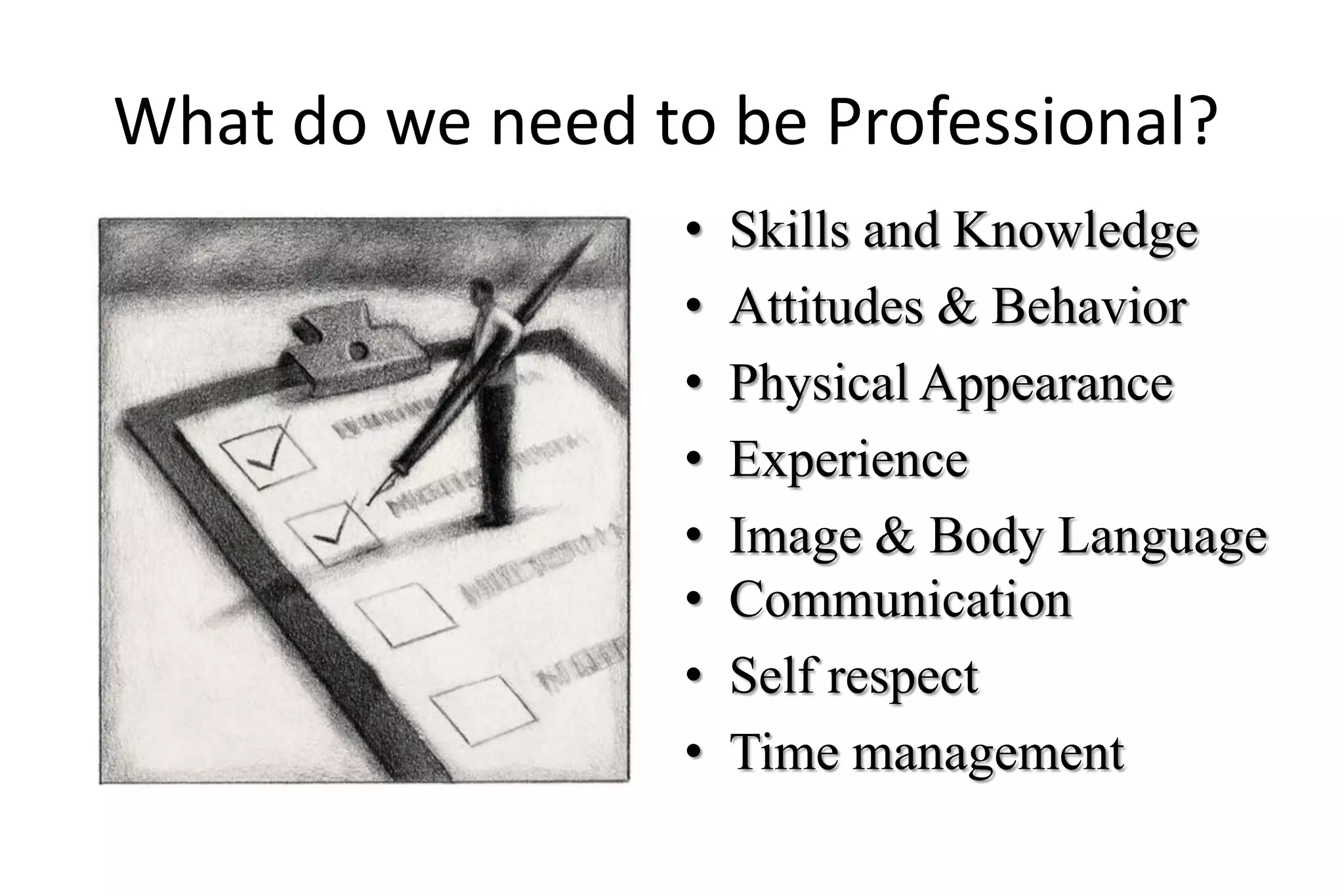
What do we need to be Professional?
• Skills and Knowledge
• Attitudes & Behavior
• Physical Appearance
• Experience
• Image & Body Language
• Communication
• Self respect
• Time management
Professional Behaviors
• Initiative:
– Do you take responsibility for your actions or do you
blame others? A problem solving approach is a valuable
asset
• Energy Level:
– Can’t function without your coffee? Demonstrate a
desire and a capacity to move things ahead
• Positive Attitude:
– How well do you get along with others? This may be a
key factor in determining your contribution to the team
Professional Behaviors
• Show up at work everyday, and on time
• Ability to Communicate (verbal and written)
• Skill at grasping ideas
• Good Interpersonal Skills: team player?
• Flexibility: Are you afraid of change?
Behavior
• Greetings
• Names
• Hand-shake
• Smiles
• Courtesy
Your Image and Self-Perception
3 sides to your self image
• As you see yourself
• As others see you
• As you truly are
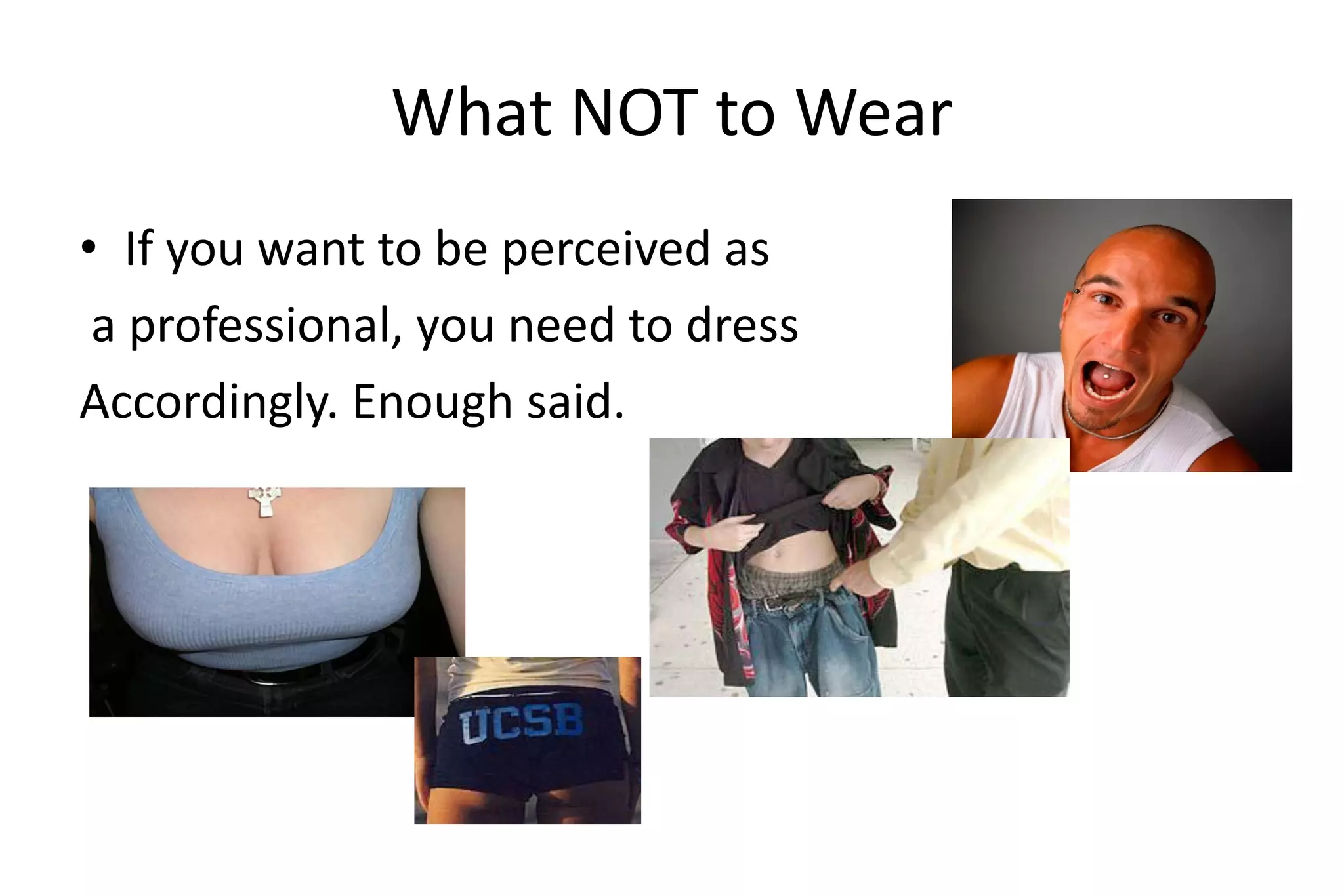
What NOT to Wear
• If you want to be perceived as
a professional, you need to dress
Accordingly. Enough said.
Self respect
Work reflects your inner character
• Strive for Excellence
• Don’t view it as a job
• Be responsible
• No Gossips
Attitude
• Emit your competence and confidence.
• Keep your personal business personal.
• Be always positive, focused, and energetic.
• Avoid engaging in or repeating gossip.
• Maintains the highest levels of honesty and integrity.
• Do not compromises professionalism by engaging in
risky behaviors outside of the work place.
• A professional is a role-model
Professional Status is Not an Inherent
Right
IT IS GRANTED BY SOCIETY
It Must Be Constantly Earned by
Meeting the Obligations Expected
of a Professional
IF MEDICINE FAILS TO MEET ITS
OBLIGATIONS
SOCIETY WILL CHANGE
ITS STATUS
IT CONFERS
• Prestige and Respect
• Trust
• Autonomy in Practice
• Physician-Led Regulation
• Financial Rewards
PROFESSIONAL STATUS IS
IMPORTANT TO
“ Neither economic incentives, nor
technology, nor administrative control has
proved an effective surrogate for the
commitment to integrity evoked in the ideal
of professionalism ”
Sullivan, 1995
PROFESSIONALISM BENEFITS SOCIETY
• A questioning society
• A complex health care system
• Failure of the professions to meet their
obligations
• Professional competition
•
PROFESSIONALISM IS THREATENED
Expectations
Obligations
THE MEDICAL
PROFESSION
SOCIETY
Individual
Physicians
Medical
Scientist
Patients
Public
Government
Politicians
Civil Servants
Managers
THE SOCIAL CONTRACT
1. Health Care System
• State & Private Sector
• Curative & Preventive
• Line Ministry & Provincial
2. Regulatory Framework
• MOH / NMRC / MSD / BMV
3. Licensing Bodies
• CMCC / SLMC
• PHSRC / SLAB / SLSI
4. Professional Bodies
• SLSMLS / CMLS
5. Customers
4. Other Stakeholders
MEDIATORS OF THE SOCIAL CONTRACT
Society’s Expectations
• To fulfill the role of the healer
• Assured competence
• Timely access to care
• Respect for patient autonomy
• Unselfish service
• Morality, integrity, & honesty
• Accountability and transparency
• Team health care
• Source of objective advice
• Promotion of the public good
Our Expectations
• Trust
• Autonomy
• Reasonable lifestyle
• Health care system
-adequately funded & staffed
- reasonable freedom
• Role in public policy
• Monopoly
• Rewards
- financial
- non-financial
• Respect
• Status•
THE SOCIAL CONTRACT
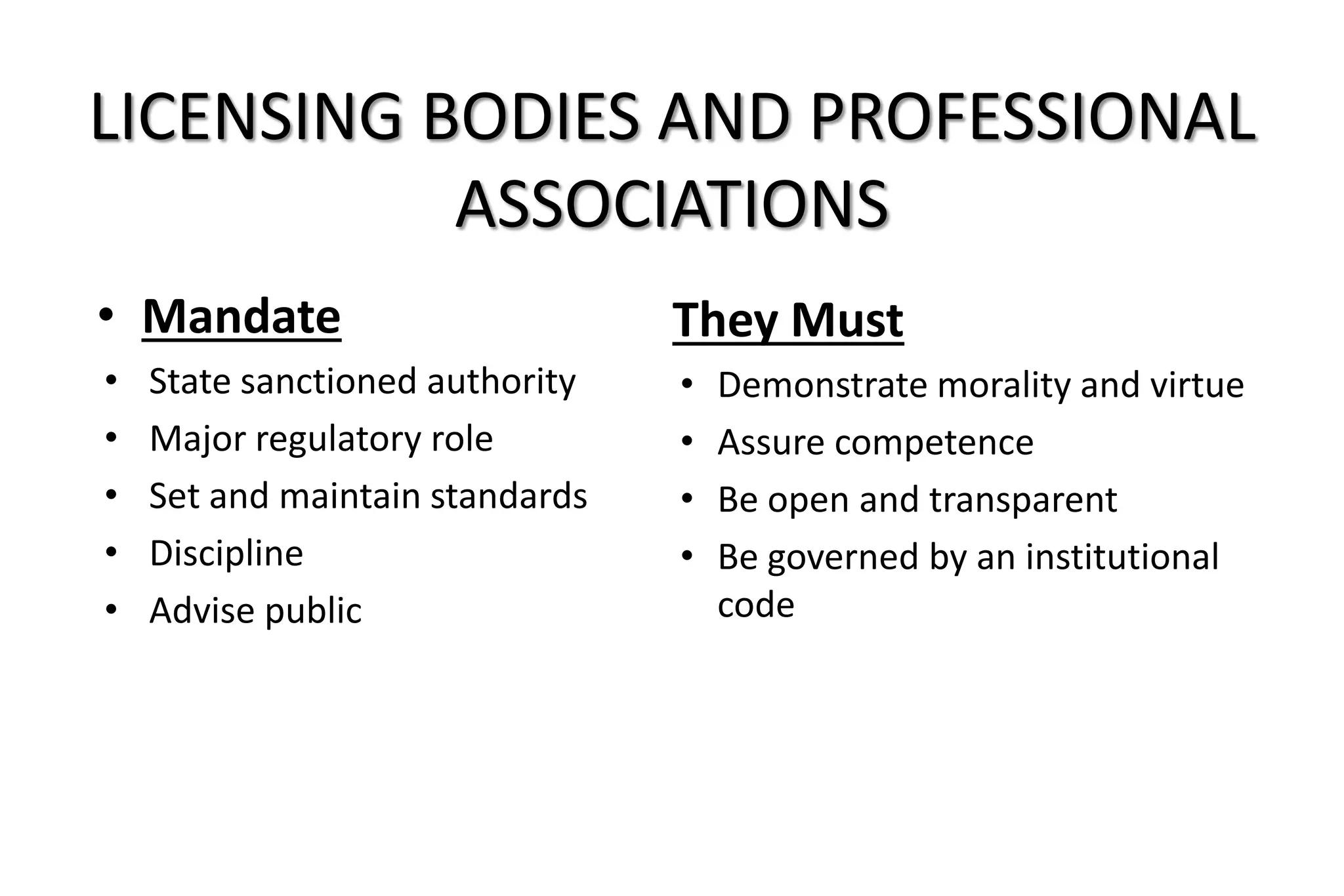
• Mandate
• State sanctioned authority
• Major regulatory role
• Set and maintain standards
• Discipline
• Advise public
They Must
• Demonstrate morality and virtue
• Assure competence
• Be open and transparent
• Be governed by an institutional
code
LICENSING BODIES AND PROFESSIONAL
ASSOCIATIONS
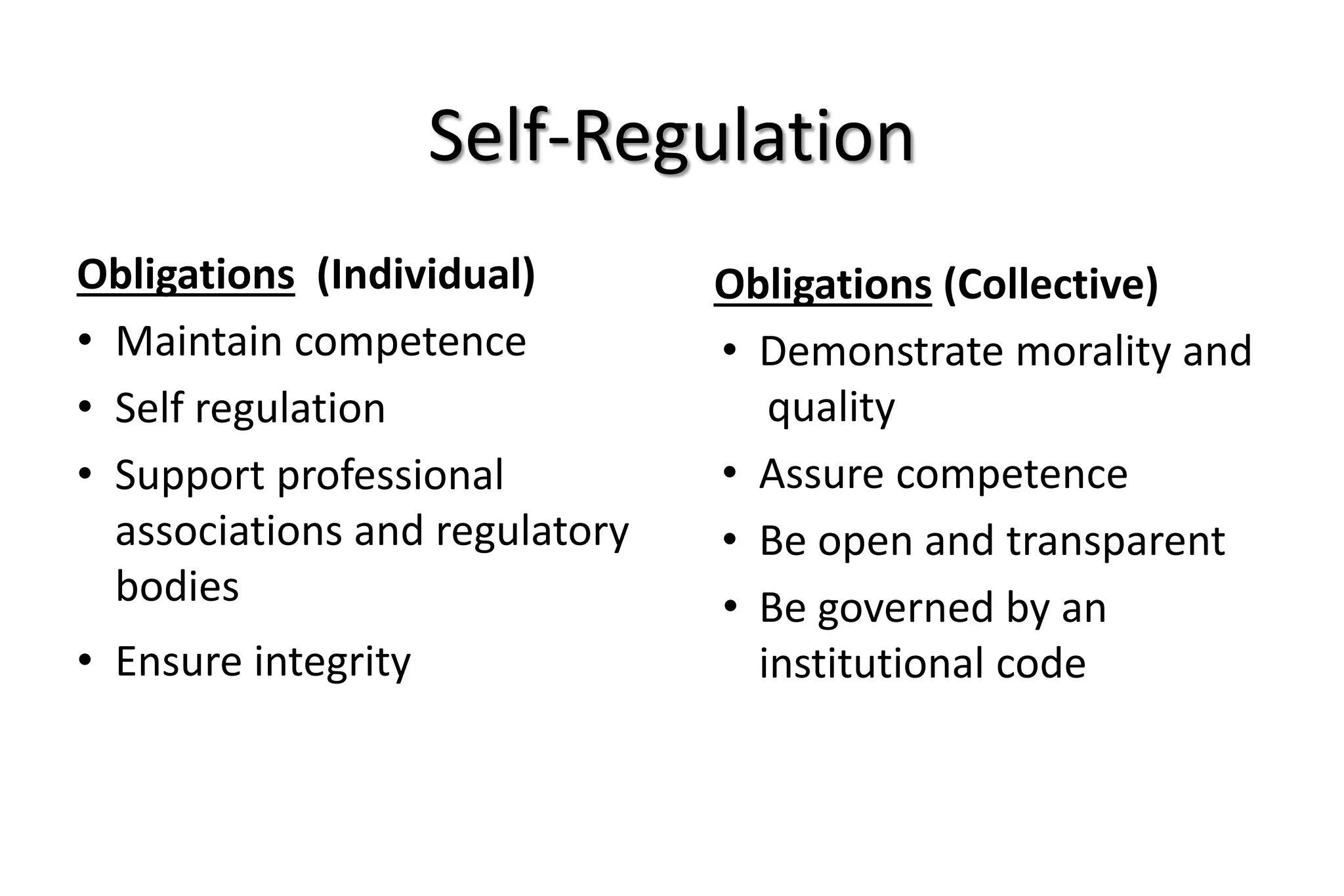
Self-Regulation
Obligations (Individual)
• Maintain competence
• Self regulation
• Support professional
associations and regulatory
bodies
• Ensure integrity
Obligations (Collective)
• Demonstrate morality and
quality
• Assure competence
• Be open and transparent
• Be governed by an
institutional code
Professional is judged through:
Qualities of our
Profession
• Our Image
• Our Communication
• Our Competence
• Our Demeanor
Quality of the
Service
• Trustworthy
• Competent
• Empathetic
• Respectful
• Caring
Crossing Professional Boundaries
• Non-therapeutic relationships
• Inappropriate communication
• Inappropriate self-disclosure
• Exploitation – money, gifts
• Breaches of confidentiality
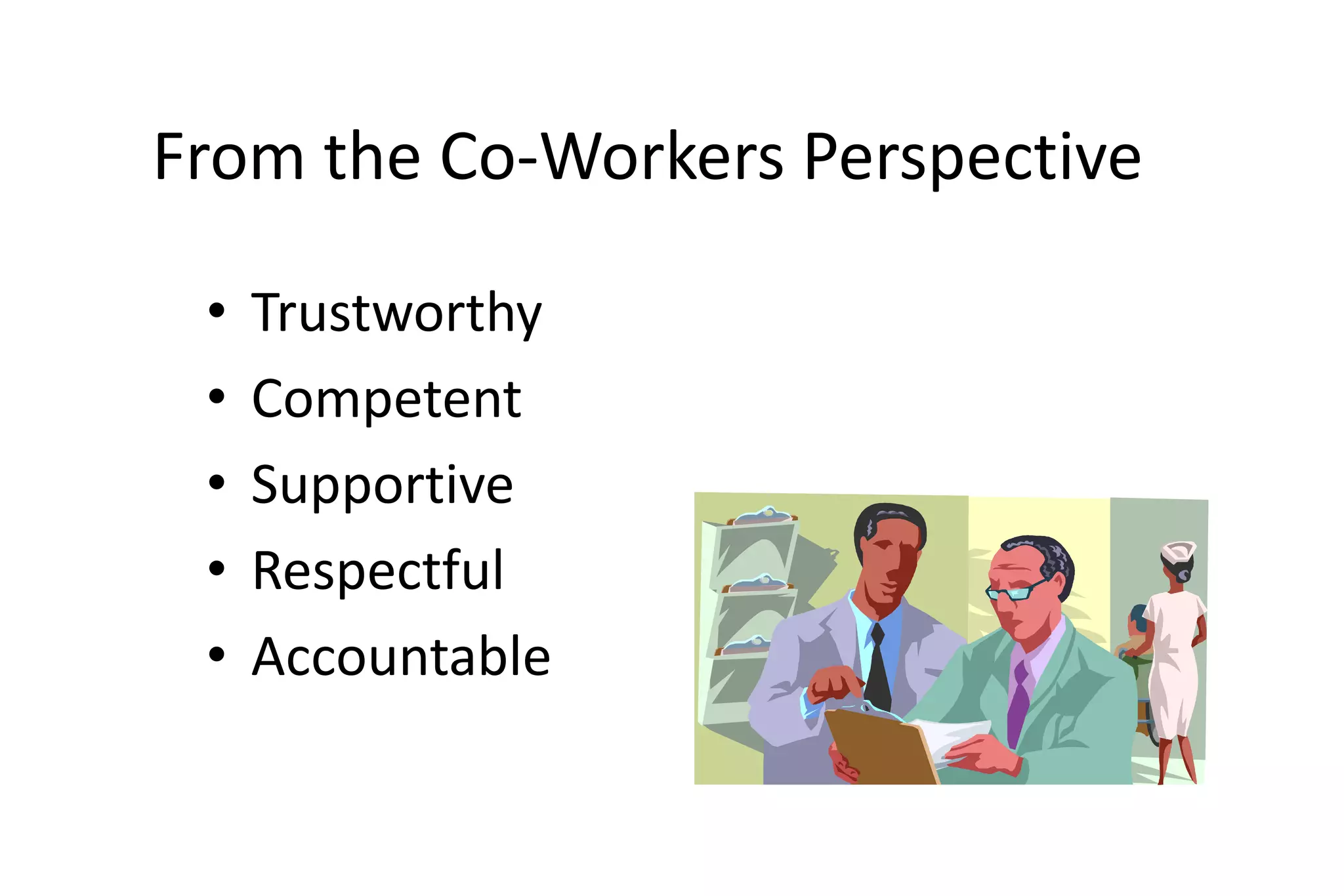
From the Co-Workers Perspective
• Trustworthy
• Competent
• Supportive
• Respectful
• Accountable
Functional Trust - Mutual respect
• All people have an equal need for
respect
• Respect is the basic foundation of
all healthy personal relationships
• Each team member is equally
important
• Each team member’s work is
equally important
Ethics: What is right?
• Moral - comes from Latin ‘mos’(mores);
• Ethics - comes from Greek ‘ethos’
• Both have meaning of customs, or generally
accepted social norm
• But ‘What is right’ is not just a matter of social
norm (e.g. slavery was a social norm at one time)
• Professional norm is not always right, it does
revise over time
• What is legally permitted is not always right
Ethical principles
• Commonly quoted ethical principles:
– Autonomy
– Beneficence
– Justice
– Nonmaleficence
• These are useful but by themselves are not
adequate for ethical decision making
Patients’ rights
• Right to Medical Treatment
• Right to Information
• Right to Choices
• Right to Privacy
• Right to Complaint
Is your service Professional ???
How Behave Healthy Service
35kumudeshr@gmail.com / +94773077717
Knowledge and Skills
36kumudeshr@gmail.com / +94773077717
Duties
• Duty List (DL) and Job Descriptions (JD)
• Chief
• Superintendents
• Managers
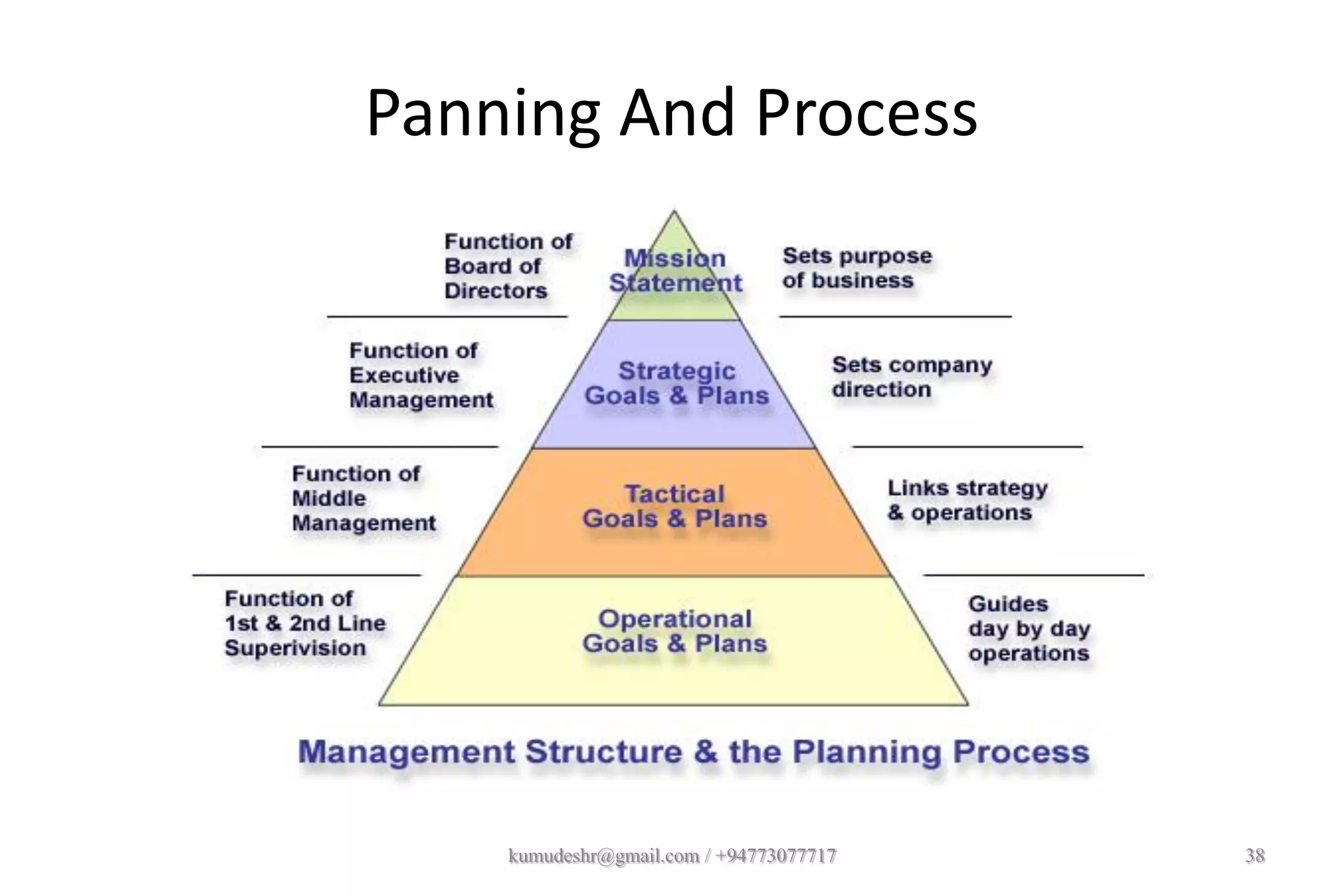
Panning And Process
38kumudeshr@gmail.com / +94773077717
Essential Elements of
Laboratory Management
• Human Resource Management (HRM)
• Quality Management (QM, TQM)
• Procurement and Supplies Management
• Laboratory Equipment Management
• Laboratory Information Management (LIM, LIS)
• Safety and Waste Management
• Laboratory Finance Management
slsmls.org 3916.09.2015 @MRI
kumudeshr@gmail.com / +94773077717 40
Quality Manager Responsibilities
Monitor quality management system
Assure compliance
Review all records
Conduct, coordinate audits
Investigate deficiencies
kumudeshr@gmail.com / +94773077717 42
43kumudeshr@gmail.com / +94773077717

Guide to Professional Success by Ravi Kumudesh

  • 1.
    Guide to ProfessionalSuccess Ravi Kumudesh SLSMLS| CMLS | 02 December 2017 Get, Set, Go Management for AHS internship – NIHS, Kaluthara
  • 2.
    What can beexpected from a Lecture or Presentation? Three Main Purposes 1. Inform 2. Influence 3. Instruct
  • 3.
  • 4.
    Let’s start withyour goal and objectives • Designation at MoH • Migration • Financial Stability • Reputation as a HP • Respect from society • Etc …
  • 5.
    The only waythat we have to achieve all above …? Professionalism
  • 6.
    Professionalism • What isyour idea of professionalism? • Close your eyes and think for a minute. What does come to your mind when you hear the word professional?
  • 7.
    Professional? You have toperform at a consistently higher level than others. That's the mark of a true professional.”
  • 8.
    What do weneed to be Professional? • Skills and Knowledge • Attitudes & Behavior • Physical Appearance • Experience • Image & Body Language • Communication • Self respect • Time management
  • 9.
    Professional Behaviors • Initiative: –Do you take responsibility for your actions or do you blame others? A problem solving approach is a valuable asset • Energy Level: – Can’t function without your coffee? Demonstrate a desire and a capacity to move things ahead • Positive Attitude: – How well do you get along with others? This may be a key factor in determining your contribution to the team
  • 10.
    Professional Behaviors • Showup at work everyday, and on time • Ability to Communicate (verbal and written) • Skill at grasping ideas • Good Interpersonal Skills: team player? • Flexibility: Are you afraid of change?
  • 11.
    Behavior • Greetings • Names •Hand-shake • Smiles • Courtesy
  • 12.
    Your Image andSelf-Perception 3 sides to your self image • As you see yourself • As others see you • As you truly are
  • 13.
    What NOT toWear • If you want to be perceived as a professional, you need to dress Accordingly. Enough said.
  • 14.
    Self respect Work reflectsyour inner character • Strive for Excellence • Don’t view it as a job • Be responsible • No Gossips
  • 15.
    Attitude • Emit yourcompetence and confidence. • Keep your personal business personal. • Be always positive, focused, and energetic. • Avoid engaging in or repeating gossip. • Maintains the highest levels of honesty and integrity. • Do not compromises professionalism by engaging in risky behaviors outside of the work place. • A professional is a role-model
  • 16.
    Professional Status isNot an Inherent Right IT IS GRANTED BY SOCIETY
  • 17.
    It Must BeConstantly Earned by Meeting the Obligations Expected of a Professional
  • 18.
    IF MEDICINE FAILSTO MEET ITS OBLIGATIONS SOCIETY WILL CHANGE ITS STATUS
  • 19.
    IT CONFERS • Prestigeand Respect • Trust • Autonomy in Practice • Physician-Led Regulation • Financial Rewards PROFESSIONAL STATUS IS IMPORTANT TO
  • 20.
    “ Neither economicincentives, nor technology, nor administrative control has proved an effective surrogate for the commitment to integrity evoked in the ideal of professionalism ” Sullivan, 1995 PROFESSIONALISM BENEFITS SOCIETY
  • 21.
    • A questioningsociety • A complex health care system • Failure of the professions to meet their obligations • Professional competition • PROFESSIONALISM IS THREATENED
  • 22.
  • 23.
    1. Health CareSystem • State & Private Sector • Curative & Preventive • Line Ministry & Provincial 2. Regulatory Framework • MOH / NMRC / MSD / BMV 3. Licensing Bodies • CMCC / SLMC • PHSRC / SLAB / SLSI 4. Professional Bodies • SLSMLS / CMLS 5. Customers 4. Other Stakeholders MEDIATORS OF THE SOCIAL CONTRACT
  • 24.
    Society’s Expectations • Tofulfill the role of the healer • Assured competence • Timely access to care • Respect for patient autonomy • Unselfish service • Morality, integrity, & honesty • Accountability and transparency • Team health care • Source of objective advice • Promotion of the public good Our Expectations • Trust • Autonomy • Reasonable lifestyle • Health care system -adequately funded & staffed - reasonable freedom • Role in public policy • Monopoly • Rewards - financial - non-financial • Respect • Status• THE SOCIAL CONTRACT
  • 25.
    • Mandate • Statesanctioned authority • Major regulatory role • Set and maintain standards • Discipline • Advise public They Must • Demonstrate morality and virtue • Assure competence • Be open and transparent • Be governed by an institutional code LICENSING BODIES AND PROFESSIONAL ASSOCIATIONS
  • 26.
    Self-Regulation Obligations (Individual) • Maintaincompetence • Self regulation • Support professional associations and regulatory bodies • Ensure integrity Obligations (Collective) • Demonstrate morality and quality • Assure competence • Be open and transparent • Be governed by an institutional code
  • 27.
    Professional is judgedthrough: Qualities of our Profession • Our Image • Our Communication • Our Competence • Our Demeanor Quality of the Service • Trustworthy • Competent • Empathetic • Respectful • Caring
  • 28.
    Crossing Professional Boundaries •Non-therapeutic relationships • Inappropriate communication • Inappropriate self-disclosure • Exploitation – money, gifts • Breaches of confidentiality
  • 29.
    From the Co-WorkersPerspective • Trustworthy • Competent • Supportive • Respectful • Accountable
  • 30.
    Functional Trust -Mutual respect • All people have an equal need for respect • Respect is the basic foundation of all healthy personal relationships • Each team member is equally important • Each team member’s work is equally important
  • 31.
    Ethics: What isright? • Moral - comes from Latin ‘mos’(mores); • Ethics - comes from Greek ‘ethos’ • Both have meaning of customs, or generally accepted social norm • But ‘What is right’ is not just a matter of social norm (e.g. slavery was a social norm at one time) • Professional norm is not always right, it does revise over time • What is legally permitted is not always right
  • 32.
    Ethical principles • Commonlyquoted ethical principles: – Autonomy – Beneficence – Justice – Nonmaleficence • These are useful but by themselves are not adequate for ethical decision making
  • 33.
    Patients’ rights • Rightto Medical Treatment • Right to Information • Right to Choices • Right to Privacy • Right to Complaint
  • 34.
    Is your serviceProfessional ???
  • 35.
    How Behave HealthyService 35kumudeshr@gmail.com / +94773077717
  • 36.
  • 37.
    Duties • Duty List(DL) and Job Descriptions (JD) • Chief • Superintendents • Managers
  • 38.
  • 39.
    Essential Elements of LaboratoryManagement • Human Resource Management (HRM) • Quality Management (QM, TQM) • Procurement and Supplies Management • Laboratory Equipment Management • Laboratory Information Management (LIM, LIS) • Safety and Waste Management • Laboratory Finance Management slsmls.org 3916.09.2015 @MRI
  • 40.
  • 41.
    Quality Manager Responsibilities Monitorquality management system Assure compliance Review all records Conduct, coordinate audits Investigate deficiencies
  • 42.
  • 43.