Earth’s Atmosphere
Why is it so important to life
on earth?
Kinara Kumudesh
Methodist College
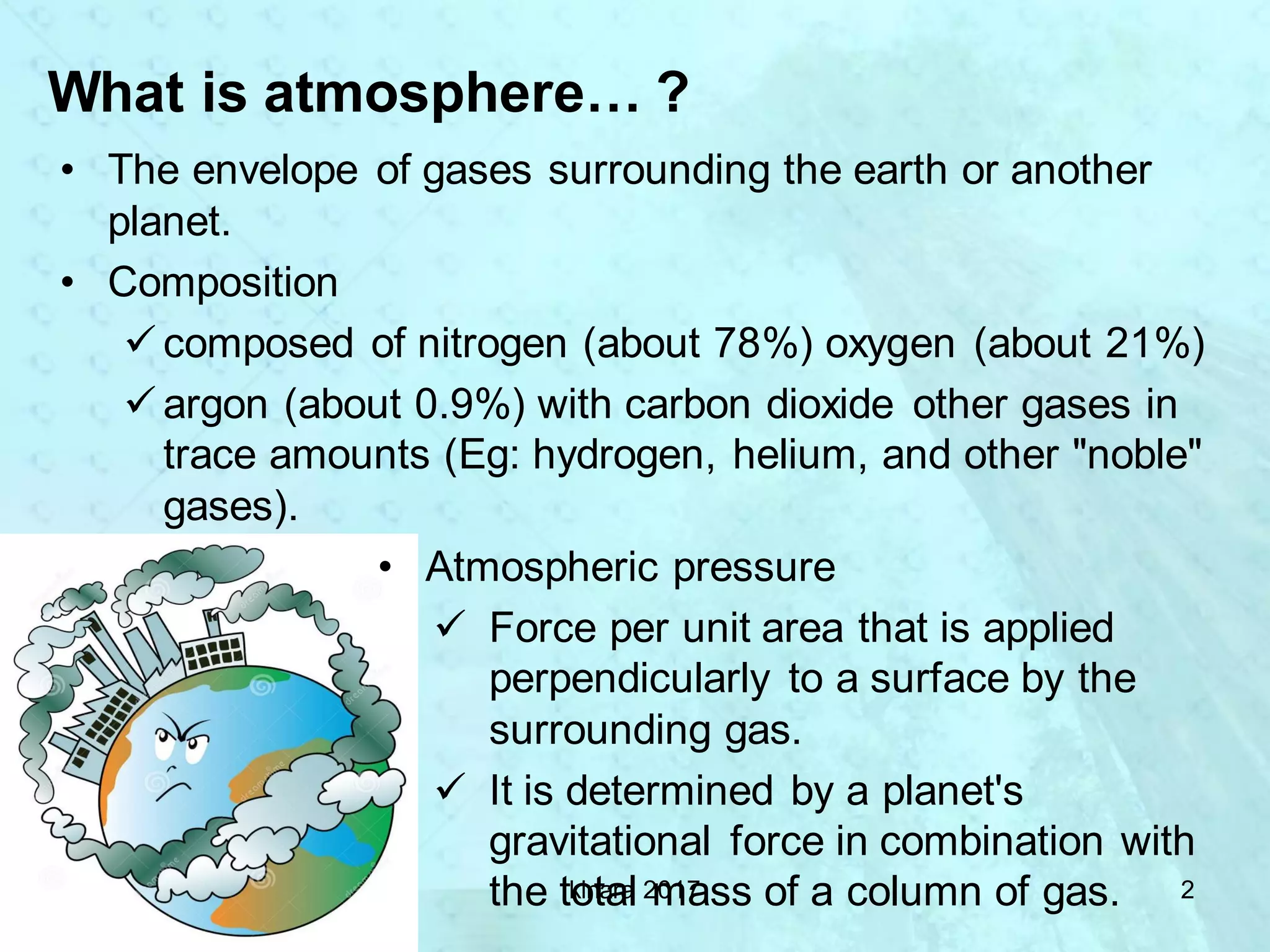
What is atmosphere… ?
• The envelope of gases surrounding the earth or another
planet.
• Composition
 composed of nitrogen (about 78%) oxygen (about 21%)
 argon (about 0.9%) with carbon dioxide other gases in
trace amounts (Eg: hydrogen, helium, and other "noble"
gases).
• Atmospheric pressure
 Force per unit area that is applied
perpendicularly to a surface by the
surrounding gas.
 It is determined by a planet's
gravitational force in combination with
the total mass of a column of gas.kinara 2017 2
Uses of Atmosphere
• The atmosphere helps
protect living organisms
from genetic damage by
solar ultraviolet radiation
• The atmosphere is an
evolutionary agent
essential to the shaping of
a planet
• composition of the
atmosphere determines the
climate and its variations
kinara 2017 3
Use of Gasses
• Oxygen is used by most organisms for
respiration
• Nitrogen is fixed by bacteria and
lightning to produce ammonia used in
the construction of nucleotides and
amino acids
• Carbon dioxide is used by plants,
algae and cyanobacteria for
photosynthesis.
• Protect living organisms from genetic
damage by protect living organisms
from genetic damage by solar
ultraviolet radiation, solar wind and
cosmic rayskinara 2017 4
Earth’s
atmosphere
is made up
of 5 different
layers…
kinara 2017 5
• Atmosphere is not
uniform, its properties
change with altitude.
• Two properties change
with altitude, the air
pressure and the air
temperature
• Lets look at each layer
individually.
Why is the atmosphere divided into 5
different layers?
kinara 2017 6
The troposphere
• The layer of the atmosphere
nearest to earth.
• The troposphere goes from
0km to 16km.
• All weather happens in the
troposphere.
• More than half the air in the
total atmosphere is in this
layer.
• The temperature drops as
the altitude increases.
• Harmful ozone is found
here…IT CREATES SMOG!
kinara 2017 7
OZONE: A gaseous layer in
the upper atmosphere that
protects the earth from
harmful UV radiation. At lower
levels, ozone becomes a
major pollutant.
SMOG: Pollution formed by the
interaction of pollutants and
sunlight (photochemical smog),
usually restricting visibility, and
occasionally hazardous to health
• OZONE and SMOG
kinara 2017 8
• The temperature goes
up with altitude.
• Most jets fly in this layer.
• The protective ozone is
at the top of the
atmosphere (It protects
us from the ultraviolet
radiation of the sun.)
• Rivers of air, called Jet
Streams, can be found
at the base of this layer.
The stratosphere
from 16km to 50 km
kinara 2017 9
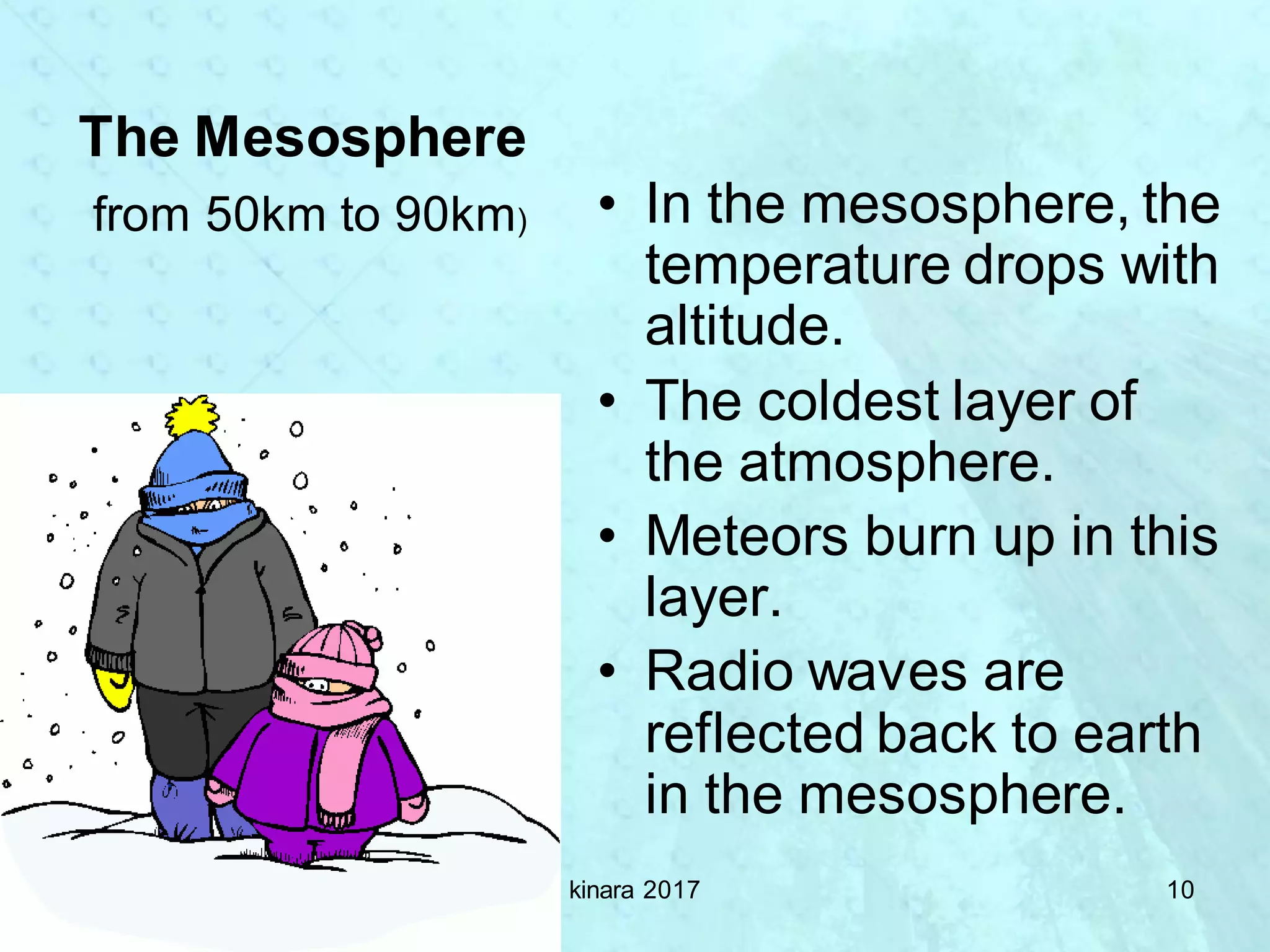
• In the mesosphere, the
temperature drops with
altitude.
• The coldest layer of
the atmosphere.
• Meteors burn up in this
layer.
• Radio waves are
reflected back to earth
in the mesosphere.
The Mesosphere
from 50km to 90km)
kinara 2017 10
• In the thermosphere the
temperature goes up with
altitude.
• The hottest layer of the
atmosphere.
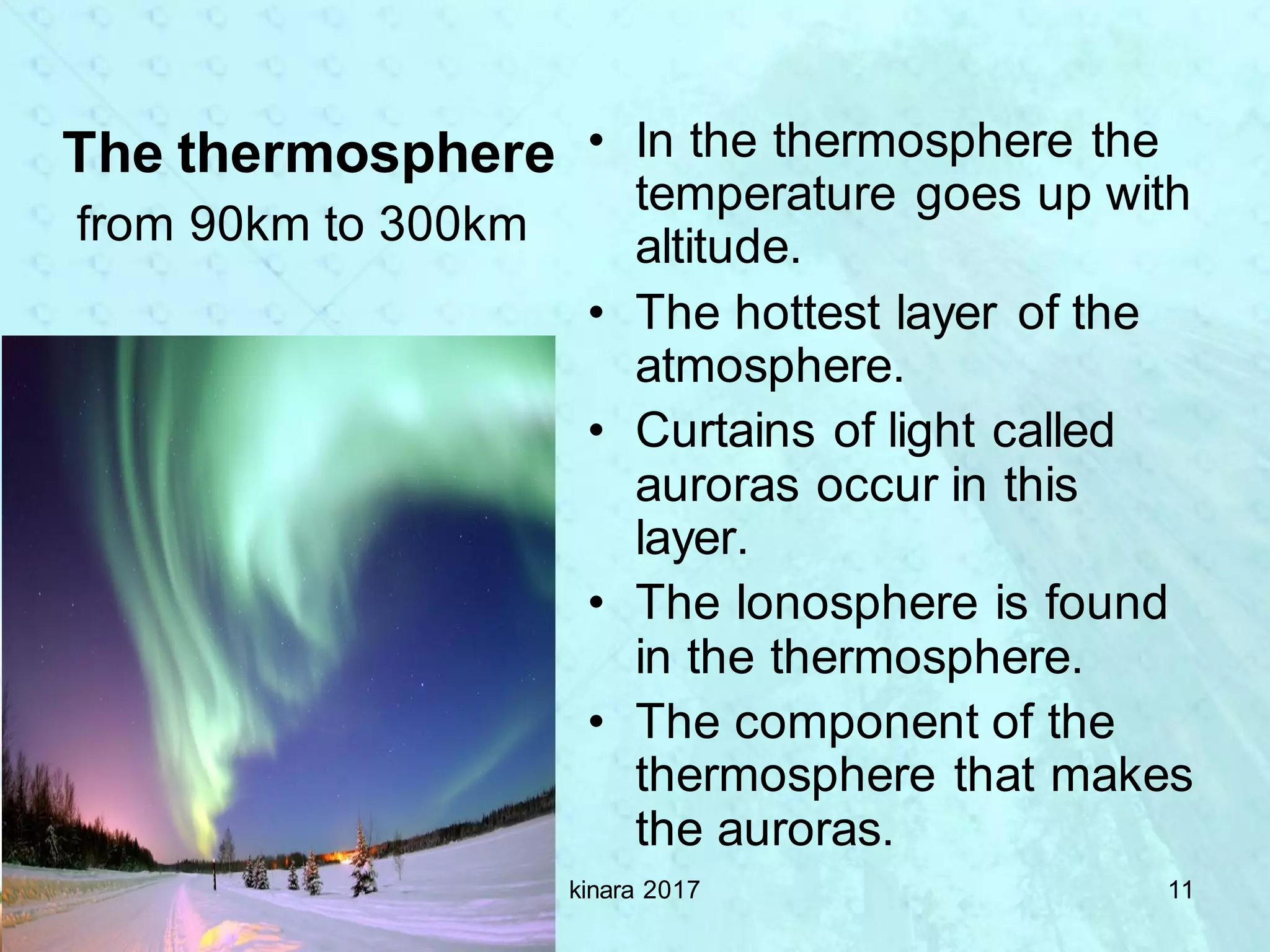
• Curtains of light called
auroras occur in this
layer.
• The Ionosphere is found
in the thermosphere.
• The component of the
thermosphere that makes
the auroras.
The thermosphere
from 90km to 300km
kinara 2017 11
Exosphere • The exosphere is
the outermost layer
of the atmosphere.
• The temperature in
the exosphere
goes up with
altitude.
• Satellites orbit
earth in the
exosphere.
kinara 2017 12
Did you know that The Science Monkey’s
Took Evan?
 The
 Science
 Monkey’s
 Took
 Evan
Troposphere
Stratosphere
Mesosphere
Thermosphere
Exosphere
kinara 2017 13
kinara 2017 14

Atmosphere by Kinara Kumudesh

  • 1.
    Earth’s Atmosphere Why isit so important to life on earth? Kinara Kumudesh Methodist College
  • 2.
    What is atmosphere…? • The envelope of gases surrounding the earth or another planet. • Composition  composed of nitrogen (about 78%) oxygen (about 21%)  argon (about 0.9%) with carbon dioxide other gases in trace amounts (Eg: hydrogen, helium, and other "noble" gases). • Atmospheric pressure  Force per unit area that is applied perpendicularly to a surface by the surrounding gas.  It is determined by a planet's gravitational force in combination with the total mass of a column of gas.kinara 2017 2
  • 3.
    Uses of Atmosphere •The atmosphere helps protect living organisms from genetic damage by solar ultraviolet radiation • The atmosphere is an evolutionary agent essential to the shaping of a planet • composition of the atmosphere determines the climate and its variations kinara 2017 3
  • 4.
    Use of Gasses •Oxygen is used by most organisms for respiration • Nitrogen is fixed by bacteria and lightning to produce ammonia used in the construction of nucleotides and amino acids • Carbon dioxide is used by plants, algae and cyanobacteria for photosynthesis. • Protect living organisms from genetic damage by protect living organisms from genetic damage by solar ultraviolet radiation, solar wind and cosmic rayskinara 2017 4
  • 5.
    Earth’s atmosphere is made up of5 different layers… kinara 2017 5
  • 6.
    • Atmosphere isnot uniform, its properties change with altitude. • Two properties change with altitude, the air pressure and the air temperature • Lets look at each layer individually. Why is the atmosphere divided into 5 different layers? kinara 2017 6
  • 7.
    The troposphere • Thelayer of the atmosphere nearest to earth. • The troposphere goes from 0km to 16km. • All weather happens in the troposphere. • More than half the air in the total atmosphere is in this layer. • The temperature drops as the altitude increases. • Harmful ozone is found here…IT CREATES SMOG! kinara 2017 7
  • 8.
    OZONE: A gaseouslayer in the upper atmosphere that protects the earth from harmful UV radiation. At lower levels, ozone becomes a major pollutant. SMOG: Pollution formed by the interaction of pollutants and sunlight (photochemical smog), usually restricting visibility, and occasionally hazardous to health • OZONE and SMOG kinara 2017 8
  • 9.
    • The temperaturegoes up with altitude. • Most jets fly in this layer. • The protective ozone is at the top of the atmosphere (It protects us from the ultraviolet radiation of the sun.) • Rivers of air, called Jet Streams, can be found at the base of this layer. The stratosphere from 16km to 50 km kinara 2017 9
  • 10.
    • In themesosphere, the temperature drops with altitude. • The coldest layer of the atmosphere. • Meteors burn up in this layer. • Radio waves are reflected back to earth in the mesosphere. The Mesosphere from 50km to 90km) kinara 2017 10
  • 11.
    • In thethermosphere the temperature goes up with altitude. • The hottest layer of the atmosphere. • Curtains of light called auroras occur in this layer. • The Ionosphere is found in the thermosphere. • The component of the thermosphere that makes the auroras. The thermosphere from 90km to 300km kinara 2017 11
  • 12.
    Exosphere • Theexosphere is the outermost layer of the atmosphere. • The temperature in the exosphere goes up with altitude. • Satellites orbit earth in the exosphere. kinara 2017 12
  • 13.
    Did you knowthat The Science Monkey’s Took Evan?  The  Science  Monkey’s  Took  Evan Troposphere Stratosphere Mesosphere Thermosphere Exosphere kinara 2017 13
  • 14.