BSW Module 1
GROUND WATER SOURCES
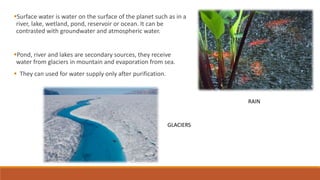
Surface water is water on the surface of the planet such as in a
river, lake, wetland, pond, reservoir or ocean. It can be
contrasted with groundwater and atmospheric water.
Pond, river and lakes are secondary sources, they receive
water from glaciers in mountain and evaporation from sea.
 They can used for water supply only after purification.
GLACIERS
RAIN
River
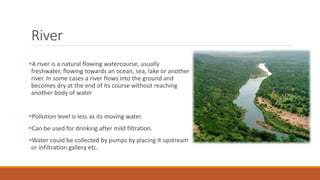
A river is a natural flowing watercourse, usually
freshwater, flowing towards an ocean, sea, lake or another
river. In some cases a river flows into the ground and
becomes dry at the end of its course without reaching
another body of water
Pollution level is less as its moving water.
Can be used for drinking after mild filtration.
Water could be collected by pumps by placing it upstream
or infiltration gallery etc.
Pond
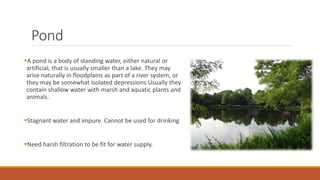
A pond is a body of standing water, either natural or
artificial, that is usually smaller than a lake. They may
arise naturally in floodplains as part of a river system, or
they may be somewhat isolated depressions Usually they
contain shallow water with marsh and aquatic plants and
animals.
Stagnant water and impure. Cannot be used for drinking
Need harsh filtration to be fit for water supply.
Lake
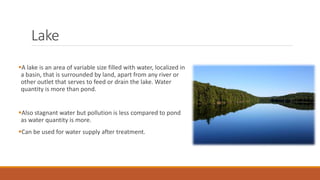
A lake is an area of variable size filled with water, localized in
a basin, that is surrounded by land, apart from any river or
other outlet that serves to feed or drain the lake. Water
quantity is more than pond.
Also stagnant water but pollution is less compared to pond
as water quantity is more.
Can be used for water supply after treatment.
Reservoir
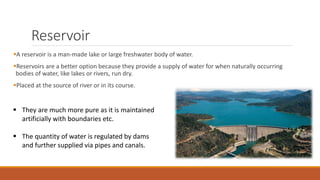
A reservoir is a man-made lake or large freshwater body of water.
Reservoirs are a better option because they provide a supply of water for when naturally occurring
bodies of water, like lakes or rivers, run dry.
Placed at the source of river or in its course.
 They are much more pure as it is maintained
artificially with boundaries etc.
 The quantity of water is regulated by dams
and further supplied via pipes and canals.
Quantity and Quality
Wet and dry periods have major impacts on the water quantity and water quality of both surface
water.
Water quantities go up during wet spells and down during dry spells.
Climate change will also affect water quality.
Surface water quality will generally improve as streams and lakes fill and dilute their pollutants.
When available surface water decreases, pollutants will concentrate and water quality will go down.
In those areas where water quantities go up dramatically water quality will deteriorate substantially
as more pollutants are washed into water supplies.
Overloaded sewage systems will spill into streams and water supplies, producing health hazards
THANK
YOU

Ground water resources

  • 1.
    BSW Module 1 GROUNDWATER SOURCES
  • 2.
    Surface water iswater on the surface of the planet such as in a river, lake, wetland, pond, reservoir or ocean. It can be contrasted with groundwater and atmospheric water. Pond, river and lakes are secondary sources, they receive water from glaciers in mountain and evaporation from sea.  They can used for water supply only after purification. GLACIERS RAIN
  • 3.
    River A river isa natural flowing watercourse, usually freshwater, flowing towards an ocean, sea, lake or another river. In some cases a river flows into the ground and becomes dry at the end of its course without reaching another body of water Pollution level is less as its moving water. Can be used for drinking after mild filtration. Water could be collected by pumps by placing it upstream or infiltration gallery etc.
  • 4.
    Pond A pond isa body of standing water, either natural or artificial, that is usually smaller than a lake. They may arise naturally in floodplains as part of a river system, or they may be somewhat isolated depressions Usually they contain shallow water with marsh and aquatic plants and animals. Stagnant water and impure. Cannot be used for drinking Need harsh filtration to be fit for water supply.
  • 5.
    Lake A lake isan area of variable size filled with water, localized in a basin, that is surrounded by land, apart from any river or other outlet that serves to feed or drain the lake. Water quantity is more than pond. Also stagnant water but pollution is less compared to pond as water quantity is more. Can be used for water supply after treatment.
  • 6.
    Reservoir A reservoir isa man-made lake or large freshwater body of water. Reservoirs are a better option because they provide a supply of water for when naturally occurring bodies of water, like lakes or rivers, run dry. Placed at the source of river or in its course.  They are much more pure as it is maintained artificially with boundaries etc.  The quantity of water is regulated by dams and further supplied via pipes and canals.
  • 7.
    Quantity and Quality Wetand dry periods have major impacts on the water quantity and water quality of both surface water. Water quantities go up during wet spells and down during dry spells. Climate change will also affect water quality. Surface water quality will generally improve as streams and lakes fill and dilute their pollutants. When available surface water decreases, pollutants will concentrate and water quality will go down. In those areas where water quantities go up dramatically water quality will deteriorate substantially as more pollutants are washed into water supplies. Overloaded sewage systems will spill into streams and water supplies, producing health hazards
  • 8.