THREATS TO WORLD’S RIVERS,THREATS TO WORLD’S RIVERS,
LAKES, WETLANDS ANDLAKES, WETLANDS AND
FRESHWATER SYSTEMSFRESHWATER SYSTEMS
• INTRODUCTION TO FRESHWATER AND THEIR ECOSYSTEMS
•THREATS TO VARIOUS FRESHWATER SOURCES
•NEED OF MONITORING
What are FRESHWATER ECOSYSTEMS ?
• Freshwater ecosystems are a subset of
Earth's “aquatic ecosystems”.
• Aquatic ecosystems constitute of MARINE
ecosystems and FRESHWATER ecosystems.ecosystems and FRESHWATER ecosystems.
• Freshwater ecosystems include LAKES,
PONDS, RIVERS, SPRINGS and WETLANDS.
• Marine ecosystems include water bodies with
high salt content i.e. SEAS and OCEANS.
FRESHWATER ( STATISTICS)
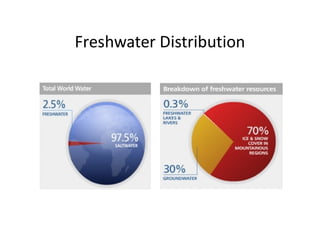
• The total volume of water on Earth is about
1.4 billion cubic km.
• The volume of freshwater resources is around
35 million cubic km, or about 2.5 percent of35 million cubic km, or about 2.5 percent of
the total volume.
• Of these freshwater resources, about 24
million cubic km or 70 % is in the form of ice
and permanent snow cover in mountainous
regions, the Antarctic and Arctic regions.
Freshwater Distribution
Polluted Freshwater statistics
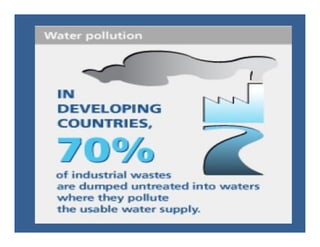
• Up to 90 % of wastewater in developing countries
flows untreated into rivers, lakes and coastal zones,
threatening health, food security and access to safe
drinking and affecting various ecosystems.
• Over 80 percent of wastewater worldwide is not• Over 80 percent of wastewater worldwide is not
collected or treated.
• Every day, 2 million tons of human waste are disposed
off in water courses.
• The food sector contributes respectively 40% and 54%
to the production of organic water pollutants in high-
income and low-income countries.
Threats to rivers and livelihoods
• Fragmentation of river systems due to dams is the
single greatest threat to freshwater ecosystems health.
• There are an estimated 0.8 million dams worldwide,
including around 45000 large dams over 15 metres
heightand 1000 mega-dams over 100 metres height.heightand 1000 mega-dams over 100 metres height.
• Over 60% of the world’s 227 largest rivers have been
fragmented by dams, diversions and canals. An
estimated 60 to 80 million people have been displaced
by dams and nearly 500 million people have their lives
and livelihoods negatively affected.
Threats to wetlands
• Conversion of wetlands for commercial development,
drainage schemes, extraction of minerals and coal,
overfishing, tourism, siltation, pesticide discharges
from intensive agriculture, toxic pollutants from
industrial wastes are major threats to wetlandsindustrial wastes are major threats to wetlands
everywhere.
• Climate change is also taking its toll. Increases in
temperature are causing polar ice to melt and sea
levels to rise. This in turn is leading to shallow wetlands
being harshly swamped and some species of
mangrove trees being submerged and drowned.
Threats to groundwater
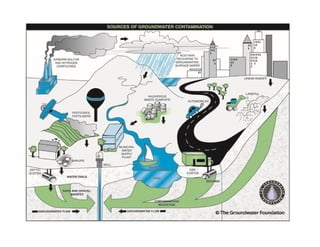
• Groundwater contamination occurs when man-made
products such as gasoline, oil and chemicals get into the
groundwater and cause it to become unsafe and unfit for
human use.
• Materials from the land's surface can move through the soil
and end up in the groundwater.and end up in the groundwater.
– For example, pesticides and fertilizers can find their way into
groundwater supplies over time.
– Toxic substances from mining sites may also seep into
groundwater.
– It is possible for untreated waste from sewage tanks and toxic
chemicals from underground storage tanks and leaky landfills
(underground wastes disposing areas) to contaminate
groundwater.
POTENTIAL THREATS TO
GROUNDWATER (EMERGING ISSUES)
• Hydraulic Fracturing
– Hydraulic fracturing is an oil and gas well development
process that involves injecting water under high pressure
into a bedrock formation via the well. It is used to increase
oil or gas flow to a well from petroleum-bearing rock
formations that is seeing increasing use across the world.formations that is seeing increasing use across the world.
• Microplastics
– Microplastics are small plastic particles in the
environment. They have the potential to impact aquatic
life through ingestion and the plastic's ability to attract and
absorb certain pollutants. Sources of microplastics include
microbeads ( binding units ) in various cosmetics and soaps
and the break down of larger plastic materials.
Monitoring of threats to freshwater
• By conducting regular, systematic measurements
of the physical, chemical and biological
conditions of freshwater, monitoring systems :
– Measure the natural changes and conditions of water
quality.quality.
– Determine changes over time, at various locations, of
water contaminants.
– Support development of science-based guidelines for
water, fish, and sediments.
– Identify emerging issues and threats.
– Track the results of remedial measures and regulatory
decisions.
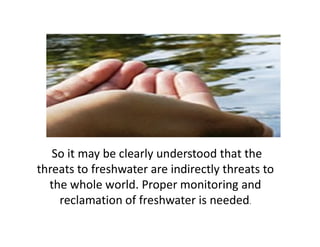
So it may be clearly understood that the
threats to freshwater are indirectly threats to
the whole world. Proper monitoring and
reclamation of freshwater is needed.
References
• www.unwater.org
• www.indiaenvironmentportal.org
• www.wwf.panda.org
• www.groundwater.org• www.groundwater.org
• www.environment.nationalgeographic.com
• www.wikipedia.org.
Submitted to :
Dr. R. K. IsaacDr. R. K. Isaac
Submitted by :
Shyam Mohan Chaudhary
13BTAG114

FRESHWATER THREATS

  • 1.
    THREATS TO WORLD’SRIVERS,THREATS TO WORLD’S RIVERS, LAKES, WETLANDS ANDLAKES, WETLANDS AND FRESHWATER SYSTEMSFRESHWATER SYSTEMS • INTRODUCTION TO FRESHWATER AND THEIR ECOSYSTEMS •THREATS TO VARIOUS FRESHWATER SOURCES •NEED OF MONITORING
  • 2.
    What are FRESHWATERECOSYSTEMS ? • Freshwater ecosystems are a subset of Earth's “aquatic ecosystems”. • Aquatic ecosystems constitute of MARINE ecosystems and FRESHWATER ecosystems.ecosystems and FRESHWATER ecosystems. • Freshwater ecosystems include LAKES, PONDS, RIVERS, SPRINGS and WETLANDS. • Marine ecosystems include water bodies with high salt content i.e. SEAS and OCEANS.
  • 3.
    FRESHWATER ( STATISTICS) •The total volume of water on Earth is about 1.4 billion cubic km. • The volume of freshwater resources is around 35 million cubic km, or about 2.5 percent of35 million cubic km, or about 2.5 percent of the total volume. • Of these freshwater resources, about 24 million cubic km or 70 % is in the form of ice and permanent snow cover in mountainous regions, the Antarctic and Arctic regions.
  • 4.
  • 5.
    Polluted Freshwater statistics •Up to 90 % of wastewater in developing countries flows untreated into rivers, lakes and coastal zones, threatening health, food security and access to safe drinking and affecting various ecosystems. • Over 80 percent of wastewater worldwide is not• Over 80 percent of wastewater worldwide is not collected or treated. • Every day, 2 million tons of human waste are disposed off in water courses. • The food sector contributes respectively 40% and 54% to the production of organic water pollutants in high- income and low-income countries.
  • 7.
    Threats to riversand livelihoods • Fragmentation of river systems due to dams is the single greatest threat to freshwater ecosystems health. • There are an estimated 0.8 million dams worldwide, including around 45000 large dams over 15 metres heightand 1000 mega-dams over 100 metres height.heightand 1000 mega-dams over 100 metres height. • Over 60% of the world’s 227 largest rivers have been fragmented by dams, diversions and canals. An estimated 60 to 80 million people have been displaced by dams and nearly 500 million people have their lives and livelihoods negatively affected.
  • 8.
    Threats to wetlands •Conversion of wetlands for commercial development, drainage schemes, extraction of minerals and coal, overfishing, tourism, siltation, pesticide discharges from intensive agriculture, toxic pollutants from industrial wastes are major threats to wetlandsindustrial wastes are major threats to wetlands everywhere. • Climate change is also taking its toll. Increases in temperature are causing polar ice to melt and sea levels to rise. This in turn is leading to shallow wetlands being harshly swamped and some species of mangrove trees being submerged and drowned.
  • 9.
    Threats to groundwater •Groundwater contamination occurs when man-made products such as gasoline, oil and chemicals get into the groundwater and cause it to become unsafe and unfit for human use. • Materials from the land's surface can move through the soil and end up in the groundwater.and end up in the groundwater. – For example, pesticides and fertilizers can find their way into groundwater supplies over time. – Toxic substances from mining sites may also seep into groundwater. – It is possible for untreated waste from sewage tanks and toxic chemicals from underground storage tanks and leaky landfills (underground wastes disposing areas) to contaminate groundwater.
  • 11.
    POTENTIAL THREATS TO GROUNDWATER(EMERGING ISSUES) • Hydraulic Fracturing – Hydraulic fracturing is an oil and gas well development process that involves injecting water under high pressure into a bedrock formation via the well. It is used to increase oil or gas flow to a well from petroleum-bearing rock formations that is seeing increasing use across the world.formations that is seeing increasing use across the world. • Microplastics – Microplastics are small plastic particles in the environment. They have the potential to impact aquatic life through ingestion and the plastic's ability to attract and absorb certain pollutants. Sources of microplastics include microbeads ( binding units ) in various cosmetics and soaps and the break down of larger plastic materials.
  • 12.
    Monitoring of threatsto freshwater • By conducting regular, systematic measurements of the physical, chemical and biological conditions of freshwater, monitoring systems : – Measure the natural changes and conditions of water quality.quality. – Determine changes over time, at various locations, of water contaminants. – Support development of science-based guidelines for water, fish, and sediments. – Identify emerging issues and threats. – Track the results of remedial measures and regulatory decisions.
  • 13.
    So it maybe clearly understood that the threats to freshwater are indirectly threats to the whole world. Proper monitoring and reclamation of freshwater is needed.
  • 14.
    References • www.unwater.org • www.indiaenvironmentportal.org •www.wwf.panda.org • www.groundwater.org• www.groundwater.org • www.environment.nationalgeographic.com • www.wikipedia.org.
  • 15.
    Submitted to : Dr.R. K. IsaacDr. R. K. Isaac Submitted by : Shyam Mohan Chaudhary 13BTAG114