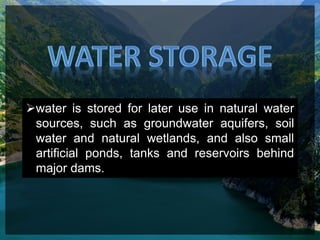
water is stored for later use in natural water
sources, such as groundwater aquifers, soil
water and natural wetlands, and also small
artificial ponds, tanks and reservoirs behind
major dams.
TYPES OF WATER STORAGE
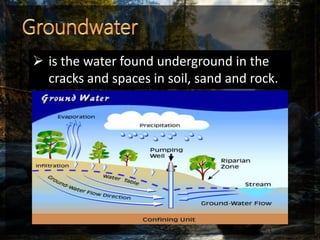
 is the water found underground in the
cracks and spaces in soil, sand and rock.
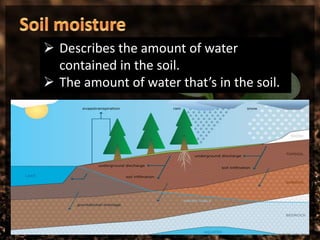
 Describes the amount of water
contained in the soil.
 The amount of water that’s in the soil.
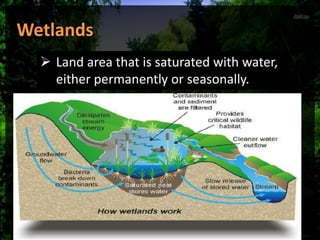
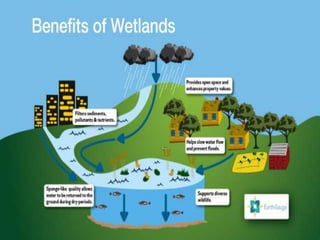
 Land area that is saturated with water,
either permanently or seasonally.
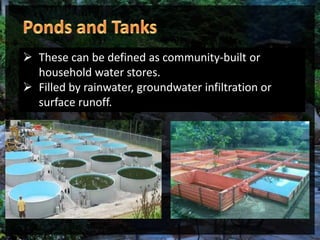
 These can be defined as community-built or
household water stores.
 Filled by rainwater, groundwater infiltration or
surface runoff.
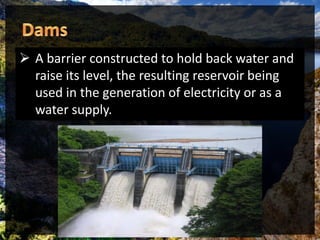
 A barrier constructed to hold back water and
raise its level, the resulting reservoir being
used in the generation of electricity or as a
water supply.

Water Storage

  • 1.
    water is storedfor later use in natural water sources, such as groundwater aquifers, soil water and natural wetlands, and also small artificial ponds, tanks and reservoirs behind major dams.
  • 2.
  • 3.
     is thewater found underground in the cracks and spaces in soil, sand and rock.
  • 4.
     Describes theamount of water contained in the soil.  The amount of water that’s in the soil.
  • 5.
     Land areathat is saturated with water, either permanently or seasonally.
  • 7.
     These canbe defined as community-built or household water stores.  Filled by rainwater, groundwater infiltration or surface runoff.
  • 8.
     A barrierconstructed to hold back water and raise its level, the resulting reservoir being used in the generation of electricity or as a water supply.