
POLYTECHNIC
 What is green Building ?
 Importance of green Building
 Objectives of green Building
 Various rating Systems
 Different types of Efficiencies
 MSU Guest House
 Existing Green buildings in India
3
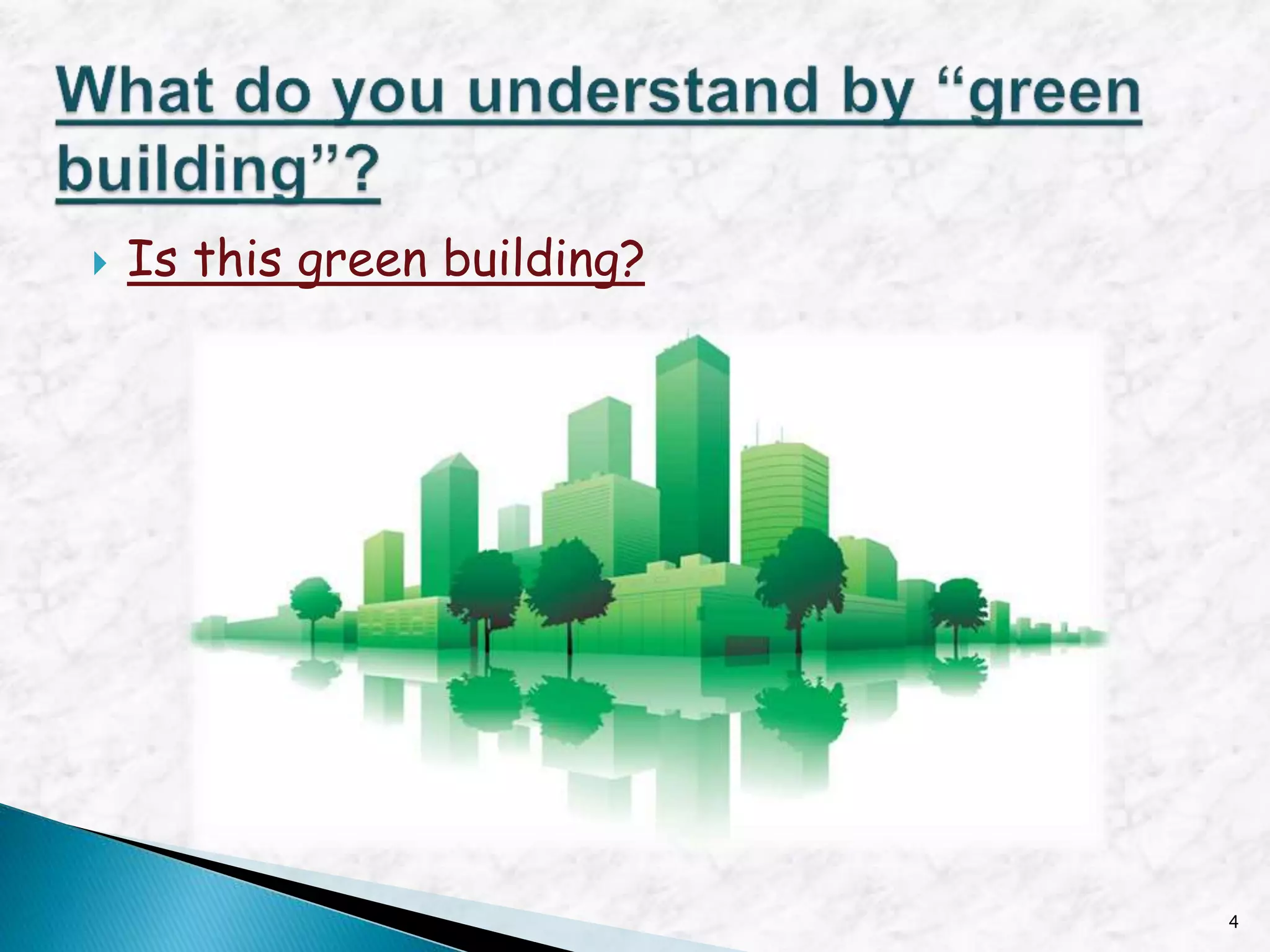
 Is this green building?
4
A green building is the one that uses less water,
optimizes energy efficiency, conserves natural
resources, generates less waste and provide healthier
space for occupants as compared to a conventional
building.
We would like to show some awesome constructions
that are ancient and available today which are
naturally ventilated…
5
6
7
 The concept of green building can be traced to the
energy crisis and environmental pollution concerns of
1960s to 1970s.
 There are numbers of motives for building green
including environmental and economic benefit.
 To bring together a vast array of practices techniques
and skills to reduce and ultimately eliminate the
impacts on environment and humans.
 To emphasis on taking advantage of renewable
resources.
8
 It enhances and protects eco system.
 It improve air and water quality.
 It reduces waste streams.
 Conserves and restores natural resources. It operating
cost is very less
 It improves quality of life.
 It improves occupant productivity.
 Enhances asset value and profit.
 It optimizes life cycle economic performance.
 It enhances occupants health and comfort.
 It minimizes strain on local area .
9
 India ranks 3 among top 10 for LEED green
buildings with 1883 certified projects.
 With Canada being on the first place with 4814
projects.
 China being second with 2022 projects.
 And US with 53908 projects but is not considered
in ranking.
10
In India
1). LEED(Leadership in Energy & Environmental Design) by
IGBC (Indian Green Building Council).
2). GRIHA (Green Rating for Integrated Habitat Assessment)
by TERI (The Energy Research Institute).
In UK:
 Breeam Building Establishment Environmental
Assessment Method.
In japan:
 Casbee Comprehensive Assessment system for building
environmental efficiency.
11
12
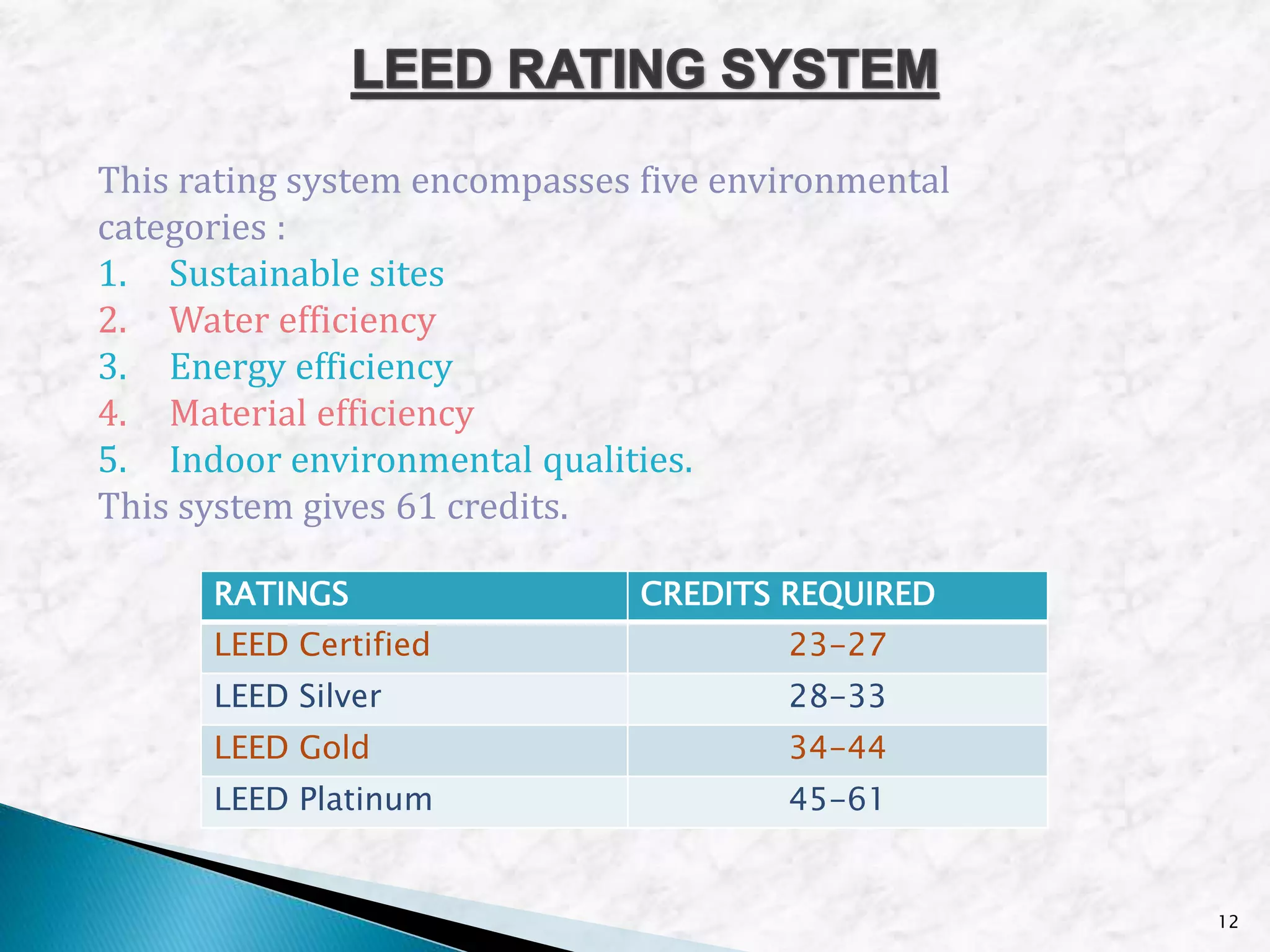
RATINGS CREDITS REQUIRED
LEED Certified 23-27
LEED Silver 28-33
LEED Gold 34-44
LEED Platinum 45-61
This rating system encompasses five environmental
categories :
1. Sustainable sites
2. Water efficiency
3. Energy efficiency
4. Material efficiency
5. Indoor environmental qualities.
This system gives 61 credits.
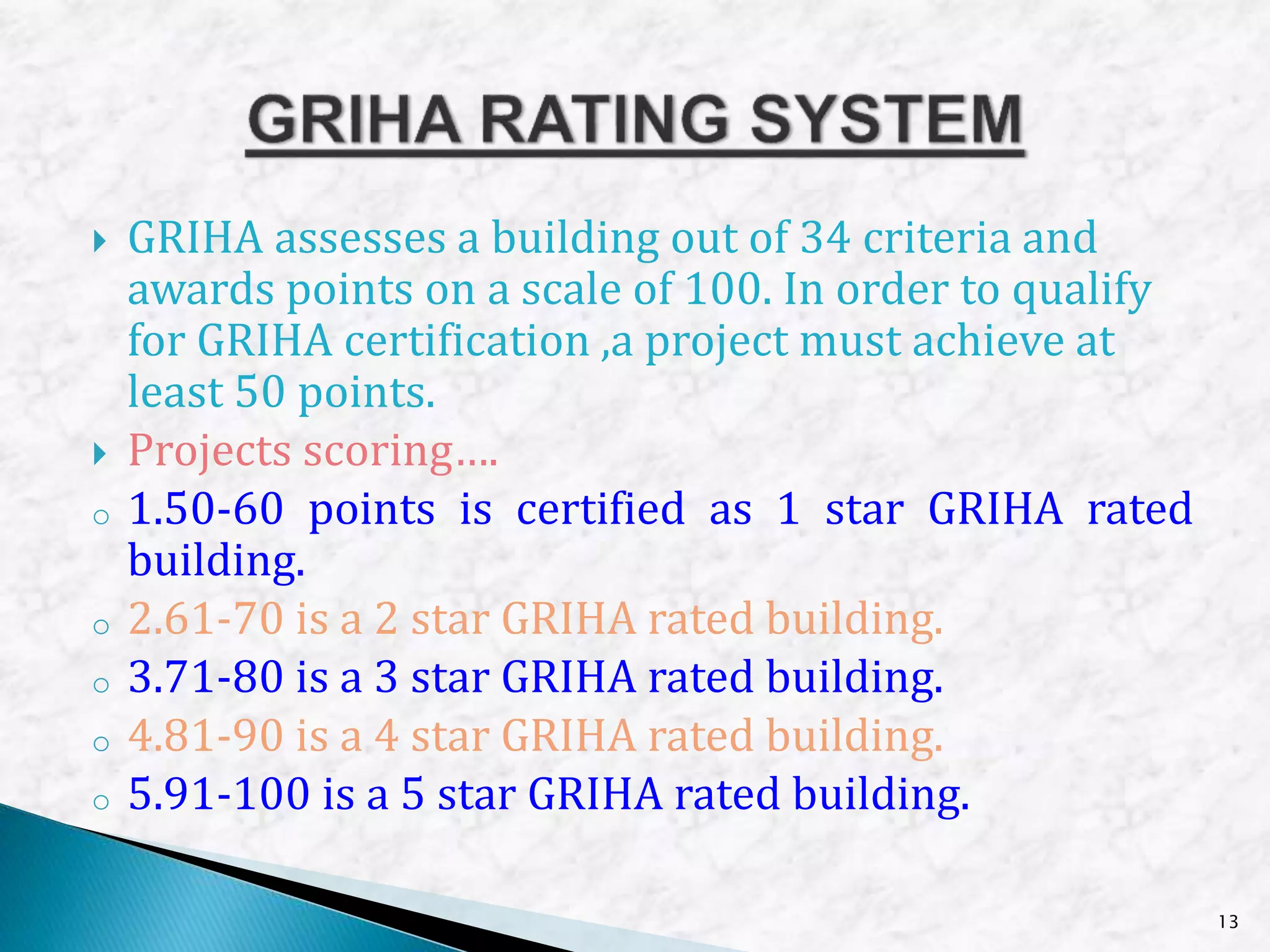
 GRIHA assesses a building out of 34 criteria and
awards points on a scale of 100. In order to qualify
for GRIHA certification ,a project must achieve at
least 50 points.
 Projects scoring….
o 1.50-60 points is certified as 1 star GRIHA rated
building.
o 2.61-70 is a 2 star GRIHA rated building.
o 3.71-80 is a 3 star GRIHA rated building.
o 4.81-90 is a 4 star GRIHA rated building.
o 5.91-100 is a 5 star GRIHA rated building.
13
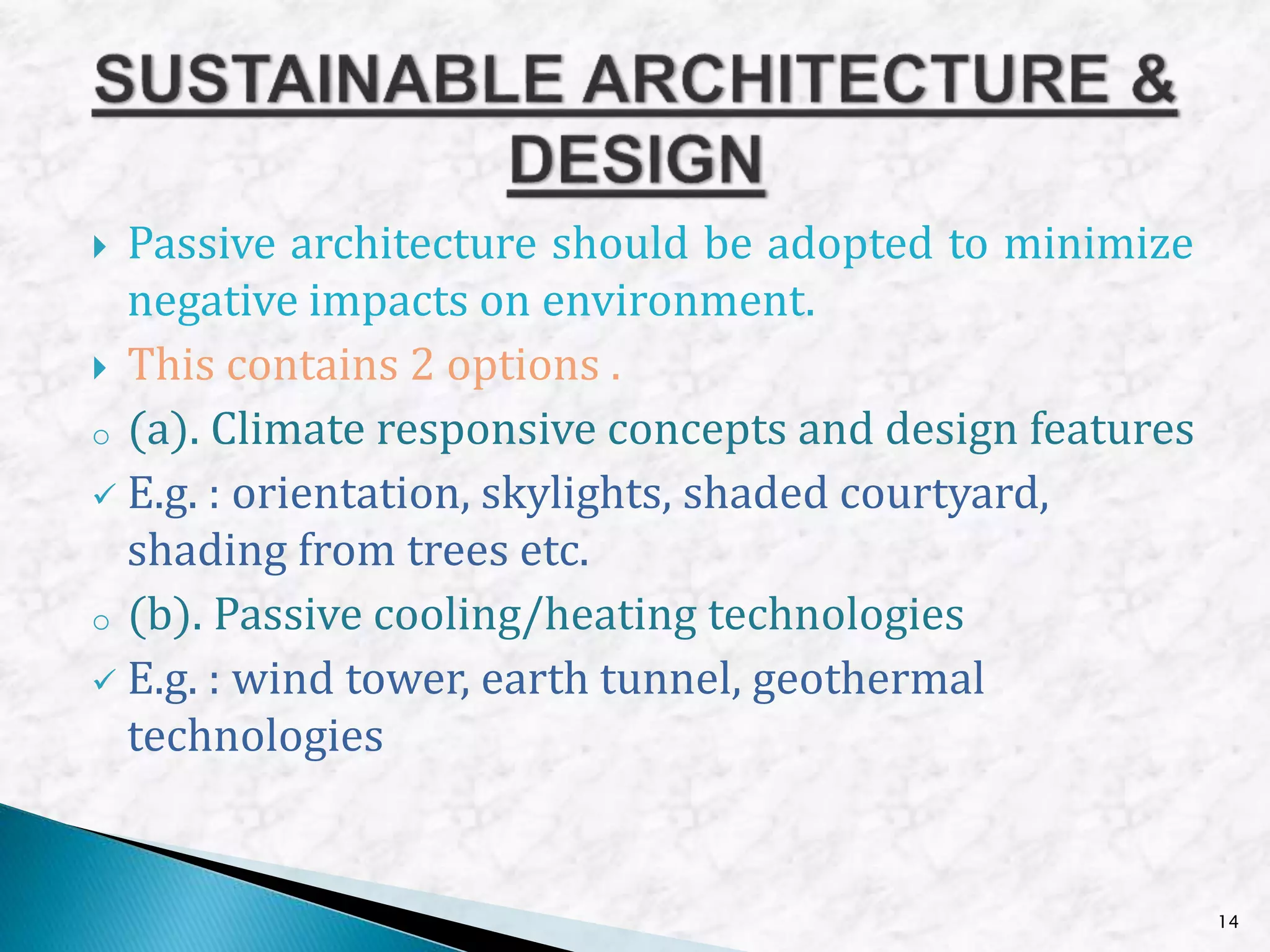
 Passive architecture should be adopted to minimize
negative impacts on environment.
 This contains 2 options .
o (a). Climate responsive concepts and design features
 E.g. : orientation, skylights, shaded courtyard,
shading from trees etc.
o (b). Passive cooling/heating technologies
 E.g. : wind tower, earth tunnel, geothermal
technologies
14
 Erosion of soil should be controlled
 Fertile topsoil should be stockpiled prior to
construction , for future reuse or donation.
 Provision for basic amenities so as to reduce
negative impact caused from auto mobile use.
 Minimum disturbance to the nearby topography or
vegetation
 Restoration of disturbed site area by design
vegetated spaces over built up structure and on the
ground, for at leas 30%of the site area.
15
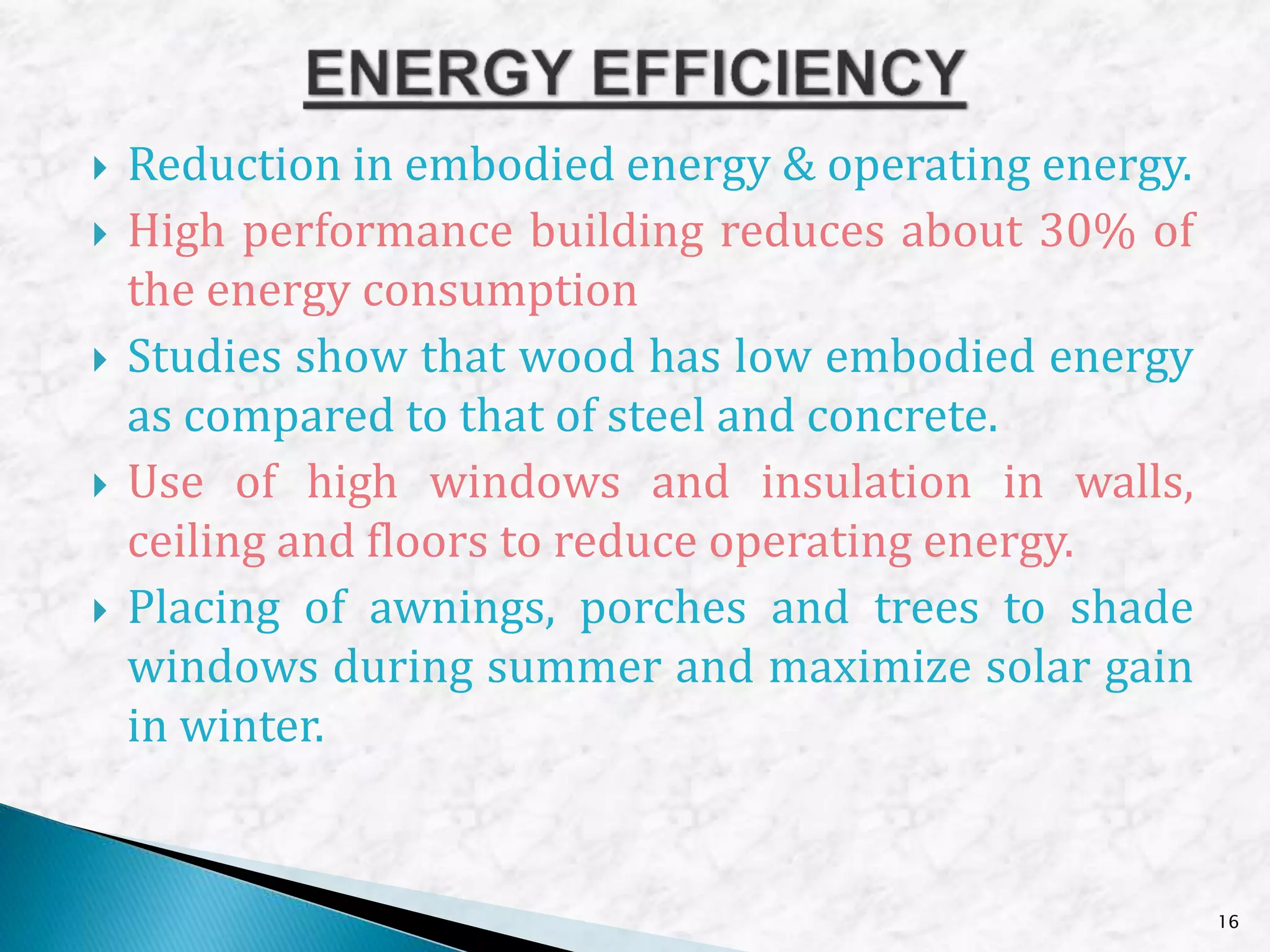
 Reduction in embodied energy & operating energy.
 High performance building reduces about 30% of
the energy consumption
 Studies show that wood has low embodied energy
as compared to that of steel and concrete.
 Use of high windows and insulation in walls,
ceiling and floors to reduce operating energy.
 Placing of awnings, porches and trees to shade
windows during summer and maximize solar gain
in winter.
16
 Efficient heating and cooling systems.
 Building automation system.
Energy efficient commercial lighting, such as leds, are
used to reduce energy.
Reduction of amount of energy lost through heat from out
dated lighting system.
Automation system are the main sources of energy
efficiency in existing buildings.
Based on occupancy, outside temperature, light and time
of day automation system can reduce energy usage by
activating heating, cooling or led lighting only in those area
of building where they are necessary.
17
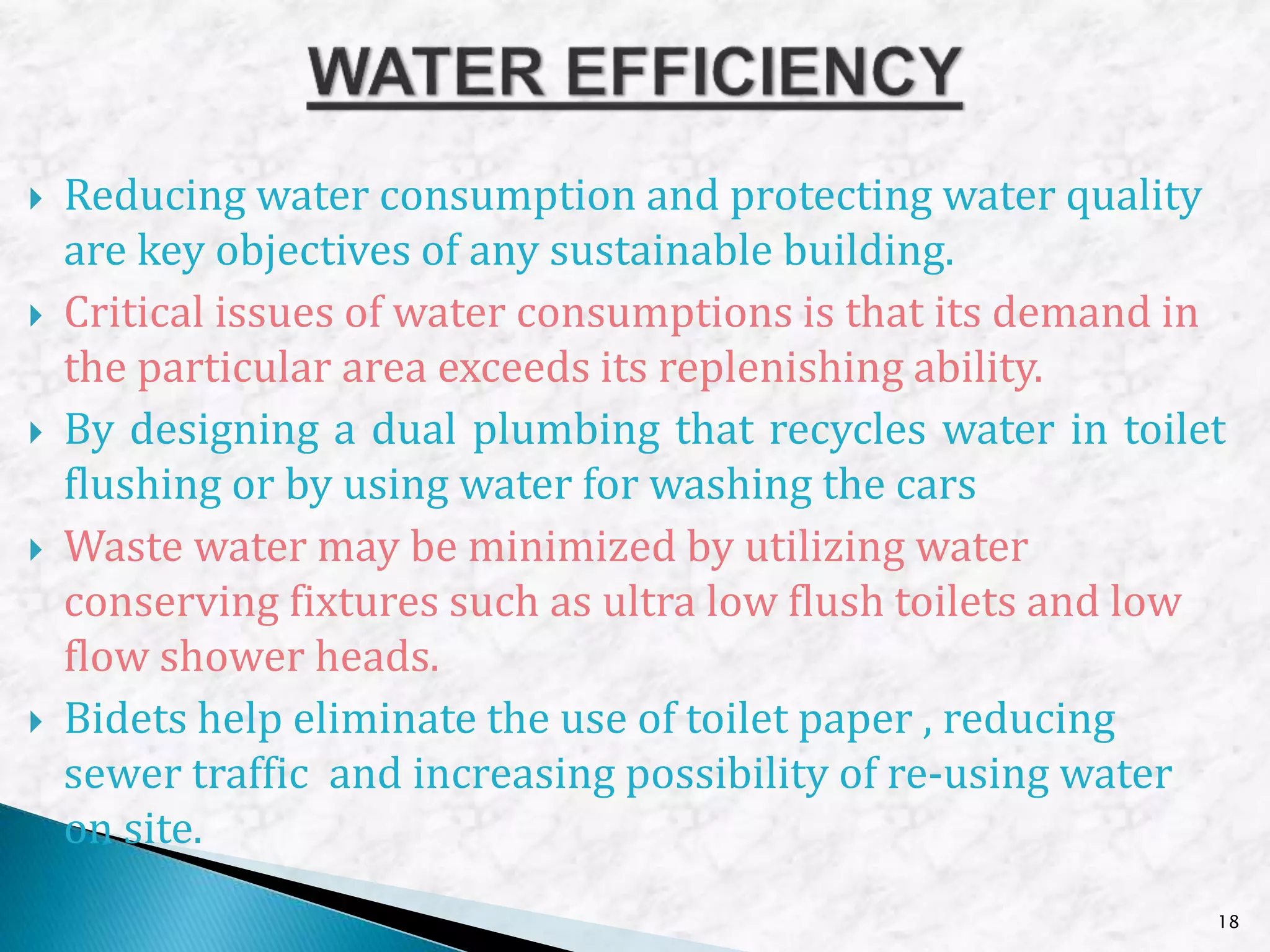
 Reducing water consumption and protecting water quality
are key objectives of any sustainable building.
 Critical issues of water consumptions is that its demand in
the particular area exceeds its replenishing ability.
 By designing a dual plumbing that recycles water in toilet
flushing or by using water for washing the cars
 Waste water may be minimized by utilizing water
conserving fixtures such as ultra low flush toilets and low
flow shower heads.
 Bidets help eliminate the use of toilet paper , reducing
sewer traffic and increasing possibility of re-using water
on site.
18
 Limit the use of turf on the site, instead plant a
native species of the particular area.
 Treat waste water generated from site , so as to
avoid polluting the receiving streams by safe
disposal.
 Enhance ground water table usage thus decrease
municipal water demand through effective
rainwater management.
19
 Green building emphasise waste reduction.
 Construction wastes & demolition debris are the main
wastes produced during construction process & these
wastes degrade the quality of environment.
 Green building ensures waste reduction by:
1. Reuse & minimisation of construction wastes &
debris & diverting them to recycling units.
2. The increased use of recycled contents & waste by-
products in construction materials.
3. The use of existing building structure & reclaimed
building materials in the core & shell of project.
4. Designing the structure to produce less scrap &
execute it according to the plan
20
 Green Buildings reduce construction wastes by 50%
compared with that of similar conventional buildings.
 For green building, building materials such as lumbers
from forest, recycled stone, recycled metal and any other
industrial recycled goods which are non toxic like coals,
sand etc are used.
21
 This one of the five category in LEED standards that
concerns with the comforts and well being and
productivity of occupants.
 Provide adequate air ventilation, so as to avoid pollutants
affecting indoor air quality.
22
23
 The previous building was constructed 90 years back.
 Exhibits bunglow type with open space surrounding it.
 It served 75 years and since then it was lying unused.
 It was deteriorated since last 10 years.
 This building was used by East India Company officers
before independence & then it along with the other
buildings and spaces were given to establish university
in 1949 by His Highness Maharaja of Baroda state.
 The building due to lack of maintenance and repair got
deteriorated and finally was abandoned after .
24
25
PASSIVE SOLAR ENERGY CONCEPT:
 Optimum Orientation
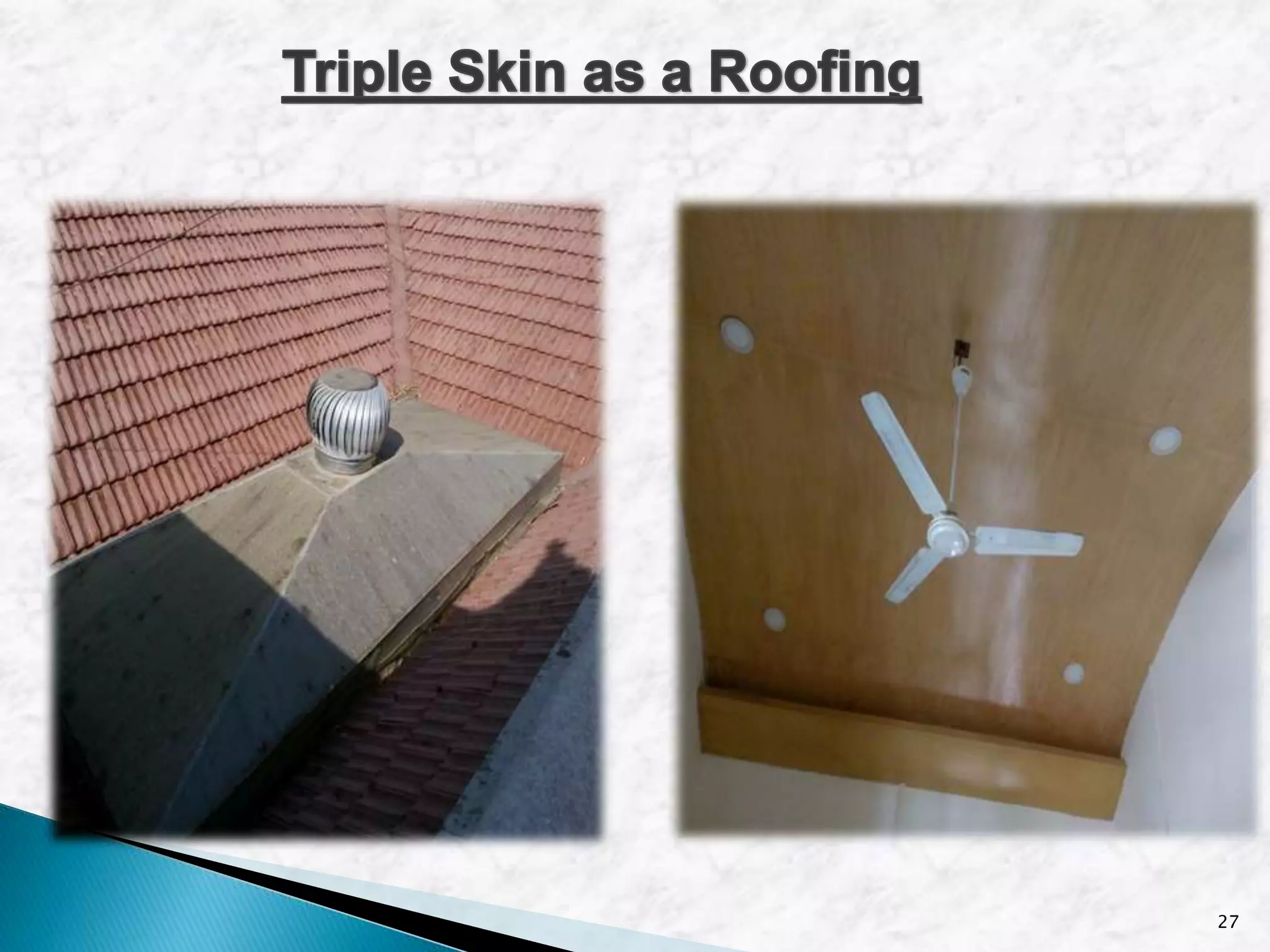
 Triple Skin as a Roofing
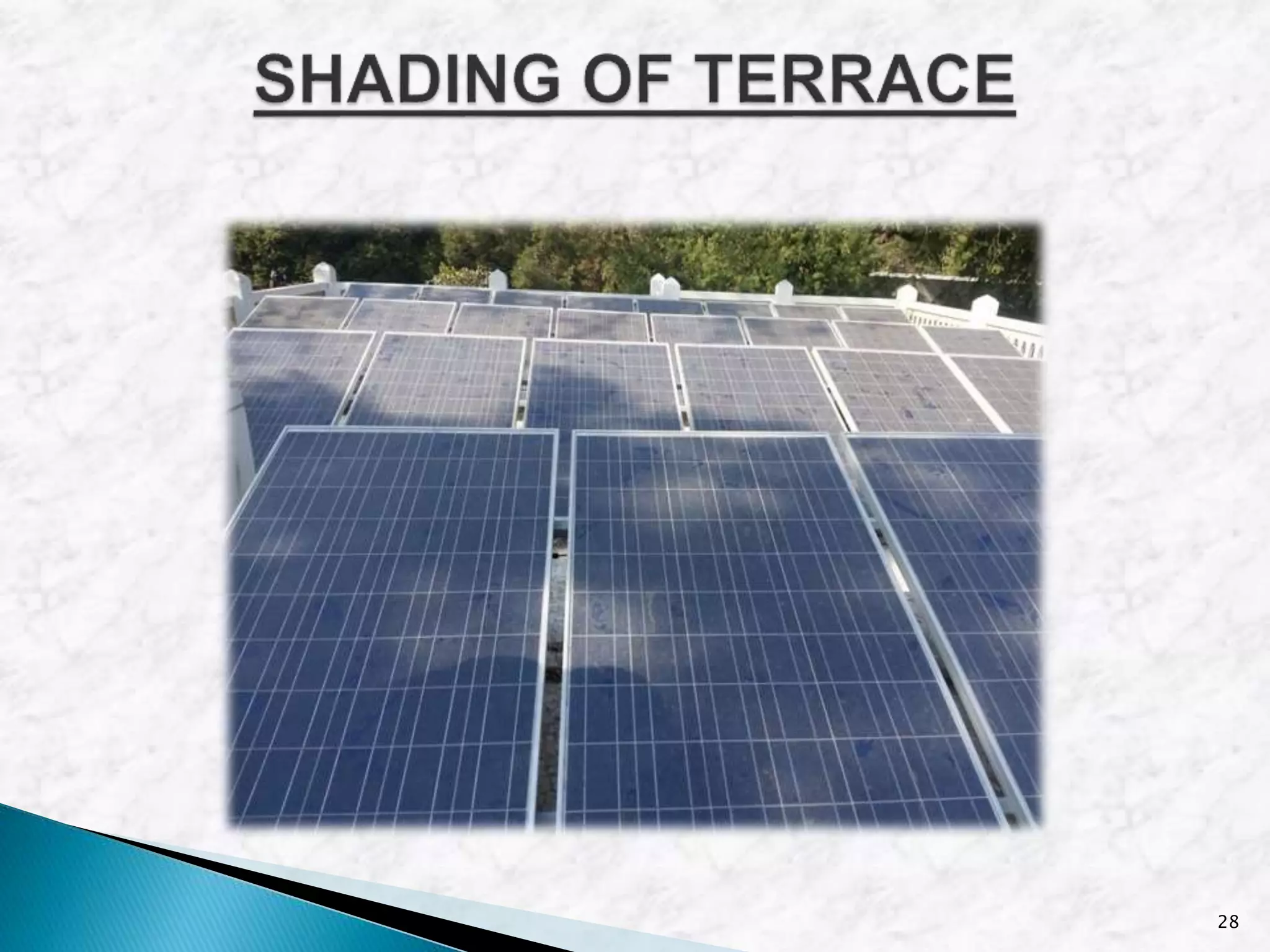
 Shading of Terrace
 Day light & Sky light
 Passive Ventilation via a Turbo Ventilator
 Solar Control with Shading & High Performance
Glazing
 Micro Climate around the Building
26
27
28
29
30
31
32
 Water Optimization
 Rain Water Harvesting
 Ground Water Recharge
33
34
35
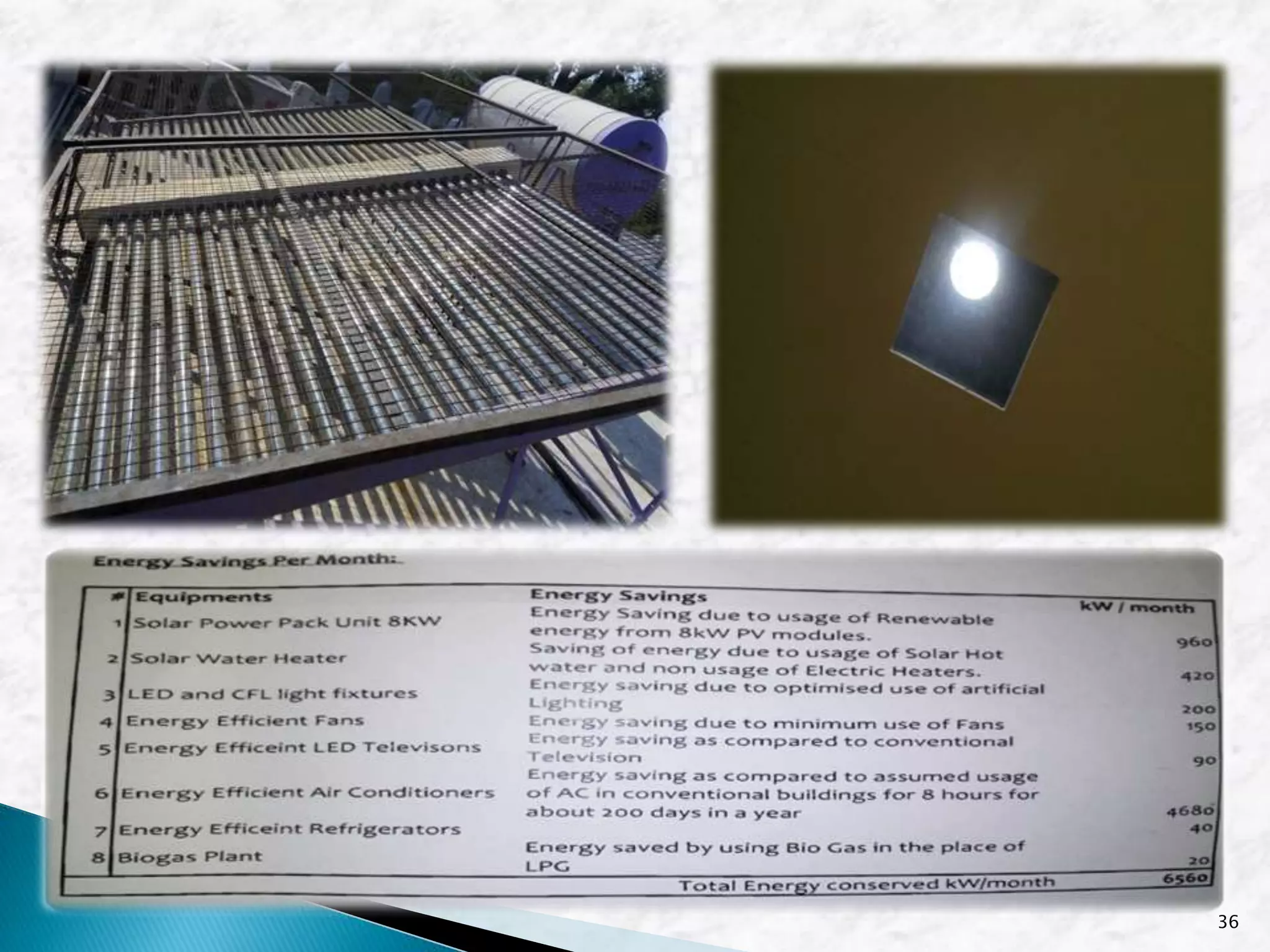
• Energy Optimization
• Energy Generation
36
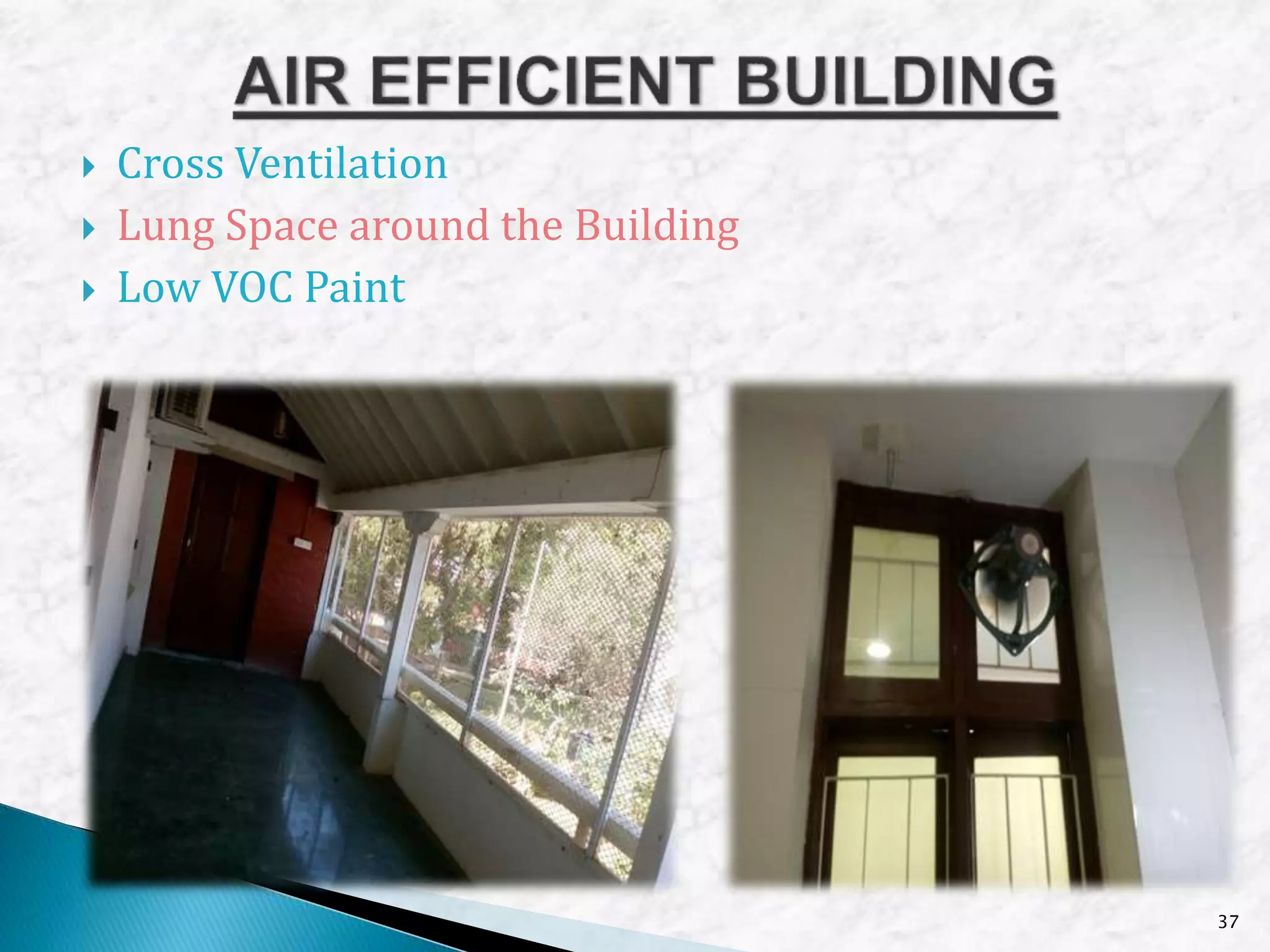
 Cross Ventilation
 Lung Space around the Building
 Low VOC Paint
37
38
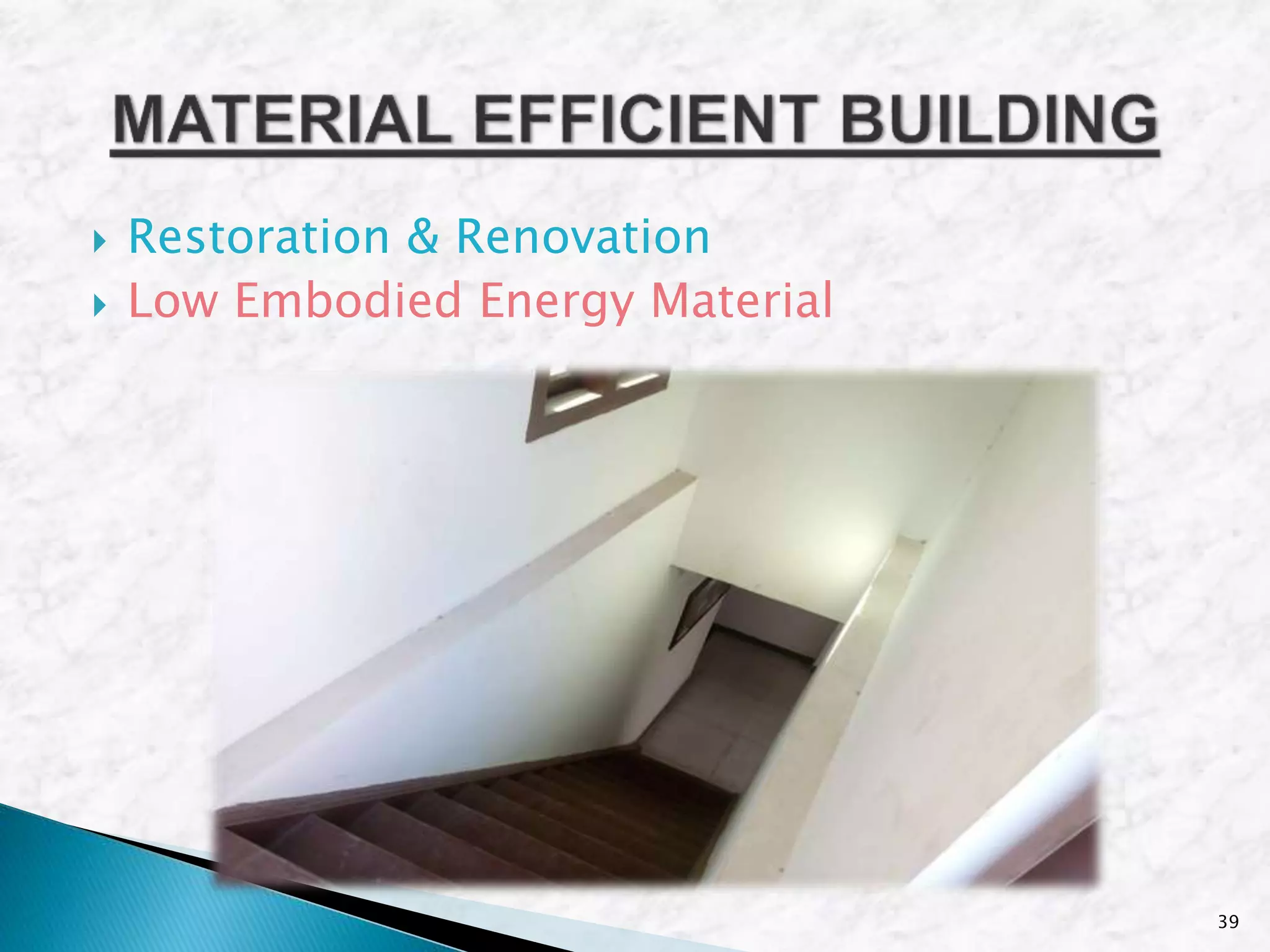
 Restoration & Renovation
 Low Embodied Energy Material
39
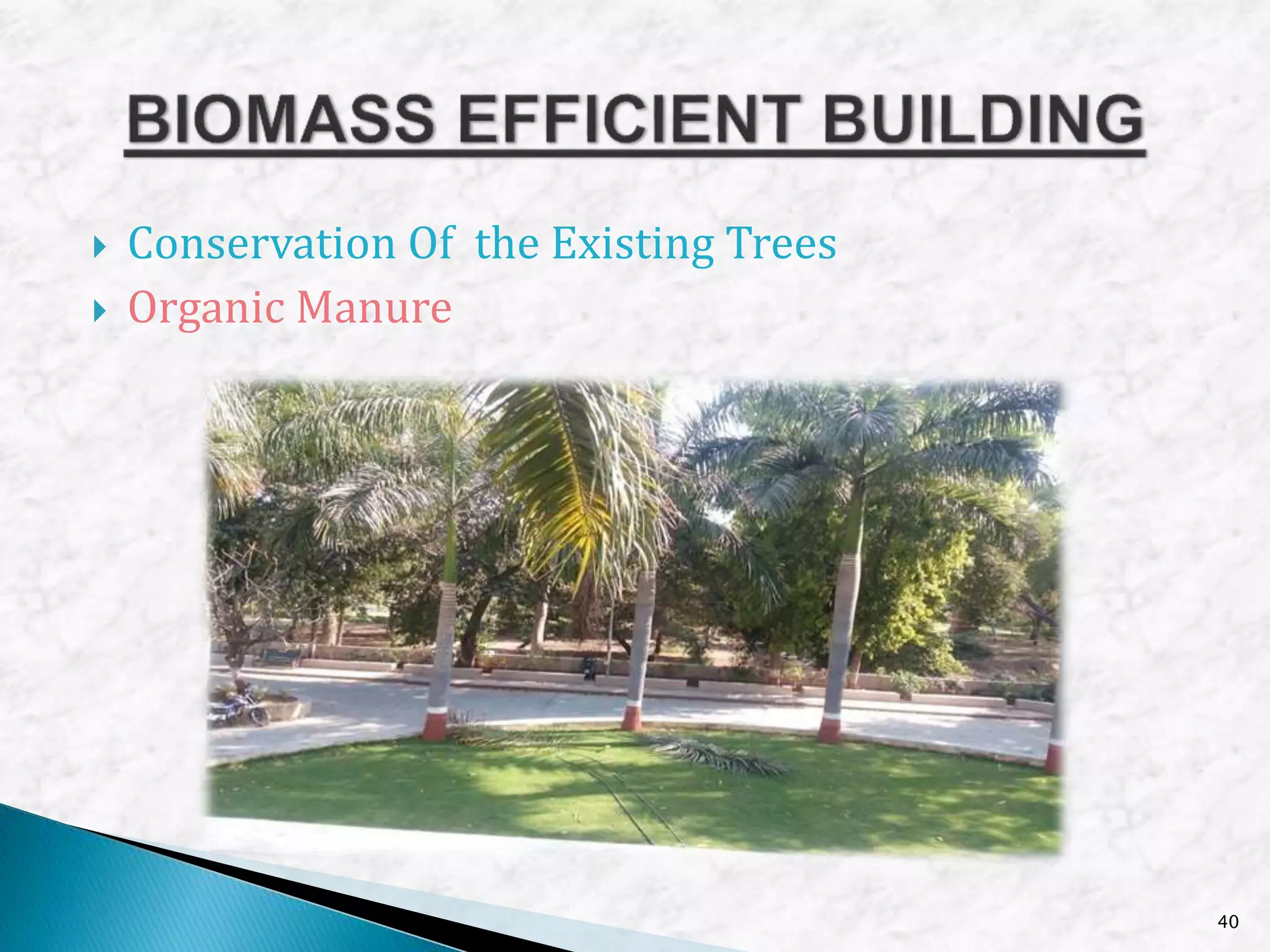
 Conservation Of the Existing Trees
 Organic Manure
40
 Reuse of all Construction Waste
 Composting system of Organic Waste
 Segregation On Site
41
 This building is one of the worlds best example of
passive architectural design .
 At the time of inauguration it was the first building
outside US to be awarded LEED platinum rating.
 The GBC is unofficially worlds most environmental
friendly construction for the use of water and
energy efficient technologies.
 This building is literally made out of recycled
material.
42
 This building does not discharge any waste water
and recycles all the used water.
 The building compromises of two air conditioning
towers where incoming air is cooled up to 7 to 8
degree by spraying water there by reducing the load
of air conditioning energy consumption.
 The roof is covered by gardens as well as solar
photovoltaic thereby reducing the energy
consumption by 60%against a comparable
conventional building.
43
44
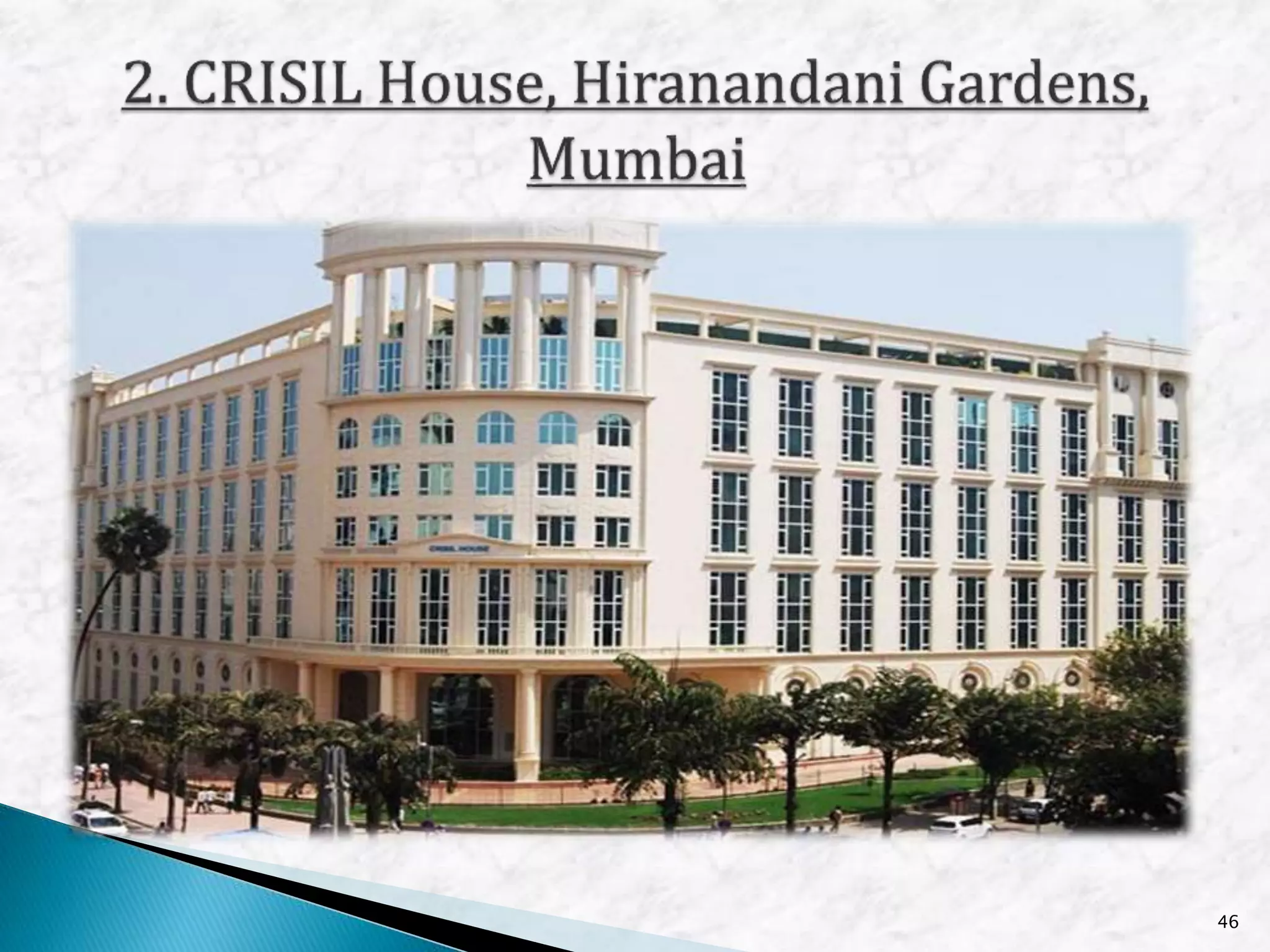
 This building is often dubbed as greenest
commercial complex in India.
 This headquarters of rating agency has 14 gardens
inside the building.
 The building is so designed as 70% of the work
area does not require any artificial lighting during
day.
 All the interiors are made of recycled material.
45
46
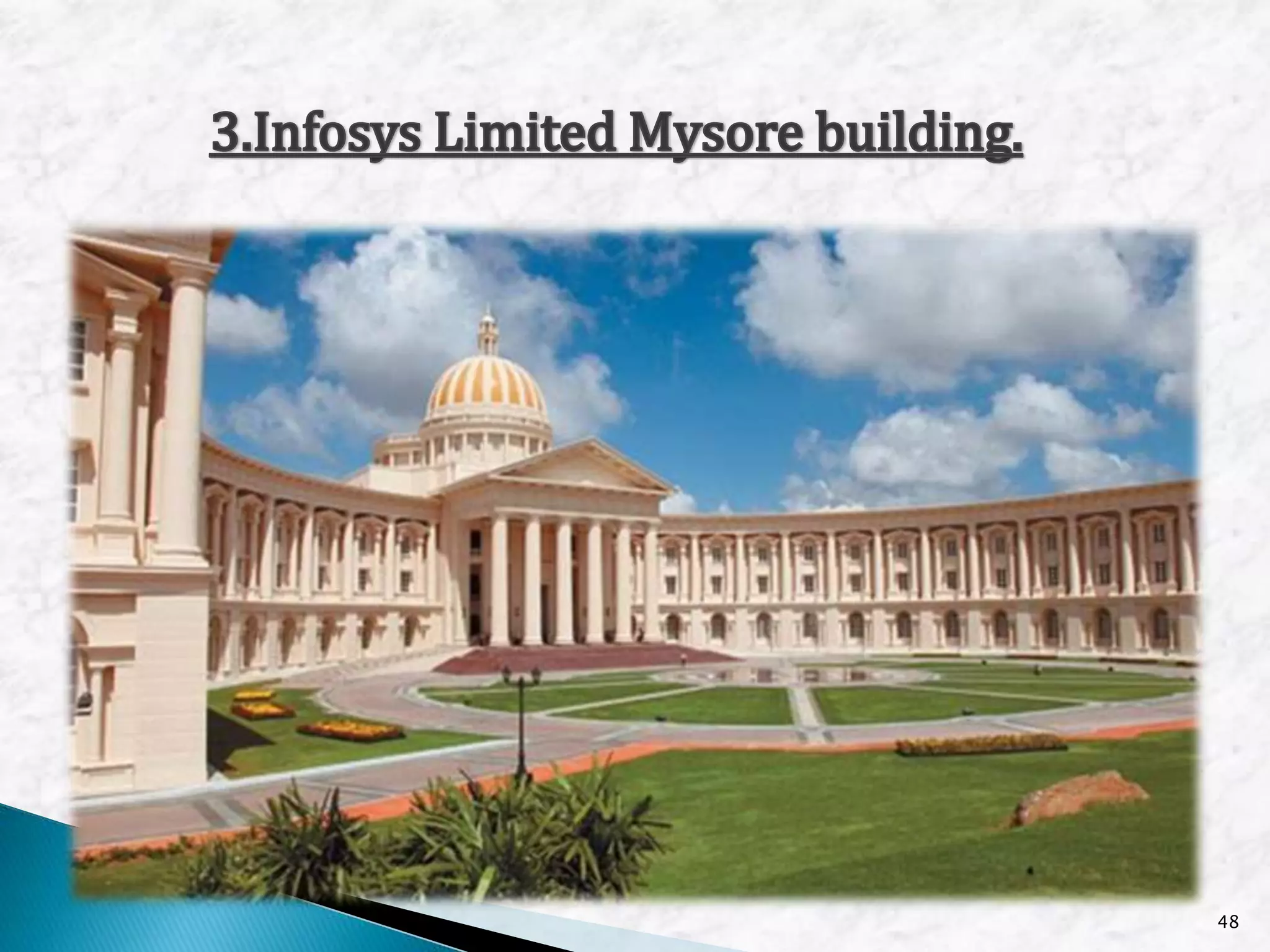
 The overall water consumption of this building is 58%
less as compared to other building of same capacity.
 Most of the waste water is recycled and used for
irrigation purpose.
 The buildings design comprises of an efficient building
envelope, which includes insulated walls and roof,
along with spectrally selective double glazed windows
which are appropriately shaded
 More over, efficient equipment and smart automation
is used across the building that leads to a 40%
reduction in energy cost.
 Almost 90% of the work spaces inside the building
includes light shelves that ensures that natural light
travels as deep as possible inside the building.
47
48
o NILESH KACHOT (37)
o SUMEET HEMNANI (33)
o KEYUR KHETANI (42)
o JAINA KHARVA (41)
MR. N.K. OJHA SIR (Chief Executive Engg. - MSU)
MR. S.N. PARMAR SIR (Deputy Engg. - MSU)
MR. HARDIK BHATT SIR
MR. VYASH SIR
MR. GURUJI SIR
MR. DHAMECHA SIR
MR. MEHUL PATEL SIR
ALL RESPECTED STAFF MEMBERS OF OUR DEPARTMENT
ALL STAFF MEMBERS OF “MSU GUEST HOUSE”
51

Green building, MSU students

  • 1.
  • 3.
     What isgreen Building ?  Importance of green Building  Objectives of green Building  Various rating Systems  Different types of Efficiencies  MSU Guest House  Existing Green buildings in India 3
  • 4.
     Is thisgreen building? 4
  • 5.
    A green buildingis the one that uses less water, optimizes energy efficiency, conserves natural resources, generates less waste and provide healthier space for occupants as compared to a conventional building. We would like to show some awesome constructions that are ancient and available today which are naturally ventilated… 5
  • 6.
  • 7.
  • 8.
     The conceptof green building can be traced to the energy crisis and environmental pollution concerns of 1960s to 1970s.  There are numbers of motives for building green including environmental and economic benefit.  To bring together a vast array of practices techniques and skills to reduce and ultimately eliminate the impacts on environment and humans.  To emphasis on taking advantage of renewable resources. 8
  • 9.
     It enhancesand protects eco system.  It improve air and water quality.  It reduces waste streams.  Conserves and restores natural resources. It operating cost is very less  It improves quality of life.  It improves occupant productivity.  Enhances asset value and profit.  It optimizes life cycle economic performance.  It enhances occupants health and comfort.  It minimizes strain on local area . 9
  • 10.
     India ranks3 among top 10 for LEED green buildings with 1883 certified projects.  With Canada being on the first place with 4814 projects.  China being second with 2022 projects.  And US with 53908 projects but is not considered in ranking. 10
  • 11.
    In India 1). LEED(Leadershipin Energy & Environmental Design) by IGBC (Indian Green Building Council). 2). GRIHA (Green Rating for Integrated Habitat Assessment) by TERI (The Energy Research Institute). In UK:  Breeam Building Establishment Environmental Assessment Method. In japan:  Casbee Comprehensive Assessment system for building environmental efficiency. 11
  • 12.
    12 RATINGS CREDITS REQUIRED LEEDCertified 23-27 LEED Silver 28-33 LEED Gold 34-44 LEED Platinum 45-61 This rating system encompasses five environmental categories : 1. Sustainable sites 2. Water efficiency 3. Energy efficiency 4. Material efficiency 5. Indoor environmental qualities. This system gives 61 credits.
  • 13.
     GRIHA assessesa building out of 34 criteria and awards points on a scale of 100. In order to qualify for GRIHA certification ,a project must achieve at least 50 points.  Projects scoring…. o 1.50-60 points is certified as 1 star GRIHA rated building. o 2.61-70 is a 2 star GRIHA rated building. o 3.71-80 is a 3 star GRIHA rated building. o 4.81-90 is a 4 star GRIHA rated building. o 5.91-100 is a 5 star GRIHA rated building. 13
  • 14.
     Passive architectureshould be adopted to minimize negative impacts on environment.  This contains 2 options . o (a). Climate responsive concepts and design features  E.g. : orientation, skylights, shaded courtyard, shading from trees etc. o (b). Passive cooling/heating technologies  E.g. : wind tower, earth tunnel, geothermal technologies 14
  • 15.
     Erosion ofsoil should be controlled  Fertile topsoil should be stockpiled prior to construction , for future reuse or donation.  Provision for basic amenities so as to reduce negative impact caused from auto mobile use.  Minimum disturbance to the nearby topography or vegetation  Restoration of disturbed site area by design vegetated spaces over built up structure and on the ground, for at leas 30%of the site area. 15
  • 16.
     Reduction inembodied energy & operating energy.  High performance building reduces about 30% of the energy consumption  Studies show that wood has low embodied energy as compared to that of steel and concrete.  Use of high windows and insulation in walls, ceiling and floors to reduce operating energy.  Placing of awnings, porches and trees to shade windows during summer and maximize solar gain in winter. 16
  • 17.
     Efficient heatingand cooling systems.  Building automation system. Energy efficient commercial lighting, such as leds, are used to reduce energy. Reduction of amount of energy lost through heat from out dated lighting system. Automation system are the main sources of energy efficiency in existing buildings. Based on occupancy, outside temperature, light and time of day automation system can reduce energy usage by activating heating, cooling or led lighting only in those area of building where they are necessary. 17
  • 18.
     Reducing waterconsumption and protecting water quality are key objectives of any sustainable building.  Critical issues of water consumptions is that its demand in the particular area exceeds its replenishing ability.  By designing a dual plumbing that recycles water in toilet flushing or by using water for washing the cars  Waste water may be minimized by utilizing water conserving fixtures such as ultra low flush toilets and low flow shower heads.  Bidets help eliminate the use of toilet paper , reducing sewer traffic and increasing possibility of re-using water on site. 18
  • 19.
     Limit theuse of turf on the site, instead plant a native species of the particular area.  Treat waste water generated from site , so as to avoid polluting the receiving streams by safe disposal.  Enhance ground water table usage thus decrease municipal water demand through effective rainwater management. 19
  • 20.
     Green buildingemphasise waste reduction.  Construction wastes & demolition debris are the main wastes produced during construction process & these wastes degrade the quality of environment.  Green building ensures waste reduction by: 1. Reuse & minimisation of construction wastes & debris & diverting them to recycling units. 2. The increased use of recycled contents & waste by- products in construction materials. 3. The use of existing building structure & reclaimed building materials in the core & shell of project. 4. Designing the structure to produce less scrap & execute it according to the plan 20
  • 21.
     Green Buildingsreduce construction wastes by 50% compared with that of similar conventional buildings.  For green building, building materials such as lumbers from forest, recycled stone, recycled metal and any other industrial recycled goods which are non toxic like coals, sand etc are used. 21
  • 22.
     This oneof the five category in LEED standards that concerns with the comforts and well being and productivity of occupants.  Provide adequate air ventilation, so as to avoid pollutants affecting indoor air quality. 22
  • 23.
  • 24.
     The previousbuilding was constructed 90 years back.  Exhibits bunglow type with open space surrounding it.  It served 75 years and since then it was lying unused.  It was deteriorated since last 10 years.  This building was used by East India Company officers before independence & then it along with the other buildings and spaces were given to establish university in 1949 by His Highness Maharaja of Baroda state.  The building due to lack of maintenance and repair got deteriorated and finally was abandoned after . 24
  • 25.
  • 26.
    PASSIVE SOLAR ENERGYCONCEPT:  Optimum Orientation  Triple Skin as a Roofing  Shading of Terrace  Day light & Sky light  Passive Ventilation via a Turbo Ventilator  Solar Control with Shading & High Performance Glazing  Micro Climate around the Building 26
  • 27.
  • 28.
  • 29.
  • 30.
  • 31.
  • 32.
  • 33.
     Water Optimization Rain Water Harvesting  Ground Water Recharge 33
  • 34.
  • 35.
  • 36.
  • 37.
     Cross Ventilation Lung Space around the Building  Low VOC Paint 37
  • 38.
  • 39.
     Restoration &Renovation  Low Embodied Energy Material 39
  • 40.
     Conservation Ofthe Existing Trees  Organic Manure 40
  • 41.
     Reuse ofall Construction Waste  Composting system of Organic Waste  Segregation On Site 41
  • 42.
     This buildingis one of the worlds best example of passive architectural design .  At the time of inauguration it was the first building outside US to be awarded LEED platinum rating.  The GBC is unofficially worlds most environmental friendly construction for the use of water and energy efficient technologies.  This building is literally made out of recycled material. 42
  • 43.
     This buildingdoes not discharge any waste water and recycles all the used water.  The building compromises of two air conditioning towers where incoming air is cooled up to 7 to 8 degree by spraying water there by reducing the load of air conditioning energy consumption.  The roof is covered by gardens as well as solar photovoltaic thereby reducing the energy consumption by 60%against a comparable conventional building. 43
  • 44.
  • 45.
     This buildingis often dubbed as greenest commercial complex in India.  This headquarters of rating agency has 14 gardens inside the building.  The building is so designed as 70% of the work area does not require any artificial lighting during day.  All the interiors are made of recycled material. 45
  • 46.
  • 47.
     The overallwater consumption of this building is 58% less as compared to other building of same capacity.  Most of the waste water is recycled and used for irrigation purpose.  The buildings design comprises of an efficient building envelope, which includes insulated walls and roof, along with spectrally selective double glazed windows which are appropriately shaded  More over, efficient equipment and smart automation is used across the building that leads to a 40% reduction in energy cost.  Almost 90% of the work spaces inside the building includes light shelves that ensures that natural light travels as deep as possible inside the building. 47
  • 48.
  • 49.
    o NILESH KACHOT(37) o SUMEET HEMNANI (33) o KEYUR KHETANI (42) o JAINA KHARVA (41)
  • 50.
    MR. N.K. OJHASIR (Chief Executive Engg. - MSU) MR. S.N. PARMAR SIR (Deputy Engg. - MSU) MR. HARDIK BHATT SIR MR. VYASH SIR MR. GURUJI SIR MR. DHAMECHA SIR MR. MEHUL PATEL SIR ALL RESPECTED STAFF MEMBERS OF OUR DEPARTMENT ALL STAFF MEMBERS OF “MSU GUEST HOUSE”
  • 51.