Graphic and Visual Aids
0
1
2
3
4
5
6
7
8
9
10
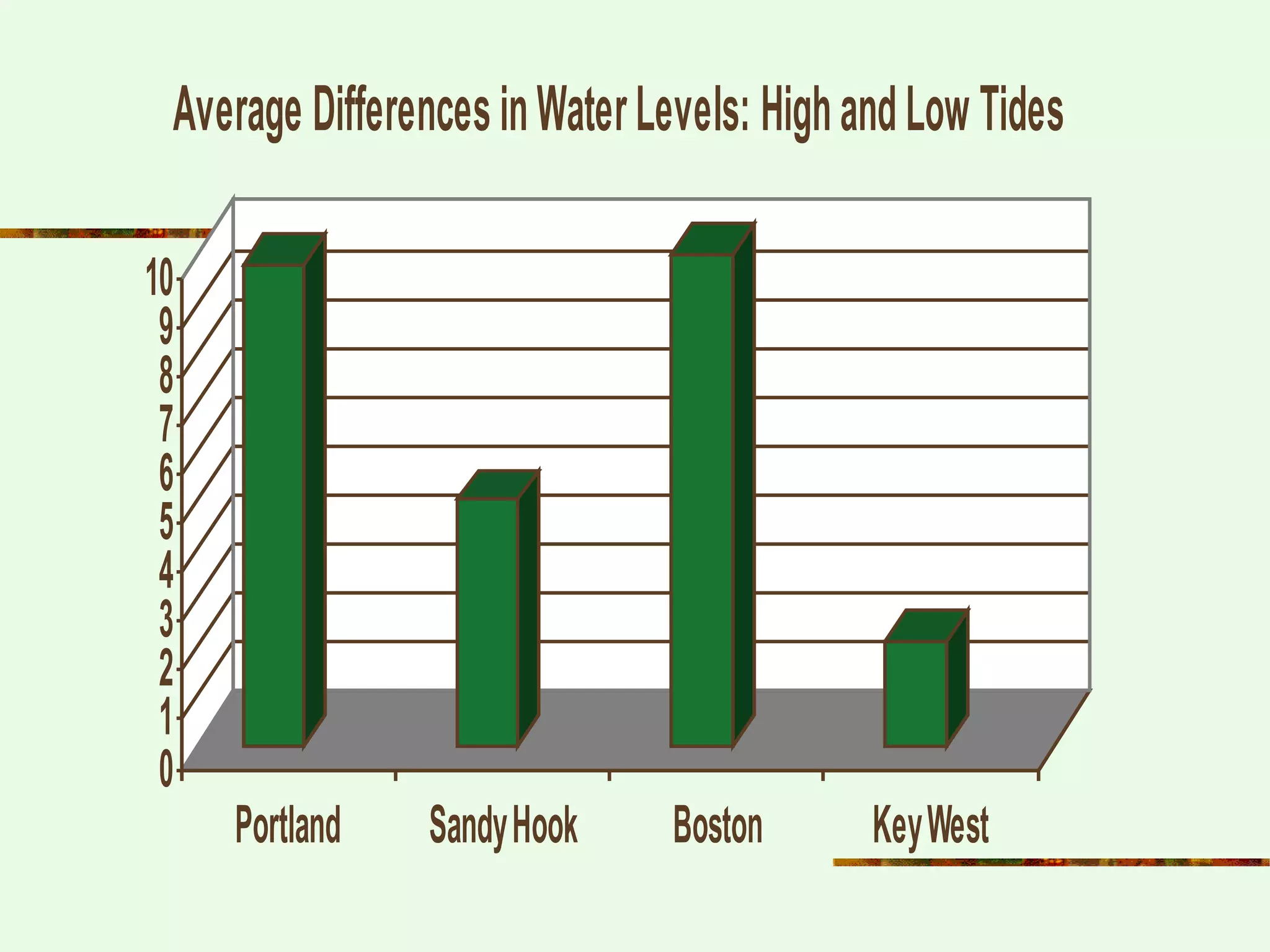
Portland SandyHook Boston KeyWest
Average DifferencesinWaterLevels: HighandLow Tides
4
Definition
Graphic aids present information in
pictorial form or in other specific
formats in order to consolidate, clarify,
or prove the written material they go
with.
Too often graphs, diagrams, charts and
tables are casually glanced over or
bypassed completely by readers.
5
Purpose
 Visual aids are designed to summarize information.
Sometimes the amount of data is so large that an aid is
the only practical way of making the information
accessible.
 Visual aids allow the writer to explain complex ideas
more concretely, and the reader to visualize abstract
concepts.
 Visuals aids can even present new or additional
information to the written text.
6
The General Strategy for
Interpreting Graphs
n 1. Read the title. It usually tells the topic.
n 2. Look at the source of the information.
n 3. Read any accompanying explanation.
n 4. Read the legend (small explanatory table or list of symbols)
n if there is one.
n 5. Read the labels on the parts of the graph.
n 6. Determine what is being measured or compared and the
n units of measurement.
n 7. Look for trends or patterns.
n 8. Think about how the graph illustrates, clarifies, or proves
n the material it accompanies.
n 9. Draw the important conclusions.
7
Line Graphs
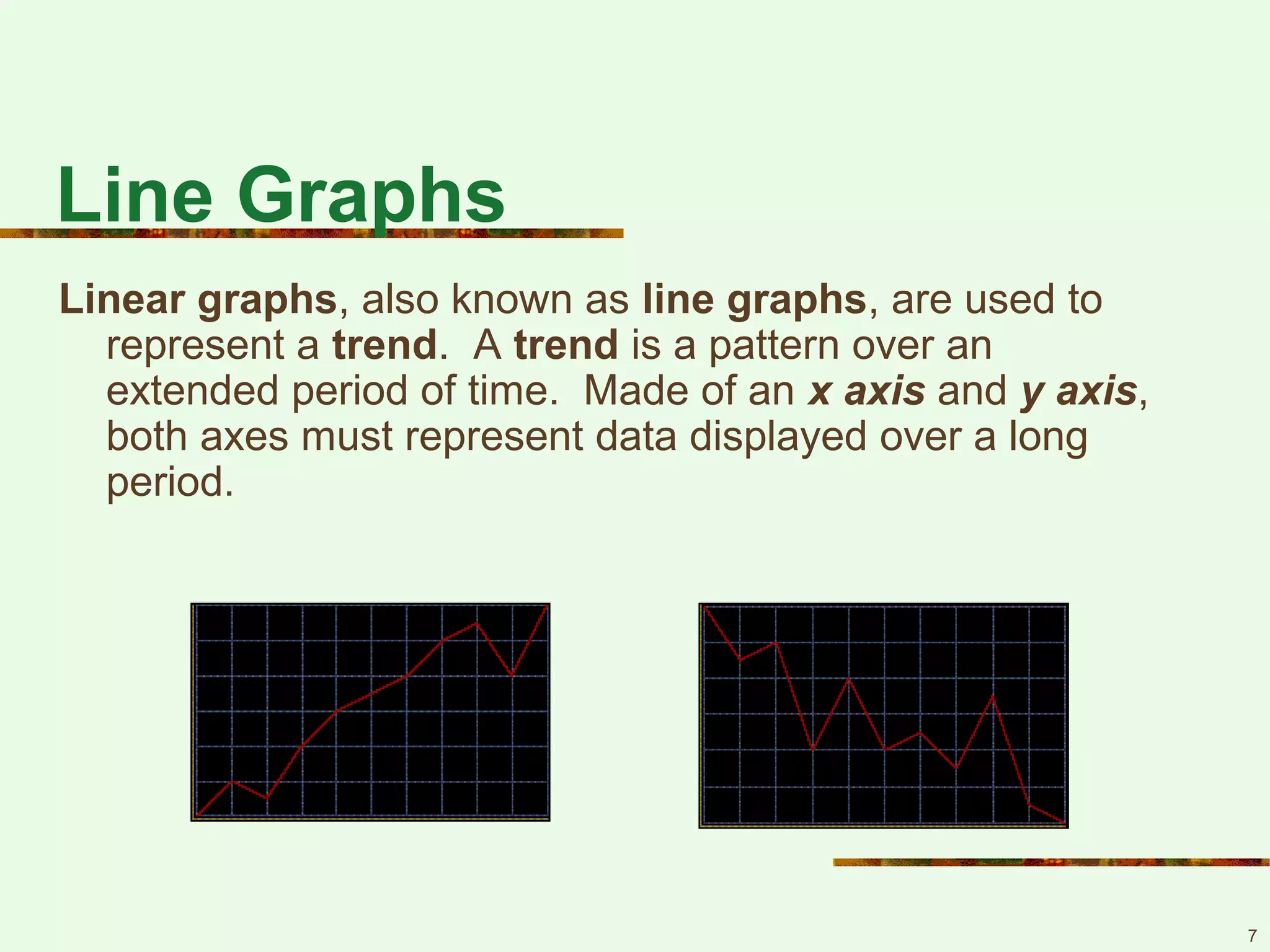
Linear graphs, also known as line graphs, are used to
represent a trend. A trend is a pattern over an
extended period of time. Made of an x axis and y axis,
both axes must represent data displayed over a long
period.
Line Graphs
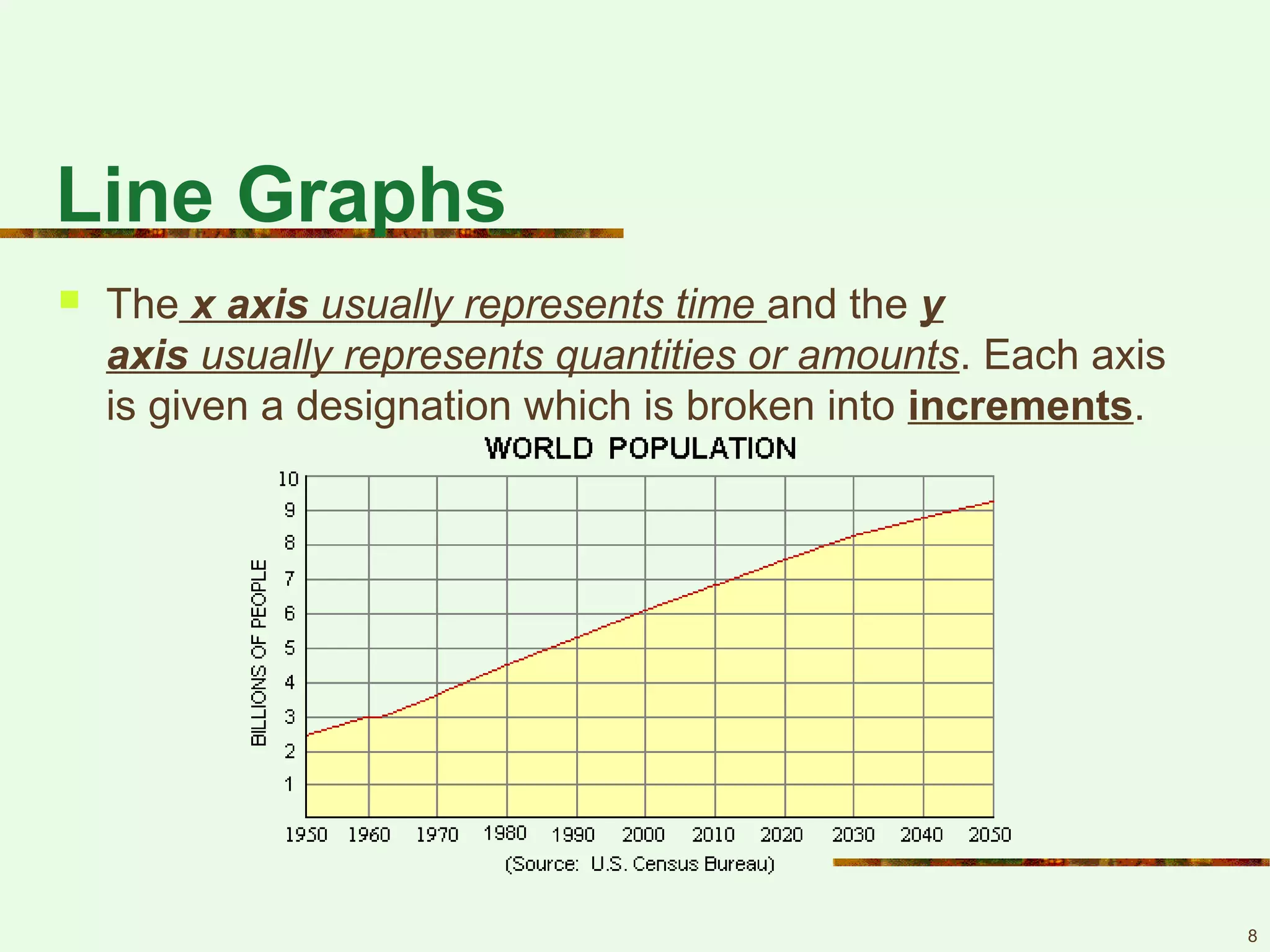
 The x axis usually represents time and the y
axis usually represents quantities or amounts. Each axis
is given a designation which is broken into increments.
8
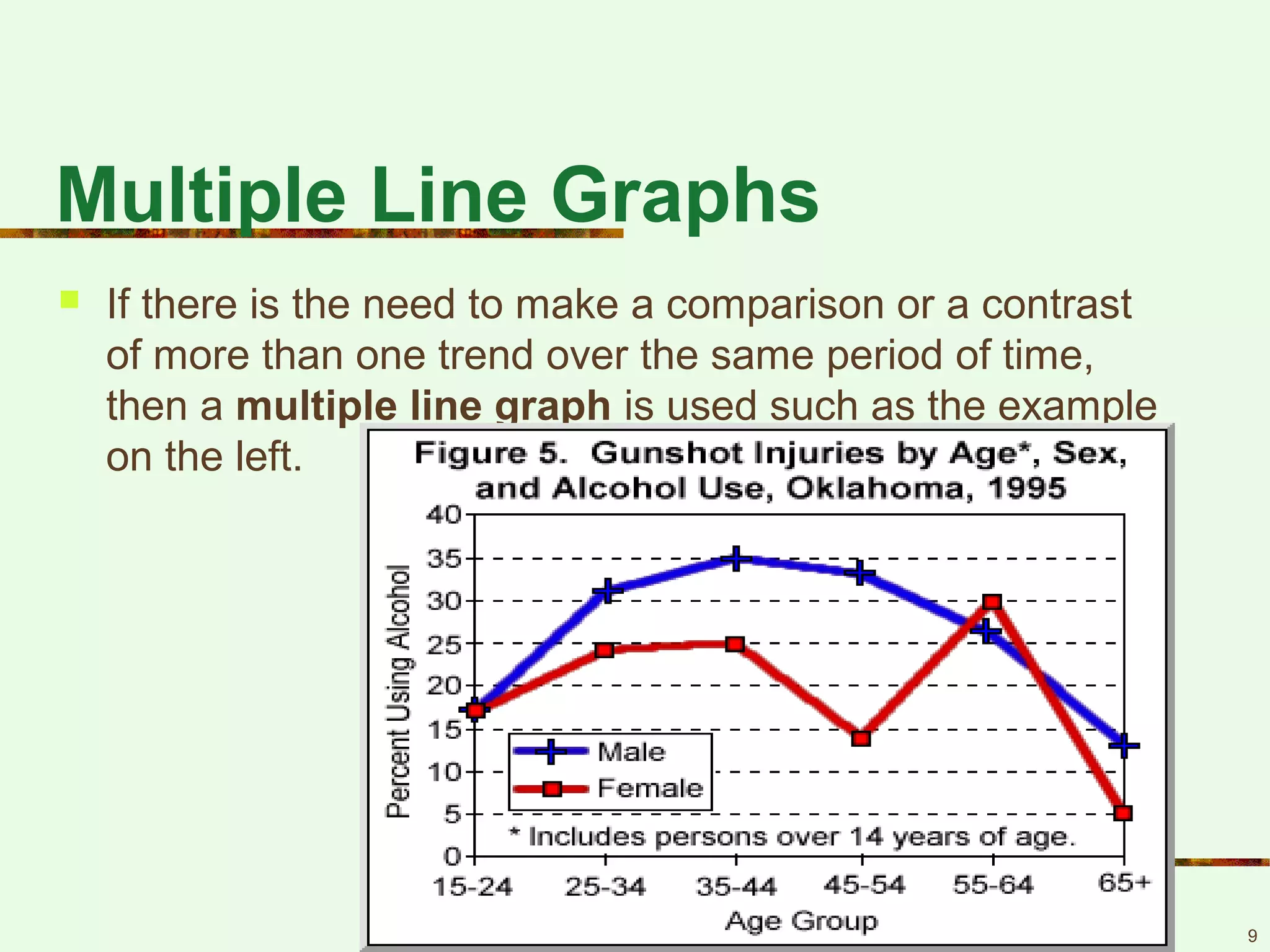
Multiple Line Graphs
 If there is the need to make a comparison or a contrast
of more than one trend over the same period of time,
then a multiple line graph is used such as the example
on the left.
9
10
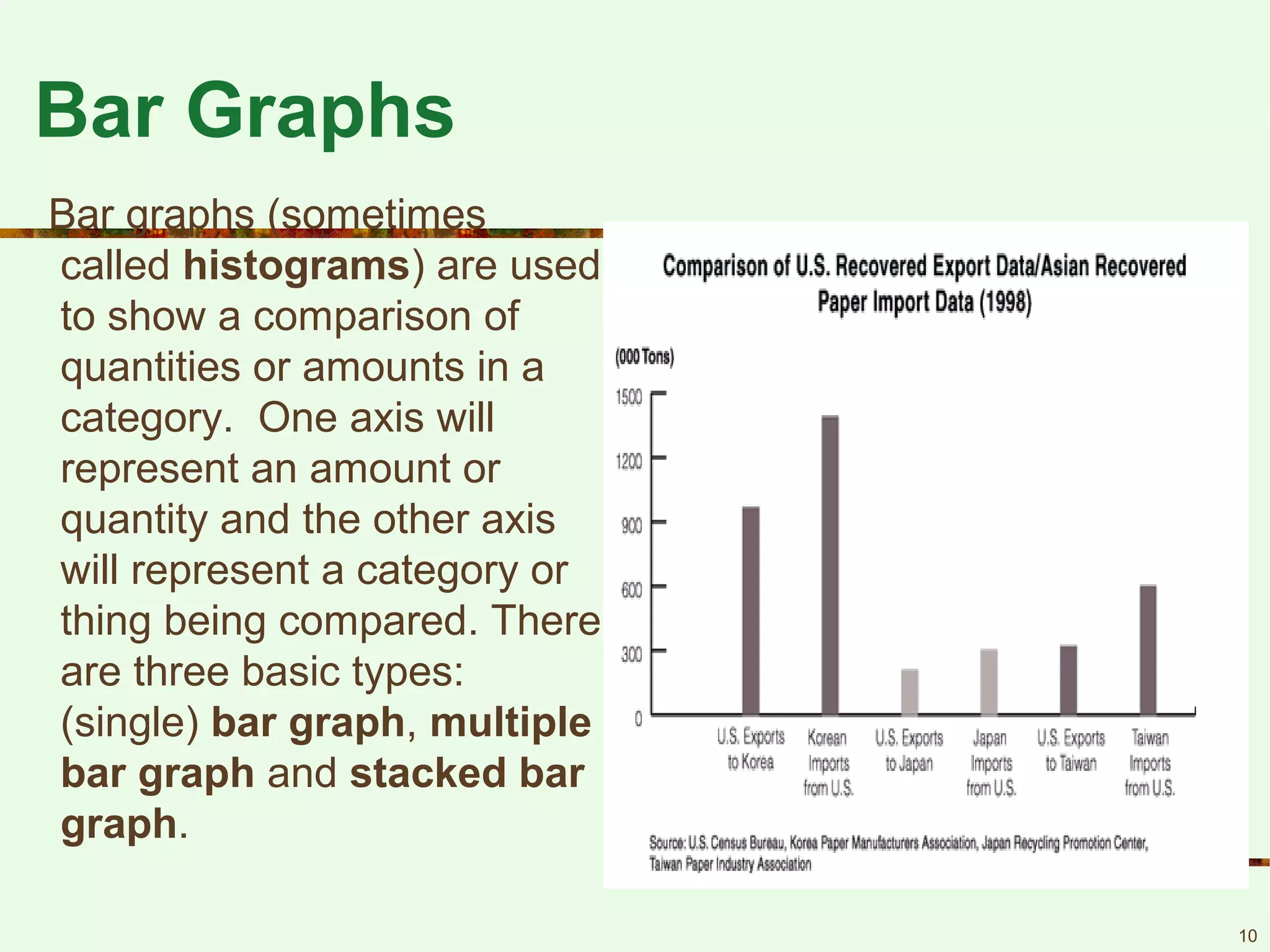
Bar Graphs
Bar graphs (sometimes
called histograms) are used
to show a comparison of
quantities or amounts in a
category. One axis will
represent an amount or
quantity and the other axis
will represent a category or
thing being compared. There
are three basic types:
(single) bar graph, multiple
bar graph and stacked bar
graph.
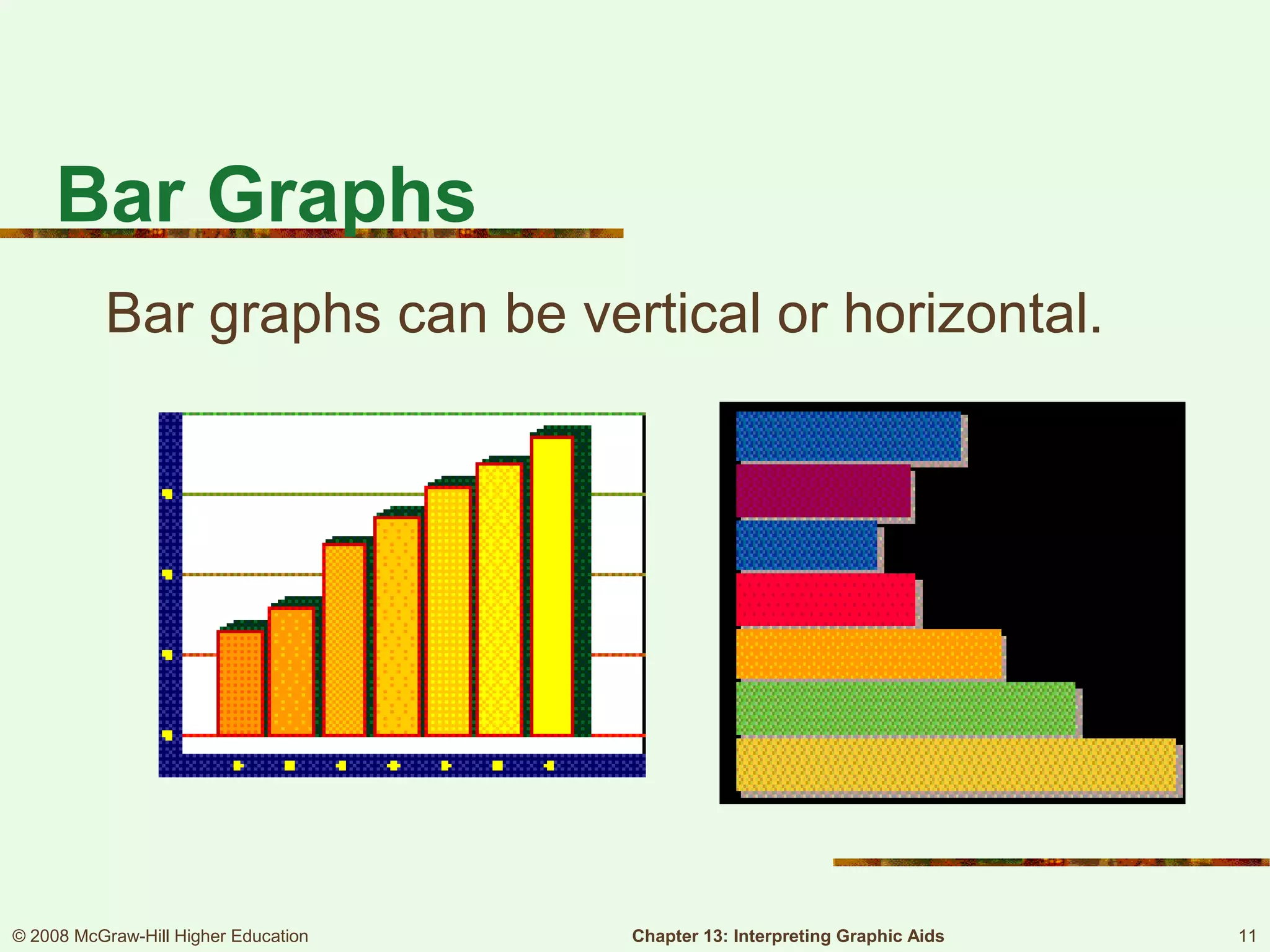
Bar Graphs
Bar graphs can be vertical or horizontal.
© 2008 McGraw-Hill Higher Education Chapter 13: Interpreting Graphic Aids 11
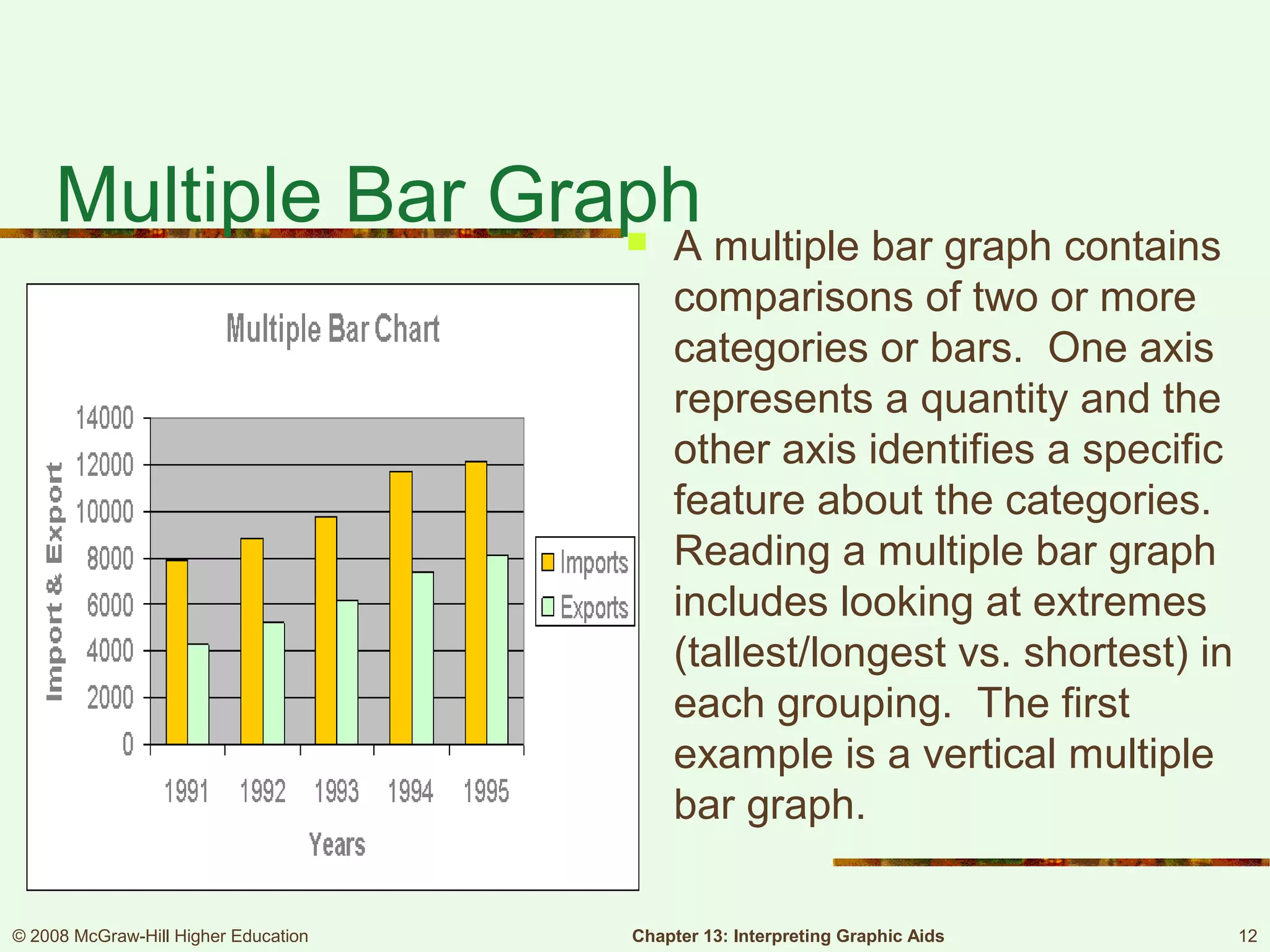
Multiple Bar Graph A multiple bar graph contains
comparisons of two or more
categories or bars. One axis
represents a quantity and the
other axis identifies a specific
feature about the categories.
Reading a multiple bar graph
includes looking at extremes
(tallest/longest vs. shortest) in
each grouping. The first
example is a vertical multiple
bar graph.
© 2008 McGraw-Hill Higher Education Chapter 13: Interpreting Graphic Aids 12
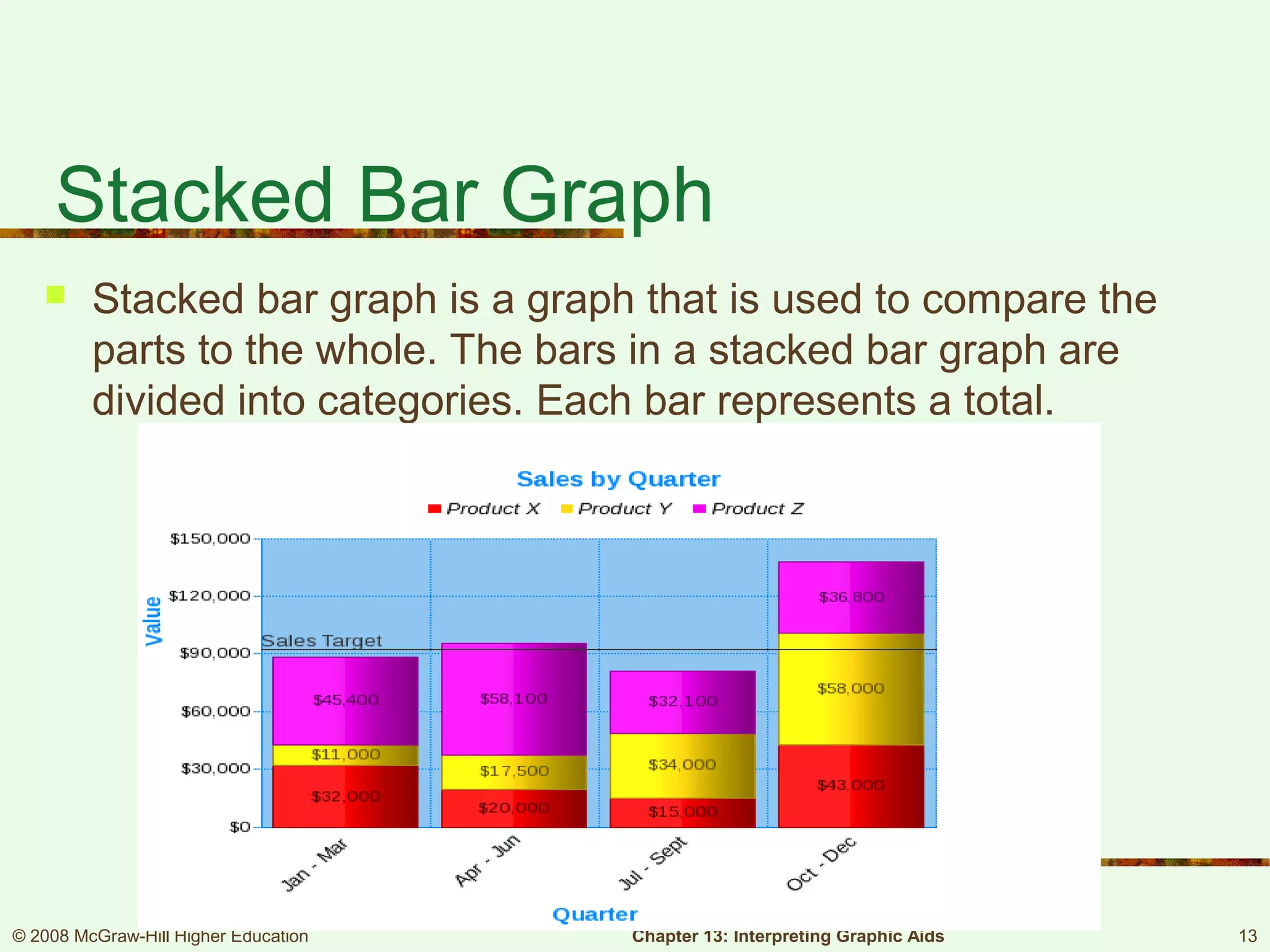
Stacked Bar Graph
 Stacked bar graph is a graph that is used to compare the
parts to the whole. The bars in a stacked bar graph are
divided into categories. Each bar represents a total.
© 2008 McGraw-Hill Higher Education Chapter 13: Interpreting Graphic Aids 13
14
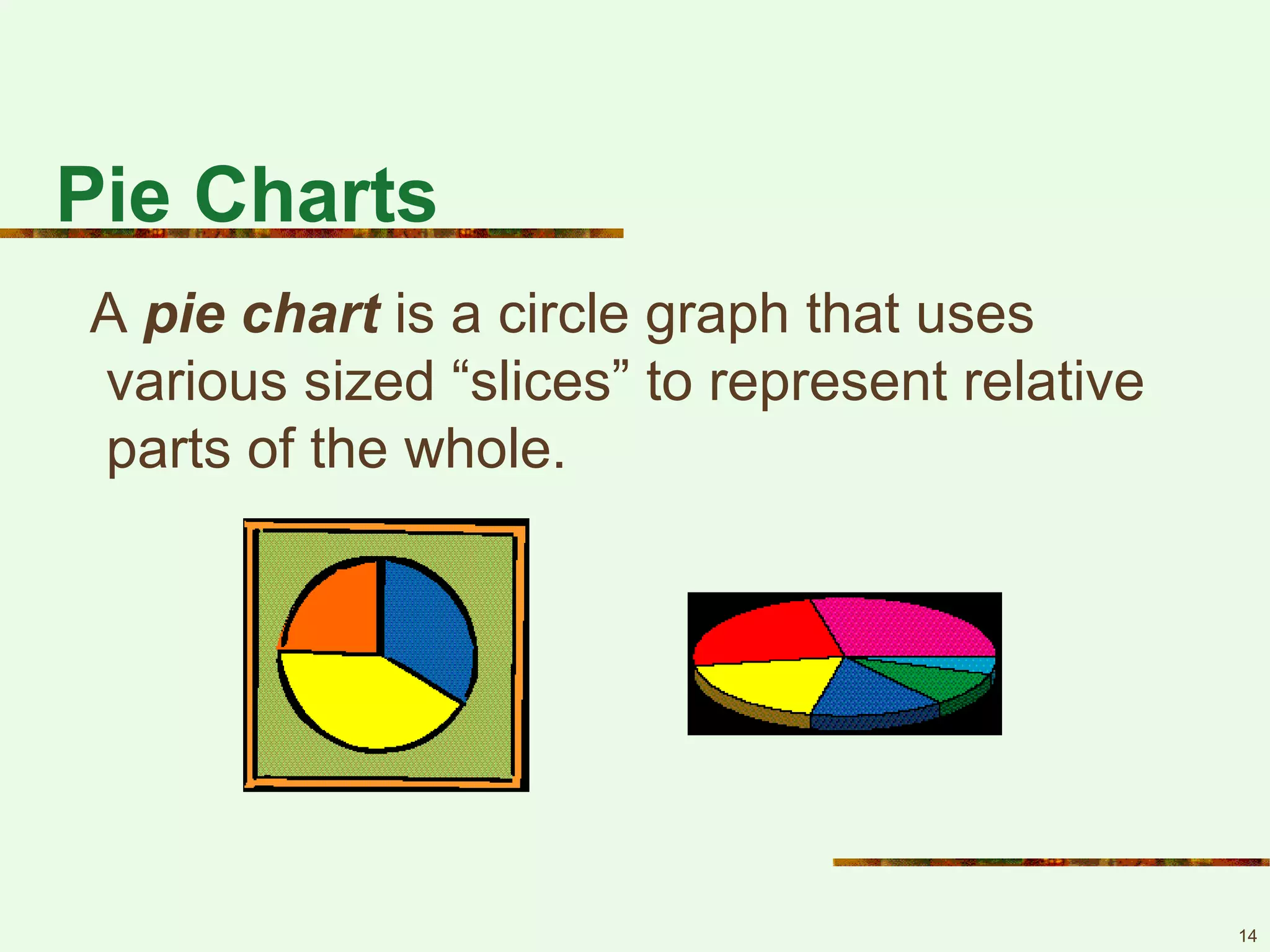
Pie Charts
A pie chart is a circle graph that uses
various sized “slices” to represent relative
parts of the whole.
15
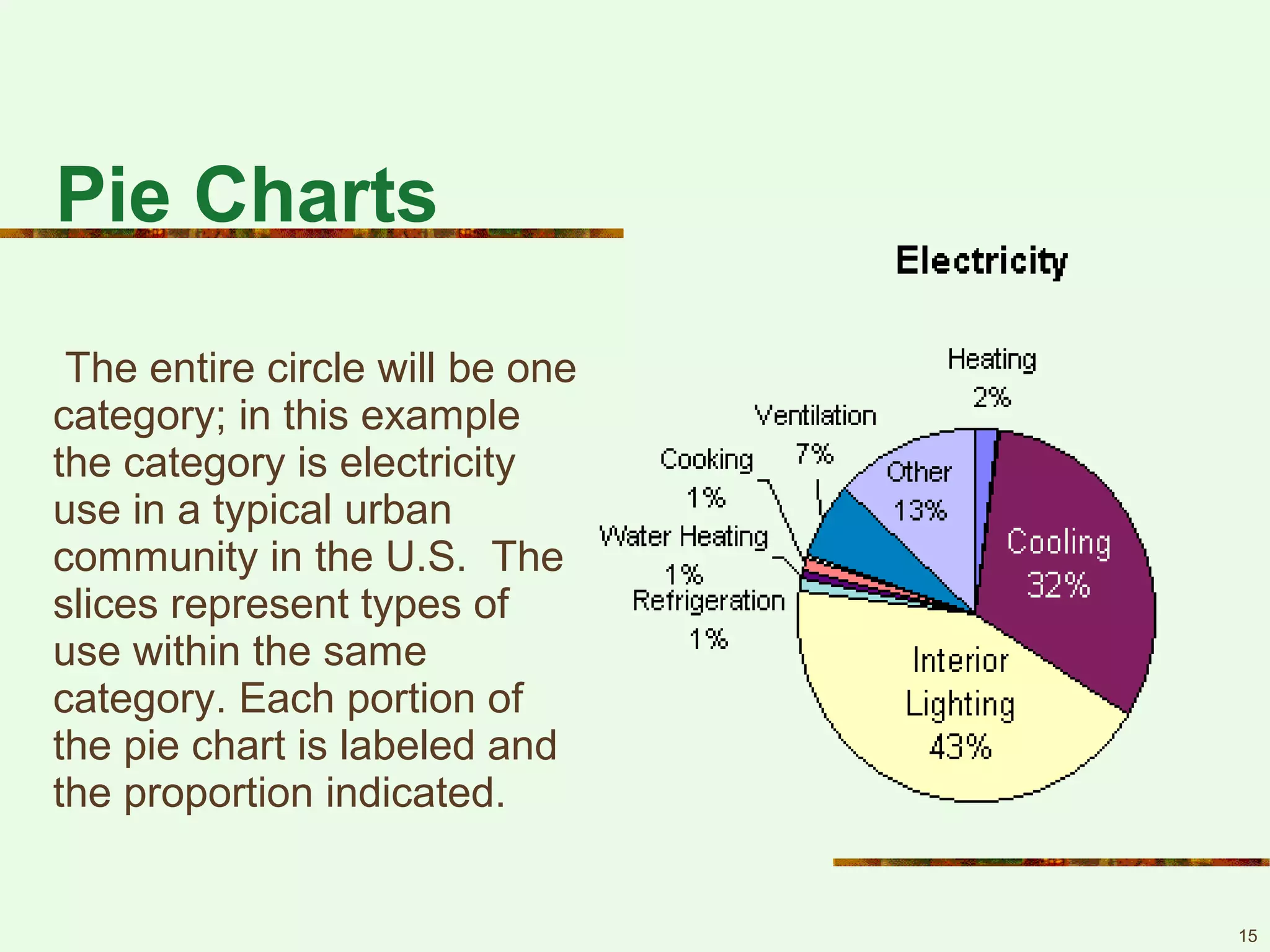
Pie Charts
The entire circle will be one
category; in this example
the category is electricity
use in a typical urban
community in the U.S. The
slices represent types of
use within the same
category. Each portion of
the pie chart is labeled and
the proportion indicated.
16
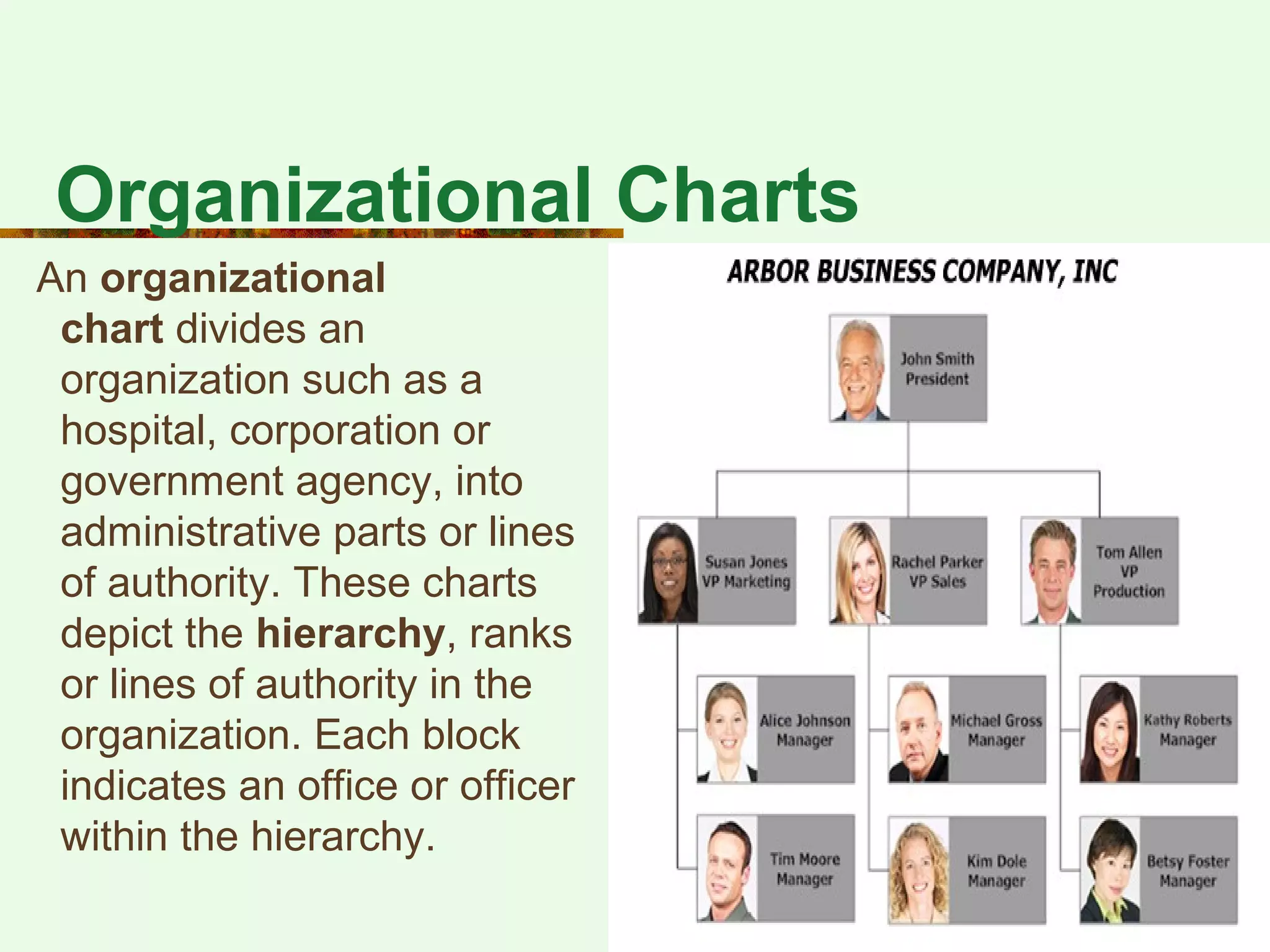
Organizational Charts
An organizational
chart divides an
organization such as a
hospital, corporation or
government agency, into
administrative parts or lines
of authority. These charts
depict the hierarchy, ranks
or lines of authority in the
organization. Each block
indicates an office or officer
within the hierarchy.
17
Flowcharts
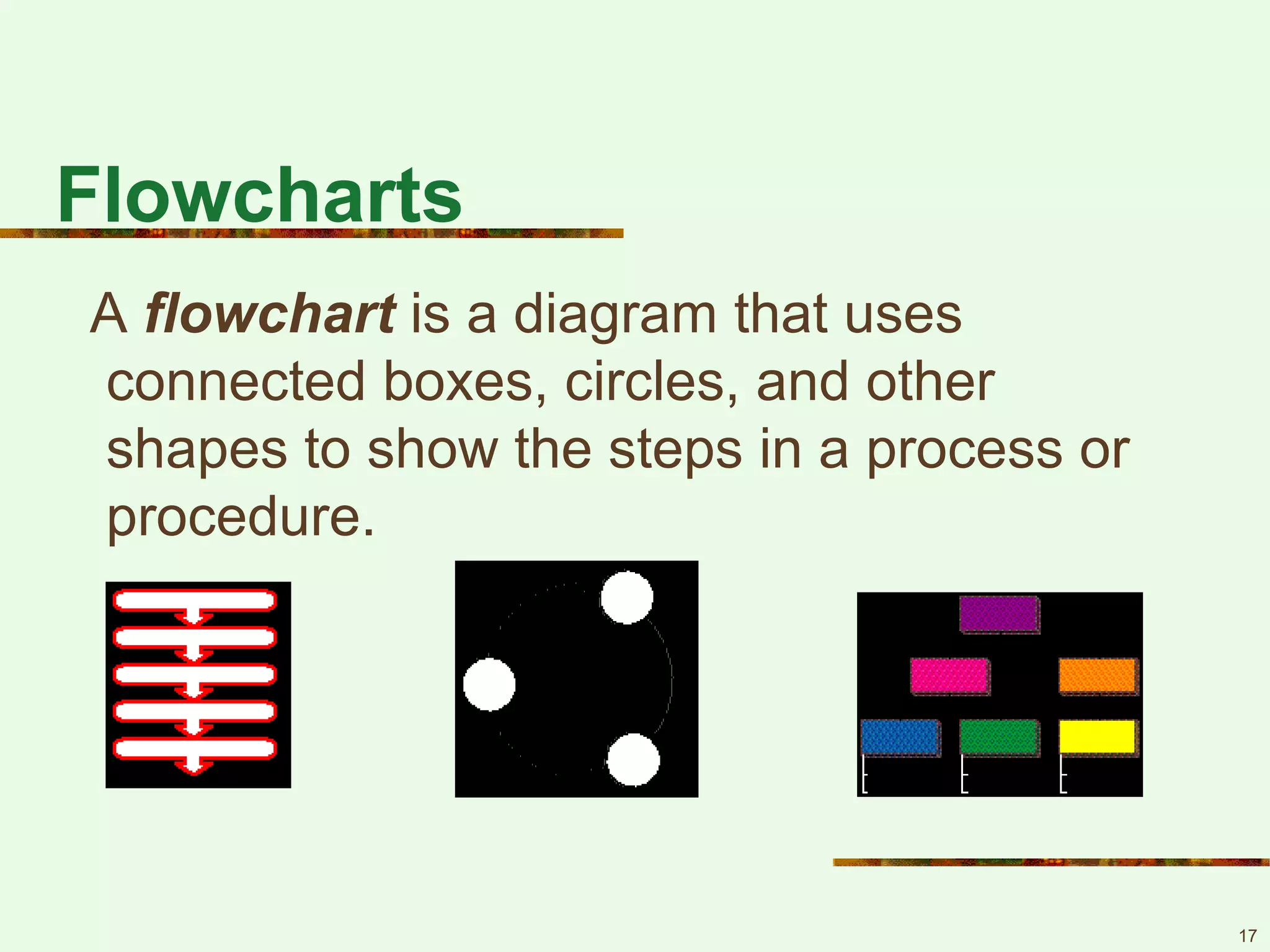
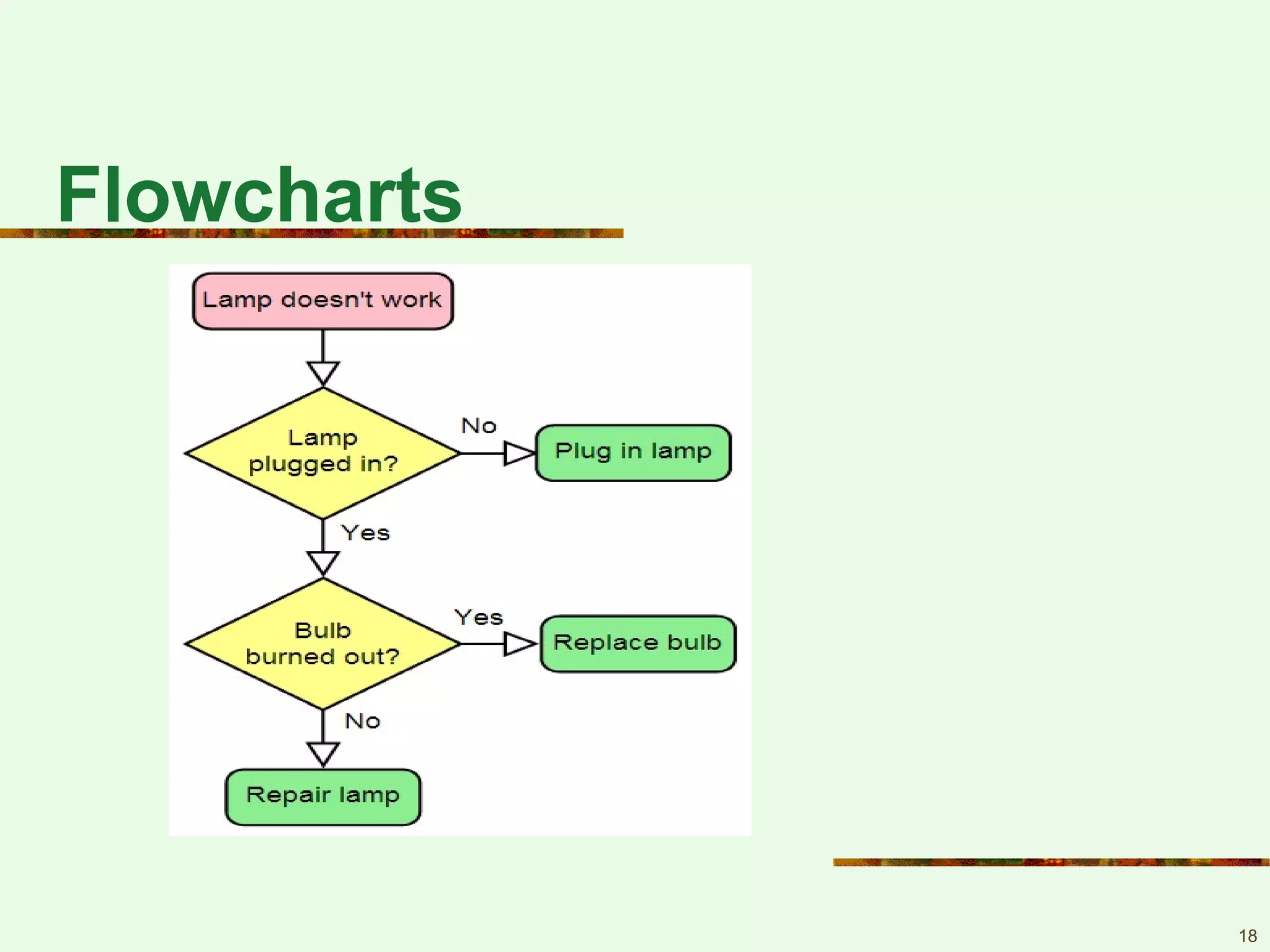
A flowchart is a diagram that uses
connected boxes, circles, and other
shapes to show the steps in a process or
procedure.
18
Flowcharts
Diagrams
19
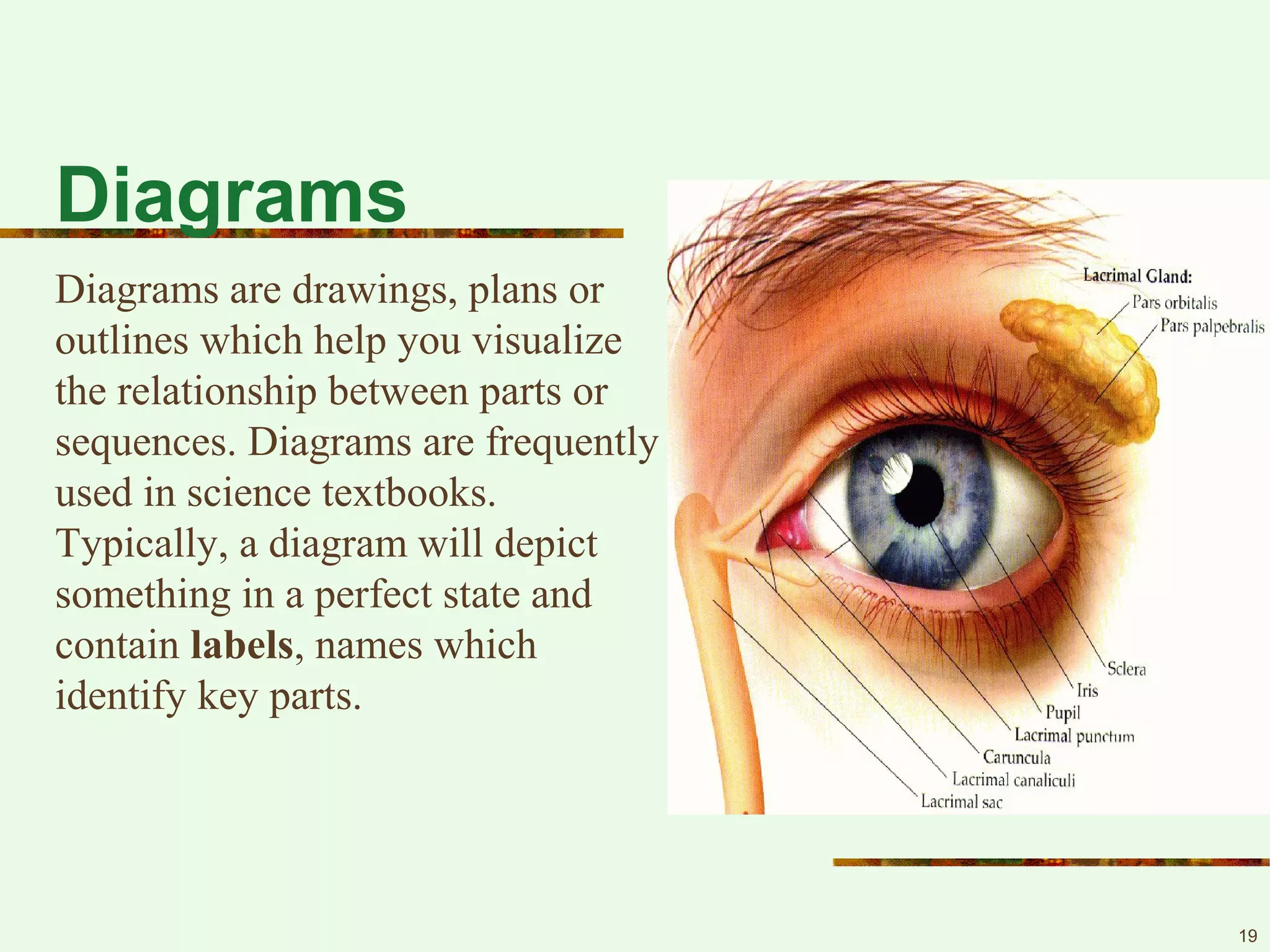
Diagrams are drawings, plans or
outlines which help you visualize
the relationship between parts or
sequences. Diagrams are frequently
used in science textbooks.
Typically, a diagram will depict
something in a perfect state and
contain labels, names which
identify key parts.
20
Tables
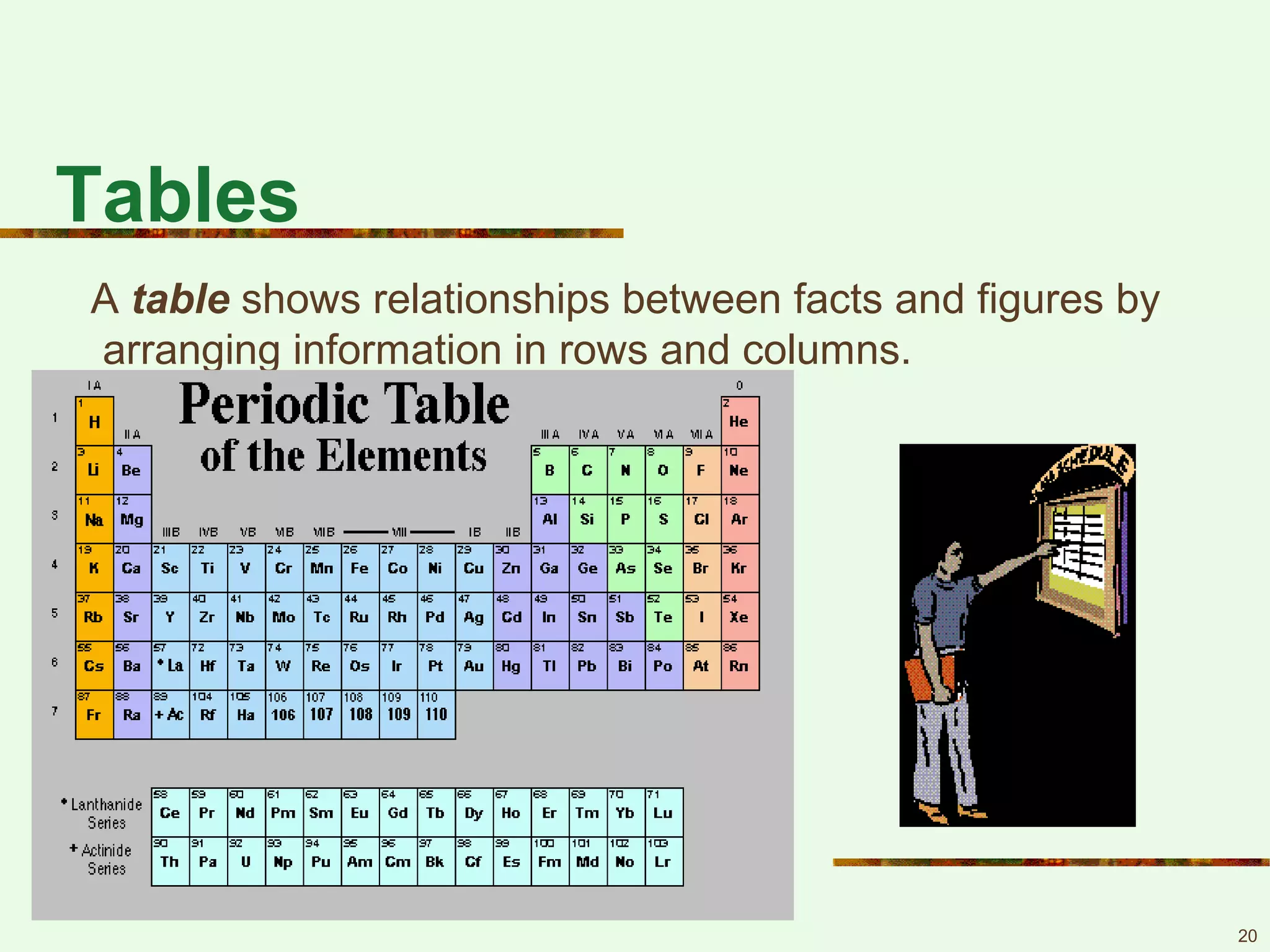
A table shows relationships between facts and figures by
arranging information in rows and columns.
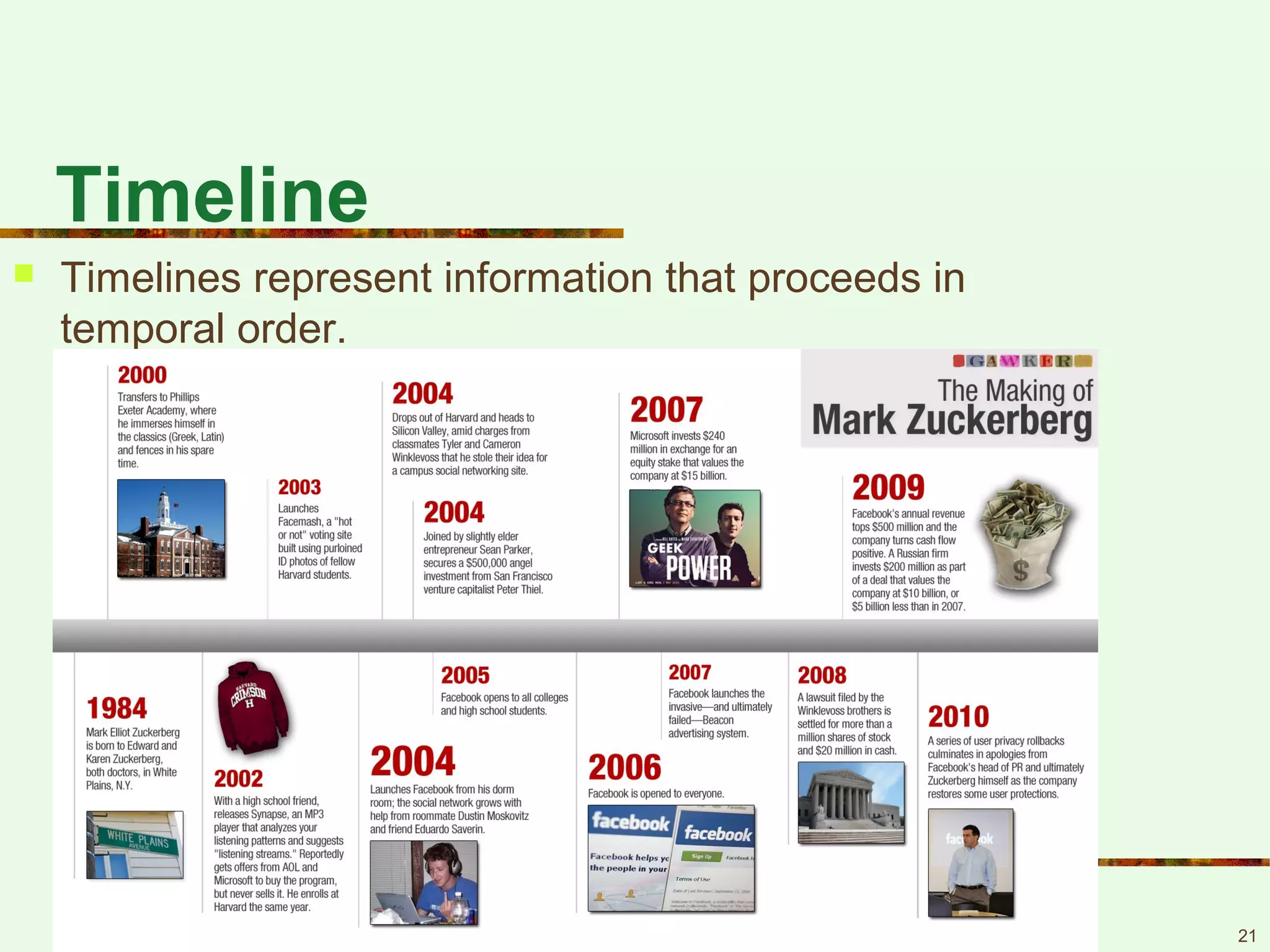
Timeline
 Timelines represent information that proceeds in
temporal order.
21

Graphs and visual aids 11

  • 1.
  • 3.
    0 1 2 3 4 5 6 7 8 9 10 Portland SandyHook BostonKeyWest Average DifferencesinWaterLevels: HighandLow Tides
  • 4.
    4 Definition Graphic aids presentinformation in pictorial form or in other specific formats in order to consolidate, clarify, or prove the written material they go with. Too often graphs, diagrams, charts and tables are casually glanced over or bypassed completely by readers.
  • 5.
    5 Purpose  Visual aidsare designed to summarize information. Sometimes the amount of data is so large that an aid is the only practical way of making the information accessible.  Visual aids allow the writer to explain complex ideas more concretely, and the reader to visualize abstract concepts.  Visuals aids can even present new or additional information to the written text.
  • 6.
    6 The General Strategyfor Interpreting Graphs n 1. Read the title. It usually tells the topic. n 2. Look at the source of the information. n 3. Read any accompanying explanation. n 4. Read the legend (small explanatory table or list of symbols) n if there is one. n 5. Read the labels on the parts of the graph. n 6. Determine what is being measured or compared and the n units of measurement. n 7. Look for trends or patterns. n 8. Think about how the graph illustrates, clarifies, or proves n the material it accompanies. n 9. Draw the important conclusions.
  • 7.
    7 Line Graphs Linear graphs,also known as line graphs, are used to represent a trend. A trend is a pattern over an extended period of time. Made of an x axis and y axis, both axes must represent data displayed over a long period.
  • 8.
    Line Graphs  Thex axis usually represents time and the y axis usually represents quantities or amounts. Each axis is given a designation which is broken into increments. 8
  • 9.
    Multiple Line Graphs If there is the need to make a comparison or a contrast of more than one trend over the same period of time, then a multiple line graph is used such as the example on the left. 9
  • 10.
    10 Bar Graphs Bar graphs(sometimes called histograms) are used to show a comparison of quantities or amounts in a category. One axis will represent an amount or quantity and the other axis will represent a category or thing being compared. There are three basic types: (single) bar graph, multiple bar graph and stacked bar graph.
  • 11.
    Bar Graphs Bar graphscan be vertical or horizontal. © 2008 McGraw-Hill Higher Education Chapter 13: Interpreting Graphic Aids 11
  • 12.
    Multiple Bar GraphA multiple bar graph contains comparisons of two or more categories or bars. One axis represents a quantity and the other axis identifies a specific feature about the categories. Reading a multiple bar graph includes looking at extremes (tallest/longest vs. shortest) in each grouping. The first example is a vertical multiple bar graph. © 2008 McGraw-Hill Higher Education Chapter 13: Interpreting Graphic Aids 12
  • 13.
    Stacked Bar Graph Stacked bar graph is a graph that is used to compare the parts to the whole. The bars in a stacked bar graph are divided into categories. Each bar represents a total. © 2008 McGraw-Hill Higher Education Chapter 13: Interpreting Graphic Aids 13
  • 14.
    14 Pie Charts A piechart is a circle graph that uses various sized “slices” to represent relative parts of the whole.
  • 15.
    15 Pie Charts The entirecircle will be one category; in this example the category is electricity use in a typical urban community in the U.S. The slices represent types of use within the same category. Each portion of the pie chart is labeled and the proportion indicated.
  • 16.
    16 Organizational Charts An organizational chartdivides an organization such as a hospital, corporation or government agency, into administrative parts or lines of authority. These charts depict the hierarchy, ranks or lines of authority in the organization. Each block indicates an office or officer within the hierarchy.
  • 17.
    17 Flowcharts A flowchart isa diagram that uses connected boxes, circles, and other shapes to show the steps in a process or procedure.
  • 18.
  • 19.
    Diagrams 19 Diagrams are drawings,plans or outlines which help you visualize the relationship between parts or sequences. Diagrams are frequently used in science textbooks. Typically, a diagram will depict something in a perfect state and contain labels, names which identify key parts.
  • 20.
    20 Tables A table showsrelationships between facts and figures by arranging information in rows and columns.
  • 21.
    Timeline  Timelines representinformation that proceeds in temporal order. 21