Hitesh C. Parmar
Topic :- Types of Journalism
Paper Name :- Mass Media and Communication
Paper No. :- 14
P.G. Enrollment No. :- PG13101024
Semester :- 04
Year :- 2014 – 2015
Date :- 12/03/2015
Submitted to
Smt. S.B. Gardi Department of English,
Maharaja Krishnakumarsinhji
Bhavnagar University, Bhavnagar.
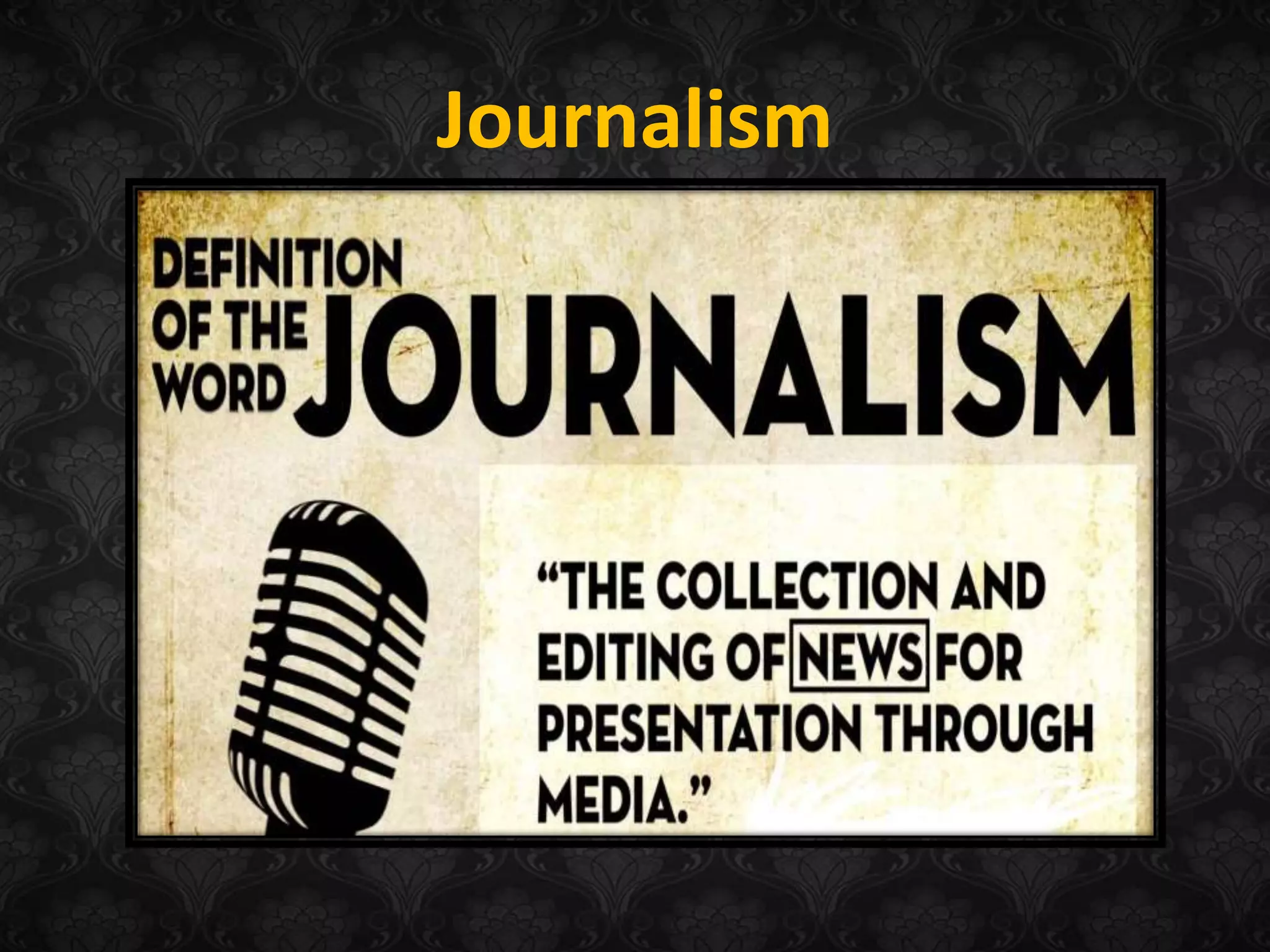
Journalism
• Journalism is concerned it is a form of writing
that tells people about things that really
happened, but that they might not have been
known about already.
Journalism
Types of
Journalism
Advocacy
journalism
Broadcast
Journalism
Investigative
journalism
Tabloid
Journalism
Yellow
Journalism
Advocacy
Journalism
• Advocacy journalism deals with writing to
advocate particular viewpoints or influence
the opinions of the audience.
• It also describes the use of journalism
techniques to promote a specific political or
social cause.
Broadcast
Journalism
• journalism which is the field of news and
journals which are broadcast or in other words
we can say that it is published by electrical
methods, instead of the older methods such
as printed newspapers and posters
• e.g. Radio and Television.
Investigative
Journalism
• Journalism that tries to discover information
of public interest that someone is trying to
hide.
• It also includes serious crimes, political
corruption or corporate wrongdoing.
Tabloid
Journalism
• Tabloid journalism is a newspaper of small
format giving the news is condensed form,
usually with illustrated often sensational
material.
• It puts more stress on crime stories, astrology,
gossip columns about the personal lives of
celebrities and sports stars and junk food
news.
Yellow
Journalism
• Yellow journalism is also known as
sensationalism and it is writing which
emphasizes exaggerated claims or rumors.
• Yellow journalism which highlights little or no
legitimate well-researched news and instead
uses eye-catching headlines to sell more
newspapers.
Conclusion
• Journalism as one part of mass communication
and media studies. Journalism is the practice of
investigation and reporting of events, issues and
trends to a broad audience in a timely fashion.
• Journalism also covers cultural aspects of society
such as arts and entertainment. The field includes
editing, photojournalism and documentary.
Types of Journalism

Types of Journalism

  • 1.
    Hitesh C. Parmar Topic:- Types of Journalism Paper Name :- Mass Media and Communication Paper No. :- 14 P.G. Enrollment No. :- PG13101024 Semester :- 04 Year :- 2014 – 2015 Date :- 12/03/2015 Submitted to Smt. S.B. Gardi Department of English, Maharaja Krishnakumarsinhji Bhavnagar University, Bhavnagar.
  • 2.
    Journalism • Journalism isconcerned it is a form of writing that tells people about things that really happened, but that they might not have been known about already.
  • 3.
  • 4.
  • 5.
    Advocacy Journalism • Advocacy journalismdeals with writing to advocate particular viewpoints or influence the opinions of the audience. • It also describes the use of journalism techniques to promote a specific political or social cause.
  • 6.
    Broadcast Journalism • journalism whichis the field of news and journals which are broadcast or in other words we can say that it is published by electrical methods, instead of the older methods such as printed newspapers and posters • e.g. Radio and Television.
  • 7.
    Investigative Journalism • Journalism thattries to discover information of public interest that someone is trying to hide. • It also includes serious crimes, political corruption or corporate wrongdoing.
  • 8.
    Tabloid Journalism • Tabloid journalismis a newspaper of small format giving the news is condensed form, usually with illustrated often sensational material. • It puts more stress on crime stories, astrology, gossip columns about the personal lives of celebrities and sports stars and junk food news.
  • 9.
    Yellow Journalism • Yellow journalismis also known as sensationalism and it is writing which emphasizes exaggerated claims or rumors. • Yellow journalism which highlights little or no legitimate well-researched news and instead uses eye-catching headlines to sell more newspapers.
  • 10.
    Conclusion • Journalism asone part of mass communication and media studies. Journalism is the practice of investigation and reporting of events, issues and trends to a broad audience in a timely fashion. • Journalism also covers cultural aspects of society such as arts and entertainment. The field includes editing, photojournalism and documentary.