Parasympatholytics
Presented by:
Areeb waheed
INTRODUCTION
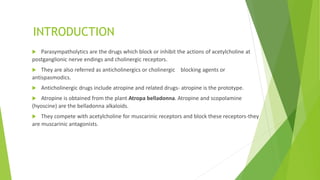
 Parasympatholytics are the drugs which block or inhibit the actions of acetylcholine at
postganglionic nerve endings and cholinergic receptors.
 They are also referred as anticholinergics or cholinergic blocking agents or
antispasmodics.
 Anticholinergic drugs include atropine and related drugs- atropine is the prototype.
 Atropine is obtained from the plant Atropa belladonna. Atropine and scopolamine
(hyoscine) are the belladonna alkaloids.
 They compete with acetylcholine for muscarinic receptors and block these receptors-they
are muscarinic antagonists.
Classification of parasympatholytics
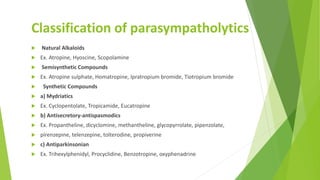
 Natural Alkaloids
 Ex. Atropine, Hyoscine, Scopolamine
 Semisynthetic Compounds
 Ex. Atropine sulphate, Homatropine, Ipratropium bromide, Tiotropium bromide
 Synthetic Compounds
 a) Mydriatics
 Ex. Cyclopentolate, Tropicamide, Eucatropine
 b) Antisecretory-antispasmodics
 Ex. Propantheline, dicyclomine, methantheline, glycopyrrolate, pipenzolate,
 pirenzepine, telenzepine, tolterodine, propiverine
 c) Antiparkinsonian
 Ex. Trihexylphenidyl, Procyclidine, Benzotropine, oxyphenadrine
ATROPINE
 Atropine and other synthetic anticholinergic agentscompetitively antagonise the
muscarinic cholinergic receptors.
 Thus prevents the action of Ach on muscarinic receptors.
 These drugs block the muscarinic receptors on smooth muscles,cardiac muscles, exocrine
glands and CNS.
 MECHANISM OF ACTION OF ATROPINE
 The smooth muscles of the iris of the eye have a dual nerve supply(parasympathetic and
sympathetic nerve supply).
 The parasympathetic supply is carried out via oculomotor nerve andinnervates circular
muscles of iris.
 The stimulation of these muscles causes miosis (pupil constriction).
 The sympathetic supply is carried out via spinal nerve and innervatesradial muscles of iris.
 The stimulation of radial muscles causes mydriasis (pupil dilation).
 When atropine is instilled in to eye (1-2% solution), adilation of the pupil (mydriasis) and
cycloplegia occurs.The lens becomes less convex and eye is fixed for distantvision (far vision).
 The onset of action of atropine for mydriasis action is 10-20 min.
 The duration of action of atropine for mydriasis is 2 hours to 2 days.
 The cycloplegic effect of atropine begins within 30 min and last for 24-
 48 hours.
Therapeutic uses
 CNS disorders: they are used to reduce tremors and rigidity of
 Parkinsonism’s disease.
 As antispasmodics: they relax the spasm of smooth muscles of the intestinal (as antidiarrheal action), urinary and
biliary tracts.
 Ipratropium is used as bronchodilator in cases of bronchial asthma.
 As anti-secretory agent: they are used to reduce gastric secretion in cases of peptic ulcer and to reduce sweating in
tuberculosis patients with profuse midnight sweating.
 As preanesthetic medication: atropine is sued to reduce salivary and bronchial mucus secretions. Hence used as
preanesthetic medication.
 Ophthalmic uses: atropine is used to produce mydriasis and cycloplegia for measurement of refractive errors, and
other diagnostic procedures. They are also used in treatment corneal ulcers, choroiditis and iridocyclitis.
 Atropine is a cardiac stimulant hence used in heart block due to digitalis toxicity.
 In urinary incontinence (enuresis)
 Atropine sulphate is used as antidote in Organophospharus poisoning due to its antimuscarinic actions.
 Dose:
 Atropine sulphate (oral, SC, eye drops) 0.5 mg to 1 mg.
 • for eye drops 1-2% solution may be used.
Adverse drug reactions of atropine
 Dryness of mouth and throat (xerostomia): due to reduction insalivation, leading to dysphagia
(difficulty for swallowing).
 The skin is dry, hot and red, especially in the region of the face and neck (flushing).
 The body temperature may be raised due to decreased sweating and reduced heat loss leading to
hyperpyrexia.
 Increased in intraocular pressure leading to glaucoma.
 Blurred vision due to paralysis of circular muscles and ciliary bodies of iris (pupil dilation i.e.
mydriasis). Photophobia may result due to widely dilated pupils.
 Urinary retention may occur due to loss of bladder tone especially in elder male patients with
prostate enlargement. (Urinary retention is defined as the inability to completely or partially empty the
bladder.
 Suffering from urinary retention means you may be unable to start urination, or if you are able to
start, you can't fully empty your bladder)
 Palpitation and tachycardia may occur due to blockade of cardiac vagus nerve.
 Constipation occurs due to reduced GIT motility and peristalsis.
Contraindications
 • Atropine is contraindicated in patients with narrow angle glaucoma,angina pectoris,
congestive heart failure and prostate enlargement.
ACUTE BELLADONNA POISONING
 It may occur accidentally by ingestion of leaves/ roots of Atropabelladonna or seeds of
Dhatura stromanium or overdose of atropine or scopolamine or anticholinergic drugs.
Symptoms
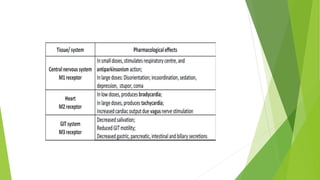
 M1 blockade actions: Hallucinations, mania, delirium, heavy breathing, stupor,respiratory collapse,
coma and death
 M2 blockade actions: Tachycardia, palpitation
 M3 blockade actions: Severe dryness of mouth and throat
 Dysphagia (difficulty for swallowing) and extreme thirst
 Wide pupillary dilation (mydriasis)
 Blurred vision, photophobia
 Respiratory collapse
 Redness of skin, flushing, skin rash
 Rise in body temperature (hyperpyrexia)
 Urinary urgency, difficulty for micturition, urinary retention
 Muscle incoordination
Management of belladonna poisoning
 The patient should be hospitalized immediately.
 • Artificial ventilator must be given.
 • The antidote of choice is Physostigmine salicylate. Intravenous injection of 1-4 mg of
physostigmine salicylate controls delirium (reduced awareness of surroundings) and coma.
 • Hyperpyrexia may be treated by an ice cap and cold water sponging on whole body.
 • Respiratory stimulants like caffeine may be given to control respiratory collapse.
 • Diazepam may be given if mental symptoms are disturbance.
 • Other supportive measures are to be given.

Parasympatholytics.pptx

  • 1.
  • 2.
    INTRODUCTION  Parasympatholytics arethe drugs which block or inhibit the actions of acetylcholine at postganglionic nerve endings and cholinergic receptors.  They are also referred as anticholinergics or cholinergic blocking agents or antispasmodics.  Anticholinergic drugs include atropine and related drugs- atropine is the prototype.  Atropine is obtained from the plant Atropa belladonna. Atropine and scopolamine (hyoscine) are the belladonna alkaloids.  They compete with acetylcholine for muscarinic receptors and block these receptors-they are muscarinic antagonists.
  • 3.
    Classification of parasympatholytics Natural Alkaloids  Ex. Atropine, Hyoscine, Scopolamine  Semisynthetic Compounds  Ex. Atropine sulphate, Homatropine, Ipratropium bromide, Tiotropium bromide  Synthetic Compounds  a) Mydriatics  Ex. Cyclopentolate, Tropicamide, Eucatropine  b) Antisecretory-antispasmodics  Ex. Propantheline, dicyclomine, methantheline, glycopyrrolate, pipenzolate,  pirenzepine, telenzepine, tolterodine, propiverine  c) Antiparkinsonian  Ex. Trihexylphenidyl, Procyclidine, Benzotropine, oxyphenadrine
  • 4.
    ATROPINE  Atropine andother synthetic anticholinergic agentscompetitively antagonise the muscarinic cholinergic receptors.  Thus prevents the action of Ach on muscarinic receptors.  These drugs block the muscarinic receptors on smooth muscles,cardiac muscles, exocrine glands and CNS.  MECHANISM OF ACTION OF ATROPINE
  • 8.
     The smoothmuscles of the iris of the eye have a dual nerve supply(parasympathetic and sympathetic nerve supply).  The parasympathetic supply is carried out via oculomotor nerve andinnervates circular muscles of iris.  The stimulation of these muscles causes miosis (pupil constriction).  The sympathetic supply is carried out via spinal nerve and innervatesradial muscles of iris.  The stimulation of radial muscles causes mydriasis (pupil dilation).  When atropine is instilled in to eye (1-2% solution), adilation of the pupil (mydriasis) and cycloplegia occurs.The lens becomes less convex and eye is fixed for distantvision (far vision).  The onset of action of atropine for mydriasis action is 10-20 min.  The duration of action of atropine for mydriasis is 2 hours to 2 days.  The cycloplegic effect of atropine begins within 30 min and last for 24-  48 hours.
  • 9.
    Therapeutic uses  CNSdisorders: they are used to reduce tremors and rigidity of  Parkinsonism’s disease.  As antispasmodics: they relax the spasm of smooth muscles of the intestinal (as antidiarrheal action), urinary and biliary tracts.  Ipratropium is used as bronchodilator in cases of bronchial asthma.  As anti-secretory agent: they are used to reduce gastric secretion in cases of peptic ulcer and to reduce sweating in tuberculosis patients with profuse midnight sweating.  As preanesthetic medication: atropine is sued to reduce salivary and bronchial mucus secretions. Hence used as preanesthetic medication.  Ophthalmic uses: atropine is used to produce mydriasis and cycloplegia for measurement of refractive errors, and other diagnostic procedures. They are also used in treatment corneal ulcers, choroiditis and iridocyclitis.  Atropine is a cardiac stimulant hence used in heart block due to digitalis toxicity.  In urinary incontinence (enuresis)  Atropine sulphate is used as antidote in Organophospharus poisoning due to its antimuscarinic actions.  Dose:  Atropine sulphate (oral, SC, eye drops) 0.5 mg to 1 mg.  • for eye drops 1-2% solution may be used.
  • 10.
    Adverse drug reactionsof atropine  Dryness of mouth and throat (xerostomia): due to reduction insalivation, leading to dysphagia (difficulty for swallowing).  The skin is dry, hot and red, especially in the region of the face and neck (flushing).  The body temperature may be raised due to decreased sweating and reduced heat loss leading to hyperpyrexia.  Increased in intraocular pressure leading to glaucoma.  Blurred vision due to paralysis of circular muscles and ciliary bodies of iris (pupil dilation i.e. mydriasis). Photophobia may result due to widely dilated pupils.  Urinary retention may occur due to loss of bladder tone especially in elder male patients with prostate enlargement. (Urinary retention is defined as the inability to completely or partially empty the bladder.  Suffering from urinary retention means you may be unable to start urination, or if you are able to start, you can't fully empty your bladder)  Palpitation and tachycardia may occur due to blockade of cardiac vagus nerve.  Constipation occurs due to reduced GIT motility and peristalsis.
  • 11.
    Contraindications  • Atropineis contraindicated in patients with narrow angle glaucoma,angina pectoris, congestive heart failure and prostate enlargement.
  • 12.
    ACUTE BELLADONNA POISONING It may occur accidentally by ingestion of leaves/ roots of Atropabelladonna or seeds of Dhatura stromanium or overdose of atropine or scopolamine or anticholinergic drugs. Symptoms  M1 blockade actions: Hallucinations, mania, delirium, heavy breathing, stupor,respiratory collapse, coma and death  M2 blockade actions: Tachycardia, palpitation  M3 blockade actions: Severe dryness of mouth and throat  Dysphagia (difficulty for swallowing) and extreme thirst  Wide pupillary dilation (mydriasis)  Blurred vision, photophobia  Respiratory collapse  Redness of skin, flushing, skin rash  Rise in body temperature (hyperpyrexia)  Urinary urgency, difficulty for micturition, urinary retention  Muscle incoordination
  • 13.
    Management of belladonnapoisoning  The patient should be hospitalized immediately.  • Artificial ventilator must be given.  • The antidote of choice is Physostigmine salicylate. Intravenous injection of 1-4 mg of physostigmine salicylate controls delirium (reduced awareness of surroundings) and coma.  • Hyperpyrexia may be treated by an ice cap and cold water sponging on whole body.  • Respiratory stimulants like caffeine may be given to control respiratory collapse.  • Diazepam may be given if mental symptoms are disturbance.  • Other supportive measures are to be given.