Download to read offline





The document discusses the goals and methods of computer protection. It aims to control access to resources and prevent their unauthorized use. Hardware protection differentiates between user and monitor modes. The CPU protects modes through a mode bit, and switches to monitor for interrupts. Memory protection prevents processes from accessing memory not allocated to them. I/O protection makes I/O instructions privileged to monitor mode only. The goals are to share resources safely according to policies and minimize damage from misbehaving programs.
Introduces the concept of protection in computer security, focusing on the goals and hardware functionalities controlled by the operating system.
Discusses dual mode protection necessary for sharing resources in operating systems, ensuring incorrect programs don't mislead other executions.
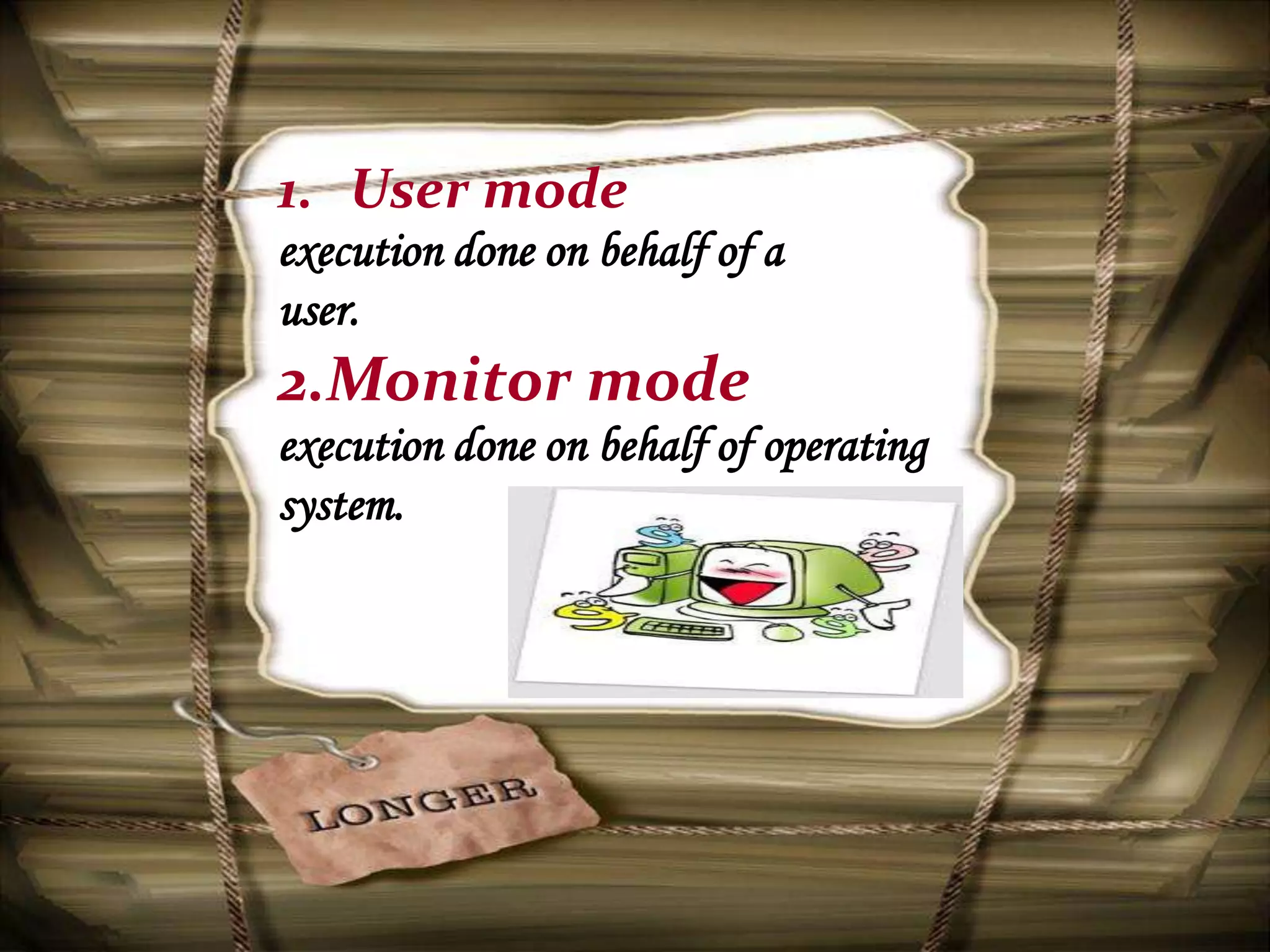
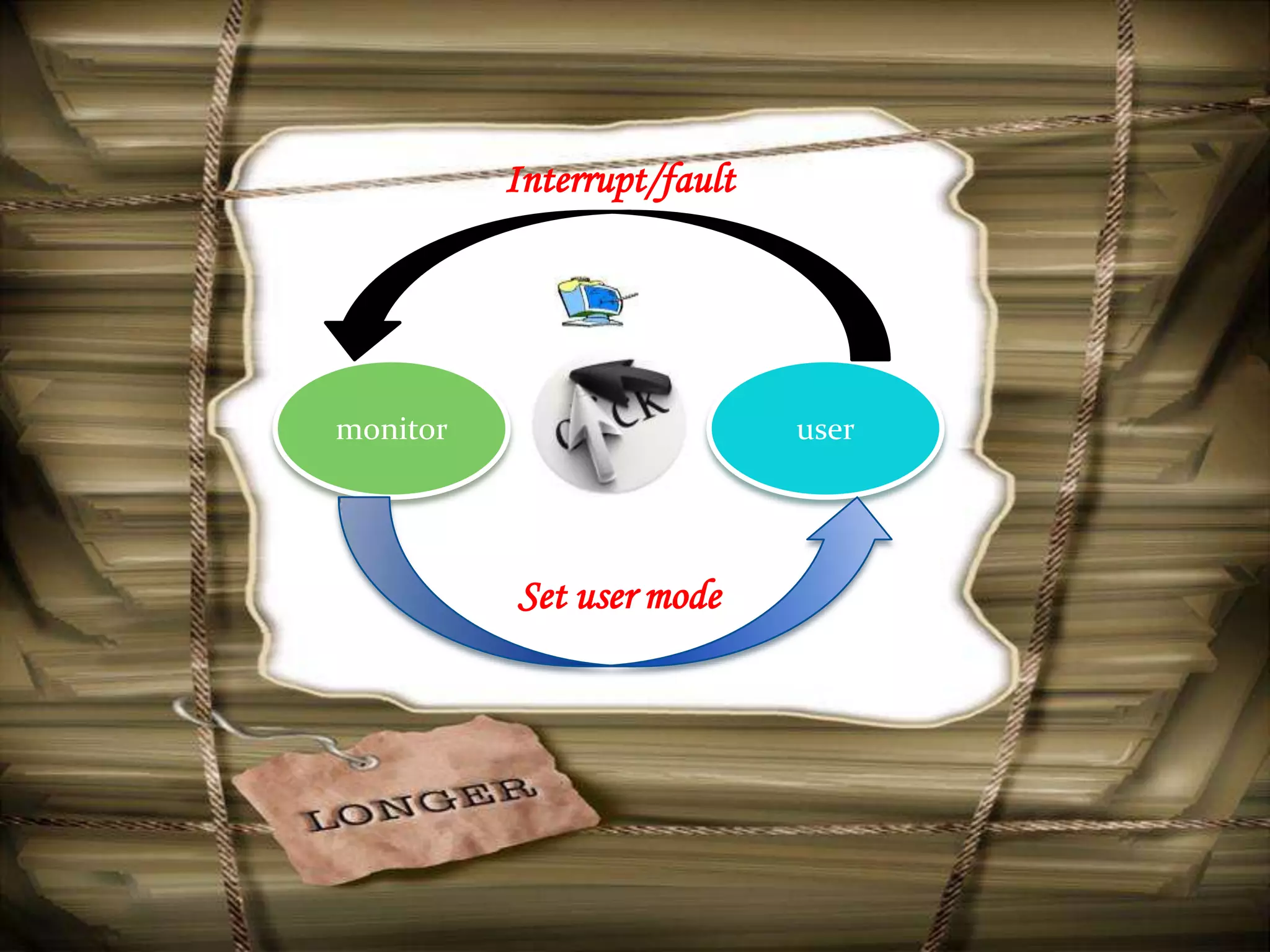
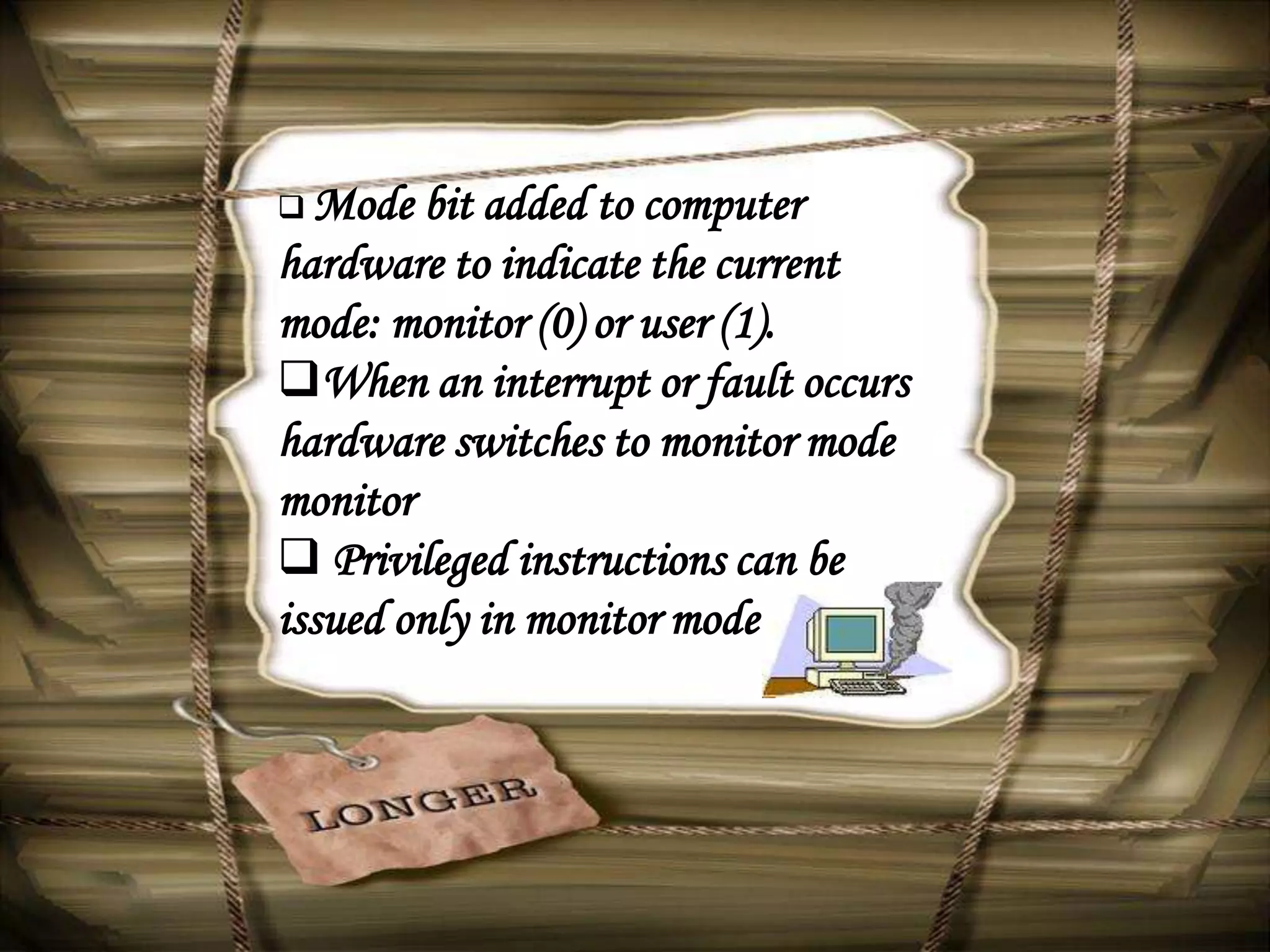
Describes user mode and monitor mode in CPU operation, detailing the function of mode bits and interrupt management to switch execution modes.
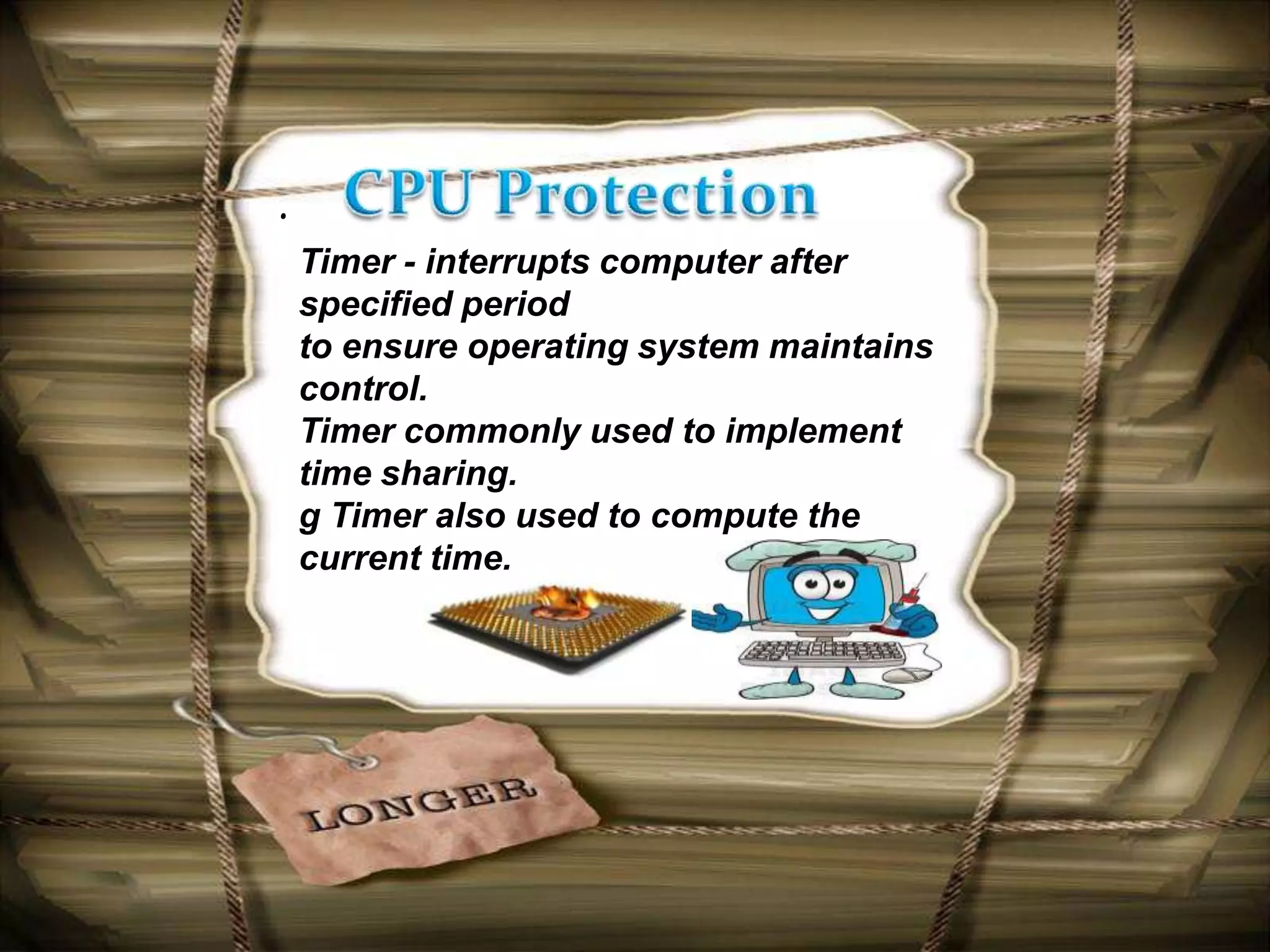
Explains the timer role in system control, enabling time-sharing and tracking current time for efficient operating system management.
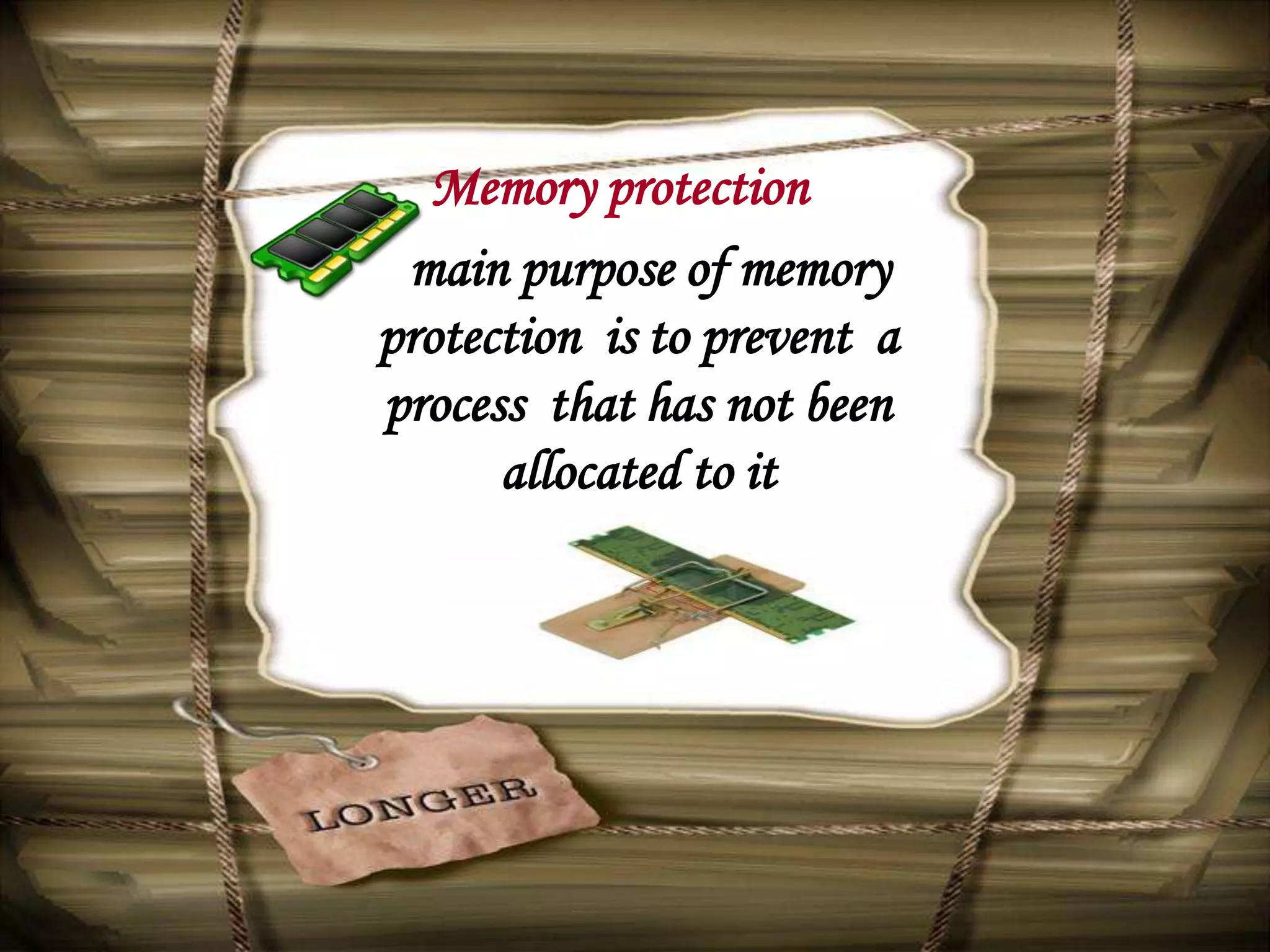
Highlights the significance of memory protection, ensuring that processes do not access unauthorized memory areas.
Focuses on I/O protection principles, preventing user programs from executing privileged instructions and ensuring safe resource use among users.


