INTERNATIONAL BUSINESSPROJECTMMS-II (Semi- III)PRESENTED TO:Dr. AMOL GOREDATE- 10/08/2009
GROUP MEMBERSPRADNYA  BHALERAO	   C-03SWAPNIL CHAVAN	           P-04AVINASH KARDE		   P-14SAIDAS NAIK                         P-23SATISH RAJPAL                    C-30ANANDITA SINGH	           C-34PRATIKSHA RANE	           C-42JAYASHREE PRABHU          C-43
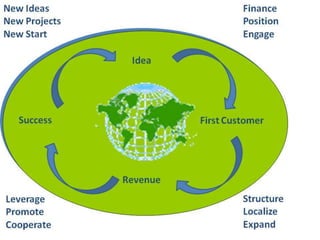
INTRODUCTION ABOUT GLOBALIZATIONBUILDING GLOBAL COMPANIES GLOBAL MANAGERS
Globalization
WHAT IS GLOBALIZATION?The trend toward countries joining together economically,EducationSociety Politics and Viewing themselves not only through their national identity but also as part of the world as a whole.
NEED FOR GLOBALIZATION
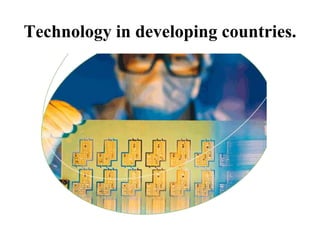
Technology in developing countries.
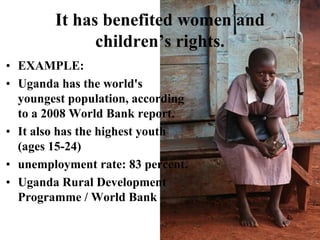
It has benefited women and children’s rights.EXAMPLE:Uganda has the world's youngest population, according to a 2008 World Bank report. It also has the highest youth (ages 15-24) unemployment rate: 83 percent. Uganda Rural Development Programme / World Bank
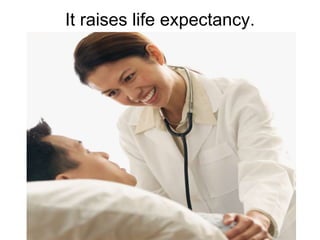
It raises life expectancy.
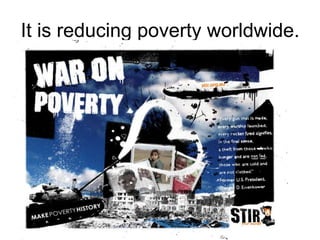
It is reducing poverty worldwide.
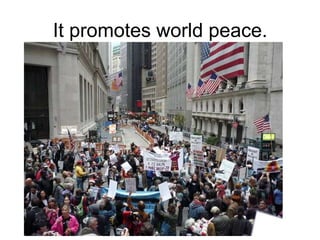
It promotes world peace.
IMPACT OF GLOBALIZATIONCOMMUNICATIONTRANSPORTATIONTRADELIBERALISATION
IMPORTANCE AND NEEDGlobal Marketing / AdvertisingOutsourcing
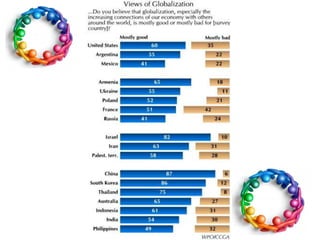
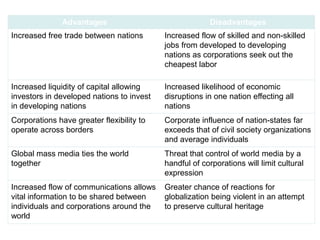
PROSPros Of GlobalizationWith globalization, there is a global market for companies to trade their products & a wider range of options for people, to choose from among the products of different nations.   Developing countries benefit a lot from globalization, as there is a sound flow of money and thus, a decrease in the currency difference. To meet the increasing demands that follow globalization, there is an increase in the production sector. This gives loads of options to the manufacturers as well. Competition keeps prices relatively low, and as a result, inflation is less likely to occur.
……CONTDThe focus is diverted and segregated among all the nations. No country remains the single power head; instead there are compartmentalized power sectors. The decisions at higher levels are meant for the people at large.   Communication among the countries is on the rise, which allows for better understanding and broader vision. As communication increases amongst two countries, there is interchange of cultures as well. We get to know more about the other's cultural preferences. As we feed to each other's financial needs, the ecological imbalance is also met . Governments of countries show concern about each other.
CONSGlobalization is causing Europeans to lose their jobs as work is being outsourced to the Asian countries. The cost of labor in the Asian countries is low as compared to other countries. The high rate of profit for the companies, in Asia, has resulted in a pressure on the employed Europeans, who are always under the threat of the business being outsourced. Companies are opening their counterparts in other countries. This results in transferring the quality of their product to other countries, thereby increasing the chances of depreciation in terms of quality.
……CONTDThere are experts who believe that globalization is the cause for the invasion of communicable diseases and social degeneration in countries. The threat that the corporate would rule the world is on high, as there is a lot of money invested by them. It is often argued that poor countries are exploited by the richer countries where the work force is taken advantage of and low wages are implemented.
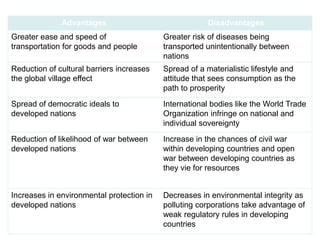
ADVANTAGES & DISADVANTAGES OFGLOBALIZATION
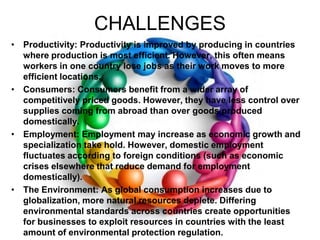
CHALLENGESProductivity: Productivity is improved by producing in countries where production is most efficient. However, this often means workers in one country lose jobs as their work moves to more efficient locations.Consumers: Consumers benefit from a wider array of competitively priced goods. However, they have less control over supplies coming from abroad than over goods produced domestically.Employment: Employment may increase as economic growth and specialization take hold. However, domestic employment fluctuates according to foreign conditions (such as economic crises elsewhere that reduce demand for employment domestically).The Environment: As global consumption increases due to globalization, more natural resources deplete. Differing environmental standards across countries create opportunities for businesses to exploit resources in countries with the least amount of environmental protection regulation.
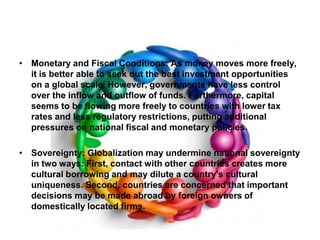
Monetary and Fiscal Conditions: As money moves more freely, it is better able to seek out the best investment opportunities on a global scale. However, governments have less control over the inflow and outflow of funds. Furthermore, capital seems to be flowing more freely to countries with lower tax rates and less regulatory restrictions, putting additional pressures on national fiscal and monetary policies.Sovereignty: Globalization may undermine national sovereignty in two ways: First, contact with other countries creates more cultural borrowing and may dilute a country's cultural uniqueness. Second, countries are concerned that important decisions may be made abroad by foreign owners of domestically located firms.
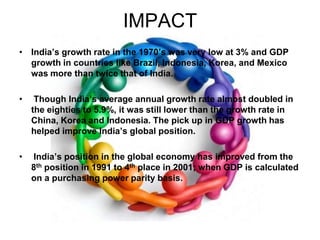
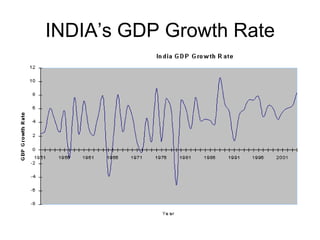
IMPACTIndia’s growth rate in the 1970’s was very low at 3% and GDP growth in countries like Brazil, Indonesia, Korea, and Mexico was more than twice that of India. Though India’s average annual growth rate almost doubled in the eighties to 5.9%, it was still lower than the growth rate in China, Korea and Indonesia. The pick up in GDP growth has helped improve India’s global position.  India’s position in the global economy has improved from the 8th position in 1991 to 4th place in 2001; when GDP is calculated on a purchasing power parity basis.
During 1991-92 the first year of Rao’s reforms program, The Indian economy grew by 0.9%only.However the GDP growth accelerated to 5.3 % in 1992-93, and 6.2% 1993- 94. A growth rate of above 8% was an achievement by the Indian economy during the year 2003-04.India is ranked 18th among the world’s leading exporters of services with a share of 1.3% in world exportsIndia’s GDP growth rate can be seen from the following graph since independence
INDIA’s GDP Growth Rate
Building Global companiesPESTLE Analysis
Political factorsStability of the government
Type of government         - Democratic        - Theocracy (religious)        - monarchy ( kingdom)Control structure          Canada, USA ( decentralized province)          Japan, France( centralized)
Govt take over of asset(with or without permission)
Operational restriction
Remittance/ Repatriation restrictions
Government policies
Opposition parties, pressure groups, external linkages Economic factorsEconomic system ( open / mixed)
Economic development
Standard of living( per capita income)
Sectorial share in GDP
Foreign Exchange reserves
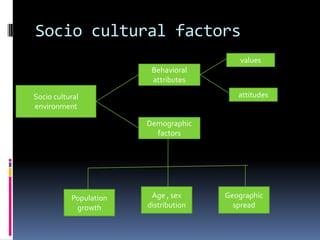
Economic indicators( inflation rate, BOP)Socio cultural factorsvaluesBehavioral attributesSocio cultural environmentattitudesDemographic factorsAge , sex distributionGeographic spreadPopulation growth
Technological factorsDifferentiation strategyCompetitive advantage
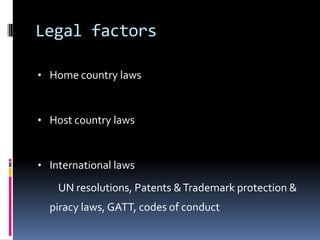
Legal factorsHome country laws
Host country laws
International laws         UN resolutions, Patents & Trademark protection & piracy laws, GATT, codes of conduct
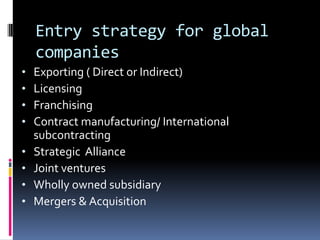
Entry strategy for global companiesExporting ( Direct or Indirect)
Licensing
Franchising
Contract manufacturing/ International subcontracting
Strategic  Alliance
Joint ventures
Wholly owned subsidiary
Mergers & AcquisitionTOYOTAKiichiro Toyoda, founder of TMC, 1929From starting, eye on global competitionUse of cultural practices in businessTaiichi ohno , founder of TPS        Customer 1st, dealer 2nd, manufacturer 3rd…
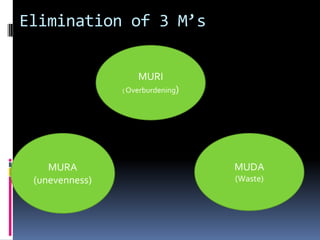
Elimination of 3 M’sMURI( Overburdening)MUDA(Waste)MURA(unevenness)
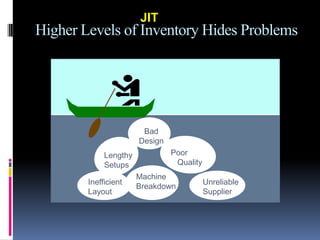
Higher Levels of Inventory Hides ProblemsJITBadDesignPoor   QualityLengthySetupsMachineBreakdownUnreliableSupplierInefficientLayout
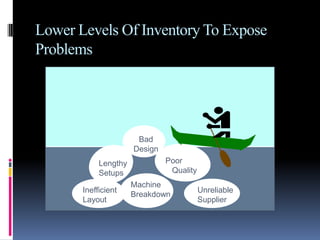
Lower Levels Of Inventory To Expose ProblemsBadDesignPoor   QualityLengthySetupsMachineBreakdownUnreliableSupplierInefficientLayout
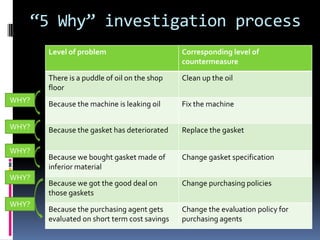
“5 Why” investigation processWHY?WHY?WHY?WHY?WHY?
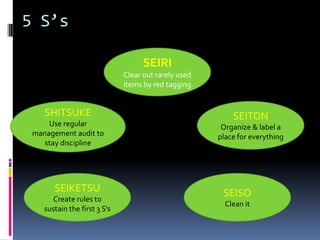
5 S’sSEIRIClear out rarely used items by red tagging SHITSUKEUse regular management audit to stay disciplineSEITONOrganize & label a place for everythingSEISOClean itSEIKETSUCreate rules to sustain the first 3 S’s
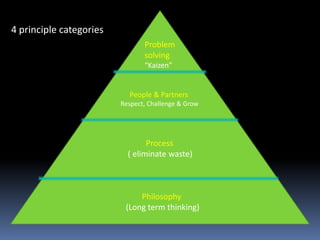
4 principle categoriesProblem   solving“Kaizen”People & PartnersRespect, Challenge & Grow Process         ( eliminate waste)Philosophy        (Long term thinking)
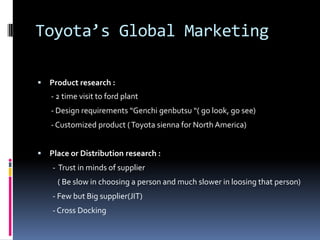
Toyota’s Global MarketingProduct research :        - 2 time visit to ford plant        - Design requirements “Genchi genbutsu “( go look, go see)        - Customized product ( Toyota sienna for North America)Place or Distribution research :         -  Trust in minds of supplier            ( Be slow in choosing a person and much slower in loosing that person)         - Few but Big supplier(JIT)         - Cross Docking
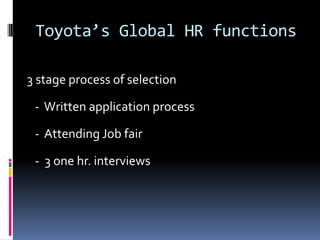
Toyota’s Global HR functions  3 stage process of selection     -  Written application process     -  Attending Job fair     -  3 one hr. interviews
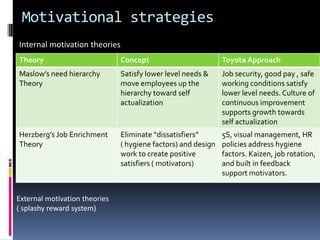
Motivational strategiesInternal motivation theoriesExternal motivation theories         ( splashy reward system)
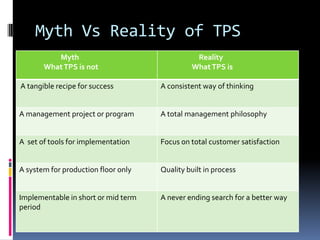
Myth Vs Reality of TPS
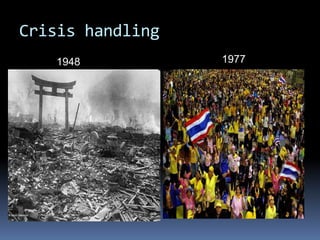
Crisis handling19771948
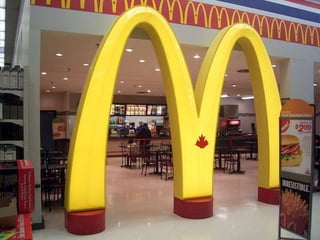
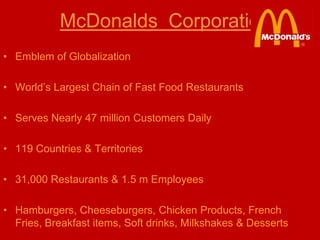
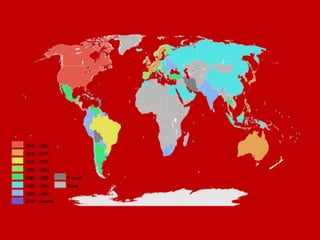
McDonalds  CorporationEmblem of GlobalizationWorld’s Largest Chain of Fast Food RestaurantsServes Nearly 47 million Customers Daily119 Countries & Territories31,000 Restaurants & 1.5 m EmployeesHamburgers, Cheeseburgers, Chicken Products, French Fries, Breakfast items, Soft drinks, Milkshakes & Desserts
Types of RestaurantDrive-Thru, Auto-Mac, Pay and Drive, or McDrive Solid Gold McDonald's McCaféMcExpressMcStop
First Mcdonalds RestaurantOn May 15th 1940, San Bernardino, California.Menu of 25 Items (mostly Barbeque)20 EmployeesPopular and highly profitable teen hangout
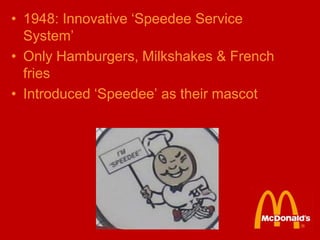
1948: Innovative ‘Speedee Service System’Only Hamburgers, Milkshakes & French friesIntroduced ‘Speedee’ as their mascot
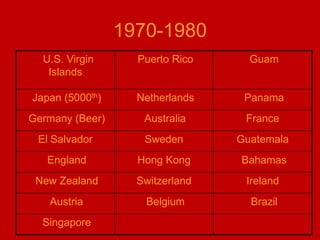
1953: Franchised restaurant in Arizona & Michigan1954: Mr Ray Kroc proposed to Franchise Mcdonalds outside Arizona & Michigan1955: ‘Mcdonalds Systems Inc’ Legal Structure of planned franchises1958: 100 millionth Hamburger1959: 100th Mcdonalds Restaurant & Billboard Advertising1960: Renamed as Mcdonalds Corporation1963: 500th Mcdonalds Restaurant, Introduced ‘Ronald’ as their new Mascot1967: First restaurant outside US
1970-1980
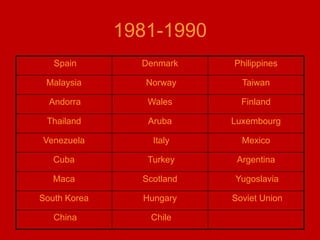
1981-1990
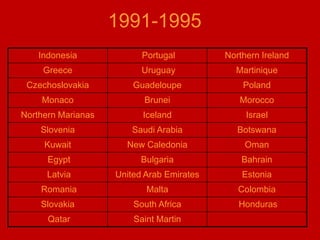
1991-1995
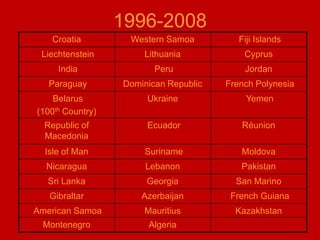
1996-2008
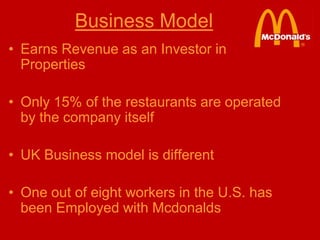
Business ModelEarns Revenue as an Investor in PropertiesOnly 15% of the restaurants are operated by the company itselfUK Business model is differentOne out of eight workers in the U.S. has been Employed with Mcdonalds
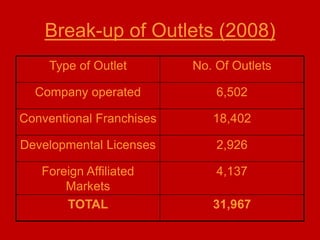
Break-up of Outlets (2008)
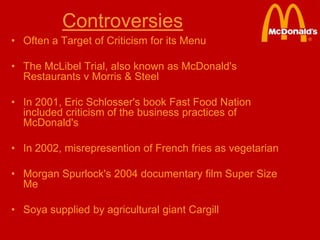
ControversiesOften a Target of Criticism for its MenuThe McLibel Trial, also known as McDonald's Restaurants v Morris & SteelIn 2001, Eric Schlosser's book Fast Food Nation included criticism of the business practices of McDonald's In 2002, misrepresention of French fries as vegetarian Morgan Spurlock's 2004 documentary film Super Size MeSoya supplied by agricultural giant Cargill
PEPSICO
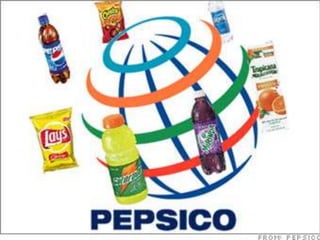
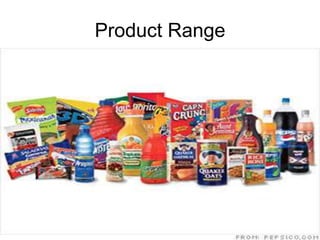
Product Range
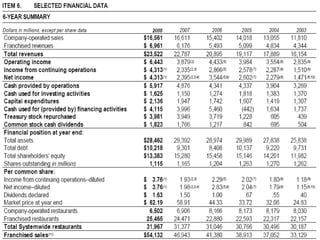
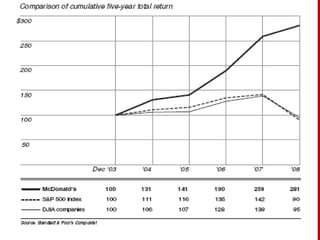
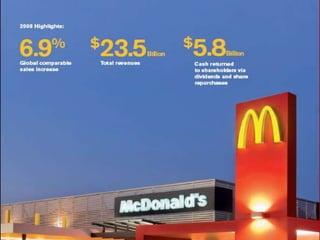
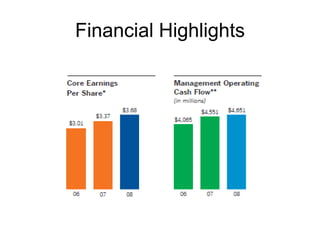
Financial Highlights
Global Centers
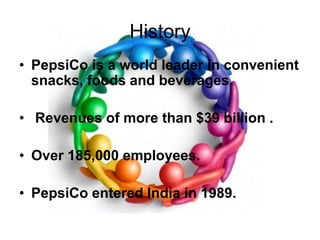
HistoryPepsiCo is a world leader in convenient snacks, foods and beverages. Revenues of more than $39 billion .Over 185,000 employees. PepsiCo entered India in 1989.
PEPSI
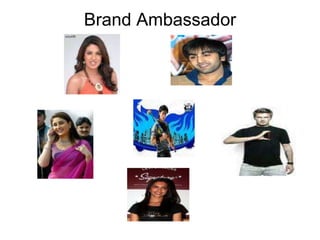
Brand Ambassador
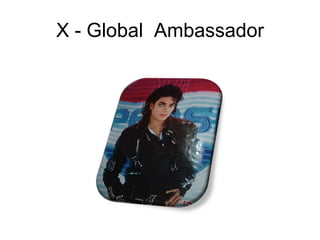
X - Global  Ambassador
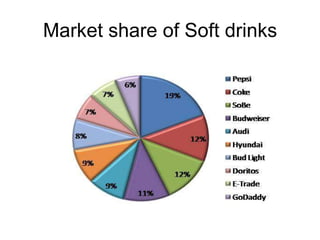
Market share of Soft drinks
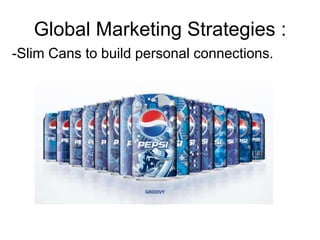
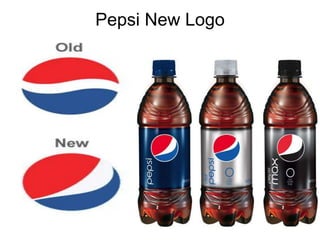
Global Marketing Strategies :Slim Cans to build personal connections.Pepsi New Logo
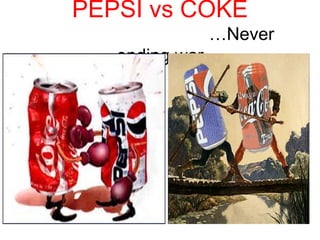
PEPSI vs COKE                                 …Never ending war
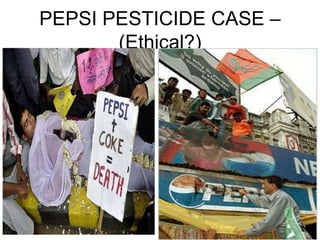
PEPSI PESTICIDE CASE – (Ethical?)
News ReleasePepsiCo Reaches Merger Agreements with Pepsi Bottling Group and PepsiAmericas.(4th Aug 2009)	    - Fully-Integrated System        - Strategically Transform North American     	Beverage Business
GLOBAL MANAGERS
Manager’s global vision is shaped by several factors Global mindset      "Think Local Act Global".Adaptation to local conditions
External forces which drive global mindsetLeadership View of the worldAdministrative HeritageOrganizational StructureIndustry forces
Global Manager’s thought processMulticultural approach to reflect global operations Shift of focus on "soft tools" - Vision, process and people to achieve objectives Collaboration with a network of vendors, partners & customersRecruitment from global talent pool - to get best set of peopleGlobal transfer of human resources - global learning/training processCreating a learning OrganizationFocus on big picture - respond rapidly to global business environment changes.
Roles of a Global ManagerSelect & Implement Foreign Market EntrySelect Countries, Mode of Entry etcPerform Local Marketing AbroadPromote Products and ServicesConduct Market ResearchManage Advertising CampaignManage Global Operations
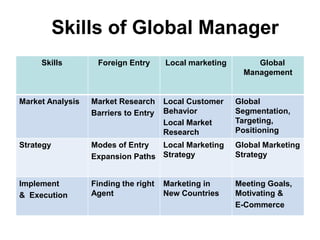
Skills of Global Manager
Culture & Managerial SkillsSuccessful mangers tend to be good at acceptable behaviors and avoid unacceptable behaviorsLessens from past managerial experience in other countries has little value in other cultures.Success & Failures in the past will be repeated elsewhere, before learning the local implications
Managerial StylesCultures tend to generate different managerial styles. Management styles is heavily influenced by home country culture.Japan High Context culture influences mangers to read body language while in US, a low context culture tends to ignore body languageManagers are usually inadequately trained to handle different cultures. Time, Money pressure compromise training.
Cultural DilemmasManagers face cultural dilemmas due to differences in culturesUniversalism Vs Particularism : Doing the right thing or doing things right?Individualism Vs Collectivism in decision makingNeutral Vs EmotionalSpecific Vs General : Is it just business or the whole person, individual or the entire firmAttitudes towards TimeAttitudes towards Environment
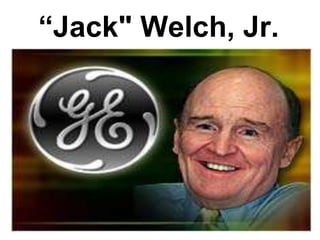
“Jack" Welch, Jr.
Born November 19, 1935 is the former Chairmen and CEO of General Electrics between 1981 and 2001.Graduating in 1957 with a Bachelor of science degree in chemical engineering.Welch went on to receive his M.S and Ph.D at the University of Llinois at Urbana -Champaign in 1960.
Welch joined General Electric in 1960. He worked as a junior engineer in Pittsfield, Massachusetts, at a salary of $10,500 annually.Welch was named a vice president of GE in 1972. He moved up the ranks to become senior vice president in 1977 and vice chairman in 1979.Welch became GE's youngest chairman and CEO in 1981
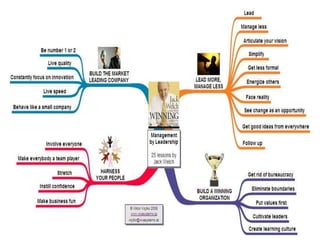
Welch strategiesWelch worked to eradicate inefficiency by trimming inventories and dismantling the bureaucracy that had almost led him to leave GE in the past.Each year, Welch would fire the bottom 10% of his managers.He would reward those in the top 20% with bonuses and stock options.He is also known for destroying the nine-layer management hierarchy and bringing a sense of informality to the company.
Delegating far greater authority to empowered employees.Welch adopted Motorola's Six Sigma quality program in late 1995.Welch launched the effort in late 1995 with 200 projects and intensive training programs
INDIAN MANAGERS
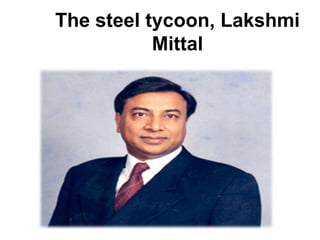
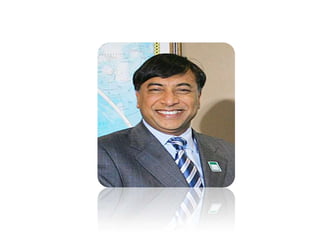
The steel tycoon, Lakshmi Mittal
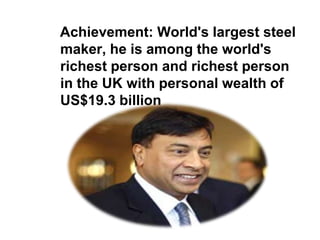
   Achievement: World's largest steel maker, he is among the world's richest person and richest person in the UK with personal wealth of US$19.3 billion
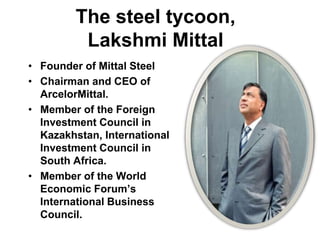
The steel tycoon, Lakshmi MittalFounder of Mittal SteelChairman and CEO of ArcelorMittal.Member of the Foreign Investment Council in Kazakhstan, International Investment Council in South Africa.Member of the World Economic Forum’s International Business Council.
Introduction Born: June 15, 1950.Commerce graduate from St. Xaviers in Kolkata.He split from his father and two younger brothers in 1994 and took the international arm.Lakshmi Mittal is married with two children Aditya Mittal and Vanisha Mittal.
Success StoryBegan his career working in the family's steelmaking business in India.In 1976, Mittal founded Mittal Steel Company 1989: Acquisition of Iron & Steel Company of Trinidad & Tobago.In 1994, he set out to establish its international division – buying of a run-down plant in Indonesia.Purchased of International Steel Group for $4.5 billion .
Success Story    contd….2003:  He acquired the Kensington mansion, said to be the world's most expensive home, from Formula One racing's Bernie Ecclestone for £70 million ($128 million).2005: Investment of $9 billion in Jharkhand, India announced.2006: Merger between Mittal Steel and Arcelor.2006: Investment for 12 million tonnes capacity steel plant announced in Orissa, India.
Success Story    contd….Today, Mittal Steel is global steel producer in the world with operations on 14 countries, spanning 4 continents.Mittal holds steel assets in South Africa, Poland, Indonesia, and Kazakhstan, Romania, Bosnia Herzegovina, Ukraine and other nations.
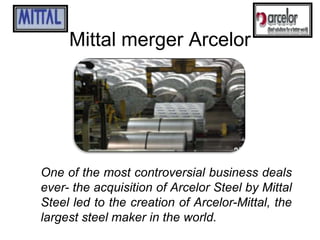
 Mittal merger ArcelorOne of the most controversial business deals ever- the acquisition of Arcelor Steel by Mittal Steel led to the creation of Arcelor-Mittal, the largest steel maker in the world.
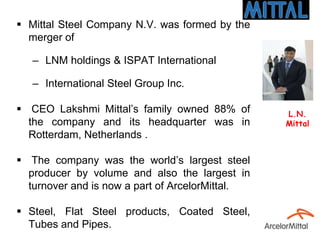
Mittal Steel Company N.V. was formed by the merger of LNM holdings & ISPAT International International Steel Group Inc.  CEO Lakshmi Mittal’s family owned 88% of the company and its headquarter was in Rotterdam, Netherlands .
 The company was the world’s largest steel producer by volume and also the largest in turnover and is now a part of ArcelorMittal.
Steel, Flat Steel products, Coated Steel,     Tubes and Pipes.L.N. Mittal
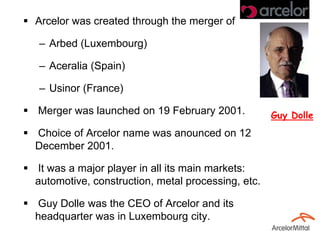
Arcelor was created through the merger of Arbed (Luxembourg) Aceralia (Spain) Usinor (France) Merger was launched on 19 February 2001.
 Choice of Arcelor name was anounced on 12 December 2001.
 It was a major player in all its main markets: automotive, construction, metal processing, etc.
 Guy Dolle was the CEO of Arcelor and its headquarter was in Luxembourg city.Guy Dolle
The big dealIn January 2006, Mittal Steel launched a $22.7 billion offer to Arcelor’s shareholders.
 The deal was split between Mittal Shares (75 percent) and cash (25 percent) .
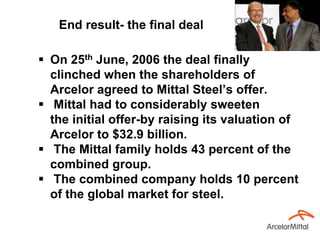
 Under the offer, Arcelor shareholders would have received 4 Mittal Steel shares and 35 euros for every 5 Arcelor shares they held .End result- the final dealOn 25th June, 2006 the deal finally                            clinched when the shareholders of Arcelor agreed to Mittal Steel’s offer.
 Mittal had to considerably sweeten                                     the initial offer-by raising its valuation of Arcelor to $32.9 billion.
 The Mittal family holds 43 percent of the combined group.
 The combined company holds 10 percent of the global market for steel. Criticism and allegationsSlave-labour allegations.Controversial self-bonus.Environmental damage.
Awards & RecognitionLaxmi Mittal has achieved several awards and accolades for his contribution to the steel manufacturing industry :'Steelmaker of the Year' in the year 1996 by New Steel in the USA .
'European Businessman of the Year 2004' by Fortune magazine.
'Willy Korf Steel Vision Award' in the year 1998.
'Business Person of 2006' by the Sunday Times.
'International Newsmaker of the Year 2006' by Time Magazine.

Globalisation 100119101548-phpapp01

  • 1.
    INTERNATIONAL BUSINESSPROJECTMMS-II (Semi-III)PRESENTED TO:Dr. AMOL GOREDATE- 10/08/2009
  • 2.
    GROUP MEMBERSPRADNYA BHALERAO C-03SWAPNIL CHAVAN P-04AVINASH KARDE P-14SAIDAS NAIK P-23SATISH RAJPAL C-30ANANDITA SINGH C-34PRATIKSHA RANE C-42JAYASHREE PRABHU C-43
  • 3.
    INTRODUCTION ABOUT GLOBALIZATIONBUILDINGGLOBAL COMPANIES GLOBAL MANAGERS
  • 4.
  • 6.
    WHAT IS GLOBALIZATION?Thetrend toward countries joining together economically,EducationSociety Politics and Viewing themselves not only through their national identity but also as part of the world as a whole.
  • 8.
  • 9.
  • 10.
    It has benefitedwomen and children’s rights.EXAMPLE:Uganda has the world's youngest population, according to a 2008 World Bank report. It also has the highest youth (ages 15-24) unemployment rate: 83 percent. Uganda Rural Development Programme / World Bank
  • 11.
    It raises lifeexpectancy.
  • 12.
    It is reducingpoverty worldwide.
  • 13.
  • 14.
  • 15.
    IMPORTANCE AND NEEDGlobalMarketing / AdvertisingOutsourcing
  • 18.
    PROSPros Of GlobalizationWithglobalization, there is a global market for companies to trade their products & a wider range of options for people, to choose from among the products of different nations.   Developing countries benefit a lot from globalization, as there is a sound flow of money and thus, a decrease in the currency difference. To meet the increasing demands that follow globalization, there is an increase in the production sector. This gives loads of options to the manufacturers as well. Competition keeps prices relatively low, and as a result, inflation is less likely to occur.
  • 19.
    ……CONTDThe focus isdiverted and segregated among all the nations. No country remains the single power head; instead there are compartmentalized power sectors. The decisions at higher levels are meant for the people at large.   Communication among the countries is on the rise, which allows for better understanding and broader vision. As communication increases amongst two countries, there is interchange of cultures as well. We get to know more about the other's cultural preferences. As we feed to each other's financial needs, the ecological imbalance is also met . Governments of countries show concern about each other.
  • 20.
    CONSGlobalization is causingEuropeans to lose their jobs as work is being outsourced to the Asian countries. The cost of labor in the Asian countries is low as compared to other countries. The high rate of profit for the companies, in Asia, has resulted in a pressure on the employed Europeans, who are always under the threat of the business being outsourced. Companies are opening their counterparts in other countries. This results in transferring the quality of their product to other countries, thereby increasing the chances of depreciation in terms of quality.
  • 21.
    ……CONTDThere are expertswho believe that globalization is the cause for the invasion of communicable diseases and social degeneration in countries. The threat that the corporate would rule the world is on high, as there is a lot of money invested by them. It is often argued that poor countries are exploited by the richer countries where the work force is taken advantage of and low wages are implemented.
  • 22.
  • 25.
    CHALLENGESProductivity: Productivity isimproved by producing in countries where production is most efficient. However, this often means workers in one country lose jobs as their work moves to more efficient locations.Consumers: Consumers benefit from a wider array of competitively priced goods. However, they have less control over supplies coming from abroad than over goods produced domestically.Employment: Employment may increase as economic growth and specialization take hold. However, domestic employment fluctuates according to foreign conditions (such as economic crises elsewhere that reduce demand for employment domestically).The Environment: As global consumption increases due to globalization, more natural resources deplete. Differing environmental standards across countries create opportunities for businesses to exploit resources in countries with the least amount of environmental protection regulation.
  • 26.
    Monetary and FiscalConditions: As money moves more freely, it is better able to seek out the best investment opportunities on a global scale. However, governments have less control over the inflow and outflow of funds. Furthermore, capital seems to be flowing more freely to countries with lower tax rates and less regulatory restrictions, putting additional pressures on national fiscal and monetary policies.Sovereignty: Globalization may undermine national sovereignty in two ways: First, contact with other countries creates more cultural borrowing and may dilute a country's cultural uniqueness. Second, countries are concerned that important decisions may be made abroad by foreign owners of domestically located firms.
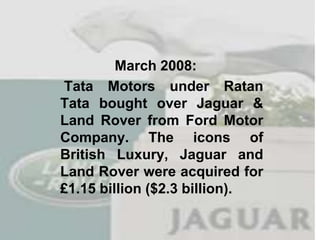
  • 27.
    IMPACTIndia’s growth ratein the 1970’s was very low at 3% and GDP growth in countries like Brazil, Indonesia, Korea, and Mexico was more than twice that of India. Though India’s average annual growth rate almost doubled in the eighties to 5.9%, it was still lower than the growth rate in China, Korea and Indonesia. The pick up in GDP growth has helped improve India’s global position. India’s position in the global economy has improved from the 8th position in 1991 to 4th place in 2001; when GDP is calculated on a purchasing power parity basis.
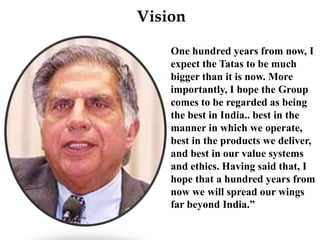
  • 28.
    During 1991-92 thefirst year of Rao’s reforms program, The Indian economy grew by 0.9%only.However the GDP growth accelerated to 5.3 % in 1992-93, and 6.2% 1993- 94. A growth rate of above 8% was an achievement by the Indian economy during the year 2003-04.India is ranked 18th among the world’s leading exporters of services with a share of 1.3% in world exportsIndia’s GDP growth rate can be seen from the following graph since independence
  • 29.
  • 30.
  • 31.
  • 32.
    Type of government - Democratic - Theocracy (religious) - monarchy ( kingdom)Control structure Canada, USA ( decentralized province) Japan, France( centralized)
  • 33.
    Govt take overof asset(with or without permission)
  • 34.
  • 35.
  • 36.
  • 37.
    Opposition parties, pressuregroups, external linkages Economic factorsEconomic system ( open / mixed)
  • 38.
  • 39.
    Standard of living(per capita income)
  • 40.
  • 41.
  • 42.
    Economic indicators( inflationrate, BOP)Socio cultural factorsvaluesBehavioral attributesSocio cultural environmentattitudesDemographic factorsAge , sex distributionGeographic spreadPopulation growth
  • 43.
  • 44.
  • 45.
  • 46.
    International laws UN resolutions, Patents & Trademark protection & piracy laws, GATT, codes of conduct
  • 47.
    Entry strategy forglobal companiesExporting ( Direct or Indirect)
  • 48.
  • 49.
  • 50.
  • 51.
  • 52.
  • 53.
  • 54.
    Mergers & AcquisitionTOYOTAKiichiroToyoda, founder of TMC, 1929From starting, eye on global competitionUse of cultural practices in businessTaiichi ohno , founder of TPS Customer 1st, dealer 2nd, manufacturer 3rd…
  • 55.
    Elimination of 3M’sMURI( Overburdening)MUDA(Waste)MURA(unevenness)
  • 56.
    Higher Levels ofInventory Hides ProblemsJITBadDesignPoor QualityLengthySetupsMachineBreakdownUnreliableSupplierInefficientLayout
  • 57.
    Lower Levels OfInventory To Expose ProblemsBadDesignPoor QualityLengthySetupsMachineBreakdownUnreliableSupplierInefficientLayout
  • 58.
    “5 Why” investigationprocessWHY?WHY?WHY?WHY?WHY?
  • 59.
    5 S’sSEIRIClear outrarely used items by red tagging SHITSUKEUse regular management audit to stay disciplineSEITONOrganize & label a place for everythingSEISOClean itSEIKETSUCreate rules to sustain the first 3 S’s
  • 60.
    4 principle categoriesProblem solving“Kaizen”People & PartnersRespect, Challenge & Grow Process ( eliminate waste)Philosophy (Long term thinking)
  • 61.
    Toyota’s Global MarketingProductresearch : - 2 time visit to ford plant - Design requirements “Genchi genbutsu “( go look, go see) - Customized product ( Toyota sienna for North America)Place or Distribution research : - Trust in minds of supplier ( Be slow in choosing a person and much slower in loosing that person) - Few but Big supplier(JIT) - Cross Docking
  • 62.
    Toyota’s Global HRfunctions 3 stage process of selection - Written application process - Attending Job fair - 3 one hr. interviews
  • 63.
    Motivational strategiesInternal motivationtheoriesExternal motivation theories ( splashy reward system)
  • 64.
  • 65.
  • 69.
    McDonalds CorporationEmblemof GlobalizationWorld’s Largest Chain of Fast Food RestaurantsServes Nearly 47 million Customers Daily119 Countries & Territories31,000 Restaurants & 1.5 m EmployeesHamburgers, Cheeseburgers, Chicken Products, French Fries, Breakfast items, Soft drinks, Milkshakes & Desserts
  • 70.
    Types of RestaurantDrive-Thru,Auto-Mac, Pay and Drive, or McDrive Solid Gold McDonald's McCaféMcExpressMcStop
  • 71.
    First Mcdonalds RestaurantOnMay 15th 1940, San Bernardino, California.Menu of 25 Items (mostly Barbeque)20 EmployeesPopular and highly profitable teen hangout
  • 72.
    1948: Innovative ‘SpeedeeService System’Only Hamburgers, Milkshakes & French friesIntroduced ‘Speedee’ as their mascot
  • 73.
    1953: Franchised restaurantin Arizona & Michigan1954: Mr Ray Kroc proposed to Franchise Mcdonalds outside Arizona & Michigan1955: ‘Mcdonalds Systems Inc’ Legal Structure of planned franchises1958: 100 millionth Hamburger1959: 100th Mcdonalds Restaurant & Billboard Advertising1960: Renamed as Mcdonalds Corporation1963: 500th Mcdonalds Restaurant, Introduced ‘Ronald’ as their new Mascot1967: First restaurant outside US
  • 74.
  • 75.
  • 76.
  • 77.
  • 78.
    Business ModelEarns Revenueas an Investor in PropertiesOnly 15% of the restaurants are operated by the company itselfUK Business model is differentOne out of eight workers in the U.S. has been Employed with Mcdonalds
  • 79.
  • 84.
    ControversiesOften a Targetof Criticism for its MenuThe McLibel Trial, also known as McDonald's Restaurants v Morris & SteelIn 2001, Eric Schlosser's book Fast Food Nation included criticism of the business practices of McDonald's In 2002, misrepresention of French fries as vegetarian Morgan Spurlock's 2004 documentary film Super Size MeSoya supplied by agricultural giant Cargill
  • 85.
  • 86.
  • 87.
  • 88.
  • 89.
    HistoryPepsiCo is aworld leader in convenient snacks, foods and beverages. Revenues of more than $39 billion .Over 185,000 employees. PepsiCo entered India in 1989.
  • 90.
  • 91.
  • 92.
    X - Global Ambassador
  • 93.
    Market share ofSoft drinks
  • 94.
    Global Marketing Strategies:Slim Cans to build personal connections.Pepsi New Logo
  • 95.
    PEPSI vs COKE …Never ending war
  • 96.
    PEPSI PESTICIDE CASE– (Ethical?)
  • 97.
    News ReleasePepsiCo ReachesMerger Agreements with Pepsi Bottling Group and PepsiAmericas.(4th Aug 2009) - Fully-Integrated System - Strategically Transform North American Beverage Business
  • 98.
  • 99.
    Manager’s global visionis shaped by several factors Global mindset "Think Local Act Global".Adaptation to local conditions
  • 100.
    External forces whichdrive global mindsetLeadership View of the worldAdministrative HeritageOrganizational StructureIndustry forces
  • 101.
    Global Manager’s thoughtprocessMulticultural approach to reflect global operations Shift of focus on "soft tools" - Vision, process and people to achieve objectives Collaboration with a network of vendors, partners & customersRecruitment from global talent pool - to get best set of peopleGlobal transfer of human resources - global learning/training processCreating a learning OrganizationFocus on big picture - respond rapidly to global business environment changes.
  • 102.
    Roles of aGlobal ManagerSelect & Implement Foreign Market EntrySelect Countries, Mode of Entry etcPerform Local Marketing AbroadPromote Products and ServicesConduct Market ResearchManage Advertising CampaignManage Global Operations
  • 103.
  • 104.
    Culture & ManagerialSkillsSuccessful mangers tend to be good at acceptable behaviors and avoid unacceptable behaviorsLessens from past managerial experience in other countries has little value in other cultures.Success & Failures in the past will be repeated elsewhere, before learning the local implications
  • 105.
    Managerial StylesCultures tendto generate different managerial styles. Management styles is heavily influenced by home country culture.Japan High Context culture influences mangers to read body language while in US, a low context culture tends to ignore body languageManagers are usually inadequately trained to handle different cultures. Time, Money pressure compromise training.
  • 106.
    Cultural DilemmasManagers facecultural dilemmas due to differences in culturesUniversalism Vs Particularism : Doing the right thing or doing things right?Individualism Vs Collectivism in decision makingNeutral Vs EmotionalSpecific Vs General : Is it just business or the whole person, individual or the entire firmAttitudes towards TimeAttitudes towards Environment
  • 107.
  • 108.
    Born November 19,1935 is the former Chairmen and CEO of General Electrics between 1981 and 2001.Graduating in 1957 with a Bachelor of science degree in chemical engineering.Welch went on to receive his M.S and Ph.D at the University of Llinois at Urbana -Champaign in 1960.
  • 109.
    Welch joined GeneralElectric in 1960. He worked as a junior engineer in Pittsfield, Massachusetts, at a salary of $10,500 annually.Welch was named a vice president of GE in 1972. He moved up the ranks to become senior vice president in 1977 and vice chairman in 1979.Welch became GE's youngest chairman and CEO in 1981
  • 113.
    Welch strategiesWelch workedto eradicate inefficiency by trimming inventories and dismantling the bureaucracy that had almost led him to leave GE in the past.Each year, Welch would fire the bottom 10% of his managers.He would reward those in the top 20% with bonuses and stock options.He is also known for destroying the nine-layer management hierarchy and bringing a sense of informality to the company.
  • 114.
    Delegating far greaterauthority to empowered employees.Welch adopted Motorola's Six Sigma quality program in late 1995.Welch launched the effort in late 1995 with 200 projects and intensive training programs
  • 115.
  • 116.
    The steel tycoon,Lakshmi Mittal
  • 117.
    Achievement: World's largest steel maker, he is among the world's richest person and richest person in the UK with personal wealth of US$19.3 billion
  • 118.
    The steel tycoon,Lakshmi MittalFounder of Mittal SteelChairman and CEO of ArcelorMittal.Member of the Foreign Investment Council in Kazakhstan, International Investment Council in South Africa.Member of the World Economic Forum’s International Business Council.
  • 119.
    Introduction Born: June15, 1950.Commerce graduate from St. Xaviers in Kolkata.He split from his father and two younger brothers in 1994 and took the international arm.Lakshmi Mittal is married with two children Aditya Mittal and Vanisha Mittal.
  • 120.
    Success StoryBegan hiscareer working in the family's steelmaking business in India.In 1976, Mittal founded Mittal Steel Company 1989: Acquisition of Iron & Steel Company of Trinidad & Tobago.In 1994, he set out to establish its international division – buying of a run-down plant in Indonesia.Purchased of International Steel Group for $4.5 billion .
  • 121.
    Success Story contd….2003: He acquired the Kensington mansion, said to be the world's most expensive home, from Formula One racing's Bernie Ecclestone for £70 million ($128 million).2005: Investment of $9 billion in Jharkhand, India announced.2006: Merger between Mittal Steel and Arcelor.2006: Investment for 12 million tonnes capacity steel plant announced in Orissa, India.
  • 122.
    Success Story contd….Today, Mittal Steel is global steel producer in the world with operations on 14 countries, spanning 4 continents.Mittal holds steel assets in South Africa, Poland, Indonesia, and Kazakhstan, Romania, Bosnia Herzegovina, Ukraine and other nations.
  • 123.
    Mittal mergerArcelorOne of the most controversial business deals ever- the acquisition of Arcelor Steel by Mittal Steel led to the creation of Arcelor-Mittal, the largest steel maker in the world.
  • 124.
    Mittal Steel CompanyN.V. was formed by the merger of LNM holdings & ISPAT International International Steel Group Inc. CEO Lakshmi Mittal’s family owned 88% of the company and its headquarter was in Rotterdam, Netherlands .
  • 125.
    The companywas the world’s largest steel producer by volume and also the largest in turnover and is now a part of ArcelorMittal.
  • 126.
    Steel, Flat Steelproducts, Coated Steel, Tubes and Pipes.L.N. Mittal
  • 127.
    Arcelor was createdthrough the merger of Arbed (Luxembourg) Aceralia (Spain) Usinor (France) Merger was launched on 19 February 2001.
  • 128.
    Choice ofArcelor name was anounced on 12 December 2001.
  • 129.
    It wasa major player in all its main markets: automotive, construction, metal processing, etc.
  • 130.
    Guy Dollewas the CEO of Arcelor and its headquarter was in Luxembourg city.Guy Dolle
  • 131.
    The big dealInJanuary 2006, Mittal Steel launched a $22.7 billion offer to Arcelor’s shareholders.
  • 132.
    The dealwas split between Mittal Shares (75 percent) and cash (25 percent) .
  • 133.
    Under theoffer, Arcelor shareholders would have received 4 Mittal Steel shares and 35 euros for every 5 Arcelor shares they held .End result- the final dealOn 25th June, 2006 the deal finally clinched when the shareholders of Arcelor agreed to Mittal Steel’s offer.
  • 134.
    Mittal hadto considerably sweeten the initial offer-by raising its valuation of Arcelor to $32.9 billion.
  • 135.
    The Mittalfamily holds 43 percent of the combined group.
  • 136.
    The combinedcompany holds 10 percent of the global market for steel. Criticism and allegationsSlave-labour allegations.Controversial self-bonus.Environmental damage.
  • 137.
    Awards & RecognitionLaxmiMittal has achieved several awards and accolades for his contribution to the steel manufacturing industry :'Steelmaker of the Year' in the year 1996 by New Steel in the USA .
  • 138.
    'European Businessman ofthe Year 2004' by Fortune magazine.
  • 139.
    'Willy Korf SteelVision Award' in the year 1998.
  • 140.
    'Business Person of2006' by the Sunday Times.
  • 141.
    'International Newsmaker ofthe Year 2006' by Time Magazine.
  • 142.
    'Person of theYear 2006' by the Financial Times.
  • 143.
  • 144.
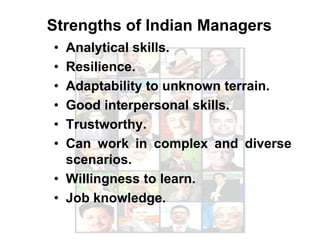
    Strengths of IndianManagersAnalytical skills.Resilience.Adaptability to unknown terrain.Good interpersonal skills.Trustworthy.Can work in complex and diverse scenarios.Willingness to learn.Job knowledge.
  • 145.
    Areas of ImprovementOpen-mindedness,ability to build juniors.Vision, values, strategic thinking, decision making skills, risk taking. Learning orientation, self renewal efforts, cross cultural sensitivity.
  • 146.
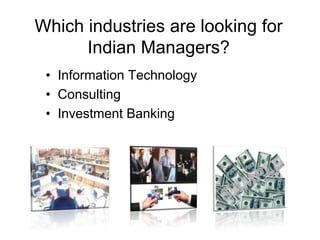
    Which industries arelooking for Indian Managers?Information TechnologyConsultingInvestment Banking
  • 147.
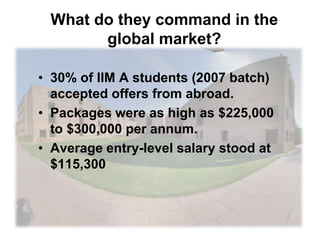
    What do theycommand in the global market? 30% of IIM A students (2007 batch) accepted offers from abroad.Packages were as high as $225,000 to $300,000 per annum.Average entry-level salary stood at $115,300
  • 148.
  • 149.
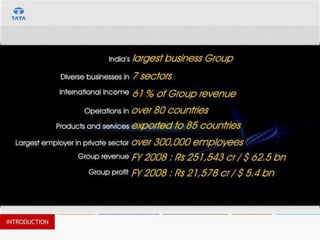
    At home inthe world Anchored in India and committed to its traditional values of leadership with trust, the Tata group is spreading its footprint globally through excellence and innovation.
  • 150.
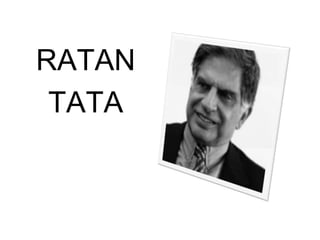
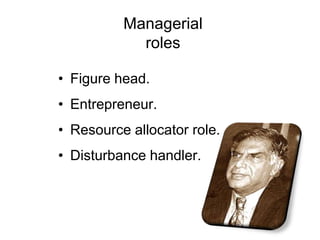
    IntroductionBorn on December28, 1937.Graduated with a degree in Architecture and Structural Engineering from Cornell University.Also completed advanced management programme at Harvard Business School. Appointed the Director-in-Charge of The National Radio & Electronics Company Limited (Nelco) in 1971.Became the Chairman of Tata Industries in 1981.Took over as Tata Group Chairman in 1991.
  • 153.
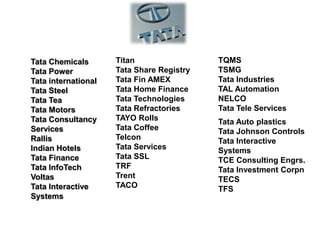
    TQMSTSMGTata IndustriesTAL AutomationNELCOTataTele ServicesTitanTata Share RegistryTata Fin AMEXTata Home FinanceTata TechnologiesTata RefractoriesTAYO RollsTata CoffeeTelconTata ServicesTata SSLTRFTrentTACOTata ChemicalsTata PowerTata internationalTata SteelTata TeaTata MotorsTata Consultancy ServicesRallisIndian HotelsTata FinanceTata InfoTechVoltasTata Interactive SystemsTata Auto plasticsTata Johnson ControlsTata Interactive SystemsTCE Consulting Engrs.Tata Investment CorpnTECSTFS
  • 155.
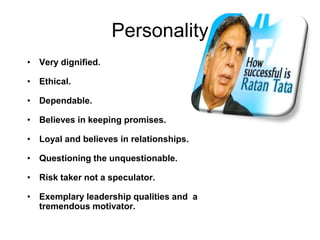
    Very dignified.Ethical.Dependable.Believes inkeeping promises.Loyal and believes in relationships.Questioning the unquestionable.Risk taker not a speculator.Exemplary leadership qualities and a tremendous motivator.Personality
  • 156.
  • 157.
    Ratan Tata -Going Global1998: Tata Motors came up with Tata Indica, the first truly Indian car. 2000: Tata Tea acquired the Tetley group of the UK for pounds 271 million ($435 million) - the biggest acquisition in the history of Indian Companies.2003: Stepped down from executive position. Bought the truck unit of South Korea‘s Daewoo Motors. A stake in one of Indonesia's biggest coal mines, and steel mills in Singapore, Thailand, and Vietnam
  • 158.
    Ratan Tata -Going Global2004: Takeover of Tony hotels including New York's Pierre, the Ritz-Carlton in Boston, and San Francisco's Camden Place.Purchase of Tyco International's undersea telecom cables.2007: Tata Sons successfully acquired Corus Group for an estimated £6.7 billion. “A defining moment for Tata Steel” – Tata said
  • 159.
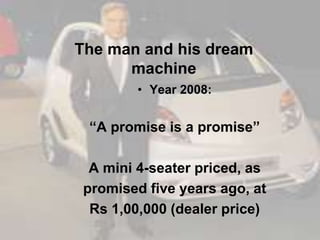
    The man andhis dream machineYear 2008:“A promise is a promise”A mini 4-seater priced, as promised five years ago, at Rs 1,00,000 (dealer price)
  • 160.
    March 2008: Tata Motors under Ratan Tata bought over Jaguar & Land Rover from Ford Motor Company. The icons of British Luxury, Jaguar and Land Rover were acquired for £1.15 billion ($2.3 billion).
  • 161.
    Future prospectsPriority markets:Tata group is focusing on a clutch of priority countries, which are expected to be of strategic importance in the years ahead.The regions are North America, UK, China, the Netherlands, Germany, South Africa, members of the Gulf Cooperation Council, Brazil, Vietnam, Thailand and Sri Lanka.
  • 162.
    VisionOne hundred yearsfrom now, I expect the Tatas to be much bigger than it is now. More importantly, I hope the Group comes to be regarded as being the best in India.. best in the manner in which we operate, best in the products we deliver, and best in our value systems and ethics. Having said that, I hope that a hundred years from now we will spread our wings far beyond India.”
  • 163.
  • 164.
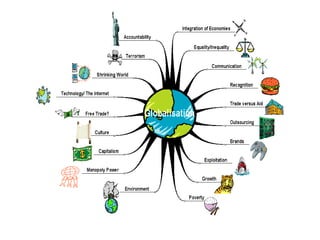
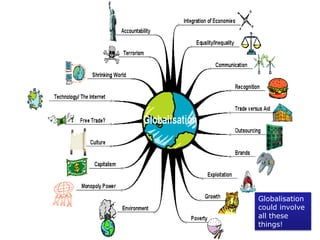
    GlobalisationDefinition:An economic phenomenon.Asocial phenomenon.A cultural phenomenon.The movement towards the expansion of economic and social ties between countries through the spread of corporate institutions and the capitalist philosophy that leads to the shrinking of the world in economic terms.
  • 165.
  • 166.
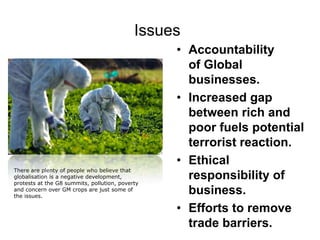
    IssuesAccountability of Globalbusinesses.Increased gap between rich and poor fuels potential terrorist reaction.Ethical responsibility of business.Efforts to remove trade barriers.There are plenty of people who believe that globalisation is a negative development, protests at the G8 summits, pollution, poverty and concern over GM crops are just some of the issues.
  • 167.
    Corporate Social ResponsibilityTheintegrity with which a company governs itself, fulfils its mission, lives by its values, engages with its stakeholders, measures its impact and reports on its activities.Includes Non polluting environment.Demand from civil society, consumers, governments, and others for corporations to conduct sustainable business.Being ethical while running their daily operations.
  • 168.
    BIBLIOGRAPHY AND WEBLIOGRAPHYInternationalBusiness – By V.K. Bhalla & S.Shiva Ramu.www.tata.comwww.mittalsteel.comwww.arcelormittal.comwww.ge.com