







Globalization
Globalization is the process of interaction and
integration among the people, companies and
governments of different nations, a process
driven by international trade and investment
and aided by information technology.
Globalization is the flow across national
boundaries of goods and services, capital,
people, technology, ideas, and culture.
More evidence of Globalization
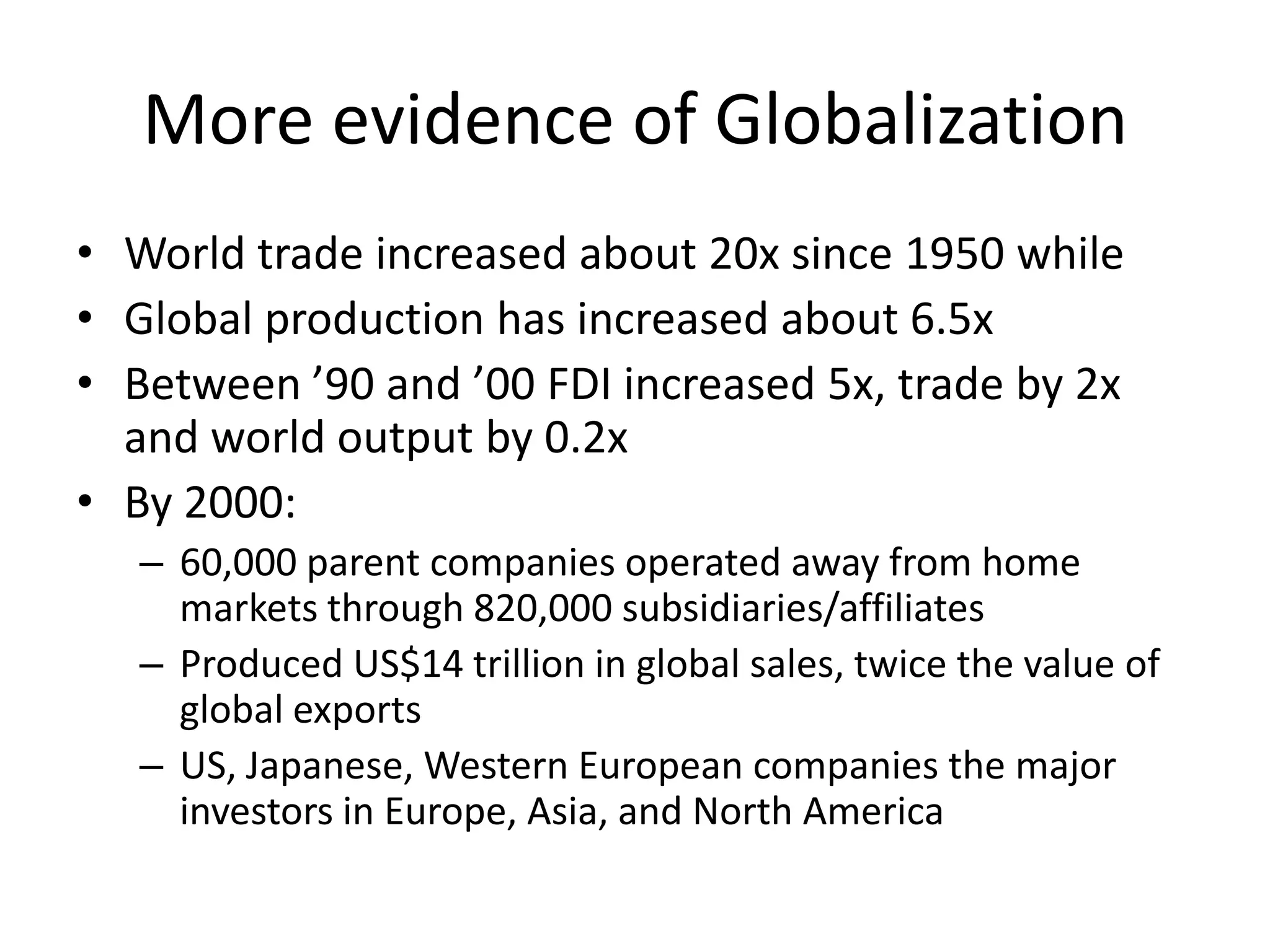
• World trade increased about 20x since 1950 while
• Global production has increased about 6.5x
• Between ’90 and ’00 FDI increased 5x, trade by 2x
  and world output by 0.2x
• By 2000:
   – 60,000 parent companies operated away from home
     markets through 820,000 subsidiaries/affiliates
   – Produced US$14 trillion in global sales, twice the value of
     global exports
   – US, Japanese, Western European companies the major
     investors in Europe, Asia, and North America
Examples of Globalization
• The Internet
• Selling local products in the global market
• Attending lectures by a British professor teaching in
  an American University via a web-conference in NUS
• Wearing Made in China clothes
• Driving Made in Japan cars
Key Driving Forces of Globalization


1) Developments in      2) Transnational
   transportation and      Companies
   communications
1) Developments in transportation and
          communications
   – Improvements in transport technology has
     “shrunk” the world
   – 19th century steam engine  20th century jet
     engine,
   –   Faster and more convenient communication
   –   People all over the globe can communicate via
       telephone, e-mail, fax, video conferencing, etc
• Internet has transferred the way people communicate, do
  business, obtain information and purchase goods and services
2) Transnational Companies
•    TNCs set up operations in different parts of
     the world:
    – Sourcing for new markets
    – Lowering cost of production
    – Production of different parts for products and
      assembly done in a variety of countries
Impact of Globalization
1) Economic Impact
2) Social Impact
3) Environmental Impact
1) Economic Impact
•       Widening Income Gap Between the Rich and
        the Poor
    –     The rich developed countries prosper with
          better opportunities while the poor developing
          countries face economic uncertainties like
          retrenchment
    –     Widening income gap can lead to social
          problems, increasing tension between the rich
          and the poor
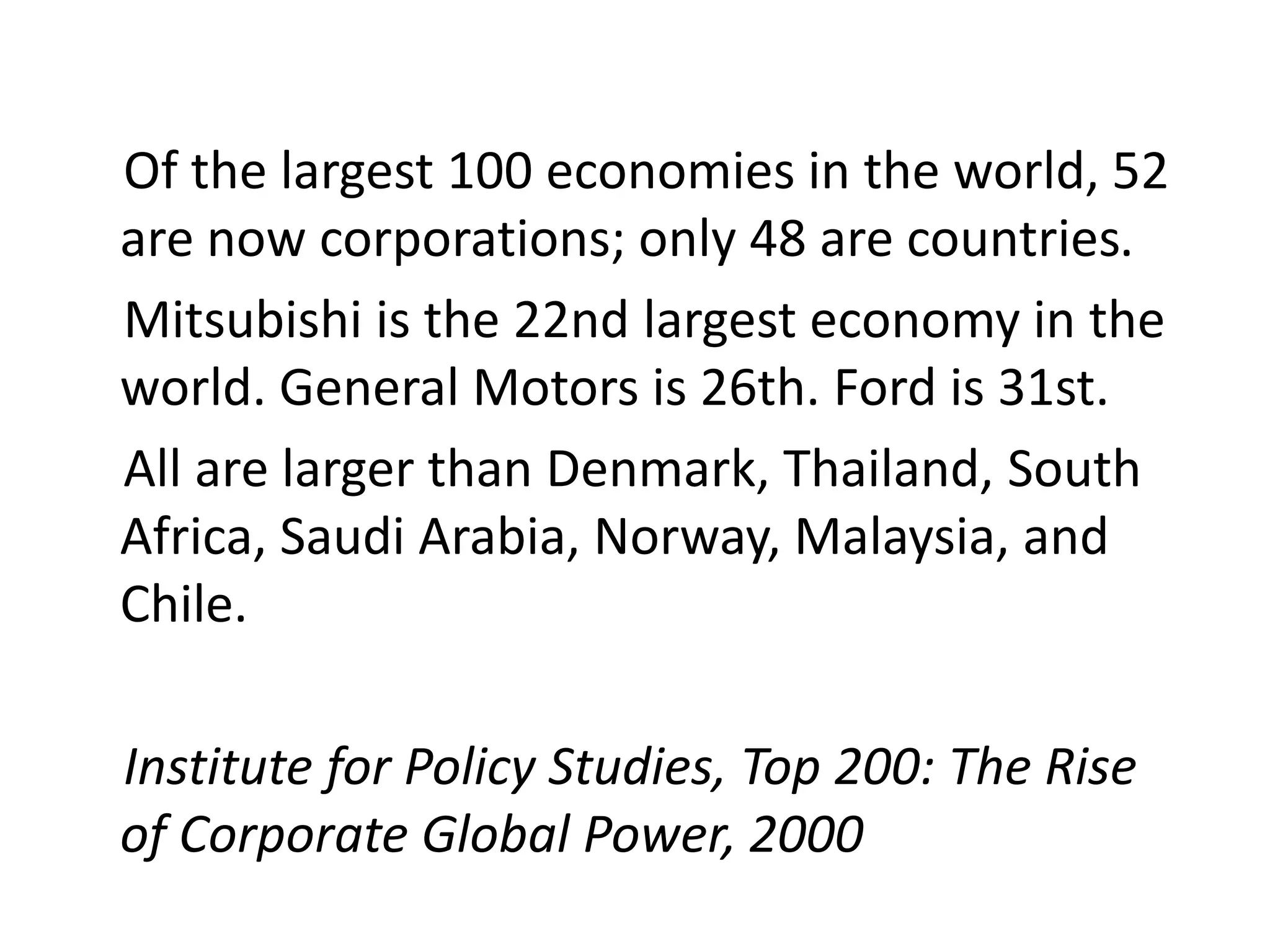
Of the largest 100 economies in the world, 52
are now corporations; only 48 are countries.
Mitsubishi is the 22nd largest economy in the
world. General Motors is 26th. Ford is 31st.
All are larger than Denmark, Thailand, South
Africa, Saudi Arabia, Norway, Malaysia, and
Chile.

Institute for Policy Studies, Top 200: The Rise
of Corporate Global Power, 2000
2) Social Impact
•       Increased Awareness of Foreign Culture
    –      Travel, the Internet, mass media (products of globalisation allow
           you to learn more about foreign culture
•       Loss of Local Culture
    –      Global (Western) brands dominate consumer markets in developing
           countries
    –      Creation of homogenous culture across the world
    –      Spread of pop culture and erosion or loss of local culture
    –      Negative influence of youth
    –      Enforced beliefs
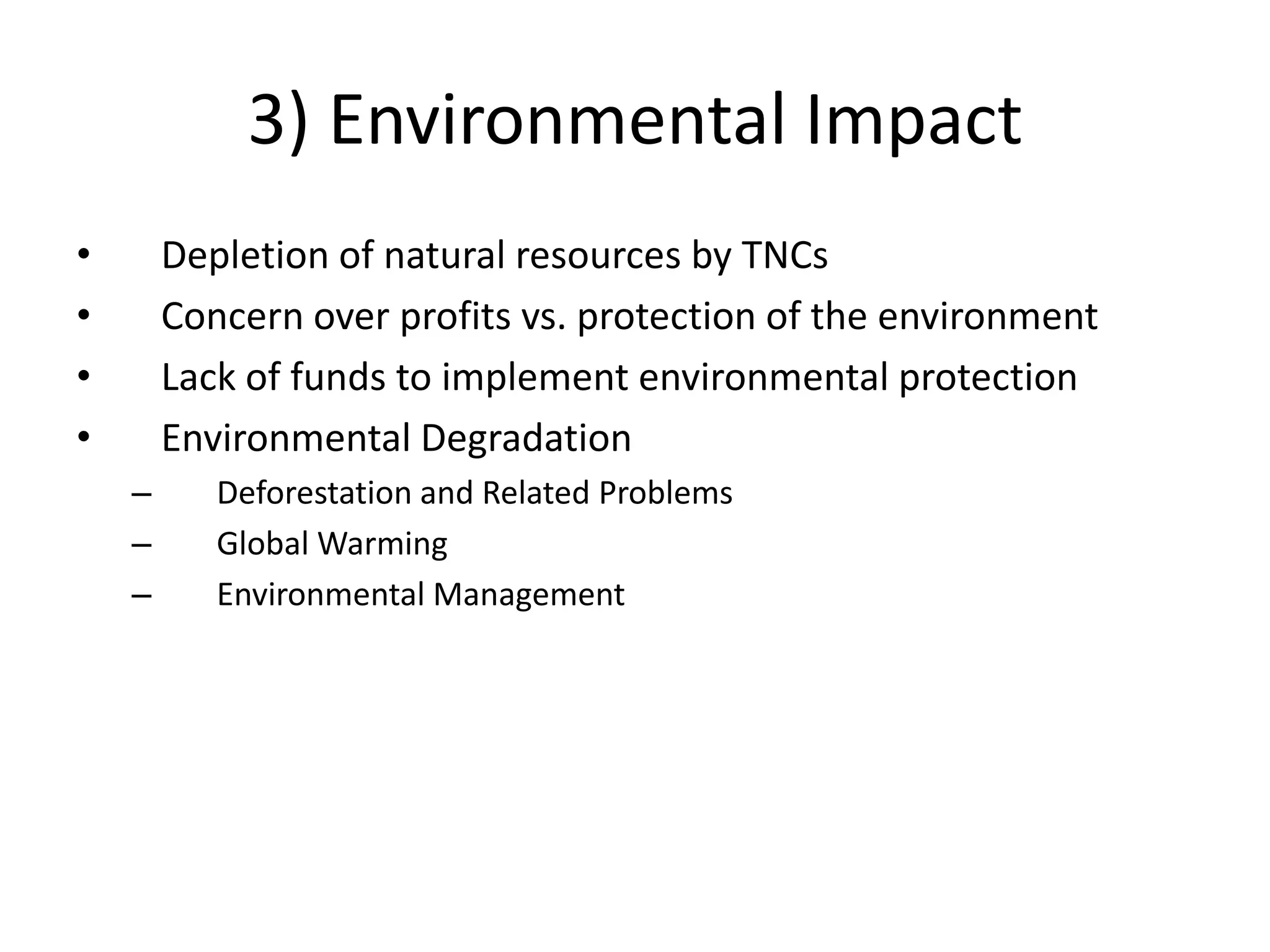
3) Environmental Impact
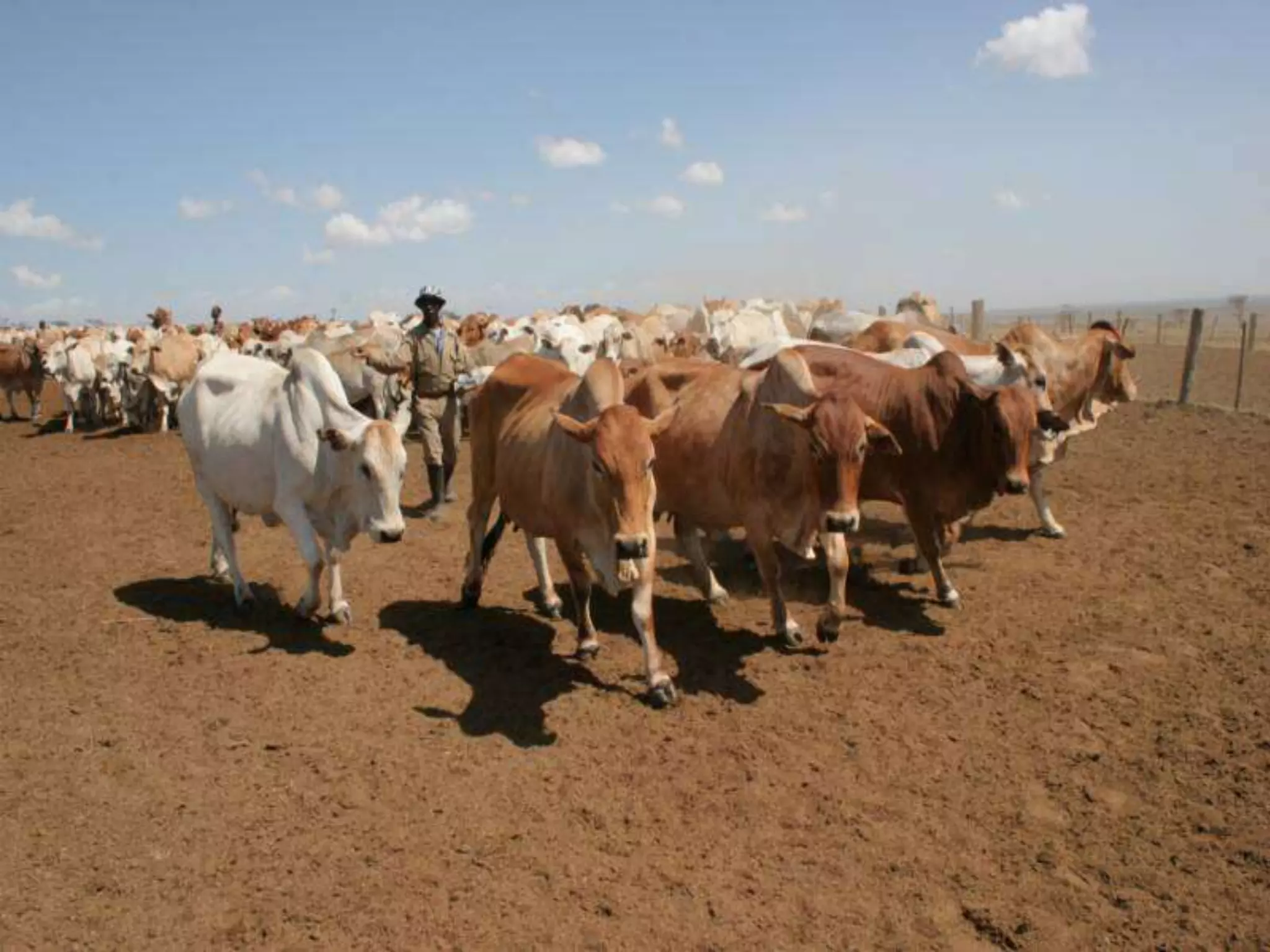
•       Depletion of natural resources by TNCs
•       Concern over profits vs. protection of the environment
•       Lack of funds to implement environmental protection
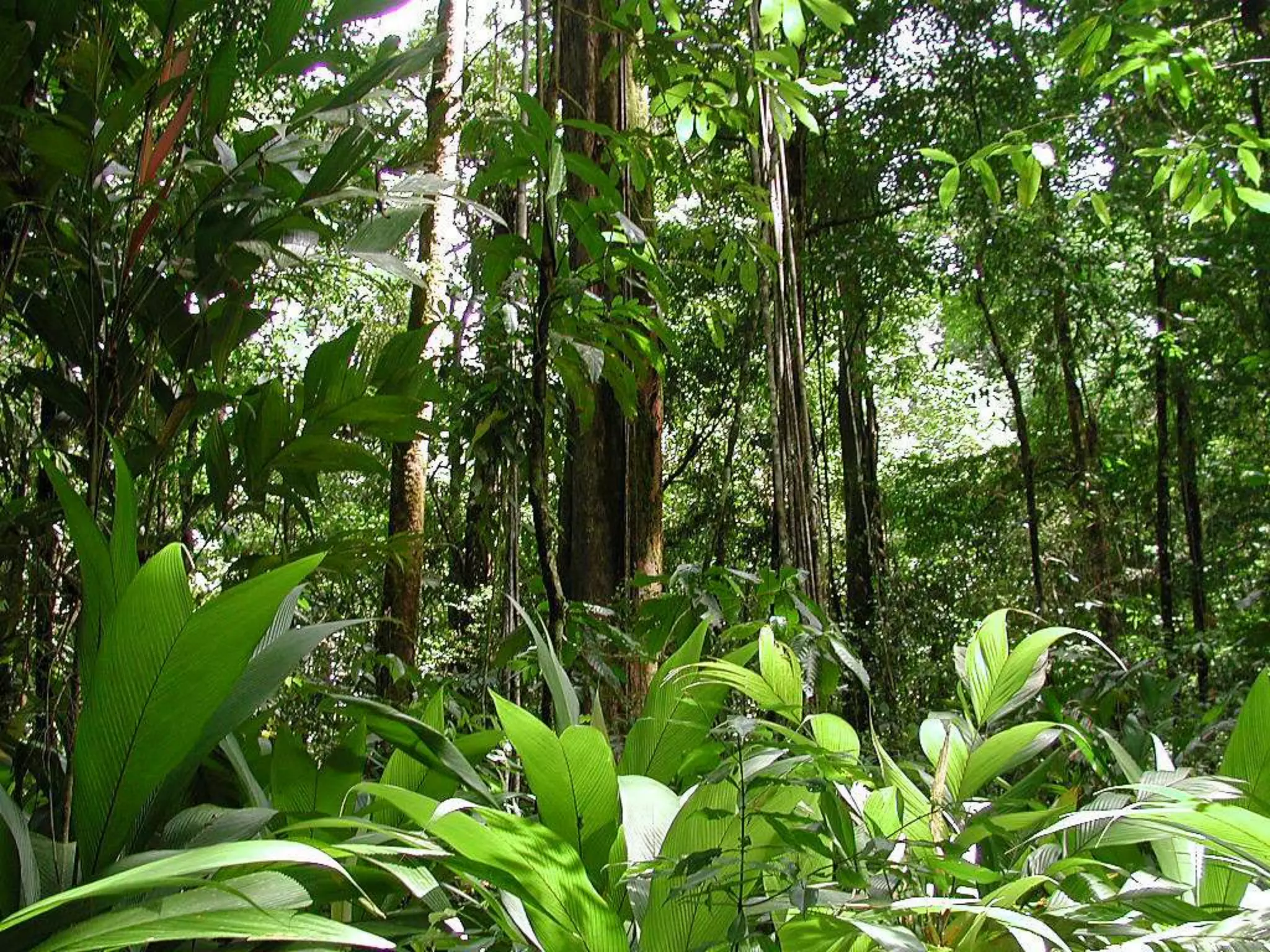
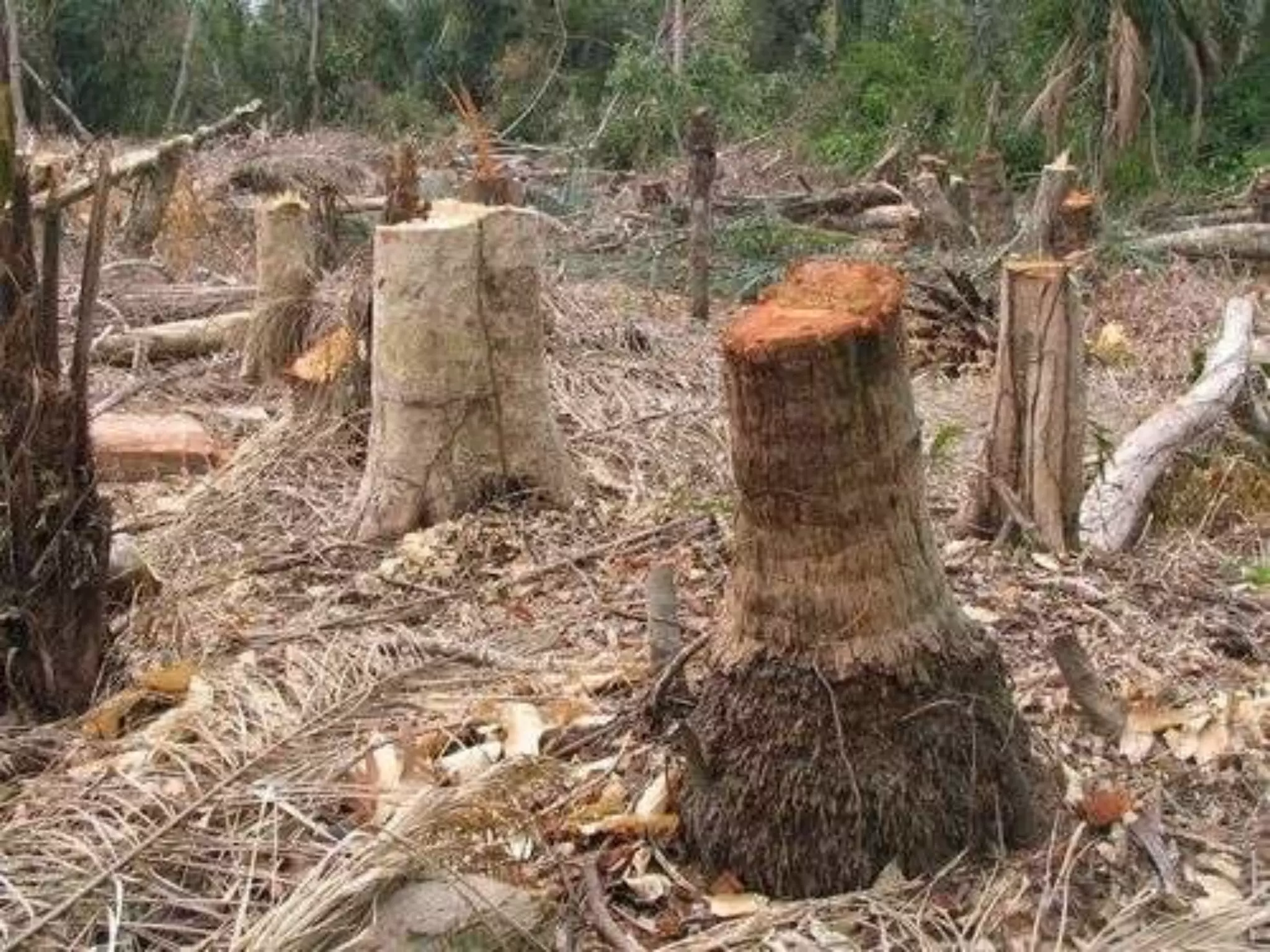
•       Environmental Degradation
    –      Deforestation and Related Problems
    –      Global Warming
    –      Environmental Management
Globalization Quiz
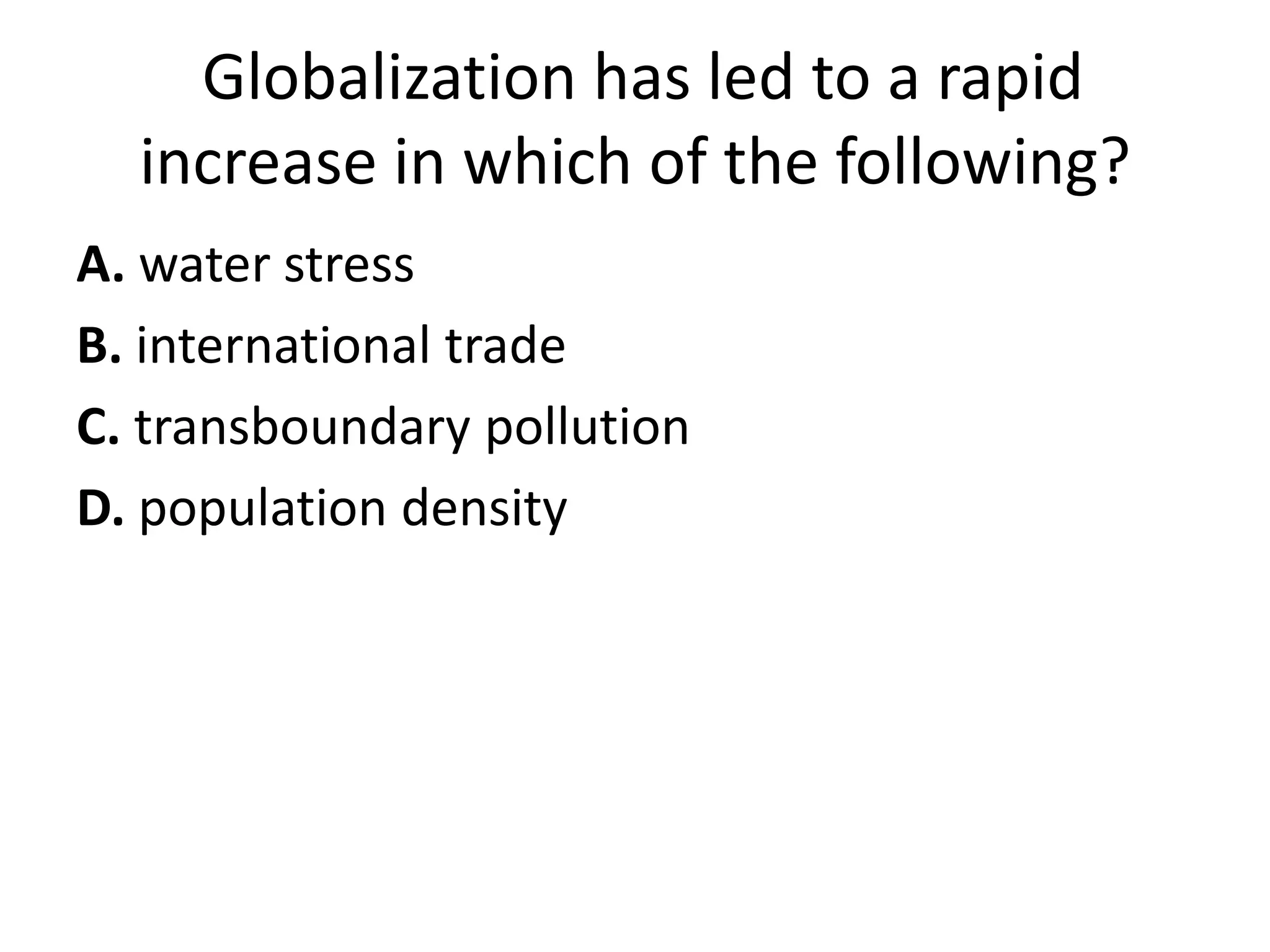
Globalization has led to a rapid
  increase in which of the following?
A. water stress
B. international trade
C. transboundary pollution
D. population density
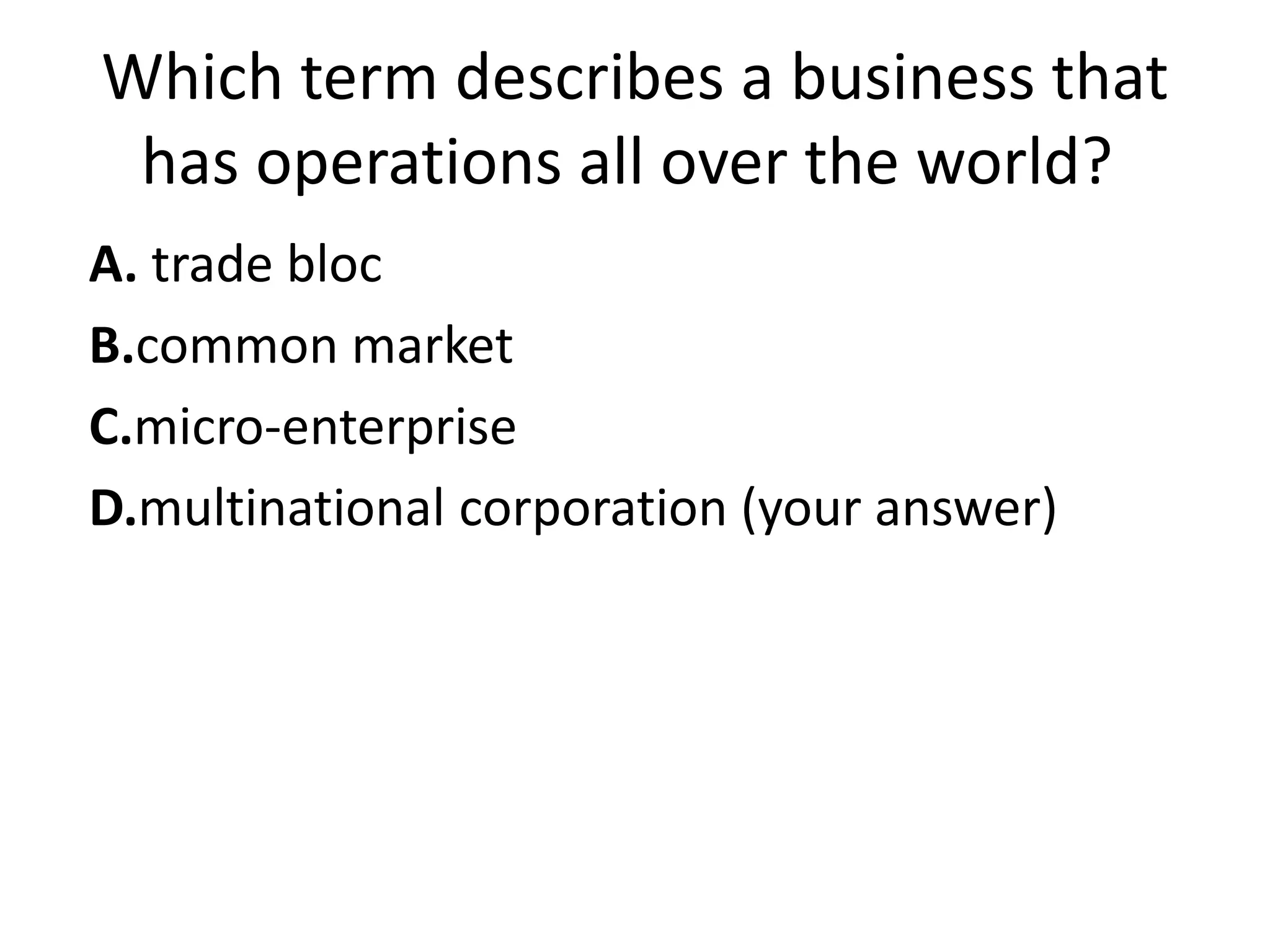
Which term describes a business that
 has operations all over the world?
A. trade bloc
B.common market
C.micro-enterprise
D.multinational corporation (your answer)
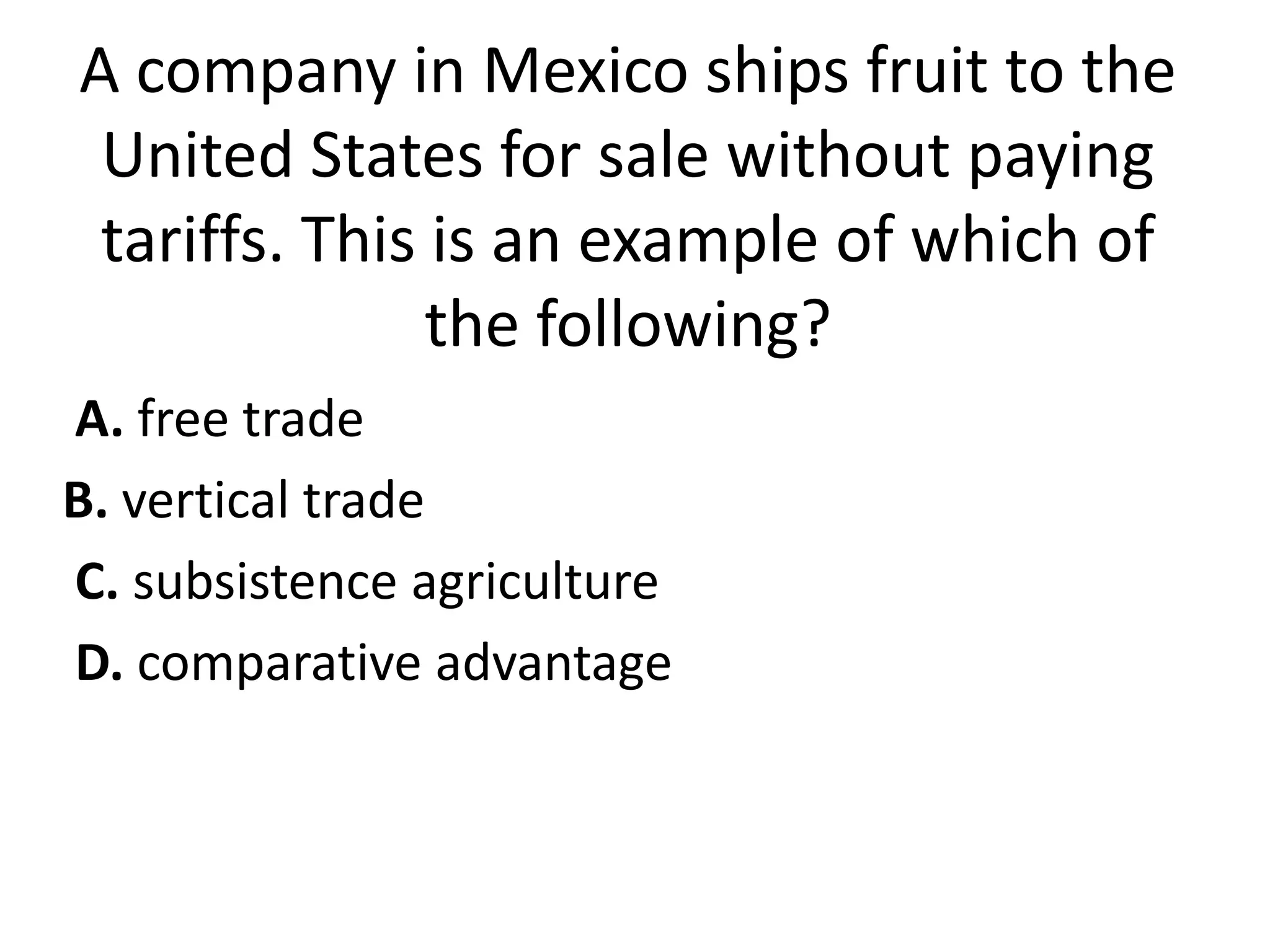
A company in Mexico ships fruit to the
 United States for sale without paying
 tariffs. This is an example of which of
               the following?
A. free trade
B. vertical trade
C. subsistence agriculture
D. comparative advantage
China looks to Japan for foreign
 investment and technology. Japanese
  consumers buy many goods made in
    China. The result is which of the
              following?
A. ethnic diversity
B. sustainable development
C. supranational cooperation
D. economic interdependence
Which best describes why factories
have been moved to Asian countries in
         the last 50 years?
A.low labor costs in developing countries (your
  answer)
B.workers are faster than American workers
C.Asian countries have better materials to work
  with
D.there are more people to work in factories
Globalization
Globalization
Globalization
Globalization
Globalization
Globalization

Globalization

  • 1.
  • 2.
    Globalization is theprocess of interaction and integration among the people, companies and governments of different nations, a process driven by international trade and investment and aided by information technology.
  • 3.
    Globalization is theflow across national boundaries of goods and services, capital, people, technology, ideas, and culture.
  • 4.
    More evidence ofGlobalization • World trade increased about 20x since 1950 while • Global production has increased about 6.5x • Between ’90 and ’00 FDI increased 5x, trade by 2x and world output by 0.2x • By 2000: – 60,000 parent companies operated away from home markets through 820,000 subsidiaries/affiliates – Produced US$14 trillion in global sales, twice the value of global exports – US, Japanese, Western European companies the major investors in Europe, Asia, and North America
  • 5.
    Examples of Globalization •The Internet • Selling local products in the global market • Attending lectures by a British professor teaching in an American University via a web-conference in NUS • Wearing Made in China clothes • Driving Made in Japan cars
  • 6.
    Key Driving Forcesof Globalization 1) Developments in 2) Transnational transportation and Companies communications
  • 7.
    1) Developments intransportation and communications – Improvements in transport technology has “shrunk” the world – 19th century steam engine  20th century jet engine, – Faster and more convenient communication – People all over the globe can communicate via telephone, e-mail, fax, video conferencing, etc • Internet has transferred the way people communicate, do business, obtain information and purchase goods and services
  • 8.
    2) Transnational Companies • TNCs set up operations in different parts of the world: – Sourcing for new markets – Lowering cost of production – Production of different parts for products and assembly done in a variety of countries
  • 9.
    Impact of Globalization 1)Economic Impact 2) Social Impact 3) Environmental Impact
  • 10.
    1) Economic Impact • Widening Income Gap Between the Rich and the Poor – The rich developed countries prosper with better opportunities while the poor developing countries face economic uncertainties like retrenchment – Widening income gap can lead to social problems, increasing tension between the rich and the poor
  • 11.
    Of the largest100 economies in the world, 52 are now corporations; only 48 are countries. Mitsubishi is the 22nd largest economy in the world. General Motors is 26th. Ford is 31st. All are larger than Denmark, Thailand, South Africa, Saudi Arabia, Norway, Malaysia, and Chile. Institute for Policy Studies, Top 200: The Rise of Corporate Global Power, 2000
  • 12.
    2) Social Impact • Increased Awareness of Foreign Culture – Travel, the Internet, mass media (products of globalisation allow you to learn more about foreign culture • Loss of Local Culture – Global (Western) brands dominate consumer markets in developing countries – Creation of homogenous culture across the world – Spread of pop culture and erosion or loss of local culture – Negative influence of youth – Enforced beliefs
  • 15.
    3) Environmental Impact • Depletion of natural resources by TNCs • Concern over profits vs. protection of the environment • Lack of funds to implement environmental protection • Environmental Degradation – Deforestation and Related Problems – Global Warming – Environmental Management
  • 19.
  • 20.
    Globalization has ledto a rapid increase in which of the following? A. water stress B. international trade C. transboundary pollution D. population density
  • 21.
    Which term describesa business that has operations all over the world? A. trade bloc B.common market C.micro-enterprise D.multinational corporation (your answer)
  • 22.
    A company inMexico ships fruit to the United States for sale without paying tariffs. This is an example of which of the following? A. free trade B. vertical trade C. subsistence agriculture D. comparative advantage
  • 23.
    China looks toJapan for foreign investment and technology. Japanese consumers buy many goods made in China. The result is which of the following? A. ethnic diversity B. sustainable development C. supranational cooperation D. economic interdependence
  • 24.
    Which best describeswhy factories have been moved to Asian countries in the last 50 years? A.low labor costs in developing countries (your answer) B.workers are faster than American workers C.Asian countries have better materials to work with D.there are more people to work in factories