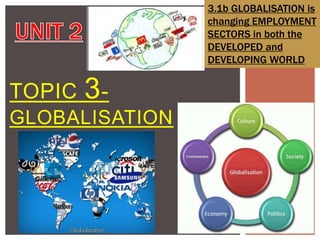
3.1b GLOBALISATION is
changing EMPLOYMENT
SECTORS in both the
DEVELOPED and
DEVELOPING WORLD

TOPIC

3-

GLOBALISATION
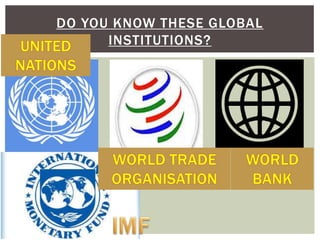
DO YOU KNOW THESE GLOBAL
INSTITUTIONS?
WHO ARE THE WTO?
In your own
words write
down what the
WTO is.

There are a number of ways of looking at the World Trade Organization.
1. It is an organization for trade opening.
2. It is a forum for governments to negotiate trade agreements.
3. It is a place for them to settle trade disputes.
4. It operates a system of trade rules.
5. Essentially, the WTO is a place where member governments try to sort
out the trade problems they face with each other.
 http://www.youtube.com/watch?v=7iywG3_EG1c
What does this
say about the
WTO?
EVALUATE THE IMPACT OF GLOBALISATION ON
DIFFERENT GROUPS OF PEOPLE (MEN AND WOMEN
IN DEVELOPED AND DEVELOPING WORLD)

 Brainstorm any impacts you can think of
http://www.youtube.com/watch?v=4sBMOH
pPZTI

 What does the video suggest are some of the
impacts of GLOBALISATION?
There are more jobs
Has meant thousands of
Women in the UK have increased job available in
women in Kenya have
opportunities in flexible, part time
developing countries,
access to land which
employment especially
especially in
previously they did not Women and men in the developing world
manufacturing and
under Kenyan law
have access to urban (city) secondary and increasingly in
tertiary too
Women in the
tertiary jobs
developing world have Men in the East end of London have reduced access to secondary
increased access to
jobs in car manufacturing that their fathers did
education
Many men in developing Many men in developing countries
have to leave their rural homes and
Many women in countries nations feel work is
children with elderly relatives in
better paid and regular
like Bangladesh work in
in factories compared to countries like China, to work in
‘sweatshops’ for TNCs,
factories
farming which can be
stitching clothes for low
affected by the weather In the UK, fewer full time jobs in
pay, in tough conditions
with limited or no breaks
secondary industries, and more part
time tertiary jobs than 50 years ago
Task
Women in developed
Sort these statements into following groups and draw them
countries have more
into a table
access to work compared
1) Globalisations impact on men in the developed world
to 50 years ago when
2) Globalisations impact on women in the developed world
more jobs were labour
3) Globalisations impact on men in the developing world
intensive- so now women
4) Globalisations impact on women in the developing world
are more equal
MEN IN THE DEVELOPED WORLD
Men in the East end of London have reduced access to secondary
jobs in car manufacturing that their fathers did
In the UK, fewer full time jobs in secondary industries, and more
part time tertiary jobs than 50 years ago
MEN IN THE DEVELOPING WORLD

Many men in developing
nations feel work is
better paid and more
consistent in factories
compared to farming
which can be affected by
the weather

Women and men in the developing world
have access to urban secondary and
tertiary jobs

Many men in developing countries
have to leave their rural homes and
children with elderly relatives in
countries like China, to work in
factories
There are more jobs
available in
developing countries,
especially in
manufacturing and
increasingly in
tertiary too
WOMEN IN THE DEVELOPED WORLD
Women are more equal in
the jobs market

Women in the UK have increased job
opportunities in flexible, part time
employment especially in retail sector.

As male dominated
employment of the past
(mainly secondary) has
declined, this has led to
increased pressure on
women in the developed
world to have jobs
WOMEN IN THE DEVELOPING WORLD
Women in developed
countries have increased
access to flexible work
compared to 50 years ago
when more jobs were
labour intensive- so now
women are more equal

Women in the
developing world have
increased access to
education

There are more jobs
available in
developing countries,
especially in
manufacturing and
increasingly in
tertiary too

Women and men
in the developing
world have
access to urban
secondary and
tertiary jobs

Many women in countries
like Bangladesh work in
‘sweatshops’ for TNCs,
stitching clothes for
minimal pay, in tough
conditions with limited or
no breaks
EXAM PRACTICE QUESTION
Task
Turn to page 174. Draw the spider diagram showing the impacts on the developed
and developing world
What have been the two broad changes mentioned at the top of the page?

 Outline the role global institutions have on creating a
more globalised world ( 2)
 Explain the potential impacts of globalisation on one group
of people (4)

L3&4 globalisation impacts

  • 1.
    3.1b GLOBALISATION is changingEMPLOYMENT SECTORS in both the DEVELOPED and DEVELOPING WORLD TOPIC 3- GLOBALISATION
  • 2.
    DO YOU KNOWTHESE GLOBAL INSTITUTIONS?
  • 3.
    WHO ARE THEWTO? In your own words write down what the WTO is. There are a number of ways of looking at the World Trade Organization. 1. It is an organization for trade opening. 2. It is a forum for governments to negotiate trade agreements. 3. It is a place for them to settle trade disputes. 4. It operates a system of trade rules. 5. Essentially, the WTO is a place where member governments try to sort out the trade problems they face with each other.  http://www.youtube.com/watch?v=7iywG3_EG1c
  • 4.
    What does this sayabout the WTO?
  • 5.
    EVALUATE THE IMPACTOF GLOBALISATION ON DIFFERENT GROUPS OF PEOPLE (MEN AND WOMEN IN DEVELOPED AND DEVELOPING WORLD)  Brainstorm any impacts you can think of http://www.youtube.com/watch?v=4sBMOH pPZTI  What does the video suggest are some of the impacts of GLOBALISATION?
  • 6.
    There are morejobs Has meant thousands of Women in the UK have increased job available in women in Kenya have opportunities in flexible, part time developing countries, access to land which employment especially especially in previously they did not Women and men in the developing world manufacturing and under Kenyan law have access to urban (city) secondary and increasingly in tertiary too Women in the tertiary jobs developing world have Men in the East end of London have reduced access to secondary increased access to jobs in car manufacturing that their fathers did education Many men in developing Many men in developing countries have to leave their rural homes and Many women in countries nations feel work is children with elderly relatives in better paid and regular like Bangladesh work in in factories compared to countries like China, to work in ‘sweatshops’ for TNCs, factories farming which can be stitching clothes for low affected by the weather In the UK, fewer full time jobs in pay, in tough conditions with limited or no breaks secondary industries, and more part time tertiary jobs than 50 years ago Task Women in developed Sort these statements into following groups and draw them countries have more into a table access to work compared 1) Globalisations impact on men in the developed world to 50 years ago when 2) Globalisations impact on women in the developed world more jobs were labour 3) Globalisations impact on men in the developing world intensive- so now women 4) Globalisations impact on women in the developing world are more equal
  • 7.
    MEN IN THEDEVELOPED WORLD Men in the East end of London have reduced access to secondary jobs in car manufacturing that their fathers did In the UK, fewer full time jobs in secondary industries, and more part time tertiary jobs than 50 years ago
  • 8.
    MEN IN THEDEVELOPING WORLD Many men in developing nations feel work is better paid and more consistent in factories compared to farming which can be affected by the weather Women and men in the developing world have access to urban secondary and tertiary jobs Many men in developing countries have to leave their rural homes and children with elderly relatives in countries like China, to work in factories There are more jobs available in developing countries, especially in manufacturing and increasingly in tertiary too
  • 9.
    WOMEN IN THEDEVELOPED WORLD Women are more equal in the jobs market Women in the UK have increased job opportunities in flexible, part time employment especially in retail sector. As male dominated employment of the past (mainly secondary) has declined, this has led to increased pressure on women in the developed world to have jobs
  • 10.
    WOMEN IN THEDEVELOPING WORLD Women in developed countries have increased access to flexible work compared to 50 years ago when more jobs were labour intensive- so now women are more equal Women in the developing world have increased access to education There are more jobs available in developing countries, especially in manufacturing and increasingly in tertiary too Women and men in the developing world have access to urban secondary and tertiary jobs Many women in countries like Bangladesh work in ‘sweatshops’ for TNCs, stitching clothes for minimal pay, in tough conditions with limited or no breaks
  • 11.
    EXAM PRACTICE QUESTION Task Turnto page 174. Draw the spider diagram showing the impacts on the developed and developing world What have been the two broad changes mentioned at the top of the page?  Outline the role global institutions have on creating a more globalised world ( 2)  Explain the potential impacts of globalisation on one group of people (4)

Editor's Notes

  • #7 Need to cut up into card sort