Chapter 3 Notes

Ancient India &
    China
India

• Diverse Geography
 • Himalayan and Karakoram
   mountains

 • Ganges and Indus River Valleys

 • Deccan Plateau
Ancient India

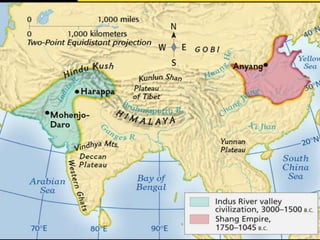
• Indus Valley Civilization
  • (3000 BC to 1500 BC)


  • Major Cities were Mohenjo-Daro &
    Harappa

  • Well organized with public wells &
    advanced drainage system
Indus Valley (continued)

• Theocracies

• Economy based on farming by
  the Indus River

• Traded with Mesopotamia
Aryans (1500 BC)

• Moved from Asia into India and
  conquered the Harappans

• Controlled all of India by 1000
  BC

• Could farm with the help of the
  Iron plowshare
Aryans (continued)

• Developed Sanskrit, their first
  writing system
  • Used for recording legends and
    religious chants

  • The Vedas were religious hymns
  • The Bhagavad Gita was the most
    famous section of the Mahabhara
Caste System
• Light-skinned Aryans looked
  down on dark skinned subjects

• A set of social categories that
  determined a persons
  occupation & economic
  potential

• The caste system still exists
  today
5 major castes
•    Brahmins (priests)
    • Kshatriyas (warriors)
    • Vaisyas (commoners)
    • Sudras (Dark skinned
      natives who worked for the
      Vaisyas)
    • Untouchables (not
      considered human, lived in
      separate areas)
Hinduism
   Collection of ancient beliefs, no
     single “founder”
   • Believed in the existence of a
     single force in nature, called
     Brahman
• A person’s actions will
  determine how they are reborn
  in their next life
• Goal is to be unified with
  Brahman
Buddhism
• Founded by Siddhartha Gautama
Beliefs:
 • Escape from suffering
 • Promise of eternal salvation


Spread throughout China

Monasteries became important
 centers of learning
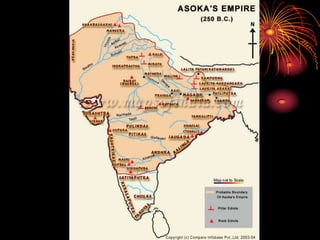
Mauryan Dynasty (324 BC)
 • Centralized government with
   provinces

 • Asoka was the greatest ruler in
   the history of India

 • He used Buddhist ideals to
   guide his rule
   • Provided rest stops & animal
     hospitals
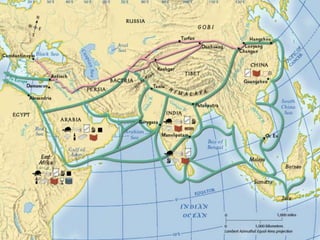
Silk Road (around 1 AD)
• Silk was China’s most valuable
  product

• Ran from China to Eastern
  Europe

• India prospered from the trade
  between the Romans and the
  Chinese
Gupta Empire (320 AD)
• Known for religious toleration

• Great traders

• This was the Golden Age of
  India
Indian Science
• Earth was round, on it’s
  axis, and revolved around the
  sun
• Algebra
• Concept of zero

• Indians gave their number
  system to the Arabs
  • The Arabs gave this number
    system to the Europeans
Ancient China
• Diverse geography
  •Huang and Yangtze
   rivers
  •Deserts, Mountains
  •China isolated by
   natural barriers
Shang Dynasty
  (1750 – 1122 BC)
• Major concern was war

• King could choose & remove
  aristocratic leaders

• Strong belief in life after death

• Mastery of bronze casting
Zhou Dynasty
  (1045 – 256 BC)
• Mandate of Heaven
  • heaven kept order through the
    king

  • king had authority from heaven to
    command
Technology & Family
• Technology
  • Irrigation was widely used
  • Increased food production due to iron
    plowshares…this led to increased population
  E048186       Trinity+1


• Family
  • Filial piety -> duty of members of the family to
    put the needs of the leading male in the family
    ahead of their own
Religion
• Hinduism & Buddhism
 • focused on freeing the soul from the cycle
   of rebirth


• Confucianism, Daoism, & Legalism
 • focused on the immediate world and how
  to create a stable order in that world
Important People

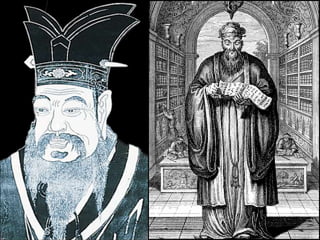
• Confucius: Great Teacher
 • People must behave in accordance
   with Tao (the Way)

 • Filial piety: respect family, elders
   first
Confucianism
• 5 relationships
  • parent and child,
  • husband and wife,
  • elder sibling and junior
    sibling,
  • elder friend and junior
    friend,
  • ruler and subject
Confucianism (continued)

  • Duties & responsibilities

  • Filial piety

  • Social Harmony

  • Kings should lead by example
Daoism
• Based on the ideas of Lao Zi

• Tries to set proper forms of behavior
  for human beings on Earth

• Act spontaneously and let nature take
  its course without interfering in it
Legalism
• People are evil by nature

• Create order through strict laws and
  harsh punishment

• Feudal leaders agreed with this
Qin Dynasty
   (221 – 206 BC)
• United China into a centralized state

• Legalism became their ideology
• Bureaucracy divided into 3 parts:
  • Civil, military, censorate (Checked on
    government officials)


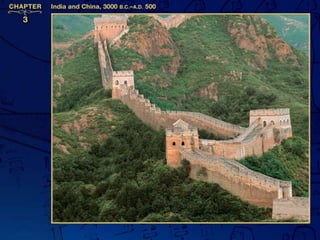
• Built the Great Wall of China
Han Dynasty
   (202 BC – 220 AD)
• Established schools for civil positions

• Followed Confucius’ ideals

• Population increased

• Expanded Chinese Empire
Great Chinese Inventions
  • Magnetic compass

  • Gunpowder

  • Paper

  • Printing

  • Iron casting (led to steel)

  • Fore-and-aft rigging for ships

06 07 chapter 3 notes

  • 1.
  • 3.
    India • Diverse Geography • Himalayan and Karakoram mountains • Ganges and Indus River Valleys • Deccan Plateau
  • 4.
    Ancient India • IndusValley Civilization • (3000 BC to 1500 BC) • Major Cities were Mohenjo-Daro & Harappa • Well organized with public wells & advanced drainage system
  • 5.
    Indus Valley (continued) •Theocracies • Economy based on farming by the Indus River • Traded with Mesopotamia
  • 6.
    Aryans (1500 BC) •Moved from Asia into India and conquered the Harappans • Controlled all of India by 1000 BC • Could farm with the help of the Iron plowshare
  • 7.
    Aryans (continued) • DevelopedSanskrit, their first writing system • Used for recording legends and religious chants • The Vedas were religious hymns • The Bhagavad Gita was the most famous section of the Mahabhara
  • 8.
    Caste System • Light-skinnedAryans looked down on dark skinned subjects • A set of social categories that determined a persons occupation & economic potential • The caste system still exists today
  • 9.
    5 major castes • Brahmins (priests) • Kshatriyas (warriors) • Vaisyas (commoners) • Sudras (Dark skinned natives who worked for the Vaisyas) • Untouchables (not considered human, lived in separate areas)
  • 10.
    Hinduism Collection of ancient beliefs, no single “founder” • Believed in the existence of a single force in nature, called Brahman • A person’s actions will determine how they are reborn in their next life • Goal is to be unified with Brahman
  • 11.
    Buddhism • Founded bySiddhartha Gautama Beliefs: • Escape from suffering • Promise of eternal salvation Spread throughout China Monasteries became important centers of learning
  • 12.
    Mauryan Dynasty (324BC) • Centralized government with provinces • Asoka was the greatest ruler in the history of India • He used Buddhist ideals to guide his rule • Provided rest stops & animal hospitals
  • 14.
    Silk Road (around1 AD) • Silk was China’s most valuable product • Ran from China to Eastern Europe • India prospered from the trade between the Romans and the Chinese
  • 16.
    Gupta Empire (320AD) • Known for religious toleration • Great traders • This was the Golden Age of India
  • 17.
    Indian Science • Earthwas round, on it’s axis, and revolved around the sun • Algebra • Concept of zero • Indians gave their number system to the Arabs • The Arabs gave this number system to the Europeans
  • 18.
    Ancient China • Diversegeography •Huang and Yangtze rivers •Deserts, Mountains •China isolated by natural barriers
  • 19.
    Shang Dynasty (1750 – 1122 BC) • Major concern was war • King could choose & remove aristocratic leaders • Strong belief in life after death • Mastery of bronze casting
  • 20.
    Zhou Dynasty (1045 – 256 BC) • Mandate of Heaven • heaven kept order through the king • king had authority from heaven to command
  • 21.
    Technology & Family •Technology • Irrigation was widely used • Increased food production due to iron plowshares…this led to increased population E048186 Trinity+1 • Family • Filial piety -> duty of members of the family to put the needs of the leading male in the family ahead of their own
  • 22.
    Religion • Hinduism &Buddhism • focused on freeing the soul from the cycle of rebirth • Confucianism, Daoism, & Legalism • focused on the immediate world and how to create a stable order in that world
  • 23.
    Important People • Confucius:Great Teacher • People must behave in accordance with Tao (the Way) • Filial piety: respect family, elders first
  • 24.
    Confucianism • 5 relationships • parent and child, • husband and wife, • elder sibling and junior sibling, • elder friend and junior friend, • ruler and subject
  • 25.
    Confucianism (continued) • Duties & responsibilities • Filial piety • Social Harmony • Kings should lead by example
  • 27.
    Daoism • Based onthe ideas of Lao Zi • Tries to set proper forms of behavior for human beings on Earth • Act spontaneously and let nature take its course without interfering in it
  • 28.
    Legalism • People areevil by nature • Create order through strict laws and harsh punishment • Feudal leaders agreed with this
  • 29.
    Qin Dynasty (221 – 206 BC) • United China into a centralized state • Legalism became their ideology • Bureaucracy divided into 3 parts: • Civil, military, censorate (Checked on government officials) • Built the Great Wall of China
  • 31.
    Han Dynasty (202 BC – 220 AD) • Established schools for civil positions • Followed Confucius’ ideals • Population increased • Expanded Chinese Empire
  • 32.
    Great Chinese Inventions • Magnetic compass • Gunpowder • Paper • Printing • Iron casting (led to steel) • Fore-and-aft rigging for ships