1
Mr. Sagar Kishor Savale
[Department of Pharmaceutics]
avengersagar16@gmail.com
2015-2016
Department of Pharmacy (Pharmaceutics) | Sagar savale
 Introduction
 Advantages
 Disadvantages
 Types of glass
 Composition
 Additives
 Manufacturing process
 Evaluation test
 Conclusion
 Reference
2
After the manufacturing of the drug, it is essential that
these should be stored properly. The stability of drug
during it’s storage depend on so many factor and proper
packaging is one of them. The pharmaceutical
products are in direct contact with the container and
closures. So improper packaging and poor quality of
container may lead to deterioration of the product.
3
 DEFINITION:
Pharmaceutical container has been defined as
a device that holds the drug and it may or may not be in
direct contact with the pharmaceutical preparation.
 Types of packaging
1. Primary packaging
2. Secondary packaging
4
 They are transparent.
 They can withstand the variation in temperature and
pressure during sterilization.
 they can be sealed hermetically or by removable
closers.
 They can protect the photosensitive medicaments from
light during their storage.
 They are neutral after proper treatment.
 They are impermeable to moisture and other gases.
 They do not deteriorate with age
5
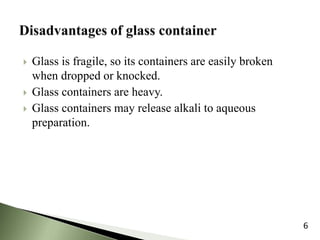
 Glass is fragile, so its containers are easily broken
when dropped or knocked.
 Glass containers are heavy.
 Glass containers may release alkali to aqueous
preparation.
6
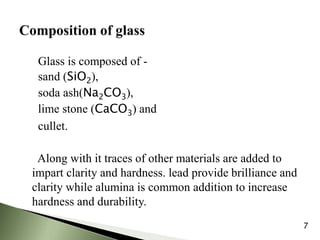
Glass is composed of -
sand (SiO2),
soda ash(Na2CO3),
lime stone (CaCO3) and
cullet.
Along with it traces of other materials are added to
impart clarity and hardness. lead provide brilliance and
clarity while alumina is common addition to increase
hardness and durability.
7
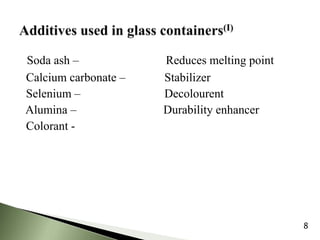
Soda ash – Reduces melting point
Calcium carbonate – Stabilizer
Selenium – Decolourent
Alumina – Durability enhancer
Colorant -
8
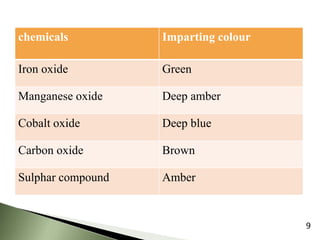
chemicals Imparting colour
Iron oxide Green
Manganese oxide Deep amber
Cobalt oxide Deep blue
Carbon oxide Brown
Sulphar compound Amber
9
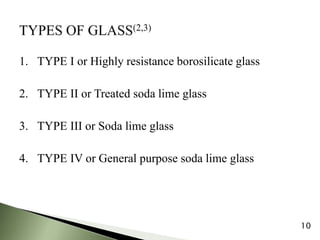
1. TYPE I or Highly resistance borosilicate glass
2. TYPE II or Treated soda lime glass
3. TYPE III or Soda lime glass
4. TYPE IV or General purpose soda lime glass
10
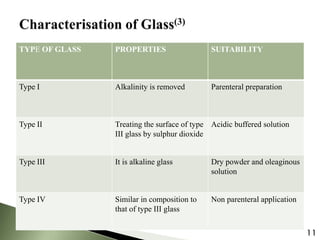
TYPE OF GLASS PROPERTIES SUITABILITY
Type I Alkalinity is removed Parenteral preparation
Type II Treating the surface of type
III glass by sulphur dioxide
Acidic buffered solution
Type III It is alkaline glass Dry powder and oleaginous
solution
Type IV Similar in composition to
that of type III glass
Non parenteral application
11
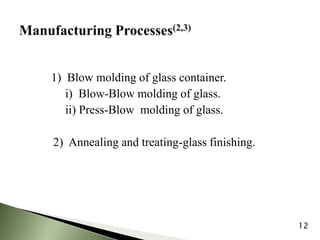
1) Blow molding of glass container.
i) Blow-Blow molding of glass.
ii) Press-Blow molding of glass.
2) Annealing and treating-glass finishing.
12
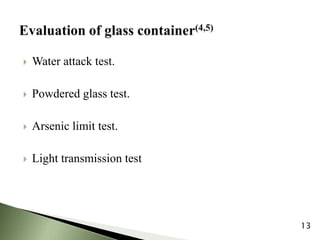
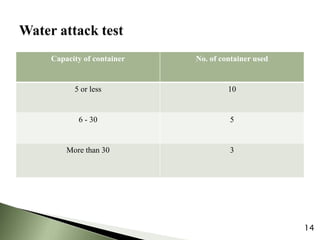
 Water attack test.
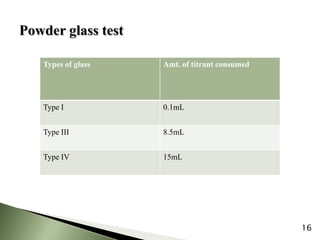
 Powdered glass test.
 Arsenic limit test.
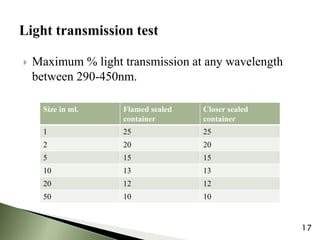
 Light transmission test
13
Capacity of container No. of container used
5 or less 10
6 - 30 5
More than 30 3
14
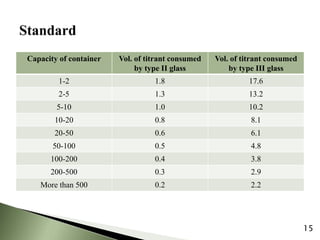
Capacity of container Vol. of titrant consumed
by type II glass
Vol. of titrant consumed
by type III glass
1-2 1.8 17.6
2-5 1.3 13.2
5-10 1.0 10.2
10-20 0.8 8.1
20-50 0.6 6.1
50-100 0.5 4.8
100-200 0.4 3.8
200-500 0.3 2.9
More than 500 0.2 2.2
15
Types of glass Amt. of titrant consumed
Type I 0.1mL
Type III 8.5mL
Type IV 15mL
16
 Maximum % light transmission at any wavelength
between 290-450nm.
Size in ml. Flamed sealed
container
Closer sealed
container
1 25 25
2 20 20
5 15 15
10 13 13
20 12 12
50 10 10
17
Glass is one of the best primary packing
material for parentral preparation, because-
 It is transparent, by which we can easily visualize the
preparation.
 For multiple dose preparation, glass container are more
preferably used.
 We can protect the product from sunlight or U.V. rays
 It has least possibility to interact with preparation.
18
1.Remington, The Science and Practice of Pharmacy, 21st ed;
Vol-I, P.809
2.Edward BJ, Pharmaceutical Packaging Handbook, Informa
healthcare, New York, London, P.195,297-303.
3.Jain NK, Pharmaceutical Product Development, CBS Publisher
and distributor Pvt.Ltd. 1st ed- 2006: P.167
4.United State Pharmacopoeia and National Formulary, United
States Pharmacopoeial Convention, INC, Asian ed-2004; P.
2288-2290.
5.INDIAN PHARMACOPOEIA 1996, Govt. of India, ministry
of health & family welfare, Published by Indian
Pharmacopoeial Commission, Vol-II, Ghaziabad, P.A -127.
19
I.www.ecolife.com
20
Glass

Glass

  • 1.
    1 Mr. Sagar KishorSavale [Department of Pharmaceutics] avengersagar16@gmail.com 2015-2016 Department of Pharmacy (Pharmaceutics) | Sagar savale
  • 2.
     Introduction  Advantages Disadvantages  Types of glass  Composition  Additives  Manufacturing process  Evaluation test  Conclusion  Reference 2
  • 3.
    After the manufacturingof the drug, it is essential that these should be stored properly. The stability of drug during it’s storage depend on so many factor and proper packaging is one of them. The pharmaceutical products are in direct contact with the container and closures. So improper packaging and poor quality of container may lead to deterioration of the product. 3
  • 4.
     DEFINITION: Pharmaceutical containerhas been defined as a device that holds the drug and it may or may not be in direct contact with the pharmaceutical preparation.  Types of packaging 1. Primary packaging 2. Secondary packaging 4
  • 5.
     They aretransparent.  They can withstand the variation in temperature and pressure during sterilization.  they can be sealed hermetically or by removable closers.  They can protect the photosensitive medicaments from light during their storage.  They are neutral after proper treatment.  They are impermeable to moisture and other gases.  They do not deteriorate with age 5
  • 6.
     Glass isfragile, so its containers are easily broken when dropped or knocked.  Glass containers are heavy.  Glass containers may release alkali to aqueous preparation. 6
  • 7.
    Glass is composedof - sand (SiO2), soda ash(Na2CO3), lime stone (CaCO3) and cullet. Along with it traces of other materials are added to impart clarity and hardness. lead provide brilliance and clarity while alumina is common addition to increase hardness and durability. 7
  • 8.
    Soda ash –Reduces melting point Calcium carbonate – Stabilizer Selenium – Decolourent Alumina – Durability enhancer Colorant - 8
  • 9.
    chemicals Imparting colour Ironoxide Green Manganese oxide Deep amber Cobalt oxide Deep blue Carbon oxide Brown Sulphar compound Amber 9
  • 10.
    1. TYPE Ior Highly resistance borosilicate glass 2. TYPE II or Treated soda lime glass 3. TYPE III or Soda lime glass 4. TYPE IV or General purpose soda lime glass 10
  • 11.
    TYPE OF GLASSPROPERTIES SUITABILITY Type I Alkalinity is removed Parenteral preparation Type II Treating the surface of type III glass by sulphur dioxide Acidic buffered solution Type III It is alkaline glass Dry powder and oleaginous solution Type IV Similar in composition to that of type III glass Non parenteral application 11
  • 12.
    1) Blow moldingof glass container. i) Blow-Blow molding of glass. ii) Press-Blow molding of glass. 2) Annealing and treating-glass finishing. 12
  • 13.
     Water attacktest.  Powdered glass test.  Arsenic limit test.  Light transmission test 13
  • 14.
    Capacity of containerNo. of container used 5 or less 10 6 - 30 5 More than 30 3 14
  • 15.
    Capacity of containerVol. of titrant consumed by type II glass Vol. of titrant consumed by type III glass 1-2 1.8 17.6 2-5 1.3 13.2 5-10 1.0 10.2 10-20 0.8 8.1 20-50 0.6 6.1 50-100 0.5 4.8 100-200 0.4 3.8 200-500 0.3 2.9 More than 500 0.2 2.2 15
  • 16.
    Types of glassAmt. of titrant consumed Type I 0.1mL Type III 8.5mL Type IV 15mL 16
  • 17.
     Maximum %light transmission at any wavelength between 290-450nm. Size in ml. Flamed sealed container Closer sealed container 1 25 25 2 20 20 5 15 15 10 13 13 20 12 12 50 10 10 17
  • 18.
    Glass is oneof the best primary packing material for parentral preparation, because-  It is transparent, by which we can easily visualize the preparation.  For multiple dose preparation, glass container are more preferably used.  We can protect the product from sunlight or U.V. rays  It has least possibility to interact with preparation. 18
  • 19.
    1.Remington, The Scienceand Practice of Pharmacy, 21st ed; Vol-I, P.809 2.Edward BJ, Pharmaceutical Packaging Handbook, Informa healthcare, New York, London, P.195,297-303. 3.Jain NK, Pharmaceutical Product Development, CBS Publisher and distributor Pvt.Ltd. 1st ed- 2006: P.167 4.United State Pharmacopoeia and National Formulary, United States Pharmacopoeial Convention, INC, Asian ed-2004; P. 2288-2290. 5.INDIAN PHARMACOPOEIA 1996, Govt. of India, ministry of health & family welfare, Published by Indian Pharmacopoeial Commission, Vol-II, Ghaziabad, P.A -127. 19
  • 20.