Download to read offline
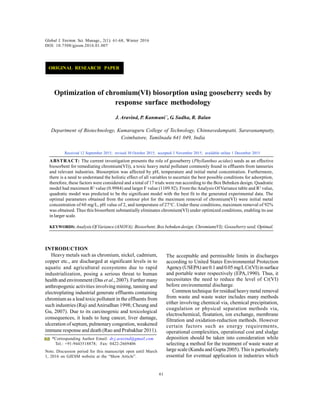
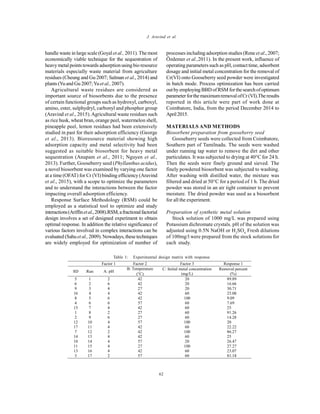
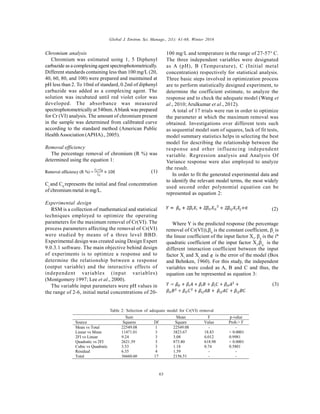
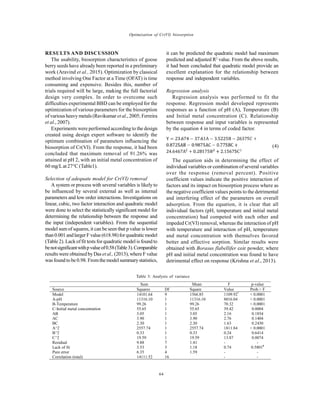
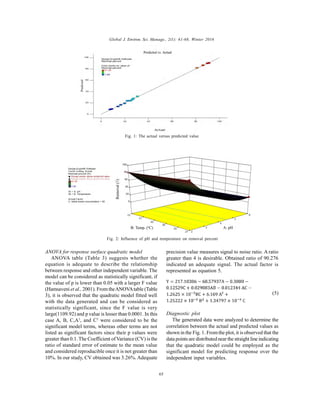
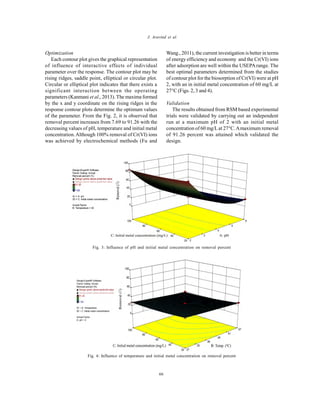
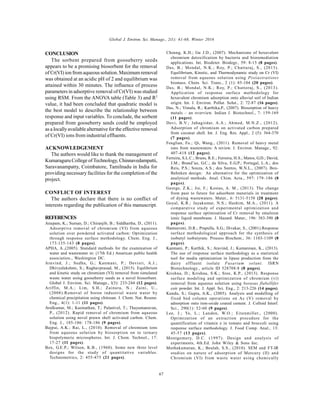
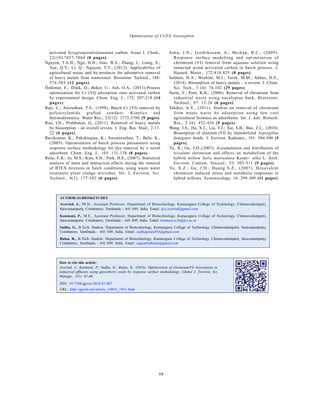

The investigation evaluates gooseberry (Phyllanthus acidus) seeds as a biosorbent for removing chromium(VI), a toxic heavy metal from industrial effluents. Using response surface methodology, optimal conditions for chromium removal were identified at a pH of 2, a temperature of 27°C, and an initial metal concentration of 60 mg/L, achieving a maximum removal efficiency of 92%. The study's results indicate that this biosorbent could be a viable solution for large-scale chromium(VI) remediation.


