Shaimaa Elkholy, M.D.
Cairo University, Egypt
Shaimaa Elkholy, M.D. Cairo University
Agenda
Introduction.
Distribution.
Predisposing factors.
Oesphageal lymphoma
Gastric lymphoma.
Small intestinal lymphoma.
Take home message.
References.
Shaimaa Elkholy, M.D. Cairo University
Introduction
Primary GI lymphoma typically refers to a lymphoma
that predominantly involves any section of the GI
tract from the oropharynx to the rectum.
The gastrointestinal (GI) tract is the predominant site
of extra nodal lymphoma involvement mostly are
non-Hodgkin lymphomas (NHLs).
Primary lymphomas of the GI tract are rare 1-4% of
GI neoplasm.
Secondary GI involvement ranges from 10 % of
patients at the time of diagnosis, and up to 60 % of
those dying from advanced disease.
Shaimaa Elkholy, M.D. Cairo University
Distribution :
80%
15%
5%
Gastric
Small Intestinal
Colo rectal
Gastric lymphomas more common 80%.
Small intestinal lymphomas about 15%.
Colorectal are very rare 5%.
Shaimaa Elkholy, M.D. Cairo University
Predisposing factors:
H. pylori infection :
 Mostly gastric lymphoma
Auto immune diseases:
 Rheumatoid arthritis.
 SLE & Sjögren's syndrome.
 Granulomatosis with polyangiitis (Wegener's granulomatosis).
 Immunosuppressive therapy increases the risk.
Shaimaa Elkholy, M.D. Cairo University
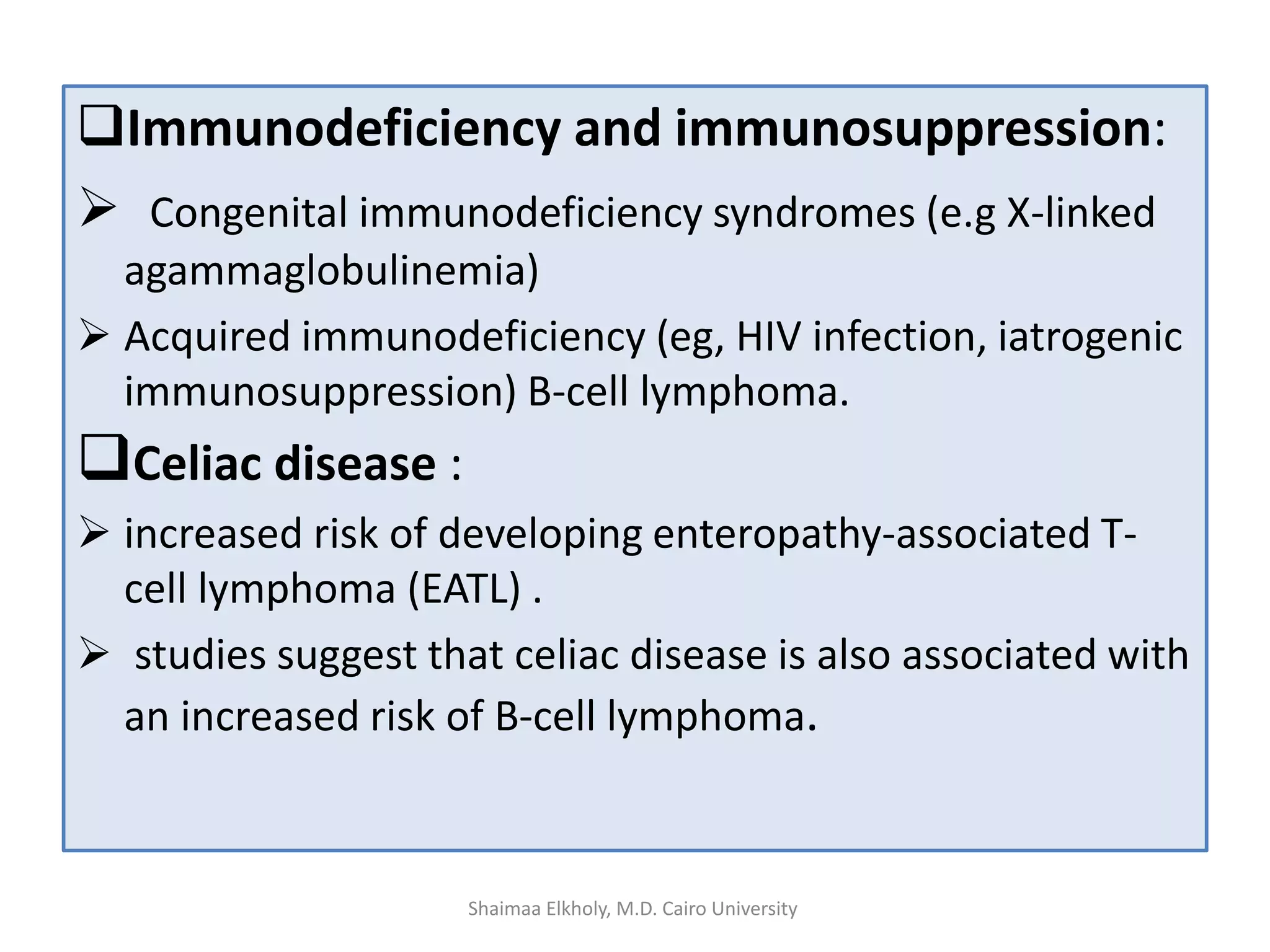
Immunodeficiency and immunosuppression:
 Congenital immunodeficiency syndromes (e.g X-linked
agammaglobulinemia)
 Acquired immunodeficiency (eg, HIV infection, iatrogenic
immunosuppression) B-cell lymphoma.
Celiac disease :
 increased risk of developing enteropathy-associated T-
cell lymphoma (EATL) .
 studies suggest that celiac disease is also associated with
an increased risk of B-cell lymphoma.
Shaimaa Elkholy, M.D. Cairo University
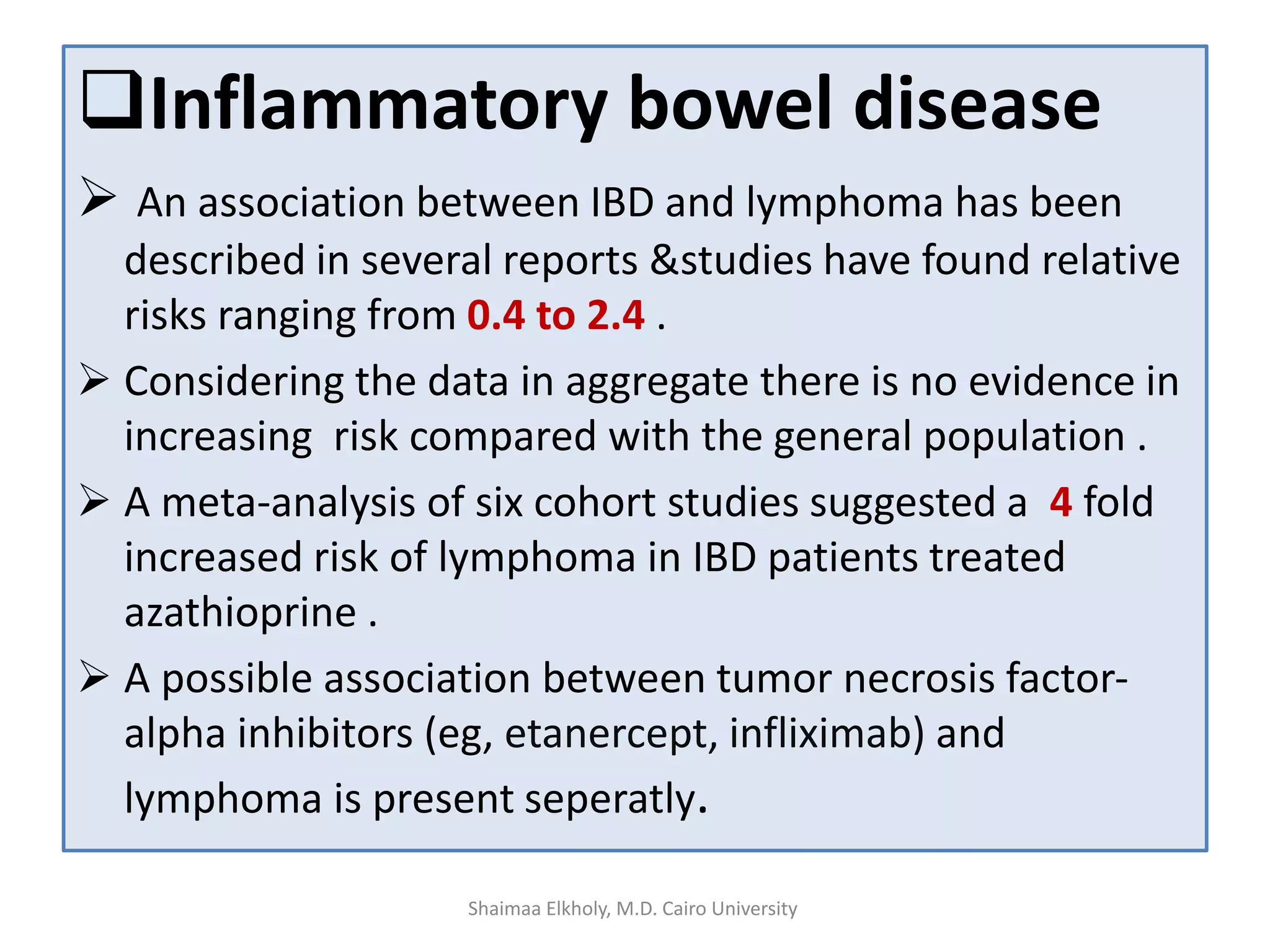
Inflammatory bowel disease
 An association between IBD and lymphoma has been
described in several reports &studies have found relative
risks ranging from 0.4 to 2.4 .
 Considering the data in aggregate there is no evidence in
increasing risk compared with the general population .
 A meta-analysis of six cohort studies suggested a 4 fold
increased risk of lymphoma in IBD patients treated
azathioprine .
 A possible association between tumor necrosis factor-
alpha inhibitors (eg, etanercept, infliximab) and
lymphoma is present separately.
Shaimaa Elkholy, M.D. Cairo University
:
 Its diffuse hyperplasia of the lymphoid intestinal
follicles.
 It is a benign condition but it has been implicated as
an important risk factor for primary lymphomas of
the small intestine.
 In children, it tends to have a benign course and
usually regresses spontaneously.
Shaimaa Elkholy, M.D. Cairo University
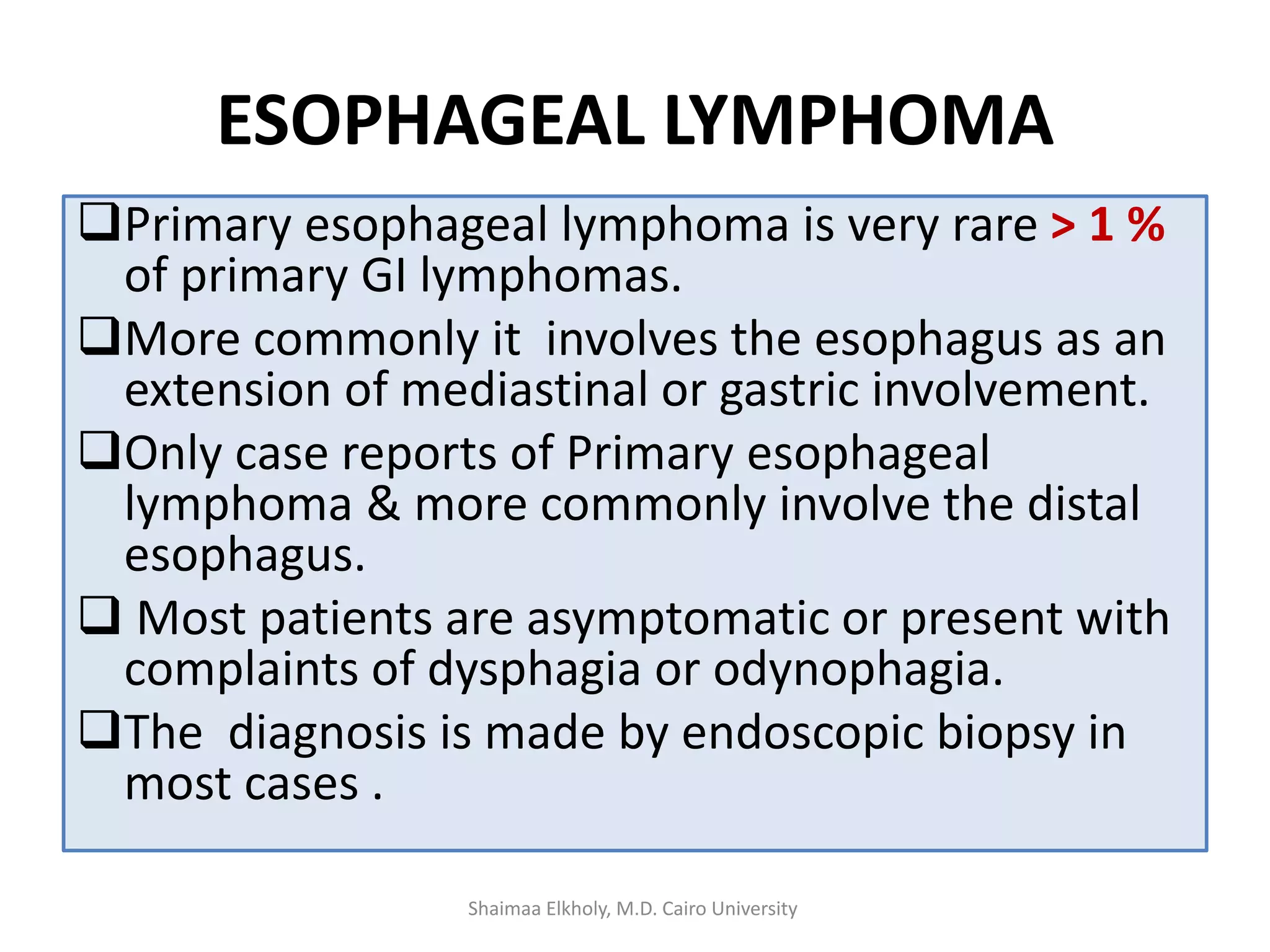
ESOPHAGEAL LYMPHOMA
Primary esophageal lymphoma is very rare > 1 %
of primary GI lymphomas.
More commonly it involves the esophagus as an
extension of mediastinal or gastric involvement.
Only case reports of Primary esophageal
lymphoma & more commonly involve the distal
esophagus.
 Most patients are asymptomatic or present with
complaints of dysphagia or odynophagia.
The diagnosis is made by endoscopic biopsy in
most cases .
Shaimaa Elkholy, M.D. Cairo University
GASTRIC LYMPHOMA
Epidemiology :
It is the most common primary GI lymphomas
75-80%.
 it accounts about 3 %of gastric neoplasm and
10 % of lymphomas.
Gastric lymphoma reaches its peak incidence
between the ages of 50 to 60 years.
There is a slight male predominance.
Shaimaa Elkholy, M.D. Cairo University
• Clinical features :
Patients usually present with nonspecific symptoms
frequently seen with more common gastric conditions as
peptic ulcer disease.
The most common presenting symptoms include:
 Epigastric pain or discomfort (78 to 93 %).
 Early satiety & anorexia (47 %).
 Weight loss (25 %).
 Nausea and/or vomiting (18 %).
 Occult GIT bleeding (19%), Hematemesis & melena are
uncommon.
 Systemic B symptoms (fever, night sweats) seen in 12 %.
Weight loss is frequently due to mechanical factors.
Shaimaa Elkholy, M.D. Cairo University
The vast majority (> 90 %) of gastric lymphomas
divided into two histologic subtypes
 Extranodal marginal zone B-cell lymphoma of
mucosa -associated lymphoid tissue (MALT) (38 to 48
%)
 Diffuse large B-cell lymphoma (45 to 59 %).
The remaining cases of gastric lymphoma may
also represent as:
 Mantle cell lymphoma .
 Follicular lymphoma .
 Peripheral T-cell lymphoma.
Shaimaa Elkholy, M.D. Cairo University
Diagnostic evaluation :
The diagnosis of gastric lymphoma is done
with upper endoscopy with biopsy with
variable findings:
Mucosal erythema.
Shaimaa Elkholy, M.D. Cairo University
Benign-appearing gastric ulcer .
A mass or polypoid lesion with or without
ulceration
Shaimaa Elkholy, M.D. Cairo University
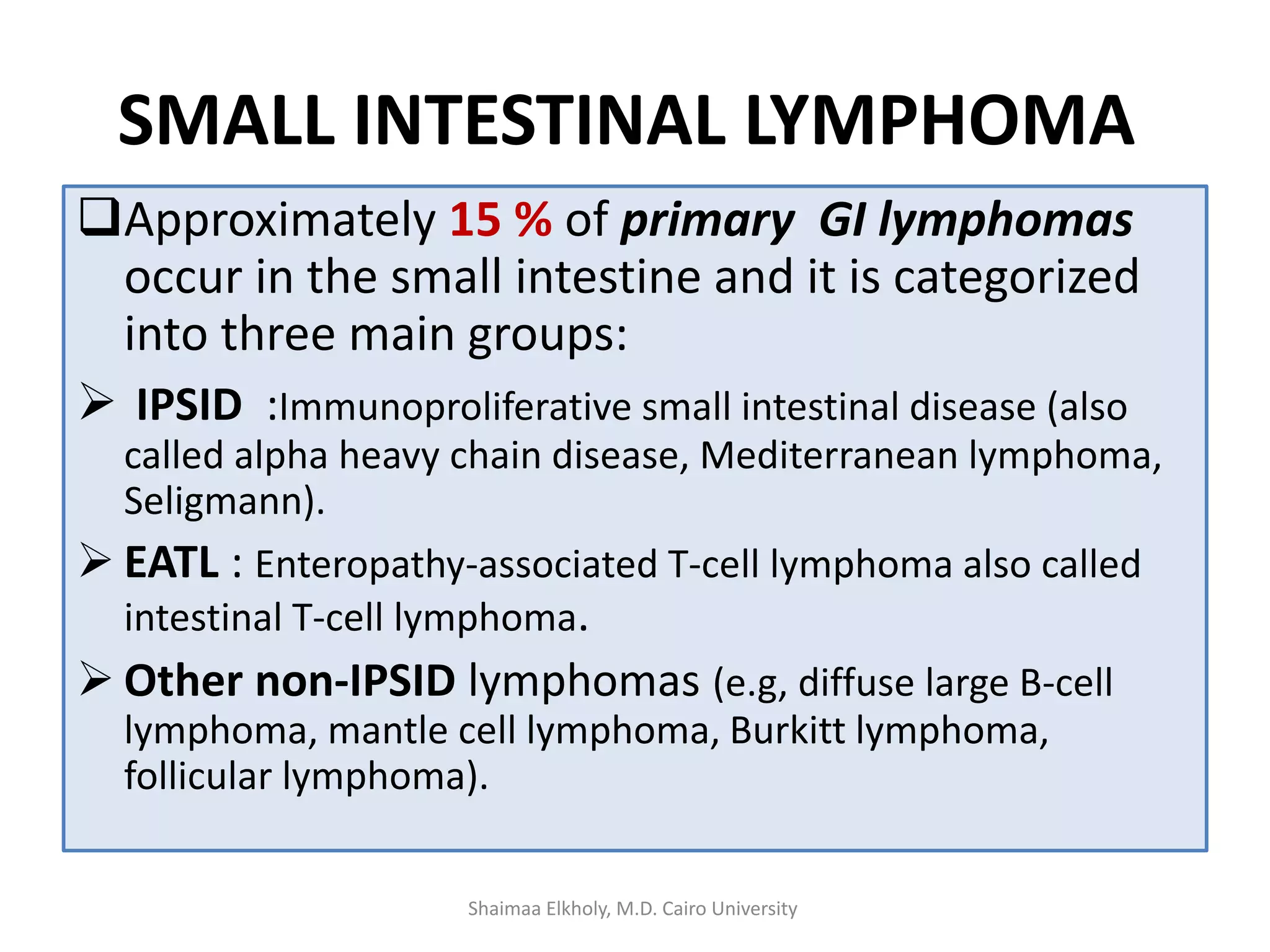
SMALL INTESTINAL LYMPHOMA
Approximately 15 % of primary GI lymphomas
occur in the small intestine and it is categorized
into three main groups:
 IPSID :Immunoproliferative small intestinal disease (also
called alpha heavy chain disease, Mediterranean lymphoma,
Seligmann).
 EATL : Enteropathy-associated T-cell lymphoma also called
intestinal T-cell lymphoma.
 Other non-IPSID lymphomas (e.g, diffuse large B-cell
lymphoma, mantle cell lymphoma, Burkitt lymphoma,
follicular lymphoma).
Shaimaa Elkholy, M.D. Cairo University
Clinical features:
The clinical presentation of the patients differs
according to the histologic tumor type.
Patients with IPSID typically present with:
• abdominal pain
• chronic diarrhea, malabsorption,
• severe weight loss,
• clubbing, and ankle edema
• may present with enteroenteric fistulae, ascites,
fever, and organomegaly .
Shaimaa Elkholy, M.D. Cairo University
Patients with EATL:
• Clinical deterioration of celiac disease, despite
compliance with a gluten-free diet, should raise
suspicion of the possible presence of lymphoma.
• Some times present with acute bleeding,
obstruction, or perforation .
Patients with non-IPSID lymphomas may prsent
with:
• abdominal pain, GI bleeding.
• intestinal obstruction or perforation.
• obstructive jaundice and/or a palpable abdominal
mass .
Shaimaa Elkholy, M.D. Cairo University
Diagnostic evaluation :
Shaimaa Elkholy, M.D. Cairo University
Endoscopy — endoscopic approach to the small
intestine is technically difficult however it remains the gold
standard for diagnosis .different modalities are available:
 Push enteroscopy.
 Capsule endoscopy is another useful technique but it does not
permit tissue sampling.
Double balloon enetroscopy: is anew modality
allowing appropriate approach to the small intestine and
allows biopsy and even therapeutic measures.
Shaimaa Elkholy, M.D. Cairo University
Laparotomy — should be performed when
the lesion is not accessible via endoscopy or
when endoscopic biopsies are unavailable or
non-diagnostic or in Obstructing lesions also
require laparotomy.
Shaimaa Elkholy, M.D. Cairo University
COLORECTAL LYMPHOMA
Colorectal lymphoma is uncommon
can present with abdominal pain, overt or occult
bleeding, diarrhea, intussusception or rarely, bowel
obstruction.
Colonoscopy with biopsy is the principal diagnostic
modality for colorectal lymphomas.
The most common histology seen in this region
include:
 Mantle cell lymphoma
 Burkitt lymphoma
 Follicular lymphoma .
 Diffuse large B-cell lymphoma.
Shaimaa Elkholy, M.D. Cairo University
oThe GI tract is the most common site of primary extra
nodal lymphoma and the vast majority are NHLs.
oThe most common site of involvement is the stomach
followed by the small bowel, colon, rectum, and esophagus.
oGastric lymphoma mostly are MALT or B-cell lymphoma
oSmall intestinal lymphoma mainly are IPSID &ETAL.
oEndoscopy and biopsy are the hall mark of diagnosis.
oDouble balloon enteroscopy is emerging modality to un
reveal most of the secrets of the small intestine.
TAKE HOME MESSAGE
Shaimaa Elkholy, M.D. Cairo University
• REFERENCES
• Palli D, Trallori G, Bagnoli S, et al. Hodgkin's disease risk is increased in patients with ulcerative colitis. Gastroenterology 2000; 119:647.
• Paryani S, Hoppe RT, Burke JS, et al. Extralymphatic involvement in diffuse non-Hodgkin's lymphoma. J Clin Oncol 1983; 1:682.
• Loehr WJ, Mujahed Z, Zahn FD, et al. Primary lymphoma of the gastrointestinal tract: a review of 100 cases. Ann Surg 1969; 170:232.
• Ehrlich AN, Stalder G, Geller W, Sherlock P. Gastrointestinal manifestations of malignant lymphoma. Gastroenterology 1968; 54:1115.
• Koch P, del Valle F, Berdel WE, et al. Primary gastrointestinal non-Hodgkin's lymphoma: I. Anatomic and histologic distribution, clinical
features, and survival data of 371 patients registered in the German Multicenter Study GIT NHL 01/92. J Clin Oncol 2001; 19:3861.
• Papaxoinis G, Papageorgiou S, Rontogianni D, et al. Primary gastrointestinal non-Hodgkin's lymphoma: a clinicopathologic study of 128
cases in Greece. A Hellenic Cooperative Oncology Group study (HeCOG). Leuk Lymphoma 2006; 47:2140.
• Aull MJ, Buell JF, Peddi VR, et al. MALToma: a Helicobacter pylori-associated malignancy in transplant patients: a report from the Israel
Penn International Transplant Tumor Registry with a review of published literature. Transplantation 2003; 75:225.
• Kaslikova J, Kocandrle V, Zastava V, et al. Multiple immunoblastic sarcoma of the small intestine following renal transplantation.
Transplantation 1981; 31:481.
• McTamaney JP, Neifeld JP, Mendez-Picon G, Lee HM. Primary gastric lymphoma following renal transplantation. J Surg Oncol 1981;
18:265.
• Jamieson NV, Thiru S, Calne RY, Evans DB. Gastric lymphomas arising in two patients with renal allografts. Transplantation 1981; 31:224.
• Coté TR, Biggar RJ, Rosenberg PS, et al. Non-Hodgkin's lymphoma among people with AIDS: incidence, presentation and public health
burden. AIDS/Cancer Study Group. Int J Cancer 1997; 73:645.
• Sandler AS, Kaplan LD. Diagnosis and management of systemic non-Hodgkin's lymphoma in HIV disease. Hematol Oncol Clin North Am
1996; 10:1111.
• Andrews CN, John Gill M, Urbanski SJ, et al. Changing epidemiology and risk factors for gastrointestinal non-Hodgkin's lymphoma in a
North American population: population-based study. Am J Gastroenterol 2008; 103:1762.
• Smedby KE, Akerman M, Hildebrand H, et al. Malignant lymphomas in coeliac disease: evidence of increased risks for lymphoma types
other than enteropathy-type T cell lymphoma. Gut 2005; 54:54. Nasrallah SM. Lactose intolerance in the Lebanese population and in
"Mediterranean lymphoma". Am J Clin Nutr 1979; 32:1994.
• Vessal K, Dutz W, Kohout E, Rezvani L. Immunoproliferative small intestinal disease with duodenojejunal lymphoma: radiologic changes.
AJR Am J Roentgenol 1980; 135:491..
• Ross WA, Egwim CI, Wallace MJ, et al. Outcomes in lymphoma patients with obstructive jaundice: a cancer center experience. Dig Dis
Sci 2010; 55:3271.
• Schmatz AI, Streubel B, Kretschmer-Chott E, et al. Primary follicular lymphoma of the duodenum is a distinct mucosal/submucosal
variant of follicular lymphoma: a retrospective study of 63 cases. J Clin Oncol 2011; 29:1445.
• Mendelson RM, Fermoyle S. Primary gastrointestinal lymphomas: a radiological-pathological review. Part 2: Small intestine. Australas
Radiol 2006; 50:102. Shaimaa Elkholy, M.D. Cairo University

Primary GIT Lymphoma

  • 1.
    Shaimaa Elkholy, M.D. CairoUniversity, Egypt Shaimaa Elkholy, M.D. Cairo University
  • 2.
    Agenda Introduction. Distribution. Predisposing factors. Oesphageal lymphoma Gastriclymphoma. Small intestinal lymphoma. Take home message. References. Shaimaa Elkholy, M.D. Cairo University
  • 3.
    Introduction Primary GI lymphomatypically refers to a lymphoma that predominantly involves any section of the GI tract from the oropharynx to the rectum. The gastrointestinal (GI) tract is the predominant site of extra nodal lymphoma involvement mostly are non-Hodgkin lymphomas (NHLs). Primary lymphomas of the GI tract are rare 1-4% of GI neoplasm. Secondary GI involvement ranges from 10 % of patients at the time of diagnosis, and up to 60 % of those dying from advanced disease. Shaimaa Elkholy, M.D. Cairo University
  • 4.
    Distribution : 80% 15% 5% Gastric Small Intestinal Colorectal Gastric lymphomas more common 80%. Small intestinal lymphomas about 15%. Colorectal are very rare 5%. Shaimaa Elkholy, M.D. Cairo University
  • 5.
    Predisposing factors: H. pyloriinfection :  Mostly gastric lymphoma Auto immune diseases:  Rheumatoid arthritis.  SLE & Sjögren's syndrome.  Granulomatosis with polyangiitis (Wegener's granulomatosis).  Immunosuppressive therapy increases the risk. Shaimaa Elkholy, M.D. Cairo University
  • 6.
    Immunodeficiency and immunosuppression: Congenital immunodeficiency syndromes (e.g X-linked agammaglobulinemia)  Acquired immunodeficiency (eg, HIV infection, iatrogenic immunosuppression) B-cell lymphoma. Celiac disease :  increased risk of developing enteropathy-associated T- cell lymphoma (EATL) .  studies suggest that celiac disease is also associated with an increased risk of B-cell lymphoma. Shaimaa Elkholy, M.D. Cairo University
  • 7.
    Inflammatory bowel disease An association between IBD and lymphoma has been described in several reports &studies have found relative risks ranging from 0.4 to 2.4 .  Considering the data in aggregate there is no evidence in increasing risk compared with the general population .  A meta-analysis of six cohort studies suggested a 4 fold increased risk of lymphoma in IBD patients treated azathioprine .  A possible association between tumor necrosis factor- alpha inhibitors (eg, etanercept, infliximab) and lymphoma is present separately. Shaimaa Elkholy, M.D. Cairo University
  • 8.
    :  Its diffusehyperplasia of the lymphoid intestinal follicles.  It is a benign condition but it has been implicated as an important risk factor for primary lymphomas of the small intestine.  In children, it tends to have a benign course and usually regresses spontaneously. Shaimaa Elkholy, M.D. Cairo University
  • 9.
    Shaimaa Elkholy, M.D.Cairo University
  • 10.
    ESOPHAGEAL LYMPHOMA Primary esophageallymphoma is very rare > 1 % of primary GI lymphomas. More commonly it involves the esophagus as an extension of mediastinal or gastric involvement. Only case reports of Primary esophageal lymphoma & more commonly involve the distal esophagus.  Most patients are asymptomatic or present with complaints of dysphagia or odynophagia. The diagnosis is made by endoscopic biopsy in most cases . Shaimaa Elkholy, M.D. Cairo University
  • 11.
    GASTRIC LYMPHOMA Epidemiology : Itis the most common primary GI lymphomas 75-80%.  it accounts about 3 %of gastric neoplasm and 10 % of lymphomas. Gastric lymphoma reaches its peak incidence between the ages of 50 to 60 years. There is a slight male predominance. Shaimaa Elkholy, M.D. Cairo University
  • 12.
    • Clinical features: Patients usually present with nonspecific symptoms frequently seen with more common gastric conditions as peptic ulcer disease. The most common presenting symptoms include:  Epigastric pain or discomfort (78 to 93 %).  Early satiety & anorexia (47 %).  Weight loss (25 %).  Nausea and/or vomiting (18 %).  Occult GIT bleeding (19%), Hematemesis & melena are uncommon.  Systemic B symptoms (fever, night sweats) seen in 12 %. Weight loss is frequently due to mechanical factors. Shaimaa Elkholy, M.D. Cairo University
  • 13.
    The vast majority(> 90 %) of gastric lymphomas divided into two histologic subtypes  Extranodal marginal zone B-cell lymphoma of mucosa -associated lymphoid tissue (MALT) (38 to 48 %)  Diffuse large B-cell lymphoma (45 to 59 %). The remaining cases of gastric lymphoma may also represent as:  Mantle cell lymphoma .  Follicular lymphoma .  Peripheral T-cell lymphoma. Shaimaa Elkholy, M.D. Cairo University
  • 14.
    Diagnostic evaluation : Thediagnosis of gastric lymphoma is done with upper endoscopy with biopsy with variable findings: Mucosal erythema. Shaimaa Elkholy, M.D. Cairo University
  • 15.
    Benign-appearing gastric ulcer. A mass or polypoid lesion with or without ulceration Shaimaa Elkholy, M.D. Cairo University
  • 16.
    Shaimaa Elkholy, M.D.Cairo University
  • 17.
    SMALL INTESTINAL LYMPHOMA Approximately15 % of primary GI lymphomas occur in the small intestine and it is categorized into three main groups:  IPSID :Immunoproliferative small intestinal disease (also called alpha heavy chain disease, Mediterranean lymphoma, Seligmann).  EATL : Enteropathy-associated T-cell lymphoma also called intestinal T-cell lymphoma.  Other non-IPSID lymphomas (e.g, diffuse large B-cell lymphoma, mantle cell lymphoma, Burkitt lymphoma, follicular lymphoma). Shaimaa Elkholy, M.D. Cairo University
  • 18.
    Clinical features: The clinicalpresentation of the patients differs according to the histologic tumor type. Patients with IPSID typically present with: • abdominal pain • chronic diarrhea, malabsorption, • severe weight loss, • clubbing, and ankle edema • may present with enteroenteric fistulae, ascites, fever, and organomegaly . Shaimaa Elkholy, M.D. Cairo University
  • 19.
    Patients with EATL: •Clinical deterioration of celiac disease, despite compliance with a gluten-free diet, should raise suspicion of the possible presence of lymphoma. • Some times present with acute bleeding, obstruction, or perforation . Patients with non-IPSID lymphomas may prsent with: • abdominal pain, GI bleeding. • intestinal obstruction or perforation. • obstructive jaundice and/or a palpable abdominal mass . Shaimaa Elkholy, M.D. Cairo University
  • 20.
    Diagnostic evaluation : ShaimaaElkholy, M.D. Cairo University
  • 21.
    Shaimaa Elkholy, M.D.Cairo University
  • 22.
    Endoscopy — endoscopicapproach to the small intestine is technically difficult however it remains the gold standard for diagnosis .different modalities are available:  Push enteroscopy.  Capsule endoscopy is another useful technique but it does not permit tissue sampling. Double balloon enetroscopy: is anew modality allowing appropriate approach to the small intestine and allows biopsy and even therapeutic measures. Shaimaa Elkholy, M.D. Cairo University
  • 23.
    Shaimaa Elkholy, M.D.Cairo University
  • 24.
    Laparotomy — shouldbe performed when the lesion is not accessible via endoscopy or when endoscopic biopsies are unavailable or non-diagnostic or in Obstructing lesions also require laparotomy. Shaimaa Elkholy, M.D. Cairo University
  • 25.
    COLORECTAL LYMPHOMA Colorectal lymphomais uncommon can present with abdominal pain, overt or occult bleeding, diarrhea, intussusception or rarely, bowel obstruction. Colonoscopy with biopsy is the principal diagnostic modality for colorectal lymphomas. The most common histology seen in this region include:  Mantle cell lymphoma  Burkitt lymphoma  Follicular lymphoma .  Diffuse large B-cell lymphoma. Shaimaa Elkholy, M.D. Cairo University
  • 26.
    oThe GI tractis the most common site of primary extra nodal lymphoma and the vast majority are NHLs. oThe most common site of involvement is the stomach followed by the small bowel, colon, rectum, and esophagus. oGastric lymphoma mostly are MALT or B-cell lymphoma oSmall intestinal lymphoma mainly are IPSID &ETAL. oEndoscopy and biopsy are the hall mark of diagnosis. oDouble balloon enteroscopy is emerging modality to un reveal most of the secrets of the small intestine. TAKE HOME MESSAGE Shaimaa Elkholy, M.D. Cairo University
  • 27.
    • REFERENCES • PalliD, Trallori G, Bagnoli S, et al. Hodgkin's disease risk is increased in patients with ulcerative colitis. Gastroenterology 2000; 119:647. • Paryani S, Hoppe RT, Burke JS, et al. Extralymphatic involvement in diffuse non-Hodgkin's lymphoma. J Clin Oncol 1983; 1:682. • Loehr WJ, Mujahed Z, Zahn FD, et al. Primary lymphoma of the gastrointestinal tract: a review of 100 cases. Ann Surg 1969; 170:232. • Ehrlich AN, Stalder G, Geller W, Sherlock P. Gastrointestinal manifestations of malignant lymphoma. Gastroenterology 1968; 54:1115. • Koch P, del Valle F, Berdel WE, et al. Primary gastrointestinal non-Hodgkin's lymphoma: I. Anatomic and histologic distribution, clinical features, and survival data of 371 patients registered in the German Multicenter Study GIT NHL 01/92. J Clin Oncol 2001; 19:3861. • Papaxoinis G, Papageorgiou S, Rontogianni D, et al. Primary gastrointestinal non-Hodgkin's lymphoma: a clinicopathologic study of 128 cases in Greece. A Hellenic Cooperative Oncology Group study (HeCOG). Leuk Lymphoma 2006; 47:2140. • Aull MJ, Buell JF, Peddi VR, et al. MALToma: a Helicobacter pylori-associated malignancy in transplant patients: a report from the Israel Penn International Transplant Tumor Registry with a review of published literature. Transplantation 2003; 75:225. • Kaslikova J, Kocandrle V, Zastava V, et al. Multiple immunoblastic sarcoma of the small intestine following renal transplantation. Transplantation 1981; 31:481. • McTamaney JP, Neifeld JP, Mendez-Picon G, Lee HM. Primary gastric lymphoma following renal transplantation. J Surg Oncol 1981; 18:265. • Jamieson NV, Thiru S, Calne RY, Evans DB. Gastric lymphomas arising in two patients with renal allografts. Transplantation 1981; 31:224. • Coté TR, Biggar RJ, Rosenberg PS, et al. Non-Hodgkin's lymphoma among people with AIDS: incidence, presentation and public health burden. AIDS/Cancer Study Group. Int J Cancer 1997; 73:645. • Sandler AS, Kaplan LD. Diagnosis and management of systemic non-Hodgkin's lymphoma in HIV disease. Hematol Oncol Clin North Am 1996; 10:1111. • Andrews CN, John Gill M, Urbanski SJ, et al. Changing epidemiology and risk factors for gastrointestinal non-Hodgkin's lymphoma in a North American population: population-based study. Am J Gastroenterol 2008; 103:1762. • Smedby KE, Akerman M, Hildebrand H, et al. Malignant lymphomas in coeliac disease: evidence of increased risks for lymphoma types other than enteropathy-type T cell lymphoma. Gut 2005; 54:54. Nasrallah SM. Lactose intolerance in the Lebanese population and in "Mediterranean lymphoma". Am J Clin Nutr 1979; 32:1994. • Vessal K, Dutz W, Kohout E, Rezvani L. Immunoproliferative small intestinal disease with duodenojejunal lymphoma: radiologic changes. AJR Am J Roentgenol 1980; 135:491.. • Ross WA, Egwim CI, Wallace MJ, et al. Outcomes in lymphoma patients with obstructive jaundice: a cancer center experience. Dig Dis Sci 2010; 55:3271. • Schmatz AI, Streubel B, Kretschmer-Chott E, et al. Primary follicular lymphoma of the duodenum is a distinct mucosal/submucosal variant of follicular lymphoma: a retrospective study of 63 cases. J Clin Oncol 2011; 29:1445. • Mendelson RM, Fermoyle S. Primary gastrointestinal lymphomas: a radiological-pathological review. Part 2: Small intestine. Australas Radiol 2006; 50:102. Shaimaa Elkholy, M.D. Cairo University