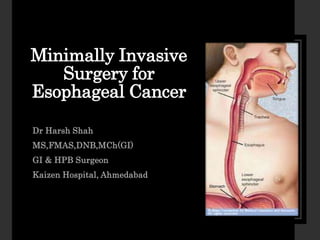
Minimally Invasive
Surgery for
Esophageal Cancer
Dr Harsh Shah
MS,FMAS,DNB,MCh(GI)
GI & HPB Surgeon
Kaizen Hospital, Ahmedabad
What is Minimally Invasive Surgery ?
• Procedure carried out by entering the body through the skin or
through a body cavity or anatomical opening
• Types:
 Laparoscopy
 Thoracoscopy
 NOTES
• Advantages:
 Smaller incision, Less pain, rapid recovery
 Lesser inflammatory response (IL-6, IL-8)
Esophageal Surgery
“The history of oesophageal surgery is the
tale of men repeatedly losing to a stronger
adversary yet persisting in this unequal
struggle until the nature of the problems
became apparent and the war was won.”
Professor R. G. Emslie (1988)
Evolution of esophagectomy
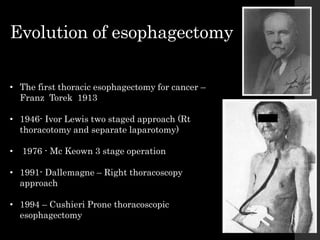
• The first thoracic esophagectomy for cancer –
Franz Torek 1913
• 1946- Ivor Lewis two staged approach (Rt
thoracotomy and separate laparotomy)
• 1976 - Mc Keown 3 stage operation
• 1991- Dallemagne – Right thoracoscopy
approach
• 1994 – Cushieri Prone thoracoscopic
esophagectomy
Epidemiology
• 6th most common cause of cancer death
• SCC > Adeno carcinoma
• SCC more common in Asia
• Risk factors – Tobacco, Alcohol
• CTRT followed by surgery is the standard of care
Signs & symptoms
• Early stages do not produce physical symptoms
• Once cancer has advanced most common signs & symptoms are:
 Dysphagia – 90%
 Anorexia & Weight loss – 75%
 Odynophagia – 50%
Less frequent
 Coughing & hoarseness of voice
 Chest pain often radiating to back
 Frequent choking on food
 Regurgitation & undigested food
 Hiccups
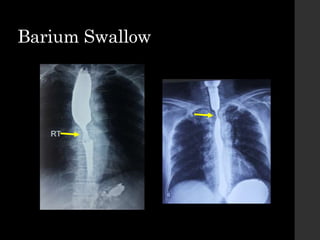
Barium Swallow
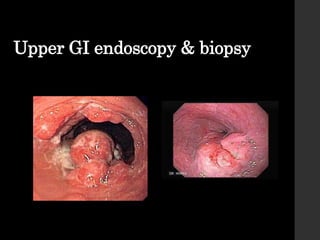
Upper GI endoscopy & biopsy
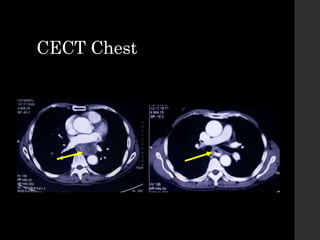
CECT Chest
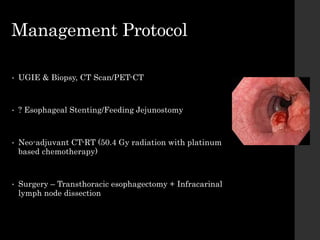
Management Protocol
• UGIE & Biopsy, CT Scan/PET-CT
• ? Esophageal Stenting/Feeding Jejunostomy
• Neo-adjuvant CT-RT (50.4 Gy radiation with platinum
based chemotherapy)
• Surgery – Transthoracic esophagectomy + Infracarinal
lymph node dissection
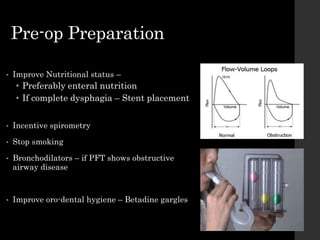
Pre-op Preparation
• Improve Nutritional status –
• Preferably enteral nutrition
• If complete dysphagia – Stent placement
• Incentive spirometry
• Stop smoking
• Bronchodilators – if PFT shows obstructive
airway disease
• Improve oro-dental hygiene – Betadine gargles
Esophagectomy is a complex surgery
• Location
 Posterior mediastinum
• Surrounded by vital structure
 Trachea & bronchi
 Aorta
 Azygous vein
 RLN
 Thoracic duct
• High incidence of anastomotic leak
 Absence of serosal layer
 Mucosal retraction
 Patient factors
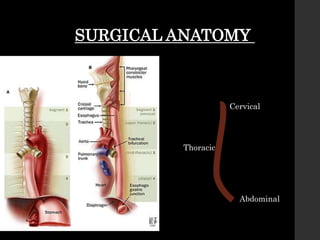
SURGICAL ANATOMY
Cervical
Thoracic
Abdominal
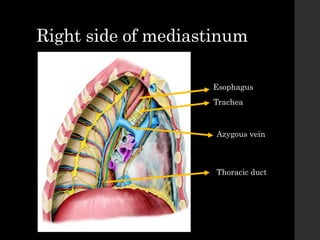
Right side of mediastinum
Esophagus
Trachea
Azygous vein
Thoracic duct
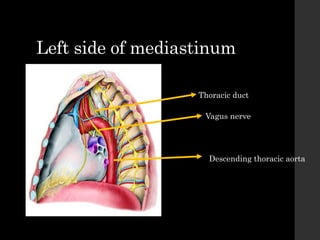
Left side of mediastinum
Thoracic duct
Vagus nerve
Descending thoracic aorta
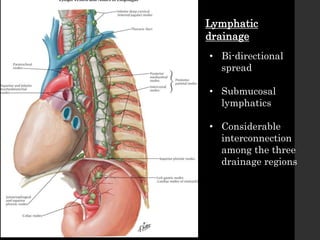
Lymphatic
drainage
• Bi-directional
spread
• Submucosal
lymphatics
• Considerable
interconnection
among the three
drainage regions
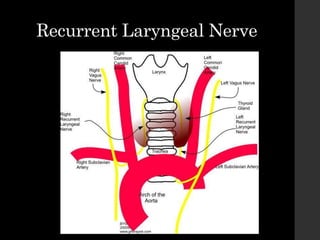
Recurrent Laryngeal Nerve
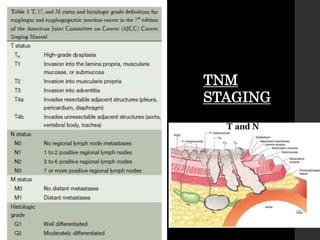
TNM
STAGING
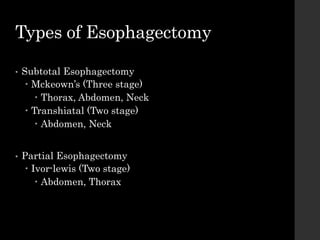
Types of Esophagectomy
• Subtotal Esophagectomy
 Mckeown’s (Three stage)
 Thorax, Abdomen, Neck
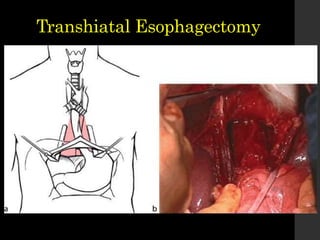
 Transhiatal (Two stage)
 Abdomen, Neck
• Partial Esophagectomy
 Ivor-lewis (Two stage)
 Abdomen, Thorax
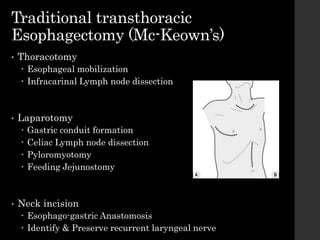
Traditional transthoracic
Esophagectomy (Mc-Keown’s)
• Thoracotomy
 Esophageal mobilization
 Infracarinal Lymph node dissection
• Laparotomy
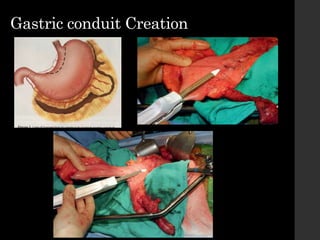
 Gastric conduit formation
 Celiac Lymph node dissection
 Pyloromyotomy
 Feeding Jejunostomy
• Neck incision
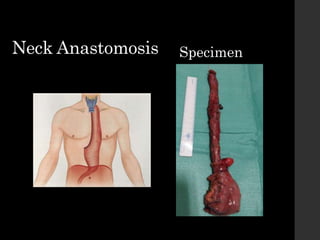
 Esophago-gastric Anastomosis
 Identify & Preserve recurrent laryngeal nerve
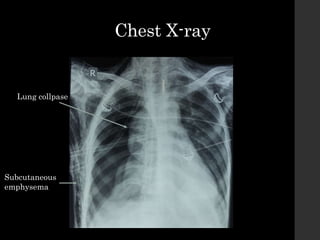
Chest X-ray
Lung collpase
Subcutaneous
emphysema
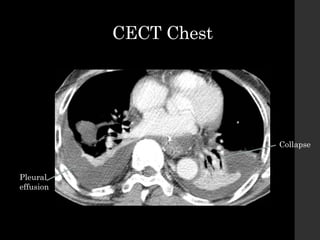
CECT Chest
Collapse
Pleural
effusion
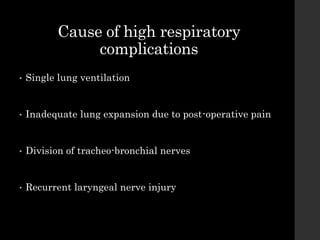
Cause of high respiratory
complications
• Single lung ventilation
• Inadequate lung expansion due to post-operative pain
• Division of tracheo-bronchial nerves
• Recurrent laryngeal nerve injury
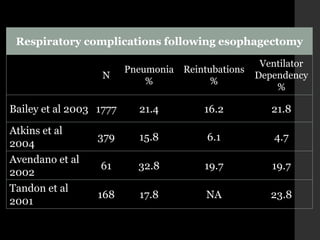
Respiratory complications following esophagectomy
N
Pneumonia
%
Reintubations
%
Ventilator
Dependency
%
Bailey et al 2003 1777 21.4 16.2 21.8
Atkins et al
2004
379 15.8 6.1 4.7
Avendano et al
2002
61 32.8 19.7 19.7
Tandon et al
2001
168 17.8 NA 23.8
Transhiatal Esophagectomy
Definitive CTRT
• Cervical esophageal cancer
• 60Gy RT with platinum based chemotherapy
• SCC responds better
• Recurrence rate – 30-50%
• Higher incidence of tracheo-esophageal fistula
Esophagectomy for cancer
• Morbidity 25-80%
• Mortality 5-12%
• Respiratory 25%,
• Cardiovascular 12%,
• Anastomotic leak 16%
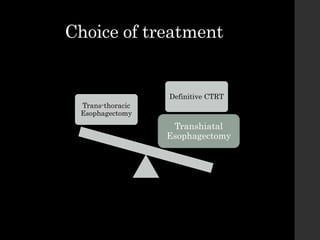
Choice of treatment
Trans-thoracic
Esophagectomy
Definitive CTRT
Transhiatal
Esophagectomy
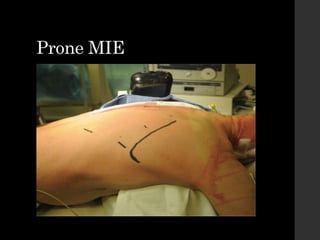
Prone MIE
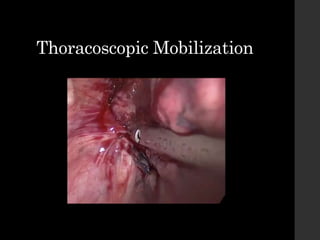
Thoracoscopic Mobilization
Gastric conduit Creation
Neck Anastomosis Specimen
Advantages of MIE
• Smaller incision less post-op pain
• Immediate extubation
• Excellent visualization of anatomy
• Reduced pulmonary complications
• Reduced ICU stay
• Less incidence of RLN palsy
• Early ambulation, Rapid recovery, shorter hospital stay
Advantages of Prone Position
• Dual lung ventilation
 Rapid induction of anesthesia
 Reduced incidence of post-op lung collapse
• Ergonomically better
• Permits solo-surgery
• Blood collects in dependent part
 Does not obscure the surgical field
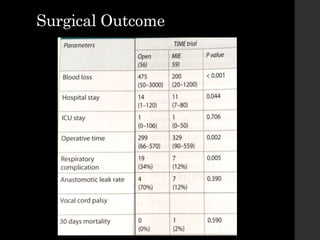
Surgical Outcome
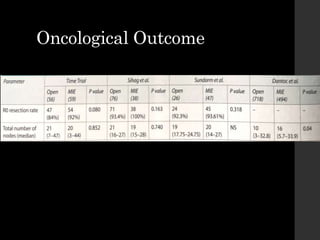
Oncological Outcome
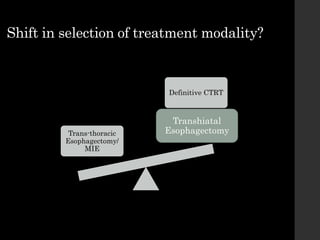
Shift in selection of treatment modality?
Trans-thoracic
Esophagectomy/
MIE
Definitive CTRT
Transhiatal
Esophagectomy
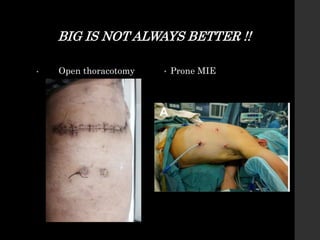
BIG IS NOT ALWAYS BETTER !!
• Open thoracotomy • Prone MIE
Summary
• Surgery is the important component of the multimodality
treatment of carcinoma esophagus
• Surgery is complicated
• Preop work up and patient optimization for the surgery is of
utmost importance
• Minimally invasive methods have significantly decreased the
morbidity but long term oncological outcomes are yet to be
defined.
Thank You
Mission Gastrocare
Jetalpur Road
Vadodara

Mis carcinoma Esophagus

  • 1.
    Minimally Invasive Surgery for EsophagealCancer Dr Harsh Shah MS,FMAS,DNB,MCh(GI) GI & HPB Surgeon Kaizen Hospital, Ahmedabad
  • 2.
    What is MinimallyInvasive Surgery ? • Procedure carried out by entering the body through the skin or through a body cavity or anatomical opening • Types:  Laparoscopy  Thoracoscopy  NOTES • Advantages:  Smaller incision, Less pain, rapid recovery  Lesser inflammatory response (IL-6, IL-8)
  • 3.
    Esophageal Surgery “The historyof oesophageal surgery is the tale of men repeatedly losing to a stronger adversary yet persisting in this unequal struggle until the nature of the problems became apparent and the war was won.” Professor R. G. Emslie (1988)
  • 4.
    Evolution of esophagectomy •The first thoracic esophagectomy for cancer – Franz Torek 1913 • 1946- Ivor Lewis two staged approach (Rt thoracotomy and separate laparotomy) • 1976 - Mc Keown 3 stage operation • 1991- Dallemagne – Right thoracoscopy approach • 1994 – Cushieri Prone thoracoscopic esophagectomy
  • 5.
    Epidemiology • 6th mostcommon cause of cancer death • SCC > Adeno carcinoma • SCC more common in Asia • Risk factors – Tobacco, Alcohol • CTRT followed by surgery is the standard of care
  • 6.
    Signs & symptoms •Early stages do not produce physical symptoms • Once cancer has advanced most common signs & symptoms are:  Dysphagia – 90%  Anorexia & Weight loss – 75%  Odynophagia – 50% Less frequent  Coughing & hoarseness of voice  Chest pain often radiating to back  Frequent choking on food  Regurgitation & undigested food  Hiccups
  • 7.
  • 8.
  • 9.
  • 10.
    Management Protocol • UGIE& Biopsy, CT Scan/PET-CT • ? Esophageal Stenting/Feeding Jejunostomy • Neo-adjuvant CT-RT (50.4 Gy radiation with platinum based chemotherapy) • Surgery – Transthoracic esophagectomy + Infracarinal lymph node dissection
  • 11.
    Pre-op Preparation • ImproveNutritional status – • Preferably enteral nutrition • If complete dysphagia – Stent placement • Incentive spirometry • Stop smoking • Bronchodilators – if PFT shows obstructive airway disease • Improve oro-dental hygiene – Betadine gargles
  • 12.
    Esophagectomy is acomplex surgery • Location  Posterior mediastinum • Surrounded by vital structure  Trachea & bronchi  Aorta  Azygous vein  RLN  Thoracic duct • High incidence of anastomotic leak  Absence of serosal layer  Mucosal retraction  Patient factors
  • 13.
  • 14.
    Right side ofmediastinum Esophagus Trachea Azygous vein Thoracic duct
  • 15.
    Left side ofmediastinum Thoracic duct Vagus nerve Descending thoracic aorta
  • 16.
    Lymphatic drainage • Bi-directional spread • Submucosal lymphatics •Considerable interconnection among the three drainage regions
  • 17.
  • 18.
  • 19.
    Types of Esophagectomy •Subtotal Esophagectomy  Mckeown’s (Three stage)  Thorax, Abdomen, Neck  Transhiatal (Two stage)  Abdomen, Neck • Partial Esophagectomy  Ivor-lewis (Two stage)  Abdomen, Thorax
  • 20.
    Traditional transthoracic Esophagectomy (Mc-Keown’s) •Thoracotomy  Esophageal mobilization  Infracarinal Lymph node dissection • Laparotomy  Gastric conduit formation  Celiac Lymph node dissection  Pyloromyotomy  Feeding Jejunostomy • Neck incision  Esophago-gastric Anastomosis  Identify & Preserve recurrent laryngeal nerve
  • 21.
  • 22.
  • 23.
    Cause of highrespiratory complications • Single lung ventilation • Inadequate lung expansion due to post-operative pain • Division of tracheo-bronchial nerves • Recurrent laryngeal nerve injury
  • 24.
    Respiratory complications followingesophagectomy N Pneumonia % Reintubations % Ventilator Dependency % Bailey et al 2003 1777 21.4 16.2 21.8 Atkins et al 2004 379 15.8 6.1 4.7 Avendano et al 2002 61 32.8 19.7 19.7 Tandon et al 2001 168 17.8 NA 23.8
  • 25.
  • 26.
    Definitive CTRT • Cervicalesophageal cancer • 60Gy RT with platinum based chemotherapy • SCC responds better • Recurrence rate – 30-50% • Higher incidence of tracheo-esophageal fistula
  • 27.
    Esophagectomy for cancer •Morbidity 25-80% • Mortality 5-12% • Respiratory 25%, • Cardiovascular 12%, • Anastomotic leak 16%
  • 28.
  • 29.
  • 30.
  • 31.
  • 32.
  • 33.
    Advantages of MIE •Smaller incision less post-op pain • Immediate extubation • Excellent visualization of anatomy • Reduced pulmonary complications • Reduced ICU stay • Less incidence of RLN palsy • Early ambulation, Rapid recovery, shorter hospital stay
  • 34.
    Advantages of PronePosition • Dual lung ventilation  Rapid induction of anesthesia  Reduced incidence of post-op lung collapse • Ergonomically better • Permits solo-surgery • Blood collects in dependent part  Does not obscure the surgical field
  • 35.
  • 36.
  • 37.
    Shift in selectionof treatment modality? Trans-thoracic Esophagectomy/ MIE Definitive CTRT Transhiatal Esophagectomy
  • 38.
    BIG IS NOTALWAYS BETTER !! • Open thoracotomy • Prone MIE
  • 39.
    Summary • Surgery isthe important component of the multimodality treatment of carcinoma esophagus • Surgery is complicated • Preop work up and patient optimization for the surgery is of utmost importance • Minimally invasive methods have significantly decreased the morbidity but long term oncological outcomes are yet to be defined.
  • 40.