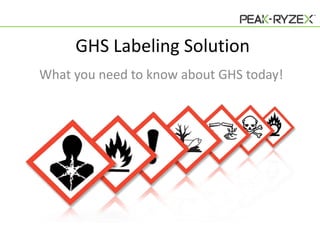
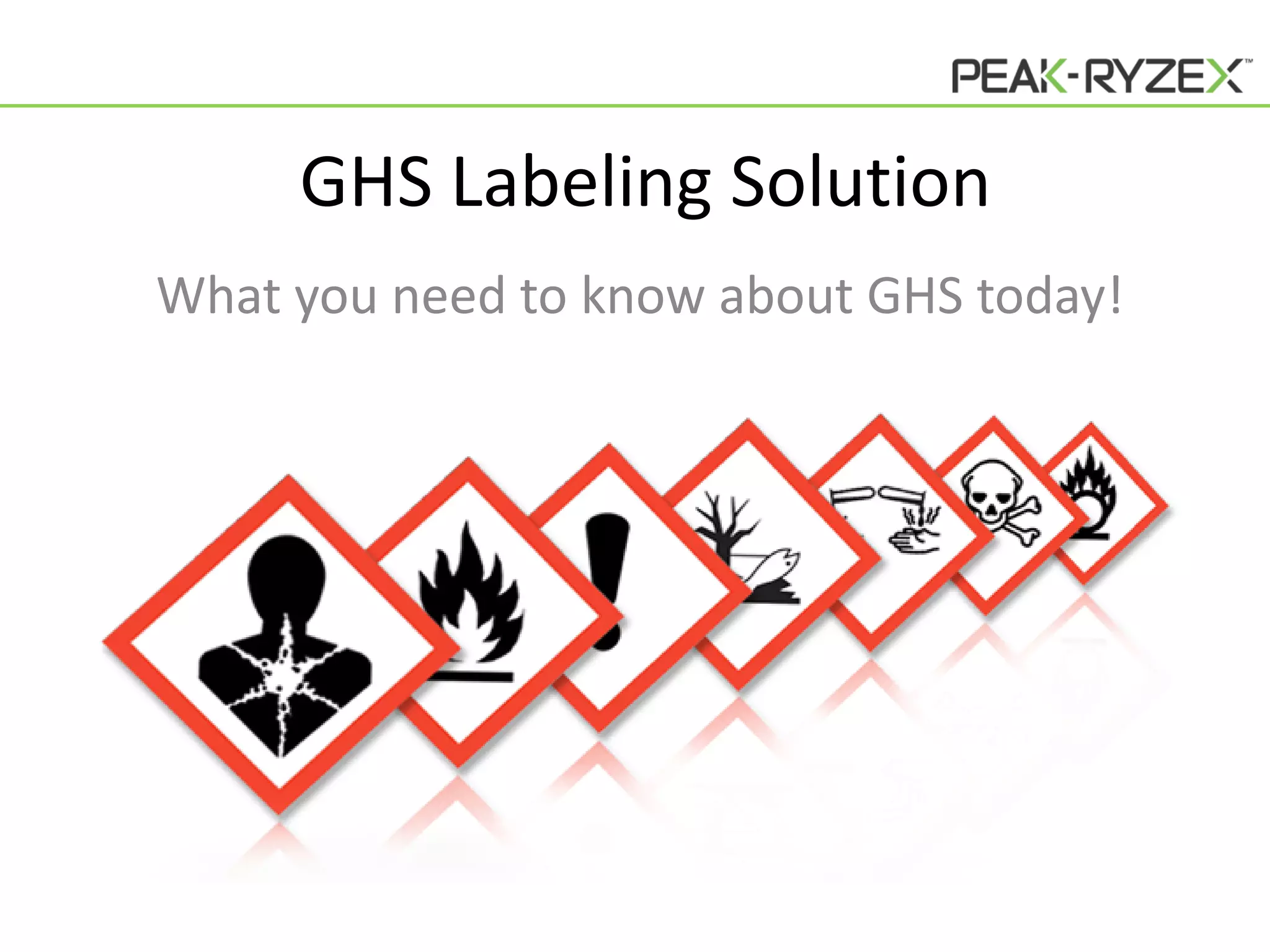
GHS Labeling Solution
What you need to know about GHS today!
What is GHS?
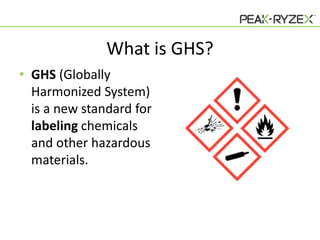
• GHS (Globally
Harmonized System)
is a new standard for
labeling chemicals
and other hazardous
materials.
How does it affect you?
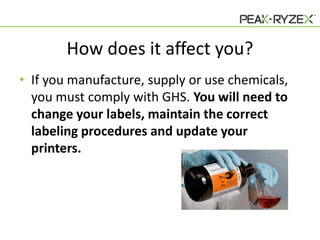
• If you manufacture, supply or use chemicals,
you must comply with GHS. You will need to
change your labels, maintain the correct
labeling procedures and update your
printers.
Why the need for GHS?
• Improve SAFETY with the transportation and
handling of Hazardous Materials
• Adoption of GHS brings the US up to the
International Standard
• One Standard for all to follow
• Consistency to assist in emergency response
• Using the Right Label at Right Time
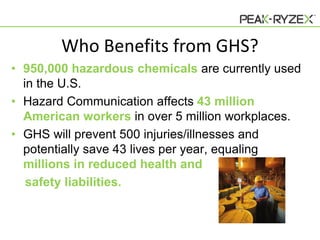
Who Benefits from GHS?
• 950,000 hazardous chemicals are currently used
in the U.S.
• Hazard Communication affects 43 million
American workers in over 5 million workplaces.
• GHS will prevent 500 injuries/illnesses and
potentially save 43 lives per year, equaling
millions in reduced health and
safety liabilities.
Benefits of GHS
Countries, international organizations, chemical producers
and users of chemicals all benefit..

• Enhance protection of humans and environment
• Facilitate international trade in chemicals
• Reduce need for testing and evaluation
• Assist countries and international organizations
to ensure the sound management of chemicals
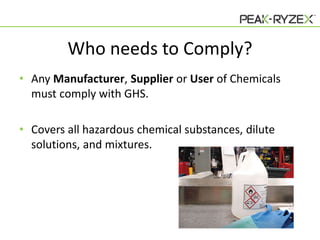
Who needs to Comply?
• Any Manufacturer, Supplier or User of Chemicals
must comply with GHS.
• Covers all hazardous chemical substances, dilute
solutions, and mixtures.
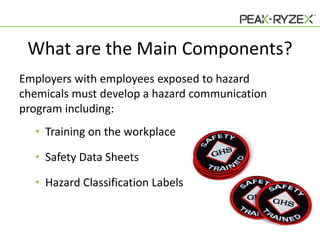
What are the Main Components?
Employers with employees exposed to hazard
chemicals must develop a hazard communication
program including:
• Training on the workplace
• Safety Data Sheets
• Hazard Classification Labels
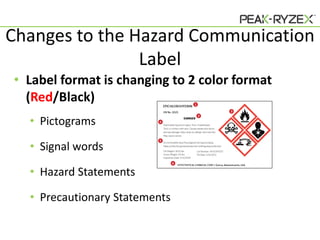
Changes to the Hazard Communication
Label
• Label format is changing to 2 color format
(Red/Black)
• Pictograms
• Signal words
• Hazard Statements
• Precautionary Statements
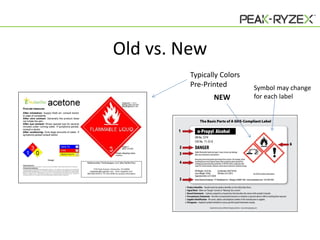
Old vs. New
Typically Colors
Pre-Printed
NEW

Symbol may change
for each label
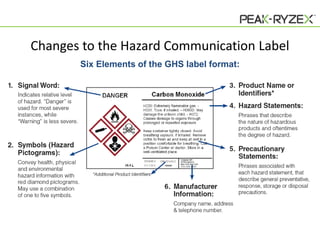
Changes to the Hazard Communication Label
Six Elements of the GHS label format:
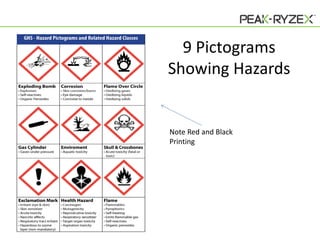
9 Pictograms
Showing Hazards

Note Red and Black
Printing
Labeling: What is the BS5609 Compliance Standard?
• To be GHS Certified, the labels must pass BS 5609 Compliance
standard: BS 5609, a British Maritime Standard, is a
specification for printed pressure-sensitive, adhesive coated
labels, and is one of the most common benchmark certifications
of durability.
• Label Durability is Critical: A label can only warn of a hazard if it
is readable. Since many of the items being labeled are very
harsh to begin with and must survive shipment, exceptional
chemical and abrasion resistance is required.
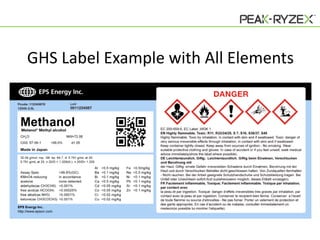
GHS Label Example with All Elements
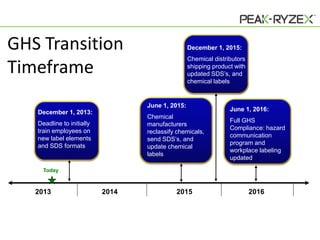
GHS Transition
Timeframe

December 1, 2015:
Chemical distributors
shipping product with
updated SDS’s, and
chemical labels

June 1, 2015:
December 1, 2013:

Chemical
manufacturers
reclassify chemicals,
send SDS’s, and
update chemical
labels

Deadline to initially
train employees on
new label elements
and SDS formats

June 1, 2016:
Full GHS
Compliance: hazard
communication
program and
workplace labeling
updated

Today

2013

2014

2015

2016
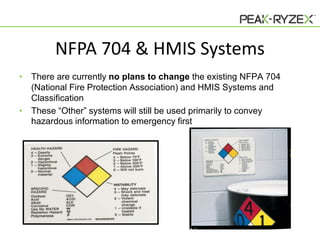
NFPA 704 & HMIS Systems
• There are currently no plans to change the existing NFPA 704
(National Fire Protection Association) and HMIS Systems and
Classification
• These “Other” systems will still be used primarily to convey
hazardous information to emergency first
What are factors in choosing which
method?
•
•
•
•
•
•

Size of Label
Print Volumes
Environment – Dirt, Dust, Heat, Cold
Host Printing System
Current Printing Equipment / Methods
Software
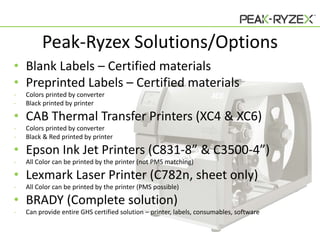
Peak-Ryzex Solutions/Options
• Blank Labels – Certified materials
• Preprinted Labels – Certified materials
-

Colors printed by converter
Black printed by printer

-

Colors printed by converter
Black & Red printed by printer

-

All Color can be printed by the printer (not PMS matching)

-

All Color can be printed by the printer (PMS possible)

-

Can provide entire GHS certified solution – printer, labels, consumables, software

• CAB Thermal Transfer Printers (XC4 & XC6)
• Epson Ink Jet Printers (C831-8” & C3500-4”)
• Lexmark Laser Printer (C782n, sheet only)
• BRADY (Complete solution)
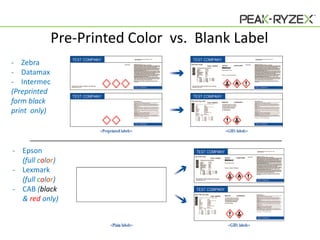
Pre-Printed Color vs. Blank Label
- Zebra
- Datamax
- Intermec
(Preprinted
form black
print only)
_______________________________________________________________
- Epson
(full color)
- Lexmark
(full color)
- CAB (black
& red only)
Summary
• GHS is a Standard ALL companies
manufacturing or shipping chemicals must
comply with!
• You will need to change your labels, maintain
the correct labeling procedures and update
your printers.
Contact Information
• For additional information or any questions
about GHS, click on the links below!
www.Peak-Ryzex.com
info@Peak-Ryzex.com

What You Need to Know About GHS Labeling Solutions

  • 1.
    GHS Labeling Solution Whatyou need to know about GHS today!
  • 2.
    What is GHS? •GHS (Globally Harmonized System) is a new standard for labeling chemicals and other hazardous materials.
  • 3.
    How does itaffect you? • If you manufacture, supply or use chemicals, you must comply with GHS. You will need to change your labels, maintain the correct labeling procedures and update your printers.
  • 4.
    Why the needfor GHS? • Improve SAFETY with the transportation and handling of Hazardous Materials • Adoption of GHS brings the US up to the International Standard • One Standard for all to follow • Consistency to assist in emergency response • Using the Right Label at Right Time
  • 5.
    Who Benefits fromGHS? • 950,000 hazardous chemicals are currently used in the U.S. • Hazard Communication affects 43 million American workers in over 5 million workplaces. • GHS will prevent 500 injuries/illnesses and potentially save 43 lives per year, equaling millions in reduced health and safety liabilities.
  • 6.
    Benefits of GHS Countries,international organizations, chemical producers and users of chemicals all benefit.. • Enhance protection of humans and environment • Facilitate international trade in chemicals • Reduce need for testing and evaluation • Assist countries and international organizations to ensure the sound management of chemicals
  • 7.
    Who needs toComply? • Any Manufacturer, Supplier or User of Chemicals must comply with GHS. • Covers all hazardous chemical substances, dilute solutions, and mixtures.
  • 8.
    What are theMain Components? Employers with employees exposed to hazard chemicals must develop a hazard communication program including: • Training on the workplace • Safety Data Sheets • Hazard Classification Labels
  • 9.
    Changes to theHazard Communication Label • Label format is changing to 2 color format (Red/Black) • Pictograms • Signal words • Hazard Statements • Precautionary Statements
  • 10.
    Old vs. New TypicallyColors Pre-Printed NEW Symbol may change for each label
  • 11.
    Changes to theHazard Communication Label Six Elements of the GHS label format:
  • 12.
    9 Pictograms Showing Hazards NoteRed and Black Printing
  • 13.
    Labeling: What isthe BS5609 Compliance Standard? • To be GHS Certified, the labels must pass BS 5609 Compliance standard: BS 5609, a British Maritime Standard, is a specification for printed pressure-sensitive, adhesive coated labels, and is one of the most common benchmark certifications of durability. • Label Durability is Critical: A label can only warn of a hazard if it is readable. Since many of the items being labeled are very harsh to begin with and must survive shipment, exceptional chemical and abrasion resistance is required.
  • 14.
    GHS Label Examplewith All Elements
  • 15.
    GHS Transition Timeframe December 1,2015: Chemical distributors shipping product with updated SDS’s, and chemical labels June 1, 2015: December 1, 2013: Chemical manufacturers reclassify chemicals, send SDS’s, and update chemical labels Deadline to initially train employees on new label elements and SDS formats June 1, 2016: Full GHS Compliance: hazard communication program and workplace labeling updated Today 2013 2014 2015 2016
  • 16.
    NFPA 704 &HMIS Systems • There are currently no plans to change the existing NFPA 704 (National Fire Protection Association) and HMIS Systems and Classification • These “Other” systems will still be used primarily to convey hazardous information to emergency first
  • 17.
    What are factorsin choosing which method? • • • • • • Size of Label Print Volumes Environment – Dirt, Dust, Heat, Cold Host Printing System Current Printing Equipment / Methods Software
  • 18.
    Peak-Ryzex Solutions/Options • BlankLabels – Certified materials • Preprinted Labels – Certified materials - Colors printed by converter Black printed by printer - Colors printed by converter Black & Red printed by printer - All Color can be printed by the printer (not PMS matching) - All Color can be printed by the printer (PMS possible) - Can provide entire GHS certified solution – printer, labels, consumables, software • CAB Thermal Transfer Printers (XC4 & XC6) • Epson Ink Jet Printers (C831-8” & C3500-4”) • Lexmark Laser Printer (C782n, sheet only) • BRADY (Complete solution)
  • 19.
    Pre-Printed Color vs.Blank Label - Zebra - Datamax - Intermec (Preprinted form black print only) _______________________________________________________________ - Epson (full color) - Lexmark (full color) - CAB (black & red only)
  • 20.
    Summary • GHS isa Standard ALL companies manufacturing or shipping chemicals must comply with! • You will need to change your labels, maintain the correct labeling procedures and update your printers.
  • 21.
    Contact Information • Foradditional information or any questions about GHS, click on the links below! www.Peak-Ryzex.com info@Peak-Ryzex.com