


PREPARED BY: KERWIN D. PALPAL
What are Gestures?
• Gesture are specific bodily movement
that reinforce verbal message or convey
a particular thought or emotion.
• It include eye contact, posture and
facial expression.
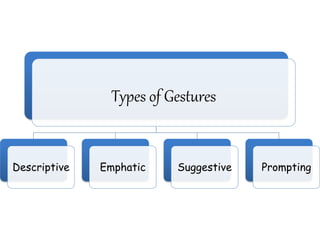
Types of Gestures
Descriptive Emphatic Suggestive Prompting
Descriptive Gestures
• used to describe size, shape, movement,
location, number, etc.
• improve the impact of the speech and
improve comprehension of audience.
Emphatic Gestures
• used to emphasize feelings or emotions.
• Example:
Clenched fist or angry face – symbolizes
anger
• helps the speaker to appear more
genuine.
Suggestive Gestures
• These are gestures that depict
moods or emotion.
• Example
Welcoming your audience with open
arms
Prompting Gestures
• They are used to evoke a desired
response from the audience. If you want
your listeners to raise their hands,
applaud or perform some specific
action, it’ll be effective if you do it
yourself.
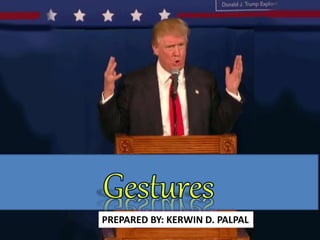
Gestures
Gestures
Gestures
Gestures

Gestures

  • 1.
  • 2.
    What are Gestures? •Gesture are specific bodily movement that reinforce verbal message or convey a particular thought or emotion. • It include eye contact, posture and facial expression.
  • 3.
    Types of Gestures DescriptiveEmphatic Suggestive Prompting
  • 4.
    Descriptive Gestures • usedto describe size, shape, movement, location, number, etc. • improve the impact of the speech and improve comprehension of audience.
  • 7.
    Emphatic Gestures • usedto emphasize feelings or emotions. • Example: Clenched fist or angry face – symbolizes anger • helps the speaker to appear more genuine.
  • 9.
    Suggestive Gestures • Theseare gestures that depict moods or emotion. • Example Welcoming your audience with open arms
  • 11.
    Prompting Gestures • Theyare used to evoke a desired response from the audience. If you want your listeners to raise their hands, applaud or perform some specific action, it’ll be effective if you do it yourself.