GERIATRIC ANESTHESIA
Presenter:
Dr. Tirtha Raj Bhandari
2nd year Resident
Department of Anesthesiology
and Intensive Care
NAMS,Bir Hospital,
Kathmandu,Nepal
OBJECTIVES
 To discuss about age related anatomical
and physiological changes of ageing
 To discuss about pharmacological changes
 To discuss preoperative, intra-operative and
postoperative considerations in elderly
 To discuss common peri-operative
complications in geriatric anesthesia
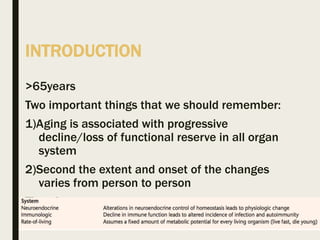
INTRODUCTION
>65years
Two important things that we should remember:
1)Aging is associated with progressive
decline/loss of functional reserve in all organ
system
2)Second the extent and onset of the changes
varies from person to person
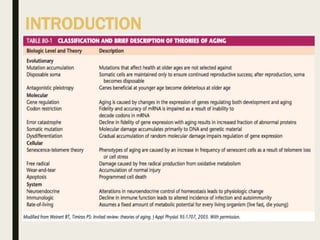
Theories:
INTRODUCTION
INTRODUCTION
Aging is a progressive physiologic process
characterized by :
1) Decreased End-organ Reserve
2) Decreased Functional Capacity
3) Imbalance Of Homeostatic Mechanisms
4) Increasing Incidence Of Pathologic Processes.
INTRODUCTION
Limitation of physiological reserves becomes evident
only during the time of physiological stress.
1)exercise
2)Illness
3)Surgery
We should anticipate the interaction between
underlying disease, limited physiological reserve, and
stress of perioperative period.
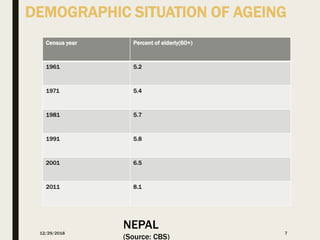
Census year Percent of elderly(60+)
1961 5.2
1971 5.4
1981 5.7
1991 5.8
2001 6.5
2011 8.1
12/29/2018 7
DEMOGRAPHIC SITUATION OF AGEING
NEPAL
(Source: CBS)
DEMOGRAPHIC SITUATION OF
AGEING
 Approximately 15% of the Western
population,
 About 25% of surgical patients are aged ≥65
yrs.
 Age itself is an independent morbidity and
mortality
 By 2030-20% >65yrs(US)
 Rate of surgery-2-3times higher than young
age
 Worldwide >60yrs=2billion
ANATOMIC & PHYSIOLOGIC CHANGES
Nervous System:
 Memory decline occurs in > 40% of individuals.
 Small loss of neuron from neocortex,
 decrease volume  due to shrinkage(more in HTN
and Atherosclerosis)- gyral atrophy and ventricular
dilatation(increased size)
 Cerebral blood flow decreases by 20%, although auto
regulation stays intact.
NERVOUS SYSTEM
 Decreased neurotransmitter synthesis: GABA,
serotonin, dopamine, norepinephrine, and
acetylcholine .
 Coupling of cerebral activity, cerebral metabolic
rate and cerebral blood flow remains intact
Decreases in brain reserve are manifested by:
 Increased sensitivity to anesthetic medications
 Increased risk for peri-operative delirium and
postoperative cognitive dysfunction(POCD).
NERVOUS SYSTEM
Neuraxial changes :
 Reduction of epidural space,
 Increased permeability of the dura
 Decreased volume of CSF.
 The diameter and number of myelinated
fibers in the dorsal and ventral nerve
roots are decreased.
 Decreased conduction velocity in
peripheral nerves.
 more sensitive to Neuraxial block.
NERVOUS SYSTEM
Dementia and parkinsonism are common
problem in old age
 Cognitive deficits are associated with poorer
rehabilitation outcomes and higher surgical
mortality.
 Parkinson's patients are at increased risk for:
Postoperative pharyngeal dysfunction
Risk of aspiration.
Autonomic instability.
CARDIOVASCULAR SYSTEM
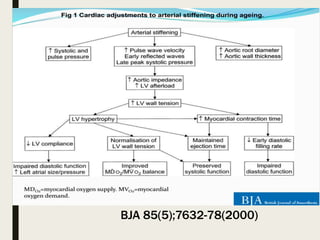
 Decreased myocyte number,
 Left ventricular wall thickening
 Aortic valve sclerosis/calcification and mitral
annular calcification
 Decreased conduction fiber density and sinus node
cell number.
CARDIOVASCULAR SYSTEM
Functionally, characterize by
 Decreased contractility
 Increased myocardial stiffness and ventricular filling
pressures
 Decreased β-adrenergic sensitivity
CARDIOVASCULAR SYSTEM
Cardiac rhythm other than sinus is often poorly tolerated in
elderly individuals.
Decreased ventricular compliance and increased after-load
Compensatory prolongation of myocardial contraction
Decreased early diastolic filling time ->making the
contribution of atrial contraction to late ventricular filling
more important
CARDIOVASCULAR SYSTEM
■ Structural and functional changes in the coronary
vasculature which could affect myocardial
perfusion with advancing age.
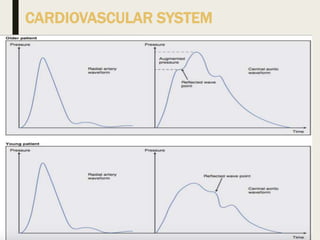
Vascular:
■ The large arteries dilate, their walls thicken, and
smooth muscle tone increases vascular stiffness
increases with advancing age.
■ Vascular stiffness further increases with presence of
HTN, Atherosclerosis, DM, Obesity, cardiovascular
disease, tobacco use
Alterations in nitric oxide–induced vasodilation.
Elevated MAP and pulse pressure.
CARDIOVASCULAR SYSTEM
BJA 85(5);7632-78(2000)
CARDIOVASCULAR SYSTEM
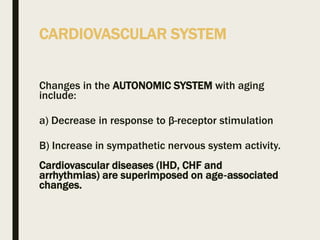
Changes in the AUTONOMIC SYSTEM with aging
include:
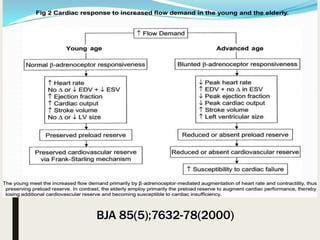
a) Decrease in response to β-receptor stimulation
B) Increase in sympathetic nervous system activity.
Cardiovascular diseases (IHD, CHF and
arrhythmias) are superimposed on age‐associated
changes.
CARDIOVASCULAR SYSTEM
BJA 85(5);7632-78(2000)
RESPIRATORY SYSTEM
 Decreased lung tissue elasticity (due to loss of
elastic recoil and reorganization of collagen and
elastin)
 Lung compliance similar/increase
 Loss of height and calcification of vertebral column
and rib casebarrel chest and flattening of
diaphragm
 Chest wall rigidity increase->Chest wall compliance
decrease->Increase Work of Breathing
 Increased V/Q mismatch
RESPIRATORY SYSTEM
 Loss of elastic recoil and and reorganization
of elastin and collagen and Altered
surfactant production- Increased lung
compliance
 Early collapse of small airways and over
distension of alveoli
 Loss of alveolar surface area
 Increased anatomic and physiologic dead
space
 Blunted response to hypercapnia, hypoxia,
and mechanical stress.
RESPIRATORY SYSTEM
 Increase A-a gradient
 Decreased protective reflexes (coughing and
swallowing)
 Increased pulmonary vascular resistance and
pulmonary arterial pressure.
 Blunted hypoxic pulmonary vaso-constrictive
response  may cause difficulty in one lung
ventilation
 Air trapping and hyper-inflation is also common
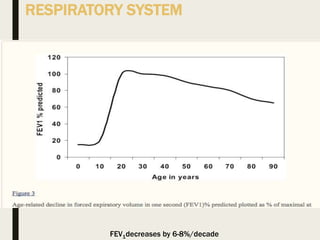
 Decreased in FEV1 with age, 6-8%/decade
primarily due to decreased muscle mass.
RESPIRATORY SYSTEM
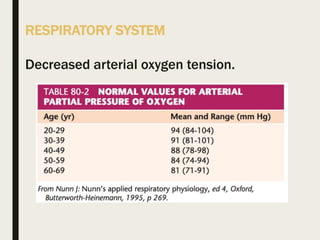
Decreased arterial oxygen tension.
RESPIRATORY SYSTEM
FEV1decreases by 6-8%/decade
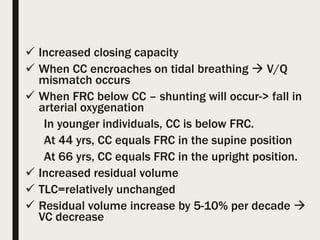
 Increased closing capacity
 When CC encroaches on tidal breathing  V/Q
mismatch occurs
 When FRC below CC – shunting will occur-> fall in
arterial oxygenation
In younger individuals, CC is below FRC.
At 44 yrs, CC equals FRC in the supine position
At 66 yrs, CC equals FRC in the upright position.
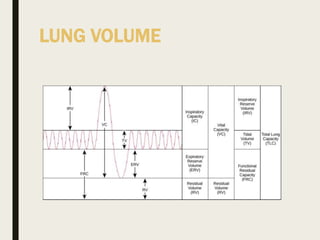
 Increased residual volume
 TLC=relatively unchanged
 Residual volume increase by 5-10% per decade 
VC decrease
LUNG VOLUME
RESPIRATORY SYSTEM
■ Increase sensitivity to broncho-constriction and
also diminished response to beta agonist
■ Alteration of immune system leads to increased
susceptibility to environmental exposure and
lung injury
RENAL CHANGES
 Decrease renal mass ,also muscle mass
 Nephrosclerosis is observed with aging
but may not correlate with GFR
 Renal blood flow ↓es 10% per decade
after 40 years
 Serum creatinine relatively unchanged
 Blood urea nitrogen gradually increases
RENAL CHANGES
Decreased thirst response  dehydration
and Na depletion, vice versa also
Renal capacity to conserve Na is decreased
 Impaired Na+ handling
 Decreased tubular function
 Decreased concentrating and diluting
capacity
RENAL CHANGES
Impaired fluid handling
Decreased drug excretion
Decreased RAAS responsiveness
Impaired K+ excretion
HEPATIC CHANGES
Liver volume decreases (20 to 40%)
Hepatic blood flow decreases 10% per
decade
Decreased capacity to metabolize drugs
Plasma cholinesterase levels are reduced
METABOLIC AND ENDOCRINE CHANGES
 Basal and maximal oxygen consumption declines
 Heat production decreases
 Heat loss increases
 Hypothalamic temperature-regulating centers
may reset at a lower leveldecreased heat
production
METABOLIC AND ENDOCRINE
CHANGES
 Increasing insulin resistance
 Atrophy of endocrine glands
 leading to impaired hormone production:
Insulin,
Thyroxin ,
Growth Hormone,
Testosterone etc
 Blunted Neuro-endocrine stress response.
 Increases risk of hypothermia.
MUSCULOSKELETAL CHANGES
 Reduced muscle mass
 Skin atrophy  susceptible to trauma
 Fragile veins, easily ruptured
 Arthritic joints  may interfere with positioning
 Degenerative cervical spine disease can limit
neck extension intubation difficult
AGE-RELATED PHARMACOLOGIC
EFFECTS
 Increased body fat and decreased total body
water;
Higher plasma concentration of water-soluble drugs.
Lower plasma concentration of fat-soluble drugs.
 Reduced clearance secondary to decreased
hepatic and renal function.
AGE-RELATED PHARMACOLOGIC
EFFECTS
Altered protein binding:
Reduced albumin affects binding of acidic
drugs (opioids.
barbiturates, benzodiazepines).
Increased alpha-acid glycoprotein affects
binding of basic drugs(local anesthetics).
AGE-RELATED PHARMACOLOGIC
EFFECTS
Alterations in sensitivity and number of
receptors more sensitive to anesthetic
drugs
Less medication is usually required
Effect prolonged
Compensatory or reflex responses are
often blunted or absent
SPECIFIC AGENTS
Inhaled Anesthetics
 MAC ↓es by 6% per decade
 Alterations in ion channels, synaptic activity or
receptor sensitivity
 Myocardial depressant effects are exaggerated
 Tachycardia responses of isoflurane and
desflurane are attenuated  decreased CO and
HR
 Agents that are rapidly eliminated
(sevoflurane/desflurane) are good choices
Intravenous Anesthetics
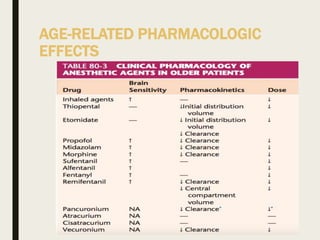
■ Thiopental - decrease in induction dose
requirement
■ Propofol - 30% to 50% increased sensitivity
- reduced clearance
■ Benzodiazepines - increased brain sensitivity
- decreased drug clearance
■ Opioids - Increase in sensitivity
- 50% ↓ in dose requirement
Muscle relaxants:
 No significant changes in pharmacodynamics
 Decreased CO and slow muscle blood flow two
fold prolongation in onset
 Delayed excretion and recovery of Pancuronium due
to renal impairment
 Decrease hepatic extraction, prolongs duration of
action of Vecuronium and Rocuronium
 Atracurium and Cis-atracurium relatively unaffected
AGE-RELATED PHARMACOLOGIC
EFFECTS
AGE-RELATED PHARMACOLOGIC EFFECTS
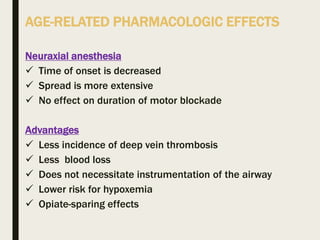
Neuraxial anesthesia
 Time of onset is decreased
 Spread is more extensive
 No effect on duration of motor blockade
Advantages
 Less incidence of deep vein thrombosis
 Less blood loss
 Does not necessitate instrumentation of the airway
 Lower risk for hypoxemia
 Opiate-sparing effects
COGNITIVE ISSUE OF OLD AGE
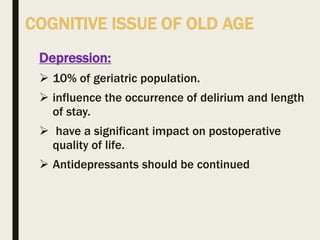
Depression:
 10% of geriatric population.
 influence the occurrence of delirium and length
of stay.
 have a significant impact on postoperative
quality of life.
 Antidepressants should be continued
AGE-RELATED PHARMACOLOGIC
EFFECTS
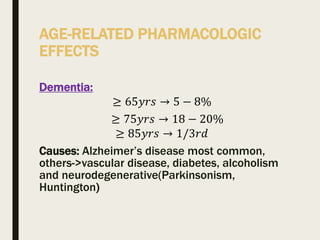
Dementia:
≥ 65𝑦𝑟𝑠 → 5 − 8%
≥ 75𝑦𝑟𝑠 → 18 − 20%
≥ 85𝑦𝑟𝑠 → 1/3𝑟𝑑
Causes: Alzheimer’s disease most common,
others->vascular disease, diabetes, alcoholism
and neurodegenerative(Parkinsonism,
Huntington)
DEMENTIA-> PERIOPERATIVE
ISSUES
Detection,
Informed consent,
Drug interaction->delayed emergence,
Pain management,
Post-operative delirium
Increased mortality
Psychiatric disturbance-> Agitation,
Depression, Sleep disturbances
GA monitoring??BIS EEG???
GA with Dementia-> can progress Dementia
with inhaled anesthesia??
POST-OPERATIVE DELIRIUM
 Is an acute confused state with alteration
in attention and consciousness
 Increases morbidity, delays recovery, and
prolongs hospital stay
 Presentation :
Hyperactive (1%),
Hypoactive(68%),
Mixed (31%)
12/29/2018
12/29/2018
DSM-V Diagnostic Criteria for Delirium
A. Disturbance in attention (ie, reduced ability to direct, focus, sustain, and
shift attention) and awareness (reduced orientation to environment)
B. The disturbance develops over a short period of time (usually hours to few
days), represent an acute change from baseline attention and awareness,
and tends to fluctuate in severity during the course of a day.
C. An additional disturbance in cognition (e.g. memory deficit, disorientation,
language, visuospatial ability or perception)
D. The disturbances in Criteria A and C are not better explained by a pre-
existing, established or evolving neurocognitive disorder and do not occur in
the context of a severely reduced level of arousal such as coma
E. There is evidence from the history, physical examination, or laboratory
findings that the disturbance is caused by a direct physiologic consequence
of a general medical condition, an intoxicating substance, medication use, or
more than one cause.
POST-OPERATIVE DELIRIUM
MANAGEMENT OF POSTOPERATIVE
DELERIUM
 Correction of metabolic and electrolyte
disorders
 Perioperative continuation of medication for
neuropsychiatric disorders
 Decrease exposure to drugs triggering delirium
 Pain management – multimodal and opioids
rotation
 Better sleep environment
 Treat underlying precipitating medical cause
12/29/2018
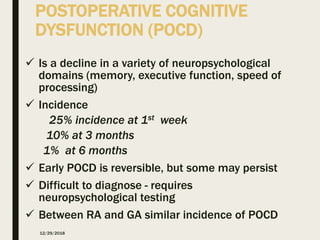
POSTOPERATIVE COGNITIVE
DYSFUNCTION (POCD)
 Is a decline in a variety of neuropsychological
domains (memory, executive function, speed of
processing)
 Incidence
25% incidence at 1st week
10% at 3 months
1% at 6 months
 Early POCD is reversible, but some may persist
 Difficult to diagnose - requires
neuropsychological testing
 Between RA and GA similar incidence of POCD
12/29/2018
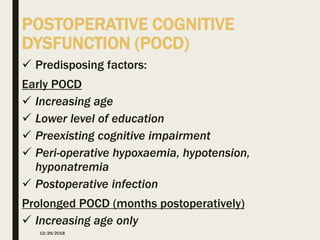
POSTOPERATIVE COGNITIVE
DYSFUNCTION (POCD)
 Predisposing factors:
Early POCD
 Increasing age
 Lower level of education
 Preexisting cognitive impairment
 Peri-operative hypoxaemia, hypotension,
hyponatremia
 Postoperative infection
Prolonged POCD (months postoperatively)
 Increasing age only
12/29/2018
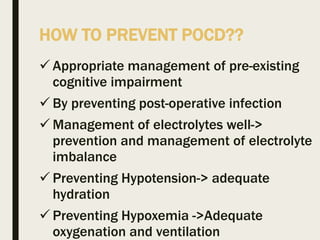
HOW TO PREVENT POCD??
 Appropriate management of pre-existing
cognitive impairment
 By preventing post-operative infection
 Management of electrolytes well->
prevention and management of electrolyte
imbalance
 Preventing Hypotension-> adequate
hydration
 Preventing Hypoxemia ->Adequate
oxygenation and ventilation
SPECIAL ANESTHETIC
CONSIDERATIONAtypical presentation of disease:
 Recognizing the acute illness and acute
exacerbation of chronic disease is challenging.
Polypharmacy
 The number of medications used is directly
proportional to the likelihood of having an adverse
drug reaction
 We should know drug interaction very well
Malnutrition
 Surgical patients who are malnourished have
increased morbidity and mortality and increased
length of stay.
SPECIAL ANESTHETIC CONSIDERATION
Dehydration
Dehydration is often associated with
hypernatremia and accompanied by
infection, e.g. pneumonia and UTI.
Immobility
Bed rest leads to ventricular atrophy,
hypovolemia, and orthostatic intolerance.
Prolonged bed rest causes decreases in
muscle mass  may influence pulmonary
function.
SPECIAL ANESTHETIC CONSIDERATION
Chronic Pain:
 Occurs in 25-50%
 Arthritis(41.7%), bone fracture(12.4%),
other musculoskeletal(9.7%)
 Chronic pain(76.8%),acute
pain(19.9%),3% both
 Persistent pain  depression, sleep
disturbances, and impaired ambulation
 Drug interaction
SPECIAL ANESTHETIC CONSIDERATION
Trauma:
 Unintentional fall is leading cause of
traumatic injury and death
 Substance abuse, alcohol is most
common(5-14%)
 Incidence of mortality is high
 Decreased reserve, comorbidity, multiple
medication (anticoagulants)
 Under-triaged
SPECIAL ANESTHETIC CONSIDERATION
Hypothermia:
Contributing factors:
Frail constitution
Reduced metabolic rate,
Reduced subcutaneous fat layer,
Major and long operations, and
Impaired thermoregulation impaired,
Ability to sense colder temperature,
Impaired autonomic homeostasis,
Reduced ability to vasoconstriction and shivering
Unintentional hypothermia has been associated with
myocardial ischemia, angina, and hypoxemia in post-operative
period.
RISK ASSESSMENT AND PREOPERATIVE
EVALUATION
Role of Complication:
 Increased life expectancy, safer anesthesia and less
invasive technique-> Geriatric surgery increasing
 Postoperative complications increases with age
 Depends on ->physical status and coexisting disease,
elective/urgent, type of procedure
 Atypical presentation, alteration in pulmonary and
circulation system, fluid and electrolyte balance
changes
 So, Emergency surgery mortality is also high
PRE-OPERATIVE EVALUATION
Age and age related disease:
 High index of suspicion of disease
neurological, pulmonary and cardiac
 Physiological reserve, Laboratory, History,
Physical examination, functional capacity->
gives idea about assessment
 ADL(activity daily living), IADL(instrumental ADL)
PRE-OPERATIVE EVALUATION
FRAIL:
 Refers to multisystem loss of physiological
reserve that makes more vulnerable to disability
during and after stress.
 Prognostic factor for poor outcome
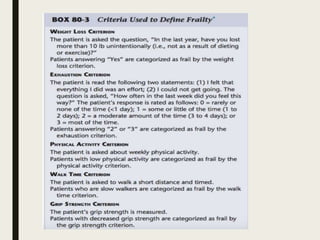
 Criteria: 1) weight loss criteria
2) Exhaustion criteria
3) Physical activity criteria
4) Walk time criteria
5) Grip strength criteria
PRE-ANESTHETIC CHECK UP
 History
 Assessment of co-morbid conditions
 Assessment of functional reserve
 History of medications
 Airway assessment
 Mini-mental state examination
 Investigations
 Consent
PRE-ANESTHETIC CHECK UP
We should remember common disease while doing
PAC
Cardiovascular:
 Atherosclerosis
 Coronary artery disease
 Essential hypertension
 Congestive heart failure
 Cardiac arrhythmias
 Aortic stenosis
Respiratory:
 Emphysema
 Chronic bronchitis
 Pneumonia
PRE-ANESTHETIC CHECK UP
Neurologic:
 Stroke
 Dementia
 Parkinson’s disease
 Alzheimer’s disease
Renal:
 Diabetic nephropathy
 Hypertensive nephropathy
 Obstructive Uropathy (prostatic obstruction)
PRE-ANESTHETIC CHECK UP
Difficult IV access
 fragile veins
Airway problem
 Dentition
 TMJ stiffness
 Cervical spondylosis
 Arthritis of atlanto-occipital joint
Increased sensitivity to volatile anesthetics, opioids
, benzodiazepines
INTRAOPERATIVE CONSIDERATION
 Neurovascular complications of positioning
 Strict fluid balance (decreased LV compliance,
decreased response to β-adrenergic
stimulation)
 Hypotension (exaggerated) when fluid depleted
 CHF when overloaded
 Hypothermia
 Toxicity of anesthetic agents as well as drug
interaction
POSTOPERATIVE CONSIDERATION
Acute Postoperative Pain
 Often underreported
 More difficult in cognitively impaired
patients
 Multi-modal analgesia
 Use of opioids should be done cautiously
 PCA is also difficult
Fluid management
Prevention of hypothermia
DVT prophylaxis
Nutrition
COMPLICATIONS(INTRA AND POST-
OP)
Respiratory
 Pneumonia
 Re-intubation
 Prolonged
mechanical
ventilation
Cardiovascular
 Myocardial ischemia
 Cardiac arrest
GI
Prolonged ileus
Neurologic
 CVA
 Post-operative
delirium
 Post-operative
cognitive
dysfunction(POCD)
12/29/2018
GA Versus RA
■ The difference in outcome is not clear.
■ The incidence of POCD is similar
■ Less incidence of hypoxemia in RA
■ Fewer PPC in RA
■ Better outcome is found in lower limb
vascular surgery- decrease graft
thrombosis, less blood loss, increase
venous flow.
■ RA has less incidence of DVT
DVT WHY LESS IN RA???
 Sympathectomy induced increases in lower
extremity blood flow.
 Systemic anti-inflammatory effects of local
anesthetics
 Decrease platelet reactivity
 Attenuated postoperative increases in factor
VIII and VWF
 Attenuated postoperative decrease in anti-
thrombin III
 Alteration in stress response
WHY PPC LESS IN RA??
 No need of instrumentation of airway
 Patient maintain their airway
themselves
 Patient maintain their pulmonary
function also
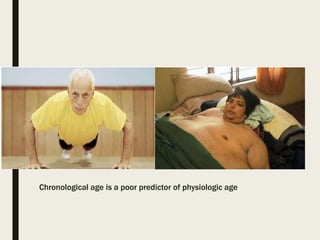
Chronological age is a poor predictor of physiologic age
Any
Questions????
Summary
 Chronological age is much less important risk factor than
decrease in functional reserve and co- existing disease.
 Understanding of the physiological changes with age and
pharmacology helps to optimize anesthesia.
 Thorough pre-operative assessment with correction of
parameters, planning and good monitoring are essential.
 We should consider disease the associated with old age,
adverse drug reaction, dehydration, delirium and functional
decline while giving geriatric anesthesia
References
■ Miller’s Anesthesia 8th edition
■ Morghan Mikhail Cilinical
Anesthesiology-6th edition
■ British Journal of Anesthesia-2000
BJA 85(5);7632-78(2000)
THANK YOU

Geriatric anesthesia

  • 1.
    GERIATRIC ANESTHESIA Presenter: Dr. TirthaRaj Bhandari 2nd year Resident Department of Anesthesiology and Intensive Care NAMS,Bir Hospital, Kathmandu,Nepal
  • 2.
    OBJECTIVES  To discussabout age related anatomical and physiological changes of ageing  To discuss about pharmacological changes  To discuss preoperative, intra-operative and postoperative considerations in elderly  To discuss common peri-operative complications in geriatric anesthesia
  • 3.
    INTRODUCTION >65years Two important thingsthat we should remember: 1)Aging is associated with progressive decline/loss of functional reserve in all organ system 2)Second the extent and onset of the changes varies from person to person Theories:
  • 4.
  • 5.
    INTRODUCTION Aging is aprogressive physiologic process characterized by : 1) Decreased End-organ Reserve 2) Decreased Functional Capacity 3) Imbalance Of Homeostatic Mechanisms 4) Increasing Incidence Of Pathologic Processes.
  • 6.
    INTRODUCTION Limitation of physiologicalreserves becomes evident only during the time of physiological stress. 1)exercise 2)Illness 3)Surgery We should anticipate the interaction between underlying disease, limited physiological reserve, and stress of perioperative period.
  • 7.
    Census year Percentof elderly(60+) 1961 5.2 1971 5.4 1981 5.7 1991 5.8 2001 6.5 2011 8.1 12/29/2018 7 DEMOGRAPHIC SITUATION OF AGEING NEPAL (Source: CBS)
  • 8.
    DEMOGRAPHIC SITUATION OF AGEING Approximately 15% of the Western population,  About 25% of surgical patients are aged ≥65 yrs.  Age itself is an independent morbidity and mortality  By 2030-20% >65yrs(US)  Rate of surgery-2-3times higher than young age  Worldwide >60yrs=2billion
  • 9.
    ANATOMIC & PHYSIOLOGICCHANGES Nervous System:  Memory decline occurs in > 40% of individuals.  Small loss of neuron from neocortex,  decrease volume  due to shrinkage(more in HTN and Atherosclerosis)- gyral atrophy and ventricular dilatation(increased size)  Cerebral blood flow decreases by 20%, although auto regulation stays intact.
  • 10.
    NERVOUS SYSTEM  Decreasedneurotransmitter synthesis: GABA, serotonin, dopamine, norepinephrine, and acetylcholine .  Coupling of cerebral activity, cerebral metabolic rate and cerebral blood flow remains intact Decreases in brain reserve are manifested by:  Increased sensitivity to anesthetic medications  Increased risk for peri-operative delirium and postoperative cognitive dysfunction(POCD).
  • 11.
    NERVOUS SYSTEM Neuraxial changes:  Reduction of epidural space,  Increased permeability of the dura  Decreased volume of CSF.  The diameter and number of myelinated fibers in the dorsal and ventral nerve roots are decreased.  Decreased conduction velocity in peripheral nerves.  more sensitive to Neuraxial block.
  • 12.
    NERVOUS SYSTEM Dementia andparkinsonism are common problem in old age  Cognitive deficits are associated with poorer rehabilitation outcomes and higher surgical mortality.  Parkinson's patients are at increased risk for: Postoperative pharyngeal dysfunction Risk of aspiration. Autonomic instability.
  • 13.
    CARDIOVASCULAR SYSTEM  Decreasedmyocyte number,  Left ventricular wall thickening  Aortic valve sclerosis/calcification and mitral annular calcification  Decreased conduction fiber density and sinus node cell number.
  • 14.
    CARDIOVASCULAR SYSTEM Functionally, characterizeby  Decreased contractility  Increased myocardial stiffness and ventricular filling pressures  Decreased β-adrenergic sensitivity
  • 15.
    CARDIOVASCULAR SYSTEM Cardiac rhythmother than sinus is often poorly tolerated in elderly individuals. Decreased ventricular compliance and increased after-load Compensatory prolongation of myocardial contraction Decreased early diastolic filling time ->making the contribution of atrial contraction to late ventricular filling more important
  • 16.
    CARDIOVASCULAR SYSTEM ■ Structuraland functional changes in the coronary vasculature which could affect myocardial perfusion with advancing age. Vascular: ■ The large arteries dilate, their walls thicken, and smooth muscle tone increases vascular stiffness increases with advancing age. ■ Vascular stiffness further increases with presence of HTN, Atherosclerosis, DM, Obesity, cardiovascular disease, tobacco use Alterations in nitric oxide–induced vasodilation. Elevated MAP and pulse pressure.
  • 17.
  • 18.
  • 19.
    CARDIOVASCULAR SYSTEM Changes inthe AUTONOMIC SYSTEM with aging include: a) Decrease in response to β-receptor stimulation B) Increase in sympathetic nervous system activity. Cardiovascular diseases (IHD, CHF and arrhythmias) are superimposed on age‐associated changes.
  • 20.
  • 21.
    RESPIRATORY SYSTEM  Decreasedlung tissue elasticity (due to loss of elastic recoil and reorganization of collagen and elastin)  Lung compliance similar/increase  Loss of height and calcification of vertebral column and rib casebarrel chest and flattening of diaphragm  Chest wall rigidity increase->Chest wall compliance decrease->Increase Work of Breathing  Increased V/Q mismatch
  • 22.
    RESPIRATORY SYSTEM  Lossof elastic recoil and and reorganization of elastin and collagen and Altered surfactant production- Increased lung compliance  Early collapse of small airways and over distension of alveoli  Loss of alveolar surface area  Increased anatomic and physiologic dead space  Blunted response to hypercapnia, hypoxia, and mechanical stress.
  • 23.
    RESPIRATORY SYSTEM  IncreaseA-a gradient  Decreased protective reflexes (coughing and swallowing)  Increased pulmonary vascular resistance and pulmonary arterial pressure.  Blunted hypoxic pulmonary vaso-constrictive response  may cause difficulty in one lung ventilation  Air trapping and hyper-inflation is also common  Decreased in FEV1 with age, 6-8%/decade primarily due to decreased muscle mass.
  • 24.
  • 25.
  • 26.
     Increased closingcapacity  When CC encroaches on tidal breathing  V/Q mismatch occurs  When FRC below CC – shunting will occur-> fall in arterial oxygenation In younger individuals, CC is below FRC. At 44 yrs, CC equals FRC in the supine position At 66 yrs, CC equals FRC in the upright position.  Increased residual volume  TLC=relatively unchanged  Residual volume increase by 5-10% per decade  VC decrease
  • 27.
  • 28.
    RESPIRATORY SYSTEM ■ Increasesensitivity to broncho-constriction and also diminished response to beta agonist ■ Alteration of immune system leads to increased susceptibility to environmental exposure and lung injury
  • 29.
    RENAL CHANGES  Decreaserenal mass ,also muscle mass  Nephrosclerosis is observed with aging but may not correlate with GFR  Renal blood flow ↓es 10% per decade after 40 years  Serum creatinine relatively unchanged  Blood urea nitrogen gradually increases
  • 30.
    RENAL CHANGES Decreased thirstresponse  dehydration and Na depletion, vice versa also Renal capacity to conserve Na is decreased  Impaired Na+ handling  Decreased tubular function  Decreased concentrating and diluting capacity
  • 31.
    RENAL CHANGES Impaired fluidhandling Decreased drug excretion Decreased RAAS responsiveness Impaired K+ excretion
  • 32.
    HEPATIC CHANGES Liver volumedecreases (20 to 40%) Hepatic blood flow decreases 10% per decade Decreased capacity to metabolize drugs Plasma cholinesterase levels are reduced
  • 33.
    METABOLIC AND ENDOCRINECHANGES  Basal and maximal oxygen consumption declines  Heat production decreases  Heat loss increases  Hypothalamic temperature-regulating centers may reset at a lower leveldecreased heat production
  • 34.
    METABOLIC AND ENDOCRINE CHANGES Increasing insulin resistance  Atrophy of endocrine glands  leading to impaired hormone production: Insulin, Thyroxin , Growth Hormone, Testosterone etc  Blunted Neuro-endocrine stress response.  Increases risk of hypothermia.
  • 35.
    MUSCULOSKELETAL CHANGES  Reducedmuscle mass  Skin atrophy  susceptible to trauma  Fragile veins, easily ruptured  Arthritic joints  may interfere with positioning  Degenerative cervical spine disease can limit neck extension intubation difficult
  • 36.
    AGE-RELATED PHARMACOLOGIC EFFECTS  Increasedbody fat and decreased total body water; Higher plasma concentration of water-soluble drugs. Lower plasma concentration of fat-soluble drugs.  Reduced clearance secondary to decreased hepatic and renal function.
  • 37.
    AGE-RELATED PHARMACOLOGIC EFFECTS Altered proteinbinding: Reduced albumin affects binding of acidic drugs (opioids. barbiturates, benzodiazepines). Increased alpha-acid glycoprotein affects binding of basic drugs(local anesthetics).
  • 38.
    AGE-RELATED PHARMACOLOGIC EFFECTS Alterations insensitivity and number of receptors more sensitive to anesthetic drugs Less medication is usually required Effect prolonged Compensatory or reflex responses are often blunted or absent
  • 39.
    SPECIFIC AGENTS Inhaled Anesthetics MAC ↓es by 6% per decade  Alterations in ion channels, synaptic activity or receptor sensitivity  Myocardial depressant effects are exaggerated  Tachycardia responses of isoflurane and desflurane are attenuated  decreased CO and HR  Agents that are rapidly eliminated (sevoflurane/desflurane) are good choices
  • 40.
    Intravenous Anesthetics ■ Thiopental- decrease in induction dose requirement ■ Propofol - 30% to 50% increased sensitivity - reduced clearance ■ Benzodiazepines - increased brain sensitivity - decreased drug clearance ■ Opioids - Increase in sensitivity - 50% ↓ in dose requirement
  • 41.
    Muscle relaxants:  Nosignificant changes in pharmacodynamics  Decreased CO and slow muscle blood flow two fold prolongation in onset  Delayed excretion and recovery of Pancuronium due to renal impairment  Decrease hepatic extraction, prolongs duration of action of Vecuronium and Rocuronium  Atracurium and Cis-atracurium relatively unaffected
  • 42.
  • 43.
    AGE-RELATED PHARMACOLOGIC EFFECTS Neuraxialanesthesia  Time of onset is decreased  Spread is more extensive  No effect on duration of motor blockade Advantages  Less incidence of deep vein thrombosis  Less blood loss  Does not necessitate instrumentation of the airway  Lower risk for hypoxemia  Opiate-sparing effects
  • 44.
    COGNITIVE ISSUE OFOLD AGE Depression:  10% of geriatric population.  influence the occurrence of delirium and length of stay.  have a significant impact on postoperative quality of life.  Antidepressants should be continued
  • 45.
    AGE-RELATED PHARMACOLOGIC EFFECTS Dementia: ≥ 65𝑦𝑟𝑠→ 5 − 8% ≥ 75𝑦𝑟𝑠 → 18 − 20% ≥ 85𝑦𝑟𝑠 → 1/3𝑟𝑑 Causes: Alzheimer’s disease most common, others->vascular disease, diabetes, alcoholism and neurodegenerative(Parkinsonism, Huntington)
  • 46.
    DEMENTIA-> PERIOPERATIVE ISSUES Detection, Informed consent, Druginteraction->delayed emergence, Pain management, Post-operative delirium Increased mortality Psychiatric disturbance-> Agitation, Depression, Sleep disturbances GA monitoring??BIS EEG??? GA with Dementia-> can progress Dementia with inhaled anesthesia??
  • 47.
    POST-OPERATIVE DELIRIUM  Isan acute confused state with alteration in attention and consciousness  Increases morbidity, delays recovery, and prolongs hospital stay  Presentation : Hyperactive (1%), Hypoactive(68%), Mixed (31%) 12/29/2018
  • 48.
    12/29/2018 DSM-V Diagnostic Criteriafor Delirium A. Disturbance in attention (ie, reduced ability to direct, focus, sustain, and shift attention) and awareness (reduced orientation to environment) B. The disturbance develops over a short period of time (usually hours to few days), represent an acute change from baseline attention and awareness, and tends to fluctuate in severity during the course of a day. C. An additional disturbance in cognition (e.g. memory deficit, disorientation, language, visuospatial ability or perception) D. The disturbances in Criteria A and C are not better explained by a pre- existing, established or evolving neurocognitive disorder and do not occur in the context of a severely reduced level of arousal such as coma E. There is evidence from the history, physical examination, or laboratory findings that the disturbance is caused by a direct physiologic consequence of a general medical condition, an intoxicating substance, medication use, or more than one cause.
  • 49.
  • 50.
    MANAGEMENT OF POSTOPERATIVE DELERIUM Correction of metabolic and electrolyte disorders  Perioperative continuation of medication for neuropsychiatric disorders  Decrease exposure to drugs triggering delirium  Pain management – multimodal and opioids rotation  Better sleep environment  Treat underlying precipitating medical cause 12/29/2018
  • 51.
    POSTOPERATIVE COGNITIVE DYSFUNCTION (POCD) Is a decline in a variety of neuropsychological domains (memory, executive function, speed of processing)  Incidence 25% incidence at 1st week 10% at 3 months 1% at 6 months  Early POCD is reversible, but some may persist  Difficult to diagnose - requires neuropsychological testing  Between RA and GA similar incidence of POCD 12/29/2018
  • 52.
    POSTOPERATIVE COGNITIVE DYSFUNCTION (POCD) Predisposing factors: Early POCD  Increasing age  Lower level of education  Preexisting cognitive impairment  Peri-operative hypoxaemia, hypotension, hyponatremia  Postoperative infection Prolonged POCD (months postoperatively)  Increasing age only 12/29/2018
  • 53.
    HOW TO PREVENTPOCD??  Appropriate management of pre-existing cognitive impairment  By preventing post-operative infection  Management of electrolytes well-> prevention and management of electrolyte imbalance  Preventing Hypotension-> adequate hydration  Preventing Hypoxemia ->Adequate oxygenation and ventilation
  • 54.
    SPECIAL ANESTHETIC CONSIDERATIONAtypical presentationof disease:  Recognizing the acute illness and acute exacerbation of chronic disease is challenging. Polypharmacy  The number of medications used is directly proportional to the likelihood of having an adverse drug reaction  We should know drug interaction very well Malnutrition  Surgical patients who are malnourished have increased morbidity and mortality and increased length of stay.
  • 55.
    SPECIAL ANESTHETIC CONSIDERATION Dehydration Dehydrationis often associated with hypernatremia and accompanied by infection, e.g. pneumonia and UTI. Immobility Bed rest leads to ventricular atrophy, hypovolemia, and orthostatic intolerance. Prolonged bed rest causes decreases in muscle mass  may influence pulmonary function.
  • 56.
    SPECIAL ANESTHETIC CONSIDERATION ChronicPain:  Occurs in 25-50%  Arthritis(41.7%), bone fracture(12.4%), other musculoskeletal(9.7%)  Chronic pain(76.8%),acute pain(19.9%),3% both  Persistent pain  depression, sleep disturbances, and impaired ambulation  Drug interaction
  • 57.
    SPECIAL ANESTHETIC CONSIDERATION Trauma: Unintentional fall is leading cause of traumatic injury and death  Substance abuse, alcohol is most common(5-14%)  Incidence of mortality is high  Decreased reserve, comorbidity, multiple medication (anticoagulants)  Under-triaged
  • 58.
    SPECIAL ANESTHETIC CONSIDERATION Hypothermia: Contributingfactors: Frail constitution Reduced metabolic rate, Reduced subcutaneous fat layer, Major and long operations, and Impaired thermoregulation impaired, Ability to sense colder temperature, Impaired autonomic homeostasis, Reduced ability to vasoconstriction and shivering Unintentional hypothermia has been associated with myocardial ischemia, angina, and hypoxemia in post-operative period.
  • 59.
    RISK ASSESSMENT ANDPREOPERATIVE EVALUATION Role of Complication:  Increased life expectancy, safer anesthesia and less invasive technique-> Geriatric surgery increasing  Postoperative complications increases with age  Depends on ->physical status and coexisting disease, elective/urgent, type of procedure  Atypical presentation, alteration in pulmonary and circulation system, fluid and electrolyte balance changes  So, Emergency surgery mortality is also high
  • 60.
    PRE-OPERATIVE EVALUATION Age andage related disease:  High index of suspicion of disease neurological, pulmonary and cardiac  Physiological reserve, Laboratory, History, Physical examination, functional capacity-> gives idea about assessment  ADL(activity daily living), IADL(instrumental ADL)
  • 61.
    PRE-OPERATIVE EVALUATION FRAIL:  Refersto multisystem loss of physiological reserve that makes more vulnerable to disability during and after stress.  Prognostic factor for poor outcome  Criteria: 1) weight loss criteria 2) Exhaustion criteria 3) Physical activity criteria 4) Walk time criteria 5) Grip strength criteria
  • 63.
    PRE-ANESTHETIC CHECK UP History  Assessment of co-morbid conditions  Assessment of functional reserve  History of medications  Airway assessment  Mini-mental state examination  Investigations  Consent
  • 64.
    PRE-ANESTHETIC CHECK UP Weshould remember common disease while doing PAC Cardiovascular:  Atherosclerosis  Coronary artery disease  Essential hypertension  Congestive heart failure  Cardiac arrhythmias  Aortic stenosis Respiratory:  Emphysema  Chronic bronchitis  Pneumonia
  • 65.
    PRE-ANESTHETIC CHECK UP Neurologic: Stroke  Dementia  Parkinson’s disease  Alzheimer’s disease Renal:  Diabetic nephropathy  Hypertensive nephropathy  Obstructive Uropathy (prostatic obstruction)
  • 66.
    PRE-ANESTHETIC CHECK UP DifficultIV access  fragile veins Airway problem  Dentition  TMJ stiffness  Cervical spondylosis  Arthritis of atlanto-occipital joint Increased sensitivity to volatile anesthetics, opioids , benzodiazepines
  • 67.
    INTRAOPERATIVE CONSIDERATION  Neurovascularcomplications of positioning  Strict fluid balance (decreased LV compliance, decreased response to β-adrenergic stimulation)  Hypotension (exaggerated) when fluid depleted  CHF when overloaded  Hypothermia  Toxicity of anesthetic agents as well as drug interaction
  • 68.
    POSTOPERATIVE CONSIDERATION Acute PostoperativePain  Often underreported  More difficult in cognitively impaired patients  Multi-modal analgesia  Use of opioids should be done cautiously  PCA is also difficult Fluid management Prevention of hypothermia DVT prophylaxis Nutrition
  • 69.
    COMPLICATIONS(INTRA AND POST- OP) Respiratory Pneumonia  Re-intubation  Prolonged mechanical ventilation Cardiovascular  Myocardial ischemia  Cardiac arrest GI Prolonged ileus Neurologic  CVA  Post-operative delirium  Post-operative cognitive dysfunction(POCD) 12/29/2018
  • 70.
    GA Versus RA ■The difference in outcome is not clear. ■ The incidence of POCD is similar ■ Less incidence of hypoxemia in RA ■ Fewer PPC in RA ■ Better outcome is found in lower limb vascular surgery- decrease graft thrombosis, less blood loss, increase venous flow. ■ RA has less incidence of DVT
  • 71.
    DVT WHY LESSIN RA???  Sympathectomy induced increases in lower extremity blood flow.  Systemic anti-inflammatory effects of local anesthetics  Decrease platelet reactivity  Attenuated postoperative increases in factor VIII and VWF  Attenuated postoperative decrease in anti- thrombin III  Alteration in stress response
  • 72.
    WHY PPC LESSIN RA??  No need of instrumentation of airway  Patient maintain their airway themselves  Patient maintain their pulmonary function also
  • 73.
    Chronological age isa poor predictor of physiologic age
  • 74.
  • 75.
    Summary  Chronological ageis much less important risk factor than decrease in functional reserve and co- existing disease.  Understanding of the physiological changes with age and pharmacology helps to optimize anesthesia.  Thorough pre-operative assessment with correction of parameters, planning and good monitoring are essential.  We should consider disease the associated with old age, adverse drug reaction, dehydration, delirium and functional decline while giving geriatric anesthesia
  • 76.
    References ■ Miller’s Anesthesia8th edition ■ Morghan Mikhail Cilinical Anesthesiology-6th edition ■ British Journal of Anesthesia-2000 BJA 85(5);7632-78(2000)
  • 77.

Editor's Notes

  • #4 Three Groups Elderly ------ Age 65 to 74 Aged -------- Age 75 to 84 Very Old ---- Age 85 and more Old age is not a disease. Theories- evolutionary, molecular, cellular, system(neuro,endo)
  • #7 Best care-should anticipate all
  • #8 In Nepal, individuals over 60 years of age are considered elderly in contrast to 65 yrs in most developed countries Physiological ageing important in respect to chronological ageing
  • #9 risk factor for a long list of diseases and injuries, hospitalization, length of hospitalization, and adverse drug reactions.
  • #10 Memory decline is not universal Small loss of neuron from neocortex, decrease volume is mainly due to shrinkage(more in htn,athero)->gyral atrophy and ventricular dilatation( Coupling of cerebral activity, cerebral metabolic rate and cerebral blood flow remains intact
  • #12 Neuraxial- both central and peripheral
  • #17 related to breakdown of elastin and collagen(vessel)
  • #20 Decreased β-receptor responsiveness : 1) causes the increased peripheral flow demand to be met primarily by preload reserve. 2) is 2ry to: decreased receptor affinity and alterations in signal transduction. sympathetic overactivity leading to desensitization of β‐adrenoceptors
  • #22 Lung compliance is similar/increase(if disease lung)- due to damage of elastin and collagen- The change in the relationship between FRC and CC cause an increased ventilation-perfusion mismatch (increased Shunt) and represent the most important mechanism for the increase in alveolar-arterial oxygen gradient. formula P(A–a)O2 = 3 + (0.21 x patient's age) Loss of elastic recoil enlargement of respiratory bronchioles and alveolar duct->air trapping and hyperinflation
  • #23  V/Q mismatch-> due to increase anatomical dead space, decreasing diffusing capacity and increased CC
  • #24  cause an increased ventilation-perfusion mismatch (increased Shunt) and represent the most important mechanism for the increase in alveolar-arterial oxygen gradient. formula P(A–a)O2 = 3 + (0.21 x patient's age) Air trapping and hyper-inflation= loss of elastin element, dilatation of bronchioles and alveolar ducts-> leading to early collapse of alveoli hyperinflation and airtrapping
  • #26 FEV- decrase- due to muscle mass decrease
  • #27 The change in the relationship between FRC and CC
  • #30 reduced renal blood flow and decreased nephron mass in elderly patients increases the risk of acute renal failure kidney’s ability to excrete drugs declines 3. predispose elderly patients to both dehydration and fluid overload
  • #31 Thirst regulation-distrubed-so hypo,hypernatremia with hyper and hypovolemia
  • #32 RAAS- renin angiotensin aldosterone system
  • #38 A->A
  • #45 Discontinuation of antidepressants can aggravate the condition/confusion
  • #47 Dementia alters-> BIS,EEG Pain management challanging->opiods-> delerium, PCA difficult. Inhaled-> plague formation
  • #48 Delirium is a syndrome characterized by acute onset of variable and fluctuating changes in level of consciousness accompanied by a range of other mental symptoms. Essential feature of delirium is disturbance in consciousness accompanied by change in cognition
  • #49 Distrubance of attention Acute Additional distrubance- memory deficit, disorientation,language
  • #50 Age >65, cognitive impairment, functional impairment, sensory impairment, decrease oral intake, drugs, comorbidity, icu admission, pain, sleep deprivation
  • #51 Opioid rotation refers to a switch from one opioid to another in an effort to improve the response to analgesic therapy or reduce adverse effects. It is a common method to address the problem of poor opioid responsiveness despite optimal dose titration.
  • #52 based on changes between preoperative and postoperative scores on a set of neuropsychological tests
  • #53 Recent evidence suggesting that patients are at risk from POCD as a consequence of admission to hospital supports the concept of day case surgery.
  • #55 Pneumonia may present with confusion, lethargy and general deterioration of condition. Having dementia may significantly alter the manifestation of disease
  • #62 Frail component: mobility, muscle weakness, poor exercise tolerance, unstable balance, weight loss/malnutrition/muscle wasting