PERI-OPERATIVE PAIN MANAGEMENT
Presenter:
Dr.Tirtha Raj Bhandari
2nd year Resident
Department of Aesthesia , KCH,
NAMS
2/8/2019 Department of PediatricAnesthesia, KCH 1
Objectives
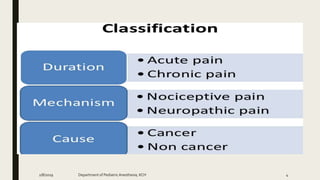
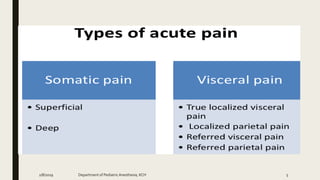
 Defining and classifying pain
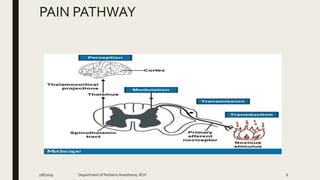
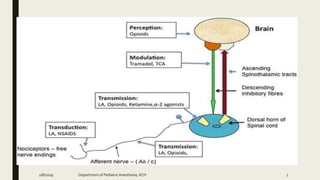
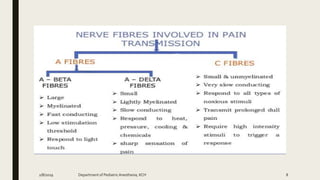
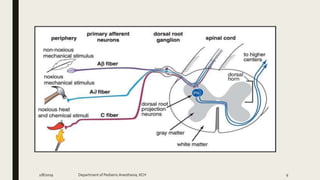
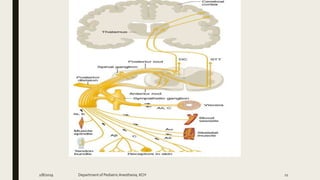
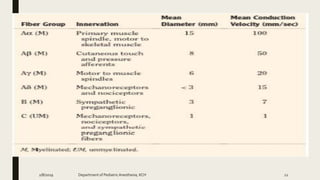
 Neurophysiology of pain conduction and modulation
 Pain assessment in pediatric patients
 Different methods for management of perioperative pain
2/8/2019 Department of PediatricAnesthesia, KCH 2
Introduction
 An unpleasant sensory and emotional experience associated with actual or potential
tissue damage, or described in terms of such damage.(IASP= InternationalAssociation
of study of pain)
 “Pain is a more terrible lord of mankind than even death itself.”
-Albert Schweitzer
 Pain affects various system of our body
 Nowadays pain is also considered as 5th vital sign
2/8/2019 Department of PediatricAnesthesia, KCH 3
2/8/2019 Department of PediatricAnesthesia, KCH 4
2/8/2019 Department of PediatricAnesthesia, KCH 5
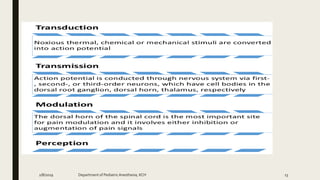
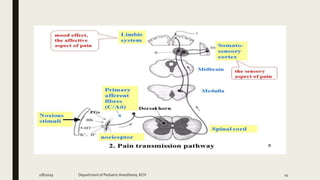
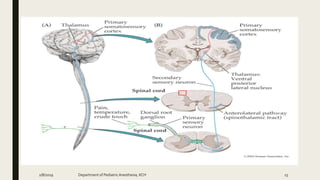
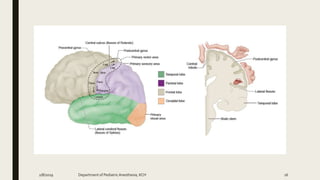
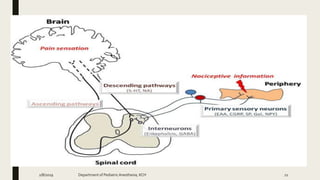
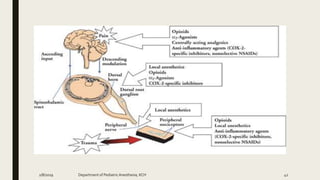
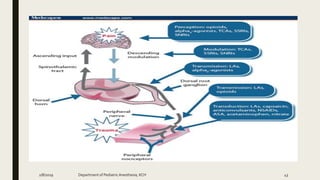
PAIN PATHWAY
2/8/2019 Department of PediatricAnesthesia, KCH 6
2/8/2019 Department of PediatricAnesthesia, KCH 7
2/8/2019 Department of PediatricAnesthesia, KCH 8
2/8/2019 Department of PediatricAnesthesia, KCH 9
2/8/2019 Department of PediatricAnesthesia, KCH 10
2/8/2019 Department of PediatricAnesthesia, KCH 11
2/8/2019 Department of PediatricAnesthesia, KCH 12
2/8/2019 Department of PediatricAnesthesia, KCH 13
2/8/2019 Department of PediatricAnesthesia, KCH 14
2/8/2019 Department of PediatricAnesthesia, KCH 15
2/8/2019 Department of PediatricAnesthesia, KCH 16
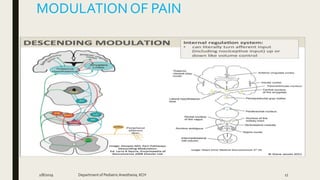
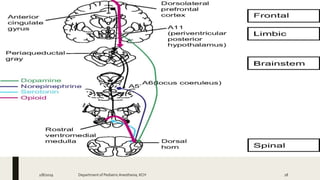
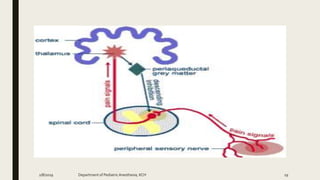
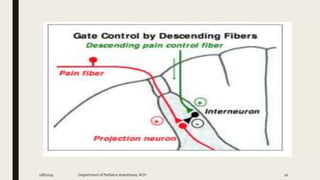
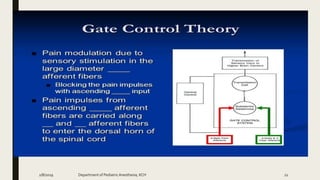
MODULATIONOF PAIN
2/8/2019 Department of PediatricAnesthesia, KCH 17
2/8/2019 Department of PediatricAnesthesia, KCH 18
2/8/2019 Department of PediatricAnesthesia, KCH 19
2/8/2019 Department of PediatricAnesthesia, KCH 20
2/8/2019 Department of PediatricAnesthesia, KCH 21
2/8/2019 Department of PediatricAnesthesia, KCH 22
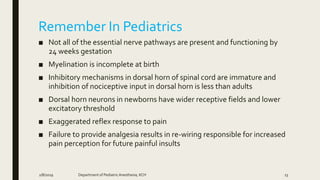
Remember In Pediatrics
■ Not all of the essential nerve pathways are present and functioning by
24 weeks gestation
■ Myelination is incomplete at birth
■ Inhibitory mechanisms in dorsal horn of spinal cord are immature and
inhibition of nociceptive input in dorsal horn is less than adults
■ Dorsal horn neurons in newborns have wider receptive fields and lower
excitatory threshold
■ Exaggerated reflex response to pain
■ Failure to provide analgesia results in re-wiring responsible for increased
pain perception for future painful insults
2/8/2019 Department of PediatricAnesthesia, KCH 23
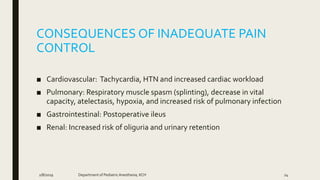
CONSEQUENCES OF INADEQUATE PAIN
CONTROL
■ Cardiovascular: Tachycardia, HTN and increased cardiac workload
■ Pulmonary: Respiratory muscle spasm (splinting), decrease in vital
capacity, atelectasis, hypoxia, and increased risk of pulmonary infection
■ Gastrointestinal: Postoperative ileus
■ Renal: Increased risk of oliguria and urinary retention
2/8/2019 Department of PediatricAnesthesia, KCH 24
CONTD
■ Coagulation: Increased risk of thromboembolism
■ Muscular: Muscle weakness and fatigue
■ Psychological: Anxiety, fear and frustration
■ Poor patient satisfaction, delayed wound healing, increase hospital stay
and cost
2/8/2019 Department of PediatricAnesthesia, KCH 25
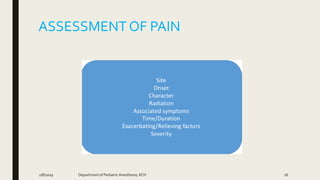
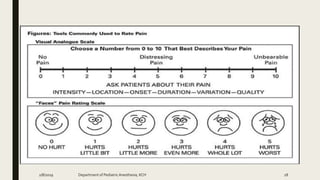
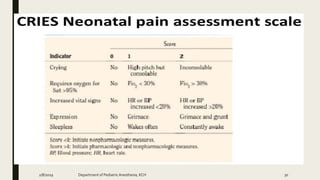
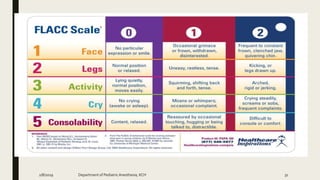
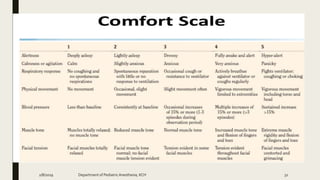
ASSESSMENT OF PAIN
2/8/2019 Department of PediatricAnesthesia, KCH 26
2/8/2019 Department of PediatricAnesthesia, KCH 27
2/8/2019 Department of PediatricAnesthesia, KCH 28
2/8/2019 Department of PediatricAnesthesia, KCH 29
2/8/2019 Department of PediatricAnesthesia, KCH 30
2/8/2019 Department of PediatricAnesthesia, KCH 31
2/8/2019 Department of PediatricAnesthesia, KCH 32
MANAGEMENT OF PERIOPERATIVE
PAIN
2/8/2019 Department of PediatricAnesthesia, KCH 33
Pre-emptive Analgesia
-Treatment that is initiated before surgical procedure
- Reduces sensitization
Goal: To prevent NMDA receptor activation in the dorsal horn. NMDA receptor activation-
– causes “wind-up”, facilitation, central sensitization expansion of receptive fields
and long-term potentiation
– lead to a chronic pain state
2/8/2019 Department of PediatricAnesthesia, KCH 34
Pre-emptive Analgesia
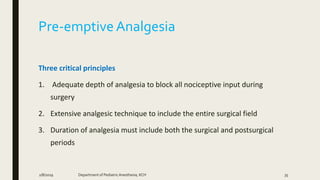
Three critical principles
1. Adequate depth of analgesia to block all nociceptive input during
surgery
2. Extensive analgesic technique to include the entire surgical field
3. Duration of analgesia must include both the surgical and postsurgical
periods
2/8/2019 Department of PediatricAnesthesia, KCH 35
Pre-emptive Analgesia
Activation of peripheral nociceptors:
NSAIDs, anti-histaminics, 5-HT antagonists and local
anesthetics.
Within dorsal horn: Nociceptive transmission and processing
can be affected by local anesthetic, neuraxial opiods,alpha-2
adrenergic agonist (clonidine, dexmedetomidine),
transcutaneous nerve stimulation.
Within CNS: Systemic opioids, alpha 2 agonist, anticonvulsants,
hypnosis, acupuncture, biofeedback, distraction, relaxation
technique.
2/8/2019 Department of PediatricAnesthesia, KCH 36
MANAGEMENT OF PERIOPERATIVE
PAINR=Recognize
A=Assessment
T=Treatment
MultimodalAnalgesia:
 Different drugs and technique with different mechanisms/sites of action
along pain pathway
 Each with a lower dose than if used alone
 Can provide additive or synergistic effects
 Provides better analgesia with less side effects
2/8/2019 Department of PediatricAnesthesia, KCH 37
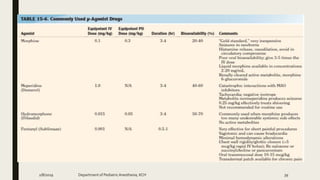
DRUGS
■ Opioids: Morphine, Fentanyl, Pethidine etc.
■ NSAIDS: Ketorolac, Declofenac, PCM?? Etc.
■ Anti-depressants: TCA (Amitriptyline)
■ Anti-convulsants : Carbamazepine,
■ Delta 2 Calcium channel ligand mediated: Pregabaline and gabapentine
etc.
■ NMDA blockers: Ketamine
■ Alfa 2 agonist: Clonidine and dexmedetomidine
■ Local Anesthetics: Lignocaine, Bupivacaine, Ropivacaine etc.
2/8/2019 Department of PediatricAnesthesia, KCH 38
2/8/2019 Department of PediatricAnesthesia, KCH 39
2/8/2019 Department of PediatricAnesthesia, KCH 40
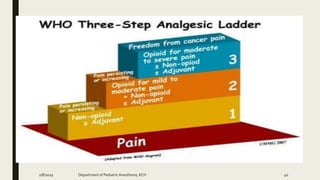
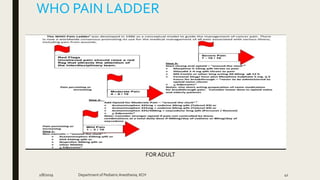
WHO PAIN LADDER
2/8/2019 Department of PediatricAnesthesia, KCH 41
FOR ADULT
2/8/2019 Department of PediatricAnesthesia, KCH 42
2/8/2019 Department of PediatricAnesthesia, KCH 43
■THANKYOU
2/8/2019 Department of PediatricAnesthesia, KCH 44
PERIOPERATIVE PAIN MANAGEMENT
PART-II
2/8/2019 Department of PediatricAnesthesia, KCH 45
REGIONALANESTHESIA FOR
PERIOPERATIVE PAIN MANAGEMENT
Central Neuro-axial block
a) Intra-thecal Injection of drug
b)Epidural analgesia, caudal analgesia
Commonly used drugs are- 0.5%bupivacaine, Lignocaine,
Fentanyl, Morphine, Clonidine, dexmedetomidine etc
2/8/2019 Department of PediatricAnesthesia, KCH 46
2/8/2019 Department of PediatricAnesthesia, KCH 47
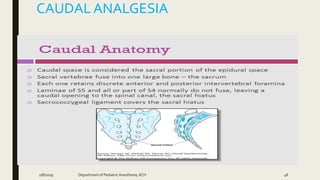
CAUDAL ANALGESIA
2/8/2019 Department of PediatricAnesthesia, KCH 48
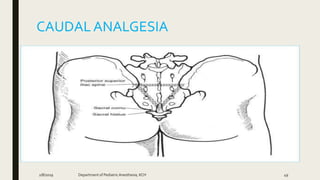
CAUDALANALGESIA
2/8/2019 Department of PediatricAnesthesia, KCH 49
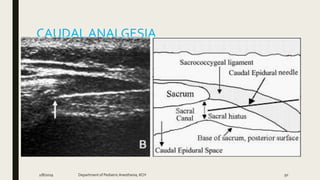
CAUDAL ANALGESIA
2/8/2019 Department of PediatricAnesthesia, KCH 50
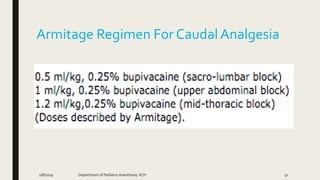
Armitage Regimen For CaudalAnalgesia
2/8/2019 Department of PediatricAnesthesia, KCH 51
Peripheral Nerve Block
2/8/2019 Department of PediatricAnesthesia, KCH 52
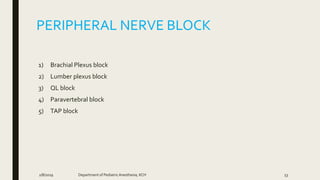
PERIPHERAL NERVE BLOCK
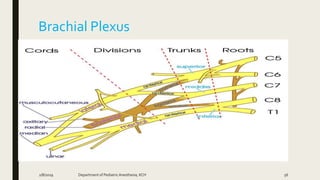
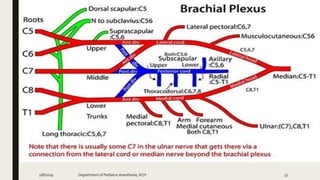
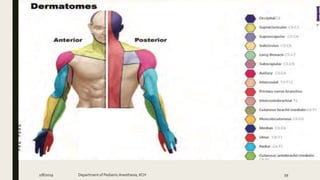
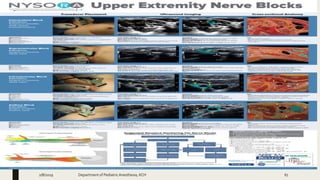
1) Brachial Plexus block
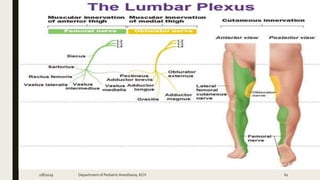
2) Lumber plexus block
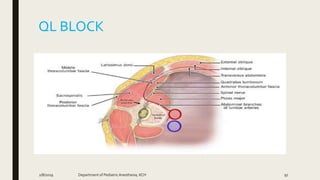
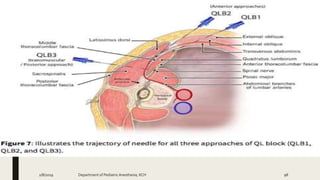
3) QL block
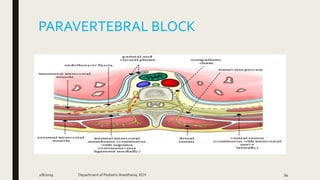
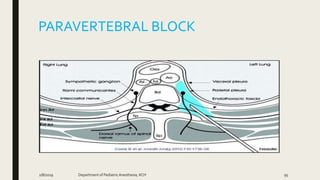
4) Paravertebral block
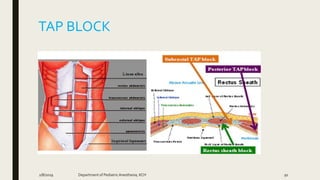
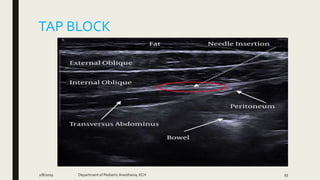
5) TAP block
2/8/2019 Department of PediatricAnesthesia, KCH 53
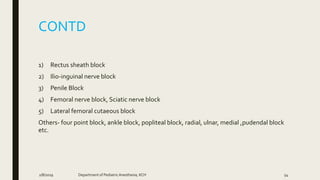
CONTD
1) Rectus sheath block
2) Ilio-inguinal nerve block
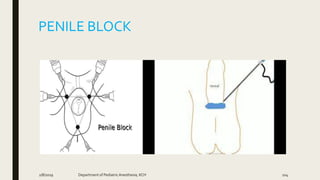
3) Penile Block
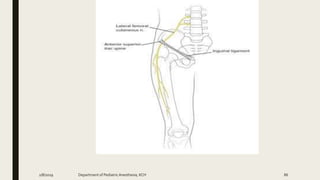
4) Femoral nerve block, Sciatic nerve block
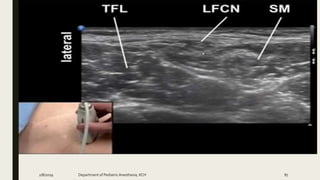
5) Lateral femoral cutaeous block
Others- four point block, ankle block, popliteal block, radial, ulnar, medial ,pudendal block
etc.
2/8/2019 Department of PediatricAnesthesia, KCH 54
2/8/2019 Department of PediatricAnesthesia, KCH 55
Brachial Plexus
2/8/2019 Department of PediatricAnesthesia, KCH 56
2/8/2019 Department of PediatricAnesthesia, KCH 57
2/8/2019 Department of PediatricAnesthesia, KCH 58
2/8/2019 Department of PediatricAnesthesia, KCH 59
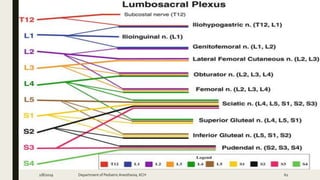
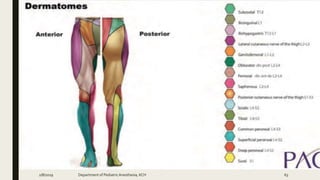
Lumber Plexus
2/8/2019 Department of PediatricAnesthesia, KCH 60
2/8/2019 Department of PediatricAnesthesia, KCH 61
2/8/2019 Department of PediatricAnesthesia, KCH 62
2/8/2019 Department of PediatricAnesthesia, KCH 63
2/8/2019 Department of PediatricAnesthesia, KCH 64
2/8/2019 Department of PediatricAnesthesia, KCH 65
2/8/2019 Department of PediatricAnesthesia, KCH 66
2/8/2019 Department of PediatricAnesthesia, KCH 67
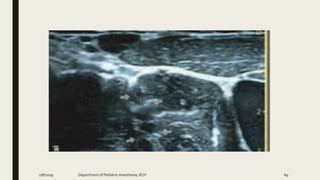
Interscalene
2/8/2019 Department of PediatricAnesthesia, KCH 68
2/8/2019 Department of PediatricAnesthesia, KCH 69
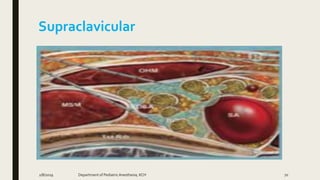
Supraclavicular
2/8/2019 Department of PediatricAnesthesia, KCH 70
2/8/2019 Department of PediatricAnesthesia, KCH 71
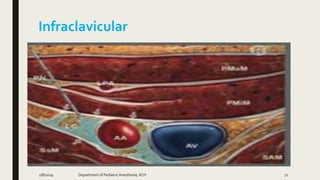
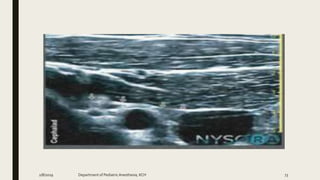
Infraclavicular
2/8/2019 Department of PediatricAnesthesia, KCH 72
2/8/2019 Department of PediatricAnesthesia, KCH 73
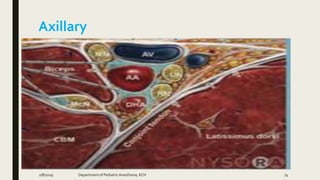
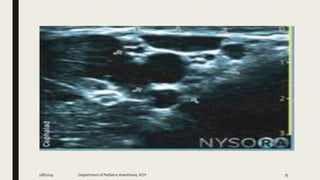
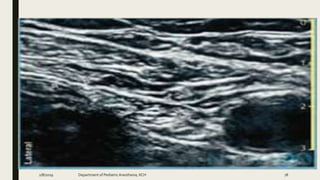
Axillary
2/8/2019 Department of PediatricAnesthesia, KCH 74
2/8/2019 Department of PediatricAnesthesia, KCH 75
2/8/2019 Department of PediatricAnesthesia, KCH 76
Femoral
2/8/2019 Department of PediatricAnesthesia, KCH 77
2/8/2019 Department of PediatricAnesthesia, KCH 78
Saphenous
2/8/2019 Department of PediatricAnesthesia, KCH 79
2/8/2019 Department of PediatricAnesthesia, KCH 80
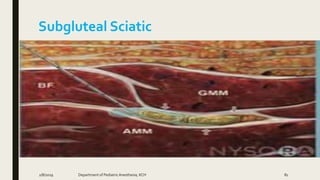
Subgluteal Sciatic
2/8/2019 Department of PediatricAnesthesia, KCH 81
2/8/2019 Department of PediatricAnesthesia, KCH 82
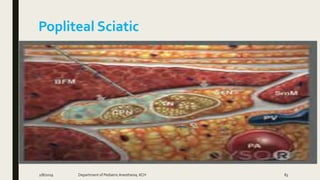
Popliteal Sciatic
2/8/2019 Department of PediatricAnesthesia, KCH 83
2/8/2019 Department of PediatricAnesthesia, KCH 84
2/8/2019 Department of PediatricAnesthesia, KCH 85
2/8/2019 Department of PediatricAnesthesia, KCH 86
2/8/2019 Department of PediatricAnesthesia, KCH 87
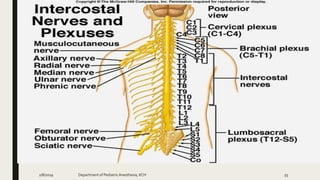
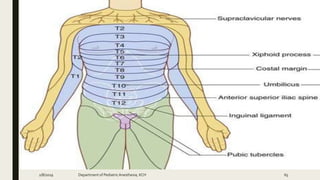
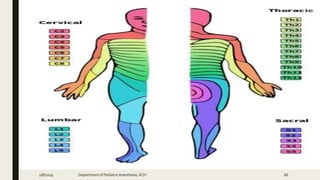
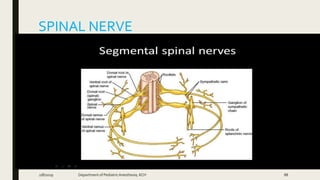
SPINAL NERVE
2/8/2019 Department of PediatricAnesthesia, KCH 88
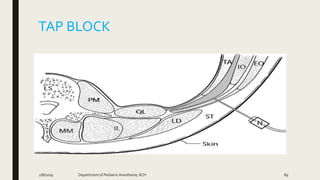
TAP BLOCK
2/8/2019 Department of PediatricAnesthesia, KCH 89
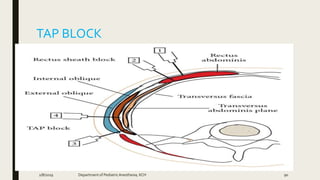
TAP BLOCK
2/8/2019 Department of PediatricAnesthesia, KCH 90
TAP BLOCK
2/8/2019 Department of PediatricAnesthesia, KCH 91
TAP-Types
2/8/2019 Department of PediatricAnesthesia, KCH 92
TAP BLOCK
2/8/2019 Department of PediatricAnesthesia, KCH 93
PARAVERTEBRAL BLOCK
2/8/2019 Department of PediatricAnesthesia, KCH 94
PARAVERTEBRAL BLOCK
2/8/2019 Department of PediatricAnesthesia, KCH 95
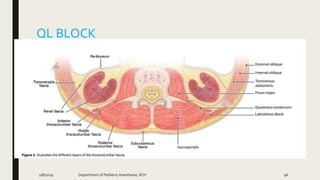
QL BLOCK
2/8/2019 Department of PediatricAnesthesia, KCH 96
QL BLOCK
2/8/2019 Department of PediatricAnesthesia, KCH 97
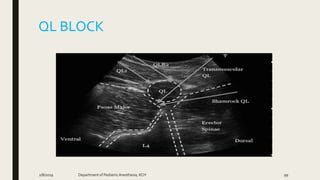
QL BLOCK
2/8/2019 Department of PediatricAnesthesia, KCH 98
QL BLOCK
2/8/2019 Department of PediatricAnesthesia, KCH 99
Ili-inguinal and Ilio-hypogastric nerve
block
2/8/2019 Department of PediatricAnesthesia, KCH 100
Ili-inguinal and Ilio-hypogastric nerve
block
2/8/2019 Department of PediatricAnesthesia, KCH 101
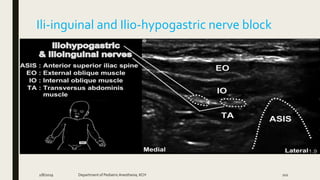
Ili-inguinal and Ilio-hypogastric nerve block
2/8/2019 Department of PediatricAnesthesia, KCH 102
PENILE BLOCK
2/8/2019 Department of PediatricAnesthesia, KCH 103
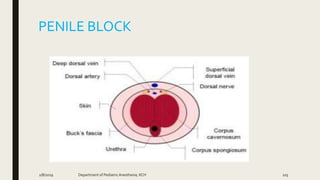
PENILE BLOCK
2/8/2019 Department of PediatricAnesthesia, KCH 104
ANY QUESTIONS???
2/8/2019 Department of PediatricAnesthesia, KCH 105
SUMMARY
■ Pain affects various system of our body
■ Careful assessment of pain is necessary
■ Multiple approach of pain management should be considered while managing pain
2/8/2019 Department of PediatricAnesthesia, KCH 106
REFERENCES
■ Miller’sAnesthesia, 8th edition
■ MorganAnesthesia 6th edition
■ Smith pediatric anesthesia, 8th edition
2/8/2019 Department of PediatricAnesthesia, KCH 107
THANKYOU
2/8/2019 Department of PediatricAnesthesia, KCH 108

Peri operative pain management

Editor's Notes

  • #41 Amitryptyline,gabapentine etc
  • #69 Anesthesia and analgesia for shoulder, distal clavicle, and proximal humerus
  • #71 Anesthesia and analgesia of humerus, elbow, forearm and hand
  • #75 Forearm and hand
  • #78 Femur, anterior thigh, knee, patella fracture, quadriceps tendon repair
  • #80 Analgesia for knee as multimodal, and with sciatic for below knee surgery
  • #82 Femur, at and below knee
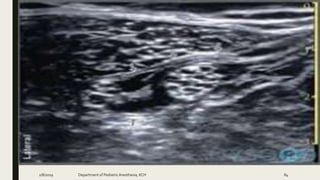
  • #84 Below knee