GERIATRIC
ANAESTHESIA
BY DR HIMANSHU SHARMA
DEPT OF ANAESTHESIA
AGEING
◦ Aging is a universal and progressive physiologic phenomenon characterized by degenerative
changes in both the structure and functional reserve of organs and tissues.
◦ This provides a safety margin available to meet the additional demands of surgery, healing and
convalescence.
◦ Two important principles of aging are
1) progressive loss of functional reserve in all organ system
2) The extent and onset of these changes vary from person to person
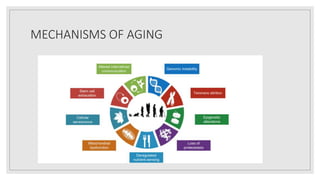
MECHANISMS OF AGING
AGE RELATED PROBLEMS
◦ Hypertension
◦ Diabetes mellitus
◦ Heart disease
◦ Malignancy
◦ Myocardial ischemia
◦ Cerebral vascular accident
◦ Chronic renal insufficiency, Liver dysfunction
◦ COPD, Pneumonia
◦ Dementia- Alzheimer’s disease,Presence of cognitive deficit
◦ Parkinson’s disease (tremor, muscle rigidity, bradykinesia)
◦ Poly-pharmacy
◦ Depression
◦ Immobility
◦ Dehydration
◦ Alcoholism
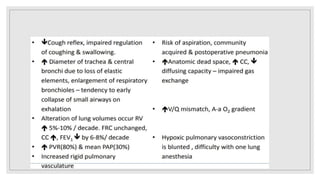
RESPIRATORY CHANGES
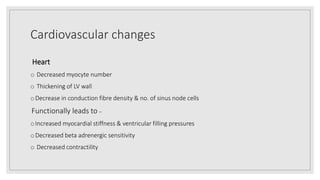
Cardiovascular changes
Heart
o Decreased myocyte number
o Thickening of LV wall
oDecrease in conduction fibre density & no. of sinus node cells
Functionally leads to –
oIncreased myocardial stiffness & ventricular filling pressures
oDecreased beta adrenergic sensitivity
o Decreased contractility
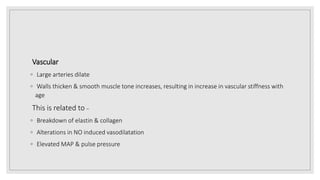
Vascular
◦ Large arteries dilate
◦ Walls thicken & smooth muscle tone increases, resulting in increase in vascular stiffness with
age
This is related to –
◦ Breakdown of elastin & collagen
◦ Alterations in NO induced vasodilatation
◦ Elevated MAP & pulse pressure
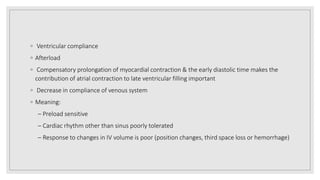
◦ Ventricular compliance
◦ Afterload
◦ Compensatory prolongation of myocardial contraction & the early diastolic time makes the
contribution of atrial contraction to late ventricular filling important
◦ Decrease in compliance of venous system
◦ Meaning:
– Preload sensitive
– Cardiac rhythm other than sinus poorly tolerated
– Response to changes in IV volume is poor (position changes, third space loss or hemorrhage)
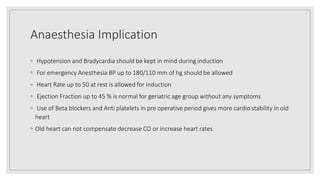
Anaesthesia Implication
◦ Hypotension and Bradycardia should be kept in mind during induction
◦ For emergency Anesthesia BP up to 180/110 mm of hg should be allowed
◦ Heart Rate up to 50 at rest is allowed for induction
◦ Ejection Fraction up to 45 % is normal for geriatric age group without any symptoms
◦ Use of Beta blockers and Anti platelets in pre operative period gives more cardio stability in old
heart
◦ Old heart can not compensate decrease CO or increase heart rates
Changes in ANS
Response to β receptor stimulation
◦ Due to decrease receptor affinity & alteration in signal transduction
◦ Sympathetic over activity leading to desensitization of β receptors
◦ Causes increased peripheral flow demand to be meet by preload reserve
Clincally:
◦ ANS changes lead to more chances of adverse intra operative hemodynamic events &
decreased ability to meet metabolic demands of surgery
◦ CV diseases are superimposed (IHD, CHF, hypertension, arrhythmias).
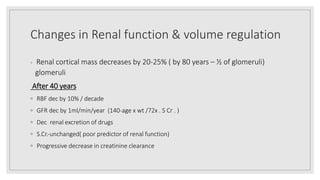
Changes in Renal function & volume regulation
◦ Renal cortical mass decreases by 20‐25% ( by 80 years – ½ of glomeruli)
glomeruli
After 40 years
◦ RBF dec by 10% / decade
◦ GFR dec by 1ml/min/year (140‐age x wt /72x . S Cr . )
◦ Dec renal excretion of drugs
◦ S.Cr.‐unchanged( poor predictor of renal function)
◦ Progressive decrease in creatinine clearance
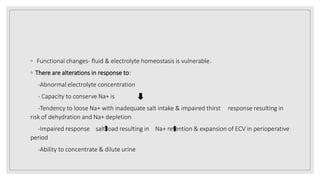
◦ Functional changes‐ fluid & electrolyte homeostasis is vulnerable.
◦ There are alterations in response to:
-Abnormal electrolyte concentration
- Capacity to conserve Na+ is
-Tendency to loose Na+ with inadequate salt intake & impaired thirst response resulting in
risk of dehydration and Na+ depletion
-Impaired response salt load resulting in Na+ retention & expansion of ECV in perioperative
period
-Ability to concentrate & dilute urine
CNS
◦ Brain mass begins to by 50 years & by 80 years 10% of its weight is lost
◦ In brain reserve manifests by
- in functional ADL
- sensitivity to anesthetic medications
- risk for perioperative & postoperative delirium
Neurotransmitter function affected significantly
(dopamine, NE, serotonin ,GABA, A‐ch)
◦ 6% in MAC/ decade after 40 years
◦ Significant cognitive impairment after 85 years
Nervous system
Neuraxial
◦ epidural space
◦ volume of CSF
◦ permeability of duramater
◦ Changes in myelinated fibers (dorsal & ventral nerve roots ) & in peripheral nerves
◦ More sensitive to neuraxial & peripheral nerve blocks
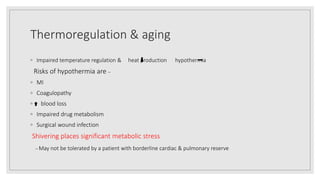
Thermoregulation & aging
◦ Impaired temperature regulation & heat production hypothermia
Risks of hypothermia are –
◦ MI
◦ Coagulopathy
◦ blood loss
◦ Impaired drug metabolism
◦ Surgical wound infection
Shivering places significant metabolic stress
– May not be tolerated by a patient with borderline cardiac & pulmonary reserve
Endocrine system
◦ The average fasting glucose level rises 6 to 14 mg/dL for each 10 years after age 50 yrs
◦ Functional decline in insulin secretion in response to glucose load
◦ Increase Insulin resistance
◦ Even healthy patients may require insulin therapy in perioperative period
◦ Hyperglycemia increase the mortality and morbidity in old age , because of late diagnose of
DM
◦ Accepted level of FBS is between 80 – 120 mg/dl or HbA1C less than 7
◦ Discontinue metformin and sulfonyl ureas night before and day of surgery( due to increase
chance of MI in hypovolemic and reserved cardiac functions in old age)
Liver /Gastrointestinal system
◦ Liver mass with age
◦ There is 20 – 40% in Liver blood flow‐ risk of hepatic injury with hypotension
◦ Maintenance dose of drugs rapidly metabolized is decreased
◦ acid production, moderate atrophy of small intestine villi, decreased colon motility
◦ Risk of prolonged postoperative ileus, retention of gastric contents & risk of aspiration
Anaesthetic Implications
◦ Drugs cleared by Phase -1 pathways (oxidation, reduction & hydrolysis) are slowly metabolize
because of decreased hepatic blood flow
◦ Drugs whose clearance depends on hepatic blood flow
-ketamine –flumazenil –morphine -fentanyl –sufentanyl –lidocaine
oBeers criteria recommend avoiding Proclorperazine , Promethazine, Metocloprmide
Preoperative Assessment
◦ Complete medical history
◦ History
◦ CVS and RS complaints present and past
◦ Routine activities
◦ Mental & Physical status
◦ Dependency
◦ Associated Diseases
◦ Drug history/Polypharmacy
◦ BMI / Nutrition
◦ Past history Op/Ane. experience
◦ Any alternative medicine
◦ Allergy
◦ Social and Family history
Always see for
-Depression
-malnutrition
- immobility
-dehydration
-Denture
-Pace maker
-Any joint replacement
- Any anti depressant Rx
◦ Functional status assessment
◦ Common screening tools –
- Activities of daily living (ADL)‐ day to day self care
- Instrumental ADL ( ) IADL ‐ more complex tests
• APACHE (Acute Physiological and Chronic Health Evaluation) for critically ill patients
• POSSUM (Physiological and Operative Severity Score for enumeration of Mortality and Morbidity) for surgical pts.
Frailty
◦ Multisystem loss of physiological reserve, prognostic factor for poor outcome
– Clinical syndrome characterized by Weight loss, fatigue & weakness
– Preoperative stratification of perioperative vulnerability and correlates to increased
mortality, lengthier stay & discharge
-sensitive indicator for the necessity of in-depth conversations concerning complicated risks,
likely outcomes , goals of care and alternatives to surgery
◦ Functional capacity‐ 1 – 10 METs –
◦ Site & invasiveness of surgical procedure ‐
◦ Surgery specific risk
High: Emergent major surgery, vascular surgery, prolonged op with large fluid shifts &/or blood
loss
Intermediate: Intermediate: Head‐neck, intra‐peritoneal peritoneal, intra‐thoracic, orthopedic
surgery
Low‐ endoscopic procedures, cataract
◦ perioperative cardiac risk relies on the evaluation of clinical markers
◦ Patients with multiple risk factors need more extensive evaluation – 2D echo etc.
Major: Unstable coronary syndromes, decompensated CHF, severe valvular disease, significant
arrhythmia
Intermediate: Mild AP, previous MI, compensated CHF, DM
Minor: Abnormal Abnormal ECG, rhythm other than sinus, low functional capacity, h/o stroke,
uncontrolled HT
◦ Preoperative PFT – to optimize respiratory function in patients undergoing major surgery
◦ Look for malnutrition, dehydration, alcoholism, mobility
◦ Consider DVT prophylaxis
◦ Explain need for postoperative ventilation, ICU stay, lines/ tubes
◦ Note presence of dentures, hearing aids , pacemakers
Depression
◦ 8‐16% >65 years of age
◦ Predicts greater risk for major adverse cardiac events
◦ Predictor of post operative delirium
◦ Preoperative assessment of mood and cognition is important for baseline data ,when
evaluating postoperative delirium , dementia or depression
◦ Antidepressants should be continued during perioperative period
MONITORING
◦ ASA standards for basic anaesthetic monitoring should be followed
◦ Monitor hemodynamic stability , adequate anesthesia & amnesia
◦ Additional monitors to detect changes in oxygenation, ventilation,circulation and temperature
◦ EEG may improve the ability to titrate anesthetic doses
Positioning
◦ There is increased risk of nerve , joint and skin injury
◦ Stiff joints , particularly in the cervical spine , hips, and shoulders can prevent optimal patient
positioning
◦ Avoid applying force against resistance to increase joint angles
◦ Geriatric pts have fragile skin and peripheral circulation
◦ Avoid skin tearing ,bruising & extra cushioning to avoid pressure sores
General Anaesthesia
◦ Airway management plan must be formed to intubate patient safely
◦ Patients are often edentulous, making mask ventilation more challenging and have decreased
cervical extension impairing laryngoscopy
◦ Vasopressors and fast acting antihypertensives should be available during induction to maintain
safe and adequate blood pressure.
◦ During maintainence and tempered dosing and patience are valuable principles, as elderly
pharmacokinetics and dynamics can delay the return of respiratory function and extubation
Neuraxial anaestheisa
◦ As compared to GA , Neuraxial techniques are associated with fewer pulmonary complications
in patients with lung disease
◦ Decreased requirement of sedating medications may decrease the risk of postoperative
delirium
◦ It is not an ideal choice for long surgeries ,patients with anxiety & difficulty lying comfortably in
required position for surgery
IV Anaesthetic agents
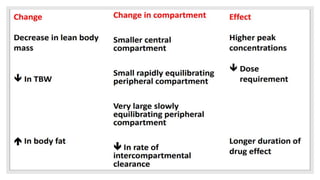
◦ Geriatric patients require lower doses of intravenous anaesthetics due to altered
pharmacodynamic response and decreased drug clearance
◦ Propofol requires only 50 to 70 percent dosing (bolus or infusion) relative to younger patients
◦ Etomidate is often favorable choice as an induction agent in elderly/pt with cardiac reserve
or hemodynamic instability
◦ Ketamine may be practical primary or adjunct agent in certain circumstances but is rarely used
in due to post operative delirium
◦ The bronchodilatory effects of ketamine is good for patients with reactive airway disease or
hemodynamic instability with CAD
Opioids
◦ There is higher risk of opioid – induced apnea, with decreased hypoxic and hypercarbic
respiratory drive to compensate for oversedation
◦ Opioids are more potent due to decreased clearance and increased neurologic sensitivity
◦ Pain should be treated first with non-opioid analgesics then weak opioids
◦ Use of morphine places patients with decreased renal function at risk of apnea
◦ Meperidine increases the risk of postoperative delirium
◦ Fentanyl, Sufentanyl ,Alfentanyl : 50% reduction reduction in dose, minimal changes in
pharmacokinetic
Neuromuscular blockers
◦ There is prolong duration of neuromuscular blockade for most agents
◦ In setting of respiratory dysfunction, these changes increase the risk of postoperative
respiratory complications and reintubation
◦ Atracurium , cis-atracurium and mivacurium do not prolong paralysis in geriatric patients due
to elimination by ester hydrolysis or Hoffmann degradation
◦ Complete reversal should be verified before extubation
Fluid management
◦ Geriatric patients have poor tolerance for hypervolemia and hypovolemia
◦ Dehydrated patients may benefit from preoperative fluid resuscitation or drinking clear fluids
upto 2 hrs
◦ Fluid overloaded patients may require hospital admission for diuresis to optimize surgical
conditions
◦ Moderate administration of crystalloids or colloids to maintain euvolemia and avoid CHF
exacerbation , pulmonary edema and dilutional coagulopathies
Postoperative Delirium and Cognitive
Dysfunction
Risk factors
◦ Cognitive dysfunction
◦ Ho CVA
◦ Depression
◦ Age>70 yrs
◦ Alcohol use
◦ Poor functional status
◦ Electrolytes imbalance
◦ ASA developed the Brain Health Initiative to help postoperative cognitive dysfunction
◦ This platform contains tools and resources for practitioners and medical centres to implement preoperative and postoperative
cognitive assessment preventional guidelines
◦ Perioperative Neurocognitive Disorders (PND) includes
-delirium
-delayed Neurocognitive recovery
-mild/major neurocognitive disorder
THANK YOU

ANAESTHESIA CONSIDERATIONS IN GERIATRIC PATEINTS

  • 1.
    GERIATRIC ANAESTHESIA BY DR HIMANSHUSHARMA DEPT OF ANAESTHESIA
  • 2.
    AGEING ◦ Aging isa universal and progressive physiologic phenomenon characterized by degenerative changes in both the structure and functional reserve of organs and tissues. ◦ This provides a safety margin available to meet the additional demands of surgery, healing and convalescence. ◦ Two important principles of aging are 1) progressive loss of functional reserve in all organ system 2) The extent and onset of these changes vary from person to person
  • 3.
  • 4.
    AGE RELATED PROBLEMS ◦Hypertension ◦ Diabetes mellitus ◦ Heart disease ◦ Malignancy ◦ Myocardial ischemia ◦ Cerebral vascular accident ◦ Chronic renal insufficiency, Liver dysfunction ◦ COPD, Pneumonia ◦ Dementia- Alzheimer’s disease,Presence of cognitive deficit
  • 5.
    ◦ Parkinson’s disease(tremor, muscle rigidity, bradykinesia) ◦ Poly-pharmacy ◦ Depression ◦ Immobility ◦ Dehydration ◦ Alcoholism
  • 6.
  • 10.
    Cardiovascular changes Heart o Decreasedmyocyte number o Thickening of LV wall oDecrease in conduction fibre density & no. of sinus node cells Functionally leads to – oIncreased myocardial stiffness & ventricular filling pressures oDecreased beta adrenergic sensitivity o Decreased contractility
  • 12.
    Vascular ◦ Large arteriesdilate ◦ Walls thicken & smooth muscle tone increases, resulting in increase in vascular stiffness with age This is related to – ◦ Breakdown of elastin & collagen ◦ Alterations in NO induced vasodilatation ◦ Elevated MAP & pulse pressure
  • 13.
    ◦ Ventricular compliance ◦Afterload ◦ Compensatory prolongation of myocardial contraction & the early diastolic time makes the contribution of atrial contraction to late ventricular filling important ◦ Decrease in compliance of venous system ◦ Meaning: – Preload sensitive – Cardiac rhythm other than sinus poorly tolerated – Response to changes in IV volume is poor (position changes, third space loss or hemorrhage)
  • 14.
    Anaesthesia Implication ◦ Hypotensionand Bradycardia should be kept in mind during induction ◦ For emergency Anesthesia BP up to 180/110 mm of hg should be allowed ◦ Heart Rate up to 50 at rest is allowed for induction ◦ Ejection Fraction up to 45 % is normal for geriatric age group without any symptoms ◦ Use of Beta blockers and Anti platelets in pre operative period gives more cardio stability in old heart ◦ Old heart can not compensate decrease CO or increase heart rates
  • 15.
    Changes in ANS Responseto β receptor stimulation ◦ Due to decrease receptor affinity & alteration in signal transduction ◦ Sympathetic over activity leading to desensitization of β receptors ◦ Causes increased peripheral flow demand to be meet by preload reserve Clincally: ◦ ANS changes lead to more chances of adverse intra operative hemodynamic events & decreased ability to meet metabolic demands of surgery ◦ CV diseases are superimposed (IHD, CHF, hypertension, arrhythmias).
  • 16.
    Changes in Renalfunction & volume regulation ◦ Renal cortical mass decreases by 20‐25% ( by 80 years – ½ of glomeruli) glomeruli After 40 years ◦ RBF dec by 10% / decade ◦ GFR dec by 1ml/min/year (140‐age x wt /72x . S Cr . ) ◦ Dec renal excretion of drugs ◦ S.Cr.‐unchanged( poor predictor of renal function) ◦ Progressive decrease in creatinine clearance
  • 17.
    ◦ Functional changes‐fluid & electrolyte homeostasis is vulnerable. ◦ There are alterations in response to: -Abnormal electrolyte concentration - Capacity to conserve Na+ is -Tendency to loose Na+ with inadequate salt intake & impaired thirst response resulting in risk of dehydration and Na+ depletion -Impaired response salt load resulting in Na+ retention & expansion of ECV in perioperative period -Ability to concentrate & dilute urine
  • 18.
    CNS ◦ Brain massbegins to by 50 years & by 80 years 10% of its weight is lost ◦ In brain reserve manifests by - in functional ADL - sensitivity to anesthetic medications - risk for perioperative & postoperative delirium Neurotransmitter function affected significantly (dopamine, NE, serotonin ,GABA, A‐ch) ◦ 6% in MAC/ decade after 40 years ◦ Significant cognitive impairment after 85 years
  • 19.
    Nervous system Neuraxial ◦ epiduralspace ◦ volume of CSF ◦ permeability of duramater ◦ Changes in myelinated fibers (dorsal & ventral nerve roots ) & in peripheral nerves ◦ More sensitive to neuraxial & peripheral nerve blocks
  • 21.
    Thermoregulation & aging ◦Impaired temperature regulation & heat production hypothermia Risks of hypothermia are – ◦ MI ◦ Coagulopathy ◦ blood loss ◦ Impaired drug metabolism ◦ Surgical wound infection Shivering places significant metabolic stress – May not be tolerated by a patient with borderline cardiac & pulmonary reserve
  • 22.
    Endocrine system ◦ Theaverage fasting glucose level rises 6 to 14 mg/dL for each 10 years after age 50 yrs ◦ Functional decline in insulin secretion in response to glucose load ◦ Increase Insulin resistance ◦ Even healthy patients may require insulin therapy in perioperative period ◦ Hyperglycemia increase the mortality and morbidity in old age , because of late diagnose of DM ◦ Accepted level of FBS is between 80 – 120 mg/dl or HbA1C less than 7 ◦ Discontinue metformin and sulfonyl ureas night before and day of surgery( due to increase chance of MI in hypovolemic and reserved cardiac functions in old age)
  • 23.
    Liver /Gastrointestinal system ◦Liver mass with age ◦ There is 20 – 40% in Liver blood flow‐ risk of hepatic injury with hypotension ◦ Maintenance dose of drugs rapidly metabolized is decreased ◦ acid production, moderate atrophy of small intestine villi, decreased colon motility ◦ Risk of prolonged postoperative ileus, retention of gastric contents & risk of aspiration
  • 24.
    Anaesthetic Implications ◦ Drugscleared by Phase -1 pathways (oxidation, reduction & hydrolysis) are slowly metabolize because of decreased hepatic blood flow ◦ Drugs whose clearance depends on hepatic blood flow -ketamine –flumazenil –morphine -fentanyl –sufentanyl –lidocaine oBeers criteria recommend avoiding Proclorperazine , Promethazine, Metocloprmide
  • 25.
    Preoperative Assessment ◦ Completemedical history ◦ History ◦ CVS and RS complaints present and past ◦ Routine activities ◦ Mental & Physical status ◦ Dependency ◦ Associated Diseases ◦ Drug history/Polypharmacy ◦ BMI / Nutrition ◦ Past history Op/Ane. experience ◦ Any alternative medicine ◦ Allergy ◦ Social and Family history Always see for -Depression -malnutrition - immobility -dehydration -Denture -Pace maker -Any joint replacement - Any anti depressant Rx
  • 26.
    ◦ Functional statusassessment ◦ Common screening tools – - Activities of daily living (ADL)‐ day to day self care - Instrumental ADL ( ) IADL ‐ more complex tests • APACHE (Acute Physiological and Chronic Health Evaluation) for critically ill patients • POSSUM (Physiological and Operative Severity Score for enumeration of Mortality and Morbidity) for surgical pts.
  • 28.
    Frailty ◦ Multisystem lossof physiological reserve, prognostic factor for poor outcome – Clinical syndrome characterized by Weight loss, fatigue & weakness – Preoperative stratification of perioperative vulnerability and correlates to increased mortality, lengthier stay & discharge -sensitive indicator for the necessity of in-depth conversations concerning complicated risks, likely outcomes , goals of care and alternatives to surgery
  • 30.
    ◦ Functional capacity‐1 – 10 METs – ◦ Site & invasiveness of surgical procedure ‐ ◦ Surgery specific risk High: Emergent major surgery, vascular surgery, prolonged op with large fluid shifts &/or blood loss Intermediate: Intermediate: Head‐neck, intra‐peritoneal peritoneal, intra‐thoracic, orthopedic surgery Low‐ endoscopic procedures, cataract
  • 31.
    ◦ perioperative cardiacrisk relies on the evaluation of clinical markers ◦ Patients with multiple risk factors need more extensive evaluation – 2D echo etc. Major: Unstable coronary syndromes, decompensated CHF, severe valvular disease, significant arrhythmia Intermediate: Mild AP, previous MI, compensated CHF, DM Minor: Abnormal Abnormal ECG, rhythm other than sinus, low functional capacity, h/o stroke, uncontrolled HT
  • 32.
    ◦ Preoperative PFT– to optimize respiratory function in patients undergoing major surgery ◦ Look for malnutrition, dehydration, alcoholism, mobility ◦ Consider DVT prophylaxis ◦ Explain need for postoperative ventilation, ICU stay, lines/ tubes ◦ Note presence of dentures, hearing aids , pacemakers
  • 33.
    Depression ◦ 8‐16% >65years of age ◦ Predicts greater risk for major adverse cardiac events ◦ Predictor of post operative delirium ◦ Preoperative assessment of mood and cognition is important for baseline data ,when evaluating postoperative delirium , dementia or depression ◦ Antidepressants should be continued during perioperative period
  • 34.
    MONITORING ◦ ASA standardsfor basic anaesthetic monitoring should be followed ◦ Monitor hemodynamic stability , adequate anesthesia & amnesia ◦ Additional monitors to detect changes in oxygenation, ventilation,circulation and temperature ◦ EEG may improve the ability to titrate anesthetic doses
  • 35.
    Positioning ◦ There isincreased risk of nerve , joint and skin injury ◦ Stiff joints , particularly in the cervical spine , hips, and shoulders can prevent optimal patient positioning ◦ Avoid applying force against resistance to increase joint angles ◦ Geriatric pts have fragile skin and peripheral circulation ◦ Avoid skin tearing ,bruising & extra cushioning to avoid pressure sores
  • 36.
    General Anaesthesia ◦ Airwaymanagement plan must be formed to intubate patient safely ◦ Patients are often edentulous, making mask ventilation more challenging and have decreased cervical extension impairing laryngoscopy ◦ Vasopressors and fast acting antihypertensives should be available during induction to maintain safe and adequate blood pressure. ◦ During maintainence and tempered dosing and patience are valuable principles, as elderly pharmacokinetics and dynamics can delay the return of respiratory function and extubation
  • 37.
    Neuraxial anaestheisa ◦ Ascompared to GA , Neuraxial techniques are associated with fewer pulmonary complications in patients with lung disease ◦ Decreased requirement of sedating medications may decrease the risk of postoperative delirium ◦ It is not an ideal choice for long surgeries ,patients with anxiety & difficulty lying comfortably in required position for surgery
  • 39.
    IV Anaesthetic agents ◦Geriatric patients require lower doses of intravenous anaesthetics due to altered pharmacodynamic response and decreased drug clearance ◦ Propofol requires only 50 to 70 percent dosing (bolus or infusion) relative to younger patients ◦ Etomidate is often favorable choice as an induction agent in elderly/pt with cardiac reserve or hemodynamic instability ◦ Ketamine may be practical primary or adjunct agent in certain circumstances but is rarely used in due to post operative delirium ◦ The bronchodilatory effects of ketamine is good for patients with reactive airway disease or hemodynamic instability with CAD
  • 40.
    Opioids ◦ There ishigher risk of opioid – induced apnea, with decreased hypoxic and hypercarbic respiratory drive to compensate for oversedation ◦ Opioids are more potent due to decreased clearance and increased neurologic sensitivity ◦ Pain should be treated first with non-opioid analgesics then weak opioids ◦ Use of morphine places patients with decreased renal function at risk of apnea ◦ Meperidine increases the risk of postoperative delirium ◦ Fentanyl, Sufentanyl ,Alfentanyl : 50% reduction reduction in dose, minimal changes in pharmacokinetic
  • 41.
    Neuromuscular blockers ◦ Thereis prolong duration of neuromuscular blockade for most agents ◦ In setting of respiratory dysfunction, these changes increase the risk of postoperative respiratory complications and reintubation ◦ Atracurium , cis-atracurium and mivacurium do not prolong paralysis in geriatric patients due to elimination by ester hydrolysis or Hoffmann degradation ◦ Complete reversal should be verified before extubation
  • 42.
    Fluid management ◦ Geriatricpatients have poor tolerance for hypervolemia and hypovolemia ◦ Dehydrated patients may benefit from preoperative fluid resuscitation or drinking clear fluids upto 2 hrs ◦ Fluid overloaded patients may require hospital admission for diuresis to optimize surgical conditions ◦ Moderate administration of crystalloids or colloids to maintain euvolemia and avoid CHF exacerbation , pulmonary edema and dilutional coagulopathies
  • 43.
    Postoperative Delirium andCognitive Dysfunction Risk factors ◦ Cognitive dysfunction ◦ Ho CVA ◦ Depression ◦ Age>70 yrs ◦ Alcohol use ◦ Poor functional status ◦ Electrolytes imbalance
  • 45.
    ◦ ASA developedthe Brain Health Initiative to help postoperative cognitive dysfunction ◦ This platform contains tools and resources for practitioners and medical centres to implement preoperative and postoperative cognitive assessment preventional guidelines ◦ Perioperative Neurocognitive Disorders (PND) includes -delirium -delayed Neurocognitive recovery -mild/major neurocognitive disorder
  • 46.