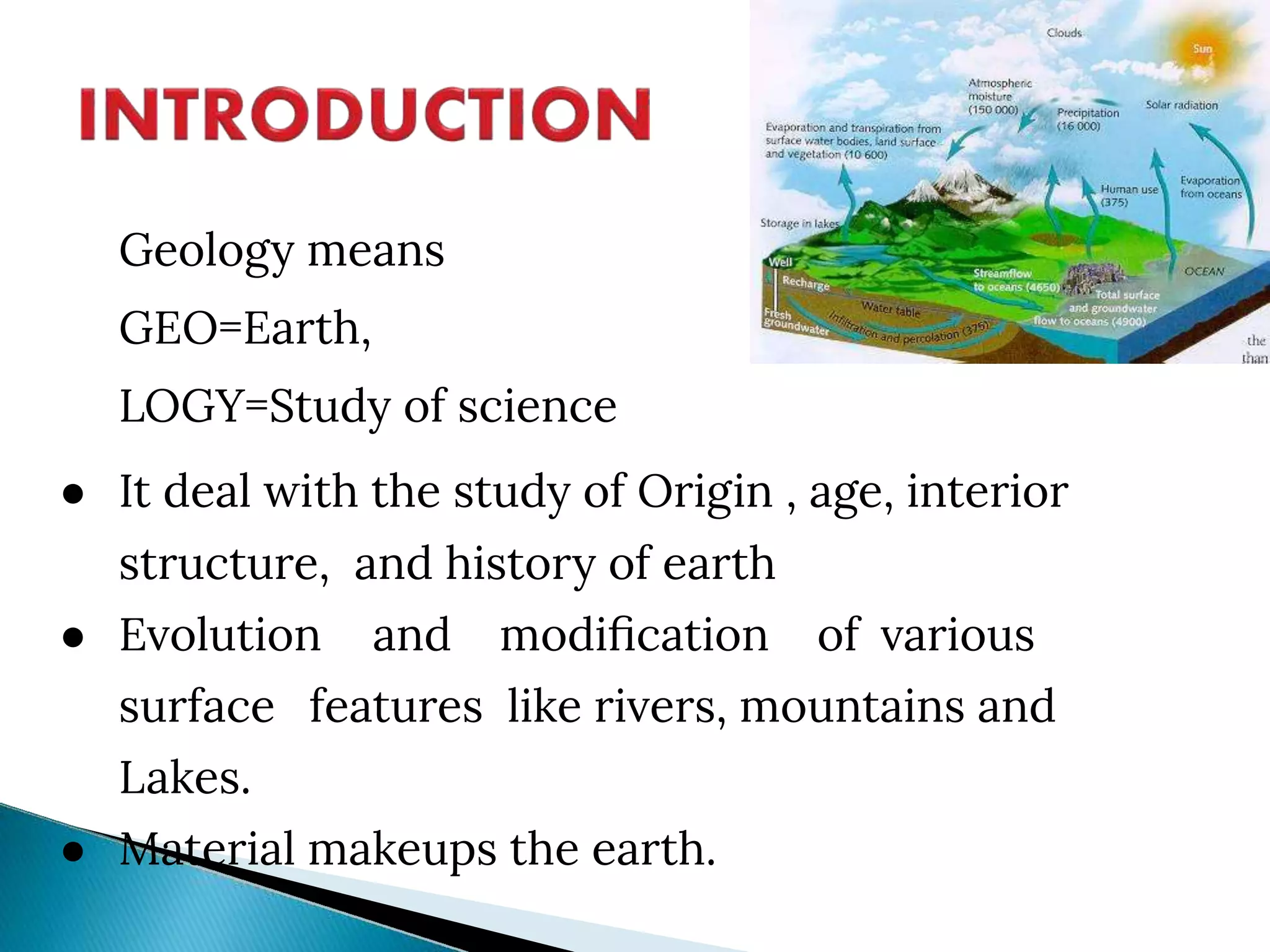
Geology means
GEO=Earth,
LOGY=Study of science
● It deal with the study of Origin , age, interior
structure, and history of earth
● Evolution and modification of various
surface features like rivers, mountains and
Lakes.
● Material makeups the earth.
Geology plays a very important role in the field of civil
engineering.
❖ Its knowledge is required for foundation faults.
❖ For design of highways and roads.
❖ In construction of tunnels.
❖ Its knowledgeis helpful for river control and shipping work.
❖ Nature of soil materials can be find out.
❖ It provides knowledge about materials used for construction.
❖ Its knowledge is helpful for constructing dams.
❖ Geotechnical engineers needs knowledgeabout this subject
for excavation work (digging work).
Main and Allied Branch of Geology
Main Branch Allied Branch
Physical Geology Engineering Geology
Mineralogy Mining Geology
Petrology Geophysics
geomorphology Geohydrology
Historical Geology Geochemistry
Economic Geology rock mechanics
Oceanography
1. Physical Geology deals with the different Physical feature of the
earth both at the exterior and interior of earth structure such as
Mountain, rivers, lakes, glaciers and volcanoes, earthquakes.
2. Geomorphology deals with the study of things which are present
only on the surface of the earth, such as mountains, rivers, lakes
etc.,
3. Mineralogy deals with the study of minerals, which includes
detailed mode of formation, composition, occurrence, types,
association properties uses etc .
4. Petrology: Petro- rock, Logy- study
It deals with the study, formation,occurrence, composition of
different types of rocks which are present on earth crust.
Cont..,
Cont..,
5. Historical Geology - study of past history of the earth and its
structure based on the fossil material obtained. Based on that fairly
accurate estimates can be made.
6. Geochemistry- study of different chemical compositions of earth
along its distribution and availability in different zones.
7. Geophysics- Study of earth’s magnetic forces, electrostatic
forces,knowledge about cosmology and seismic waves is studied.
8. Geohydrology- Interaction between hydrology with earth structure
9. Oceanography - study of physical, structural, genetic and chemical
compositions and behaviour of water bodies especially ocean.
Structural Geology (FOLDS)
Mining geology
Pure geophysics
Geo hydrology
Scope of Geology
❖ Geology provides necessary information about the construction
materials at the site used in the construction of buildings, dams,
tunnels, tanks, reservoirs, highways and bridges.
❖ Geological information is most important in planning stage, design
phase and construction phase of an engineering project.
❖ Geology is useful to know the method of mining of rock and
mineral deposits on earth’s surface and subsurface.
❖ Geology is useful for supply, storage and filling up of
reservoirs with water.
❖ This is the only subject which gives the information about the
earth surface.
Thank you

Geology and branches of geology

  • 3.
    Geology means GEO=Earth, LOGY=Study ofscience ● It deal with the study of Origin , age, interior structure, and history of earth ● Evolution and modification of various surface features like rivers, mountains and Lakes. ● Material makeups the earth.
  • 4.
    Geology plays avery important role in the field of civil engineering. ❖ Its knowledge is required for foundation faults. ❖ For design of highways and roads. ❖ In construction of tunnels. ❖ Its knowledgeis helpful for river control and shipping work. ❖ Nature of soil materials can be find out. ❖ It provides knowledge about materials used for construction. ❖ Its knowledge is helpful for constructing dams. ❖ Geotechnical engineers needs knowledgeabout this subject for excavation work (digging work).
  • 5.
    Main and AlliedBranch of Geology Main Branch Allied Branch Physical Geology Engineering Geology Mineralogy Mining Geology Petrology Geophysics geomorphology Geohydrology Historical Geology Geochemistry Economic Geology rock mechanics Oceanography
  • 6.
    1. Physical Geologydeals with the different Physical feature of the earth both at the exterior and interior of earth structure such as Mountain, rivers, lakes, glaciers and volcanoes, earthquakes. 2. Geomorphology deals with the study of things which are present only on the surface of the earth, such as mountains, rivers, lakes etc., 3. Mineralogy deals with the study of minerals, which includes detailed mode of formation, composition, occurrence, types, association properties uses etc . 4. Petrology: Petro- rock, Logy- study It deals with the study, formation,occurrence, composition of different types of rocks which are present on earth crust. Cont..,
  • 7.
    Cont.., 5. Historical Geology- study of past history of the earth and its structure based on the fossil material obtained. Based on that fairly accurate estimates can be made. 6. Geochemistry- study of different chemical compositions of earth along its distribution and availability in different zones. 7. Geophysics- Study of earth’s magnetic forces, electrostatic forces,knowledge about cosmology and seismic waves is studied. 8. Geohydrology- Interaction between hydrology with earth structure 9. Oceanography - study of physical, structural, genetic and chemical compositions and behaviour of water bodies especially ocean.
  • 8.
  • 9.
  • 10.
  • 11.
  • 12.
    Scope of Geology ❖Geology provides necessary information about the construction materials at the site used in the construction of buildings, dams, tunnels, tanks, reservoirs, highways and bridges. ❖ Geological information is most important in planning stage, design phase and construction phase of an engineering project. ❖ Geology is useful to know the method of mining of rock and mineral deposits on earth’s surface and subsurface. ❖ Geology is useful for supply, storage and filling up of reservoirs with water. ❖ This is the only subject which gives the information about the earth surface.
  • 13.