GEOGRID REINFORCED
CONCRETE
1
C.SAI CHANDRA
B110831CE
Contents
• Geogrids
• Applications in present scenario
• Factors favouring geogrids to use with concrete
• Test setup and measurement instrumentation
• Results and graphs of test
• Observations and analysis
• Conclusions
• recommendations
2
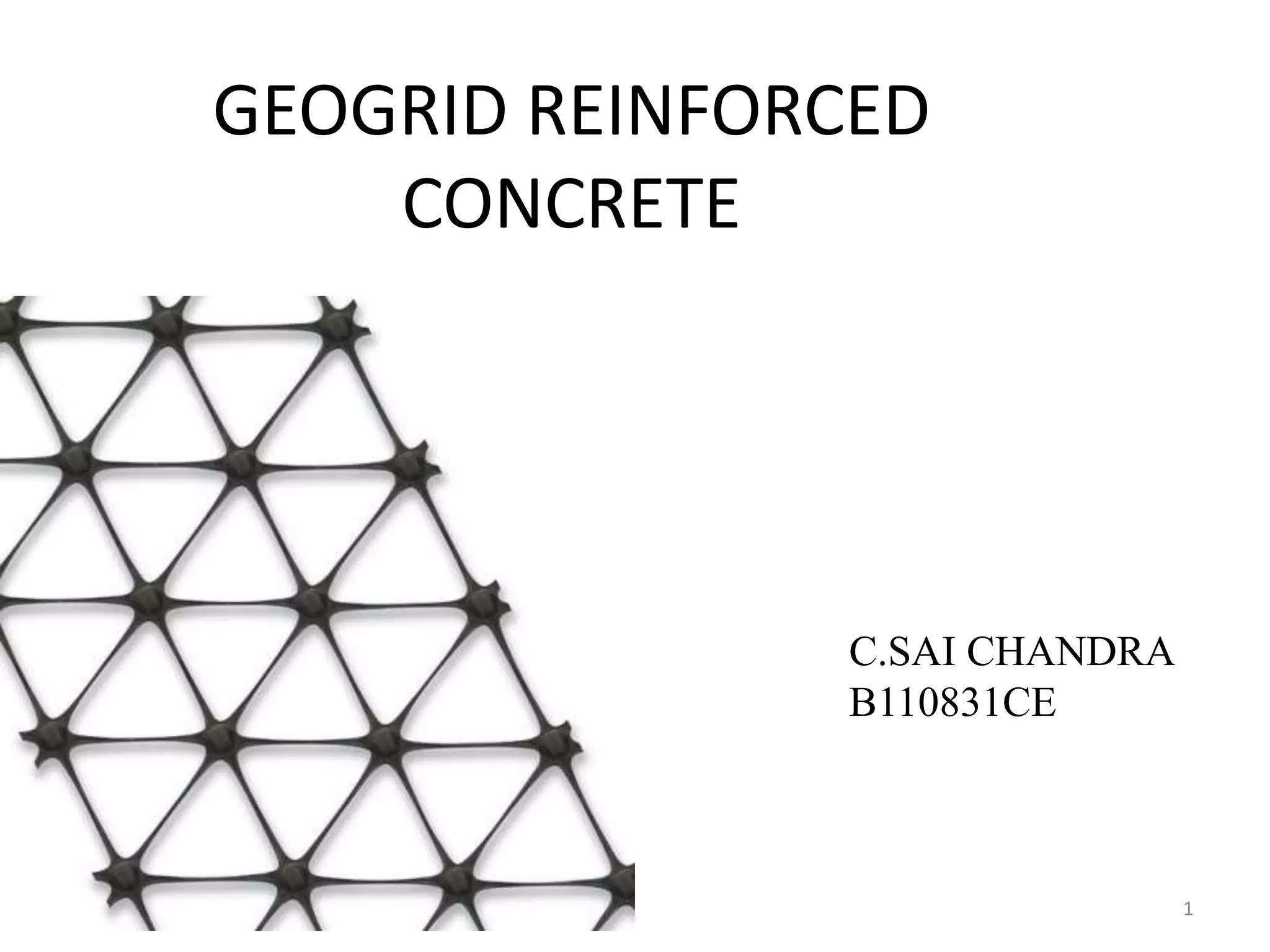
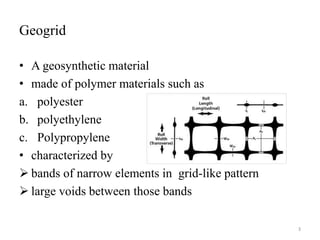
Geogrid
• A geosynthetic material
• made of polymer materials such as
a. polyester
b. polyethylene
c. Polypropylene
• characterized by
 bands of narrow elements in grid-like pattern
 large voids between those bands
3
Functioning of geogrids(CLk)
• capture the aggregates - interlock the aggregates -
create a mechanically stabilized earthwork
• redistributes the load over wider area and reduce the
vertical stress
• Provides
 Lateral Restraint
 Improved Bearing Capacity
 Tension Membrane Effect(clk)
4
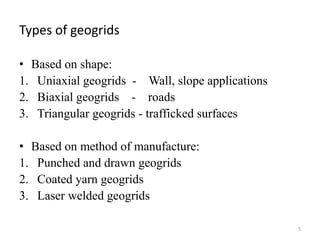
Types of geogrids
• Based on shape:
1. Uniaxial geogrids - Wall, slope applications
2. Biaxial geogrids - roads
3. Triangular geogrids - trafficked surfaces
• Based on method of manufacture:
1. Punched and drawn geogrids
2. Coated yarn geogrids
3. Laser welded geogrids
5
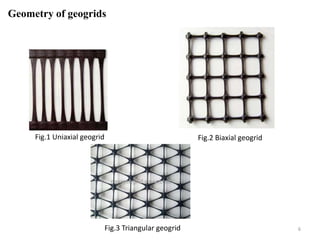
Fig.1 Uniaxial geogrid Fig.2 Biaxial geogrid
Fig.3 Triangular geogrid 6
Geometry of geogrids
Applications
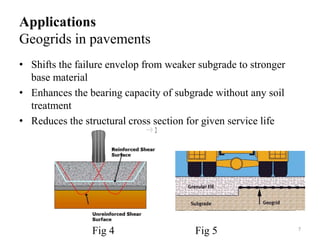
Geogrids in pavements
• Shifts the failure envelop from weaker subgrade to stronger
base material
• Enhances the bearing capacity of subgrade without any soil
treatment
• Reduces the structural cross section for given service life
7
Fig 4 Fig 5
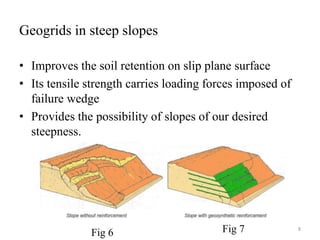
Geogrids in steep slopes
• Improves the soil retention on slip plane surface
• Its tensile strength carries loading forces imposed of
failure wedge
• Provides the possibility of slopes of our desired
steepness.
8
Fig 6 Fig 7
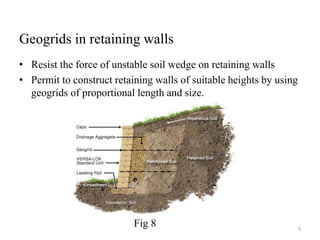
Geogrids in retaining walls
• Resist the force of unstable soil wedge on retaining walls
• Permit to construct retaining walls of suitable heights by using
geogrids of proportional length and size.
9
Fig 8
Geogrids in concrete
Factors favoring geogrids to be used with
concrete:
• Resistant to chemicals
• Inert to aqueous solutions of acids, alkalis and salts
• No nutritional values -
not attacked by micro organisms
• Corrosion resistant
• Good tensile strength
• Temperature resistant
10
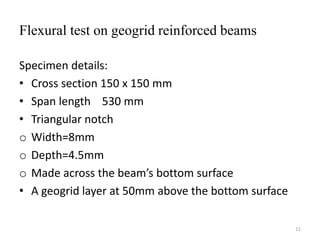
Flexural test on geogrid reinforced beams
Specimen details:
• Cross section 150 x 150 mm
• Span length 530 mm
• Triangular notch
o Width=8mm
o Depth=4.5mm
o Made across the beam’s bottom surface
• A geogrid layer at 50mm above the bottom surface
11
Numbers of specimens tested: 21
• 12 Normal strength concrete blocks(35Mpa)
 3 with no reinforcement(serves as control)
 3 with uniaxial geogrid
 3 with biaxial geogrid
 3 with triangular geogrid
• 9 high strength concrete blocks(45Mpa)
 3 with no reinforcement
 3 with biaxial geogrid
 3 with triangular geogrid
12
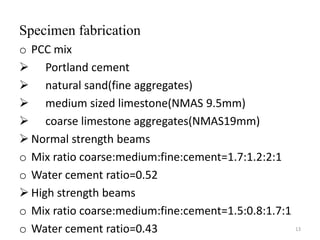
Specimen fabrication
o PCC mix
 Portland cement
 natural sand(fine aggregates)
 medium sized limestone(NMAS 9.5mm)
 coarse limestone aggregates(NMAS19mm)
 Normal strength beams
o Mix ratio coarse:medium:fine:cement=1.7:1.2:2:1
o Water cement ratio=0.52
 High strength beams
o Mix ratio coarse:medium:fine:cement=1.5:0.8:1.7:1
o Water cement ratio=0.43 13
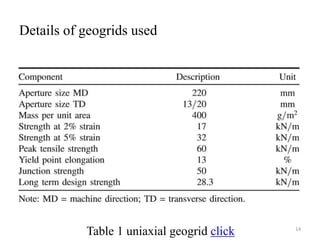
Details of geogrids used
Table 1 uniaxial geogrid click 14
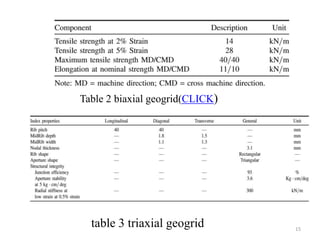
Table 2 biaxial geogrid(CLICK)
table 3 triaxial geogrid 15
16
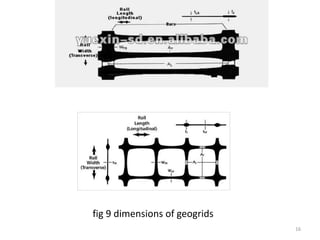
fig 9 dimensions of geogrids
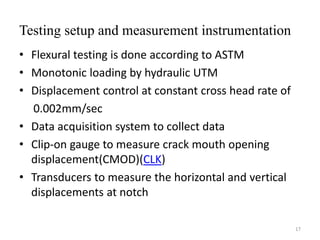
Testing setup and measurement instrumentation
• Flexural testing is done according to ASTM
• Monotonic loading by hydraulic UTM
• Displacement control at constant cross head rate of
0.002mm/sec
• Data acquisition system to collect data
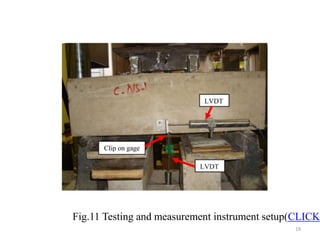
• Clip-on gauge to measure crack mouth opening
displacement(CMOD)(CLK)
• Transducers to measure the horizontal and vertical
displacements at notch
17
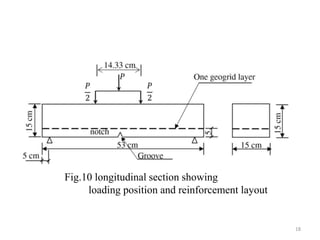
Fig.10 longitudinal section showing
loading position and reinforcement layout
18
Fig.11 Testing and measurement instrument setup(CLICK)
19
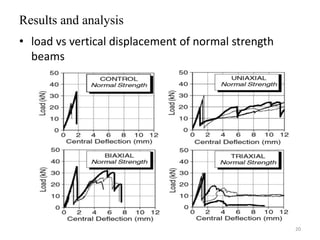
Results and analysis
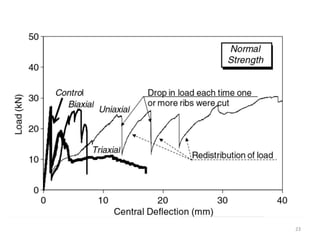
• load vs vertical displacement of normal strength
beams
20
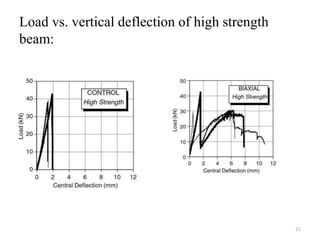
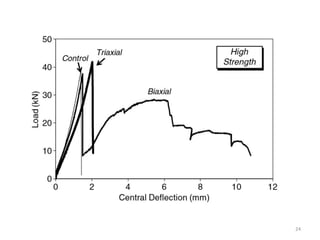
Load vs. vertical deflection of high strength
beam:
21
22
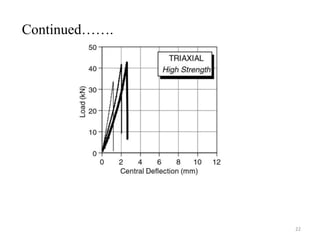
Continued…….
23
24
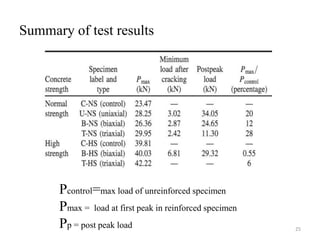
Summary of test results
25
Pcontrol=max load of unreinforced specimen
Pmax = load at first peak in reinforced specimen
Pp = post peak load
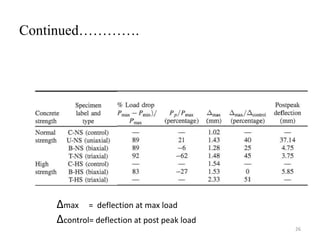
Continued………….
26
∆max = deflection at max load
∆control= deflection at post peak load
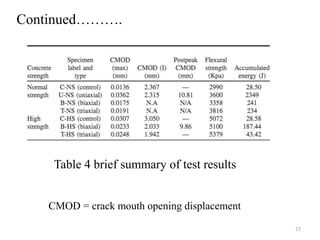
Continued……….
27
CMOD = crack mouth opening displacement
Table 4 brief summary of test results
observations
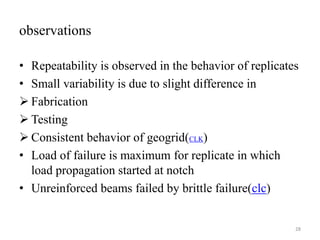
• Repeatability is observed in the behavior of replicates
• Small variability is due to slight difference in
 Fabrication
 Testing
 Consistent behavior of geogrid(CLK)
• Load of failure is maximum for replicate in which
load propagation started at notch
• Unreinforced beams failed by brittle failure(clc)
28
Continued………………..
• In reinforced beams the first drop is due to
 Inability of concrete in taking the load after cracking
 Debonding between the concrete and geogrid
• New rise is due to load taken by geogrid
• Slope of new rise is less due to less elasticity is
modulus
• Further series of drops are due to tear in the one or
more ribs at once(clk)
29
Continued……………
• Inclusion of geogrid layer increased the maximum
load and deformation of initial peak(CLK)
 Increment in strength and deformation at initial peak
of reinforced beams over unreinforced beams is
o 20% and 40% - uniaxial
o 12% and 25% - biaxial
o 28% and 48% - triaxial
• Post peak load capacity is more than first peak
capacity in uniaxial geogrids(CLK)
30
Continued………….
• More multiple peaks are observed in uniaxial geogrid
reinforced beams(CLK)
• Uneven distribution of junctions in triaxial geogrids
causes it to act as one whole reinforcement
• Single peak is observed in triaxial reinforced beams
• Change in post peak behavior of triaxial high strength
beam indicates(clk)
• ‘correlation between concrete strength and
mechanical characteristics of reinforcement’
31
Failure mechanism
32
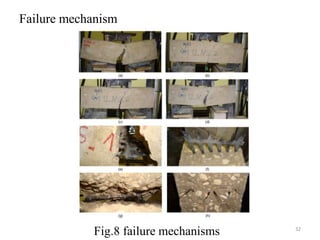
Fig.8 failure mechanisms
Failure mechanisms observed in beams
• Fig a – immediate brittle failure leading to specimen
Separation in control specimens
• Fig b – crack initiation and propagation in uniaxial
geogrid beams
• Fig c – delayed failure due to geogrids holding the
specimen intact
• Fig d – failure mode just before the total failure in
uniaxial geogrid beams
• Fig e – geogrid junction resisting load at crack
33
Continued……………
• Fig f – rib failure; failure mode of geogrids
• Fig g – rib failure in biaxial geogrids
• Fig h – rib failure in triaxial geogrids
34
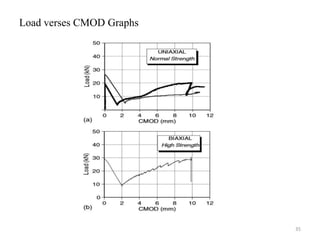
Load verses CMOD Graphs
35
observations
• CMOD measures the resistance of the beam to
growing a crack
• CMOD values are more related to concrete strength
till the failure of bottom concrete occurs
• The type and property of the geogrid influence the
CMOD value after the load transfer
36
Flexural strength
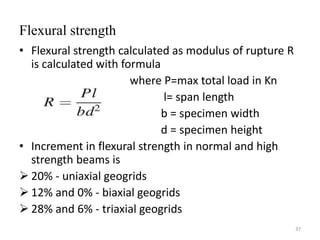
• Flexural strength calculated as modulus of rupture R
is calculated with formula
where P=max total load in Kn
l= span length
b = specimen width
d = specimen height
• Increment in flexural strength in normal and high
strength beams is
 20% - uniaxial geogrids
 12% and 0% - biaxial geogrids
 28% and 6% - triaxial geogrids
37
Fracture energy
• Area under load CMOD graph
• Geogrid reinforcements increased the fracture energy
• Highest increase is seen in uniaxial type due to more
ductility
• High strength specimens attained less energy
compared to low strength specimens
38
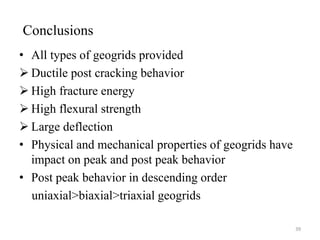
Conclusions
• All types of geogrids provided
 Ductile post cracking behavior
 High fracture energy
 High flexural strength
 Large deflection
• Physical and mechanical properties of geogrids have
impact on peak and post peak behavior
• Post peak behavior in descending order
uniaxial>biaxial>triaxial geogrids
39
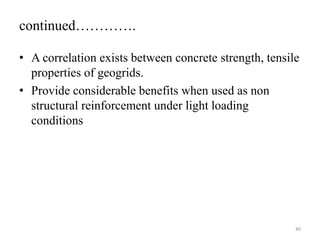
continued………….
• A correlation exists between concrete strength, tensile
properties of geogrids.
• Provide considerable benefits when used as non
structural reinforcement under light loading
conditions
40
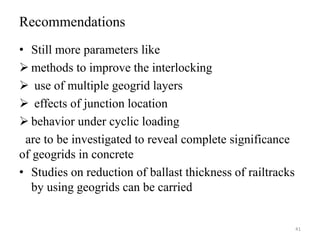
Recommendations
• Still more parameters like
 methods to improve the interlocking
 use of multiple geogrid layers
 effects of junction location
 behavior under cyclic loading
are to be investigated to reveal complete significance
of geogrids in concrete
• Studies on reduction of ballast thickness of railtracks
by using geogrids can be carried
41
42
THANK YOU

GEOGRIDS IN CONCRETE

  • 1.
  • 2.
    Contents • Geogrids • Applicationsin present scenario • Factors favouring geogrids to use with concrete • Test setup and measurement instrumentation • Results and graphs of test • Observations and analysis • Conclusions • recommendations 2
  • 3.
    Geogrid • A geosyntheticmaterial • made of polymer materials such as a. polyester b. polyethylene c. Polypropylene • characterized by  bands of narrow elements in grid-like pattern  large voids between those bands 3
  • 4.
    Functioning of geogrids(CLk) •capture the aggregates - interlock the aggregates - create a mechanically stabilized earthwork • redistributes the load over wider area and reduce the vertical stress • Provides  Lateral Restraint  Improved Bearing Capacity  Tension Membrane Effect(clk) 4
  • 5.
    Types of geogrids •Based on shape: 1. Uniaxial geogrids - Wall, slope applications 2. Biaxial geogrids - roads 3. Triangular geogrids - trafficked surfaces • Based on method of manufacture: 1. Punched and drawn geogrids 2. Coated yarn geogrids 3. Laser welded geogrids 5
  • 6.
    Fig.1 Uniaxial geogridFig.2 Biaxial geogrid Fig.3 Triangular geogrid 6 Geometry of geogrids
  • 7.
    Applications Geogrids in pavements •Shifts the failure envelop from weaker subgrade to stronger base material • Enhances the bearing capacity of subgrade without any soil treatment • Reduces the structural cross section for given service life 7 Fig 4 Fig 5
  • 8.
    Geogrids in steepslopes • Improves the soil retention on slip plane surface • Its tensile strength carries loading forces imposed of failure wedge • Provides the possibility of slopes of our desired steepness. 8 Fig 6 Fig 7
  • 9.
    Geogrids in retainingwalls • Resist the force of unstable soil wedge on retaining walls • Permit to construct retaining walls of suitable heights by using geogrids of proportional length and size. 9 Fig 8
  • 10.
    Geogrids in concrete Factorsfavoring geogrids to be used with concrete: • Resistant to chemicals • Inert to aqueous solutions of acids, alkalis and salts • No nutritional values - not attacked by micro organisms • Corrosion resistant • Good tensile strength • Temperature resistant 10
  • 11.
    Flexural test ongeogrid reinforced beams Specimen details: • Cross section 150 x 150 mm • Span length 530 mm • Triangular notch o Width=8mm o Depth=4.5mm o Made across the beam’s bottom surface • A geogrid layer at 50mm above the bottom surface 11
  • 12.
    Numbers of specimenstested: 21 • 12 Normal strength concrete blocks(35Mpa)  3 with no reinforcement(serves as control)  3 with uniaxial geogrid  3 with biaxial geogrid  3 with triangular geogrid • 9 high strength concrete blocks(45Mpa)  3 with no reinforcement  3 with biaxial geogrid  3 with triangular geogrid 12
  • 13.
    Specimen fabrication o PCCmix  Portland cement  natural sand(fine aggregates)  medium sized limestone(NMAS 9.5mm)  coarse limestone aggregates(NMAS19mm)  Normal strength beams o Mix ratio coarse:medium:fine:cement=1.7:1.2:2:1 o Water cement ratio=0.52  High strength beams o Mix ratio coarse:medium:fine:cement=1.5:0.8:1.7:1 o Water cement ratio=0.43 13
  • 14.
    Details of geogridsused Table 1 uniaxial geogrid click 14
  • 15.
    Table 2 biaxialgeogrid(CLICK) table 3 triaxial geogrid 15
  • 16.
  • 17.
    Testing setup andmeasurement instrumentation • Flexural testing is done according to ASTM • Monotonic loading by hydraulic UTM • Displacement control at constant cross head rate of 0.002mm/sec • Data acquisition system to collect data • Clip-on gauge to measure crack mouth opening displacement(CMOD)(CLK) • Transducers to measure the horizontal and vertical displacements at notch 17
  • 18.
    Fig.10 longitudinal sectionshowing loading position and reinforcement layout 18
  • 19.
    Fig.11 Testing andmeasurement instrument setup(CLICK) 19
  • 20.
    Results and analysis •load vs vertical displacement of normal strength beams 20
  • 21.
    Load vs. verticaldeflection of high strength beam: 21
  • 22.
  • 23.
  • 24.
  • 25.
    Summary of testresults 25 Pcontrol=max load of unreinforced specimen Pmax = load at first peak in reinforced specimen Pp = post peak load
  • 26.
    Continued…………. 26 ∆max = deflectionat max load ∆control= deflection at post peak load
  • 27.
    Continued………. 27 CMOD = crackmouth opening displacement Table 4 brief summary of test results
  • 28.
    observations • Repeatability isobserved in the behavior of replicates • Small variability is due to slight difference in  Fabrication  Testing  Consistent behavior of geogrid(CLK) • Load of failure is maximum for replicate in which load propagation started at notch • Unreinforced beams failed by brittle failure(clc) 28
  • 29.
    Continued……………….. • In reinforcedbeams the first drop is due to  Inability of concrete in taking the load after cracking  Debonding between the concrete and geogrid • New rise is due to load taken by geogrid • Slope of new rise is less due to less elasticity is modulus • Further series of drops are due to tear in the one or more ribs at once(clk) 29
  • 30.
    Continued…………… • Inclusion ofgeogrid layer increased the maximum load and deformation of initial peak(CLK)  Increment in strength and deformation at initial peak of reinforced beams over unreinforced beams is o 20% and 40% - uniaxial o 12% and 25% - biaxial o 28% and 48% - triaxial • Post peak load capacity is more than first peak capacity in uniaxial geogrids(CLK) 30
  • 31.
    Continued…………. • More multiplepeaks are observed in uniaxial geogrid reinforced beams(CLK) • Uneven distribution of junctions in triaxial geogrids causes it to act as one whole reinforcement • Single peak is observed in triaxial reinforced beams • Change in post peak behavior of triaxial high strength beam indicates(clk) • ‘correlation between concrete strength and mechanical characteristics of reinforcement’ 31
  • 32.
  • 33.
    Failure mechanisms observedin beams • Fig a – immediate brittle failure leading to specimen Separation in control specimens • Fig b – crack initiation and propagation in uniaxial geogrid beams • Fig c – delayed failure due to geogrids holding the specimen intact • Fig d – failure mode just before the total failure in uniaxial geogrid beams • Fig e – geogrid junction resisting load at crack 33
  • 34.
    Continued…………… • Fig f– rib failure; failure mode of geogrids • Fig g – rib failure in biaxial geogrids • Fig h – rib failure in triaxial geogrids 34
  • 35.
  • 36.
    observations • CMOD measuresthe resistance of the beam to growing a crack • CMOD values are more related to concrete strength till the failure of bottom concrete occurs • The type and property of the geogrid influence the CMOD value after the load transfer 36
  • 37.
    Flexural strength • Flexuralstrength calculated as modulus of rupture R is calculated with formula where P=max total load in Kn l= span length b = specimen width d = specimen height • Increment in flexural strength in normal and high strength beams is  20% - uniaxial geogrids  12% and 0% - biaxial geogrids  28% and 6% - triaxial geogrids 37
  • 38.
    Fracture energy • Areaunder load CMOD graph • Geogrid reinforcements increased the fracture energy • Highest increase is seen in uniaxial type due to more ductility • High strength specimens attained less energy compared to low strength specimens 38
  • 39.
    Conclusions • All typesof geogrids provided  Ductile post cracking behavior  High fracture energy  High flexural strength  Large deflection • Physical and mechanical properties of geogrids have impact on peak and post peak behavior • Post peak behavior in descending order uniaxial>biaxial>triaxial geogrids 39
  • 40.
    continued…………. • A correlationexists between concrete strength, tensile properties of geogrids. • Provide considerable benefits when used as non structural reinforcement under light loading conditions 40
  • 41.
    Recommendations • Still moreparameters like  methods to improve the interlocking  use of multiple geogrid layers  effects of junction location  behavior under cyclic loading are to be investigated to reveal complete significance of geogrids in concrete • Studies on reduction of ballast thickness of railtracks by using geogrids can be carried 41
  • 42.