KARNATAKA COLLEGE OF PHARMACY
(Department of pharmacology)
PHARMACOLOGICAL AND TOXICOLOGICAL SCREENING
METHODS
PRESENTATION TOPIC :
Genotoxicity studies
SUBMITTED TO : DR NAGARATNA P.K.M
PREPARED BY : DIANA MORIA
Genotoxicity
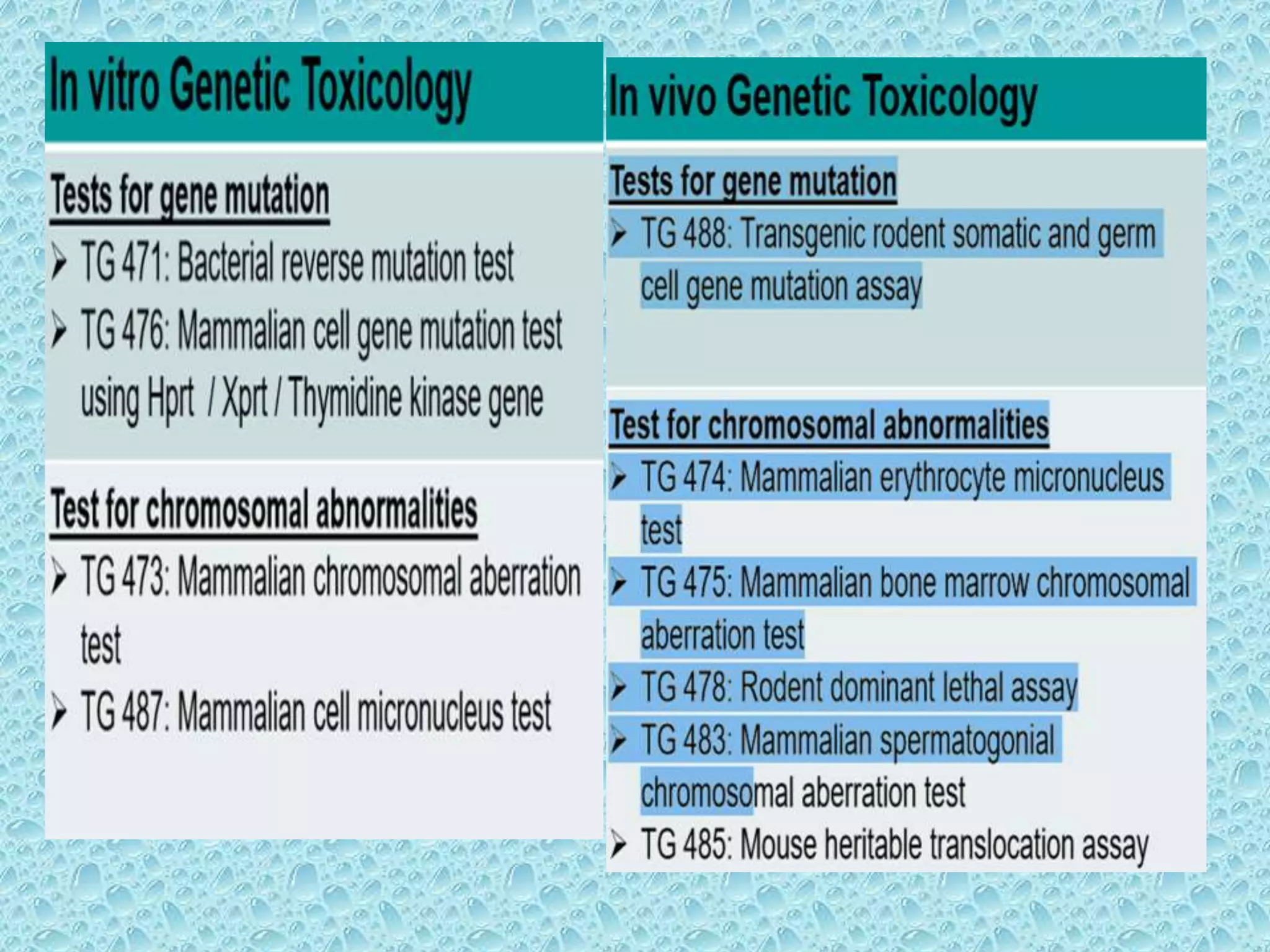
• Genotoxicity tests can be defined as in vitro
and in vivo tests designed to detect compounds
that induce genetic damage by various
mechanisms.
• These tests enable hazard identification with
respect to damage to DNA and its fixation.
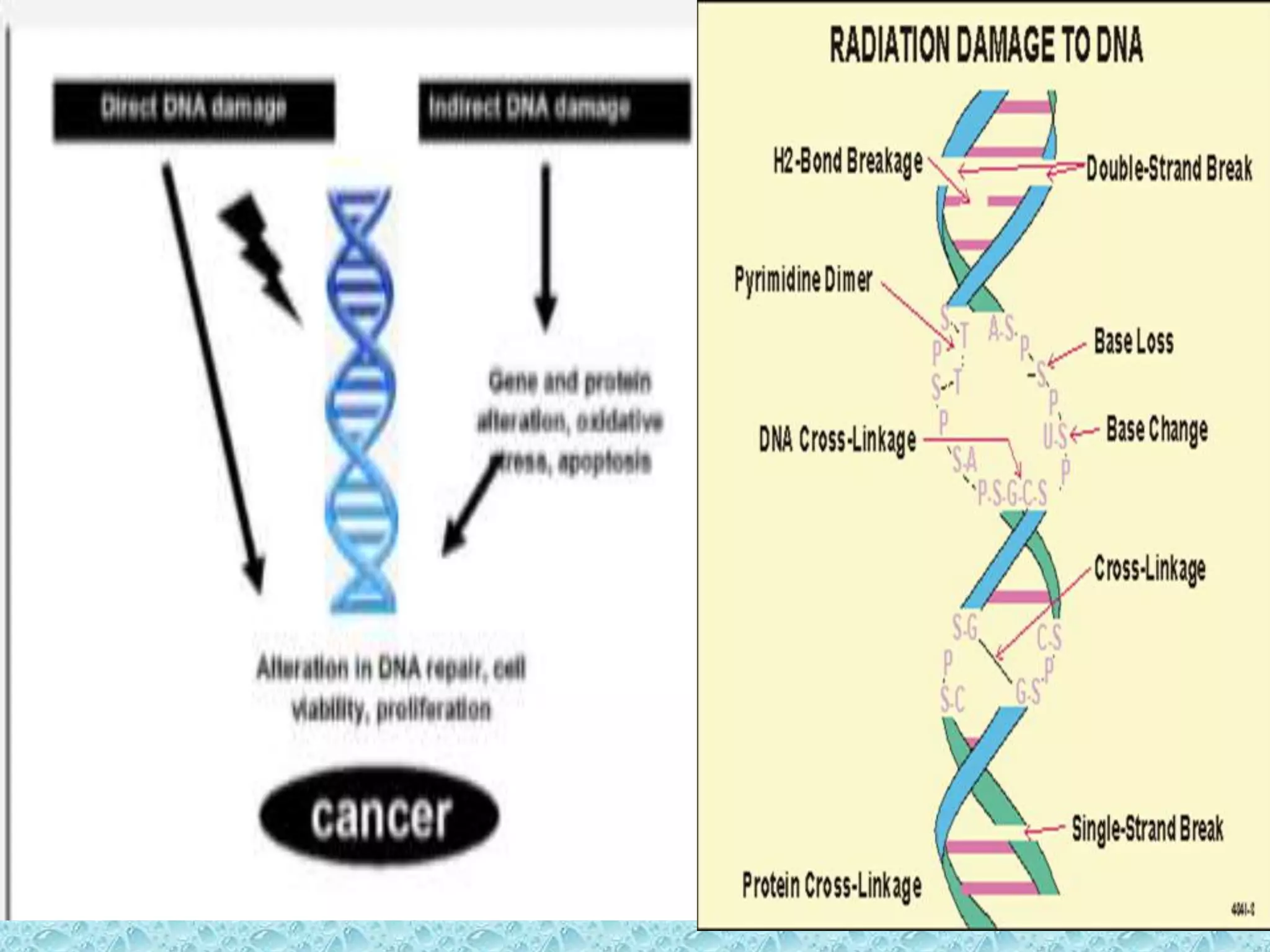
Genotoxins can be of the following
category depending on its effects
1) Carcinogens or cancer causing agents
2)Mutagens or mutation causing agents
3)Teratogens or birth defect causing agents
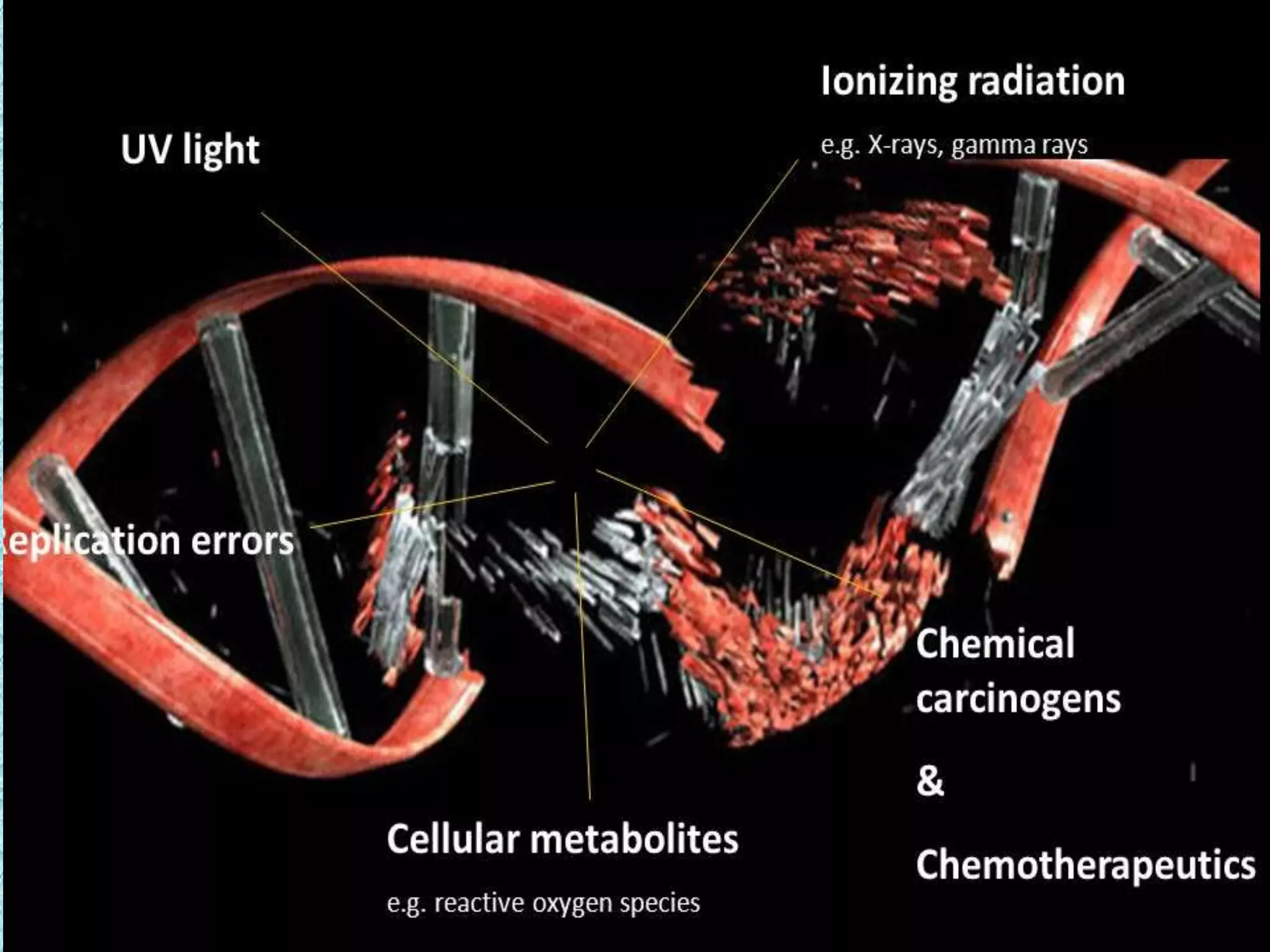
Agents that can cause direct or
indirect damage to the DNA
• Reactive oxygen species.
• UV and ionizing radiations.
• Nucleoside analogues .
• Topoisomerase inhibitors .
• Protein synthesis inhibitors .
History & Background
• Origin of genetic toxicology in 1900 , Genetic
toxicity independent branch of science started
in 1927.
• OECD Genetic Toxicology TGs was first
published in 1987.
• Major test guidelines: OECD ,ICH,
SCHEDULE Y (D&C India).
OECD GUIDELINES
• Genetic Toxicology : was first published in
1987 .Following a global update of the Genetic
Toxicology [1997,2013,2014,2015,2016]
• Latest revision provides :
(1) general background and historical
information on the OECD genetic toxicology.
(2) a brief overview of the important types of
genetic damage evaluated by these tests.
(3) a description of the specific tests.
SCHEDULE –Y
• Gene mutation in bacteria
• An in-vitro test with cytogenic evaluation of
chromosomal damage .
• An in-vivo test for chromosomal damage
using rodent hematopoietic cells
(chromosomal aberration , micronucleus ).
• DNA adduct tests , DNA strands break , DNA
repair /recombination .
ICH
• S2A:Guidance on Specific aspects of
Regulatory Tests for Pharmaceuticals .
• S2B: Standard Battery for Testing of
Pharmaceuticals
• M3:Timing of Pre-Clinical Studies in Relation
to Clinical Trials.
Importance
• Genotoxicity assays have become an
integral component of regulatory
requirement.
• Compounds which are positive in these
tests, have the potential to be human
carcinogens and/or mutagens. so it’s used
in prediction.
Aim
• To identify substances that can cause
genetic alterations in somatic and/or germ
cells.
• To identify substances that causes genetic
alterations and thus use this information
in regulatory decisions.
Mechanism of Genotoxicity
• The damage to the genetic material is caused
by the interactions of the genotoxic substance
with the DNA structure and sequence.
• These genotoxic substance interact at a
specific location or base sequence of the DNA
structure causing lesions, breakage, fusion,
deletion, mis-segregation or non- disjunction
leading to damage and mutation .
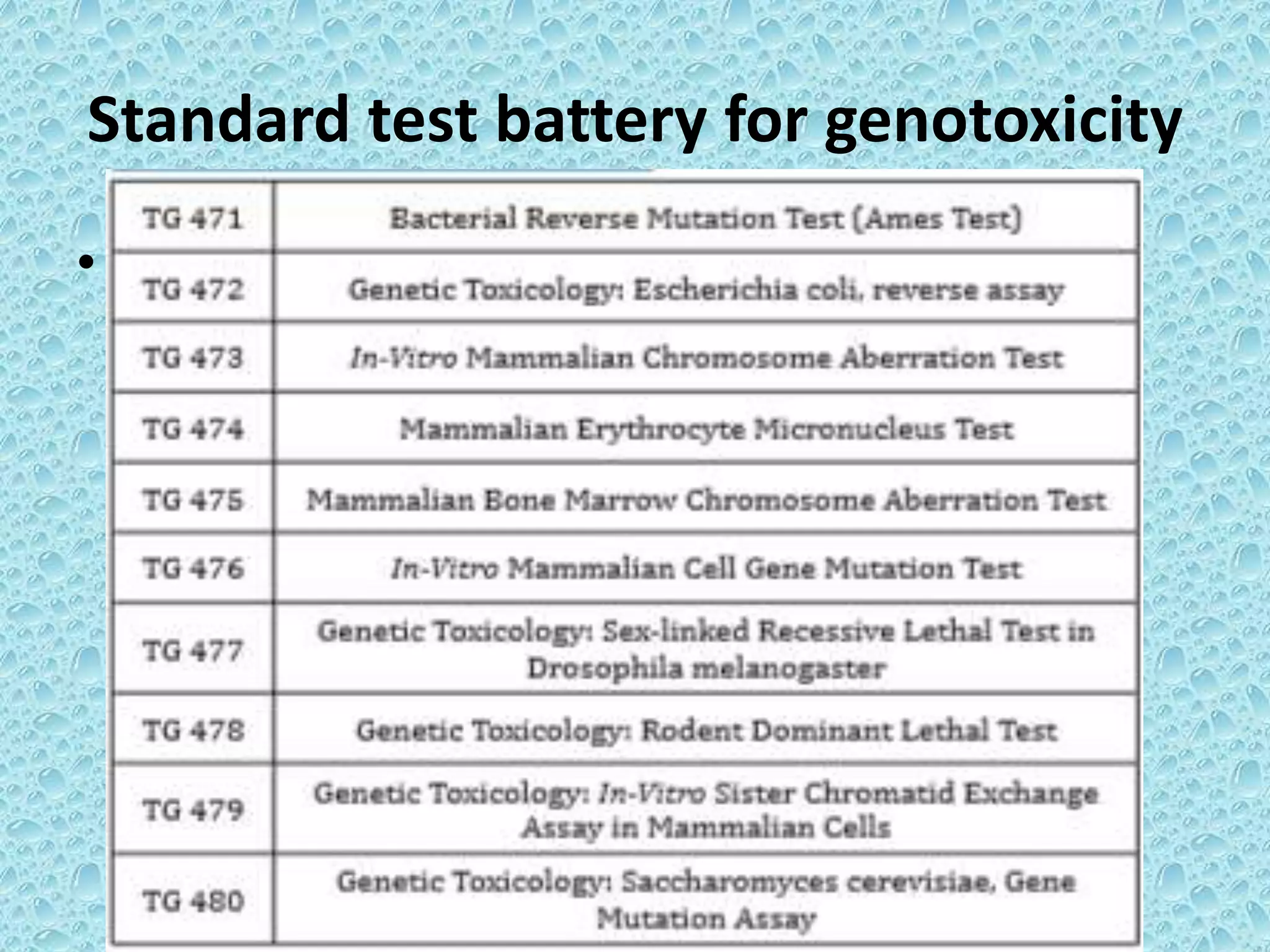
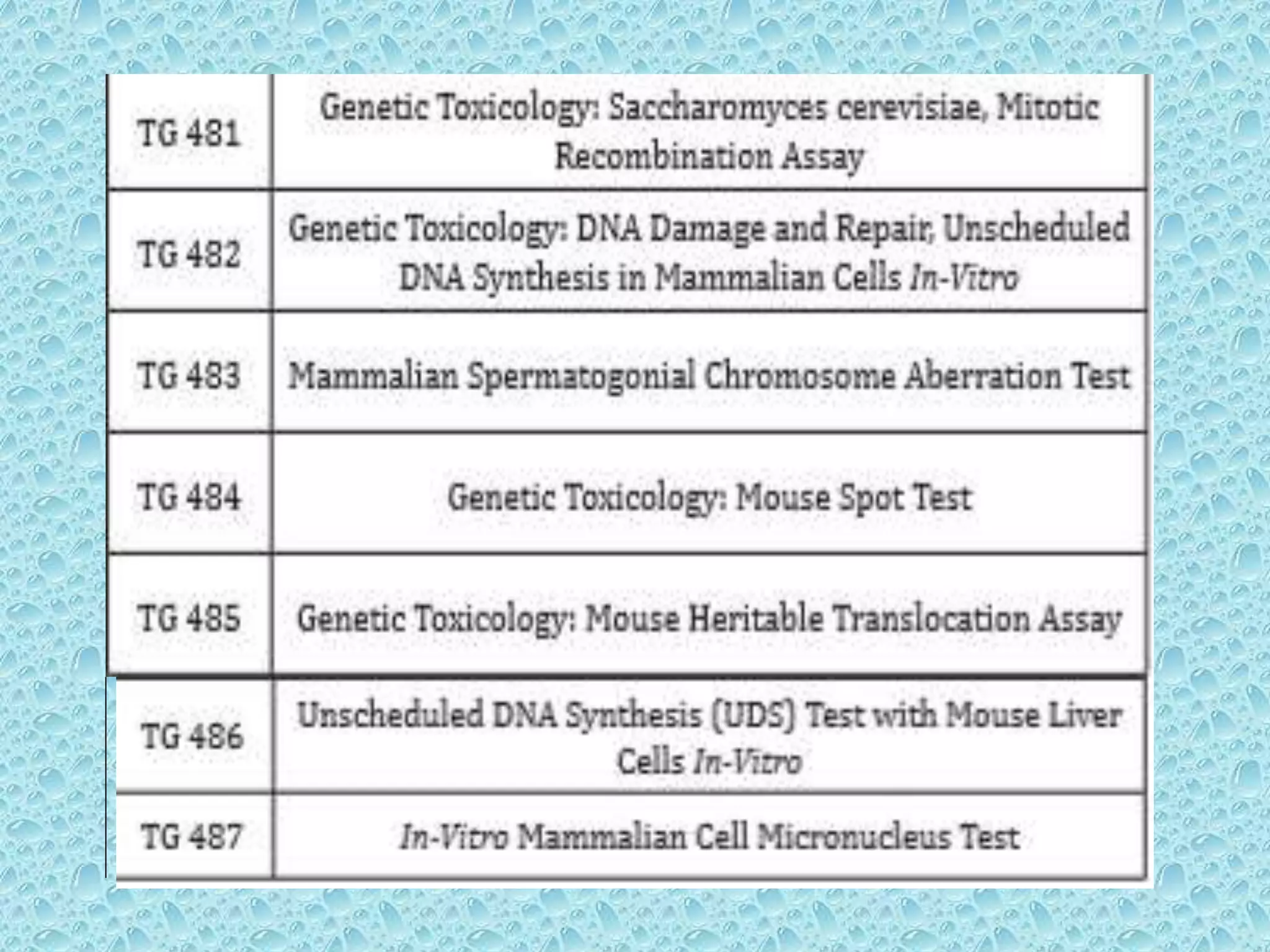
Standard test battery for genotoxicity
•
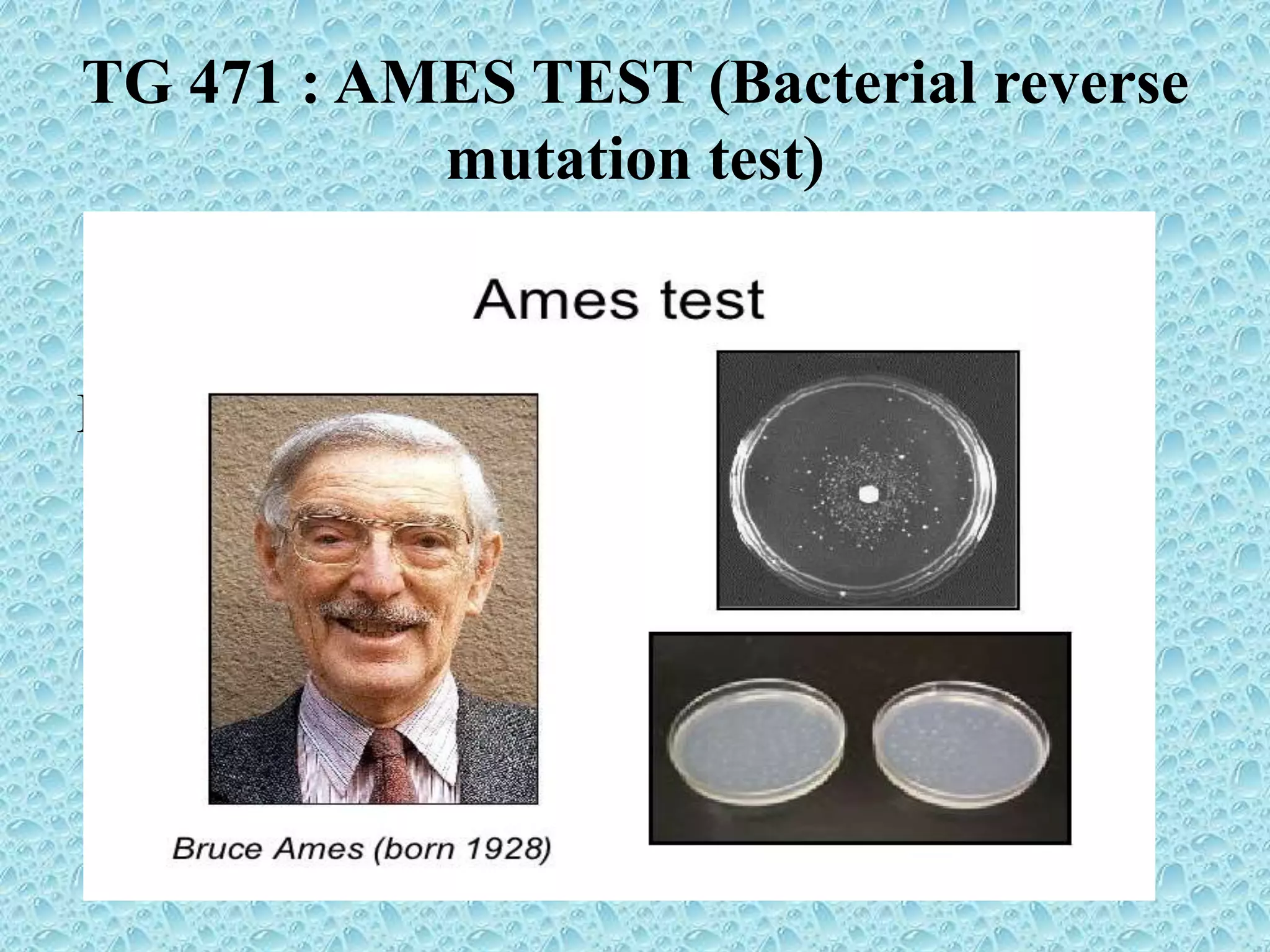
TG 471 : AMES TEST (Bacterial reverse
mutation test)
Bacteria : Salmonella typhimurium or strains
E.coli.
• Ames test was brought forward by Bruce
Ames in 1970.
• He is professor in university of California ,
berkely . In department of biochemistry.
• He developed this method because previous
methods were expensive and time consuming.
Principle
• Identifies substances that induce gene mutations
by base substitutions or frame-shifts.
• Two species of bacteria Salmonella typhimurium
and Escherichia coli with identified mutations in
an amino acid i.e. His or Trp as the reporter locus.
• It detects mutations which revert mutations
present in the test strains and restore the
functional capability of the bacteria to synthesize
an essential amino acid
PROCEDURE
• 2 methods :
1.Plate incorporation method.
2. pre-incubation method.
STEPS OF AMES TEST:
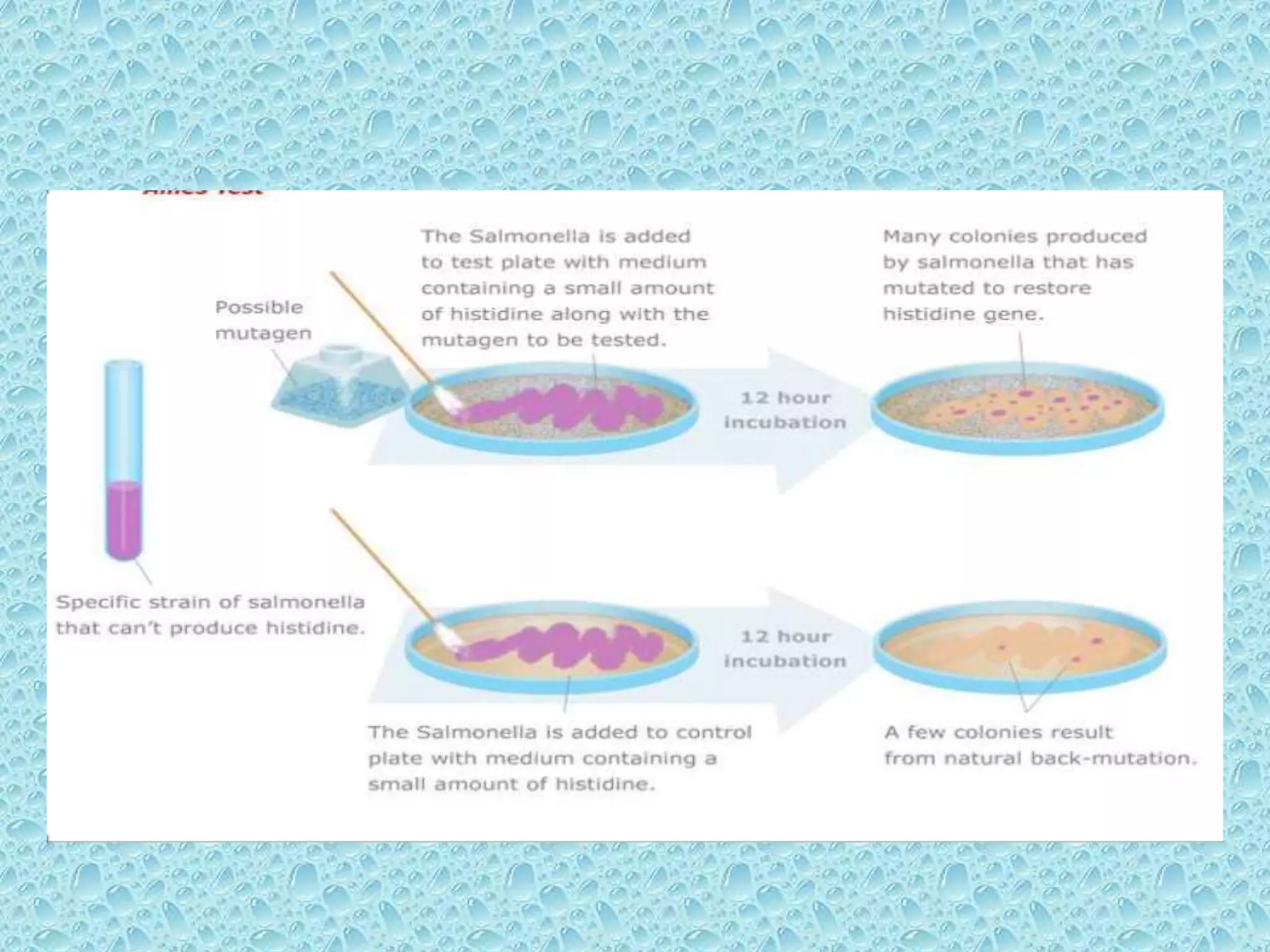
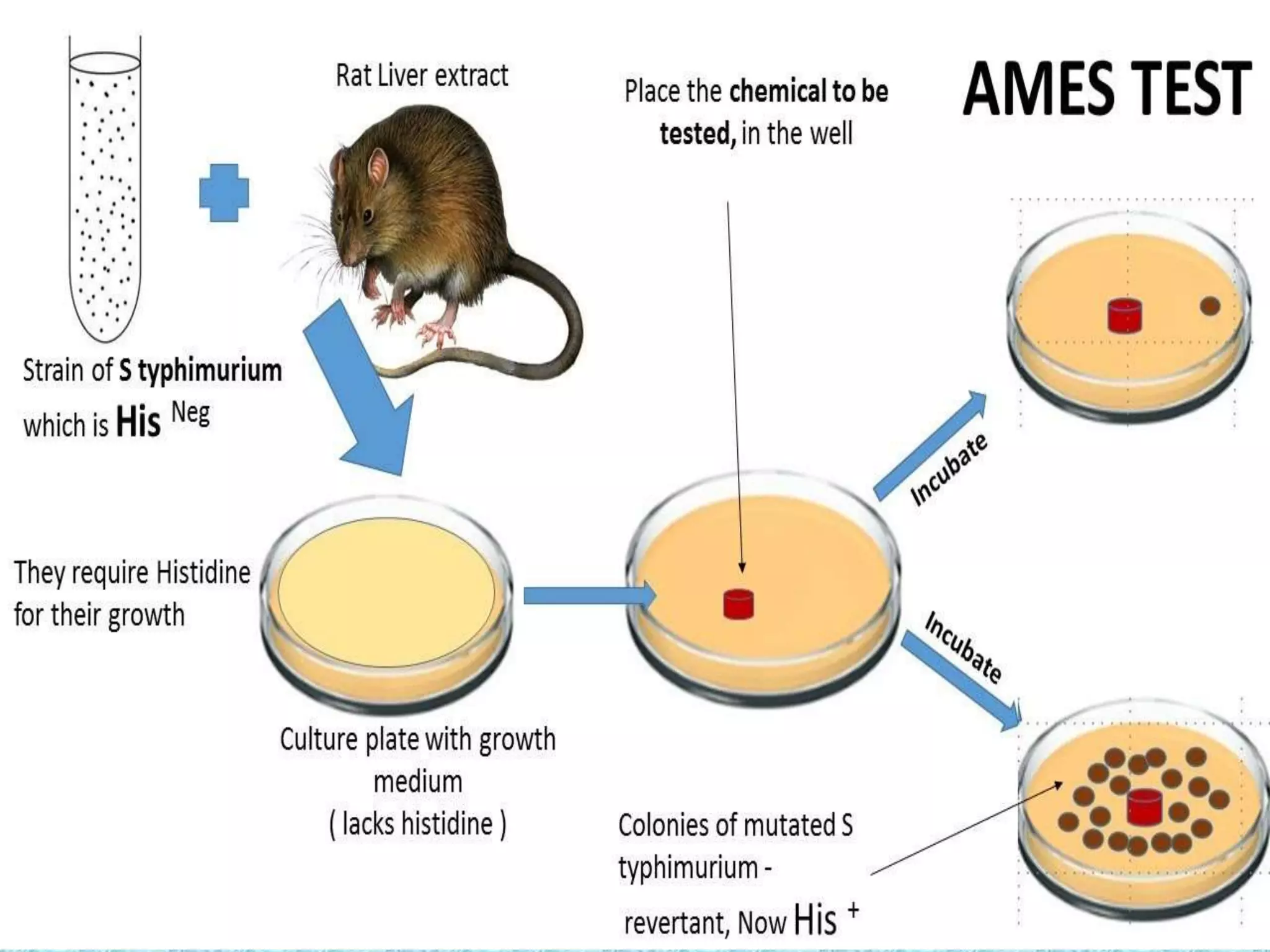
• Prepare the culture of Salmonella histidine
auxotroph's (His-).
• Mix the bacterial cells and test substance in
dilute molten top agar with a small amount of
histidine in one set, and control with complete
medium plus large amount of histidine .
• Pour the molten mixture on the top of minimal
agar plates and incubate at 37°C for 2-3 days.
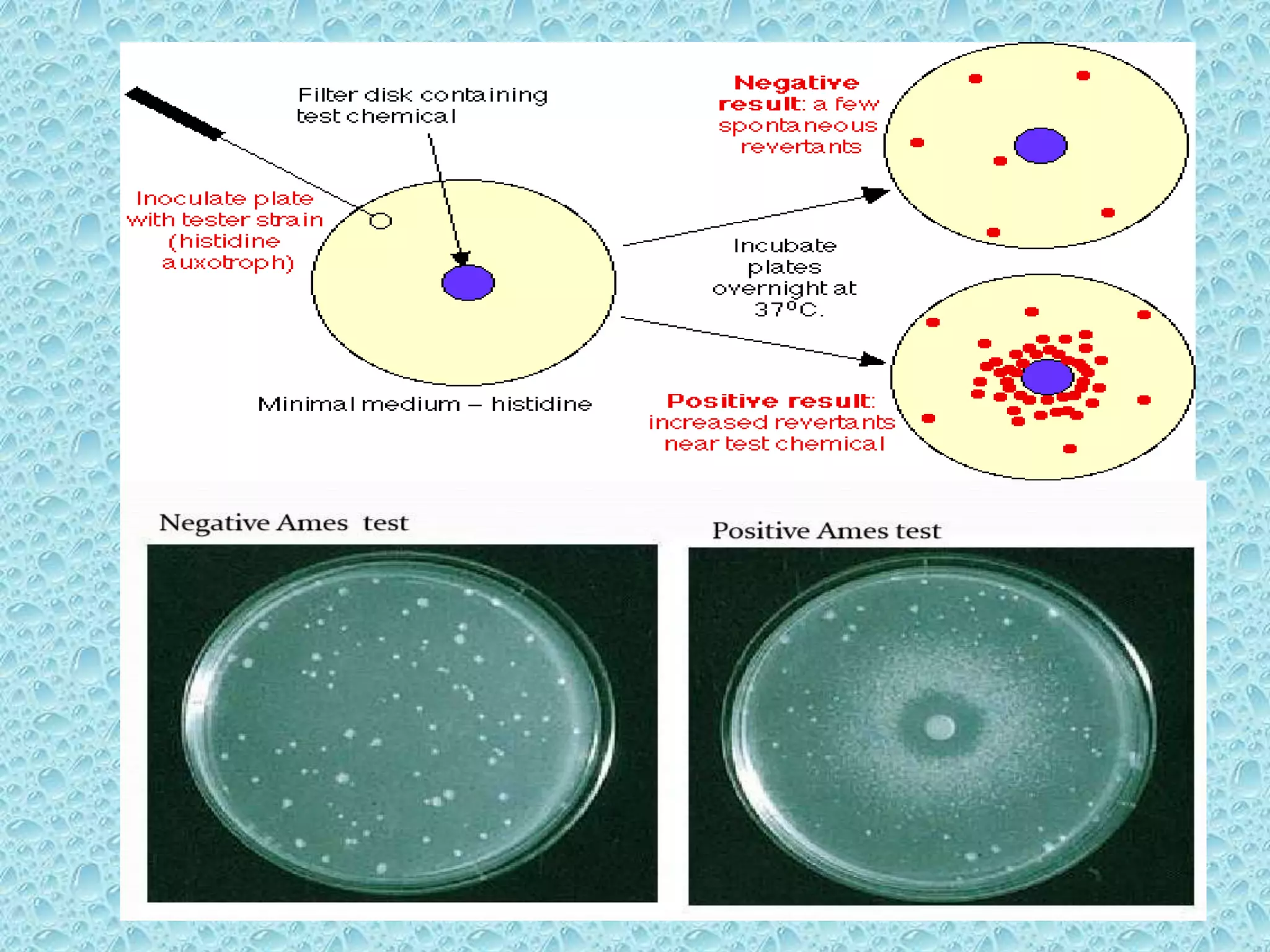
• Until histidine is depleted all the His- cells will
grow in the presence of test mutagen.
• When the histidine is completely exhausted
only the revertants will grow on the plate.
• High number of colonies represent the
greater mutagenicity
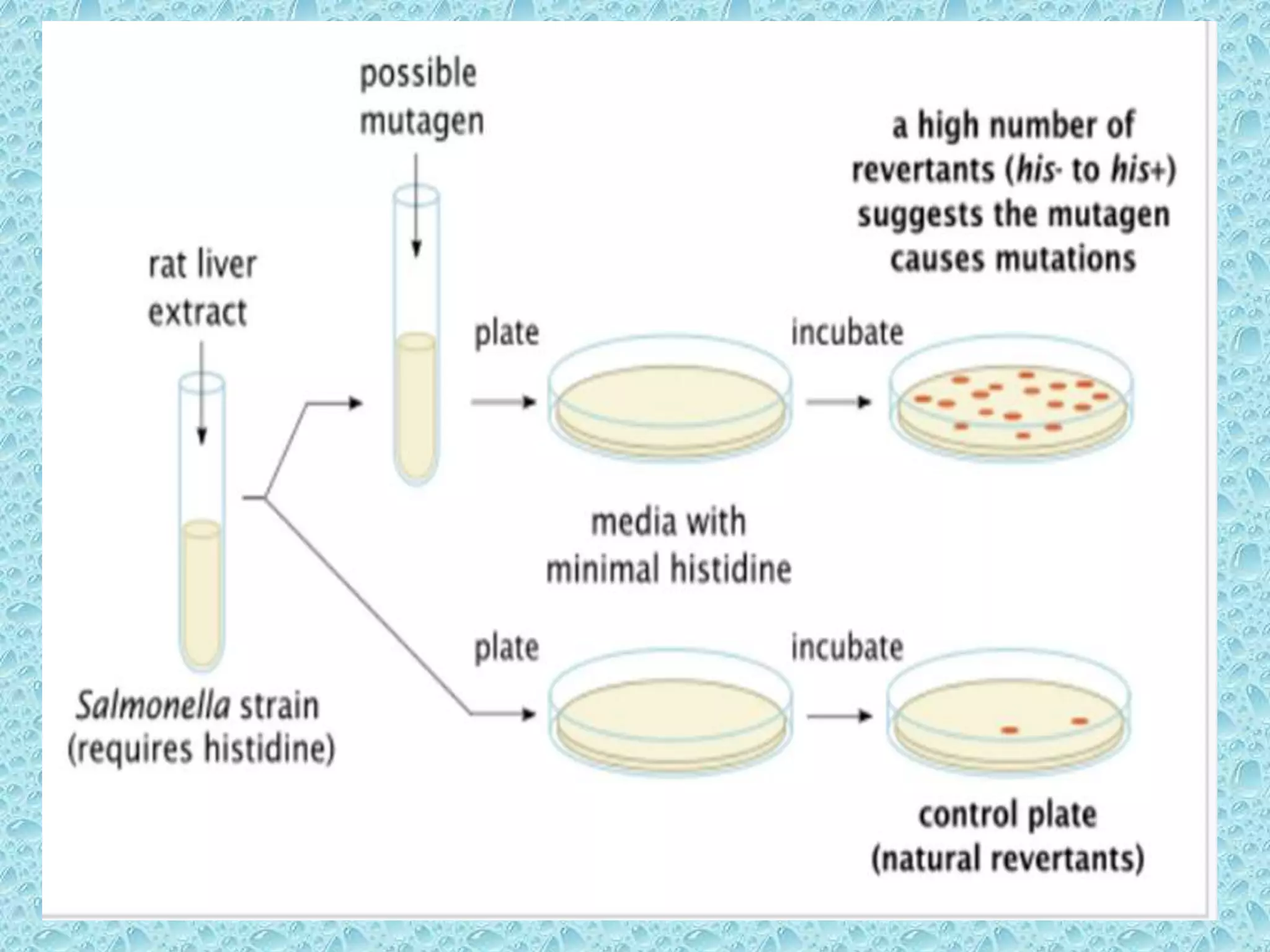
• There are some chemicals that are non
mutagenic , but they become mutagenic when
they come in contact in body metabolism.
• Bacteria does not have metabolizing capacity,
therefore, the liver extract is added to this test,
to promote transformation
• And then the bacterial sample is inoculated.
But from the idea the negative test will not
show any growth, but the growth can occur
due to spontaneous mutation, this is the only
limitation of this test.
Pre-incubation method
• Pre-incubated with the test strain .
• 0.05-0.1ml (approx. 108 cells) & sterile buffer or
the metabolic activation system (s9 0.5 ml)
usually for 20 min @30-37°c [aeration+ shaker –
48 to 72hrs]
• Mix overlay agar (2ml) and pouring onto the
surface of a minimal agar plate
• Report number of revertant colonies per plate
• ( with +ve & -ve coloies nos)
• Standard deviation
• Spontaneous mutation can give us false positive
result. So to understand the difference between
spontaneous mutation and mutagenicity.
• If the bacterial colony are obtained scattered they
show that bacteria is there because of spontaneous
mutation.
• And if the colony are aggregated they show that
the mutagenicity is brought forward by the
chemical mutagens.
REPORTING
• Test substance.
• Solvent/Vehicle.
• Strains.
• Test conditions.
Results:
• Signs of toxicity.
• signs of precipitation.
• individual plate counts .
• the mean number of revertant colonies per plate
and standard deviation .
• dose-response relationship, where possible.
• Statistical analyses
TG 487 : INVITRO MAMALIAN
CELL MICRONUCLEUS TEST -2010
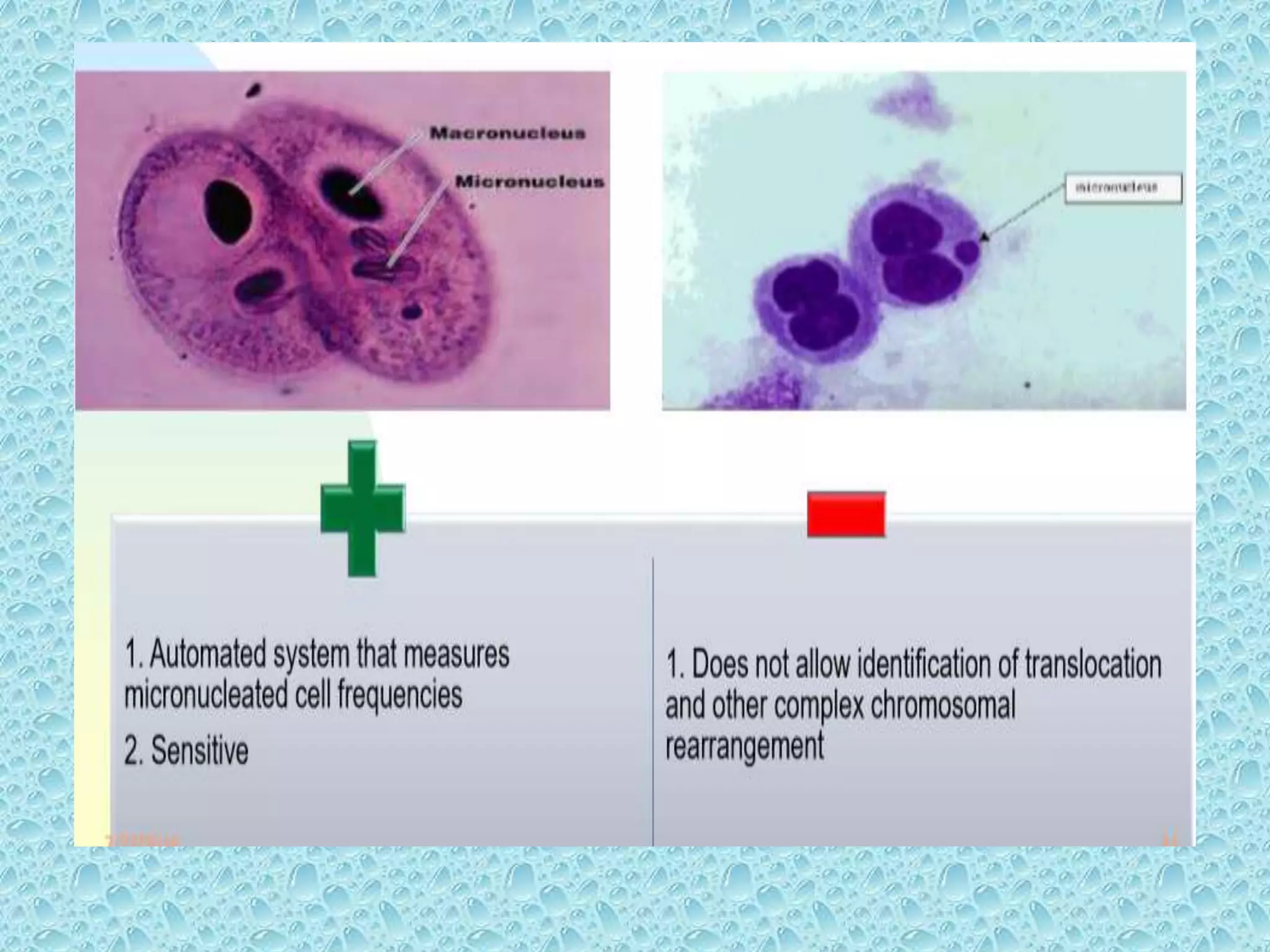
• Micronuclei is the small nucleus that
forms whenever a chromosome or its
fragment is incorporated with
daughter nuclei during cell division.
principle
• Micronuclei are the product of fragmented chromosomes or
mitotic spindle failure in a cell. Micronuclei are formed by
condensation of acentric chromosomes that are not included in
the main nuclei following the anaphase.
• Micronuclei are formed in the cytoplasm through the
following events:
• In anaphase, a chromatid and chromosomal fragments lag
behind when the centric elements move towards the spindle
poles. Micronucleus arises from chromosomal fragments or
acentric chromosomes that are not incorporated into daughter
nuclei at mitosis because they lack a centromere.
• Micronuclei appear as separate, small nucleus
in the cytoplasm in addition to the main
nucleus of the cell. Since micronuclei cannot
be observed until after the first cell cycle, the
frequencies of micronuclei within a cell
population are highly dependent on the
kinetics of cell proliferation.
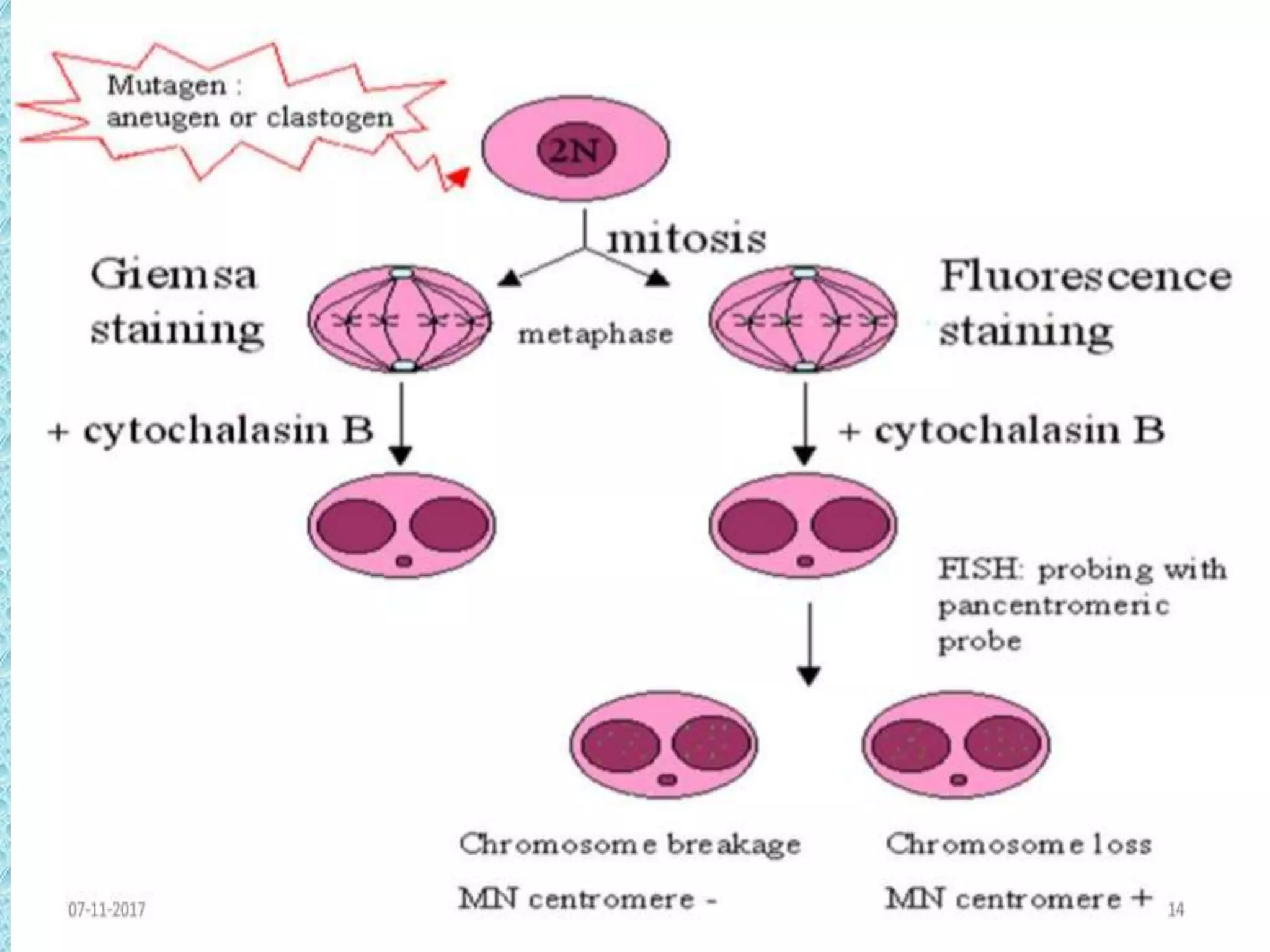
• Detection of the frequency of micronuclei:
• Cell cultures of human or other
mammalian origin are exposed to the test
chemical, formation of micronuclei in
interphase cells.
• Harvested and stained interphase cells are
analysed for the presence of micronuclei,
treated with a cytokinesis blocker.
• assay detects the activity of clastogenic
and aneugenic chemicals .
REPORTING
• Report should include :
• Percentage of vehicle in the final culture
medium should also be indicated .
• Cells: - type and source of cells used.
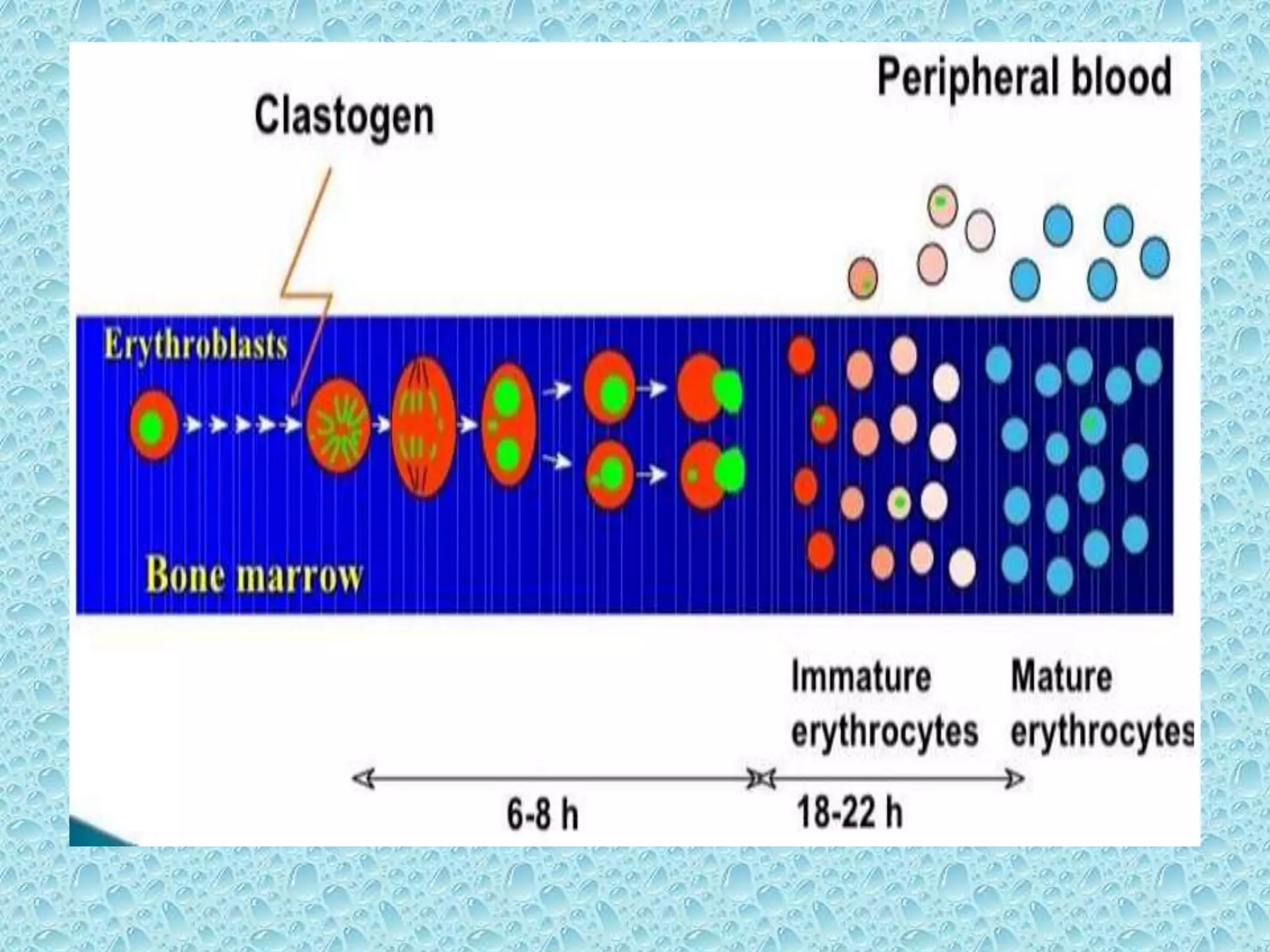
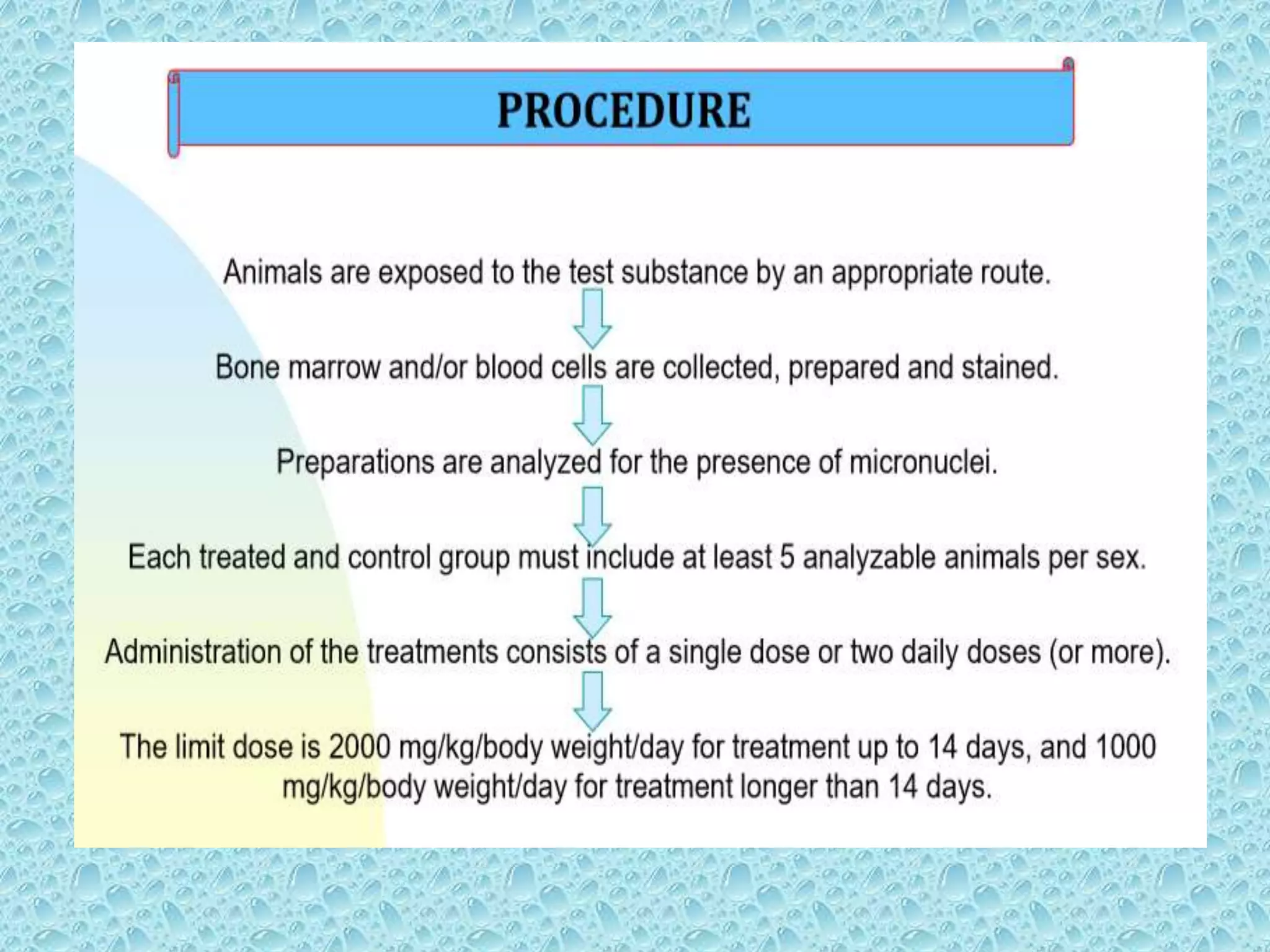
TG 474:Mammalian Erythrocyte
Micronucleus Test
• Animals are exposed to the test substance by an
appropriate route
• If bone marrow > the animals are sacrificed, bone
marrow extracted, and preparations made and
stained
• If peripheral blood > the blood is collected at
appropriate times after treatment and smear
preparations are made and stained.
• Preparations are analysed for the presence of
micronuclei
Principle
• For the detection of damage induced by the test
substance to the chromosomes or the mitotic
apparatus of erythroblasts (rodents)
• Identifies micronuclei containing lagging
chromosome fragments or whole chromosomes.
• An increase in the frequency of micronucleated
polychromatic erythrocytes in treated animals is
an indication of induced chromosome damage
because they lack main nucleus
TG 473: INVITRO MAMMALIAN
CHROMASOMALABBERATION TEST
PRINCIPLE
• After exposure of cell cultures , treated with a
metaphase-arresting substance colchicine .
with and without metabolic activation
• harvested, stained and metaphase cells are
analysed microscopically for the presence of
chromosome aberrations .
• Cell lines: CHO, CHL, V79, TK6.
• Structural aberrations may be of two types:
chromosome or chromatid.
• Observed only in metaphase of 1st or 2nd
mitotic division after treatment.
• Damage induced pre-S-phase ----------
chromosome aberration .
• Damage induced post-S-phase ----------
chromatid aberration.
• Treatment of test with lymphocytes started at
about 48 hours after mitogenic stimulation.
• negative/solvent control cultures
• Cells should exposed to the test substance
both with and without metabolic activation
for 3-6hrs sampled at a time equivalent to
about 1.5 normal cell cycle length after the
beginning of treatment.
• Chromosome preparation: culture treated
with Colcemid® or colchicine 3 hr prior to
harvesting , process involves hypotonic
treatment of the cells, fixation and staining.
• Analysis: should be independently coded
before microscopic analysis. . At least 200
well-spread metaphases should be scored per
concentration and control.
• it is important to record polyploidy and
endoreduplication when these events are
seen.
• Treatment of results: % of cells with structural
chromosome aberration(s) .
TG 475: MAMMALIAN BONE MARROW
CHROMOSOME ABERRATION TEST
principle
• For the detection of structural chromosome
aberrations induced by test compounds only in
bone marrow cells of animals (rodents).
• Animals are exposed to the test substance ,
metaphase-arresting agent , sacrificed at
appropriate times after treatment.
• Bone marrow cells are usually obtained from
the femurs or tibias immediately after sacrifice
, and stained using established methods.
• Blood :tail vein or other appropriate blood
vessel , smear preparations are made and then
stained
• DNA specific stain [e.g acridine orange or
Hoechst 33258 plus pyronin-Y]
• Prior to sacrifice, animals are injected i.p with
an appropriate dose of a metaphase arresting
agent , sampled thereafter. Cells are
harvested from the bone marrow and
analysed from chromosome aberrations.
• Chromosome preparation: bone marrow in
hypotonic solution , spread on slides and
stained
Analysis
• The mitotic index should be determined as a
measure of cytotoxicity in at least 1000 cells
per animal.
scoring
• • Different types of structural chromosome aberrations
should be listed with their numbers and frequencies
for treated and control groups.
• • Biological relevance of the results should be
considered first. Statistical methods may be used as an
aid in evaluating the test results
• • An increase in polyploidy may indicate that the test
substance has the potential to induce numerical
chromosome aberrations
• • An increase in endoreduplication may indicate that
the test substance has the potential to inhibit cell cycle
progression
REFERENCE
1. Essential concepts in toxicology by
prof.Dr.Gupta .
2. Shaily Umang Shah . Importance of
Genotoxicity & S2A guidelines for genotoxicity
testing for pharmaceuticals .IOSRJPBS.2012
1(2) 43-54 .
3. OECD website , www.oecd.org , genotoxicity
test guidelines :2016 OECD Test guidelines;
471,473,474,475,483,487 .
•Thanks

Genotoxicity studies according to oecd guildline.

  • 1.
    KARNATAKA COLLEGE OFPHARMACY (Department of pharmacology) PHARMACOLOGICAL AND TOXICOLOGICAL SCREENING METHODS PRESENTATION TOPIC : Genotoxicity studies SUBMITTED TO : DR NAGARATNA P.K.M PREPARED BY : DIANA MORIA
  • 2.
    Genotoxicity • Genotoxicity testscan be defined as in vitro and in vivo tests designed to detect compounds that induce genetic damage by various mechanisms. • These tests enable hazard identification with respect to damage to DNA and its fixation.
  • 3.
    Genotoxins can beof the following category depending on its effects 1) Carcinogens or cancer causing agents 2)Mutagens or mutation causing agents 3)Teratogens or birth defect causing agents
  • 4.
    Agents that cancause direct or indirect damage to the DNA • Reactive oxygen species. • UV and ionizing radiations. • Nucleoside analogues . • Topoisomerase inhibitors . • Protein synthesis inhibitors .
  • 7.
    History & Background •Origin of genetic toxicology in 1900 , Genetic toxicity independent branch of science started in 1927. • OECD Genetic Toxicology TGs was first published in 1987. • Major test guidelines: OECD ,ICH, SCHEDULE Y (D&C India).
  • 8.
    OECD GUIDELINES • GeneticToxicology : was first published in 1987 .Following a global update of the Genetic Toxicology [1997,2013,2014,2015,2016] • Latest revision provides : (1) general background and historical information on the OECD genetic toxicology. (2) a brief overview of the important types of genetic damage evaluated by these tests. (3) a description of the specific tests.
  • 9.
    SCHEDULE –Y • Genemutation in bacteria • An in-vitro test with cytogenic evaluation of chromosomal damage . • An in-vivo test for chromosomal damage using rodent hematopoietic cells (chromosomal aberration , micronucleus ). • DNA adduct tests , DNA strands break , DNA repair /recombination .
  • 10.
    ICH • S2A:Guidance onSpecific aspects of Regulatory Tests for Pharmaceuticals . • S2B: Standard Battery for Testing of Pharmaceuticals • M3:Timing of Pre-Clinical Studies in Relation to Clinical Trials.
  • 11.
    Importance • Genotoxicity assayshave become an integral component of regulatory requirement. • Compounds which are positive in these tests, have the potential to be human carcinogens and/or mutagens. so it’s used in prediction.
  • 12.
    Aim • To identifysubstances that can cause genetic alterations in somatic and/or germ cells. • To identify substances that causes genetic alterations and thus use this information in regulatory decisions.
  • 13.
    Mechanism of Genotoxicity •The damage to the genetic material is caused by the interactions of the genotoxic substance with the DNA structure and sequence. • These genotoxic substance interact at a specific location or base sequence of the DNA structure causing lesions, breakage, fusion, deletion, mis-segregation or non- disjunction leading to damage and mutation .
  • 15.
    Standard test batteryfor genotoxicity •
  • 17.
    TG 471 :AMES TEST (Bacterial reverse mutation test) Bacteria : Salmonella typhimurium or strains E.coli.
  • 18.
    • Ames testwas brought forward by Bruce Ames in 1970. • He is professor in university of California , berkely . In department of biochemistry. • He developed this method because previous methods were expensive and time consuming.
  • 19.
    Principle • Identifies substancesthat induce gene mutations by base substitutions or frame-shifts. • Two species of bacteria Salmonella typhimurium and Escherichia coli with identified mutations in an amino acid i.e. His or Trp as the reporter locus. • It detects mutations which revert mutations present in the test strains and restore the functional capability of the bacteria to synthesize an essential amino acid
  • 20.
    PROCEDURE • 2 methods: 1.Plate incorporation method. 2. pre-incubation method.
  • 21.
    STEPS OF AMESTEST: • Prepare the culture of Salmonella histidine auxotroph's (His-). • Mix the bacterial cells and test substance in dilute molten top agar with a small amount of histidine in one set, and control with complete medium plus large amount of histidine . • Pour the molten mixture on the top of minimal agar plates and incubate at 37°C for 2-3 days.
  • 22.
    • Until histidineis depleted all the His- cells will grow in the presence of test mutagen. • When the histidine is completely exhausted only the revertants will grow on the plate. • High number of colonies represent the greater mutagenicity
  • 24.
    • There aresome chemicals that are non mutagenic , but they become mutagenic when they come in contact in body metabolism. • Bacteria does not have metabolizing capacity, therefore, the liver extract is added to this test, to promote transformation • And then the bacterial sample is inoculated. But from the idea the negative test will not show any growth, but the growth can occur due to spontaneous mutation, this is the only limitation of this test.
  • 26.
    Pre-incubation method • Pre-incubatedwith the test strain . • 0.05-0.1ml (approx. 108 cells) & sterile buffer or the metabolic activation system (s9 0.5 ml) usually for 20 min @30-37°c [aeration+ shaker – 48 to 72hrs] • Mix overlay agar (2ml) and pouring onto the surface of a minimal agar plate • Report number of revertant colonies per plate • ( with +ve & -ve coloies nos) • Standard deviation
  • 28.
    • Spontaneous mutationcan give us false positive result. So to understand the difference between spontaneous mutation and mutagenicity. • If the bacterial colony are obtained scattered they show that bacteria is there because of spontaneous mutation. • And if the colony are aggregated they show that the mutagenicity is brought forward by the chemical mutagens.
  • 30.
    REPORTING • Test substance. •Solvent/Vehicle. • Strains. • Test conditions.
  • 31.
    Results: • Signs oftoxicity. • signs of precipitation. • individual plate counts . • the mean number of revertant colonies per plate and standard deviation . • dose-response relationship, where possible. • Statistical analyses
  • 33.
    TG 487 :INVITRO MAMALIAN CELL MICRONUCLEUS TEST -2010 • Micronuclei is the small nucleus that forms whenever a chromosome or its fragment is incorporated with daughter nuclei during cell division.
  • 36.
    principle • Micronuclei arethe product of fragmented chromosomes or mitotic spindle failure in a cell. Micronuclei are formed by condensation of acentric chromosomes that are not included in the main nuclei following the anaphase. • Micronuclei are formed in the cytoplasm through the following events: • In anaphase, a chromatid and chromosomal fragments lag behind when the centric elements move towards the spindle poles. Micronucleus arises from chromosomal fragments or acentric chromosomes that are not incorporated into daughter nuclei at mitosis because they lack a centromere.
  • 37.
    • Micronuclei appearas separate, small nucleus in the cytoplasm in addition to the main nucleus of the cell. Since micronuclei cannot be observed until after the first cell cycle, the frequencies of micronuclei within a cell population are highly dependent on the kinetics of cell proliferation.
  • 38.
    • Detection ofthe frequency of micronuclei: • Cell cultures of human or other mammalian origin are exposed to the test chemical, formation of micronuclei in interphase cells. • Harvested and stained interphase cells are analysed for the presence of micronuclei, treated with a cytokinesis blocker. • assay detects the activity of clastogenic and aneugenic chemicals .
  • 40.
    REPORTING • Report shouldinclude : • Percentage of vehicle in the final culture medium should also be indicated . • Cells: - type and source of cells used.
  • 42.
    TG 474:Mammalian Erythrocyte MicronucleusTest • Animals are exposed to the test substance by an appropriate route • If bone marrow > the animals are sacrificed, bone marrow extracted, and preparations made and stained • If peripheral blood > the blood is collected at appropriate times after treatment and smear preparations are made and stained. • Preparations are analysed for the presence of micronuclei
  • 43.
    Principle • For thedetection of damage induced by the test substance to the chromosomes or the mitotic apparatus of erythroblasts (rodents) • Identifies micronuclei containing lagging chromosome fragments or whole chromosomes. • An increase in the frequency of micronucleated polychromatic erythrocytes in treated animals is an indication of induced chromosome damage because they lack main nucleus
  • 47.
    TG 473: INVITROMAMMALIAN CHROMASOMALABBERATION TEST PRINCIPLE • After exposure of cell cultures , treated with a metaphase-arresting substance colchicine . with and without metabolic activation • harvested, stained and metaphase cells are analysed microscopically for the presence of chromosome aberrations .
  • 48.
    • Cell lines:CHO, CHL, V79, TK6. • Structural aberrations may be of two types: chromosome or chromatid. • Observed only in metaphase of 1st or 2nd mitotic division after treatment. • Damage induced pre-S-phase ---------- chromosome aberration . • Damage induced post-S-phase ---------- chromatid aberration.
  • 50.
    • Treatment oftest with lymphocytes started at about 48 hours after mitogenic stimulation. • negative/solvent control cultures • Cells should exposed to the test substance both with and without metabolic activation for 3-6hrs sampled at a time equivalent to about 1.5 normal cell cycle length after the beginning of treatment.
  • 51.
    • Chromosome preparation:culture treated with Colcemid® or colchicine 3 hr prior to harvesting , process involves hypotonic treatment of the cells, fixation and staining.
  • 52.
    • Analysis: shouldbe independently coded before microscopic analysis. . At least 200 well-spread metaphases should be scored per concentration and control. • it is important to record polyploidy and endoreduplication when these events are seen. • Treatment of results: % of cells with structural chromosome aberration(s) .
  • 53.
    TG 475: MAMMALIANBONE MARROW CHROMOSOME ABERRATION TEST principle • For the detection of structural chromosome aberrations induced by test compounds only in bone marrow cells of animals (rodents). • Animals are exposed to the test substance , metaphase-arresting agent , sacrificed at appropriate times after treatment.
  • 54.
    • Bone marrowcells are usually obtained from the femurs or tibias immediately after sacrifice , and stained using established methods. • Blood :tail vein or other appropriate blood vessel , smear preparations are made and then stained • DNA specific stain [e.g acridine orange or Hoechst 33258 plus pyronin-Y]
  • 56.
    • Prior tosacrifice, animals are injected i.p with an appropriate dose of a metaphase arresting agent , sampled thereafter. Cells are harvested from the bone marrow and analysed from chromosome aberrations. • Chromosome preparation: bone marrow in hypotonic solution , spread on slides and stained
  • 57.
    Analysis • The mitoticindex should be determined as a measure of cytotoxicity in at least 1000 cells per animal.
  • 58.
    scoring • • Differenttypes of structural chromosome aberrations should be listed with their numbers and frequencies for treated and control groups. • • Biological relevance of the results should be considered first. Statistical methods may be used as an aid in evaluating the test results • • An increase in polyploidy may indicate that the test substance has the potential to induce numerical chromosome aberrations • • An increase in endoreduplication may indicate that the test substance has the potential to inhibit cell cycle progression
  • 59.
    REFERENCE 1. Essential conceptsin toxicology by prof.Dr.Gupta . 2. Shaily Umang Shah . Importance of Genotoxicity & S2A guidelines for genotoxicity testing for pharmaceuticals .IOSRJPBS.2012 1(2) 43-54 . 3. OECD website , www.oecd.org , genotoxicity test guidelines :2016 OECD Test guidelines; 471,473,474,475,483,487 .
  • 60.