LINKAGE ANALYSIS
IN GENETIC MAPPING
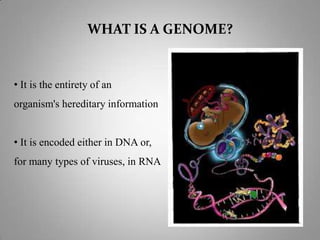
WHAT IS A GENOME?
• It is the entirety of an
organism's hereditary information
• It is encoded either in DNA or,
for many types of viruses, in RNA
GENOME MAPPING
It is the creation of a genetic map assigning DNA fragments
to chromosomes
A genome map provides a guide for the sequencing
experiments by showing the positions of genes and other
distinctive features
DNA sequencing has some major limitation – only 750 bp
can be examined in a single experiment
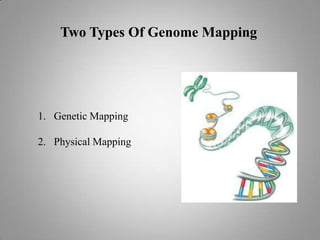
Two Types Of Genome Mapping
1. Genetic Mapping
2. Physical Mapping
•It is based on use of genetic techniques to construct
maps showing the positions of genes and other
sequence features on a genome.
•It includes cross breeding experiments or examining
the family histories in case of humans
GENETIC MAPPING
MARKERS
Various types of markers were used in mapping the
genome
1. Genes were the 1st markers used
2. DNA markers
RFLPs (Restriction fragment length polymorphisms)
SSLPs (Single sequence length polymorphisms)
SNPs (Single nucleotide polymorphisms)
 After obtaining a set of markers to construct a map, mapping
techniques came in the role.
 This techniques are based on genetic linkage
 Genetic mapping is based on inheritance
 Mendel from his breeding experiments with pea plant concluded
that pea plant possesses two alleles for each gene, but displays only
one genotype
 He therefore described it as dominant or recessive phenotype
 But Mendel did not encounter the other complications like
incomplete and co dominance while performing this experiments
Linkage Analysis Is The Basis Of Genetic
Mapping
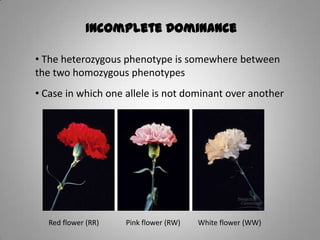
Incomplete Dominance
• The heterozygous phenotype is somewhere between
the two homozygous phenotypes
• Case in which one allele is not dominant over another
Red flower (RR) White flower (WW)Pink flower (RW)
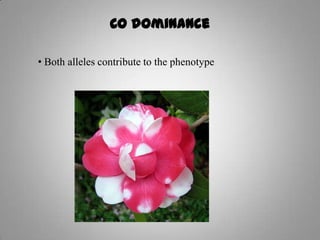
Co dominance
• Both alleles contribute to the phenotype
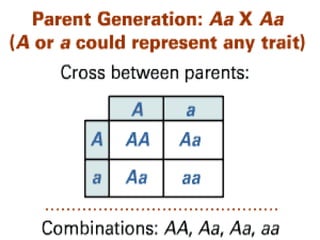
Apart from dominance recessiveness Mendel carried out
additional experiments by which he established his two laws
Laws Of Genetics :-
1. Alleles segregate randomly
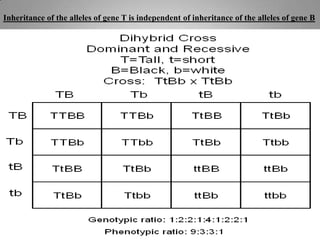
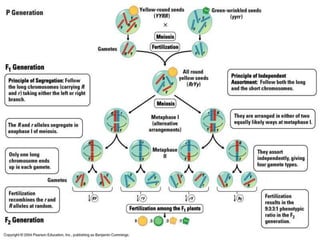
2. Pairs of alleles segregate independently
Inheritance of the alleles of gene T is independent of inheritance of the alleles of gene B
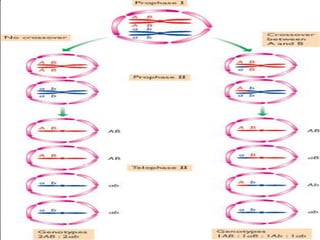
Partial Linkage
 Genes reside on chromosome
 Chromosomes are inherited as intact units, so it was
reasoned that the alleles of some pairs of genes will be
inherited together because they are on the same chromosome
 Pairs of genes were either inherited independently, as
expected for genes in different chromosomes, or, if they
showed linkage, then it was only partial linkage sometimes
they were inherited together and sometimes they were not
Recombination Frequency
Arthur Sturtevant’s, an undergraduate in Morgan laboratory
• The frequency with which the genes are unlinked by crossovers will be
directly proportional to how far apart they are on their chromosome
• The recombination frequency is therefore a measure of the distance
between two genes
• If you work out the recombination frequencies for different pairs of genes,
you can construct a map of their relative positions on the chromosome
• Recombination frequency can be calculated by LOD score method
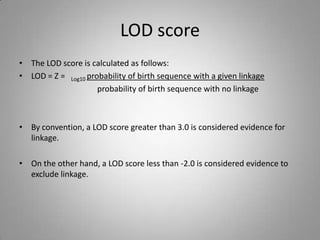
LOD score
• The LOD score is calculated as follows:
• LOD = Z = Log10 probability of birth sequence with a given linkage
probability of birth sequence with no linkage
• By convention, a LOD score greater than 3.0 is considered evidence for
linkage.
• On the other hand, a LOD score less than -2.0 is considered evidence to
exclude linkage.
Genome mapping

Genome mapping

  • 1.
  • 2.
    WHAT IS AGENOME? • It is the entirety of an organism's hereditary information • It is encoded either in DNA or, for many types of viruses, in RNA
  • 3.
    GENOME MAPPING It isthe creation of a genetic map assigning DNA fragments to chromosomes A genome map provides a guide for the sequencing experiments by showing the positions of genes and other distinctive features DNA sequencing has some major limitation – only 750 bp can be examined in a single experiment
  • 4.
    Two Types OfGenome Mapping 1. Genetic Mapping 2. Physical Mapping
  • 5.
    •It is basedon use of genetic techniques to construct maps showing the positions of genes and other sequence features on a genome. •It includes cross breeding experiments or examining the family histories in case of humans GENETIC MAPPING
  • 6.
    MARKERS Various types ofmarkers were used in mapping the genome 1. Genes were the 1st markers used 2. DNA markers RFLPs (Restriction fragment length polymorphisms) SSLPs (Single sequence length polymorphisms) SNPs (Single nucleotide polymorphisms)
  • 7.
     After obtaininga set of markers to construct a map, mapping techniques came in the role.  This techniques are based on genetic linkage  Genetic mapping is based on inheritance  Mendel from his breeding experiments with pea plant concluded that pea plant possesses two alleles for each gene, but displays only one genotype  He therefore described it as dominant or recessive phenotype  But Mendel did not encounter the other complications like incomplete and co dominance while performing this experiments Linkage Analysis Is The Basis Of Genetic Mapping
  • 8.
    Incomplete Dominance • Theheterozygous phenotype is somewhere between the two homozygous phenotypes • Case in which one allele is not dominant over another Red flower (RR) White flower (WW)Pink flower (RW)
  • 9.
    Co dominance • Bothalleles contribute to the phenotype
  • 10.
    Apart from dominancerecessiveness Mendel carried out additional experiments by which he established his two laws Laws Of Genetics :- 1. Alleles segregate randomly 2. Pairs of alleles segregate independently
  • 12.
    Inheritance of thealleles of gene T is independent of inheritance of the alleles of gene B
  • 14.
    Partial Linkage  Genesreside on chromosome  Chromosomes are inherited as intact units, so it was reasoned that the alleles of some pairs of genes will be inherited together because they are on the same chromosome  Pairs of genes were either inherited independently, as expected for genes in different chromosomes, or, if they showed linkage, then it was only partial linkage sometimes they were inherited together and sometimes they were not
  • 17.
    Recombination Frequency Arthur Sturtevant’s,an undergraduate in Morgan laboratory • The frequency with which the genes are unlinked by crossovers will be directly proportional to how far apart they are on their chromosome • The recombination frequency is therefore a measure of the distance between two genes • If you work out the recombination frequencies for different pairs of genes, you can construct a map of their relative positions on the chromosome • Recombination frequency can be calculated by LOD score method
  • 18.
    LOD score • TheLOD score is calculated as follows: • LOD = Z = Log10 probability of birth sequence with a given linkage probability of birth sequence with no linkage • By convention, a LOD score greater than 3.0 is considered evidence for linkage. • On the other hand, a LOD score less than -2.0 is considered evidence to exclude linkage.