Lecture no : 2
Introduction to Computer/ Computer
Education
Mr. Muhammad Moazzam
MPhil Public Health
BSc BioMedical
University of the Lahore
Contents
• Generations of Computer
Computer Generations
• 1st Generation - Vacuum tubes
• 2nd Generation - Transistors
• 3rd Generation - IC(Integrated
Circuits)
• 4th Generation - Micro Processor
• 5th Generation - Artificial intelligence
1-First Generation-Vacuum Tubes
• Generally, the computers built during the
World War II era are known as the first generation
computers
• These are considered the first computers, and
were extremely different from the computers we
see today
• They were designed for a specific task
• The 1st generation computers were also
extremely slow
1-First Generation-Vacuum Tubes
1946 - ENIAC first electronic computer
with 18000 vacuum tubes and it weighed 80
tons.It could do 5000 additions and 360
multiplications per second
Vacuum tubes were expensive and skill
needed to manufacutre
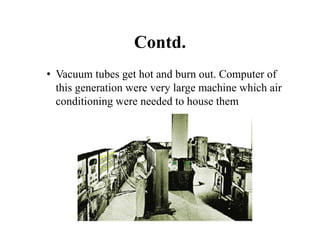
Contd.
• Vacuum tubes get hot and burn out. Computer of
this generation were very large machine which air
conditioning were needed to house them
2-Second Generation(1956-1963)
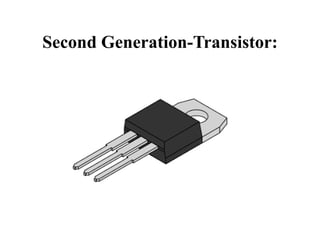
By 1947, the invention of the
transistor greatly changed the computer’s
developement.The transistor replaced the
large,unpractical vacuum tube in computers.
Computers came smaller,faster,more reliable
and more energy-efficent
2-Second Generation(1956-1963)
• These computers make use of the transistors
invented by Bell Telephone laboratories
• They had many of the same components as the
modern- day computer
• For instance, 2nd generation computers typically
had a printer, some sort of tape or disk storage,
operating systems, stored programs, as well as
some sort of memory
• These computers were also generally more
reliable and were solid in design
Second Generation-Transistor:
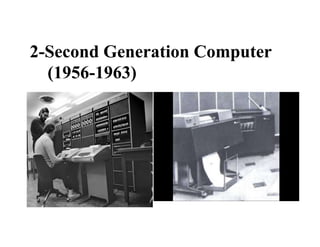
2-Second Generation Computer
(1956-1963)
3- Third Generation(1964-1971)
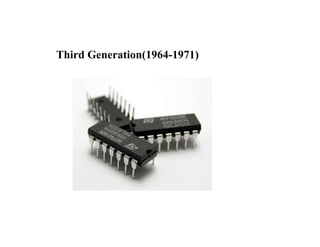
Integrated circuits(IC) semiconductor
devices with several transistors built into one
physical component.Texas Instrument and
Fairchild both announce the integrated circuit
1959
3- Third Generation(1964-1971)
• The 3rd Generation Computers were generally
much smaller in size than the 2nd and 1st
generation computers
• 3rd generation computers also contained
operating systems, which acted as overseers to the
performance of a computer and which allowed
computers to run different programs at once
• Another function of operating systems is
to make sure everything is flowing smoothly
inside the computer
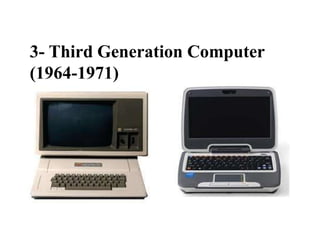
3- Third Generation Computer
(1964-1971)
Third Generation(1964-1971)
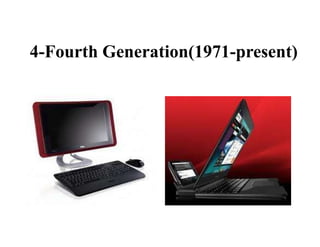
4-Fourth Generation(1971-
present)
Intel 4004 chip took the integrated circuit one step
further by locating all the components of a
computer on silicon chip.
Whereas previously had manufactured to fit a special
purpose, now one microprosessor could be
manufactured and programmed to meet any
number of demands.Other Intel prosessors 8008,
8086, 80286, 80386, 80486, pentium, pentium
pro,pentium II,pentium III
and pentium IV.
4-Fourth Generation(1971-present)
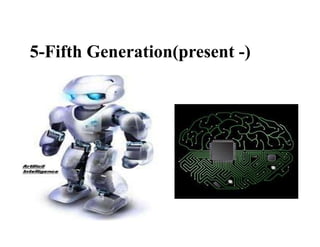
5-Fifth Generation(present -)
• Fifth generation computer based on ariticial
intelligence,are still in developement
stage.The use of parallel processing and
superconductors is helping to make aritifical
intelligense
• Advances in Super Conductor technology will
greatly improve the speed of information
traffic
• The main goal of fifth generation to make a
device which are capable of learning and self-
organization
5-Fifth Generation(present -)
Generations of Computer

Generations of Computer

  • 1.
    Lecture no :2 Introduction to Computer/ Computer Education Mr. Muhammad Moazzam MPhil Public Health BSc BioMedical University of the Lahore
  • 2.
  • 4.
    Computer Generations • 1stGeneration - Vacuum tubes • 2nd Generation - Transistors • 3rd Generation - IC(Integrated Circuits) • 4th Generation - Micro Processor • 5th Generation - Artificial intelligence
  • 5.
    1-First Generation-Vacuum Tubes •Generally, the computers built during the World War II era are known as the first generation computers • These are considered the first computers, and were extremely different from the computers we see today • They were designed for a specific task • The 1st generation computers were also extremely slow
  • 6.
    1-First Generation-Vacuum Tubes 1946- ENIAC first electronic computer with 18000 vacuum tubes and it weighed 80 tons.It could do 5000 additions and 360 multiplications per second Vacuum tubes were expensive and skill needed to manufacutre
  • 7.
    Contd. • Vacuum tubesget hot and burn out. Computer of this generation were very large machine which air conditioning were needed to house them
  • 8.
    2-Second Generation(1956-1963) By 1947,the invention of the transistor greatly changed the computer’s developement.The transistor replaced the large,unpractical vacuum tube in computers. Computers came smaller,faster,more reliable and more energy-efficent
  • 9.
    2-Second Generation(1956-1963) • Thesecomputers make use of the transistors invented by Bell Telephone laboratories • They had many of the same components as the modern- day computer • For instance, 2nd generation computers typically had a printer, some sort of tape or disk storage, operating systems, stored programs, as well as some sort of memory • These computers were also generally more reliable and were solid in design
  • 10.
  • 11.
  • 12.
    3- Third Generation(1964-1971) Integratedcircuits(IC) semiconductor devices with several transistors built into one physical component.Texas Instrument and Fairchild both announce the integrated circuit 1959
  • 13.
    3- Third Generation(1964-1971) •The 3rd Generation Computers were generally much smaller in size than the 2nd and 1st generation computers • 3rd generation computers also contained operating systems, which acted as overseers to the performance of a computer and which allowed computers to run different programs at once • Another function of operating systems is to make sure everything is flowing smoothly inside the computer
  • 14.
    3- Third GenerationComputer (1964-1971)
  • 15.
  • 16.
    4-Fourth Generation(1971- present) Intel 4004chip took the integrated circuit one step further by locating all the components of a computer on silicon chip. Whereas previously had manufactured to fit a special purpose, now one microprosessor could be manufactured and programmed to meet any number of demands.Other Intel prosessors 8008, 8086, 80286, 80386, 80486, pentium, pentium pro,pentium II,pentium III and pentium IV.
  • 17.
  • 18.
    5-Fifth Generation(present -) •Fifth generation computer based on ariticial intelligence,are still in developement stage.The use of parallel processing and superconductors is helping to make aritifical intelligense • Advances in Super Conductor technology will greatly improve the speed of information traffic • The main goal of fifth generation to make a device which are capable of learning and self- organization
  • 19.