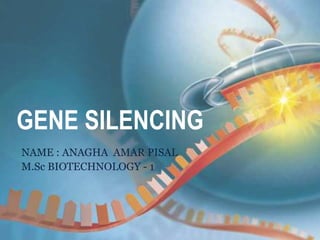
GENE SILENCING
NAME : ANAGHA AMAR PISAL
M.Sc BIOTECHNOLOGY - 1
INTRODUCTION
• Epigenetic process of gene regulation
• Aims to reduce or eliminate the production of
protein from its corresponding gene
• It is same as gene knock down but totally
different form gene knock out
Types
• Transcriptional gene silencing -
results in histone modifications
• Post transcriptional gene silencing –
results from mRNA of a particular gene being
destroyed or blocked
Transcriptional silencing
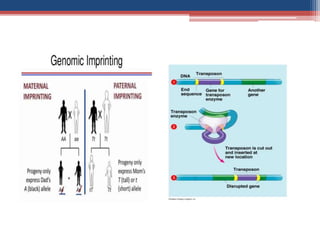
• Genome imprinting :
genetic phenomenon in which genes are
expressed in parent or origin specific manner
• Paramutation :
interaction between two alleles of a single locus
• Position effect :
due of translocation of gene eg. Drosophila :
position effect variegation
• RNA directed DNA methylation
• Transposon silencing
Gene silencing methods used in
research
• Antisense oligonucleotides :
bind to complementary target molecules
• Ribozymes :
catalytic activity inhibit gene expression
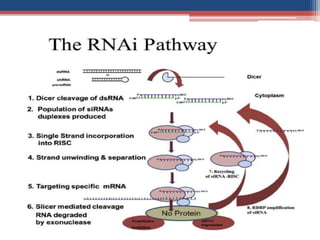
RNA interference (post-transcriptional
gene silencing)
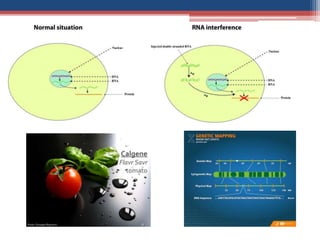
• Exogenous dsRNA is induced which binds to
known complementary mRNA
• Cellular mechanism that degrades the unwanted
mRNA in the cytoplasm
• Sequence specific RNA degradation
• dsRNA can be
1. siRNA
2. miRNA
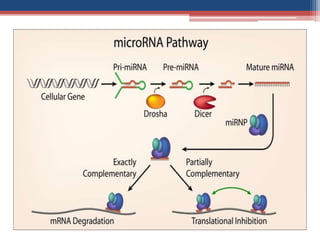
miRNA
• RNA molecules, 22–25 nucleotides
• miRNAs are produced by Dicer from the precursors
of ~70 nucleotides (pre-miRNAs)
• Processed through at least two sequential steps:
(i) generation of the ~70 nucleotide
precursor microRNAs from the
longer transcripts (termed primiRNAs);
(ii) processing of pre-miRNAs into
mature miRNAs.
siRNA
• double stranded RNA from exogenous sources like
viruses, transgenes or transposons, i.e;
they originate from double stranded RNAs.
• 21–23 nucleotide-long double-stranded RNA
• result from the Dicer enzyme cutting up a larger
fragment of perfectly complimentary double
stranded RNA
• RISC and serve as a guide to recognition of
complementary base pairing on target mRNA
Anti sense RNA technology
• Antisense RNA has the opposite
sense to m RNA.
• The presence of complimentary
sense and antisense RNA
interferes with gene expression
at the level of RNA processing or
possible translation.
• This technology widely used in
plants for gene inhibition.
Applications
• Biological functions
1. Downregulation of genes: important in
translational repression and in the
regulation of development
2. Upregulation of genes: dubbed RNA activation
3. Evolution: The ancestral function of the RNAi
system is generally agreed to have been
immune defense against exogenous genetic
elements such as transposons and viral
genomes
• Technological applications
1. Gene knockdown: to study the function of genes
in cell culture and in vivo in model organisms
2. Functional genomics: particularly attractive
technique for genomic mapping
3. Medicine: use of short interfering RNA mimics;
seen as a promising way to treat cancer by
silencing genes differentially
upregulated
4. Biotechnology : Flavr Savr tomato and two
cultivars of ringspot-resistant papaya, were
originally developed using antisense
technology.
THANK YOU !

Gene silencing

  • 1.
    GENE SILENCING NAME :ANAGHA AMAR PISAL M.Sc BIOTECHNOLOGY - 1
  • 2.
    INTRODUCTION • Epigenetic processof gene regulation • Aims to reduce or eliminate the production of protein from its corresponding gene • It is same as gene knock down but totally different form gene knock out
  • 3.
    Types • Transcriptional genesilencing - results in histone modifications • Post transcriptional gene silencing – results from mRNA of a particular gene being destroyed or blocked
  • 4.
    Transcriptional silencing • Genomeimprinting : genetic phenomenon in which genes are expressed in parent or origin specific manner • Paramutation : interaction between two alleles of a single locus • Position effect : due of translocation of gene eg. Drosophila : position effect variegation • RNA directed DNA methylation • Transposon silencing
  • 6.
    Gene silencing methodsused in research • Antisense oligonucleotides : bind to complementary target molecules • Ribozymes : catalytic activity inhibit gene expression
  • 7.
    RNA interference (post-transcriptional genesilencing) • Exogenous dsRNA is induced which binds to known complementary mRNA • Cellular mechanism that degrades the unwanted mRNA in the cytoplasm • Sequence specific RNA degradation • dsRNA can be 1. siRNA 2. miRNA
  • 8.
    miRNA • RNA molecules,22–25 nucleotides • miRNAs are produced by Dicer from the precursors of ~70 nucleotides (pre-miRNAs) • Processed through at least two sequential steps: (i) generation of the ~70 nucleotide precursor microRNAs from the longer transcripts (termed primiRNAs); (ii) processing of pre-miRNAs into mature miRNAs.
  • 10.
    siRNA • double strandedRNA from exogenous sources like viruses, transgenes or transposons, i.e; they originate from double stranded RNAs. • 21–23 nucleotide-long double-stranded RNA • result from the Dicer enzyme cutting up a larger fragment of perfectly complimentary double stranded RNA • RISC and serve as a guide to recognition of complementary base pairing on target mRNA
  • 12.
    Anti sense RNAtechnology • Antisense RNA has the opposite sense to m RNA. • The presence of complimentary sense and antisense RNA interferes with gene expression at the level of RNA processing or possible translation. • This technology widely used in plants for gene inhibition.
  • 13.
    Applications • Biological functions 1.Downregulation of genes: important in translational repression and in the regulation of development 2. Upregulation of genes: dubbed RNA activation 3. Evolution: The ancestral function of the RNAi system is generally agreed to have been immune defense against exogenous genetic elements such as transposons and viral genomes
  • 14.
    • Technological applications 1.Gene knockdown: to study the function of genes in cell culture and in vivo in model organisms 2. Functional genomics: particularly attractive technique for genomic mapping 3. Medicine: use of short interfering RNA mimics; seen as a promising way to treat cancer by silencing genes differentially upregulated 4. Biotechnology : Flavr Savr tomato and two cultivars of ringspot-resistant papaya, were originally developed using antisense technology.
  • 16.