All About Cholesterol
Cholesterol
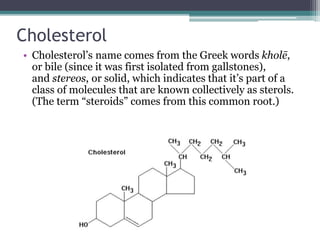
• Cholesterol’s name comes from the Greek words kholē,
or bile (since it was first isolated from gallstones),
and stereos, or solid, which indicates that it’s part of a
class of molecules that are known collectively as sterols.
(The term “steroids” comes from this common root.)
Support
• One role of cholesterol is to help give the cell
membrane extra support.
• Cholesterol is more rigid than some of the other
lipids in the membrane.
• cholesterol helps to immobilize some of the lipid
molecules around them. This extra rigidity makes
the cell membrane stronger and makes it harder for
small molecules to pass through the membrane.
• The presence of cholesterol allows the cell
membrane to be strong enough to hold the cell
together and to serve as an effective barrier to ions.
Membrane Fluidity
• cholesterol also has an important role in keeping
the cell membrane fluid.
• Cholesterol helps generate some extra space
between the lipids, which keeps them from
gelling together into their "crystalline" state.
This allows lipids to move freely throughout the
membrane as needed.
Lipid Rafts
• cholesterol also has an important role in the
construction of special parts of cell membranes
called lipid rafts.
• Lipid rafts are made up of high amounts of
cholesterol and special kinds of lipids called
sphingolipids. These rafts allow some sections of
the membrane to be distinct from other areas.
FATTY CHOLESTEROL
• Cholesterol is fatty and doesn’t mix well with
blood, so it travels in our blood via a protein
“wrapper” known as a lipoprotein
• We often hear about HDL and LDL cholesterol
— these actually aren’t “cholesterols” per se but
rather the protein “wrappers” that transport the
cholesterol.
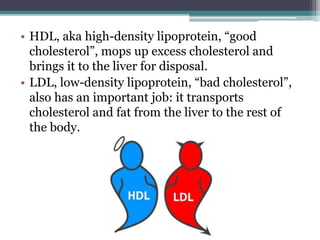
• HDL, aka high-density lipoprotein, “good
cholesterol”, mops up excess cholesterol and
brings it to the liver for disposal.
• LDL, low-density lipoprotein, “bad cholesterol”,
also has an important job: it transports
cholesterol and fat from the liver to the rest of
the body.
LIVE HEALTHY
• Get and stay lean
• Eat at least 10 servings of vegetables and fruits each
day
• Eat at least 1 cup of whole grains each day
• Eat at least 1 cup of legumes each day
• Eat at least 1/3 cup of nuts/seeds each day
• Eat/supplement with omega-3’s (algae or fish oils)
• Exercise at least 5 hours per week
• Eat plenty of herbs and spices
• Limit meat, processed foods, trans fats and dairy
• Drink at least 4 cups of tea each day
IMPORTANCE
Cholesterol, a substance required for the normal
function of cells, is present in every cell of the
human body. It is also found in the bloodstream.
The soft waxy substance is produced in the body
and is essential for the production of vitamin D,
bile salts and hormones.
LIVER
The liver is responsible for producing the
cholesterol in the body. Alone, this organ can
synthesize enough cholesterol to keep the cells
healthy and hormones at the appropriate levels.
The liver produces about 80% of the body's
cholesterol and the rest comes from dietary
sources like meat, poultry, eggs, fish, and dairy
products. Foods derived from plants contain no
cholesterol.
VITAMIN D
• Vitamin D is created in the body when sunlight
hits the skin. If cholesterol is not present in the
body, this will not occur.
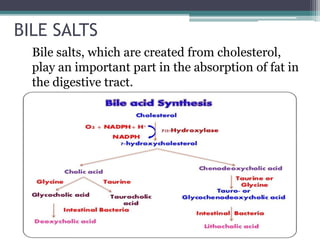
BILE SALTS
Bile salts, which are created from cholesterol,
play an important part in the absorption of fat in
the digestive tract.
HORMONES
Cholesterol must be present in the body in order
for the body to create hormones such as
progesterone, estrogen, testosterone and
cortisol.
• Cholesterol content in the
bloodstream is regulated by
the liver. After a meal,
cholesterol in the diet is
absorbed from the small
intestine and metabolized and
stored in the liver. As the
body requires cholesterol, it
may be secreted by the liver.
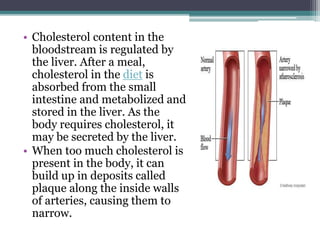
• When too much cholesterol is
present in the body, it can
build up in deposits called
plaque along the inside walls
of arteries, causing them to
narrow.
• Very low-density lipoproteins (VLDL) contain
even less protein than LDL. VLDL like LDL has
been associated with plaque deposits.
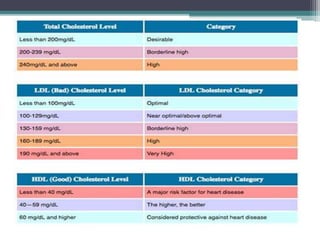
• higher the HDL to LDL ratio, the better it is for
the individual because such ratios can
potentially be protective against heart
disease, stroke, and peripheral artery disease.
Danger : Elevated cholesterol levels
• Atherosclerotic heart disease or narrowed coronary arteries in
the heart can cause the symptoms of angina, when the heart
muscle is not provided with enough oxygen to function.
• Decreased blood supply to the brain may be due to narrowed
small arteries in the brain or because the larger carotid
arteries in the neck may become blocked. This can result in
a transient ischemic attack (TIA) or stroke.
• Peripheral artery disease describes gradual narrowing of the
arteries that supply the legs. During exercise, if the legs do not
get enough blood supply, they can develop pain,
called claudication.
• Other arteries in the body may also be affected by plaque
buildup causing them to narrow, including the mesenteric
arteries to the intestine and the renal arteries to the kidney.
All about cholesterol

All about cholesterol

  • 1.
  • 2.
    Cholesterol • Cholesterol’s namecomes from the Greek words kholē, or bile (since it was first isolated from gallstones), and stereos, or solid, which indicates that it’s part of a class of molecules that are known collectively as sterols. (The term “steroids” comes from this common root.)
  • 3.
    Support • One roleof cholesterol is to help give the cell membrane extra support. • Cholesterol is more rigid than some of the other lipids in the membrane. • cholesterol helps to immobilize some of the lipid molecules around them. This extra rigidity makes the cell membrane stronger and makes it harder for small molecules to pass through the membrane. • The presence of cholesterol allows the cell membrane to be strong enough to hold the cell together and to serve as an effective barrier to ions.
  • 4.
    Membrane Fluidity • cholesterolalso has an important role in keeping the cell membrane fluid. • Cholesterol helps generate some extra space between the lipids, which keeps them from gelling together into their "crystalline" state. This allows lipids to move freely throughout the membrane as needed.
  • 5.
    Lipid Rafts • cholesterolalso has an important role in the construction of special parts of cell membranes called lipid rafts. • Lipid rafts are made up of high amounts of cholesterol and special kinds of lipids called sphingolipids. These rafts allow some sections of the membrane to be distinct from other areas.
  • 6.
    FATTY CHOLESTEROL • Cholesterolis fatty and doesn’t mix well with blood, so it travels in our blood via a protein “wrapper” known as a lipoprotein • We often hear about HDL and LDL cholesterol — these actually aren’t “cholesterols” per se but rather the protein “wrappers” that transport the cholesterol.
  • 7.
    • HDL, akahigh-density lipoprotein, “good cholesterol”, mops up excess cholesterol and brings it to the liver for disposal. • LDL, low-density lipoprotein, “bad cholesterol”, also has an important job: it transports cholesterol and fat from the liver to the rest of the body.
  • 8.
    LIVE HEALTHY • Getand stay lean • Eat at least 10 servings of vegetables and fruits each day • Eat at least 1 cup of whole grains each day • Eat at least 1 cup of legumes each day • Eat at least 1/3 cup of nuts/seeds each day • Eat/supplement with omega-3’s (algae or fish oils) • Exercise at least 5 hours per week • Eat plenty of herbs and spices • Limit meat, processed foods, trans fats and dairy • Drink at least 4 cups of tea each day
  • 9.
    IMPORTANCE Cholesterol, a substancerequired for the normal function of cells, is present in every cell of the human body. It is also found in the bloodstream. The soft waxy substance is produced in the body and is essential for the production of vitamin D, bile salts and hormones.
  • 10.
    LIVER The liver isresponsible for producing the cholesterol in the body. Alone, this organ can synthesize enough cholesterol to keep the cells healthy and hormones at the appropriate levels. The liver produces about 80% of the body's cholesterol and the rest comes from dietary sources like meat, poultry, eggs, fish, and dairy products. Foods derived from plants contain no cholesterol.
  • 11.
    VITAMIN D • VitaminD is created in the body when sunlight hits the skin. If cholesterol is not present in the body, this will not occur.
  • 12.
    BILE SALTS Bile salts,which are created from cholesterol, play an important part in the absorption of fat in the digestive tract.
  • 13.
    HORMONES Cholesterol must bepresent in the body in order for the body to create hormones such as progesterone, estrogen, testosterone and cortisol.
  • 14.
    • Cholesterol contentin the bloodstream is regulated by the liver. After a meal, cholesterol in the diet is absorbed from the small intestine and metabolized and stored in the liver. As the body requires cholesterol, it may be secreted by the liver. • When too much cholesterol is present in the body, it can build up in deposits called plaque along the inside walls of arteries, causing them to narrow.
  • 15.
    • Very low-densitylipoproteins (VLDL) contain even less protein than LDL. VLDL like LDL has been associated with plaque deposits. • higher the HDL to LDL ratio, the better it is for the individual because such ratios can potentially be protective against heart disease, stroke, and peripheral artery disease.
  • 17.
    Danger : Elevatedcholesterol levels • Atherosclerotic heart disease or narrowed coronary arteries in the heart can cause the symptoms of angina, when the heart muscle is not provided with enough oxygen to function. • Decreased blood supply to the brain may be due to narrowed small arteries in the brain or because the larger carotid arteries in the neck may become blocked. This can result in a transient ischemic attack (TIA) or stroke. • Peripheral artery disease describes gradual narrowing of the arteries that supply the legs. During exercise, if the legs do not get enough blood supply, they can develop pain, called claudication. • Other arteries in the body may also be affected by plaque buildup causing them to narrow, including the mesenteric arteries to the intestine and the renal arteries to the kidney.