Deejay Harding

GENDER ROLES   MTE 506


PRESENTATION   Professor
               Ginger
               Caldwell
INTRODUCTION


    As related to child and adolescent develop, this presentation
     regarding the development of gender roles in children and
  adolescents will specifically discuss questions of how do gender
roles develop and change over time, how observable behaviors serve
    as an indication of changes in childhood gender identity and
              interactions affiliated with gender roles.
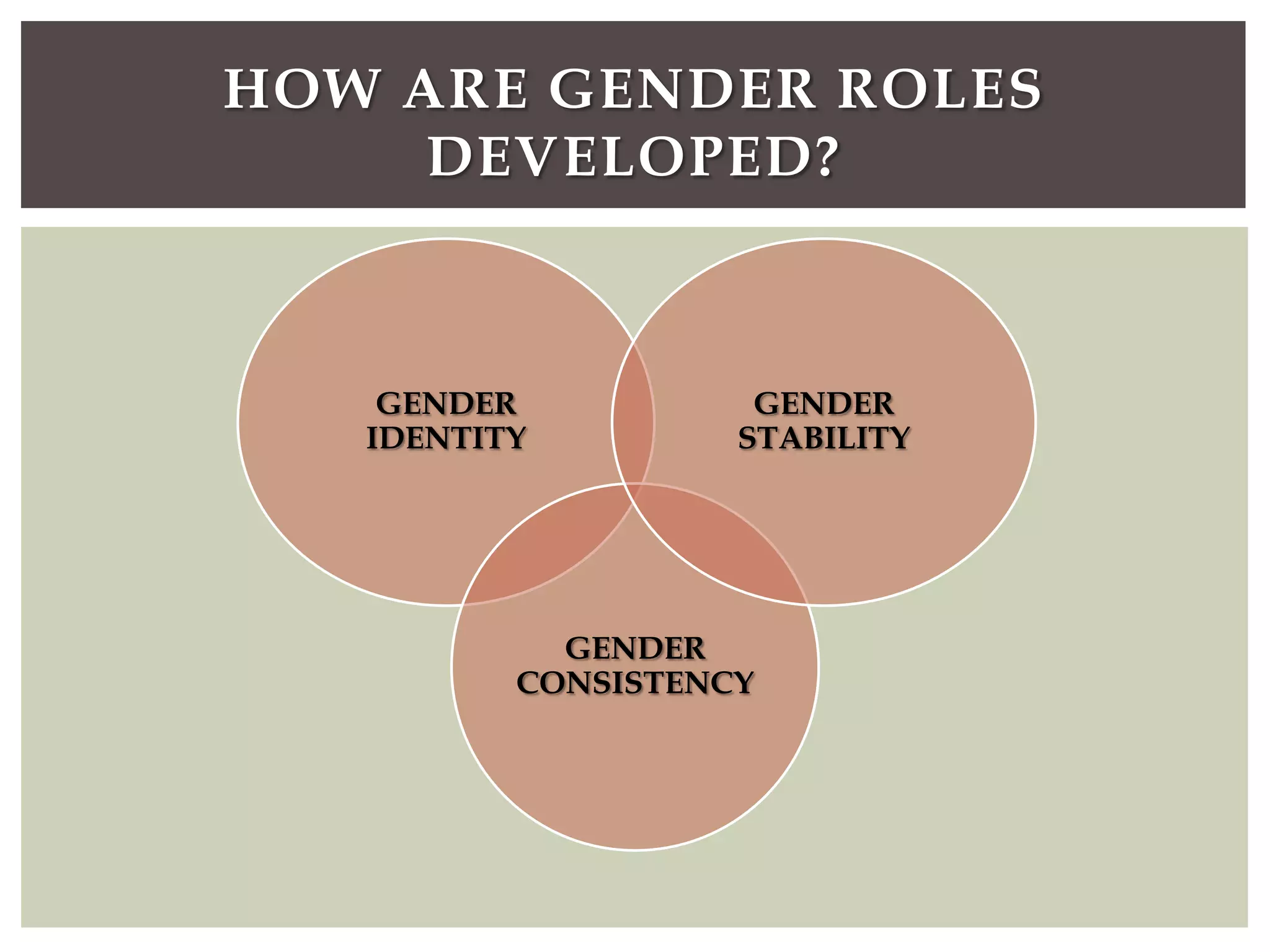
HOW ARE GENDER ROLES
     DEVELOPED?


    GENDER           GENDER
   IDENTITY         STABILITY


            GENDER
          CONSISTENCY
WHEN ARE GENDER ROLES
            ADOPTED?
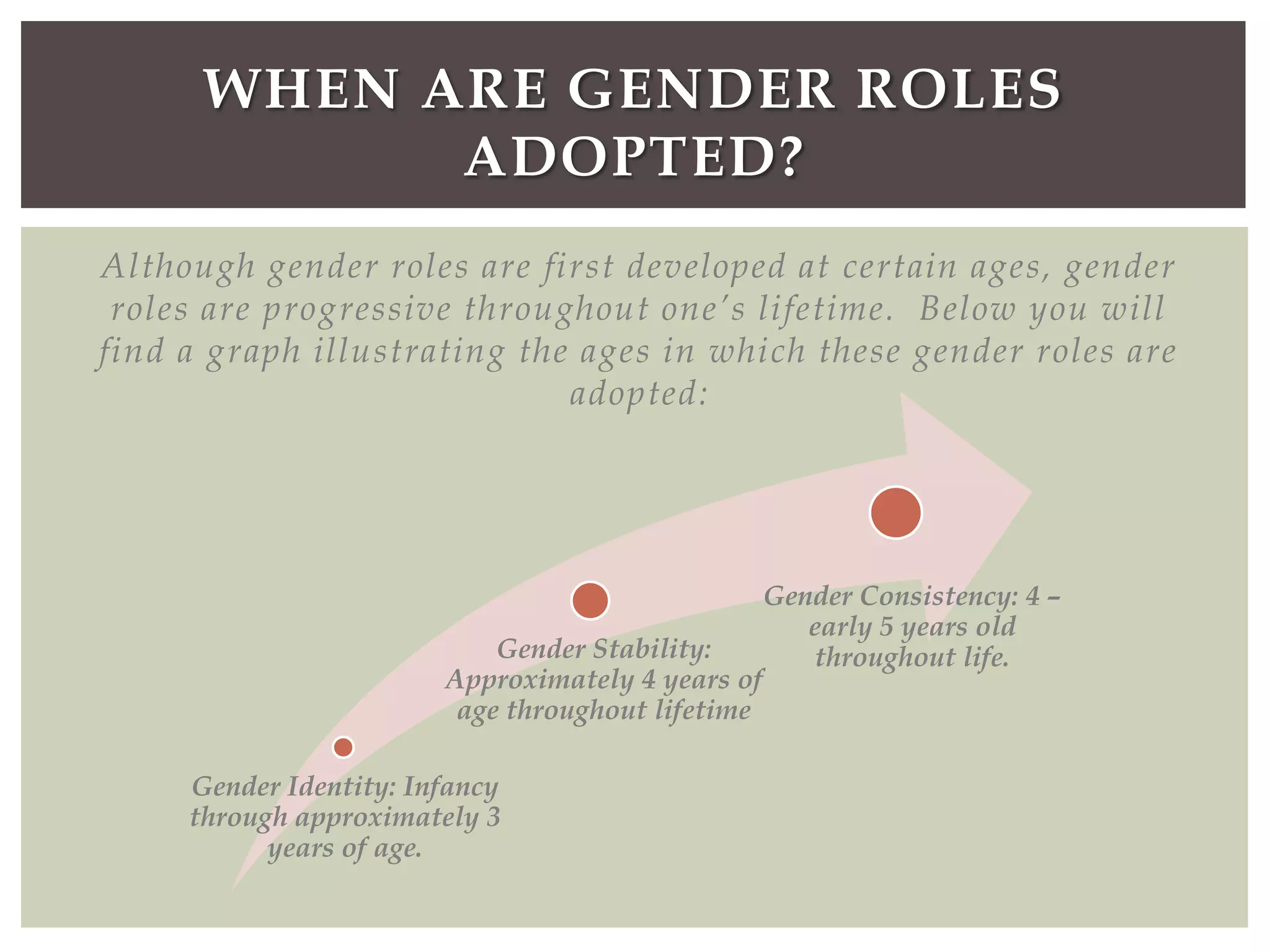
Although gender roles are first developed at certain ages, gender
 roles are progressive throughout one’s lifetime. Below you will
find a graph illustrating the ages in which these gender roles are
                             adopted:


                                                   Gender Consistency: 4 –
                                                      early 5 years old
                            Gender Stability:         throughout life.
                        Approximately 4 years of
                         age throughout lifetime

     Gender Identity: Infancy
     through approximately 3
           years of age.
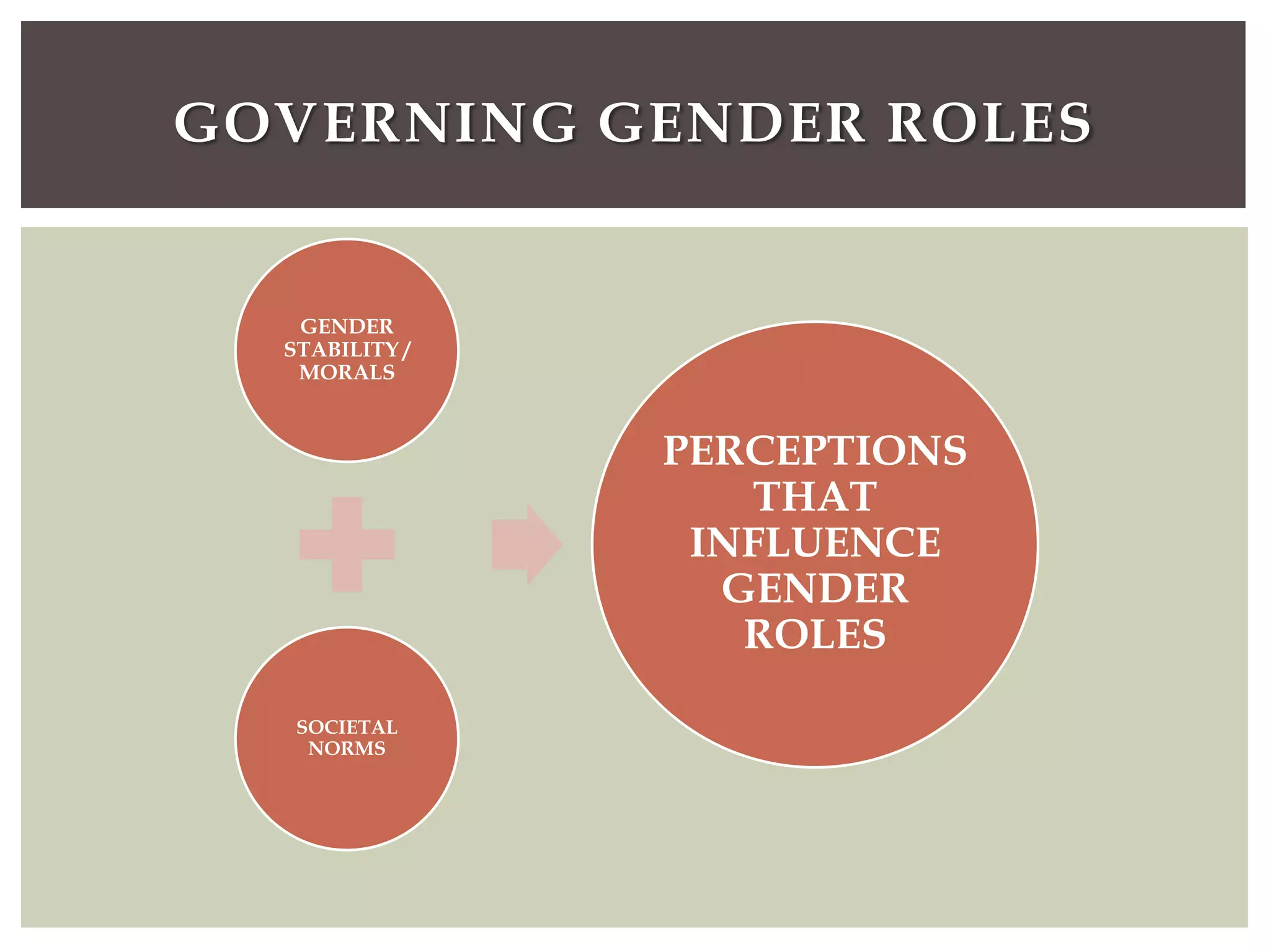
GOVERNING GENDER ROLES


   GENDER
  STABILITY /
   MORALS


                PERCEPTIONS
                   THAT
                 INFLUENCE
                  GENDER
                   ROLES

   SOCIETAL
    NORMS
HOW MIGHT GENDER IDENTITY CHANGE
   FROM EARLY CHILDHOOD THROUGH
           ADOLESCENCE?

 From childhood through adolescence, children are still quite
confused regarding gender. Often times, children believe that
 gender is not permanent and is easily changed. They have a
hard time accepting and understanding their body differences
and will often think about changing their body types through
  physical activities and behavioral patterns. An example of
this would be females who believe that playing football and
 basketball with boys will make them equivalent to a boy or
  females who cut their hair short to look similar to males.
These children may later experiment with being same -gender
                       sexual activities.
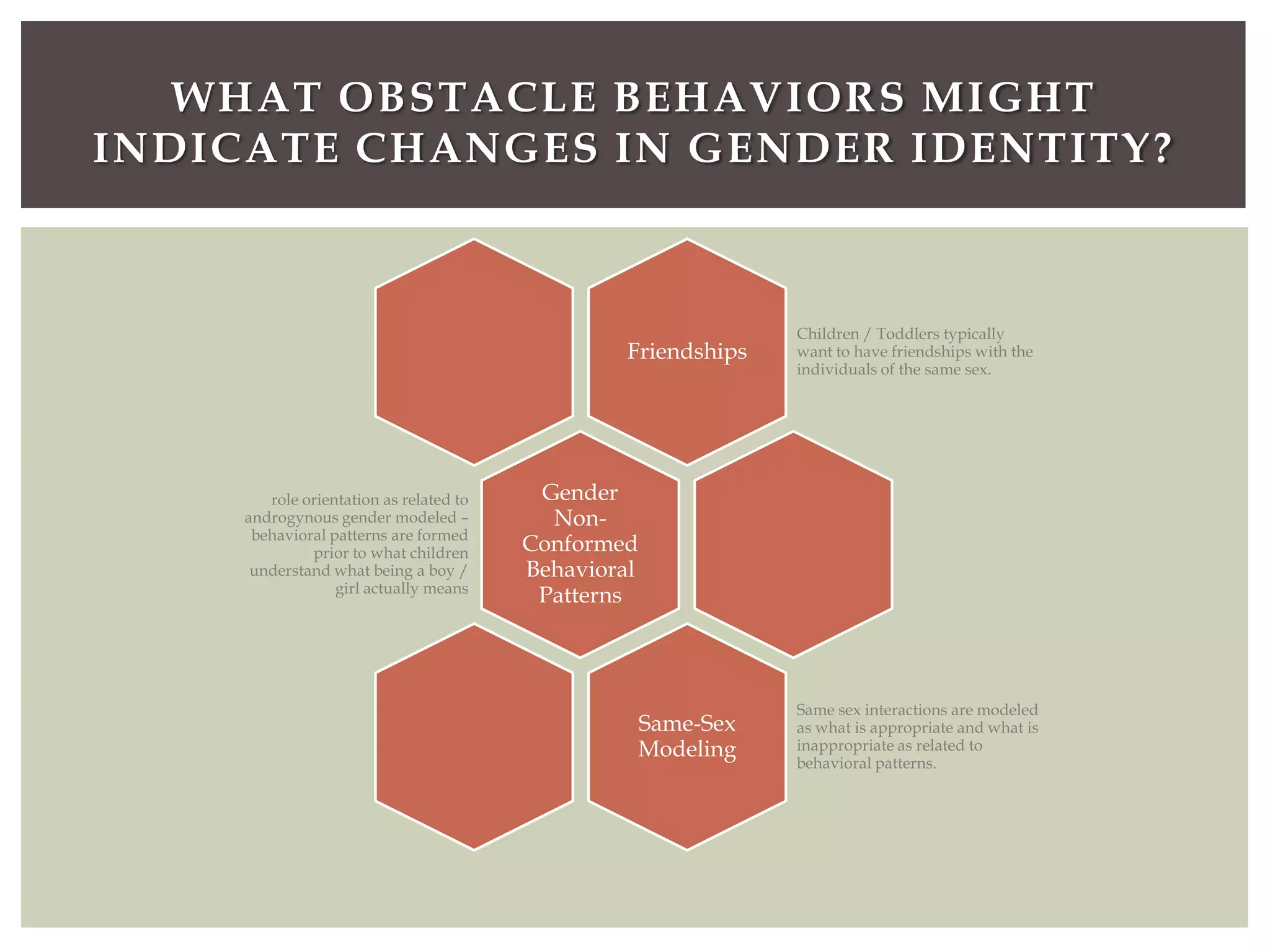
WHAT OBSTACLE BEHAVIORS MIGHT
INDICATE CHANGES IN GENDER IDENTITY?


                                                                Children / Toddlers typically
                                                  Friendships   want to have friendships with the
                                                                individuals of the same sex.


        role orientation as related to    Gender
     androgynous gender modeled –          Non-
      behavioral patterns are formed
              prior to what children     Conformed
      understand what being a boy /      Behavioral
                  girl actually means
                                          Patterns


                                                                Same sex interactions are modeled
                                                  Same-Sex      as what is appropriate and what is
                                                  Modeling      inappropriate as related to
                                                                behavioral patterns.
REFERENCES

Bee, H., & Boyd, D. (2010). The developing child (12th ed.)
      Boston, MA: Allyn & Bacon.

Gender roles presentation

  • 1.
    Deejay Harding GENDER ROLES MTE 506 PRESENTATION Professor Ginger Caldwell
  • 2.
    INTRODUCTION As related to child and adolescent develop, this presentation regarding the development of gender roles in children and adolescents will specifically discuss questions of how do gender roles develop and change over time, how observable behaviors serve as an indication of changes in childhood gender identity and interactions affiliated with gender roles.
  • 3.
    HOW ARE GENDERROLES DEVELOPED? GENDER GENDER IDENTITY STABILITY GENDER CONSISTENCY
  • 4.
    WHEN ARE GENDERROLES ADOPTED? Although gender roles are first developed at certain ages, gender roles are progressive throughout one’s lifetime. Below you will find a graph illustrating the ages in which these gender roles are adopted: Gender Consistency: 4 – early 5 years old Gender Stability: throughout life. Approximately 4 years of age throughout lifetime Gender Identity: Infancy through approximately 3 years of age.
  • 5.
    GOVERNING GENDER ROLES GENDER STABILITY / MORALS PERCEPTIONS THAT INFLUENCE GENDER ROLES SOCIETAL NORMS
  • 6.
    HOW MIGHT GENDERIDENTITY CHANGE FROM EARLY CHILDHOOD THROUGH ADOLESCENCE? From childhood through adolescence, children are still quite confused regarding gender. Often times, children believe that gender is not permanent and is easily changed. They have a hard time accepting and understanding their body differences and will often think about changing their body types through physical activities and behavioral patterns. An example of this would be females who believe that playing football and basketball with boys will make them equivalent to a boy or females who cut their hair short to look similar to males. These children may later experiment with being same -gender sexual activities.
  • 7.
    WHAT OBSTACLE BEHAVIORSMIGHT INDICATE CHANGES IN GENDER IDENTITY? Children / Toddlers typically Friendships want to have friendships with the individuals of the same sex. role orientation as related to Gender androgynous gender modeled – Non- behavioral patterns are formed prior to what children Conformed understand what being a boy / Behavioral girl actually means Patterns Same sex interactions are modeled Same-Sex as what is appropriate and what is Modeling inappropriate as related to behavioral patterns.
  • 8.
    REFERENCES Bee, H., &Boyd, D. (2010). The developing child (12th ed.) Boston, MA: Allyn & Bacon.

Editor's Notes

  • #3 According to the syllabus and rubic, the following should be addressed (note Prezi was a recommendation – not the only option for this presentation therefore I selected slideshare):Develop a presentation using a multimedia or web-based presentation tool such as PreziPresentation consists of XX-XX slides appropriate for the audience. ·         Presentation addresses the following in your presentation:·         How are gender roles developed?·         When are gender roles adopted?·         What influences shape perceptions of gender roles?·         How might gender identity change from early childhood through adolescence?·         What observable behaviors might indicate changes in gender identity?·         Include detailed speaker notes with your presentation. These may be included in your presentation or submitted as an attachment.
  • #4 Gender is a number of characters define femininity and masculinity. It is quite often referenced as sex (male, female, boy, girl) and is defined by societal norms. Gender roles have a significant impact upon child developed as well as behavioral patterns from infancy through adulthood (Bee & Boyd, 2010). Gender identity is known as the personal conception of whether an individual defines his or her self as male or female, both or neither. Gender stability was introduced by Kohlberg and is an understanding of gender labeling such as hair length, the stability of gender such as growing up fathers. Gender consistency references gender forever remaining the same.
  • #5 Gender role development is from childhood and continues to develop throughout life. They usually begin at approximately 9-10 months of age and regarding gender identity (telling who is male an female by length of hair and clothing), to gender stability at the age of 4 where children begin to understand males become fathers and females become mothers, through gender consistency where children understand this is a never ending change in life (gender always remains the same).
  • #6 When children begin to understand gender is forever permanent they typically look for ways to behave based upon their gender. Many children enter the cross gender phase because they find themselves overanalyzing gender and the societal norms as related. This typically happens between the ages of five to seven years old. Regularly, children learn and adopt gender roles that are prevalent in their homes. From these norms, children adopt morals that are often reinforced within their own lifestyles as adults and young teenagers.